
Last updated on January 13th, 2026 at 05:19 am
Do you ever feel trapped by the things you own, or the person you’re expected to be? What if the only way to feel truly alive was to destroy it all—your stuff, your identity, even yourself? Chuck Palahniuk’s Fight Club isn’t just a novel; it’s a grenade tossed into the living room of modern masculinity.
Fight Club explores the violent, nihilistic rebellion of a generation of men against consumerism, emasculation, and spiritual emptiness, arguing that only through self-destruction and chaos can they reclaim a sense of identity and power.
Evidence snapshot: The novel’s cult status and the enduring cultural relevance of its themes—from “Ikea nesting instinct” critiques to the formation of real-world fight clubs—serve as a case study in its prophetic diagnosis of modern alienation.
Best for: Readers interested in transgressive fiction, critiques of consumer culture, dark satire, and psychological thrillers. Not for: Those sensitive to graphic violence, bleak nihilism, or unstructured narratives, or readers seeking a conventional, morally clear story.
Table of Contents
1. Introduction: The Anarchist’s Bible
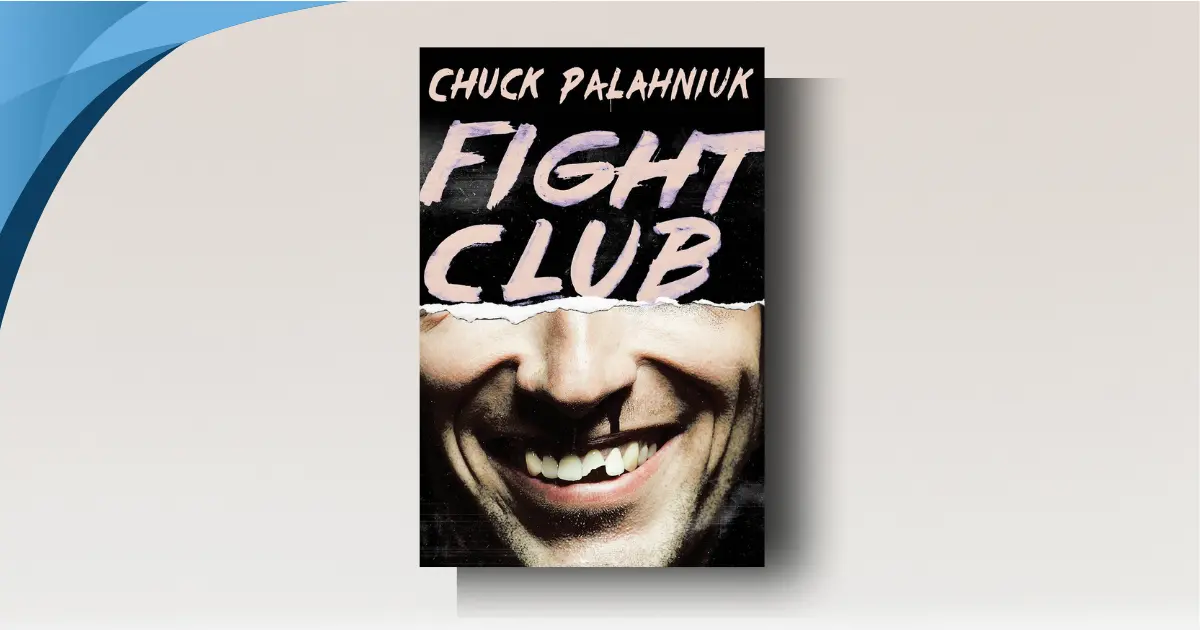
Fight Club is the 1996 debut novel by American author Chuck Palahniuk. Published by W.W. Norton & Company, it initially garnered modest sales but exploded into a cultural phenomenon following the 1999 film adaptation directed by David Fincher.
The book is a first-person narrative steeped in minimalism, visceral imagery, and dark humor, establishing Palahniuk’s signature style of confronting societal norms through extremity and shock.
2. Background
Emerging in the mid-90s, Fight Club tapped into a pre-millennial tension. It was a time of economic comfort but spiritual recession for many young men—the so-called “Generation X.”
Raised in an era of absent fathers, defined by corporate jobs and marketed identities, they were the “middle children of history” with “no great war or depression” to fight. The novel channels this specific angst, a feeling that to be a man was to be a “cog” in a machine, buying your identity from a catalogue.
As Tyler Durden states, “We’re consumers. We are by-products of a lifestyle obsession.” The historical context isn’t of wars, but of quiet, air-conditioned desperation.
3. Fight Club Summary
The unnamed Narrator is a recall campaign coordinator for a major car company, living a soul-crushing, insomnia-plagued life defined by his “Ikea nesting instinct.”
“Ikea nesting instinct” is a sardonic term coined by the narrator to describe the compulsive, consumer-driven urge to build a perfect, catalog-defined identity through the acquisition of furniture and home decor. It represents a hollow, synthetic form of self-creation.
He describes this instinct as a trap: “You buy furniture. You tell yourself, this is the last sofa I will ever need in my life… Then you’re trapped in your lovely nest, and the things you used to own, now they own you.”
It’s the novel’s central metaphor for how consumerism promises fulfillment but instead creates spiritual imprisonment. The narrator’s meticulously assembled condo, filled with “clever art” and “Swedish furniture,” is the physical manifestation of his empty, pre-fabricated life—which makes its eventual destruction by Tyler Durden not a tragedy, but a necessary act of liberation.
He finds fleeting solace by attending support groups for diseases he doesn’t have (testicular cancer, tuberculosis), where he can finally cry and sleep. This fraudulent peace is ruined by another “tourist,” Marla Singer.
His life fractures when his perfect condo is mysteriously destroyed by an explosion. With nowhere to go, he calls Tyler Durden, a charismatic, anarchic soap salesman and part-time projectionist he met on a beach.
Tyler’s philosophy is one of aggressive nihilism: “It’s only after you’ve lost everything that you’re free to do anything.” They move into a dilapidated house on Paper Street.
To feel something real, they begin bare-knuckle fighting behind a bar. This secret “fight club” becomes a phenomenon, attracting other disaffected men. The rules are simple: “You don’t talk about fight club.”
In the violence, men find a brutal form of therapy, a way to escape their “clever art” and “Swedish furniture” lives. Tyler posits, “How much can you know about yourself if you’ve never been in a fight?”
The club metastasizes into “Project Mayhem,” a domestic terrorist cell run from the Paper Street house. Recruits, called “space monkeys,” perform anarchic “homework assignments”—vandalizing corporate art, sabotaging public monuments—aimed at collapsing civilization to “save the world.”
The Narrator is increasingly sidelined as Tyler’s influence grows.
The central, mind-bending twist—revealed about two-thirds through the book—is that Tyler Durden and the Narrator are the same person. Tyler is the Narrator’s dissociative personality, his unleashed id. The insomnia was the Narrator blacking out while Tyler was active.
Tyler created fight club, started Project Mayhem, seduced Marla, and even blew up the Narrator’s own condo.
The Narrator realizes, “All the way you loved Tyler Durden… Tyler Durden loved you… All the ways you wished you could be, that’s me… I look like you wanna look, I fuck like you wanna fuck…”
Tyler, now a fully autonomous hallucination, aims to complete Project Mayhem’s ultimate act: destroying a major credit card company’s headquarters to erase debt records. The Narrator, finally awake to the monster he created, tries desperately to stop the plan.
He races to the Parker-Morris Building, where Tyler holds a gun to his head. In a final act of reclaiming control, the Narrator turns the gun on himself, shooting through his cheek to kill Tyler—the projection of himself—rather than be a martyr for the cause. He survives.
In the final moments, confined to a mental institution, he believes Project Mayhem’s members still see him as their leader, Tyler Durden, and that their plans continue in the world. The book ends with the haunting line, “We’re not free. And we never will be.”
4. Fight Club Analysis
4.1. Fight Club Characters
- The Narrator: He is everyman adrift. His lack of a name signifies his erased identity. He is defined by his job, his furniture, and his emptiness. His journey is a brutal path to self-awareness, forced to integrate the destructive, charismatic Tyler to become, however broken, a whole person.
- Tyler Durden: The idealized, monstrous self. He is Nietzschean will, chaos, and anti-materialist philosophy incarnate. He represents everything the Narrator feels he lacks: courage, sexual power, purpose. Tyler’s most chilling trait is the logic behind his madness; his critiques of consumerism (“The things you used to own, now they own you”) are often painfully accurate.
- Marla Singer: The chaotic feminine counterpoint. She is “the little scratch on the roof of your mouth that would heal if only you could stop tonguing it.” A fellow support-group “tourist,” she is a mirror to the Narrator’s fraud. Her morbid realism and self-destructive tendencies ground the story, and her unknowing relationship with both personalities makes her the key to the Narrator’s eventual unification.
- Robert “Big Bob” Paulson: A tragic figure. A former bodybuilder with testicular cancer-induced “bitch tits,” he represents a distorted, lost masculinity. His unconditional hugs give the Narrator his first taste of real human contact. His later death by police during a Project Mayhem assignment (“His name is Robert Paulson”) transforms him from an individual into an anonymous, martyred symbol for the movement, highlighting the dehumanizing cost of the very ideology he joined.
4.2. Fight Club Themes and Symbolism
- Consumerism vs. Identity: The book’s most famous theme. Identity is purchased: “I’d flip through catalogues and wonder, What kind of dining set defines me as a person?” Destruction of property becomes a sacred act of self-creation.
- Toxic Masculinity and Emasculation: The men of fight club are “a generation of men raised by women,” seeking a father figure (Tyler) and a primal, physical test of manhood that their white-collar lives deny them. The violence is both a symptom of and a misguided cure for their emasculation.
- Nihilism and Spiritual Emptiness: With God and grand narratives dead, Tyler offers a new, violent spirituality: “You have to give up. You have to know… that someday you will die. Until you know that, you’re useless.” Self-destruction becomes a perverse path to enlightenment.
- Anarchy as Therapy: Fight Club and Project Mayhem are presented as radical self-help. The physical pain of a fight cuts through the psychic numbness. The chaos of Project Mayhem is a violent rejection of a predetermined, sterile life.
- Symbolism: Soap is the central symbol. Made from stolen human fat (initially from liposuction clinics), it represents transformation through destruction (saponification), the commodification of the human body, and the dirty, base reality beneath society’s cleaned-up surface. The Paper Street House is the decaying, physical manifestation of the Narrator’s psyche.
5. Evaluation
Strengths: Palahniuk’s prose is relentless, quotable, and uniquely powerful. The novel’s structure—a confession circling its own shocking truth—is masterful.
Its social critique remains razor-sharp and disturbingly relevant. The twist is one of modern literature’s most effective, re-contextualizing the entire narrative.
Weaknesses: The pacing can feel episodic. The hyper-stylized, repetitive prose (“I am Jack’s…”) may grate on some. The extreme nihilism and violence offer a diagnosis but little in the way of a constructive alternative, which can leave the experience feeling bleak without redemption.
Impact: Fight Club is a book that doesn’t just entertain; it confronts. It forces the reader to question their own complacency, their purchases, and their masculinity. It’s emotionally draining but intellectually exhilarating.
Comparison with Similar Works: It shares the transgressive, societal-skewering spirit of Bret Easton Ellis’s American Psycho but swaps yuppie psychopathy for blue-collar anarchy. Its exploration of a fractured self is akin to Dostoevsky’s Notes from Underground, but with a punk-rock aesthetic.
Adaptation: David Fincher’s 1999 film is a rare masterpiece that arguably surpasses its source material in cultural impact.
It sharpens the plot, amplifies the visual satire, and features iconic performances from Edward Norton, Brad Pitt, and Helena Bonham Carter.
While the book is more explicitly psychological and darker in its final pages, the film perfects the tone. It was a box-office disappointment initially ($37 million domestic on a $63 million budget) but became a colossal cult classic on DVD, defining a generation’s aesthetic and philosophy. The film saw 101 USD million internationally.
Fight Club: Book vs. Film – Two Sides of the Same Shattered Mirror
David Fincher’s 1999 film adaptation of Fight Club is a rare masterpiece that doesn’t just faithfully translate Chuck Palahniuk’s novel—it sharpens its thesis for the screen, becoming a distinct yet complementary work.
While both tell the same core story of a nameless narrator’s descent into anarchic self-discovery through his alter ego, Tyler Durden, their differences in tone, structure, and conclusion highlight their unique mediums.
The Core Faithfulness: The film captures the novel’s visceral voice, nihilistic humor, and iconic dialogue with remarkable fidelity. Edward Norton’s deadpan internal monologue (“I am Jack’s smirking revenge”) is pulled straight from the page.
The plot mechanics—the support groups, the creation of fight club, Project Mayhem’s antics, and the mind-bending twist that Tyler and the Narrator are the same person—are preserved intact.
Brad Pitt embodies Tyler’s feral charisma, and the film’s hyper-stylized, grungy aesthetic perfectly visualizes Palahniuk’s world.
Key Divergences:
- Tone & Aesthetic: The book is bleaker, more claustrophobic, and deeply psychological, steeped in the Narrator’s raw, confessional mental state. The film, while dark, is more dynamic and satirical. Fincher uses rapid-cut editing, a pulsing score, and visual satire (like the IKEA catalog inserts) to create a stylish, frenetic energy that makes the anarchic philosophy seductively cinematic.
- Marla Singer’s Role: Helena Bonham Carter’s Marla is significantly expanded and hardened compared to the book. In the film, she is a more active, cynical force who directly challenges both the Narrator and Tyler. Her relationship with them is more combative and sexually charged, making her a stronger third pillar in the dynamic.
- The Ending – A Fundamental Shift: This is the most debated difference. The book’s ending is far more ambiguous and bleak. After shooting himself to kill Tyler, the Narrator wakes up in a mental institution, believing Project Mayhem’s work continues unabated. The final line—“We’re not free. And we never will be.”—underscores inescapable psychological confinement. The film’s ending is more visually spectacular and subtly hopeful. The credit card buildings are successfully destroyed (whereas in the book, the plan is foiled). In the final scene, with Marla holding his hand, the Narrator watches the buildings collapse as Pixies’ “Where Is My Mind?” swells. He has integrated Tyler, taken responsibility, and is present with Marla. The destruction is cathartic, suggesting a chance for a new, authentic beginning from the ashes.
- Project Mayhem’s Scope: The book delves deeper into the creepy, cult-like logistics of Project Mayhem at the Paper Street house, with more detail on the “space monkeys” and their dehumanizing training. The film streamlines this to maintain pacing, focusing on its most iconic acts of mischief and terrorism.
Which is Better? It’s a testament to both works that this question has no definitive answer. Purists often favor the book’s unflinching psychological depth and darker conclusion.
Many viewers find the film a perfect synthesis of form and content, where Fincher’s direction elevates the material into a defining cultural artifact.
6. Personal Insight & Contemporary Relevance
Fight Club feels more prescient today than in 1996. We live in an era of hyper-consumerism curated by algorithms, a crisis of male identity manifesting in everything from online radicalization to declining social connectivity, and widespread anomie.
The “Ikea nesting instinct” has evolved into the anxiety of keeping up a perfect social media facade. While Project Mayhem’s terrorism is not a solution, the hunger it represents—for community, purpose, and authentic experience outside a commercialized life—is real.
A 2023 Survey on American Masculinity by the Survey Center on American Life found that a majority of young men feel that society no longer values masculinity, and many report feeling isolated and without a clear path in life.
Palahniuk’s novel diagnosed this vacuum.
The conversation has thankfully moved beyond glorifying violence as an answer, but the core question remains: in a world that sells you an identity, how do you build an authentic self? Fight Club is the dangerous, flawed, but necessary starting point for that conversation.
7. Fight Club Quotes
- “The first rule of Fight Club is: you do not talk about Fight Club. The second rule of Fight Club is: you do not talk about Fight Club.”
- “You are not your job. You’re not how much money you have in the bank. You’re not the car you drive. You’re not the contents of your wallet.”
- “It’s only after we’ve lost everything that we’re free to do anything.”
- “You buy furniture. You tell yourself, this is the last sofa I will ever need in my life. Buy the sofa, then for a couple of years you’re satisfied that no matter what goes wrong, at least you’ve got your sofa issue handled. Then the right set of dishes. Then the perfect bed. The drapes. The rug. Then you’re trapped in your lovely nest, and the things you used to own, now they own you.”
- “We’re the middle children of history, man. No purpose or place. We have no Great War. No Great Depression. Our Great War’s a spiritual war… our Great Depression is our lives.”
8. Conclusion
Fight Club is not a manual but a warning; not a philosophy to live by, but a symptom of a disease to recognize. It is a brutal, brilliant, and deeply unsettling novel that holds a cracked mirror up to modern existence.
Its power lies in its ability to make the reader complicit, to make the anarchic fantasy seductive before revealing its monstrous cost. I recommend it unequivocally to readers who want their fiction to challenge, provoke, and leave a bruise.
It is a landmark work of late-20th-century literature, essential for understanding the undercurrents of alienation that continue to shape our world. Just remember the rules.







