

David Copperfield is Charles Dickens’s long, funny, heartbreaking novel about an orphaned boy who starts washing bottles in a London warehouse and ends up a famous writer. Close to 800 pages of it will test your patience, but the first third and the last quarter are among the best things Dickens ever wrote. I read the full text, and my short answer is yes, read it.
Skip the middle if you must, but never skip the bottle warehouse, the Micawber chapters, or the storm. Below you will find the whole plot with spoilers, the ending explained, a character and theme breakdown, and the reason this 1850 novel feels uncomfortably current when you set it beside Barbara Kingsolver’s Demon Copperhead.
At a glance
- What it is: Dickens’s eighth novel, serialized monthly from May 1849 to November 1850. It follows David from birth to middle age, in his own voice.
- Core idea: David asks at the start whether he will be “the hero of my own life.” The book answers by showing that heroism means surviving cruelty without becoming cruel.
- Best parts: Murdstone’s “firmness,” the warehouse chapters, Micawber, Peggotty’s boathouse, Betsey Trotwood, and Steerforth’s drowning.
- Weak parts: Dora’s long infantilised stretch, Agnes as a near-saint, and a middle section that coasts.
- Why it matters now: Roughly 138 million children were in child labour in 2024, and David’s ten-year-old self would recognise the arithmetic of a hungry child with a few shillings.
- Rating: 4.5/5.
Quick Verdict
A sprawling Victorian masterpiece with a wounded heart, uneven in the middle and unforgettable at both ends. Recommended for readers who like character-driven classics and do not mind a leisurely pace.
Rating: 4.5 / 5
Best for: Readers of Victorian fiction, anyone who loved Demon Copperhead, and people who want a novel about class, childhood, and shame that still has jokes.
Main strength: Dickens writes a child’s fear and hunger so precisely that you feel it in your own stomach.
Should You Read David Copperfield?
Yes, if you have patience for long books and you want one of the great novels of childhood. The table below gives the honest trade-off.
| Pros | Cons |
|---|---|
| Opening third is some of Dickens’s sharpest writing | Middle chapters sag and repeat |
| Micawber and Betsey Trotwood are two of fiction’s great comic creations | Agnes is more a moral compass than a person |
| First-person voice makes David’s shame feel real | Dora’s characterisation is hard to enjoy today |
| Real emotional payoff in the final quarter | Coincidences tie up the plot very neatly |
| Strong link to Dickens’s own life | Heavy dialect spelling slows some scenes |
What Is David Copperfield About?
David Copperfield is the fictional memoir of a boy born after his father’s death, bullied by a cruel stepfather, sent to work as a child, and rescued by an eccentric great-aunt. As he grows up, he makes friends and mistakes, loses people he loves, and slowly becomes a writer. The novel asks what it takes to build a decent life after being hurt young.
Introduction: Title, Author, and Publication Details
David Copperfield is by Charles Dickens (1812 to 1870). Its full title is The Personal History, Adventures, Experience and Observation of David Copperfield the Younger of Blunderstone Rookery (Which He Never Meant to Publish on Any Account), and it was Dickens’s eighth novel.
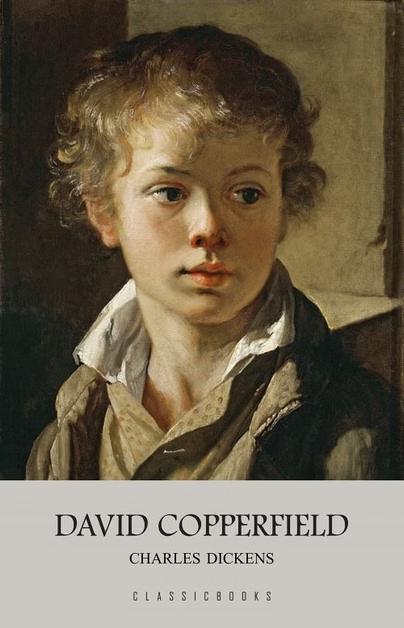
Dickens later called it his “favourite child”. After finishing it, you can see why. Nothing else he wrote feels this close to the nerve.
Why Does the Book Feel So Personal? The Background
It feels personal because it is. Dickens lived the worst chapter of David’s life himself.
When Dickens was twelve, his father was arrested for debt and sent to the Marshalsea prison. Dickens went to work at Warren’s Blacking, gluing labels onto pots of shoe polish ten hours a day for six shillings a week. He kept this secret for years. He eventually wrote an account of it for his friend John Forster, and most readers did not realise David Copperfield was autobiographical until Forster’s biography appeared in 1872.
Other real-life seeds are well documented. John Dickens, the novelist’s father, is generally identified as the model for Mr. Micawber, and Maria Beadnell, Dickens’s first love, is thought to be the inspiration for Dora.
One difference matters. In the novel the warehouse belongs to a wine merchant, Murdstone and Grinby, and David is paid six shillings a week, though he admits he is not sure if it was six or seven in the text I read (Chapter XI). He is also younger than Dickens was. David says he became “at ten years old, a little labouring hind” in Murdstone and Grinby’s service. Dickens made the boy two years younger, and I think that made the injustice worse.
Plot Summary of David Copperfield
Blunderstone and the Murdstones (Chapters I to IV)
David Copperfield is born at Blunderstone in Suffolk on a Friday at midnight, six months after his father died. His mother, Clara, is young and sweet, and she is looked after by a loyal servant named Clara Peggotty.
A few hours before his birth, his father’s formidable aunt, Betsey Trotwood, arrives hoping for a girl she can raise. When she is told the baby is a boy, she walks out and vanishes from the family.
The first years are warm. David’s mother and Peggotty are his world. Then comes Mr. Edward Murdstone, a handsome, dark-browed man who woos Clara and marries her. He brings his sister, Jane Murdstone, who is just as hard. Together they impose what they call “firmness.” In Chapter IV, I watched Murdstone stop Clara from comforting her own son with the sentence “Firmness, my dear!”
The cruelty escalates. Murdstone beats David over his lessons. In desperation, David bites his stepfather’s hand, and he is sent to Salem House, a boarding school.
Salem House, Mother’s Death, and the Warehouse (Chapters V to XII)
On the carrier’s cart, David meets Mr. Barkis, a taciturn man who asks Peggotty to tell her that “Barkis is willin’,” his clumsy way of proposing. At Salem House, David is forced to wear a sign reading “Take care of him. He bites.” The headmaster, Mr. Creakle, is a bully who beats boys for pleasure. David finds friends: James Steerforth, the charismatic older boy who nicknames him “Daisy,” and the gentle, unlucky Tommy Traddles. The kindly teacher Mr. Mell is humiliated and fired after Steerforth exposes the poverty of Mell’s mother.
On the way home for the holidays, David visits Peggotty’s family at Yarmouth. They live in an upturned boat on the beach: her brother Daniel Peggotty, his adopted niece Little Em’ly, his adopted nephew Ham, and the widow Mrs. Gummidge. David falls in childish love with Em’ly.
At school he is called out of class to learn that his mother and her newborn baby have died. Murdstone then ships ten-year-old David to London to work at his firm, Murdstone and Grinby. David washes bottles, pastes labels, and eats stale pastry bought with his lunch money.
The passage I could not forget is in Chapter XI, where he says that from Monday morning to Saturday night he had “no advice, no counsel, no encouragement, no consolation, no assistance, no support.”
He lodges with Mr. and Mrs. Micawber, a hopeful and perpetually broke couple. Micawber is arrested for debt and sent to the King’s Bench prison.
Before he goes, he gives David the advice that defines him: “Annual income twenty pounds, annual expenditure nineteen nineteen six, result happiness.” When the Micawbers leave London, David has nobody. He decides to find his one remaining relative.
Dover, Canterbury, and a New Life (Chapters XIII to XIX)
David walks to Dover. He is robbed of his box and his money on the way and arrives filthy and starving. He finds Betsey Trotwood, who is stern, odd, and shockingly kind in her own way.
She keeps the house free of donkeys, and in Chapter XIII I laughed out loud as she screamed “Janet! Donkeys!” with the fury of a general. Murdstone arrives to reclaim David, and Betsey sends him away. She adopts the boy, renames him “Trotwood,” and lodges him with a lawyer, Mr. Wickfield, in Canterbury. She also keeps a gentle, eccentric lodger, Mr. Dick, who cannot stop writing about King Charles the First.
At Wickfield’s house, David meets Agnes, Wickfield’s wise and gentle daughter, and Uriah Heep, the clerk, a red-haired, clammy-handed young man who insists on his own “‘umbleness.” David goes to Dr. Strong’s school and thrives.
London, Steerforth, and Em’ly (Chapters XX to XXXI)
David grows up. He visits Steerforth’s home, where he meets Steerforth’s proud mother and the scarred, sharp-tongued Rosa Dartle. He introduces Steerforth to the Peggottys at Yarmouth. Em’ly is now engaged to Ham. Steerforth charms everyone.
Betsey funds David’s articles at the proctor’s firm of Spenlow and Jorkins in Doctors’ Commons. In London, David meets Traddles again, gets drunk at a party, and is mortified. Agnes warns him about Steerforth. David falls madly in love with Dora Spenlow, his employer’s daughter.
Then comes the blow. Steerforth runs away with Em’ly. Mr. Peggotty sets out to search the world for her, saying he will find her. Ham is crushed.
Ruin, Dora, and Heep (Chapters XXXII to XLV)
Betsey arrives at David’s rooms in the dark and announces she is ruined. David has to earn a living. He learns shorthand, becomes a secretary to Dr. Strong, and works toward a career as a Parliamentary reporter.
Spenlow dies suddenly, leaving his affairs in disorder. David marries Dora, and the marriage is sweet and a disaster. Dora is helpless with money and household management. She wants to be a “child-wife,” and David tries to love her anyway.
At Dr. Strong’s home, a quiet crisis plays out: the Doctor’s much younger wife, Annie, is suspected of an affair. When she finally speaks, she says her marriage saved her from “the first mistaken impulse of my undisciplined heart.” It is the best marriage scene in the book.
Meanwhile Heep is tightening his grip on Mr. Wickfield. He has become the old man’s partner and is blackmailing him. He plans to marry Agnes.
The Explosion, the Storm, and the Ending (Chapters XLVI to LXIV)
Martha, a fallen woman Em’ly once knew, helps Mr. Peggotty find Em’ly in London. She has been abandoned by Steerforth and is ashamed. Mr. Peggotty finds her and forgives her. Rosa Dartle confronts Em’ly with cruel venom.
Mr. Micawber, now Heep’s clerk and secretly horrified by what he sees, finally unmasks Heep in Chapter LII. With Traddles and Betsey in the room, Micawber reads out a long formal denunciation, including that Heep had forged Wickfield’s signature. Heep is arrested and eventually imprisoned.
Dora, weak and ill, dies in Chapter LIII. Her last speech is quiet and clear-eyed: “I am afraid I was too young.” She tells David to marry Agnes.
Then the storm. Steerforth’s ship is wrecked off Yarmouth in Chapter LV. Ham dives into the sea to rescue a sailor, and both are killed. The body washed ashore is Steerforth’s. David has to carry the news to Steerforth’s mother and identify his friend.
David goes abroad for three years, writing and grieving. He gradually realises that Agnes is the woman he has always loved. She has loved him all along. When he comes home, he proposes, and in the last chapters the loose threads are tied. Mr. Peggotty takes Em’ly, Mrs. Gummidge, and the Micawbers to Australia, where Micawber becomes a respected local magistrate. Traddles marries his patient Sophy. Heep and the cruel servant Littimer end up in a model prison, visited by Creakle, who now runs the place as a magistrate.
The book ends with David as a successful novelist, married to Agnes, writing late at night. His final line is to her: “so may thy face be by me when I close my life indeed.” The answer to the opening question is clear. He has become the hero of his own life by choosing the right people.
Who Are the Main Characters, and Do They Hold Up?
Most of them do, and the best ones are not David.
David Copperfield is the narrator, and he is honest about his own failures. He is gullible, vain about Steerforth, and tragically blind about Dora. His growth is real, but the book’s energy often sits with the people around him.
Betsey Trotwood is my favourite. She is gruff, absurd, and secretly generous. Her ruin in Chapter XXXV is played with dignity, and her loyalty to Mr. Dick says more about her than any speech.
Mr. Micawber is Dickens’s great comic creation, always sure “something will turn up.” His comedy is real, but so is his shame. When he finally exposes Heep, the clown becomes a hero.
Uriah Heep is a villain built from humility. His repeated insistence that he is “umble” is chilling because it shows how resentment can be disguised as virtue. Kingsolver’s modern version turns him into Ryan “U-Haul” Pyle.
James Steerforth is the novel’s most seductive character. He is generous and charming, and he ruins people casually. His death at sea is Dickens at his most theatrical and effective.
Dora and Agnes are the weakest part. Dora is lovable but thin, and Agnes is too perfect to feel alive. I wanted more weakness from her.
Peggotty, Mr. Peggotty, Ham, and Em’ly supply the book’s warmth. Ham’s death hurt me more than I expected.
What Are the Themes and Symbols in David Copperfield?
The main themes are childhood cruelty, class shame, the damage of “firmness,” and the slow work of moral growth.
Childhood and institutional neglect. The Murdstones are cruel not because they are monsters but because they believe cruelty is discipline. Creakle’s school and the warehouse extend that into society. Nobody intervenes, which is the book’s loudest accusation.
Money and debt. Micawber’s formula about income and expenditure is both a joke and the most serious advice in the novel. Debt shapes nearly everyone, from the Micawbers to Betsey to Wickfield.
Memory and the self. David writes the story as an adult looking back, which creates a constant sense of distance and regret. The chapters titled “A Retrospect” and “Another Retrospect” make that structure explicit.
The “undisciplined heart.” Annie Strong’s phrase is the novel’s key concept. David has one too, and learning to discipline it is the main plot. Steerforth never does.
Symbols. The Peggotty boathouse stands for improvised love. The sea is both home and death, and it takes Mr. Peggotty’s family apart. Agnes’s pointing finger, described in Chapter LX as “pointing upward,” marks her as David’s moral guide.
Evaluation: My Take
David Copperfield is a vast, wounded, comic novel whose best chapters left me raw and whose weaker ones I read with a faint sigh. It earns its reputation.
What Works
- The warehouse chapters, which are among the best passages Dickens ever wrote.
- The cast of comic and moving minor characters.
- A first-person voice that holds both child and adult perspectives.
- The final storm sequence, which is genuinely powerful.
What Does Not
- The middle stretches feel padded, and Dora’s subplot overstays.
- Agnes is more an ideal than a person.
- Coincidence does a lot of heavy lifting in the resolution.
Does It Have Any Controversy or Lasting Impact?
Its main legacy is how it exposed child labour through fiction. Because readers did not know the story was autobiographical until 1872, the novel worked as sympathetic public storytelling long before the author’s secret came out. Modern readers sometimes criticise its tidy morality and its treatment of women, particularly Dora and Em’ly.
How Does It Compare with Similar Works?
The closest comparison is Demon Copperhead by Barbara Kingsolver. Reviewers describe it as a faithful retelling set in Appalachia, and its structure follows Dickens’s closely. If you like one, read the other. Among Dickens’s own books, Great Expectations is tighter, while David Copperfield is warmer and more forgiving.
Adaptation
The best-known recent screen version is The Personal History of David Copperfield, directed by Armando Iannucci and starring Dev Patel. It holds a 92% Rotten Tomatoes score, and it opened the BFI London Film Festival. Box office figures vary by tracker: AllMovie lists about $14.4 million, while another aggregator lists about $11.6 million, so I would treat the figure as roughly $12 to $14 million.
The film compresses the book heavily and leans into comedy. It loses Dickens’s slow build of dread in the warehouse chapters, but it keeps the spirit of Micawber and Betsey.
What Can David Copperfield Teach Us Today?
Its sharpest lesson is that a child left alone with adult responsibilities rarely gets a second chance at a normal childhood, and society’s indifference does a lot of the damage.
Nearly 138 million children were in child labour in 2024, including around 54 million in hazardous work. That is progress compared with 2020, but the world missed the 2025 target for ending it. When I read David counting his coins for a pastry in Chapter XI, I thought of those children. Dickens wrote about one boy in a London warehouse, but the arithmetic has not changed.
Kingsolver saw the same continuity. She credited Dickens’s critique of institutional poverty and its effect on children as the reason to rewrite the story for modern Virginia.
Five lessons from the book:
- Adults who say “firmness” often mean control. Murdstone’s favourite word covers his fear and his cruelty.
- Small kindnesses change lives. Peggotty’s pennies and Betsey’s door matter more than any speech.
- Debt is a human problem before it is a financial one. Micawber’s pride and shame do as much harm as his bills.
- Charm is not character. Steerforth shows how easily likeable people can hurt others.
- Growth means disciplining the heart, not killing it. David’s love for Agnes works because he first understands his mistakes.
Quotable Lines and Passages
- “Whether I shall turn out to be the hero of my own life…” (Chapter I)
- “Firmness, my dear!” (Chapter IV)
- “Barkis is willin’.” (Chapter V)
- “no advice, no counsel, no encouragement, no consolation, no assistance, no support” (Chapter XI)
- “Annual income twenty pounds, annual expenditure nineteen nineteen six, result happiness.” (Chapter XII)
- “Janet! Donkeys!” (Chapter XIII)
- “Child-wife.” (Chapter XLIV)
- “the first mistaken impulse of my undisciplined heart” (Chapter XLV)
- “I am afraid I was too young.” (Chapter LIII)
- “Ever pointing upward, Agnes, ever leading me to something better” (Chapter LX)
- “so may thy face be by me when I close my life indeed” (Chapter LXIV)
Conclusion
David Copperfield is uneven but magnificent. If you can enjoy a book that wanders, you will be rewarded with some of the most affecting scenes in English fiction. Read it if you like slow classics, if you loved Demon Copperhead, or if you want to see how a novelist can turn private shame into public conscience. Skip it if you want tight plotting.
Final rating: 4.5 / 5
David Copperfield
David Copperfield is Charles Dickens's long, funny, heartbreaking novel about an orphaned boy who starts washing bottles in a London warehouse and ends up a famous writer. Close to 800 pages of it will test your patience, but the first third and the last quarter are among the best things Dickens ever wrote. I read the full text, and my short answer is yes, read it.
URL: https://www.sopranu.com/david-copperfield-charles-dickens-ending-explained/
Author: Charles Dickens
4.5
Pros
- Array
Cons
- Array







