Great Expectations by Charles Dickens, first serialized in 1860–61, has a remarkably precise way of describing class shame. A girl criticizes a boy’s hands. He goes home wishing the man who raised him had taught him better manners. What happened on that short walk?
For me, the pleasure of this book is watching Dickens account for every inch of it.
Quick verdict
Rating 4.5/5
Verdict I’d read it for Joe’s visit to London alone. Dickens lets us feel how badly an encounter is going while the one person who could put it right sits wishing his guest would leave.
Best for Readers who like family stories, guilty consciences and mysteries with clues worth revisiting.
Main strength The distance between the boy making a mistake and the man remembering it.
Main weakness Several late revelations arrive through long explanations just when the action ought to hurry.
In brief. An unexpected allowance gives a blacksmith’s apprentice the chance to become a gentleman. To understand what that change costs, watch a hat in chapter 27. Joe cannot figure out where to put it in Pip’s London rooms. Pip knows the rules of the room by now. He could relieve his old friend’s embarrassment in a moment. Watching him fail to do so tells you more about his education than a list of everything he has learned.
What is Great Expectations about?
It’s about Pip, an orphan who longs to become a gentleman after a visit to a wealthy household makes him ashamed of his upbringing at a village forge.
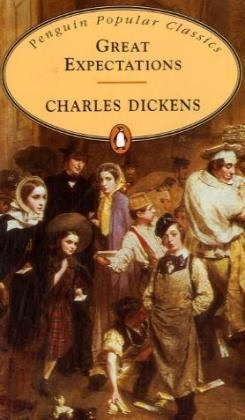
When an anonymous benefactor offers him a new life in London, Pip thinks he knows who arranged it and what that person wants for him. His guess shapes whom he loves, whom he avoids and what he feels entitled to expect.
The word expectations has a practical meaning here. Pip expects to come into property. What gives the title its sting is everything else he thinks ought to come with the money, including a particular woman’s love. Read the lawyer’s actual terms closely. There’s quite a gap between the offer made across Joe’s table and the offer Pip accepts in his head.
Is Great Expectations worth reading?
Yes, especially if you like a narrator who can remember exactly how it felt to be wrong. I found Pip easiest to forgive when he was openly frightened. Dickens asks considerably more of my sympathy once Pip acquires good clothes and learns to explain away a shabby action.
Writing style and narrative voice
Pip begins by explaining how a child who could barely pronounce his name came up with “Pip.” He then tries to picture his dead parents from the lettering on their graves. It’s funny until you remember why he has only the lettering to go on. The adult telling the story allows that small child his logic.
Later, when describing his own snobbery, he extends himself much less charity.
Characters and pacing
Joe gets funnier the longer you listen to him. Early on, he and Pip communicate over dinner by comparing the sizes of their slices of bread. It’s a private language two people have invented to survive the same kitchen. That intimacy gives the London visit its stakes.
A first-time reader may find the middle stretch crowded, particularly around the Pocket household. I’d take those chapters slowly enough to enjoy Herbert teaching table manners with extraordinary tact. (Chapter 22 through chapter 23)
Pros, cons and who should read it
I recommend it to anyone who has ever rehearsed how to introduce a relative to new friends. The mystery supplies momentum, but the recognitions are what last. My reservation is Estella. I wanted more time with her away from Pip, particularly when she begins to challenge the woman who raised her. Readers who want a romance told equally from both sides may find that imbalance frustrating.
Spoilers begin here, including the identity of Pip’s benefactor and both endings. For a spoiler-free conclusion, jump to the final recommendation.
How does the plot unfold, and what does the ending mean? Summary
Pip receives his fortune from the escaped convict he helped as a child, and the ending turns on what he can still give another person after the money is gone. Here is how Dickens gets him from the churchyard to that last walk with Estella.
The beginning on the marshes
Pip is visiting the graves of his parents and little brothers when a man in leg irons seizes him. The stranger wants food and a file. He frightens the boy into believing that an even more terrible man will come after him if he tells.
Back at home there is no adult to whom Pip can easily explain what has happened. His sister, Mrs. Joe Gargery, regards nearly everything he does as evidence of ingratitude. Her husband Joe is his friend, but telling Joe would mean admitting that he intends to steal from their home and forge.
Pip spends the night with the peculiar loneliness of a child who believes a disaster is coming and must meanwhile behave well at supper.
On Christmas morning he takes provisions, including a pork pie intended for the household, and sets out with the file. On the marsh he comes upon a second escaped prisoner before finding the man who threatened him. By now he has seen how cold and hungry the first man is. Pip actually wants him to enjoy the food. Later, soldiers interrupt Christmas dinner to have a pair of handcuffs repaired. Joe and Pip follow the search party and witness the capture of the two men, who have been fighting.
On learning whose forge the blacksmith keeps, Pip’s convict takes the blame for stealing the food. Before we know his name, we have seen him do something his threats gave us little reason to expect.
A different kind of hunger begins at Satis House. Miss Havisham, who lives among the remains of a wedding that never took place, has asked for a boy to come and play. Her adopted daughter Estella plays cards with Pip.
She laughs at his name for the knaves and draws attention to his boots and hands. Later, in the yard, he cries where he hopes she cannot see him. At home the adults demand news of the rich woman. Pip gives them a splendidly ridiculous account involving dogs and a velvet coach. Alone with Joe he admits that he lied. The shame he can share with Joe is having told a lie.
The shame he cannot quite bring himself to share is how much he now minds being like Joe.
An apprenticeship and an offer
Further visits let Pip imagine he has a future in the house.
He fights a pale young gentleman in the garden, wins, and receives permission from Estella to kiss her cheek. He wheels Miss Havisham about and listens while she encourages Estella to break hearts.
When Miss Havisham finally sends for Joe, Pip has reason to hope something grand is about to happen. She pays a premium for him to be bound apprentice to the blacksmith. Joe understands the payment as generosity. Pip must face the likelihood that the whole point of the visits, as far as his own advancement goes, was to prepare him for the life he already had.
At the forge he begins to dread Estella seeing him at work.
The forge has dangers quite apart from Pip’s disappointment. Orlick, Joe’s journeyman, quarrels with Mrs. Joe, and Joe fights him.
Later someone strikes Mrs. Joe down from behind. She survives with severe disabilities and can no longer run the household as before. Biddy comes to help. With Biddy, Pip can say plainly that he wants to become a gentleman, although explaining why proves awkward.
He considers the possibility of loving this sensible young woman instead of Estella. He barely pauses to consider what Biddy might want. Before he has to examine that habit too closely, Mr. Jaggers, a London lawyer, arrives with news.
An unnamed patron will finance Pip’s education as a gentleman. He must retain the name Pip and leave the benefactor to decide when to disclose the secret.
Joe refuses compensation for releasing his apprentice. Pip is already fitting the offer into a story in which Miss Havisham has chosen him for Estella, and Miss Havisham allows him to go away believing it. Watch how quickly his new clothes complicate his departure. He finds reasons to prefer leaving the village alone. Once the farewells are over, he feels their inadequacy and considers going back.
He keeps traveling. It is one of the book’s sharpest accounts of how easily a person can feel remorse and still get precisely what he wanted.
The education London gives him
London looks dirty to Pip, and his rooms at Barnard’s Inn scarcely suit the future he has pictured. His roommate turns out to be the boy he fought in Miss Havisham’s garden. Herbert Pocket bears him no grudge. He offers Pip friendship, a nickname, and discreet help with his table manners. Herbert also supplies some family history.
Miss Havisham had been preparing for her wedding when a letter arrived breaking it off. She stopped the clocks and kept the house as Pip found it. Herbert’s father Matthew now takes charge of part of Pip’s education.
Between Herbert’s courtesy and Jaggers’s intimidating professional habits, Pip gets two very different demonstrations of what it can mean to be at ease in company.
Joe comes to visit, bringing word that Estella has returned and Miss Havisham would like to see Pip. Getting through breakfast is an ordeal. Joe addresses Pip formally, struggles with his hat and understands perfectly well that his presence causes discomfort.
Pip has worried about who might see them together. Joe has worried about giving offense to someone he loves. He gets his message delivered and leaves before Pip can repair the morning. On a subsequent journey home Pip stays at an inn. Meanwhile Estella has grown beautiful, and Miss Havisham urges him to love her whatever it costs.
Estella herself repeatedly gives him reason to doubt the future he imagines they share. He treats the older woman’s wishes as better evidence than the younger woman’s words. (Chapter 27 through chapter 30 · Chapter 33).
Pip and Herbert spend money more readily than either can justify. They occasionally sit down to calculate what they owe, an activity so satisfying that it stands in for paying anyone.
After Mrs. Joe dies, Pip tells Biddy that he intends to visit Joe often. He hears doubt in her response and resents her for anticipating a failure the older narrator knows is coming. Yet money also gives Pip a chance to be quietly generous. With Wemmick’s help he arranges a business opportunity for Herbert, keeping his involvement secret so his friend can enjoy the success as his own. That choice matters later.
Pip is perfectly capable of understanding why someone might take pleasure in giving anonymously, right up until he has to meet the person who did it for him. (Chapter 34 through chapter 37).
The man who paid for everything
On a stormy night a visitor climbs the stairs to Pip’s rooms.
It takes Pip some time to recognize the convict from the marshes. Abel Magwitch has made money in Australia and sent it through Jaggers to turn the little boy who fed him into a gentleman. He has come back to see the result, although returning from transportation puts his life at risk. For years Pip imagined a woman at Satis House thinking about him and planning his future.
Somebody really was doing that. The shock for Pip is having to look at the actual face of that love. Along with the fortune’s imagined pedigree, his supposed engagement to Estella collapses in a single evening.
Pip and Herbert set about hiding Magwitch and getting him out of England. As they listen to his history, another story falls into place. Compeyson, the other convict Pip saw on the marshes, used Magwitch in his crimes.
When they stood trial together, Compeyson’s education and respectable appearance helped him obtain the lighter sentence. Herbert recognizes Compeyson as the man who cheated Miss Havisham. Pip goes to Satis House and challenges her about the impression she let him keep.
He also tells Estella he loves her. She intends to marry Bentley Drummle, a man whose brutality Pip already has cause to fear. Her decision hurts, but so does the realization that Pip has understood her warnings as part of a courtship only he believed in.
There is a small material good Pip can still secure. He asks Miss Havisham to complete the arrangement for Herbert’s future with Clarriker’s firm. She agrees and begs Pip’s forgiveness. She can finally recognize in his distress something of what she once suffered herself.
As he is leaving, he turns back and sees her clothes catch fire. He uses his coats and the tablecloth to smother the flames, burning his hands and arms. She survives the immediate accident, though she later dies.
I find the rescue particularly moving because nothing about it waits for an adequate apology. Pip sees a woman burning and reaches for what is at hand. Chapter 44 and chapter 49 · Chapter 57
The cost of the escape
By piecing together Herbert’s account of Magwitch’s past, Wemmick’s account of a murder trial and his own observations, Pip realizes who Estella’s parents are. Her mother is Molly, Jaggers’s housekeeper, whom the lawyer once defended.
Her father is Magwitch, who has long believed his child dead. Jaggers helped place the little girl with Miss Havisham. The distinction on which Pip built his adolescence now looks absurd. He felt too common for Estella and too respectable for the man whose daughter she is. He keeps the knowledge private.
At last he possesses a piece of somebody else’s history without assuming it entitles him to rearrange her life.
Before the planned departure, an anonymous message draws Pip to an isolated sluice-house. Orlick ties him up, blames him for grievances that have accumulated over years, and admits attacking Mrs. Joe. Pip believes he is about to die with Magwitch still depending on him and Joe and Biddy unaware of how much he regrets.
Herbert, Startop and Trabb’s boy arrive in time to save him. The escape attempt goes ahead. Pip and his friends take Magwitch down the Thames by rowing boat, hoping to put him aboard a steamer bound for the Continent. The police intercept them with Compeyson in their boat.
The two old enemies go into the water. Compeyson drowns. Magwitch is recovered, badly injured, and taken into custody.
Magwitch’s property will pass to the Crown. Pip nevertheless stays with him, visits him in prison and petitions for mercy after the death sentence. Magwitch is dying before it can be carried out. At his bedside, Pip tells him that the daughter he believed lost is alive, that she grew up to be a lady and that Pip loves her. This is the disclosure I wanted most once the parentage became clear.
Dickens gives it to the one person who can receive uncomplicated happiness from it. Pip cannot save the fortune or the life of his benefactor. He can choose what this father gets to know about his child before he dies.
The ending explained
Ill and facing arrest for debt, Pip gradually realizes that the familiar person taking care of him is Joe. Joe nurses him through his fever and pays the debt that brought the officers to the door. As Pip recovers, the old awkwardness begins creeping into Joe’s manner.
He leaves quietly. Pip returns intending to thank him and to ask Biddy to marry him, only to arrive on Joe and Biddy’s wedding day. For once, other people’s happiness genuinely surprises him. He offers his good wishes and eventually joins Herbert abroad, where he works in the business he once helped his friend enter. He repays his debts.
For the first time we can answer the question of what Pip does for a living without naming the person who pays his allowance.
Eleven years pass before Pip returns to find Joe and Biddy with a little boy who bears his name. That evening, on the ground where Satis House stood, he meets the widowed Estella. Drummle treated her cruelly and has since died. She has held on to the land and has come to see it before it is built on. What matters is that she has come on business of her own.
Nobody has summoned the pair here or instructed them how to feel. She asks for friendship. They walk out together, and Pip sees no sign of another separation.
Do they marry? Great Expectations ends on page 412 with Pip’s perception of their future. Estella has just spoken of remaining friends apart.
I hear hope in that last walk, but a wedding would be a further event, and Dickens stops before it. The distinction matters because young Pip used to treat his hopes as proof of someone else’s intentions. Dickens’s discarded ending is clearer about their separate lives: Estella has married a doctor and briefly encounters Pip in London.
Following Edward Bulwer-Lytton’s advice, Dickens replaced that meeting with the encounter on the old grounds.
Why is Pip ashamed of Joe, and what changes his mind?
Pip is ashamed of Joe because Joe makes their shared origins visible just when Pip wants strangers to believe he belongs in a different world. The giveaway is whom Pip fears at breakfast. Herbert knows his background and treats Joe kindly.
The person Pip would particularly hate to have walk in is Drummle, a man he positively dislikes. I can forgive the wish to impress a friend. It takes a more uncomfortable piece of self-knowledge to admit how hard one will work for the good opinion of a fool. (Chapter 27).
The people who teach Pip how to look at others
Estella teaches Pip to see his own hands from across the card table. Herbert teaches him to hold a knife correctly while carrying on an agreeable conversation.
Both lessons concern how to behave in company. Only one leaves the pupil free to attend to anything besides his own embarrassment. Joe offers a third possibility when, during Pip’s illness, he allows the sick man to feel like a child in his care again. These relationships helped me understand why Pip needs more than the loss of the money to change him.
He needs the experience of being dependent and welcome at the same time.
Magwitch and Miss Havisham each put money into a child’s future and hope to see a private wish fulfilled. Where their motives differ is in what they want to witness. She wants evidence that somebody else can hurt as she was hurt.
He wants the pleasure of looking at someone who has had opportunities denied to him. Both have trouble imagining what it feels like to be the child carrying out the plan. Estella puts that grievance to her adoptive mother far more plainly than Pip can put it to Magwitch.
What the hat and the hands mean
Joe’s hat keeps slipping from the mantelpiece. At the forge he knows exactly what to do with his hands. In Pip’s rooms he scarcely knows where to put them. Follow those hands to the sickroom, where Pip depends on Joe’s strength to lift him.
What seemed clumsy at breakfast becomes a source of relief in bed. The change is in the observer. There was never anything the matter with Joe’s hands.
Critical evaluation
The finest decision Dickens makes is letting the older Pip tell on himself. An outsider could report where Joe’s hat landed.
Only Pip can admit that, on receiving word of the visit, he would have paid to keep Joe away. That admission also changes how I hear the comic narration. I can laugh at the breakfast because Joe’s behavior is beautifully observed.
A few lines later I have to wonder whose side my laughter put me on.
My chief difficulty comes late. Several discoveries about Estella’s family pass from one man to another in conversation. I had to stop and reconstruct who had seen what, while the woman most affected had no part in the inquiry. Her direct challenge to Miss Havisham earlier is so good that I missed hearing her weigh this knowledge for herself.
A useful companion is Dickens’s David Copperfield. David opens by asking who will prove to be the hero of his life. Pip opens by telling us how he learned to say his name. One question invites me to consider who shaped a life.
The other makes me listen for how much that life will alter the meaning its owner gives a very small word. There’s a visual counterpart in David Lean’s film of Great Expectations: its moving camera and sharp cutting make the churchyard attack immediately frightening.
On the page, I particularly value the few moments before the attack, when the boy is alone with his curious ideas about his family.
What does Pip reveal about “fitting in” at work?
Pip shows how easily we credit a person for already knowing the customs of a room. The breakfast scene offers a small experiment. Change the room to a forge, hand Joe the tools of his trade, and Pip would be the one waiting for a cue.
Yet in London it feels perfectly obvious to Pip which of them needs improving. That moment made me think about what an interviewer means when they describe someone as a good fit.
Sociologist Lauren Rivera studied hiring at elite professional service firms through 120 employer interviews and observation of a hiring committee. Evaluators weighed shared interests, experiences and styles of presentation alongside competence.
The study concerns a particular set of employers. Its connection to Joe is precise: a person doing the judging can sincerely experience familiarity as evidence that the other person belongs. Rivera, American Sociological Review
Five specific lessons from Great Expectations
- Explain the custom quietly. Herbert keeps talking while correcting Pip’s manners, so Pip can learn without becoming the evening’s entertainment.
- Notice whose approval you want. Pip gives the absent Drummle considerable power over how he treats the guest in front of him.
- Ask where someone does their best work. Joe can describe the forge with a confidence that deserts him at a London breakfast.
- Give credit to the person doing the work. Herbert’s commercial ability matters even though somebody helped him get his start.
- Make amends in the present tense. Sitting beside Magwitch gives Pip a chance to act on an affection his benefactor can still experience.
Selected quotes and why they matter
- “I had never thought of being ashamed of my hands before” (chapter 8). Before is the word I’d underline. Pip can date the arrival of a feeling that will soon seem as ordinary to him as getting dressed.
- “what larks” (chapter 27). Joe wants these words included in Biddy’s letter announcing the visit. They carry an expectation of shared fun all the way from the forge. Pip’s reaction to the invitation makes the little phrase hurt.
- “friends apart” (chapter 59). Those two words belong to Estella. Give them as much attention as the closing line belonging to Pip and the ending sounds like a conversation between two people again.
Final recommendation
Read Great Expectations if you enjoy recognizing an embarrassing thought a character would much prefer to conceal. The mystery is worth keeping unspoiled, but on a second reading I’d go straight to breakfast with Joe.
Few scenes make such clear use of a hat, a bad host and a guest who knows exactly when to go home. If what you most want is a courtship told from both lovers’ perspectives, Pip’s company may feel confining.
For a reader interested in how someone learns to live with the person they used to be, I’d happily recommend it.
What else do readers ask about Great Expectations?
Who narrates the novel? An older Pip tells his own story. The distinction is clear when he remembers his childhood ideas about his parents and lets us see how he arrived at them.
Who gives Pip his great expectations? Abel Magwitch earns the money in Australia and sends it through Jaggers. Miss Havisham knows Pip has drawn the wrong conclusion about her role and allows him to keep it.
Does Estella know Magwitch is her father? Pip pieces together her parentage. The novel shows him telling the dying Magwitch that his daughter lives. It gives us no corresponding scene in which he tells Estella. C
Which ending is in the supplied book? The Heron Books edition, with an introduction by Kenneth Hayens, prints the revised reunion at the site of Satis House. The earlier encounter in a London street survives separately.
Great Expectations
Great Expectations by Charles Dickens, first serialized in 1860–61, has a remarkably precise way of describing class shame. A girl criticizes a boy’s hands. He goes home wishing the man who raised him had taught him better manners. What happened on that short walk?
URL: #
Author: Charles Dickens
4.5