
Last updated on May 22nd, 2026 at 10:42 am
Why do some dreams feel like oxygen—until real life puts a hand over your mouth? If you’ve ever tried to keep ambition alive while family chaos, poverty, and fear kept piling on, Crux doesn’t just “tell a story”—it puts you inside the squeeze.
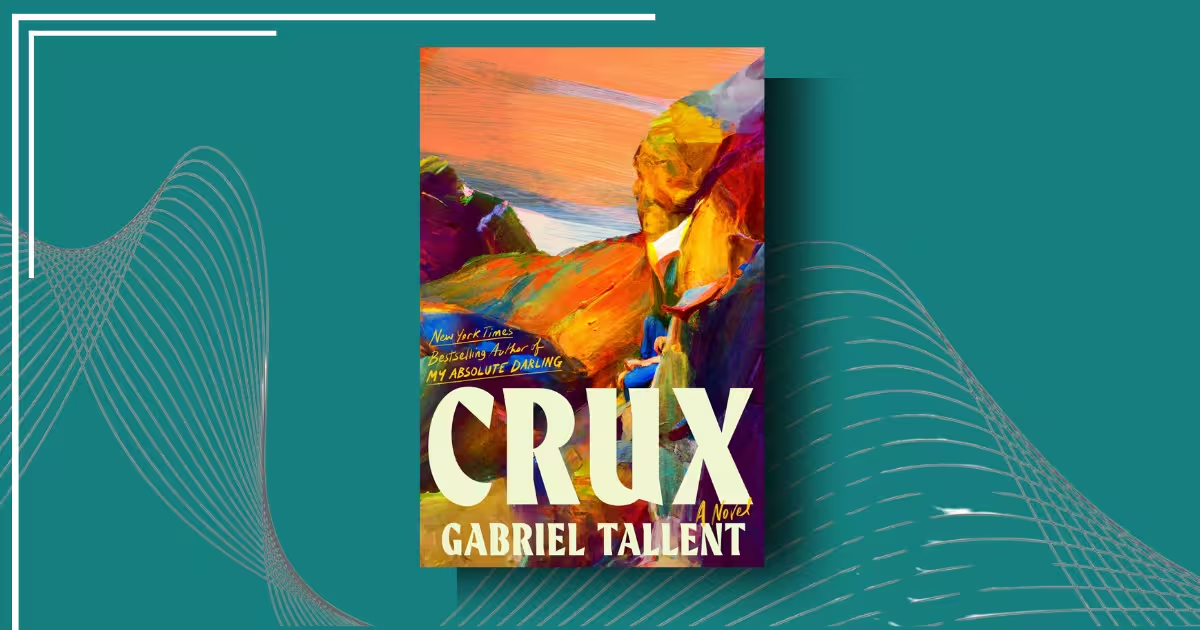
Crux is a ferociously funny, bruising novel about a desert teen climber whose obsession with “sending” becomes a fight for agency, dignity, and survival—on rock and off it.
Crux is best for readers who love gritty coming-of-age stories, climbing culture realism, complicated women leads, dark humor, and social class pressure.
Not for: anyone who wants a cosy sports story, low-stress family dynamics, or “inspiring” narratives without sharp edges (this book runs hot—emotionally and morally).
Table of Contents
1. Introduction
Book: Crux
Author: Gabriel Tallent
Publisher: Riverhead Books (Penguin Random House imprint).
If you’re searching for “Crux by Gabriel Tallent summary,” “Crux ending explained,” or “Crux review,” here’s the deal: this is not a polite story about a hobby.
It’s about what happens when climbing becomes a language for hunger—hunger for freedom, for identity, for escape velocity.
2. Background
Although Crux is fiction, it’s steeped in real climbing subculture—particularly the American desert scene where dirtbagging (living cheap to climb) collides with money, gear costs, and access.
Early on, Tamma’s longing is basically a flare gun: she sees climber girls at a gas station and thinks that is “the only possible life worth living.”
Historically, climbing has also shifted from “dirtbag romanticism” toward training, cop pressure, and gym pipelines—something the book later addresses directly through the competition world and the way privilege shapes who gets to “chase the dream.”
3. Crux Summary
Crux is built like a long, sun-baked exhale: part coming-of-age story, part grief book, part climbing novel where every personal decision feels like stepping above your last piece of protection.
It follows two desert kids—Tamma Callahan and Dan Redburn—as they try to claw their way into adulthood while the people who were supposed to hold them steady start slipping.
Part I: The Princess (how their world is shaped)
The novel opens in the Mojave with Dan and Tamma doing what they do best: escaping everything by climbing. They’re seventeen, it’s their last year of high school, and the desert is their church.
When Tamma shows up, she comes in loud and fearless—“Hello, numbnuts!”—and their whole friendship is immediately clear: teasing, intimate, codependent, full of shorthand history.
They hike in to their local boulders, passing the ugly evidence of other people’s mess—shell casings, condoms, trash—and arrive at the stone that matters most to them. The book names one of the signature problems there: “Fingerbang Princess” (graded V4), chalked and legendary in their tiny world.
But “Princess” in this book becomes bigger than a single climb. It’s the obsession—an emblem of what Tamma wants: proof, glory, escape, meaning.
From the start, the story makes it obvious that Dan and Tamma aren’t just “friends.” They’re two kids bound together by the same landscape and the same hunger.
They spot each other constantly: watching knots, watching bodies, watching fear. Their climbing is described like a relationship—trust, betrayal, tenderness, control.
But even early on, Tallent plants a warning: the same place that makes them feel alive also holds death.
At home, Dan lives in a strange, unfinished, emotionally pressurized household. His mother, Alexandra Redburn, is a novelist—brilliant, famous enough to create expectations, and also very sick.
Dan’s father Lawrence is devoted in a way that’s both moving and crushing; he’s built his whole life around her.
Later, when Dan is forced to look around the family home, he finds the performance of wealth (and the rot behind it): luxury clothes and “at least a hundred thousand dollars in shoes,” yet hidden away in boxes are drafts, tax returns, mouse droppings—evidence that the glamour is fragile and the money story is partly illusion.
Tamma’s home life is harsher, more chaotic, more survival-based. Her mother Kendra is infamous in town, wild, wounded, and destructive.
Tamma and Dan both inherited a kind of family curse: the adults around them are incomplete people, and the kids are forced to become their own scaffolding.
At one point, Dan learns more about his parents’ origin story—how Lawrence met Alexandra while she was close with Kendra, and how they all once believed in a shared future: Alexandra writing her great novel, Lawrence building things, everyone rising together.
This history matters because it shows what the book keeps returning to: dreams that were supposed to save people, and didn’t.
Meanwhile, Dan and Tamma keep climbing. Their banter stays funny, feral, and intensely specific. At times, the novel just lets you live inside their climbing seasons—routes, dirt, sun, ridiculous jokes, small triumphs.
There’s a whole run of climbs where they’re described as inseparable, moving through classic names and goofy ones, and it reads like a memory montage of youth—when pain is still exciting, and everything feels possible.
The first major fracture — death enters the story
Dan eventually stumbles onto an online thread: “FATALITY ON PRINCESS BOULDER (11/23/2011)”. The details are blunt: a climber blows the crux, strikes her head, comes to briefly, coughs up blood, gets helicoptered out, dies.
This isn’t just lore. It rewires Dan’s sense of risk. He starts to realize that the mountain doesn’t care about dreams, and that bravery can be indistinguishable from stupidity.
The book calls out the old cliché (“climbers are adrenaline junkies who don’t understand consequences”) and twists it into something uglier: maybe it’s not “climbers,” maybe it’s Dan—his private belief that everything will work out because it always has for him.
And that’s one of the deepest tensions between Dan and Tamma: Tamma doesn’t have the same safety net. Dan has parents who, even failing, still represent “a future” and “belief.” Tamma has… responsibility.
Part II: Intersection (the dream of “us” versus the reality of “me”)
The middle of the book widens: it’s no longer only about two kids climbing after school. It becomes about what adulthood demands.
There’s a shining moment where Dan and Tamma stand on top of a famous formation—Intersection Rock—and the book lets them have their “we’re going to be legends” feeling.
Tamma practically chants it: they’ve read about it, heard stories, stared from the ground, dreamed about it, and now they’re up there. She swears to Dan that they’re going to do “epic” things together.
But right after that glow, the loneliness creeps in. Tamma disappears for stretches because her sister Sierra is overwhelmed—working long shifts, dealing with a baby’s medical needs—and Tamma is the unpaid glue holding that family together.
Dan, left alone, spirals in his house with Alexandra behind a closed door and Lawrence living in a quiet, exhausted loop. Dan tries to write college essays, drafts piling up into absurd numbers, because he’s trying to claw out of the desert the “official” way.
Their texts become their lifeline—half logistics, half religion. Even their climbing talk starts to sound like life philosophy.
The Alexandra crisis — the book turns brutal
Eventually, Alexandra’s condition tips into a full emergency. The scene is intimate and unbearable: Lawrence on his knees holding her wrist, Dan holding her upright because she can’t hold herself. Tamma is there too—present, practical, the one who can describe directions to dispatch because their home “does not appear to be in our system”.
We learn specifics: Alexandra had an aortic valve replacement years earlier; the bioprosthetic valve is failing. (Even her allergies—“Strawberries”—are dragged into the moment, because emergencies force you into grim checklists .)
This crisis shoves Dan into a new reality: you can’t muscle through mortality. You can’t “train harder” against time.
Part III: Isolation (Tamma’s split: ambition versus obligation)
While Dan is pulled into hospital life and fear, Tamma’s private war intensifies. The novel shows her waking early, thinking about mistakes, feeling hated for what she wants, and above all feeling terrified to do life alone.
Then a key hinge happens: Dan texts that Alexandra is awake—her eyes opened, she’s “coming back,” but also “screaming”.
In the same conversation, Dan asks Tamma if she needs anything. And she does—she wants him at her competition, wants him to show up for her dream—but she lies, basically swallowing her need whole.
That lie matters, because it’s one of the novel’s sharpest themes: the way love can turn into self-erasure. Tamma is so trained to be the helper, the spare part, the utility player, that she can’t even ask for support when her own life is on the line.
The Los Angeles competition (“Isolation”) becomes symbolic: it’s her shot at a climbing future, a crown, a yes from the world. She goes anyway—dragging her fear with her like a crash pad.
Part IV: Wonderland (the climb that breaks everything)
The book builds toward a big objective: a serious roped climb with Dan and Tamma—something beyond bouldering. They talk about risk in direct climbing terms: old rope, the leader must not fall, maybe no one can fall.
They end up at a route with an ominous presence: Figures on a Landscape—a name that echoes the book’s obsession with how small humans look against stone, time, consequence.
They flip a quarter for the lead—Tamma wins: “Heads… My lead” . It’s a small ritual, but it becomes massive later because the ending returns to that same coin-flip logic: fate versus choice.
On this climb, they’re out of their depth and also exactly where they’ve always wanted to be. They’re finally doing the rituals of “real” climbing—tying in, racking up, committing.
And then the nightmare happens.
We don’t get a neat, cinematic “fall scene” that’s easy to digest. Instead, the aftermath is fragmented the way trauma is. We learn later that Dan doesn’t remember the accident—not the fall, not the drive, not the helicopter transport. What we do get is the physical consequence, described in ghastly clarity: Dan’s leg becomes “enormous,” stitched, pinned into an external fixator—“thirty bone fragments,” some pulverized .
This is the point where the climbing metaphor stops being a metaphor. The stone extracts payment.
Afterwards, Tamma is debriefed; Dan doesn’t even know if Naomi (a medic/ranger figure in the story’s rescue machinery) is the one who did it . Their friendship is no longer the carefree “we’re immortal” bond. It becomes something heavier: guilt, dependency, anger, fear.
Part V: Exposure (the ending, explained)
The final section carries the exhausted quiet of people who survived something they can’t really explain.
Dan graduates in a wheelchair, isolated at the end of the row. The principal congratulates him while Dan is literally held together by hardware. Tamma isn’t there, which lands like a bruise because the book has trained us to think of them as a unit.
We also see Dan continuing to orbit Alexandra’s crisis. Earlier, when Alexandra is in the hospital on a ventilator, Dan watches for signs—monitors, numbers, reflections—until he sees her eye open.
He is pure hope and terror: she’ll come back, she’ll see we love her, it’ll be okay. That’s the kind of belief the book both sympathizes with and dismantles.
At another point in the story, after Alexandra’s collapse and all the accumulated pain, Dan drives Tamma home, and she tells him something that’s both comfort and prophecy: “Figures will still be there”. It’s her way of saying: rock doesn’t move, rock doesn’t die, rock doesn’t betray you. People do.
But the true ending belongs to Tamma.
She stays with Sierra’s family through the summer. We see the unglamorous heroism of it: working at Target, cleaning toilets, budgeting in her notebook, renovating, painting a nursery, researching formula, trying not to make mistakes with babies who are already medically fragile.
The dream of being “queen” of climbing is replaced by a different kind of courage: showing up.
In the final pages, Tallent makes Tamma confront her deepest pattern—her urge to run, her fear of being trapped, her rage at cowardly adults. She thinks of her absent father, Dan’s path to college, Alexandra leaving family for art, and the way everyone is “choked at the cruxes of their lives”.
Then she does what she always does before a hard move: she flips a coin.
She stares down the highway, asking herself: if the coin says Leave, will she actually walk away from the kids and never look back? The key detail is that she’s “starting to smile… despite herself,” because the question is both terrifying and weirdly freeing.
That’s the ending’s emotional meaning:
- The book doesn’t give you a tidy “she leaves” or “she stays” certainty in a melodramatic bow.
- Instead, it leaves you at the crux—the exact moment where choice and fear meet.
- The coin is the illusion of fate. The real point is whether Tamma can finally admit that whatever she chooses will hurt—and that this is what adulthood is: not the summit, but committing to the move.
And in the book’s most explicit philosophical beat, Tallent spells out the thesis through Tamma and Dan’s climbing talk: “tops are bullshit… It’s cruxes that matter”. That’s not just climbing doctrine.
It’s the story’s worldview. The “top” (fame, escape, being the best) is a symbol. The crux is the real life—fear, responsibility, grief, love, deciding anyway.
4. Crux Analysis
4.1 Crux Characters
Tamma Callahan
Tamma is written like an exposed nerve. She’s hilarious, vulgar, tender, selfish, brave, and exhausting—sometimes in the same paragraph. Her motivations aren’t mysterious: she wants out.
She wants a self that feels chosen rather than assigned. Her most complex trait is that she can be both deeply loving and deeply transactional because survival trained her that love is never free.
Dan Redburn
Dan’s complexity is quieter. He’s the person who sees what Tamma is and loves her anyway, but he also recognizes the danger in her mythology.
He’s not “weak”—he’s realistic. His choice to redirect his life isn’t betrayal so much as a different survival instinct.
When he gives her the money, it’s both altruism and surrender: he’s letting go of their shared dream so she can keep chasing it.
Paisley Cuthers + Stella & Kerry
Paisley begins as an antagonist in Tamma’s mind into the book’s sharpest contrast engine: what does climbing look like when the basics are covered? Stella’s “podiums are never enough” speech is basically the thematic keystone.
Sierra + family ecosystem
Sierra and the wider family show the real antagonist: burnout, and cruelty disguised as humor.
The book repeatedly forces Tamma to choose between ambition and caretaking—an emotional dilemma many readers will recognize even outside this extreme plot.
4.2 Crux Themes and Symbolism
1. The “crux” as the book’s core metaphor
In climbing, a crux is the hardest, most committing sequence. Tallent turns that into a life philosophy: the decisive moments aren’t the flashy “tops,” they’re the choices made under fear and pressure.
The book says it outright—“tops are bullshit… It’s cruxes that matter” —which functions like a thesis statement for the whole novel.
2. Class, access, and the price tag on belonging
A major theme is how poverty doesn’t just limit options—it shapes identity. The cost of gear becomes symbolic: racks, ropes, and travel aren’t neutral; they’re gatekeepers.
Tamma’s fear of being seen as “trash” over rope/gear is really a fear of being unworthy of the “climber self” she’s trying to become. Climbing is freedom, but access to that freedom is unequal.
3. Escape vs responsibility (chosen life vs assigned life)
Tamma’s dream is an escape hatch; her family obligations are gravity. The story keeps forcing her into “crux choices” where either option costs her something—ambition costs caregiving, caregiving costs ambition. The constant push-pull is the emotional engine of the plot.
4. Risk, consequence, and the myth of control
Early “rituals” (coin flips for leading, belay calls, tying in) feel playful—until the novel reminds you that consequence is real and irreversible. The coin flip becomes a symbol of fate vs agency: it pretends to outsource choice, but the character still has to live with whatever follows (and the ending echoes this).
5. Rivalry, validation, and the emptiness of podiums
Competition exposes the theme of validation addiction: the desire to be “enough” through winning. Stella’s warning lands hard—“The podiums are never enough” —highlighting how achievement can become a trap rather than a cure for insecurity.
6. Rock as permanence, people as volatility
When life turns chaotic—illness, family collapse, betrayal—stone represents something brutally stable: routes remain when people don’t. Lines like “Figures will still be there” frame climbing as a refuge because rock doesn’t judge, abandon, or change its rules—humans do.
5. Evaluation
5.1 Strengths (what worked for me)
Voice: Tallent nails Tamma’s feral comedy and pain. The dialogue has bite; it’s vulgar in a way that feels character-true, not edgy-for-edgy’s-sake.
Physical realism: the ritual of climbing—coin flips, tying in, the smell of nylon—feels lived-in.
Class portrayal without lectures: the book makes poverty tactile—ATM receipts, feel it instead of being told.
5.2 Weaknesses (what didn’t work as well)
Intensity overload: sometimes the emotional temperature never drops, which can blunt the sharpest moments. A few quieter stretches could’ve made the big shocks hit harder.
Risk of caricature: certain family members veer into grotesque behavior; it’s thematically purposeful, but it may feel heavy-handed for some readers.
5.3 Impact (how it landed)
It left me thinking about how many “dream stories” ignore the scaffolding required to even attempt a dream. Crux doesn’t. It shows how ambition can be sacred—and also how it can become a kind of self-harm when you treat podiums as proof you deserve to exist.
5.4 Comparison with similar works
Gabriel Tallent’s Crux (2026) is frequently compared to his debut novel My Absolute Darling (2017), with both offering absorbing, hypnotizing storytelling and complex character psychology in harsh natural settings.
However, while My Absolute Darling centers on abuse and survival, Crux shifts to intense platonic friendship and rock climbing obsession.
Reviewers liken it to Gabrielle Zevin’s Tomorrow, and Tomorrow, and Tomorrow (2022), where a niche pursuit (video games) immerses readers in relationships, much like climbing in Crux.
It also echoes Meg Howrey’s They’re Going to Love You (2022) by making an unfamiliar activity (ballet) compelling and metaphorical.
Unlike climbing memoirs, “Crux” uses fiction to probe the sport’s emotional depths in ways non-fiction cannot.
6. Personal insight and contemporary educational relevance
What stayed with me after Crux is how ruthlessly it separates “motivation” from “access.” Tamma isn’t short on grit—if anything, she has too much. The real obstacle is structural: gear costs, travel, time, and a stable home.
Crux makes that inequality feel physical, not abstract—she’s terrified of being judged over a rope because she knows belonging can be conditional when you’re poor.
In a classroom or youth program, that’s a clean entry point to discuss equity vs equality: two students can be equally talented, but the one with resources gets more reps, safer equipment, coaching, and confidence.
Educationally, the novel also works as a case study in identity formation and “achievement hunger.” Tamma’s fixation on proving herself mirrors what many teens feel today: if you’re not exceptional, you’re invisible. The story challenges that myth by insisting the defining moments aren’t the “tops,” but the hard decisions—“It’s cruxes that matter”.
That line can anchor lessons about resilience, ethical decision-making, and mental health: how to set goals without letting validation become your oxygen.
7. Crux Quotes
- “Footholds exist… Wherever. They. Are. Needed.”
- “They had the shared joy… in the rituals…”
- “Heads… My lead.”
- “The podiums are never enough.”
- “You aren’t entitled to the top.”
- “I want you to have Alex’s money.”
- “Go out there and do it, Tamma.” She had $0.00 in her account.” bandoned us. Except you.”
8. Conclusion
Crux is a novel “about weather”—sure, that’s the survival. It’s for readers who can handle messy s, and who want a story that respects how h your foundation is cracked.
My recommendation: coming-of-age fiction with sharp social realism to keep you alive; this one is worth your time.
And if you’re a climber, it will probably hurt in a familiar way—because it understands the difference between loving the attempt and needing the top.







