
Last updated on April 22nd, 2026 at 04:28 pm
Do you ever feel like your emotions are a complex software system without a user manual? Why does it often feel like men and women are speaking entirely different biological languages? If you’ve ever stayed up at night wondering why your “gut feeling” is so loud or why your memory for emotional details is so sharp, Louann Brizendine’s The Female Brain might just be the most important book you’ll ever read.
This book is best for women seeking to understand the “why” behind their hormonal shifts, men who want to decode the women in their lives, and anyone interested in the intersection of neurobiology and behavior.
But not for those looking for a purely social-constructivist view of gender or readers who demand a dry, academic textbook without personal anecdotes.
Table of Contents
1. Introduction
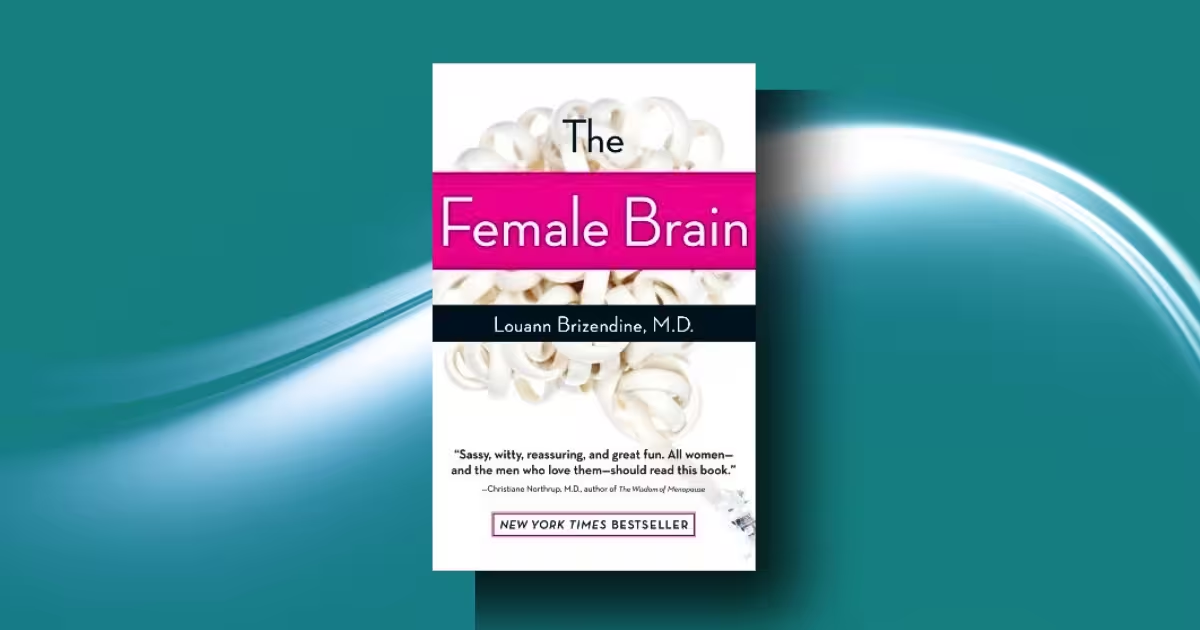
The Female Brain is a landmark work of popular science written by Louann Brizendine, M.D., and first published in 2006 by Morgan Road Books (an imprint of Broadway Books). It was a New York Times bestseller that has since been translated into over thirty languages.
Context of The Female Brain: Dr. Louann Brizendine is a pioneering neuropsychiatrist and a professor at the University of California, San Francisco (UCSF).
After completing her neurobiology degree at UC Berkeley and her M.D. at Yale School of Medicine, followed by a residency at Harvard, she founded the first clinic in the country specifically dedicated to studying women’s hormones and brain function.
She wrote this book after discovering that nearly all clinical data in neurology and psychology focused almost exclusively on males.
Purpose of The Female Brain: The central thesis of The Female Brain is that women’s behavior is not just a product of socialization but is fundamentally shaped by unique hormonal fluctuations and brain architecture. Brizendine argues that “the female brain is a lean, mean, communicating machine” specifically wired for connection, empathy, and emotional intelligence.
2. The Female BrainSummary
As a reader, what I found most striking is how Brizendine breaks down a woman’s life into “neurological phases.” Here is everything you need to know about how the female brain evolves, summarized so deeply you won’t need to reach for the book again.
a. The Birth of the Female Brain (Fetal to Puberty)
Every human brain begins as a female brain. It is only eight weeks after conception that a surge of testosterone “marinates” the male fetus, shrinking the communication centers and enlarging the parts of the brain dedicated to sex and aggression.
99% Similar, 1% Critical: While men and women are 99% genetically identical, that 1% difference in the sex-linked genetic code impacts every cell in the body, especially the brain.
The Communication Center: Women have 11% more neurons in the brain centers for language and hearing than men do. This biological advantage starts early, with infant girls being more attuned to emotional vocal tones and facial expressions.
b. The Teen Girl Brain: The “Drama” is Biology
For a teenage girl, the brain is undergoing a massive “dopamine system remodeling”.
Social Approval as a Drug: For the teen girl, social approval triggers the same pleasure centers as drugs or chocolate. This is why being “left out” of a social circle feels like a physical injury to a teenage girl.
Aggression in Pink: Brizendine explains that female aggression is often verbal and social (“relational aggression”) rather than physical, driven by the brain’s wiring to avoid direct physical conflict while still competing for social status.
c. Love, Trust, and the “Brain Below the Belt”
When a woman falls in love, her brain becomes a “chemical cocktail”.
The Oxytocin Surge: Women have higher levels of oxytocin, often called the “cuddle hormone” or “bonding chemical”. During physical touch or orgasm, oxytocin floods the brain, creating a deep sense of trust and security.
Stress and Sex: In women, the stress hormone cortisol can block oxytocin. This is why, biologically, many women cannot “get in the mood” for sex if they are stressed about work or family—their brain literally shuts down the desire circuits.
d. The Mommy Brain: A Total Rewire
Motherhood isn’t just a lifestyle change; it’s a permanent neurological restructuring.
Threat Detection: Pregnancy and childbirth trigger an increase in the size of the amygdala and other regions related to threat detection. This makes a mother hyper-aware of any potential danger to her child.
Nurturing Instincts: The massive rush of oxytocin during breastfeeding and skin-to-skin contact “hardwires” the maternal-infant bond, making the mother’s brain prioritize the child’s needs over her own survival.
e. The Mature Female Brain: The “Upgrade”
One of the most empowering sections of the book (and the subject of Brizendine’s later book, The Upgrade) is the transition through menopause.
Shift in Focus: As estrogen and progesterone levels drop, the “multitasking” and “people-pleasing” circuits in the brain relax.
Fearless and Expansive: The post-menopausal brain becomes more direct and focused on self-actualization and legacy-building rather than constant caregiving for others.
3. The Female Brain Analysis
In my view, The Female Brain is a groundbreaking work that gives women “permission” to be biological beings. It is poignant because it validates the experiences many women feel but are told are “just in their heads”.
Brizendine effectively supports her arguments using a blend of clinical case studies from her years at UCSF and Harvard with neurobiological data. She succeeds in making complex science accessible to the general reader. However, the book’s greatest strength—its accessibility—is also where it has faced the most scrutiny.
The Word Count Controversy: One of the most famous claims in the book—that women use 20,000 words a day compared to men’s 7,000—was later retracted because the specific study cited did not support such a rigid figure. In fact, later studies by researchers like Mehl et al. (2007) suggest the gap is much smaller, with both sexes using around 16,000 words.
Biological Essentialism: Some critics, such as those from The Guardian or The New Yorker, argue that Brizendine overstates the role of hormones, potentially reinforcing “neurosexism” or gender stereotypes.
Despite these flaws, the book fulfills its purpose of highlighting the historically ignored female brain and has sparked vital conversations about women’s health.
4. Strengths and Weaknesses
Strengths:
Innovative Framework: Looking at the brain through life stages (fetal to mature) is a brilliant way to structure the narrative.
Empowerment: It reclaims biological differences as “strengths” (e.g., higher emotional intelligence, verbal agility) rather than weaknesses.
Relatability: The clinical stories make the science feel human and personal.
Weaknesses:
Generalization: At times, the book treats “The Female Brain” as a monolith, ignoring the vast spectrum of individual differences.
Outdated Stats: Some of the 2006 data has been superseded by newer research, particularly regarding linguistic differences.
Class Bias: Some reviewers on Goodreads noted that her advice often seems geared towards upper-middle-class women with access to high-end hormone clinics.
5. Comparison with Similar Works
Compared to The Male Brain (also by Brizendine), which focuses on testosterone’s role in aggression and spatial skills, The Female Brain is far more focused on communication and emotional bonding.
It also shares themes with “The XX Brain” by Lisa Mosconi, though Mosconi focuses more on nutrition and Alzheimer’s prevention than Brizendine’s focus on behavior and relationships.
6. Conclusion
The Female Brain is an essential read for anyone who wants to stop guessing why they feel the way they do and start understanding the biological engines under the hood.
Whether you are a woman navigating menopause or a father trying to understand his teenage daughter, this book provides a much-needed “user manual” for the human experience.
Recommendation: Best for general audiences interested in psychology and self-improvement. While some scientists may find it too “pop-science,” the average reader will find a wealth of “aha!” moments that can transform their relationships and self-perception.







