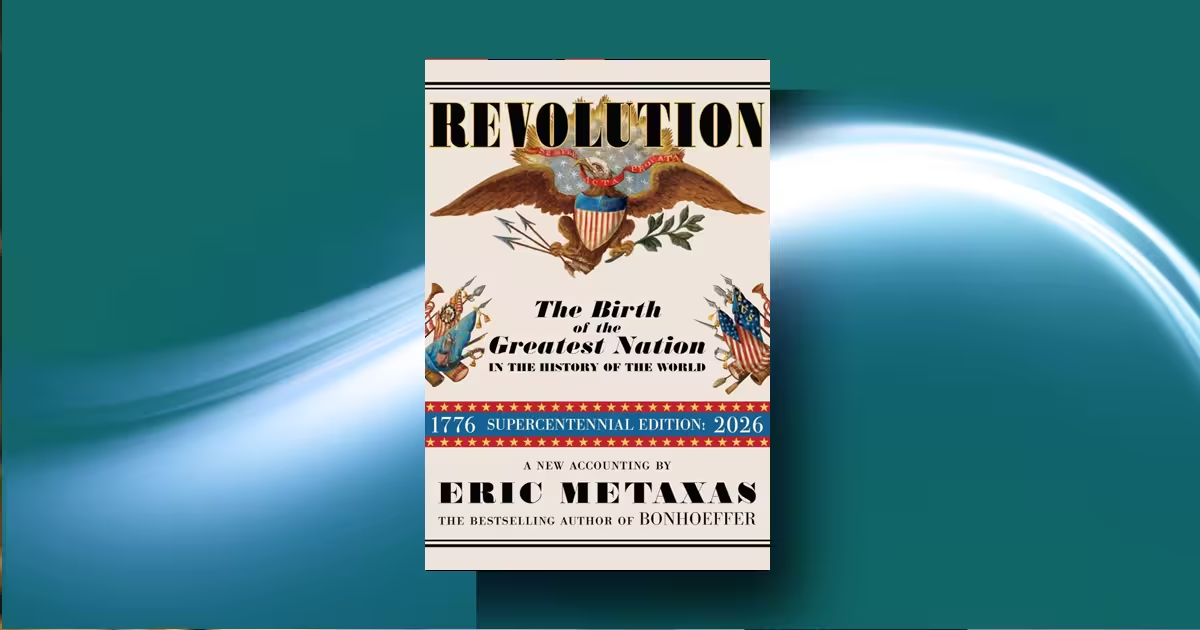
Do you know — really know — the wild, dangerous, near-miraculous chain of events that made the United States of America possible, and why the men who built it believed they were doing God’s work? Revolution: The Birth of the Greatest Nation in the History of the World will pull you in and not let go — though, to be fair, it has a few things to answer for too.
Revolution is best for history lovers, patriotic readers, Christians interested in faith’s role in American founding, narrative history fans, students of the Revolutionary era, and anyone looking for a sweeping, accessible, and deeply entertaining single-volume account of America’s birth.
Not for academic historians seeking strictly neutral scholarship, readers who prefer secular or structuralist analysis of the Revolution, or anyone uncomfortable with an author wearing his faith on his sleeve across 790 pages.
Table of Contents
Introduction
Revolution: The Birth of the Greatest Nation in the History of the World is a sweeping, 790-page narrative history by Eric Metaxas, published on June 2, 2026, by Odysseus Books, an imprint of Skyhorse Publishing.
Metaxas, the author of seven New York Times bestsellers — including his groundbreaking, million-selling biography Bonhoeffer: Pastor, Martyr, Prophet, Spy — turns here to what he clearly regards as the most important story he has ever told: how the United States of America came into being.
The book arrives at a moment of enormous cultural significance, as America marks its 250th anniversary in 2026.
The book is subtitled, unambiguously and unapologetically, “The Birth of the Greatest Nation in the History of the World.” That subtitle tells you everything you need to know about Metaxas’s angle.
This is not a book written with detachment. It is written with love, reverence, wit, and the kind of evangelical zeal that has always characterised Metaxas’s work. Those who enjoy him will relish it. Those who find him too partisan will have their patience tested.
The book’s context is the American Revolution — that cascade of events from roughly 1761, when James Otis Jr. argued against the British writs of assistance in a Boston courtroom, through 1783 and the Treaty of Paris. Metaxas covers not only the war itself but the long and electrifying decade of political, cultural, and moral conflict that preceded it.
In terms of genre, Revolution sits firmly in the tradition of popular narrative history — think David McCullough’s John Adams or Nathaniel Philbrick’s Bunker Hill — though Metaxas adds a distinctive theological dimension that sets it apart.
The book’s central thesis, stated plainly in the Introduction, is this: the American Revolution was not merely a political event but a providential one — a moment in which the idea of liberty, traced by Metaxas from the Sinai Covenant through the Reformation, finally found its fullest expression in the founding of a new nation.
As he writes in the opening pages, “the American nation — ‘conceived in liberty’ and born in 1776 — is the geopolitical expression of that Revolution, of that glorious idea from outside this world that came into the world.” Accordingly, Revolution is far more than a military history.
It is, at its heart, a theological argument dressed in narrative clothing.
Background
Eric Metaxas was born in 1963 and grew up in Danbury, Connecticut, where — as he movingly acknowledges in his book — a fifth-grade teacher named Robert F. McDevitt spent 180 school days in the 1972-73 academic year speaking to his students about the American Revolution.
That childhood encounter, Metaxas tells us, planted a seed that took more than fifty years to become this book.
He is not a credentialed academic historian; he is a storyteller, a radio host, and a deeply committed Christian intellectual who has previously written acclaimed popular biographies of William Wilberforce (Amazing Grace), Dietrich Bonhoeffer, and Martin Luther.
His skill — and his limitation — is the same: he brings everything to life, but he never pretends to be neutral.
Revolution by Eric Metaxas Summary
The Revolution Before the Revolution
Metaxas begins not with muskets and battles but with ideas — and this is perhaps the greatest strength of the book. Long before April 19, 1775, when the “shot heard round the world” was fired at Lexington, a revolution of thought had been underway for decades. Metaxas calls this “the Revolution before the Revolution,” and it occupies the first half of the book with remarkable depth.
It begins in 1761. A Boston attorney named James Otis Jr. stood in a Massachusetts courtroom to argue against the British “writs of assistance” — general search warrants that gave customs officers the right to search any building without cause.
John Adams, present in that courtroom as a young man, later called this “the opening scene of the Revolution.” The argument Otis made was radical for its time: British subjects received their rights not from Parliament or the king, but from God. The king himself was subject to God’s law, just as any other Englishman. This single idea — simple yet explosive — became the engine of everything that followed.
What Metaxas does brilliantly in these opening chapters is show that the American Founders were not inventing new ideas but recovering old ones. He traces the lineage of liberty through the Magna Carta of 1215, through the Puritan settlers of Massachusetts, through John Locke’s Second Treatise, and into the drawing rooms and taverns of 1760s Boston.
The colonists, he argues, were more faithful to the English constitution than England herself.
Samuel Adams: The Forgotten Father
Perhaps the most compelling figure in the first half of Revolution is Samuel Adams, and Metaxas makes a strong case that Adams has been unjustly overshadowed by his cousin John and by Washington.
The nineteenth-century historian James Kendall Hosmer, as Metaxas quotes, believed Samuel Adams “could more properly be called the ‘Father of America’ than Washington.” Thomas Jefferson called Adams “truly the Man of the Revolution” and “the earliest, most active, and persevering man of the Revolution.”
John Adams said his cousin possessed “the most thorough understanding of liberty, and her resources . . . as well as the most habitual, radical love of it.”
Samuel Adams’s faith was central to his politics. In 1740, when he was eighteen and had just graduated from Harvard, he heard the great revivalist George Whitefield preach in Boston to thousands. In 1742, Adams made a formal profession of Christian faith, joining the Brattle Street Church. This was not incidental to his revolutionary activity — it was its wellspring. As Metaxas writes, “Samuel Adams’s great ardor for liberty sprang as directly from his unshakeable Christian faith as Athena sprang from Zeus’s brow.”
Between 1748 and 1750, Adams wrote essays on liberty for a paper called the Independent Advertiser, calling liberty “the choicest gift that heaven has lent to man.”
By 1764, when Parliament proposed the Stamp Tax, he was already drafting legislative statements that prefigured the entire landscape of resistance to come. “If taxes are laid upon us in any shape without our having a legal representation where they are laid,” Adams wrote, “are we not reduced from the character of free subjects to the miserable state of tributary slaves?” That was 1764.
The Declaration of Independence would not come for another twelve years, yet the argument was already fully formed.
The Stamp Act and the Road to Rebellion
The Sugar Act of 1764 and then the Stamp Act of 1765 form the first great crisis of the book. The Stamp Act required that all legal documents, newspapers, and even playing cards in the American Colonies carry a revenue stamp — payable in British sterling, not Colonial currency.
The revenue would be used to pay for British troops stationed in North America. Parliament, the colonists argued, had no right to tax people who had no representatives in that Parliament. “Taxation without representation is tyranny” — a phrase popularised by James Otis Jr. — became the rallying cry.
Metaxas brings to vivid life the debates in Parliament, particularly the famous exchange between the heroic soldier Isaac Barré and the dissolute “Champagne Charley” Charles Townshend. On February 6, 1765, Barré, who had lost his eye fighting for Britain at Quebec, rose to warn Parliament that the Americans “will not be frightened.” He had actually fought alongside Americans and knew their temper.
Townshend had not. The contrast, Metaxas notes with characteristic sharpness, illustrated a theme repeated throughout the Revolution: “comically effete, out-of-touch, and dissolute elites on one side” doing battle with “principled, morally upright figures on the other.”
Likewise, Benjamin Franklin’s extraordinary testimony before Parliament on February 13, 1766 crackles with intelligence and barely disguised menace. When asked what Americans would do if Parliament sent troops to enforce the Stamp Act, Franklin replied with characteristic wit: “They will not find a rebellion — but they may indeed make one.”
Parliament repealed the Stamp Act just eight days later, on February 22, 1766. Boston erupted in celebration — Paul Revere designed a monumental illuminated obelisk lit by 280 candles on Boston Common.
Yet, as Metaxas makes clear, the celebration was premature. Parliament simultaneously passed the Declaratory Act, quietly asserting its absolute right to legislate for the Colonies “in all cases whatsoever.” The time bomb was ticking.
The Townshend Acts, Mob Violence, and the Boston Massacre
The years 1767-1770 brought escalating crisis. Charles Townshend, now Chancellor of the Exchequer, introduced a new series of taxes on imported goods — glass, paint, lead, tea. These “Townshend Acts” rekindled colonial fury.
Samuel Adams and Dr. Joseph Warren orchestrated a campaign of resistance through the Sons of Liberty. A series of mob actions, press-gang confrontations, and customs disputes followed, each ratcheting up the tension.
The Boston Massacre of March 5, 1770 occupies one of the book’s most dramatic chapters. Five colonists were killed when British soldiers, surrounded and pelted by a hostile crowd, opened fire. Among the dead was Crispus Attucks, a man of African and Native American descent — in Metaxas’s account, the first to die in the cause of American liberty.
What followed is one of history’s great ironies: the man who argued most forcefully for the soldiers’ innocence was the patriot John Adams, who took their case precisely because he believed in the rule of law above mob passions. He won acquittals for six of the eight soldiers.
Years later, Adams called this the most important legal work of his career.
Paul Revere’s famous engraving of the Massacre — largely plagiarised from another artist’s work, as Metaxas wryly notes — became one of the most powerful pieces of propaganda in American history, depicting the soldiers as cold-blooded executioners firing into a passive, peaceful crowd.
“The Destruction of the Tea”
Metaxas reminds us that the event we call the “Boston Tea Party” was not known by that name in its own time. It was called simply “The Destruction of the Tea.” The phrase “Boston Tea Party” was coined sometime in the nineteenth century, and Metaxas finds the later, cheerier label somewhat misleading for what was, in fact, an act of deliberate, organised political vandalism.
On the night of December 16, 1773, some 116 men — many of them members of the Sons of Liberty, disguised as Mohawk Indians — boarded three ships in Boston Harbour and dumped 342 chests of East India Company tea, worth approximately £10,000 (equivalent to over a million dollars today), into the harbour.
Not a penny of private property was damaged beyond the tea itself. Not a man was harmed. The discipline was extraordinary. Samuel Adams had orchestrated the event with the precision of a general.
The British response was catastrophic in its severity and strategic stupidity.
The Intolerable Acts of 1774 closed Boston Harbour, revoked the Massachusetts Charter, and required colonists to house British soldiers in their own homes. As Metaxas notes, these measures transformed a local dispute in Massachusetts into a common cause across all thirteen Colonies.
Franklin’s Humiliation and the Point of No Return
One of the most powerful individual scenes in the book is Benjamin Franklin’s public humiliation at the Privy Council in London’s Cockpit on January 29, 1774. Franklin had been in London for eighteen years as the Colonies’ de facto ambassador, working tirelessly to prevent war. He was at this point seventy years old, one of the most famous men in the world.
Alexander Wedderburn, Solicitor General, used the occasion of a hearing about some leaked letters to deliver a personal assault on Franklin lasting nearly an hour, mocking and vilifying him before a crowd that laughed and jeered. Franklin stood throughout in silence, dressed in a suit of Manchester velvet, his face entirely expressionless. He never spoke. He never flinched.
After the humiliation, he did not rest until he saw American independence. As Metaxas writes, from that day Franklin “set his face like flint toward American independence and never looked back.”
Patrick Henry and the Powder Keg of Virginia
While events in Boston dominated the public narrative, Virginia too had its revolutionary soul. In February 1765, the twenty-nine-year-old Patrick Henry had electrified the Virginia House of Burgesses with what became known as the “Parson’s Cause” argument, establishing that no government — not even the king’s — could override natural law.
Now in March 1775, at the Second Virginia Convention, Henry delivered what became the most famous speech of the Revolution. “Is life so dear, or peace so sweet, as to be purchased at the price of chains and slavery?” he demanded. “I know not what course others may take; but as for me, give me liberty or give me death!”
Metaxas notes that Reverend Peter Muhlenberg — who was present at that convention — took Henry’s words so literally that he preached a final sermon to his congregation on the following Sunday, then dramatically removed his clerical robes at the pulpit to reveal the uniform of a Continental Army officer beneath. He rode off to war that very day.
Paul Revere’s Ride
On the night of April 18-19, 1775, Paul Revere made his famous midnight ride to warn the countryside that British regulars were marching on Lexington and Concord.
Metaxas follows the ride in careful detail — the two lanterns hung in the steeple of the Old North Church as a signal, the rowboat across the Charles River, the horse borrowed on the far bank, the breathless calls to Samuel Adams and John Hancock in Lexington. Revere did not shout “The British are coming!” — all Americans at that time still considered themselves British.
He likely said “The Regulars are out!” Henry Wadsworth Longfellow’s famous poem, written in 1860, cemented the legend but took some historical liberties with the details, as Metaxas cheerfully points out.
Lexington and Concord: “The Shot Heard Round the World”
At dawn on April 19, 1775, approximately seventy-seven militiamen under Captain John Parker faced seven hundred British Regulars on the Lexington Green. Parker’s orders were not to fire but to stand and make their presence known. Someone fired — historians still argue about who, and Metaxas acknowledges the debate — and when the smoke cleared, eight Americans were dead and ten wounded.
The British had lost none.
By the time the Regulars reached Concord, however, the entire countryside had been roused. At the North Bridge in Concord, a volley was fired — “the shot heard round the world,” in Ralph Waldo Emerson’s immortal phrase.
The British began their retreat to Boston, a march that became a running gauntlet as thousands of militiamen fired from behind stone walls, trees, and houses.
By the end of the day, 73 British soldiers were dead, 174 wounded, and 26 missing. The Americans lost 49 dead, 39 wounded, and 5 missing. A lightly trained force of citizen soldiers had outfought the greatest professional army in the world. The war had begun.
The Battle of Bunker Hill
The bloodiest single day of the early Revolution came on June 17, 1775, at the Battle of Bunker Hill — which was actually fought mostly on Breed’s Hill. The Americans, commanded by Colonel William Prescott, had fortified the heights overlooking Boston Harbour.
Three times the British attacked uphill in tight formation against withering musket fire. The famous order — “Don’t fire until you see the whites of their eyes!” — may or may not have been spoken by the legendary Israel Putnam (Metaxas suspects it probably was not), but the discipline of the American defenders was remarkable regardless.
The British finally took the hill on the third assault only because the Americans ran out of ammunition.
Among the dead that day was Dr. Joseph Warren, thirty-four years old, who had by that point become the de facto leader of the entire patriot movement in Boston. Warren had been offered command of the American forces but insisted on fighting as a common soldier.
He was killed by a musket ball near the end of the battle. His death, Metaxas argues, was an incalculable loss — but also, paradoxically, a galvanising one. His martyrdom stiffened American resolve as perhaps nothing else could have.
Henry Knox’s “Noble Train of Artillery”
One of the most extraordinary episodes of the entire war — and one of Metaxas’s most entertaining chapters — concerns Henry Knox’s transportation of artillery from Fort Ticonderoga to Boston in the winter of 1775-76. Knox was a twenty-five-year-old Boston bookseller who had educated himself in military affairs by reading the books in his own shop.
Washington gave him the seemingly impossible task of hauling 120,000 pounds of cannon and other artillery some three hundred miles over frozen lakes, through the Berkshire Mountains, and into Boston.
Knox accomplished it in fifty-six days, using ox-drawn sleds across the ice of Lake George. Washington used the Ticonderoga cannon to fortify Dorchester Heights above Boston in a single night of extraordinary effort on March 4-5, 1776.
When the British general William Howe awoke to find American artillery commanding his position, he reportedly exclaimed that the rebels had accomplished in one night what his own troops could not have done in months. On March 17, 1776, the British fleet sailed out of Boston Harbour for good — never to return. The siege of Boston was over.
July 4, 1776
The Declaration of Independence was not born easily.
Thomas Jefferson drafted it in seventeen days, working in a rented room in Philadelphia. John Adams, as Metaxas details with evident delight, was the one who pushed hardest in the Continental Congress for independence, wearing down resistance day after day with arguments, persuasion, and sheer force of will.
Jefferson later acknowledged this, and Adams himself — with characteristic self-deprecation — explained that he was “obnoxious, suspected, and unpopular” whereas Jefferson was “so happily expressed” that the draft went to Jefferson rather than Adams.
The debates over the Declaration in late June and early July 1776 were intense. The most contentious passage was Jefferson’s original condemnation of slavery and the slave trade — deleted under pressure from South Carolina and Georgia, and partly from Virginia as well.
It is one of the book’s more significant silences that Metaxas, while acknowledging the deletion, does not dwell long on the contradiction between “all men are created equal” and the continued enslavement of hundreds of thousands of human beings.
This is a weakness I will return to.
On July 4, 1776, the Declaration was formally adopted. When the news reached New York, the gilded equestrian statue of King George III that New Yorkers had erected on the Bowling Green — the same statue they had put up in joy just ten years earlier when the Stamp Act was repealed — was torn down by a celebrating crowd.
It was melted into 42,088 musket balls for the Continental Army.
The Battle of Brooklyn and Washington’s Genius
The military story of the Revolution is, in truth, often a story of American near-disaster rescued by British caution, American tenacity, and what Metaxas (and many of the Founders themselves) could only call Providence. The Battle of Brooklyn in August 1776 came close to ending the Revolution before it had properly begun.
General William Howe, commanding 32,000 troops and 400 ships, landed on Long Island and executed a flanking movement around the American left that should have resulted in the annihilation of Washington’s army. The Hessian forces fought with terrifying ferocity.
The Maryland 400, as they came to be known, sacrificed themselves in a suicidal rearguard action at the Gowanus Pass to cover the American retreat, with Washington himself watching from a distance, reportedly crying out, “Good God, what brave fellows I must this day lose!”
What saved the army was the night retreat across the East River on the night of August 29-30, 1776. Nine thousand men, with all their equipment, were ferried across the East River in small boats through a moonless, foggy night — a feat of logistics so remarkable that even British officers later expressed astonishment.
As dawn broke, fog so thick that the men could not see their hands in front of their faces covered the last of the retreating soldiers, lifting only after the last boat had crossed. Washington, characteristically, was the last man to leave.
Nathan Hale: “I Only Regret That I Have But One Life to Give”
Among the many extraordinary individual stories in Revolution, the tale of Nathan Hale may be the most affecting. Hale was twenty-one years old, a recent Yale graduate and schoolteacher who volunteered in September 1776 to go behind British lines as a spy for Washington.
He was caught — betrayed, it seems, by the treacherous Robert Rogers — and hanged on the morning of September 22, 1776, without trial, chaplain, or Bible.
His final words — “My only regret is that I have but one life to give for my country” — were a conscious echo of lines from Joseph Addison’s play Cato. The British Provost Marshall William Cunningham, who oversaw the execution, refused to deliver Hale’s last letters to his family and reportedly destroyed them, saying “The rebels should never know they had a man who could die with so much firmness.”
Cunningham’s cruelty only enhanced Hale’s legend.
Hale’s body was left hanging for three days, and British soldiers defaced it with cartoons mocking Washington. It was buried in an unmarked grave.
The letter Hale’s father Richard wrote weeks later to his brother, which Metaxas quotes, is one of the most quietly devastating passages in the book: “A child I sought much by, but he is gone.”
Washington Crosses the Delaware: “Victory or Death”
By December 1776, the Continental Army was in desperate straits. After a string of defeats in New York, the army had retreated across New Jersey in disorder. Enlistments were expiring at year’s end. Thomas Paine, marching with the army, wrote The American Crisis — “These are the times that try men’s souls” — and Washington had it read aloud to the troops.
On Christmas night, 1776, Washington led 2,400 men across the ice-choked Delaware River in a night so brutal that two soldiers froze to death before they could reach the battlefield.
The password for the operation was “Victory or Death.” At dawn on December 26, the Americans fell upon the Hessian garrison at Trenton, taking the commander Colonel Rall mortally wounded and capturing nearly 900 prisoners, with no American battle deaths.
A week later, Washington won again at Princeton. The tide had turned — barely, narrowly, almost impossibly — but it had turned.
Saratoga: The Turning Point
The Battle of Saratoga in October 1777 was, Metaxas argues persuasively, the decisive moment of the Revolution. The British General Burgoyne’s campaign to split New England from the other Colonies ended in humiliating disaster when his army of 5,800 men was surrounded and forced to surrender on October 17, 1777.
It was the first time a British army had ever surrendered in the field. More importantly, it convinced the French to enter the war officially on the American side — a decision that would prove the Revolution’s salvation.
Benedict Arnold, meanwhile, played a heroic role in the victory at Saratoga — fighting with a reckless personal bravery that bordered on madness, having his horse shot under him and his leg badly wounded.
The tragedy of Arnold is that this brilliance would eventually collapse into the most infamous act of treason in American history, which Metaxas covers with genuine psychological depth.
Valley Forge: Faith, Frostbite, and a Prussian Drill Sergeant
The winter of 1777-78 at Valley Forge is one of history’s great tests of national will. The Continental Army — some 11,000 men — was encamped in conditions of extraordinary suffering. Men starved. Some had no shoes and wrapped their bleeding feet in rags. Dozens died daily of disease. The surgeon Albigence Waldo wrote in his diary that he was “a Skeleton of a man,” barely able to lift his pen.
What saved the army — or rather, what transformed it into a genuine fighting force — was the arrival of Friedrich Wilhelm August Heinrich Ferdinand Freiherr von Steuben, known as Baron von Steuben, a Prussian officer whom Franklin had sent from Paris.
Von Steuben spoke almost no English, which led to memorable scenes of bilingual profanity as he drilled the troops into shape. By spring, the Continental Army that marched out of Valley Forge was a different entity from the one that had staggered in.
At the Battle of Monmouth in June 1778, they stood toe-to-toe with British regulars and did not break.
The Tragedy of Benedict Arnold
No figure in Revolution receives more nuanced treatment than Benedict Arnold, and this is one of the book’s genuine contributions. Arnold’s treason in 1780 — his plan to surrender the fortress at West Point to the British for £20,000 and a British generalship — is generally treated as a simple morality tale of villainy. Metaxas resists this.
Arnold was, by any measure, one of the most gifted military men of the Revolution. He had captured Fort Ticonderoga (before Ethan Allen muddied the waters of credit), led a brutal winter march through the Maine wilderness toward Quebec, fought with extraordinary personal bravery at Saratoga, and commanded the defence of Lake Champlain.
His country had repaid him with slights, delays in promotion, accusations of financial corruption, a humiliating public reprimand from Washington, and the persistent intrigues of political enemies. His ego — enormous, fragile, and perpetually wounded — could not sustain it.
In May 1779, when a sealed letter from a British officer arrived at Arnold’s door promising that whoever might “facilitate” an end to hostilities would be “appropriately rewarded,” Arnold’s silence on the matter was, as Metaxas puts it, “his first sure step toward treason.”
His wife Peggy Shippen, a society beauty with Loyalist ties, guided him toward her old friend Major John André, Clinton’s aide-de-camp.
The conspiracy unravelled in September 1780 when André was captured and the documents found on him — written in Arnold’s own hand — exposed everything. Arnold escaped. André was hanged. Arnold spent the rest of his life as a British general, despised equally by the people he had betrayed and the people who had bought him.
“The World Turned Upside Down”: Yorktown
The end, when it finally came, was swift and almost theatrical in its finality. In the autumn of 1781, Washington and the French general Rochambeau marched 7,000 men from New York to Virginia, covering the distance so quickly that British spies could not believe the intelligence.
The French fleet under Admiral de Grasse sealed Chesapeake Bay, cutting off Lord Cornwallis and his 8,000 men at Yorktown, Virginia.
The siege lasted three weeks. American and French sappers dug trenches by night under constant fire. A young Lt. Colonel Alexander Hamilton led a daring assault on British Redoubt 10, personally leading his men over the parapet with the bayonet in less than ten minutes. On October 17, 1781 — four years to the day after Burgoyne’s surrender at Saratoga — Cornwallis raised the white flag.
On October 19, 1781, the British army marched out of Yorktown to surrender.
Cornwallis, pleading illness, sent his second-in-command, General Charles O’Hara, who tried to surrender to the French general Rochambeau rather than to Washington, likely as a calculated insult. Rochambeau directed him to Washington, who in turn directed him to General Benjamin Lincoln.
The British band played, reportedly, “The World Turned Upside Down.” Sarah Osborn, a woman who had followed her husband through the campaign as a laundress and cook, watched the surrender and later recalled that Washington, on horseback, repeatedly told the soldiers who pressed close to see: “Remain quiet. Remain quiet.” Metaxas finds in this detail something characteristic of the man.
The Epilogue: What Is the Meaning of America?
The Epilogue is where Metaxas steps furthest from the role of historian and speaks most directly as a theologian and cultural commentator. He argues that the Revolution cannot be understood apart from its religious dimension — that the faith and virtue of the Founders were not incidental but constitutive of what America is.
He quotes Washington’s Farewell Address, in which Washington warned that “reason and experience both forbid us to expect that national morality can prevail in exclusion of religious principle.” He quotes Adams, Franklin, Jefferson, and others on the inseparable connection between virtue and liberty.
Metaxas then makes his most provocative claim: that America today is drifting away from the faith and virtue that made it possible, and that this drift — toward what he calls a secular cultural elite that mirrors the sneering British aristocrats of the Revolutionary era — threatens the Republic itself.
“It seems impossible,” he writes, “that we might sustain the liberty bequeathed to us by the men of the Revolutionary era without a culture as dedicated to faith and virtue as theirs.”
He ends by invoking Lincoln’s Gettysburg Address, calling Americans to renew their dedication to “the unfinished work” of the Revolution in this 250th anniversary year.
Revolution by Eric Metaxas Analysis
Revolution is an important book — absorbing, addictive in its storytelling, and genuinely moving at its best moments. Metaxas writes with a propulsive energy that is rare in popular history. His prose crackles. His footnotes are often funnier than his text, which is saying something.
He has a journalist’s eye for the telling detail and a novelist’s instinct for pacing. The chapter on Henry Knox’s “Noble Train of Artillery” reads like an adventure story. The chapter on Nathan Hale is quietly heartbreaking. The chapter on Paul Revere’s illuminated obelisk is pure delight.
Furthermore, Metaxas’s fundamental argument — that the Christian faith and the Puritan understanding of liberty were absolutely central to the Revolution, not peripheral — is historically defensible, and he makes it well.
The Founders themselves said as much, repeatedly. John Adams wrote in 1798 that “our Constitution was made only for a moral and religious people. It is wholly inadequate to the government of any other.” Samuel Adams, as Metaxas demonstrates exhaustively, was animated at every point by his Christian convictions.
Washington’s Farewell Address, his prayers at Valley Forge, his letters — all point toward a man for whom Providence was not a rhetorical device but a lived reality.
You do not have to share this faith to acknowledge its historical importance, and secular historians who airbrush it out of the story are being intellectually dishonest.
However, there are significant problems.
Strengths and Weaknesses
Strengths
The book’s greatest strength is its comprehensiveness within a single volume. No one since David McCullough’s 1776 (2005) has attempted to tell this story so fully for a general audience, and Metaxas goes far beyond McCullough’s scope. He covers the entire arc from the 1761 writs of assistance to Yorktown and beyond. He gives Samuel Adams his long-overdue due.
He rehabilitates figures like Dr. Joseph Warren, who died at Bunker Hill and is largely forgotten today. He makes Benedict Arnold genuinely tragic rather than simply villainous. His treatment of the French alliance and the role of Rochambeau at Yorktown is unusually detailed.
The prose is consistently excellent. Metaxas can describe a military engagement — the crossing of the Delaware, the assault on Redoubt 10 at Yorktown — with propulsive urgency. He can also write about ideas — the relationship between Puritan theology and the notion of natural rights — with genuine clarity and intelligence. He is also genuinely funny, which helps enormously over 790 pages.
Another key strength is his ability to humanise figures who have calcified into statues. Washington emerges here as a man of flesh and blood — proud, occasionally despairing, capable of anger, and sustained by a faith that was sincere if theologically eclectic.
John Adams appears in all his brilliant, prickly, self-aware glory. Paul Revere is shown as a man of extraordinary versatility — silversmith, propagandist, organiser, midnight rider — whose contribution to the Revolution goes far beyond a single famous night.
Weaknesses
The criticisms fall into two broad categories: thematic bias and historical omission.
On bias: Metaxas makes no secret of his own convictions, and his book consequently reads, at times, like hagiography. The Founders are presented overwhelmingly as heroic. British leaders are frequently caricatured. The narrative occasionally slides from “providential history” into something closer to “triumphalist mythology.”
A reviewer in the tradition of the New York Review of Books would fairly note that Metaxas is less interested in complexity than in celebration.
On omission: the most serious criticism of Revolution is its treatment of slavery — or rather, its lack thereof. Metaxas mentions the institution, acknowledges Jefferson’s deleted passage in the Declaration, and notes Samuel Adams’s principled refusal of a wedding gift of a female slave.
But slavery — the actual lived experience of the hundreds of thousands of enslaved people whose labour built the world the Founders occupied — is not really present in this book. When the Declaration says “all men are created equal,” Metaxas celebrates the principle without fully reckoning with the fact that roughly 20 percent of the population of the thirteen Colonies in 1776 was enslaved, and that most of the most celebrated Founders owned human beings.
This is not a minor gap. For many readers, it will be a disqualifying one.
Similarly, the experiences of women during the Revolution — active contributors, sacrificers, and resisters in their own right — are touched on only occasionally. The role of Black soldiers who fought for both sides, the situation of Native Americans whose lands were at stake in ways that made the Revolution look very different from Mohawk Country or Cherokee territory — these are perspectives that a 790-page book in 2026 cannot credibly ignore.
There is also the question of partisanship. Metaxas’s political commitments — he is an outspoken conservative commentator — occasionally surface in ways that can feel intrusive. The Epilogue, in particular, reads more like a political homily than historical analysis.
Comparison with Similar Works
Revolution invites comparison with several other major treatments of its subject. David McCullough’s John Adams (2001) is more focused and more rigorous in its scholarly apparatus, though narrower in scope. Nathaniel Philbrick’s Bunker Hill (2013) and In the Hurricane’s Eye (2018) are more careful in their handling of race and gender, and more scrupulous in their presentation of evidence.
Rick Atkinson’s The British Are Coming (2019), the first volume of his Revolution Trilogy, is perhaps the finest recent military history of the period — Metaxas clearly learned from it.
Gordon Wood’s The Radicalism of the American Revolution (1991) is the essential academic counterpart, arguing that the Revolution’s social consequences were more transformative than Metaxas acknowledges.
In terms of tone and ambition, Revolution most closely resembles Peter Marshall and David Manuel’s The Light and the Glory (1977), a providentialist reading of American history that Metaxas actually cites in the book. Readers who loved The Light and the Glory will love Revolution. Those who found The Light and the Glory too theologically freighted for their taste will have the same reaction here.
Conclusion
Does Revolution deserve to be read? Without doubt, yes. It is one of the most entertaining, passionately argued, and comprehensively detailed single-volume popular histories of the American Revolution written in this generation, arriving at precisely the right moment — America’s 250th anniversary year, 2026.
It will teach most readers things they did not know, remind them of things they had forgotten, and leave them with a genuine sense of what was at stake in those years, and how near-miraculous the outcome was.
Moreover, Metaxas’s core argument — that the Revolution cannot be understood apart from the faith, the virtue, and the idea of liberty as a God-given rather than state-conferred right — is worth taking seriously regardless of one’s own theological commitments. This is history with a point, and the point is not without merit.
Nevertheless. This is not the Revolution for every reader. Those seeking a balanced, academically rigorous, gender and race-inclusive account of the founding era will find Metaxas frustrating.
Those who believe that popular history must grapple honestly with slavery and settler colonialism as well as with musket fire and midnight rides will find that this book speaks for only part of the American story — and, importantly, for the part that has always been most loudly heard.
Read it. Argue with it. That, in the end, is what the men and women of the Revolution would have wanted.