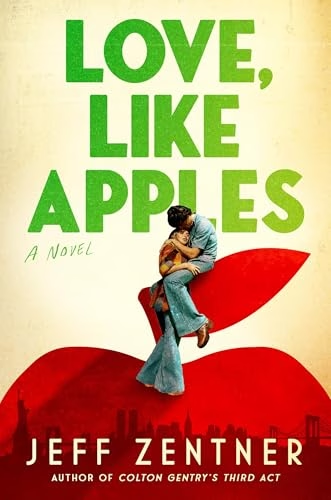
Love, Like Apples by Jeff Zentner is a 400-page novel about a Tennessee orchard boy who becomes a puppeteer on a made-up PBS show for teenagers, and it argues, quietly and with a lot of heart, that art can reach people you will never meet. Is it worth your time? Yes, if you can handle real grief alongside real humor.
This article gives you a spoiler-free verdict first, then a full-spoiler retelling, the ending explained, and my honest read on what works and what does not.
At a glance
The novel was published on November 3, 2026, by Grand Central Publishing. Tiller Loomis grows up on an apple orchard in Sawyer, Tennessee, with a cruel, drinking father and a gentle older brother named Smith.
After Smith is drafted into Vietnam, Tiller finds his way into puppetry, moves to New York in 1977, and joins the cast of Imagine Nation, an irreverent show built to reach lonely teenagers. He also falls in love with castmate Julie DiFrancesca.
The whole story is told by Tiller at 71 to a documentary filmmaker named Darwin Hoang, which is where the book hides its biggest surprise.
I give it 4.5 out of 5.
| Detail | Information |
|---|---|
| Title | Love, Like Apples |
| Author | Jeff Zentner |
| Publisher | Grand Central Publishing |
| Publication date | November 3, 2026 |
| Length | 400 pages (trade paperback) |
| ISBN-13 | 9781538773604 |
| Narrator | Tiller Loomis, first person, looking back |
| Main settings | Rural East Tennessee, 1960s to 1972; New York City, 1977 to 1978; present-day Tennessee |
Who will love this book, and who may bounce off it?
Readers who like big-hearted ensemble stories will love it, and readers who want a fast plot may drift away. If you enjoy found-family novels, the publisher’s page says Library Journal pitches it to fans of Taylor Jenkins Reid and Kristin Hannah, and that matches how it reads to me: a warm, talky cast, a love story that takes its time, and one punch in the last act that sent me back to chapter 2.
People who grew up on Sesame Street, Mister Rogers or the Muppets will get an extra layer, because Love Like Apple is partly a love letter to children’s television and the odd, tender people who make it. Fans of Zentner’s earlier work, such as The Serpent King, will recognize his gift for gentle boys in hard places.
You may bounce if sentiment makes you wince, because Tiller says what he feels out loud, often, and sometimes to the camera. You may also struggle if you prefer tight pacing, since the middle of Love Like Apple lingers over sets, jokes and meals.
A fair content note: the novel includes a soldier’s death in Vietnam, an alcoholic and neglectful father, a violent homophobic attack, heroin addiction, a character’s suicide mentioned through a letter, and a painful illness-related death that the book never names.
Introduction
Love, Like Apples is Jeff Zentner’s latest novel, from Grand Central Publishing, out in trade paperback, ebook and audiobook on November 3, 2026, according to the publisher.
Zentner also wrote The Serpent King, Colton Gentry’s Third Act and In the Wild Light, and before he was a novelist, he was a working musician, per the same author bio. He lives in Nashville.
Quick verdict
A tender, funny and sometimes devastating novel about grief, chosen family and the stubborn hope of making art for strangers. Recommended for readers of warm historical fiction who do not mind crying on public transport.
Should you read it?
| Pros | Cons |
|---|---|
| Tiller’s voice is wry, gentle and hard to forget | Sentiment is dialed high and sometimes spelled out |
| Smith, the dead brother, stays the book’s moral center | Sam Cabot, the rival, tips into cartoon villain territory |
| A large cast where almost everyone gets a real backstory | The middle section lingers, with many jokes and tangents |
| Vivid 1977 New York, down to the sweat and the blackout | A small timeline wobble around Tiller’s first day at work |
| An ending that rewrites how you read the opening chapters | The long Coda is heavy going if you are already tearful |
What is Love, Like Apples about?
It is about Tiller Loomis, who loses his older brother to Vietnam, discovers puppetry as a way to carry that brother’s kindness into the world, and joins a short-lived PBS show built for lonely teenagers. The love story with Julie DiFrancesca runs alongside it.
A present-day documentary interview frames the whole thing and decides what the story finally means.
Rating
4.5 out of 5 stars. This is my own score, based on a full read of the book.
What real history sits behind Love, Like Apples?
The show at the center of the book, Imagine Nation, is invented, but the world around it is real.
What the book does lean on is the era. Sesame Street first aired on November 10, 1969, created by Joan Ganz Cooney, Lloyd Morrisett and Jim Henson, and Zentner borrows that moment by making his fictional show a spin-off idea from the Children’s Television Workshop (Ch. 30).
The 2024 Ron Howard film Jim Henson: Idea Man describes Henson turning to puppets as a way to connect with audiences, which is close to how Tiller thinks about his craft.
The novel also uses actual events as plot turns. The citywide New York blackout began on July 13, 1977 and lasted about 25 hours, with looters hitting roughly 1,600 stores according to the New York Times as cited by Time, and Chapter 50 turns that night into a guerrilla puppet show on a Thompson Street stoop. Later, in Chapter 76, Tiller joins the protest against the Tellico Dam, where the dam gates closed in late 1979 after Congress exempted the project from the Endangered Species Act.
The acknowledgments thank PBS, Jim Henson and “the gentle creators who shaped my youth,” plus two puppet consultants, so the craft detail has some outside checking behind it.
What happens in Love, Like Apples? Full plot summary
The frame and the orchard (Chapters 1 to 13)
The book opens in the present.
Tiller Loomis, 71, a woodworker who calls himself “a poet now and a worker of wood,” is sanding a cherrywood tabletop near Rugby, Tennessee, when his son Vincent calls from Los Angeles. A clip of a 1978 PBS show called Imagine Nation has gone modestly viral, Vincent explains, and a film school classmate named Darwin Hoang wants to make a documentary about it, starting with Tiller.
Tiller walks to the Clear Fork River with his old beagle Piglet, wonders whether it is better “to tell a story or wear it hidden,” and calls back: “Tell Darwin I’ll do it.” A month later Darwin’s crew arrives.
Darwin calls the show punk rock, irreverent, queer and full of “radical empathy,” and admits he has a personal connection to it that he will not reveal yet. Tiller says his story is about hopeful, hungry artists, “but above all that, it’s a love story.”
Then he goes back to the beginning. Tiller James Loomis was born on May 26, 1954 in Sawyer, Tennessee, the same day his mother Hazel died. His father Hank, a drinker, treats him as a curse. His brother Smith, five years older, becomes the one warm thing in the house. When Tiller is six and tormenting a frog by the Pigeon River, Smith asks him quietly, “Is the frog having fun?” Tiller sobs, Smith hugs him and tells him, “You choose who you are”.
The two boys work the family’s 53-acre apple orchard together, and in Chapter 4 Tiller gives the book its thesis, the idea “how love, like apples, is a sweetness that emerges from improbable circumstances.”
In 1965, when Tiller is eleven, his father bans him from the county fair over a pair of rusty pruning shears. Smith’s best friend Pep Pruitt and Pep’s sister Betsy bring him a funnel cake anyway, and Smith gives him a limberjack, a wooden dancing figure, bought with shooting-gallery winnings.
Tiller makes it dance and feels “how love can breathe life into inanimate objects”. That toy is where his puppetry begins.
The war arrives in 1967. Smith, a devout Methodist who is “not afraid to die. He was afraid to kill”, receives his draft letter and does not try to dodge it. Pep enlists to go with him. At the bus depot Smith tells Tiller, “Remember who you are and never change”. Smith writes home from Vietnam about a Mormon buddy named Elroy Clegg and wishes for “a set of pruning shears over an M-16”. On November 3, 1968, two Army officers arrive at the Loomis kitchen. Tiller runs into the dark orchard and falls in the windfall apples. Smith comes home in a flag-draped coffin and is buried in the orchard’s southwest corner beside their mother.
Years later, Tiller still cannot bring himself to wish that Smith fired first, and he refuses to visit Smith’s name on the Vietnam Veterans Memorial, because it would feel like accepting an apology.
Puppets, Knoxville and the call from New York (Chapters 14 to 28)
In April 1969, nearly fifteen and almost an orphan in his own home, Tiller wanders into a church puppet show and meets Hobart and Eula Fulcher, a childless couple who puppeteer for free at churches, fairs and hospitals.
They feed him peach cobbler, teach him the craft, and within a year he builds his own puppet: a sandy-haired boy in denim overalls holding a felt apple, who teaches kindness and choice. He names him Smith.
In June 1972 three men outside the Black Dog Lounge grab Tiller’s puppets and threaten them and him with homophobic taunts and worse. Pep, back from the war with a headband, a motorcycle and a lot of anger, drives them off. Over a Coke he urges Tiller to take his puppets to a TV station in Knoxville: “Ain’t talking someday, Bugs. Talking now”.
The next day Pep leaves a Purple Heart on Smith’s grave. Tiller says goodbye to his father in the kitchen, tells him “I love you,” and gets only “Go then”.
In Knoxville Tiller works construction, creates a stoner puppet named Hoot, and slowly earns a spot on a local children’s show, Mother Merle’s Family Jamboree. In late 1976 a classified ad in Puppetry Journal catches his eye. The Children’s Television Workshop wants an “Appalachian puppeteer for youth program”.
He mails a reel and waits. In March 1977, a producer named Joel Parson phones, mispronouncing “Appalachian,” and invites him to New York to interview for Imagine Nation, a show for teens that tackles addiction, bigotry, grief and suicide with irreverence.
Tiller reaches Port Authority on March 30, 1977 with two suitcases, one of them holding the limberjack. He rents a week at the McBurney YMCA and has a brief, shaming and then redeeming encounter with another lonely farm kid, a would-be dancer named Paul from Yuma, Colorado, who has been disowned for being gay.
In the present-day frame, Tiller says he never saw Paul again and hopes he is “loved and not lonely”.
Imagine Nation and Julie (Chapters 29 to 60)
The interview takes place on April Fool’s Day, 1977, in a former knitting factory in SoHo. Joel Parson, a slight man in a cardigan with a scar on his forehead, is a former Episcopal priest who registered Black voters in Mississippi in 1964.
Tiller expected “Henson” and found something closer to Mister Rogers. Joel ignores the resume and asks a single question: “Who is Tiller Loomis?”.
He shows Tiller a photograph of Philippe Petit’s high-wire walk between the World Trade Center towers and says the show is about “walking that high wire and risking all to make people look higher.” Tiller tells him about Smith. Joel offers $250 a week, and Tiller says yes.
He meets the crew that same day. Frankie Furukawa, the puppet maker, snips his necktie off with fabric shears as a welcome. Yusuf Ahmed is a poet and Joel’s old friend. Billy Crowe is a Cherokee Vietnam veteran. Sam Cabot is the wealthy, brilliant head writer.
And Julie DiFrancesca, from Johnstown, Pennsylvania, is the most beautiful woman Tiller has ever seen, and she is Sam’s girlfriend. Julie helps Tiller rent a fourth-floor flat at 88 Charles Street by haggling with the super, calls him “Johnny Appleseed,” and later takes the nickname “Chess Pie” from his memory of Eula’s dessert.
She gives him Springsteen’s Born to Run and a container of Sunday gravy.
On his first day, Joel tells the troupe, “We are in the lifeline business”.
Julie confides that she was once addicted to heroin and that Joel’s drug-court program, which used puppetry, saved her life/ Tiller tells her about Smith over pie in a diner, and she holds him while he cries. Yusuf gives him a book of Langston Hughes, Billy tells him about his two tours as a tunnel rat, and Joel confesses that he lost his faith and “I laid my faith in the sepulcher”.
During a trip to see Star Wars, their hands meet in the popcorn. When Julie’s headband breaks, Tiller makes her a new one and they almost kiss before Joel walks in.
During the blackout of July 13, 1977 the troupe puts on an improvised show for teenagers on a stoop, then Sam vanishes to find drugs, and Tiller and Billy go out armed with scissors and a box cutter to bring Julie home. In August, after Sam rejects a storyline based on Smith, Tiller loses his temper and shouts, “Our friendship? It’s done”. He apologizes on his fire escape, confesses he is in love with her, and they laugh with relief. Julie has already broken up with Sam. Joel makes Sam leave the show, and on Sunday, August 21, 1977, Tiller and Julie spend their first night together. The text sums it up in three words: “Love, like apples”.
The fall brings a new head writer, Rachel Kirshner.
Peter, an openly gay cast member, pitches an episode in which his puppet Kevin comes out to Diego’s puppet Sebastian, and the cast argues about whether Southern PBS stations will drop the show. Joel decides to go ahead: “Someone has to march at the front”.
Billy, who opposed it, breaks down on the roof and admits the love of his life “wasn’t a girl.” In Central Park, counting falling leaves, Julie tells Tiller she loves him. They spend Christmas 1977 in Johnstown with her loud Italian American family, where Tiller cries on the porch because he has “always felt like I was on the outside looking in” and Julie tells him to come inside and let the joy wash over him.
On Christmas Day she proposes a pact not to let fame change them, and the narrator adds that “gravity always collects its levy eventually”.
The cancellation, the loss of Joel and the long marriage (Chapters 66 to 91)
The show premieres on PBS on Monday, January 30, 1978 at three in the afternoon. The cast crowds around a TV with champagne in Dixie cups, cheers every entrance, and wraps Joel in the same group hug that began the show. “You made the world a little better place today,” Joel tells them.
That night on the roof Billy says that if his abusive stepfather ever saw his name in the credits, he would know he had not broken him: “Fuckin’ A, man, I won”. Teenagers recognize Julie in Central Park as the science professor Prudence Battleaxe, and one hands Tiller a rock to hold as a stand-in autograph.
Then the show hits the wall. Episode nine, which airs on Friday, February 17, 1978, includes a quiet declaration of same-sex love.
A woman in Alabama calls her congressman, Talbert M. Harlow III, a former radio evangelist, who denounces the show without watching it and vows to cut federal funding to PBS. Their benefactor Margo Van De Kamp pulls her money. In Chapter 72 Joel reads the cast a letter that CTW received from Ruby Mae Gardner of Jasper, Alabama. She has not seen the show, but her gay son Howard took his own life out of loneliness, and she thanks the creators for trying to tell children that their world loves them.
It does not save the series. Episode twelve is the last to air, and episode thirteen, the one in which puppet Smith tells his little brother he can choose who to be, will never be broadcast. The cast stages a “Viking funeral, with laughter for fire.” Ronnie, standing in front of the Basquiat-style mural in the hallway, says, “Four measly weeks, man”.
Joel packs his office, leaves the Petit photograph behind for Tiller, and gives him one more object from the box, which the book does not name until the end. Joel will not leave contact information: “I trust fate will bring us together again when it means to”. The troupe scatters. Tiller moves in with Julie, builds sets and gallery installations, and watches her earn a GED and a psychology degree on the way to becoming a school counselor.
In 1979, he joins Billy at the Tellico Dam protest in East Tennessee, then proposes to Julie at a Christmas tree lot in Johnstown. She loves him, she tells him, but she has never wanted marriage, and she says no, kindly.
In May 1983, Yusuf calls: Joel is dying at St. Vincent’s Hospital in Manhattan. He is gaunt and covered in purple lesions, and his older sister Esther Peck turns up cold and hostile. The book never names the disease. The cast sings the show’s theme song at his bedside.
Afterwards, Julie asks Tiller to propose again, because she regrets saying no, and he kneels in Central Park with a ring made of a blade of grass. She says yes, and they decide to choose joy “because of the darkness and not in spite of it”.
When they return to the hospital the next day, Joel is already gone. Jim Henson would later get a grand public memorial, while Joel Parson of Lost Nation, Iowa got none.
Tiller and Julie marry on August 14, 1984, in Johnstown, with Billy as best man, and they come home from Italy with one souvenir, a son named Vincent Joel Loomis.. They settle in Asheville, North Carolina, where Julie counsels schoolchildren and Tiller becomes a furniture maker.
In 2017, they move to Rugby, Tennessee. Julie brings home a beagle puppy named Piglet.
Julie’s death and the ending explained (Chapters 85 to 93)
The last stretch is a goodbye. A doctor delivers Julie’s prognosis, and the book never names the illness. Her silver hair falls out, and she and Tiller laugh at her bald reflection until they cry.
From her sickbed, she finally admits that the mysterious red, white and blue circles on the old set were boob prints made by her, Sonia and Rosa, and Tiller says he would take those blue circles over the Basquiat any day. On a spring evening, Tiller carries her outside to look at the stars, and she says, “In spite of everything, this was a beautiful world to live in”.
At dusk on her last night she whispers the line that has followed them for decades: “Walk me home, Johnny Appleseed.” She dies the next afternoon with the window open.
She is buried in the orchard’s southwest corner beside Smith and Hazel, and her stone reads her given name with CHESS PIE carved beneath it.
The ending itself comes in Chapter 92, back in the present. As Darwin prepares to leave, Tiller tells him what became of the cast: Yusuf died in June 2020, Billy married his husband Chris in 2016, Frankie runs a bike repair shop in Seattle, and Rachel went on to write for late-night television. Then he hands Darwin the reel Joel gave him in 1978. It is the unaired episode thirteen.
In return, Darwin plays his first interview for the documentary.
A man named Anh Duc Hoang describes fleeing Vietnam in February 1976 at age fourteen, surviving the sea crossing, being bullied in Seadrift, Texas, and by January 1978 being suicidal. He watched Imagine Nation on PBS, loved Julie’s characters, spoke to his school counselor, and read the show’s brief run as a sign that the world wanted him. Darwin then reveals that Anh Duc is his father.
He had kept it back so it would not color Tiller’s telling. “Making art is a call into the darkness,” Darwin says. “You can never know everywhere the echoes reach.”
In the final chapter Tiller lies down in the woods behind his house with Piglet and looks at the stars, as he once did with Smith and with Julie in Central Park. He tells Smith he chose to be as good as he could, and he tells Julie, “I will hold you again in my arms”.
The documentary is not finished, and neither, as Tiller puts it, is his story, which may only end when he does.
Who are the main characters in Love, Like Apples, and do they feel real?
Mostly yes, and the book is strongest where its people contradict themselves. Full spoilers follow.
Tiller Loomis is the narrator, and his main trait is a stubborn decision to be kind after being given every reason not to be. Zentner gives him flaws so he does not float off into sainthood: he is jealous of Sam, he snaps at Julie and says “Our friendship? It’s done”, and he dodges taking a side when the cast fights over Peter’s coming-out storyline, which hurts Billy.
His arc is not toward toughness. It is toward being able to accept joy without bracing for its loss, a lesson Julie hands him on a cold Johnstown porch.
Smith Loomis is dead before the book is eleven chapters old and still the most powerful person in it. Tiller admits he is “making my brother out to be saintly” and then lists his flaws, calling him stubborn, bullheaded and unambitious, with a fatal flaw of being too honorable. I liked that honesty. Smith’s belief that “sometimes the honorable thing to do is not the right thing to do” is Tiller’s grief and anger in one line.
Julie DiFrancesca is the heart of the love story and the best argument against reading her as a prize to be won. She is funny, guarded, recovering from heroin, openly unsure about marriage, and she is the one who sets the terms of the relationship, from the nickname “Chess Pie” to her refusal and later change of mind. Even on her deathbed she is mischievous, confessing the “boob prints” prank on the old set, which keeps her from turning into a saint.
Joel Parson is the show’s father figure, a former priest who lost his faith and keeps rebuilding it through work. The book gives him a scarred forehead, a habit of rereading Ecclesiastes and another of vanishing, and he gets the most moving death in the book, partly because no one gets to hold a memorial for him. Sam Cabot is the weakest major character.
His rich-boy arrogance and drug use are plausible, but he is written so thoroughly as the obstacle that I never felt his appeal, which weakens the triangle.
Billy Crowe is the opposite: a Cherokee tunnel rat who reveals he is gay in a few quiet lines, and a good friend to Tiller throughout. Frankie Furukawa, who learned puppetry at the Manzanar internment camp, delivers the book’s best defense of joy: “Joy is how the universe tells us it favors our existence”.
Hank Loomis, Tiller’s father, gets almost no redemption, and I think that is right. Tiller says that man deserves “a whole other documentary”.
Darwin Hoang is a good example of a narrator’s listener who turns out to matter. For most of the book he is a polite, curious prompt. In Chapter 92 he becomes the book’s proof that the story worked.
What are the themes and symbols in Love, Like Apples?
The central theme is the choice to be good, and the symbol that carries it is the apple. In Chapter 4 Tiller says he came to understand “how love, like apples, is a sweetness that emerges from improbable circumstances,” and the sentence comes back in Chapter 55 on the night he and Julie first make love: “Love, like apples.” Apples do not breed true from seed, and Tiller takes from that the idea that he is not doomed to be his father.
Smith’s earlier line, “You choose who you are” (Ch. 3), is the book’s moral engine, and it is the same lesson that a puppet named Smith tries to teach teenagers in the lost episode thirteen.
A second theme is art as a lifeline. Joel’s phrase is blunt: “We are in the lifeline business” (Ch. 34). The book does not claim art fixes everything. It claims that making art is “a call into the darkness” and that “you can never know everywhere the echoes reach” (Ch. 92), which is why the cancellation hurts and why Darwin’s reveal is an answer, not a twist for its own sake.
A third theme is the cost of honor and war. Smith dies being exactly the man he was raised to be, and Tiller never makes peace with that, not even by visiting the Wall. He compares the moment at the bus depot to Michelangelo’s Pietà and calls it an “Appalachian Pietà” (Ch. 8).
Symbols to watch: the limberjack from Chapter 5 as proof that “love can breathe life into inanimate objects”; the Philippe Petit photograph, which Joel uses to talk about risk and to tell his crew to “make people look higher” (Ch. 29), and which gets a haunting aside on September 11, 2001 (Ch. 74); the stars, which Tiller looks at with Julie on a roof and in her last spring, and then alone at the end; and the grass ring that Tiller makes in Central Park because he does not have the diamond with him (Ch. 79).
The apple orchard itself, with three graves under the trees, is where the symbols all gather in Chapter 91.
Is Love, Like Apples any good? My evaluation
Love, Like Apples is a generous, stubbornly gentle and quietly furious novel that treats kindness as an act of resistance, then dares you to stay dry-eyed through its last forty pages.
I did not manage it. It is not a perfect book, but it is the rare one whose sentimentality feels earned because the author keeps paying for it in grief.
The best of the book
The voice carries everything. Tiller is funny in an old-man, self-correcting way, and he is not afraid to undercut a big moment with a joke, such as Frankie snipping his necktie and later returning it as a stuffed prank. The details are precise and edible: Sunday gravy, chess pie, peach cobbler, funnel cake.
Chapter 10, the short chapter in which two officers arrive at the kitchen, is as stark as the book gets and all the stronger for being brief. Zentner also extends empathy to the enemy: Tiller imagines Smith facing a Viet Cong soldier “a man who also loves” his family and finds he “cannot make myself wish Smith fired first”. And the Darwin reveal rewires the whole story without cheating.
The worst of the book
Sam Cabot is a cardboard obstacle, and the book never gives him enough scenes to complicate him. Some of the big statements land as speeches, especially Joel’s “lifeline business” pep talk, which moved me but also sounded rehearsed.
The middle of the book lingers over jokes and set life, and readers hoping for quick plot will feel it.
There is also a small timeline wobble: Joel tells Tiller to start Monday, yet the next chapters read as if he begins work at once. Finally, the long Coda covers forty years in a few chapters, so the later marriage is told more than shown.
Did the book have an impact on me?
Yes, and not only because of the death scenes. What stayed with me is the idea in Chapter 79 that you sometimes “choose joy because of the darkness and not in spite of it.” I read that line after Joel’s death, and it changed how I read the opening chapters, where Tiller’s refusal to hate his father looks less like passivity and more like a daily decision.
As far as I can tell from searching, there is no public controversy around the book, and it was published only on November 3, 2026, so there is very little critical record yet.
How does it compare with similar books?
The closest comparison is Zentner’s own The Serpent King, which is one of the best books of the 21st century according to the publisher.
Both books give you gentle boys in hard places and a belief in small kindnesses. Compared with Taylor Jenkins Reid and Kristin Hannah, the writers Library Journal names, Zentner is quirkier and less glossy: he would rather give you a funny puppet scene than a tidy epic.
The book also talks to real media history, naming Henson and Mister Rogers inside the text, so it pairs well with the Henson documentary Idea Man.
What can Love, Like Apples teach us about loneliness today?
It shows that a small piece of art or kindness can reach a lonely young person you will never meet, and that is the angle that stuck with me most. The real-world numbers behind that idea are sobering. In May 2023, the U.S. Surgeon General, Vivek Murthy, released an advisory titled “Our Epidemic of Loneliness and Isolation,” and coverage of it says loneliness and isolation can raise the risk of premature death to levels comparable to smoking cigarettes every day.
For young people who are LGBTQ+, The Trevor Project’s 2024 survey of more than 18,000 people aged 13 to 24 found that 39% had seriously considered attempting suicide in the past year, and that 50% of those who wanted mental health care could not get it.
The same page reports that youth in very accepting communities attempted suicide at less than half the rate of those in very unaccepting ones, and that 78% of LGBTQ+ students have at least one supportive adult at school.
Zentner puts a human face on those figures. Ruby Mae Gardner’s letter about her son Howard (Ch. 72) and Anh Duc Hoang’s story (Ch. 92) are fiction, but they sit where the statistics do: in the space between a lonely kid and one reachable adult.
A puppet show cannot replace care, and the book never says it can. What it argues is that “a hug for youth who need it” (Ch. 47) is part of the net. If you or someone you know is in crisis in the U.S., you can call or text 988, the 988 Suicide & Crisis Lifeline.
Five lessons I took from it
- You will almost never see your own impact, so make the thing anyway. Tiller only learns about Anh Duc through Darwin’s interview, and the show lasted “four measly weeks” (Ch. 73). Echoes arrive late, if at all.
- Kindness is a repeated decision, not a personality trait. Smith’s “You choose who you are” (Ch. 3) works because Tiller has to keep choosing it, including when his father says “Go then” (Ch. 19).
- Be one specific adult for one specific kid. Anh Duc’s turning point is not a speech. It is a school counselor named Roger Sanchez, who exists in the story because a TV show told him it was safe to ask.
- Allow yourself joy after loss. On the porch in Johnstown, Julie tells Tiller to eat the fruit of the joy instead of bracing for the next blow (Ch. 63), which is hard-won advice.
- Plan for the cost of doing right, not the applause. Joel’s rule that “someone has to march at the front” (Ch. 59) leads toward the cancellation, and the book treats the cost as worth paying.
The one problem the book quietly solves is the feeling that small creative work does not matter. Zentner’s answer is that it matters in ways you will not be shown.
What are the best quotes in Love, Like Apples?
These are the lines I marked, kept short and credited to their chapters. They contain spoilers.
“You choose who you are.” (Ch. 3, Smith, comforting six-year-old Tiller after the frog)
“…how love, like apples, is a sweetness that emerges from improbable circumstances.” (Ch. 4, the book’s thesis)
“He was not afraid to die. He was afraid to kill.” (Ch. 7, on Smith before the draft)
“Give me a set of pruning shears over an M-16 any day.” (Ch. 9, from Smith’s letters)
“Sometimes the honorable thing to do is not the right thing to do.” (Ch. 12, Tiller on Smith’s death)
“Joy is how the universe tells us it favors our existence.” (Ch. 39, Frankie)
“…risking all to make people look higher.” (Ch. 29, Joel, on the Petit photograph)
“We are in the lifeline business.” (Ch. 34, Joel)
“A hug for youth who need it.” (Ch. 47, Joel, on what the show should be)
“But gravity always collects its levy eventually.” (Ch. 65)
“Sometimes you have to choose joy because of the darkness and not in spite of it.” (Ch. 79)
“In spite of everything, this was a beautiful world to live in.” (Ch. 89, Julie, on her last night outdoors)
“Making art is a call into the darkness. You can never know everywhere the echoes reach.” (Ch. 92, Darwin, the line that reframes the book)
“Wait for me, Julie.” (Ch. 93, the final chapter)
Conclusion: should you read Love, Like Apples?
Yes, if you want a big-hearted historical novel that earns its tears. I came away loving Tiller’s voice, Smith’s lasting presence, the loud and loyal Imagine Nation crew, and a final act that turns one man’s memories into proof that art travels farther than its makers.
I came away less convinced by Sam as a rival and by a few speeches that sound written for a poster, which is why my score is 4.5 out of 5 and not a full five.
I would hand it to readers of historical fiction and found-family stories, to anyone who grew up on Sesame Street, the Muppets or Mister Rogers, to fans of Appalachian and Southern writing, and to book clubs, since the back matter includes a reading group guide with discussion questions.
I would keep it away from anyone who needs a light read this week, because the Vietnam grief, the addiction storyline and Julie’s death are written without flinching.
What makes it worth reading, I think, is its argument that you do not have to see the results of your kindness for it to count. Tiller never meets the boy whose life his show touched, and the book trusts that is enough.
Love, Like Apples
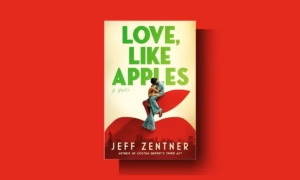
Love, Like Apples by Jeff Zentner is a 400-page novel about a Tennessee orchard boy who becomes a puppeteer on a made-up PBS show for teenagers, and it argues, quietly and with a lot of heart, that art can reach people you will never meet. Is it worth your time? Yes, if you can handle real grief alongside real humor.
URL: https://www.sopranu.com/love-like-apples-jeff-zentner-review-explained/
Author: Jeff Zentner
4.5
Pros
- Memorable narrator; Smith as moral center; vivid 1977 New York; large, well-drawn cast; an ending that reframes the opening
Cons
- Sam is a flat villain; some speeches feel rehearsed; the middle lingers; a small timeline wobble; the Coda is heavy going