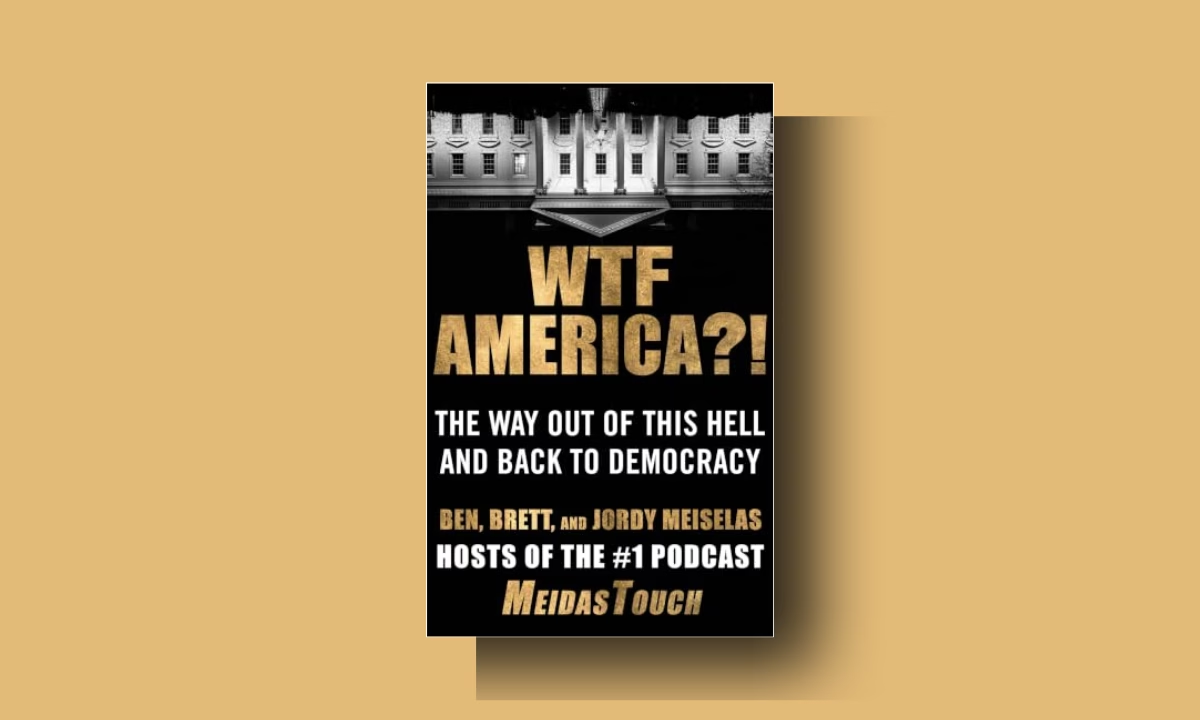
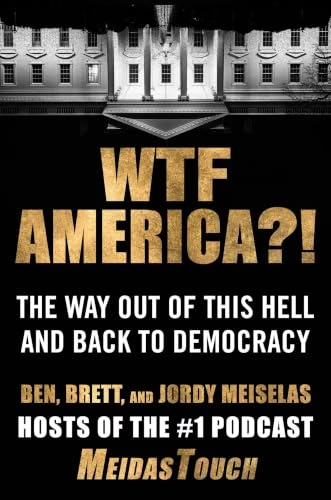
WTF America?!: The Way Out of This Hell and Back to Democracy by Ben Meiselas, Brett Meiselas, and Jordy Meiselas is a political nonfiction book about the decline of democratic trust, the influence of partisan media, political disinformation, and the struggle to restore American democracy.
Published by Grand Central Publishing in October 2026, the book presents a central argument: America’s political crisis did not emerge overnight. It developed through decades of media manipulation, political polarization, personality-driven politics, and the weakening of public confidence in institutions.
What makes the book particularly interesting is that its authors are not simply political commentators describing events from a distance.
They are the three brothers behind the MeidasTouch Network, and they tell the story from the perspective of people who built a digital media organization during the COVID-19 crisis. Their account connects the history of American political communication with their own experience of challenging misinformation and trying to reach an increasingly divided public.
This review examines both sides of their argument: why they believe America reached this point, how they explain the relationship between media and political power, what solutions they propose, and whether their proposed route back to democracy is convincing.
What are the most important lessons?
WTF America?! makes the case that the American democratic crisis is not simply the result of one politician or one presidential administration. According to Ben, Brett, and Jordy Meiselas, it is the outcome of a long political and media transformation that began decades before Donald Trump’s rise.
The authors connect Roger Ailes’s political media strategy, the growth of conservative talk radio, the emergence of Fox News, reality television, digital misinformation, political influencers, wealthy interests, and the weakening of democratic institutions.
Their central argument is that a political movement can gain power by controlling public attention, shaping people’s understanding of reality, and turning complicated social problems into emotional conflicts between opposing groups.
However, the book does not end with criticism. Its final chapters propose a different approach built around independent journalism, civic participation, international democratic cooperation, public accountability, political organization, and a positive vision of government.
The most important lessons are:
- Democracy can be weakened before people recognize what is happening. Political institutions, public trust, and democratic expectations can deteriorate gradually.
- Media shapes political reality. Repeated messages, selective reporting, emotional storytelling, and misinformation can influence how people understand public affairs.
- Attention is a political resource. The authors argue that outrage and entertainment have increasingly displaced serious discussion of public policy.
- Independent journalism matters, but it must remain accountable. Alternative media can challenge powerful institutions, although independence alone does not guarantee accuracy.
- Political accountability requires evidence. Legal proceedings, investigations, public records, and transparent institutions matter more than political slogans.
- Democracy cannot depend on elections alone. Citizens must participate between elections and defend institutions over the long term.
- A better political future needs a positive programme. The authors call for policies addressing healthcare, education, housing, equality, environmental protection, economic security, and public service.
My central reading of the book: its most interesting contribution is the connection it draws between the business of capturing attention and the political business of weakening democratic accountability.
Who should read WTF America?! and who might not enjoy it?
I would recommend this book to readers interested in American politics, political communication, journalism, propaganda, democratic institutions, and the relationship between media and political power. It is particularly useful for people who want to understand how a political personality can become the centre of a much larger communication and institutional structure.
Students of political science, media studies, journalism, sociology, and contemporary history can also use it as a starting point for discussion. However, readers looking for a politically neutral academic textbook, a balanced history of both American political parties, or a detailed statistical study of democratic decline may find its strongly pro-democracy and anti-Trump perspective limiting.
It is best approached as an argument by politically engaged media practitioners, not as a substitute for independent historical and political research.
Introduction: What is WTF America?! about?
The book was published by Grand Central Publishing, an imprint of Hachette Book Group. The publisher describes it as an examination of how the United States reached a dangerous political moment and how citizens can work to defend democratic institutions.
The authors are the three brothers who founded MeidasTouch.
Their professional backgrounds are relevant to understanding the book’s approach:
- Ben Meiselas is a lawyer and former civil rights attorney. His chapters frequently approach political developments through legal accountability, institutional responsibility, and the consequences of government decisions.
- Brett Meiselas is an Emmy Award-winning video editor whose background is in film, television, and digital storytelling.
- Jordy Meiselas is a marketer and brand strategist whose experience informs the book’s discussion of audience development, branding, and political communication.
What is the central argument of the book?
The central argument is that Donald Trump should not be understood as the sole cause of America’s political crisis.
The authors express this idea particularly clearly in the publisher’s description:
“Trump is the vessel, not the disease.” (Publisher’s book description.)
This is an important distinction.
Rather than treating Trump’s political success as an isolated event, the authors examine the conditions that made it possible. They argue that political propaganda, media concentration, wealthy interests, misinformation, institutional weakness, and the transformation of public attention helped create an environment in which authoritarian politics could flourish.
Their second argument is equally important: the solution must be larger than defeating one political candidate. It requires rebuilding the institutions, communication systems, political values, and public participation that make democracy sustainable.
In other words, the book asks two questions:
- What happened to American democracy, and what forces brought the country to this position?
- What must ordinary citizens, journalists, institutions, and political leaders do to restore democratic accountability?
The introduction establishes these questions, while the final chapters attempt to answer them.
Background: Why did the Meiselas brothers write this book?
The origin of the book is closely connected to the COVID-19 pandemic.
According to the authors’ account, the three brothers were living in different parts of the United States when the pandemic disrupted everyday life in March 2020. They followed Donald Trump’s public statements about COVID-19 and became increasingly concerned about what they considered misinformation, poor leadership, and the failure of mainstream news organizations to respond adequately.
Their initial response was not to establish a large news company. They began by communicating privately and discussing whether they could produce their own videos and articles.
On March 30, 2020, they launched MeidasTouch.
The second chapter, Going Viral, describes this beginning. It also explains the individual contributions of the three brothers:
- Ben brought legal training and an understanding of civil rights.
- Brett contributed video editing and visual storytelling.
- Jordy contributed marketing and digital communication experience.
The name MeidasTouch combines the family name Meiselas with a reference to the mythical King Midas and the idea of a golden touch. The brothers also connect the name with their belief that truth, rather than artificial appearances of wealth and success, should be the real source of value .
Their story is not merely an account of how a podcast and news network became popular. It establishes the perspective from which they approach the rest of the book.
The authors believe that people who are dissatisfied with established media should not remain passive. They can build alternative communication platforms, organize communities, and challenge powerful institutions.
Their experience becomes the practical foundation for their later argument about independent journalism.
For readers interested in the network’s origins, Brett also discussed the first videos and the brothers’ early work in a 2024 retrospective.
WTF America?! summary
The following section follows the book’s 13-chapter structure and conclusion. Page references identify the PDF page positions in the uploaded copy, rather than claiming that they correspond directly to the publisher’s printed pagination.
Introduction: What the…?
The introduction establishes the emotional and political foundation of the entire book.
The authors begin with a question: how did America reach a point where its democratic institutions, political culture, and public conversation appear so deeply divided?
They also ask how three brothers without traditional political careers became the founders of a major independent news organization.
These questions are connected. Their personal experience becomes a way to explain the broader changes in American politics and media.
The introduction identifies several principles that the authors believe should guide American public life:
- Justice and equality.
- Decency and compassion.
- Democracy and fairness.
- Public service rather than personal enrichment.
- Respect for individual dignity.
- Protection of freedom and democratic participation.
One particularly important point is their criticism of the use of government power to punish political opponents or intimidate ordinary citizens.
The authors also criticize political leaders who concentrate on their wealth, personal image, family interests, and public spectacle rather than improving people’s lives.
Their preferred alternative is a government that protects citizens’ rights and addresses practical problems such as healthcare, environmental protection, economic insecurity, and social equality.
My interpretation: The introduction makes clear that this is not intended to be a detached political history. It is a passionate defence of a particular understanding of American democracy.
Chapter 1: Into This Hell: WTF Got Us Here?
What caused the political and media environment described in the book?

The first chapter argues that the modern American political crisis has roots extending back several decades.
The authors begin with Roger Ailes, a Republican media consultant who worked with Richard Nixon.
In 1970, Ailes prepared a memorandum titled A Plan for Putting the GOP on TV News. Its central proposal was to develop a political communication strategy that could bypass conventional news organizations and communicate a favourable Republican narrative directly to voters.
The authors use this episode to introduce their main historical argument: political communication gradually became a powerful instrument for shaping how Americans understood reality.
They then identify three major developments.
1. The rise of partisan talk radio
The authors describe how conservative talk radio became increasingly influential, particularly after the Federal Communications Commission abolished the Fairness Doctrine in 1987.
They focus on Rush Limbaugh, whose nationally syndicated programme popularized a combative style of political discussion.
Rather than concentrating on policy disagreements alone, this form of broadcasting often relied on political insults, cultural grievances, and the division of society into opposing groups.
The authors argue that listeners could spend hours consuming political commentary without encountering meaningful opposing perspectives.
For them, this helped normalize political hostility.
2. The establishment of Fox News
The second major development was the creation of Fox News.
Rupert Murdoch provided the financial backing, while Roger Ailes developed the network’s editorial and programming strategy.
Fox News launched on October 7, 1996. The authors describe how its programming combined opinionated presenters, partisan political commentary, emotionally charged subjects, and a strong Republican orientation.
Their criticism focuses on the gap between the network’s public slogan, “Fair and Balanced,” and what they perceive as its actual political approach.
They contrast Fox’s consistent political identity with CNN’s attempt to maintain a middle position and MSNBC’s difficulty establishing an equivalent audience on the political left.
3. Donald Trump and reality television

The chapter then connects the media developments of previous decades to Trump’s career in reality television.
The authors argue that The Apprentice helped manufacture an image of Trump as a highly successful businessman.
They challenge that image by discussing his business failures, inherited wealth, and the financial support he received from his father.
Their broader point is that television can create a public personality that becomes more influential than the individual’s actual record.
The phrase “You’re fired!” became a recognizable television identity. According to the authors, the programme taught Trump how to attract attention through confrontation, spectacle, and exaggerated displays of authority.
The chapter ends with a wider criticism: political communication increasingly rewards outrage instead of asking whether leaders actually improve people’s lives.
Main lesson: Political manipulation did not begin with social media. The foundations were established through television, talk radio, and the deliberate construction of political identities.
Chapter 2: Going Viral: WTF Can We Do?
How can ordinary citizens challenge misinformation?
The second chapter shifts from historical explanation to the personal experience of the authors.
The brothers describe the COVID-19 pandemic as the event that pushed them into public political communication. They were concerned about Trump’s statements regarding the virus and what they saw as the inadequate response of established news organizations. Initially, their discussions happened through group messages. Eventually, they decided to make videos and publish articles.
The chapter explains how they divided their responsibilities.
Brett established their social media accounts and built the initial website. Jordy helped create the MeidasTouch brand. Ben contributed his legal and political perspective.
Their different professional backgrounds became an advantage.
The authors describe their early efforts to produce videos, build an audience, reach journalists, and develop relationships with the growing MeidasTouch community.

They call their supporters the Meidas Mighty.
This community is an important concept throughout the book. The authors do not present their media organization as simply a group of journalists producing content for passive viewers. They describe it as a participatory community whose members share information, discuss political developments, and encourage others to become involved.
Another important aspect of this chapter is the authors’ recognition that digital technology has reduced some traditional barriers to entering the media industry.
A person no longer needs to own a television station or have access to a large broadcasting company to publish political content.
However, the chapter also introduces a question that becomes more important later: does reaching a large audience automatically mean that a news organization is delivering reliable information?
The authors answer by emphasizing fact-checking, accountability, and consistent attention to public affairs.
Main lesson: People do not need to wait for established institutions to give them permission to participate in public communication. They can build their own platforms and communities.
Chapter 3: Regime Reality: WTF Qualifies Any of Them?
Why do the authors believe political leadership and public service have deteriorated?
This chapter examines the people and political appointments surrounding Trump’s administration.
Its central concern is the difference between qualifications for public office and loyalty to a political leader.
The authors use the idea of a reality television programme to describe the administration’s personnel choices and political behaviour.
The chapter begins by connecting Trump’s entertainment background with his approach to government. In the authors’ view, political appointments increasingly resemble the selection of television personalities rather than a careful assessment of professional qualifications and public responsibilities. They discuss government positions, including the selection of individuals for major administrative and national security responsibilities.
The section Reporting for Duty focuses on the people appointed to serve in government. The authors question whether loyalty, personal relationships, and ideological alignment are being valued above professional competence.
The section Race to the Bottom develops their concern about the consequences of such decisions.
The authors’ argument is that public institutions require people who understand their responsibilities and can exercise independent judgment.
If political leaders appoint people primarily because they are personally loyal, the institutions they lead may become less capable of challenging harmful decisions.
There is an important distinction here between political accountability and political loyalty.
A government official should be accountable to the public, the law, and the responsibilities of their office. The authors fear that this relationship is being replaced by personal loyalty to the president.
Main lesson: Public office should be treated as a responsibility to citizens, not as a reward for personal loyalty.
Chapter 4: Mass Distraction: WTF Are You Looking At?
How does political distraction affect democratic accountability?
This chapter examines the relationship between political spectacle and public attention.
The authors argue that Trump frequently generates controversy through dramatic statements, confrontations, and provocative public performances.
These events dominate news coverage and social media discussions.
The problem, according to the authors, is that attention is limited. When journalists and audiences spend considerable time discussing the latest controversy, other important matters may receive less scrutiny.
They describe this as a form of mass distraction.
The section Hand of Bannon introduces the role of political strategist Steve Bannon in the wider discussion of political messaging and the deliberate use of controversy.
The chapter then develops the idea of Trump’s distorted political reality.
The authors argue that political supporters can become accustomed to explanations that reinterpret unfavourable events as victories and turn criticism into evidence of persecution. This is important because political accountability depends on the ability to recognize failure. If every failure can be reinterpreted as an attack by enemies, it becomes much harder for citizens to evaluate public performance.
The authors also discuss the importance of facial expressions, public presentation, branding, and the visual side of political communication.
Main lesson: You should not measure the importance of a political event by how much attention it receives. Ask what important public questions may be disappearing behind the spectacle.
Chapter 5: Firehose of Truth: WTF Are We Doing About the Lies?
How should journalists respond to repeated political misinformation?
This chapter moves from identifying misinformation to considering how it should be challenged. The authors argue that simply repeating a false statement and then presenting a correction may not be enough. A false narrative can spread rapidly, especially when it is emotionally appealing or repeatedly promoted by influential figures.
The chapter identifies several approaches.
Rapid response: Journalists must investigate misleading statements quickly and provide evidence-based corrections.
Generational engagement: Political misinformation affects people differently depending on their media habits, age, and social environment. Communication must reach people where they actually consume information.
Correcting distorted narratives: In Bend It Like Donald, the authors examine the ways Trump allegedly changes the framing of events to suit his political objectives.
Maintaining public attention: The chapter discusses the need to keep audiences informed after the initial controversy has passed.
The section More Zombie Bites develops the recurring problem of misinformation returning even after it has been publicly challenged.
The metaphor is useful: a false claim can appear to have disappeared, only to return in a slightly different form.
The chapter also addresses political communication within religious communities through its discussion of religious messaging and the relationship between public values and political influence. The authors’ practical position is that journalists must do more than identify a lie. They must explain why it is misleading, provide relevant evidence, and help people understand the larger issue.
Main lesson: Correcting misinformation requires repetition, context, evidence, and sustained communication.
Chapter 6: Hear Me: WTF Are They Supposed to Believe?
How can political communication reach people who disagree with you?
This chapter examines the challenge of communicating with audiences who do not necessarily share the authors’ political assumptions.
The authors recognize that publishing accurate information is not enough if the intended audience never encounters it or immediately rejects it. They discuss the importance of understanding different audiences, choosing suitable communication methods, and presenting political arguments in ways that people can understand.
The section Niche Play considers the importance of specialized audiences and communication communities.
Rather than assuming everyone consumes news in the same way, the authors emphasize that different groups respond to different voices, formats, and subjects.
The section Game Plan considers how political communication can be organized around a more deliberate strategy. One of the most interesting discussions is Devil’s Bargain. It concerns the compromises that can occur when political actors or media organizations pursue influence without maintaining their principles.
The authors also discuss the importance of reaching people who may be dissatisfied with existing political conditions.
Their larger argument is that a democratic movement cannot succeed by speaking only to people who already agree with it.
My interpretation: This is one of the most important communication lessons in the book. If your purpose is to defend democracy, you must be able to communicate beyond your existing political audience.
Main lesson: Effective democratic communication requires more than strong opinions. It requires an understanding of the audience, appropriate messaging, and a willingness to engage people outside your immediate community.
Chapter 7: Making the Case: WTF Happened to Justice?
Why is an independent justice system necessary for democracy?

Chapter 7 draws particularly on Ben Meiselas’s legal background.
Its central argument is that democracy cannot function properly when legal institutions become instruments of political power.
The authors examine the relationship between political influence, prosecutors, courts, government agencies, and the rule of law. A recurring theme is the distinction between evidence-based legal accountability and politically motivated accusations. The section Learning Curve discusses the importance of understanding legal institutions and the processes through which cases are developed. The authors also consider how legal strategies can be used to defend individuals and challenge government decisions.
In Change of Venue, they examine the relationship between legal proceedings and political pressure.
The chapter’s discussion of Bad Faith focuses on the danger of political actors who use legal processes strategically while avoiding the standards of fairness and accountability expected from public institutions.
The broader argument is that the law should apply independently of a person’s political influence.
This does not mean that politicians should be immune from investigation. Nor should legal proceedings be treated as opportunities for political revenge.
A credible justice system requires evidence, due process, independent judgment, and consistent standards.
Main lesson: Democratic government depends on the principle that no individual should be above the law, including the people who exercise the greatest political power.
Chapter 8: Manning Up: WTF Is So Great About Rogan?
Why do the authors focus on Joe Rogan and the manosphere?
This chapter examines the growing influence of podcasts, online personalities, and male-oriented digital communities.
The authors use Joe Rogan as an example of a media personality whose audience and cultural influence extend beyond traditional journalism.
Their criticism is not simply that a podcast host expresses political opinions. Rather, they question the influence of personalities who can reach enormous audiences without necessarily following the editorial standards associated with established newsrooms.
The chapter considers the appeal of online male communities.
Many young men face genuine difficulties involving economic uncertainty, social expectations, loneliness, identity, and the search for role models.
The authors argue that certain online personalities exploit these feelings by offering simplistic explanations, aggressive masculinity, resentment, and the promise of individual superiority.
The section Butt Sniffers uses deliberately provocative language to criticize personalities who, in the authors’ view, behave like followers rather than independent thinkers.
Nest of Oligarchs widens the discussion to the relationship between wealthy interests, political influence, and popular digital personalities.
However, the chapter is not simply a rejection of young men’s concerns.
The authors recognize that young people need community, meaningful relationships, and examples of responsible leadership.
The final section, Who We Are and Who We Aren’t, returns to the authors’ own values and their preferred model of public communication.
One noteworthy observation is that a person can build a large following without necessarily providing the kind of leadership that improves society.
Main lesson: Popularity is not the same as credibility, and masculinity should not be defined by aggression, humiliation, or loyalty to influential personalities.
Chapter 9: Epstein Class: WTF Are You Doing with Epstein?
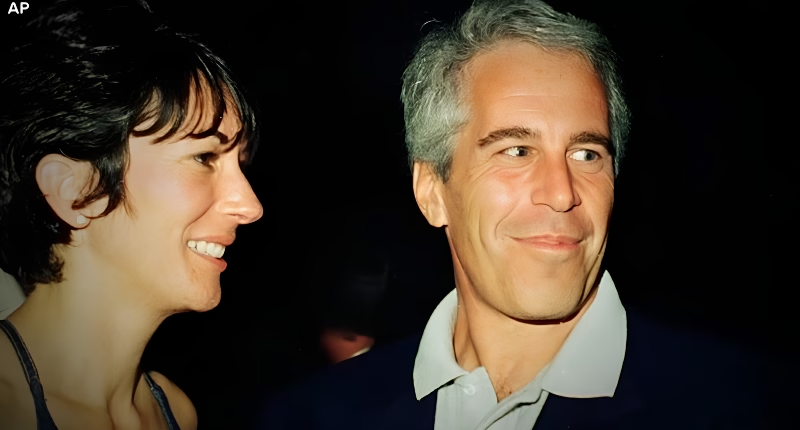
What does the Epstein case reveal about political hypocrisy and powerful networks?
This chapter examines Jeffrey Epstein, Ghislaine Maxwell, the abuse of young women and girls, and the political controversy surrounding powerful people who associated with Epstein.
The authors introduce the term Epstein Class to describe the privileged social and political circles that, in their argument, protected influential individuals while vulnerable victims suffered.
They begin by criticizing conspiracy narratives such as Pizzagate.
Pizzagate falsely alleged that a Washington pizza restaurant was the centre of a child-trafficking operation involving prominent Democrats. In December 2016, an armed man entered the restaurant claiming that he intended to investigate the allegations.
The authors use this example to show how fabricated child-protection narratives can create real-world danger.
They then contrast those fabricated allegations with the documented crimes associated with Epstein and Maxwell.
The chapter examines several subjects:
1. The social environment surrounding Epstein
The authors discuss Epstein’s relationships with wealthy, influential, and politically connected individuals.
They argue that powerful social networks can make accountability more difficult, particularly when victims have fewer resources and less public influence.
2. The relationship between Trump and Epstein
The authors examine Trump’s past social association with Epstein and discuss reporting and testimony concerning their wider social circles.
It is important to distinguish social association from proof of criminal involvement. Being associated with Epstein does not, by itself, establish participation in his crimes.
The authors use the relationship to question the consistency of Trump’s public statements about protecting children.
3. The responsibility of institutions
The chapter examines the treatment of victims, public demands for transparency, and political responses to the Epstein controversy.
A major theme is that powerful individuals should not be shielded from investigation because of their social or political position.
4. Transparency and public accountability
The section More to Come discusses the continuing struggle over disclosure and the political pressure surrounding Epstein-related information.
The authors emphasize that transparency is not simply a matter of political advantage. It is also a matter of justice for survivors.
The chapter is particularly important because it connects political hypocrisy with the unequal distribution of power.
Main lesson: The protection of children must be based on evidence and actual investigations, not selective accusations against political opponents.
Chapter 10: Big World: WTF Do They Know That We Don’t?
Why should the American democratic crisis be understood internationally?
This chapter expands the book beyond American domestic politics.
The authors argue that authoritarian movements do not operate in complete isolation. Political leaders, wealthy interests, communication networks, and ideological movements can influence one another across national boundaries.
The chapter begins by reflecting on the 2024 presidential election and the authors’ reaction to Trump’s return to office.
They describe their disappointment and their determination to understand what happened.
However, they do not treat the election as a reason to withdraw from political participation.
Instead, they ask what democratic movements can learn from the experience. The section Monroe, Revisited introduces an international dimension to the discussion of American power and political influence. The authors argue that America must understand how its decisions affect other countries and how authoritarian developments abroad can influence American politics.
Their position is that democratic movements should also develop international relationships.
This is an important shift in the book’s argument.
In the earlier chapters, the main focus is on American political communication and domestic institutions. Here, the authors argue that democratic resilience must operate across national boundaries.
They believe that authoritarian movements benefit from international cooperation, so democratic movements should develop stronger international connections of their own.
Main lesson: Defending democracy requires international awareness. A country’s political future cannot be separated completely from global political developments.
Chapter 11: Paint It Blue: WTF Is Floating in the Nasty Water?
What does the reflecting pool symbolize in the authors’ criticism of government?
This is one of the book’s most visually memorable chapters.
The authors use the Lincoln Memorial Reflecting Pool as a metaphor for political management. They begin by describing the pool’s maintenance problems, including filtration issues and leaks. They then connect its physical condition to a wider criticism of Trump’s governing approach.
Their metaphor is that instead of properly repairing a problem, the administration attempts to cover it up or make it appear attractive. The chapter describes the reflecting pool as an important public space with a long history of American civic gatherings. The authors refer to Marian Anderson’s 1939 performance, Martin Luther King Jr.’s 1963 March on Washington speech, anti-Vietnam War demonstrations, and the 2020 racial justice protests.
The location therefore represents more than a public construction project. It is a place associated with political expression, civil rights, and collective memory.
The chapter then moves through several examples of what the authors consider superficial political presentation.
The section Name Game discusses the use of Trump’s name and branding in public institutions and political spaces.
The section Deep End returns to the consequences of political image management and the attempts to control how events appear to the public. The important idea is that political leaders may concentrate on how a decision looks rather than whether it solves the underlying problem.
My interpretation: This metaphor is effective because it turns an abstract criticism of government into something readers can visualize. Painting over a problem is not the same as repairing it.
Main lesson: Good government requires actual solutions, not merely attractive appearances or public relations.
Chapter 12: No-Deal Donald: WTF Has He Ever Negotiated?
Does the book believe Trump is really a successful negotiator?
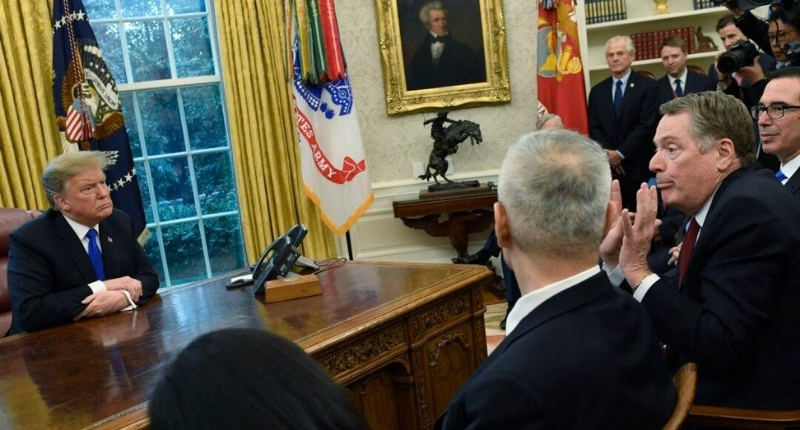
Chapter 12 challenges Trump’s public image as an exceptionally successful dealmaker.
The authors examine his repeated claims about negotiation and compare those claims with what they describe as the outcomes of his business and political decisions.
The chapter focuses particularly on trade agreements, tariffs, international relationships, and the consequences of abandoning existing agreements.
One example is Trump’s promise to make 90 deals in 90 days. The authors argue that the administration’s actual progress fell far short of this target. They also examine the withdrawal from or rejection of previous international arrangements, including the Iran nuclear agreement, the Paris Climate Agreement, and other international agreements.
The discussion is not limited to international politics.
The authors also consider the importance of negotiation as a general skill.
The section Terrible, Horrible, No Good examines the consequences of failed negotiations and the gap between boasting and actual results.
The section Take Care offers a more practical discussion of what effective negotiation should look like.
Among the principles presented are:
- Understand the other party’s position.
- Establish clear objectives.
- Define what success means.
- Negotiate in good faith.
- Avoid arbitrary deadlines.
- Do not make ultimatums you are unwilling to enforce.
- Avoid personal insults and unnecessary humiliation.
- Keep commitments once an agreement has been reached.
The chapter also refers to the United States Constitution as an important agreement that establishes the basic framework of American government.
This is a particularly interesting connection because it links negotiation with democratic cooperation.
The Constitution requires political actors to work within an agreed system, even when they disagree about policy.
Main lesson: Negotiation is not about repeatedly announcing victory. It requires preparation, mutual understanding, credible commitments, and the willingness to honour agreements.
Chapter 13: Out of This Hell: WTF Is on the Other Side?
What practical steps do the authors propose for restoring democracy?
This is arguably the most important chapter because it moves beyond criticism and presents the authors’ preferred direction for the future. They begin with a direct acknowledgement: no single political candidate, expert, or institution will rescue the country. The authors describe restoring democracy as a collective responsibility.
Their proposed approach has several major components.
1. Rebuild independent media
The authors believe independent journalism is one of the strongest ways to challenge misinformation and concentrated political influence.
They argue that alternative news organizations can reach audiences directly without depending entirely on traditional broadcasting companies.
They also want independent journalists to cooperate rather than operate as isolated individuals.
2. Build a positive political vision
The authors warn that simply opposing an authoritarian political movement is not enough.
People need a reason to support a democratic alternative.
They identify practical issues that should unite citizens, including:
- Affordable housing.
- Accessible education.
- Healthcare.
- Fair wages.
- Environmental protection.
- Women’s reproductive freedom.
- Sensible gun reform.
- Economic opportunity.
- Freedom of expression.
- Equality and social mobility.
3. Organize around common interests
The authors discuss the importance of issues that can attract broad public agreement.
Their references to the 75/25 and 80/20 approaches suggest building political coalitions around issues with substantial public support rather than allowing every disagreement to become an identity-based conflict.
4. Think beyond one election cycle
The authors argue that democratic restoration requires long-term planning.
They discuss the idea of a generational political project and use Project 2050 as a way to express the need for a longer-term alternative to short electoral cycles.
Their concern is that changing presidents every four years cannot, by itself, resolve the structural problems that have weakened democratic institutions.
5. Strengthen international democratic cooperation
The authors believe that democratic movements should cooperate internationally because authoritarian movements also have international relationships.
They want the defence of democratic principles to become a shared effort across countries.
6. Restore responsible leadership
The chapter repeatedly returns to the idea that government should serve people rather than powerful individuals.
The authors emphasize empathy, accountability, respect, and the importance of leaders who understand public service.
One of their strongest points is that democratic success should be measured by improvements in people’s lives, not simply by which political party defeats another.
Main lesson: The way out of the political crisis requires a long-term democratic movement, independent media, public participation, practical policies, and responsible leadership.
Conclusion: In the Trenches: WTF Happens Next?
The conclusion returns to the book’s most important question: what happens after people recognize the danger?
The authors argue that authoritarian leaders frequently follow recognizable patterns. They begin by creating shock, attacking established institutions, and weakening the structures that might hold them accountable. The authors believe that public resistance must begin before people become accustomed to these developments.
However, the conclusion is not entirely pessimistic.
It emphasizes that ordinary citizens can resist political intimidation and help build new institutions.
The authors argue that the power of democracy ultimately comes from people rather than from political leaders alone.
They also return to the Meidas Mighty community and the importance of collective participation. Their final message is that citizens should not surrender their political agency to powerful personalities. The future of democracy depends on people who are willing to remain informed, organize, participate, and defend the principles they believe in.
The five biggest arguments in WTF America?!
The chapter-by-chapter summary reveals several recurring ideas. I think these five arguments are the most useful for understanding the entire book.
Argument 1: Media is not simply a source of information; it can become a source of political power.
The authors’ historical discussion of Roger Ailes, Rush Limbaugh, Fox News, and reality television is central to this argument.
Their concern is that political communication can influence how people interpret events before they have an opportunity to examine the underlying evidence.
For example, a political issue involving economic insecurity may be reframed as a conflict between cultural groups.
As a result, public attention moves away from economic policy and towards political resentment. This is not just a question of whether a particular news organization is conservative or liberal. It is a question of how media ownership, editorial priorities, political influence, and audience behaviour affect public understanding.
Educational significance: This argument is relevant to media studies, political communication, agenda-setting, framing theory, and the study of propaganda.
Argument 2: Political spectacle can distract people from actual government performance.
The authors repeatedly return to the difference between appearance and substance.
Their discussion of The Apprentice shows how a television programme can construct an image of business success.
Their discussion of the reflecting pool illustrates how political image management can become more important than solving a problem.
The underlying question is simple:
Are citizens evaluating what their government actually accomplishes, or are they reacting to what political leaders want them to see?
This is a useful framework for studying political branding and the relationship between entertainment and governance.
Argument 3: Misinformation is difficult to defeat because it can become part of someone’s identity.
The authors’ discussion of recurring misinformation is particularly relevant.
People do not always accept information based on evidence alone.
Political identity, group belonging, personal experience, and trust in a particular communicator can influence how information is interpreted.
This means that correcting a false claim may not be sufficient.
Journalists and educators must explain the evidence, understand the audience, and communicate in a way that encourages independent thinking.
The authors’ response is to develop independent news organizations that can challenge misleading narratives.
My qualification is that independent media must apply the same standards of verification and correction that it demands from established media.
Argument 4: Democratic institutions need independence and accountability.
The discussion of justice, government appointments, and political influence shows that the authors see institutional independence as essential.
Courts, prosecutors, journalists, public agencies, and elected officials must be able to perform their duties without inappropriate political pressure.
This is an argument about the quality of democratic government, not merely about one political administration.
Argument 5: Democratic restoration must improve everyday life.
The final chapters make an important transition.
The authors do not want democracy to become a political slogan that exists only during election campaigns.
They connect democracy with practical improvements in people’s lives.
A government that cannot address healthcare, housing, education, economic security, and equal rights may struggle to maintain public confidence.
This is perhaps the strongest part of their proposed alternative: democracy must offer people something meaningful, not merely promise protection from authoritarianism.
Independent analysis: How convincing is the book’s argument?
The most interesting way to evaluate WTF America?! is to compare its central argument with research on media consumption, political trust, and democratic institutions.
The book is written from a clearly stated political position. That does not automatically make its arguments incorrect. However, readers should distinguish between three things:
- Historical facts that can be independently checked.
- Interpretations of political events offered by the authors.
- Predictions and recommendations about what might happen next.
This distinction matters because the book frequently moves between historical explanation, political criticism, and personal experience.
Does research support the authors’ concerns about media fragmentation?
There is independent evidence that the American news environment is becoming increasingly divided.
According to the Pew Research Center’s June 10, 2025 report, The Political Gap in Americans’ News Sources, Republicans and Democrats differ considerably in the news sources they regularly use and trust.
For example:
- 57% of Republicans and Republican-leaning independents regularly received news from Fox News.
- 48% of Democrats and Democratic-leaning independents regularly received news from CNN.
- 33% of Democrats regularly received news from MSNBC.
- 22% of Republicans regularly received news from The Joe Rogan Experience.
These figures refer to different political groups and should not be interpreted as a direct comparison of overall audience sizes. They demonstrate differences in news consumption habits.
Political differences in regular news consumption.
Is public trust in journalism actually declining?
Pew Research Center’s October 29, 2025 analysis provides further context.
Its survey of 5,195 American adults, conducted September 8–14, 2025, found:
| News source | Adults reporting at least some trust |
|---|---|
| National news organizations | 56% |
| Local news organizations | 70% |
| Social media sites | 37% |
Pew reported that trust in national news organizations had declined by 20 percentage points since the organization first asked this question in 2016.
This finding is important because the Meiselas brothers repeatedly argue that a healthy democracy needs trustworthy information.
However, it also creates an interesting question for their own organization.
If trust in established media is declining, independent news organizations must demonstrate why audiences should trust them instead.
Being independent is not sufficient. Credibility also requires transparent sourcing, editorial accountability, corrections, and the willingness to acknowledge mistakes.
Is the history of partisan broadcasting presented accurately?
The book’s discussion of the Fairness Doctrine is an important starting point.
The Federal Communications Commission’s historical records confirm that the doctrine became a subject of major regulatory and constitutional debate. The FCC’s 1987 decision is documented in its official record, and the commission later formally removed obsolete references to the doctrine in 2011
The historical connection between partisan broadcasting and the later development of cable news is worth examining.
Nevertheless, the repeal of the Fairness Doctrine should not be treated as the single cause of political polarization. Changes in technology, political parties, audience behaviour, media ownership, and the economics of broadcasting also matter.
The authors provide a clear historical narrative, but a more comprehensive academic explanation would need to examine these additional factors.
What does the book get right about democratic institutions?
The book’s argument that democratic institutions require more than formal elections is supported by established political scholarship.
In How Democracies Die, Harvard political scientists Steven Levitsky and Daniel Ziblatt examine how democratic systems can deteriorate through the gradual weakening of political norms and institutional safeguards.
Their work provides a useful academic comparison with the Meiselas brothers’ more journalistic approach.
Both works emphasize that democratic institutions can be damaged from within.
The difference is that Levitsky and Ziblatt develop their argument through comparative political science and historical examples, whereas the Meiselas brothers place greater emphasis on media, political communication, current events, and their own experience.
Critical review: What did I find compelling, and what are the weaknesses?
Overall editorial rating: 4/5
My personal assessment
I found WTF America?! an engaging and politically forceful book, particularly when it explains how media, political personalities, and public attention can influence democratic life. Its greatest strength is that it does not stop at criticizing a political leader. It attempts to explain the communication structures and institutional conditions that made that leadership possible.
However, I found its confidence in independent media as a major solution less convincing without a fuller discussion of how independent outlets themselves should be held accountable.
Strengths
1. A connected historical narrative
The movement from Roger Ailes to Rush Limbaugh, Fox News, reality television, and digital political personalities gives the book a recognizable historical structure.
Rather than discussing each media development as a separate phenomenon, the authors connect them through the theme of political attention.
2. The authors’ professional experiences
The three brothers bring different perspectives.
Ben’s legal background, Brett’s visual storytelling experience, and Jordy’s marketing experience give the book a combination of legal, communication, and business perspectives.
This makes their discussion of media strategy more personal than a conventional political commentary.
3. Strong use of metaphors
The reflecting pool chapter is a particularly memorable example.
The idea of painting over a problem instead of repairing it makes the authors’ criticism easy to understand. The book also uses the metaphors of a virus, a firehose, a reality show, and a road out of political crisis.
4. A practical conclusion
The final chapters discuss concrete subjects such as healthcare, education, housing, equality, and economic opportunity.
This makes the book more constructive than a work that simply identifies political problems.
5. A clear explanation of independent media’s role
The authors explain why they believe people should participate in news production rather than remain passive consumers.
This is particularly useful for students of journalism and digital communication.
Weaknesses
1. A strongly partisan perspective
The book is openly critical of Donald Trump and the MAGA political movement.
That is part of its identity, but it limits its ability to function as a comprehensive, politically neutral account of American democracy.
Readers should seek additional perspectives before accepting its broad political conclusions.
2. A tendency to connect complex developments through one dominant narrative
The authors place substantial emphasis on the influence of conservative media and political communication.
However, American political polarization has many causes, including economic inequality, racial divisions, institutional structures, geographical differences, party realignment, and changes in technology.
The book would benefit from a more systematic examination of these competing explanations.
3. Independent journalism needs stronger self-criticism
The authors present MeidasTouch and independent media as major parts of the solution.
That is understandable given their professional experience. Nevertheless, independent outlets can also make mistakes, develop political blind spots, and become dependent on personalities or audience expectations.
The book could have examined these risks more fully.
4. Some arguments require more comparative evidence
The authors make broad claims about political movements, wealthy interests, and institutional decline.
Some are presented through examples and reporting rather than a systematic comparative research design.
For academic readers, additional independent data and opposing interpretations would make these arguments stronger.
5. The proposed democratic programme is broad
The final chapters offer an attractive vision, but some proposals remain at the level of principles and political priorities.
For example, calling for better healthcare, housing, education, and institutional independence is not the same as explaining how to achieve these goals through legislation, funding, administrative reform, and political compromise.
The book offers a direction more than a detailed policy implementation manual.
Does the book fulfil its purpose?
Yes, substantially.
The book succeeds in presenting a connected argument about political media, misinformation, public attention, and democratic accountability. It also provides a clear explanation of why the authors believe ordinary citizens should participate in protecting democracy.
However, it is more successful as a political argument and an account of media experience than as an independent academic assessment of the causes of democratic decline.
Its greatest contribution is the connection between media power and democratic responsibility.
Comparison with similar books and works
The following books provide useful comparisons because they approach democracy, political power, misinformation, and authoritarianism from different perspectives.
1. How Democracies Die by Steven Levitsky and Daniel Ziblatt.
This is the strongest academic companion to WTF America?!. It examines how elected leaders can weaken democratic systems gradually through institutional damage and the erosion of political norms.
Difference: More comparative political science, less personal media commentary.
2. Tyranny of the Minority by Steven Levitsky and Daniel Ziblatt.
This book examines the structural weaknesses of American political institutions and how political minorities can exercise disproportionate power.
Difference: More attention to electoral systems, constitutional arrangements, and institutional reform.
3. On Tyranny by Timothy Snyder.
A short guide to recognizing authoritarian political behaviour and understanding the responsibilities of citizens.
Difference: More concise and focused on individual civic conduct.
4. Amusing Ourselves to Death by Neil Postman.
This is particularly relevant to Chapter 1 and Chapter 4. Postman examines how television and entertainment can influence public discourse.
Difference: Focuses on the relationship between communication technology and public understanding rather than contemporary American political personalities.
5. The Death of Truth by Michiko Kakutani.
This work examines the decline of shared standards of truth and the cultural consequences of misinformation.
Difference: More focused on intellectual culture, truth, and the public information environment.
Which one should you read first?
If you want to understand the historical and academic foundations of democratic decline, start with How Democracies Die. If you want to understand how media personalities and political communication fit into the contemporary American crisis, WTF America?! is a useful companion.
Together, these works provide a broader perspective than either book can offer independently.
Final verdict: Is WTF America?! worth reading?
My final impression is that WTF America?! is a politically engaging book that attempts to explain something larger than the rise of Donald Trump. It asks how media, political communication, institutional weakness, and public behaviour can combine to change the direction of a democracy.
I particularly appreciated the historical connection between Roger Ailes, conservative talk radio, Fox News, and reality television. It gives readers a framework for understanding how political communication has changed over several decades.
I also appreciated the movement from criticism to constructive proposals in the final chapters. The discussion of independent journalism, public participation, international cooperation, and long-term democratic planning gives the book a purpose beyond political opposition.
Nevertheless, I would not recommend treating every interpretation in the book as an established historical fact. Its political perspective is clear, and readers should compare its arguments with independent research and alternative viewpoints.
My recommendation: Read this book if you want to understand the relationship between political media and democratic accountability. Pair it with How Democracies Die for a more academic examination of democratic institutions.
Ultimately, the strongest message I take from the book is that democracy cannot survive through public frustration alone. It requires informed citizens, independent institutions, responsible journalism, and sustained participation.
A democracy is not protected simply because it exists. People have to keep defending it.
Research and educational discussion questions
These questions can also be used for university assignments, classroom discussions, book clubs, and research projects.
- How did Roger Ailes’s 1970 political media strategy influence the later development of partisan television news?
- What role did conservative talk radio play in the development of political polarization?
- How does reality television influence the public image of political leaders?
- What is the relationship between media ownership and political influence?
- Why can misinformation remain influential even after public corrections?
- How does political spectacle distract audiences from government performance?
- What responsibilities should independent news organizations have?
- How does political loyalty affect the independence of government institutions?
- Why does the Epstein case raise questions about institutional accountability and unequal access to justice?
- How can democratic movements build coalitions around shared economic and social interests?
- Why do the authors believe international cooperation is necessary to defend democracy?
- Can independent journalism restore public trust without adopting the same accountability standards expected of traditional news organizations?
WTF America?!: The Way Out of This Hell and Back to Democracy

WTF America?!: The Way Out of This Hell and Back to Democracy by Ben Meiselas, Brett Meiselas, and Jordy Meiselas is a political nonfiction book about the decline of democratic trust, the influence of partisan media, political disinformation, and the struggle to restore American democracy.
URL: https://www.sopranu.com/wtf-america-book-review-summary-democracy/
Author: Ben Meiselas, Brett Meiselas, Jordy Meiselas
4
Pros
- Engaging historical narrative.
- Strong discussion of media influence.
- Three complementary professional perspectives.
- Memorable examples and metaphors.
- Constructive democratic recommendations.
Cons
- Strong partisan perspective.
- Some complex political developments receive a narrow explanation.
- Independent media accountability receives insufficient examination.
- Some proposed solutions need more implementation detail.