
Last updated on October 19th, 2026 at 10:33 am
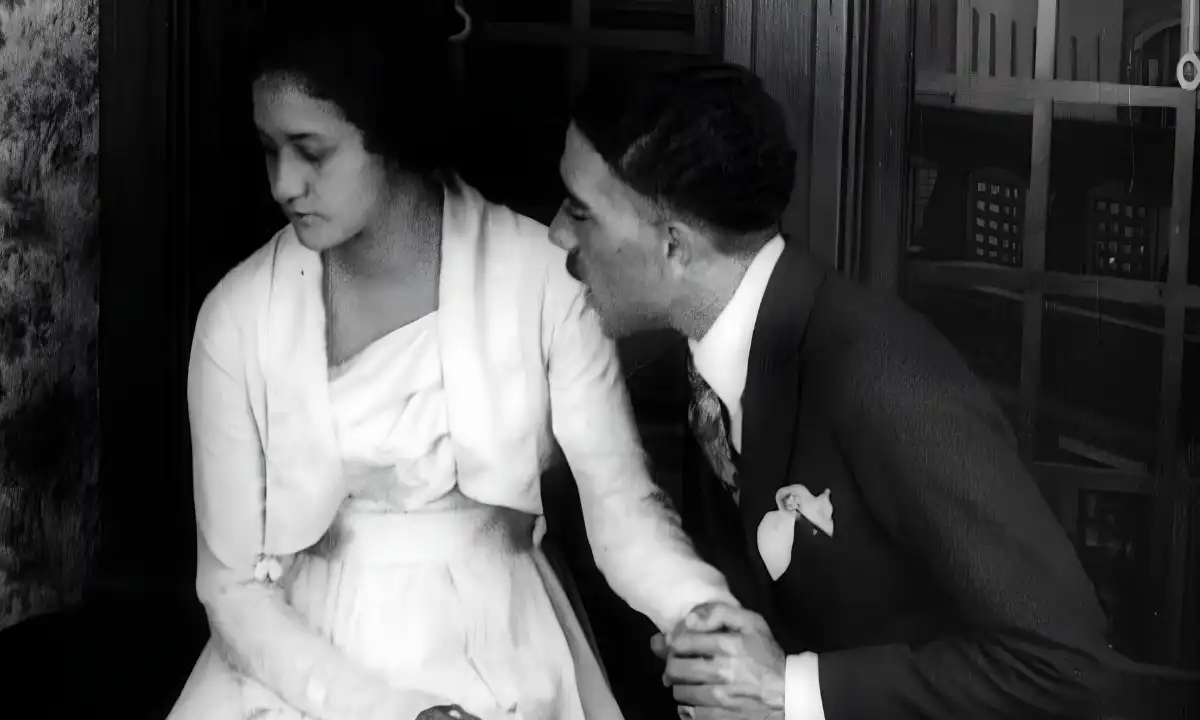
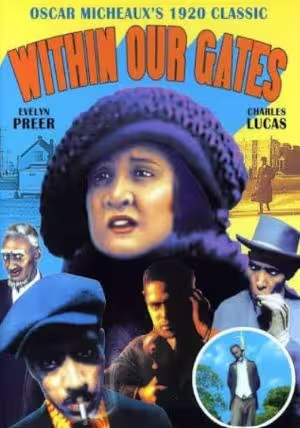
Within Our Gates is a 1920 American silent drama written, produced and directed by Oscar Micheaux, and it is the earliest known surviving feature film directed by an African American. Chicago’s censors sat on it for two months, the film then dropped out of memory for roughly seventy years, and one print eventually turned up in Spain under the title La Negra.
I find it clumsy in places and almost unbearable in others, and I still think it is one of the most important films you can watch, because it answers a famous racist hit with a story that Hollywood would not tell.
Table of Contents
Within Our Gates at a Glance
The film: a silent race drama written, produced and directed by Oscar Micheaux. Wikipedia lists a January 12, 1920 release, while the Chicago Defender advertised a Chicago run starting January 29. Running time is given as 79 minutes or 83 minutes at 18 frames per second, depending on the source and projection speed.
Why it matters: it is the oldest known surviving feature film by an African American director, and critics often read it as a reply to The Birth of a Nation.
The story: Sylvia Landry, a young Black teacher, travels north to raise money for a rural school. A late flashback shows the lynching of her adoptive parents and an attack by a white man who turns out to be her biological father.
How it survived: one print was found in Spain, and the Library of Congress preserved it in 1993. Only four of the original English intertitles survive, so the titles you read today are a reconstruction.
Official recognition: selected for the National Film Registry in 1992.
My verdict: 4.5 out of 5. The plot is crowded and the editing is rough, but the film’s nerve and its historical weight are hard to match. Expect scenes of mob violence, murder and attempted rape, which is the standard content warning programmers attach to it.
Best for: film students, history readers, anyone curious about early Black cinema. Not a casual Friday night watch.
What Is Within Our Gates and Why Does It Still Matter?
It is a 1920 race drama that put lynching, white supremacy and the Great Migration on screen at a time when almost no one else would, and it matters because the man who made it had to build his own film business to do so.
Start with Oscar Micheaux. He was born in 1884 to two former slaves, worked as a Pullman porter for three years, then tried homesteading in South Dakota. That failed, and he turned to writing. He turned down an offer from the Black-owned Lincoln Motion Picture Company to adapt his novel, because he wanted creative control.
So he raised money by selling small blocks of stock, much as he had pre-sold his books door to door. From 1918 to 1939, with one last film in 1948, he made about forty features, most of them for Black audiences in a loose network of theaters.
Within Our Gates was his second film, after the now-lost The Homesteader. One reviewer puts the budget at about $15,000 for eight reels, including advertising posters and four prints, and notes that Cecil B. DeMille’s 1918 The Squaw Man cost roughly $44,000. Where it was shot is less settled than you might expect.
Wikipedia ties the production to the early studio scene in Fort Lee, New Jersey, while Scott Simmon, who supervised the film’s restoration, describes borrowed homes and the streets of Chicago. I cannot confirm a single answer from the sources I found.
Then there is the timing. In 1919, lynchings in the United States rose from 64 to 83, and the Chicago riot that summer killed 38 people, 23 of them Black and 15 white, injured 537 and left upwards of 1,000 Black families homeless. The film premiered in Chicago less than a year later.
Five years earlier, D. W. Griffith’s The Birth of a Nation had been a hit, and critics have long treated Micheaux’s film as a response to it. I come back to that argument in the comparison section below.
One more detail helps explain why you may not have heard of it sooner. A Smithsonian report says about 80 percent of silent films made by African Americans have been lost. This one nearly joined them.
Within Our Gates Plot Summary
The film is a single feature, so there are no seasons to split. I have divided it into four movements instead. Spoilers follow, and the third part describes racial violence.
Part one: a love story collapses in the North. Sylvia Landry is a young Black woman visiting her cousin Alma in the North, waiting for her fiancé Conrad to return so they can marry. Alma loves Conrad too. Alma’s stepbrother Larry kills a gambler after cheating at poker, and Alma sets up a scene that makes Sylvia look compromised in front of Conrad. Conrad starts to strangle Sylvia, Alma stops him, and he leaves for Brazil. Sylvia goes back South.
Part two: a school needs saving. In the South, Sylvia meets Rev. Jacobs, who runs the overcrowded Piney Woods School for Black children and cannot keep it open on the small sum the state offers. She volunteers to go north and raise $5,000.
In Boston her purse is snatched, and Dr. Vivian chases the thief and returns it. Sylvia then pushes a child out of the path of a car and is hit herself. The car belongs to Elena Warwick, a wealthy philanthropist, who hears about the school and agrees to help. A Southern friend, Mrs. Stratton, tries to talk her out of it, and Warwick raises her gift to $50,000. That sum saves the school. I find this the most satisfying beat in the story: the racist argument gets made out loud, and it loses.
Part three: the past catches up. Rev. Jacobs proposes, and Sylvia refuses, since she now loves Dr. Vivian. Larry, running from the police, finds Sylvia and tries to blackmail her with secrets from her past. She runs north rather than let him expose her to the school. Larry is later shot during a bank robbery, and by chance Dr. Vivian ends up treating him and meets Alma.
Alma tells Vivian the story of Sylvia’s youth, and the film cuts to a long flashback. Simmon notes that most of the final half hour is this backstory.
In the flashback, Sylvia was adopted and raised by a poor Black family, the Landrys, who paid for her education. Her adoptive father, Jasper Landry, is wrongly accused of murdering a wealthy, unpopular white landlord, Philip Gridlestone, and the accusation comes from Philip’s loyal Black servant, Efrem. A white mob lynches Jasper and his wife and burns their bodies, while their young son Emil escapes.
The mob lynches Efrem too, even though he had helped them. Then comes the scene that audiences have argued about for a century. Philip’s brother Armand chases Sylvia and overpowers her, and he stops only when he sees a scar on her chest and realizes she is his own daughter, born to a Black woman he had married.
Part four: a patriotic ending. After hearing all this, Dr. Vivian urges Sylvia to love her country and take pride in what African Americans have contributed to it, he tells her he loves her, and they marry.
The patriotic note reflects a year when World War I was still fresh, with Vivian citing battles won by Black troops. Simmon adds that Sylvia herself does not look entirely convinced. I read that look as the most honest moment in the film.
One caution about plot summaries, including this one. Micheaux edited several versions of the film, partly because of censorship pressure, and one reviewer notes that reels of material are still missing. Details differ between write-ups, so what I describe here is the surviving restoration, not necessarily what a 1920 audience saw.
How Good Is Within Our Gates as Filmmaking?
It is uneven, but the unevenness has causes you should know about before you judge it, and the best parts are better than its reputation for roughness suggests.
The rough side first. Simmon admits the film can look meandering and even inept next to polished Hollywood work, and he explains why: it was made on the lowest possible budget by a self-taught filmmaker, and later accounts suggest Micheaux seldom allowed more than one take of a scene.
Critics collected on Rotten Tomatoes say the story is jagged and some performances are shaky, though they also treat the film as unique in the history of cinema.
Historian W. Fitzhugh Brundage, writing for the American Historical Association, says the film’s tone shifts when Sylvia heads north, and that Micheaux leans on improbable plot contrivances to turn attention to white racism. I agree with that.
The scar reveal strains belief, and the Boston chapter feels like a different film from the Southern school chapter.
Now the strong side. The film is built from digressions, cutaways and flashbacks that interrupt other flashbacks, a structure Simmon says holds together on its own terms. The last act works best. Simmon reads the finale, in both storyline and crosscut editing, as a response to Griffith.
When I watch the lynching sequence, I notice that it does not look away and does not decorate the horror. A reviewer at Movies Silently also argues that the rough, unpolished quality gives the film a documentary feel, and I think that is fair.
The censorship fight is part of the film’s story. Chicago’s censor board rejected it when Micheaux submitted it in December 1919. The Chicago Defender later claimed it took “two solid months to get by the Censor Boards”.
According to TCM, a second screening for the press, politicians and prominent Black Chicagoans convinced the board to grant a permit. A scholarly note adds that the delay was promoted in the film’s advertising, which raised public interest, and the film did well in Chicago and other markets.
Not everyone welcomed it. White theater owners in the South who served Black patrons reportedly refused to book it. In New York it ran at Harlem’s Lincoln Theatre from May 20 to 24, 1920.
The intertitles deserve a warning. The English text you read on screen is mostly not Micheaux’s. Only four of the original English intertitles survived, because the rest were replaced with Spanish ones. Simmon translated the Spanish back into English, drawing on Micheaux’s novels and on Body and Soul, and he found that the Spanish distributor sometimes simplified the American context.
So when a title card sounds awkward, you cannot be sure whose awkwardness it is.
One small pleasure for careful viewers: Micheaux cast himself in a cameo as a low-level criminal who talks about selling fake jewelry with the gambler Larry.
How Are the Performances in Within Our Gates?
The acting is stagey in places, as you would expect in 1920, but Evelyn Preer gives the film a human center that survives all the plot turns.
Evelyn Preer as Sylvia Landry. Preer landed her first Micheaux role in The Homesteader, and her early acting education came from vaudeville and street preaching.
Paul Robeson later called her the “most accomplished dramatic actress that our race has ever produced”. The Movies Silently reviewer says Preer stays believable and appealing however sharply the plot swerves.
My own impression matches that. She plays Sylvia as a woman who is tired, brave and a little guarded, and that guardedness pays off when the flashback explains it. The loss is real: apart from this film and three Christie shorts, none of her screen work is known to survive. She died of double pneumonia at 36, only months after giving birth to her daughter.
The supporting cast. Mattie Edwards plays Sylvia’s doomed adoptive mother, and the same reviewer calls her performance heartrending. James D. Ruffin plays Conrad, Sylvia’s fiancé, at full melodrama volume.
Bernice Ladd plays the genteel racist Mrs. Stratton, and the reviewer hears a deliberate echo of a Griffith heroine in her manner. Charles D. Lucas is Dr. Vivian, the earnest doctor, and William Smith plays the detective Gentry.
E. G. Tatum plays Efrem, the servant whose betrayal sets the lynching in motion, and Simmon counts him among the film’s most controversial characters, the race traitors who toady up to whites.
Standout moments. The Warwick and Stratton scene is a small duel between two white women, one decent and one polite and poisonous, and it plays well.
The best chemistry, to my eye, is not romantic. It is the grim pairing of Sylvia and her pursuer in the flashback, where the mix of fear and recognition is hard to shake.
Treat the cast list with some care: sources spell some names differently, and one catalog lists the Dr. Vivian role under a different actor. I follow Wikipedia’s credits here.
What Is Within Our Gates Really About?
On the surface it is about a teacher trying to save a school, but underneath it is about who gets to tell the truth about American racism, and what that truth costs.
Violence, and who commits it. The film reverses a picture that Griffith had made popular. A reviewer notes that the attack that Griffith pinned on Black men is here committed by a wealthy white Southerner against a biracial woman.
Brundage reads the film’s argument this way: racism is fueled by ignorance and hinders national unity, and Northern whites who looked past Southern bigotry would see Black Americans as citizens worthy of rights and respect. Simmon points out a bitter detail, too: Sunday is the day of the lynchings, when whole families can join in.
Education as the way out. The school at the center of the story carries Micheaux’s belief in uplift. Brundage says Micheaux promoted Black uplift while showing anxiety about the corrupting pull of cities on rural Black people.
The most pointed scene is the one where a wealthy woman is told that educating Black children is wasted effort, and answers by giving ten times more.
Betrayal inside the community. Micheaux did not write saints. Simmon names the servant Efrem and the minister Old Ned as the film’s controversial race traitors, and the film was criticized by parts of both the Black and white communities. I think those flawed characters are why the film feels honest rather than propagandistic. At the same time, Movies Silently notes that Micheaux has been criticized for colorism and stereotypes, which is worth holding in mind.
Race, ancestry and migration. Simmon says the mixed-race cast lets the film take on bigotry, miscegenation, the Great Migration, racial uplift and racial betrayal, more than later all-Black race movies or tamer Hollywood films did.
Patriotism with a question mark. The ending leans on military service, and Simmon’s reading is that Dr. Vivian treats Black troops’ victories as proof of a society coming together, while Sylvia looks unconvinced.
What does the title mean? Sources disagree, and I will not pretend otherwise. Simmon traces the phrase to Deuteronomy 5:14 in the King James Bible, with its sense of tolerance viewed warily. Critic Ronald J. Green thinks Micheaux chose it to hint at the risk to whites in future racial violence. A Smithsonian report says Micheaux took the title from a line in Griffith’s film.
These readings are not mutually exclusive, and I could not find a statement from Micheaux settling the question.
Emotionally, the film runs on anger and dread, with a thin line of hope. That mix is why it still lands. It does not ask you to feel comfortable, only to pay attention.
How Does Within Our Gates Compare With The Birth of a Nation and Micheaux’s Other Films?
It is best read as an argument with Griffith, though a more complicated one than “reply” suggests, and it looks different next to Micheaux’s other surviving silents.
The film is often described as Micheaux’s response to Griffith, but one history site says the reality was a bit more complex, because Micheaux echoes Griffith’s style and structure on purpose, including the South-to-North movement and the flashbacks woven into the story.
That matches what I see on screen. Micheaux borrows the tools of the film that insulted his audience and turns them around. Movies Silently summarizes Griffith’s picture as celebrating the myth of the happy slave, glamorizing the Klan and casting white actors in blackface as freed slaves. Micheaux’s film sets a Black woman at the center and shows a white mob lynching innocent people.
Where Griffith wins is polish. Where Micheaux wins is moral accuracy, and, I would argue, nerve. A rough comparison:
| Film | Year | What it does | Survival and access |
|---|---|---|---|
| Within Our Gates | 1920 | Follows a Black teacher through lynching, migration and uplift, and reverses The Birth of a Nation‘s sexual-violence narrative | Single Spanish print, restored by the Library of Congress in 1993 |
| The Birth of a Nation | 1915 | Griffith’s film that Micheaux’s project is often seen as answering | Not covered by my sources |
| Body and Soul | 1925 | Micheaux’s only silent film to survive with its original intertitles | A cut-down version was preserved by George Eastman House, and it marked Paul Robeson’s film debut |
| The Symbol of the Unconquered | 1920 | Another Micheaux silent | A print was found in Belgium and preserved by the Museum of Modern Art |
The survival column tells its own story. Of Micheaux’s roughly twenty-two silent features, only Body and Soul survives through an original English-language print.
Within Our Gates comes to us through Spain, and that makes it both precious and unreliable as a record of what Micheaux first showed.
What sets it apart from the genre? Race films of the time were usually all-Black productions made for Black audiences. Simmon argues that this film’s mixed-race cast lets it handle issues beyond the scope of later race movies and tamer Hollywood productions.
Where it falls short, for me, is storytelling discipline. Brundage calls the plot turns rickety, and I cannot argue with that. I would still pick this film over many tidier silents for what it dares to say.
If you read Sopranu regularly, the site’s earlier review of this film recommends pairing it with The Birth of a Nation, and I agree. For more classics in the same spirit, the 101 best films list on Sopranu is a good next stop.
What Does Within Our Gates Teach Us Today?
It teaches that stories survive only when someone insists on keeping them, and that justice can arrive a very long time after the people who asked for it are gone.
Start with the law. In March 2022, President Biden signed the Emmett Till Antilynching Act, making lynching a federal hate crime more than 100 years after such legislation was first proposed.
The new law lets prosecutors treat a crime as a lynching when a conspiracy to commit a hate crime leads to death or serious bodily injury, with a maximum sentence of 30 years. There had been more than 200 attempts to pass such a law. Micheaux released his film while that fight was already underway. The Movies Silently review notes that attempts at federal anti-lynching legislation were in the news before and after the film’s release.
I find it humbling to watch a 1920 film and realize its central protest took until 2022 to reach the statute books. Biden’s own line at the signing was blunt: lynching was “pure terror” used to enforce a lie. Micheaux was saying something similar in 1920, with a camera and a tiny budget.
Then think about memory. For seven decades, The Birth of a Nation was enshrined in film histories while Within Our Gates was lost from memory.
About 80 percent of silent films made by African Americans have been lost. What survived did so through luck: Spain’s national film archive acquired a print in 1956, and a historian recognized it decades later. If you care about any community’s history, that is a practical lesson. Ask who holds the copies, who pays for restoration and whose stories sit in a vault with the wrong label on the can.
There is a lesson in how Micheaux worked, too. He declined an offer that would have cost him control and financed films through small stock sales. He was bankrupt by 1928, so independence was not a happy ending. It was a hard, risky choice that gave him the freedom to make this film. I think about that whenever someone says artists should wait for permission.
A fourth lesson concerns how we view flawed work. Movies Silently warns against hagiography and reminds us Micheaux was criticized for colorism and stereotypes. I agree. You can admire his nerve, wince at some of his choices, and still learn from both.
Finally, the fight back. In 1919 Black communities resisted attacks in ways that were not typical before. The film’s courage belongs to that moment. It was not a lone voice. It was one of many, and it happened to be recorded on film, which is why we can still watch it.
What Are the Pros and Cons of Within Our Gates?
The strengths are historical weight, nerve and a lead performance that holds together a messy story. The weaknesses are mostly the plot and the gaps in the surviving film.
| Pros | Cons |
|---|---|
| Oldest known surviving feature by an African American director | Plot is crowded, and critics call its turns rickety |
| Confronts lynching and sexual violence plainly, in a way that reverses Griffith’s narrative | Scar-reveal coincidence and Boston subplot feel contrived |
| Evelyn Preer stays believable through every twist | Only four original intertitles survive, so the text is reconstructed |
| Flashbacks and crosscutting build to a powerful finale | Reels are still missing, so some jumps confuse |
| Complex Black characters, not saints, which makes it more honest | Criticized for colorism and stereotypes |
| Short running time, about 79 to 83 minutes | Harrowing content, not suited to every viewer |
Is Within Our Gates Worth Watching?
Yes, if you can handle its violence, and I rate it 4.5 out of 5. As a piece of storytelling it is bumpy. As a document of its time, an act of defiance and a rescued piece of film history, it is hard to beat.
It survived through one print in Spain, it was nearly kept off screens in Chicago, and it still has something to say about who gets believed.
My recommendation: watch it with some background in hand, pair it with a reading of the Birth of a Nation debate, and give yourself time afterward. It suits film students, teachers, history readers and patient general viewers. It is not suited to anyone who wants light entertainment, and it is not a good first silent film for a child.
Within Our Gates

Director: Oscar Micheaux
Date Created: 2026-11-06 23:42
4.5
Pros
- Historic importance; plain treatment of lynching and sexual violence; Evelyn Preer's performance; powerful flashback finale; short running time
Cons
- Crowded plot; contrived coincidences; reconstructed intertitles; missing reels; harrowing content







