Last updated on November 3rd, 2026 at 04:57 pm
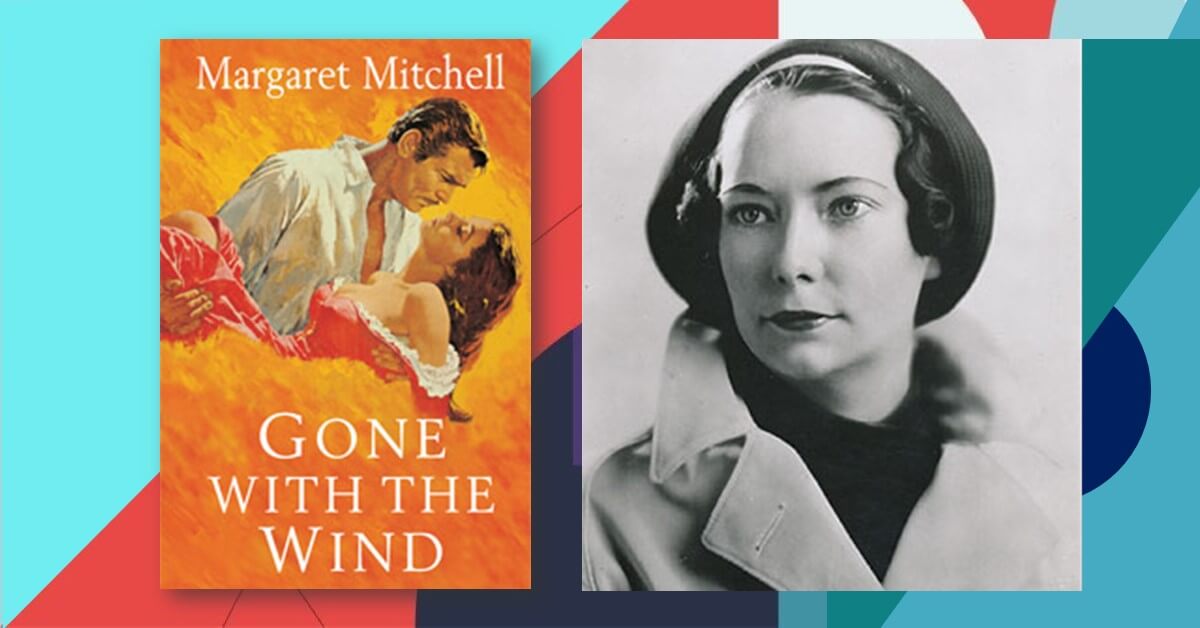
Gone With the Wind by Margaret Mitchell is a 1,000-page Civil War epic that most people remember as a love story, but I finished it convinced it is really a novel about survival, money and refusing to look back. Scarlett O’Hara is not a romantic heroine. She is a hungry, scheming, brilliant woman who rebuilds her life three times while everyone around her mourns a world that, the book quietly admits, was built on slavery.
This review gives you the full plot with the ending explained, a close look at Scarlett, Rhett, Melanie and Ashley, chapter-cited quotes, a book-versus-film comparison, and an honest answer to the question readers keep asking in 2026: is this book still worth your time, and how should you read it?
Quick Summary
Gone With the Wind (1936) follows Scarlett O’Hara, the spoiled daughter of a Georgia cotton planter, from the eve of the Civil War through Reconstruction. She marries three times, never for love until it is too late. She keeps her family’s plantation alive through starvation and taxes, and she chases Ashley Wilkes for twelve years while missing that Rhett Butler is the man who actually matches her.
The novel won the 1937 Pulitzer Prize (HISTORY.com).
Its storytelling is superb and its portrait of a woman surviving collapse feels startlingly modern. Its picture of slavery and the Ku Klux Klan, however, repeats the “Lost Cause” myth, and modern readers need to read it with open eyes.
Who will love it, and who may bounce: If you enjoy long, absorbing historical novels with a flawed heroine at the center, such as Vanity Fair, War and Peace or a good family saga, you will probably be glued to this book, especially the middle stretch from the siege of Atlanta to the return to Tara. Readers interested in women and money, economic collapse, or how people rebuild after disaster will find a lot here.
If you want a balanced history of the Civil War, a fast plot, or a book that treats its Black characters as full human beings, you will likely struggle.
The racist dialect, the nostalgic plantation scenes and the sympathetic Klan chapters are hard going, and nothing in the text pushes back against them.
I would also warn romance-first readers that the ending is not the happy reunion they may expect.
Introduction
Book Details
- Title: Gone With the Wind
- Author: Margaret Mitchell (born November 8, 1900, Atlanta; died August 16, 1949) (New Georgia Encyclopedia)
- First published: June 30, 1936, by Macmillan, after editor Harold Latham received the manuscript (HISTORY.com)
- Structure: Five parts, 63 chapters
- Award: Pulitzer Prize for Fiction, 1937 (HISTORY.com)
- Genre: Historical fiction, Southern epic, coming-of-age
Quick Verdict
A gripping, ruthless survival story disguised as a plantation romance, carried by one of fiction’s most alive heroines and weighed down by a racial myth it never questions. I recommend it to patient readers of big historical novels who are willing to read critically.
Rating: ⭐ 4/5
Five stars for storytelling and character. I took one off because the novel’s view of slavery and Reconstruction is not just dated but actively misleading.
Should You Read It?
| ✅ Pros | ❌ Cons |
|---|---|
| Scarlett is one of the most vivid, contradictory heroines in American fiction | Romanticizes slavery and portrays enslaved people through demeaning stereotypes and dialect |
| The siege of Atlanta and the return to Tara are unforgettable set pieces | Frames the Ku Klux Klan sympathetically during Reconstruction |
| Sharp eye for money, class and how people adapt (or fail to) after collapse | Over 1,000 pages, and the middle Reconstruction politics drag |
| An ending that refuses the easy romantic payoff | Ashley and Melanie can feel static next to Scarlett and Rhett |
| Rhett Butler’s dialogue is still funny and cutting | Contains racial slurs throughout |
What Is It About?
Scarlett O’Hara loves Ashley Wilkes, who marries his cousin Melanie instead. Through the Civil War and Reconstruction, Scarlett survives the fall of Atlanta, saves her family’s plantation and builds a business. Meanwhile she misreads her own heart until her third husband, Rhett Butler, finally walks away.
Background: Why Does the History Matter Here?
You need some history because the novel’s whole emotional pull depends on it. Mitchell grew up in Atlanta hearing stories from her relatives and from Confederate veterans (HISTORY.com). She started writing the novel in 1926, when a broken ankle ended her journalism career at the Atlanta Journal, and she wrote most of it within about three years (New Georgia Encyclopedia).
Her heroine was originally called “Pansy,” and the name was changed to Scarlett before publication.
The book was an instant phenomenon. It sold over a million copies in its first six months. It has since been translated into 27 languages and has sold more than 30 million copies, according to the same source. In 2014, a Harris Poll of 2,300 Americans ranked it as the nation’s second-favorite book, behind only the Bible (Christian Science Monitor).
The historical setting runs from April 1861 to roughly the early 1870s. It covers secession, Sherman’s Atlanta campaign, defeat, and the Reconstruction years when Georgia was under military rule. Mitchell tells this history from the point of view of white planters who lost the war. That point of view matters, as I explain in the analysis.
Gone With the Wind Plot Summary
Part One: The Barbecue at Twelve Oaks (Chapters 1–7)
The novel opens in April 1861 on the porch of Tara, the O’Hara cotton plantation in north Georgia. Its famous first line sets the tone: “Scarlett O’Hara was not beautiful, but men seldom realized it when caught by her charm” (Chapter 1). Sixteen-year-old Scarlett is flirting with the Tarleton twins when they let slip some news. Ashley Wilkes, the dreamy, bookish heir of the neighboring Twelve Oaks plantation, will announce his engagement to his cousin Melanie Hamilton at a barbecue the next day.
Scarlett is stunned, because she has decided that Ashley belongs to her. Her father, Gerald O’Hara, an Irish immigrant who won his first land in a card game, tries to comfort her by telling her that land is what really lasts. “Land is the only thing in the world that amounts to anything,” he shouts at her (Chapter 2). She brushes him off, but the line becomes the spine of the whole book.
Chapter 3 then goes back to the story of Scarlett’s mother, Ellen, a gentle aristocrat from Savannah who married Gerald after the cousin she loved died. Ellen runs Tara with quiet discipline, and Scarlett worships her.
At the barbecue (Chapter 6), Scarlett corners Ashley alone in the library and confesses her love. He admits he cares for her but says he will marry Melanie because they are alike. Furious, Scarlett slaps him, and after he leaves she throws a china bowl against the wall.
A voice rises from the sofa. Rhett Butler, a Charleston outcast with a scandalous reputation, has overheard everything, and he is delighted. Earlier that day Rhett had annoyed the young men by pointing out that “there’s not a cannon factory south of the Mason-Dixon Line” (Chapter 6), which suggests that the South could not win a war. Moments later, news arrives that war has begun. Out of spite and wounded pride, Scarlett accepts a proposal from Charles Hamilton, Melanie’s shy brother.
Within two weeks she is a wife and within two months a widow (Chapter 7). Charles dies “of pneumonia, following measles,” without ever seeing battle. Scarlett gives birth to his son, Wade Hampton, and finds herself trapped in widow’s black at seventeen.
Part Two: Atlanta at War (Chapters 8–16)
Bored and miserable, Scarlett moves to Atlanta in May 1862 to live with Melanie and their fluttery aunt, Pittypat Hamilton. Her real motive is to be near any news of Ashley. Atlanta is bustling with soldiers, hospitals and war profiteers, and she starts to come alive again.
At a charity bazaar (Chapter 9), the men bid for the right to lead the ladies in a reel. Rhett, now a wealthy blockade runner, bids “one hundred and fifty dollars, in gold” for Scarlett, a widow in mourning. She dances, Atlanta is scandalized, and her new life begins. Rhett keeps calling on her. He brings her a green Paris bonnet, mocks the Confederate “Cause,” and makes no secret that he is getting rich off the war. Scarlett finds him infuriating and fascinating in equal measure.
The war turns. After Gettysburg, the casualty lists bring death to almost every family, including the Tarleton twins. Ashley comes home on Christmas furlough in 1863 (Chapter 15).
Before he leaves, he asks Scarlett to look after Melanie, and she promises, still hoping for a sign that he loves her. He kisses her and then goes back to the front. Soon after, the family learns that he has been captured and sent to the Rock Island prison camp (Chapter 16). Melanie is pregnant.
Part Three: Siege, Fire and the Road to Tara (Chapters 17–30)
In May 1864, Sherman’s army pushes into Georgia, and Atlanta comes under siege. Scarlett nurses wounded soldiers and hates every minute of it. Her mother writes that her sisters have typhoid, so she cannot come home. Bound by her promise to Ashley, Scarlett stays in the shelled city with Melanie, whose pregnancy is difficult.
Melanie goes into labor just as the Confederate army is pulling out of Atlanta. The doctors are swamped with dying men, so Scarlett delivers the baby herself with only the useless young slave Prissy to help. Melanie’s son, Beau, survives. That night Scarlett sends Prissy to find Rhett. He arrives with a stolen horse and a wagon and drives them through the burning city. Then, on the road out, he abruptly announces that he is joining the army. He kisses Scarlett and tells her, “I love you, Scarlett, because we are so much alike, renegades, both of us” (Chapter 23). Then he leaves her alone on a dark road with a sick woman, a newborn, a frightened child and Prissy.
Scarlett drives the wagon through the night to Tara. She passes Twelve Oaks, which has been burned, and wonders whether Tara is “also gone with the wind which had swept through Georgia” (Chapter 24). That is the line that gives the novel its title.
Tara is still standing, because Union officers used it as a headquarters. Inside, though, everything has collapsed. Her mother died of typhoid the day before. Her father has lost his mind with grief.
Her sisters are weak, the fields have been stripped, and the slaves have fled except for a loyal few.
Scarlett takes charge. In Chapter 25, she walks to the ruins of Twelve Oaks looking for food, eats a raw radish, vomits it up, and makes the vow that defines her: “As God is my witness… I’m never going to be hungry again.” From then on she picks cotton with her own hands, drives her sisters to work, and when a Union deserter breaks into the house to loot it, she shoots him dead on the stairs (Chapter 26).
Melanie, barely able to stand, helps her hide the body. When Union soldiers later raid Tara and try to burn it, Scarlett and Melanie beat out the fire.
The war ends in April 1865 (Chapter 29). Ragged Confederate soldiers stream past Tara on their way home. One of them, Will Benteen, a one-legged soldier from a poor farming family, stays on and becomes the farm’s steady backbone. Finally Ashley walks up the road, and Melanie runs to meet him (Chapter 30).
Part Four: The Taxes, the Curtains and Frank Kennedy (Chapters 31–47)
In January 1866, Scarlett learns that Jonas Wilkerson, Tara’s former overseer and now a Reconstruction official, has helped push Tara’s taxes up to $300. If she can’t pay, Wilkerson plans to buy the plantation at the tax sale.
She goes to Ashley, who is splitting rails in the orchard, and begs him to run away with her. He refuses. Earlier he had confessed what he mourns: “before the war, life was beautiful.
There was a glamor to it, a perfection and a completeness and a symmetry to it like Grecian art” (Chapter 31). He presses a clod of Tara’s red earth into her hand to remind her what she is fighting for.
Scarlett decides to get the money from Rhett, who is said to be sitting on Confederate gold. Since she has nothing presentable to wear, she has Mammy make a dress from her mother’s green velvet curtains (Chapter 32).
In Atlanta, she learns that Rhett is in a Yankee jail, charged with killing a Black man (Chapter 33). She visits him and offers to become his mistress in exchange for the money. He is tempted until he takes her hands and sees the calluses that give away her poverty.
He refuses, partly in anger and partly because his money is locked up abroad.
On her way home in the rain, Scarlett runs into Frank Kennedy, a middle-aged storekeeper engaged to her sister Suellen, and finds out he has saved some money. She tells him Suellen is about to marry someone else and marries him herself two weeks later (Chapter 36). She pays the taxes, and with a loan from Rhett she buys a sawmill.
The businesswoman in her takes over. She drives hard bargains, sells to Yankees and carpetbaggers, and later leases convict labor, all of which horrifies Atlanta society. She also persuades a reluctant Ashley to give up a job in New York and come to Atlanta to manage one of her mills, which keeps him close.
Meanwhile Gerald dies after Suellen, trying to win compensation for the family’s lost cotton, gets him drunk enough to consider signing a loyalty oath to the Union. He rides wildly at a fence, and the horse throws him (Chapter 40). Will Benteen marries Suellen and takes over Tara, and Scarlett’s youngest sister, Carreen, enters a convent. Scarlett gives birth to Frank’s daughter, Ella (Chapter 42).
In Chapter 44, Scarlett insists on driving alone past a shantytown on the way to her mill. She is attacked and is rescued by Big Sam, Tara’s former foreman. That night Frank, Ashley and other men ride out with the Ku Klux Klan to punish the shantytown.
Union troops are waiting. Frank is shot dead, and Ashley is wounded. Rhett saves the survivors by staging an alibi: he claims they were all drunk at Belle Watling’s brothel, and Belle backs up the story (Chapter 45). Soon after Frank’s funeral, Rhett proposes. Scarlett, tired and frightened and drawn to his money, says yes (Chapter 47).
Part Five: Rhett, Bonnie and the Ending (Chapters 48–63)
The couple honeymoon in New Orleans, where Scarlett has nightmares about starving and Rhett comforts her. Back in Atlanta she builds a gaudy mansion on Peachtree Street and fills it with Republican officials and carpetbagger wives, which cuts her off from the old Atlanta families.
Their daughter, Eugenie Victoria, is nicknamed “Bonnie Blue” because of her eyes (Chapter 50). Rhett adores her. After Bonnie’s birth, Scarlett tells him she wants no more children, and they begin sleeping in separate rooms.
Rhett sets out to win back respectability for Bonnie’s sake, charming the old Confederate matrons and giving to their causes. Then the marriage fractures. At Ashley’s surprise birthday party, his sister India and others catch Scarlett and Ashley in an innocent but compromising embrace at the mill (Chapter 53). Rhett forces Scarlett to attend the party anyway. Melanie publicly stands by her and refuses to hear a word against her.
That night, a drunk, jealous Rhett tells Scarlett, “We are both scoundrels, Scarlett, and nothing is beyond us when we want something” (Chapter 54), and carries her up the stairs. The scene is presented as a romantic turning point, but modern readers widely recognize it as marital rape.
Rhett leaves with Bonnie for three months and stays with his mother in Charleston. Scarlett realizes she is pregnant. When he returns, they trade cruel words at the top of the stairs, and Scarlett falls and miscarries. Rhett is shattered by guilt. For a while afterwards, the couple seem gentler with each other, until Bonnie, trying to jump her pony over a bar, is thrown and breaks her neck. Rhett nearly goes mad with grief and refuses to let her be buried until Melanie talks him round.
Then Melanie, pregnant against her doctor’s warnings, falls fatally ill. On her deathbed she asks Scarlett to look after Beau and Ashley: “Look after him, Scarlett, but… don’t ever let him know.” She also asks Scarlett to be kind to Rhett, telling her he loves her. In those final hours Scarlett sees Ashley clearly for the first time. “I loved something I made up,” she realizes, “I made a pretty suit of clothes and fell in love with it” (Chapter 61). She also understands, at last, that she loves Rhett.
The ending explained. Scarlett runs home through the fog to tell Rhett (Chapter 63). He listens, but it is too late. Bonnie’s death and years of Scarlett’s coldness have worn out his love. “I was never one to patiently pick up broken fragments and glue them together,” he tells her. He wants to go back to Charleston and find some of the calm and grace of the old life. When she begs him, asking what she will do without him, he answers: “My dear, I don’t give a damn.”
Alone, Scarlett falls back on the habit that has carried her through everything: she puts the pain off. She decides to go home to Tara, where she has always found strength, and the novel ends on her final vow: “Tomorrow, I’ll think of some way to get him back. After all, tomorrow is another day” (Chapter 63).
So does Rhett come back? Mitchell never says. The ending is open on purpose. What it does settle is Scarlett’s nature. She has lost her mother, two husbands, a child, her best friend and the man she loves, and she still turns toward tomorrow. The ending is both a tragedy and a victory, and the book wants you to feel both.
Analysis and Critique
Characters
Is Scarlett O’Hara a heroine or a villain? She is both, and that is why the book still works. Scarlett is selfish, vain, and blind to other people’s feelings. She steals her sister’s fiancé, she exploits convict labor, and she uses her children mostly as props.
But she is also the only person in the novel who sees reality clearly when the world collapses. While the men talk about honor, she digs for radishes.
I found myself disliking her and cheering for her on the same page, and Mitchell knew exactly what she was doing. Scarlett’s great flaw is not greed. It is that she can’t understand anything that is not practical, whether that is love, grief, or Melanie’s goodness, until it is gone.
Rhett Butler is the novel’s truth-teller, which makes him its most entertaining voice. He sees through the Confederacy, through Atlanta society, and through Scarlett. His tragedy is that he understands her completely and still can’t make her love him in time. His late return to respectability for Bonnie’s sake shows a man more sentimental than he pretends to be.
His violence in Chapter 54 is ugly, and the novel treats it far too lightly.
Melanie Hamilton Wilkes is easy to underrate on a first read. She seems meek, but she is the toughest moral force in the book. She helps hide a dead Yankee without blinking, she defies Atlanta to defend Scarlett, and she sees good in Rhett when no one else does. Scarlett’s late discovery that she loved and needed Melanie is one of the most moving turns in the novel.
Ashley Wilkes is the old South itself: graceful, educated, and unable to function once the world changes. Mitchell is surprisingly harsh about him. He admits his weakness openly, and through his eyes the novel shows how nostalgia can paralyze a person.
Mammy, Prissy, Pork, Big Sam and Dilcey are where the novel fails worst. They are written as loyal servants or comic figures, in heavy dialect, with almost no inner lives. Mammy has authority and wit, but she exists to serve the O’Haras. The book never asks what freedom meant to the people Tara enslaved.
Themes and Symbolism
Survival over sentiment. Survival is the theme I think the book is really about. Mitchell herself named “gumption” as the quality that separates those who survive from those who don’t. Scarlett survives because she adapts, while Ashley and the old families who cling to the past slowly sink. The vow in Chapter 25 is the novel’s center.
Land and Tara. Gerald’s speech in Chapter 2 comes back in Chapter 25, when Scarlett remembers that land is “the only thing worth working for, fighting for, dying for.” Tara stands for roots, home and recovery. Every time Scarlett is broken, she goes back to Tara. The red clay Ashley hands her in Chapter 31 is a small, perfect symbol of the same idea.
Money and women’s power. Few novels of the 1930s were so frank about a woman wanting money and getting it herself. “Money is the most important thing in the world,” Scarlett tells Frank (Chapter 36). The book shows how a woman running a business threatened Southern manners more than any Yankee did.
Nostalgia as a trap. “Gone with the wind” names a lost world, but the book also shows what that longing costs. Ashley’s “Grecian art” speech is gorgeous.
Yet when Scarlett repeats his words to Rhett in the last chapter, Rhett replies, “That’s what I meant.” The man who mocked the Old South ends up longing for it too. Mitchell seems to mourn and question the past at the same time.
The Lost Cause myth. This is the theme the novel conveys without meaning to. The plantation is shown as gracious, slavery as benign, Reconstruction as chaos, and the Klan as a necessary defense. It is not neutral storytelling. It reflects a version of history that historians have long rejected, and it affects how the book reads today.
The green dress and the curtains. Green runs through the book: the flowered dress in Chapter 2, the green bonnet, and the green velvet curtains. To me, green marks Scarlett’s ambition and her ability to turn whatever is at hand into a weapon.
Evaluation
Gone With the Wind is a magnificent, maddening novel. It is a page-turning study of survival with a moral blind spot at its center, and I could not put it down even when I wanted to argue with it.
Strengths
What struck me most was the sheer momentum. Mitchell writes set pieces like a filmmaker. The bazaar, the burning of Atlanta, the night drive to Tara and the radish scene stay in my memory more clearly than parts of books I read last month. Scarlett’s voice feels uncannily modern, and the dialogue between her and Rhett still crackles. The ending is brave, too.
Most publishers in 1936 would have wanted a reunion, and Mitchell refused.
Weaknesses
The Reconstruction chapters slow down badly and turn into political argument, almost all of it from one side. The racial caricatures are not occasional slips but a constant presence. Ashley stays in the same note for nearly a thousand pages. And the treatment of Chapter 54 as a romantic “morning after” moment made me uncomfortable.
Impact and Controversy
The novel’s influence is enormous, and so is the argument about it. In 2001, Alice Randall’s The Wind Done Gone retold the story from the point of view of an enslaved woman on the plantation. The Mitchell estate sued, and the Eleventh Circuit ruled that the book was a fair-use parody that criticized the original’s portrayal of slavery (U.S. Copyright Office summary of SunTrust Bank v. Houghton Mifflin).
In 2023, publisher Pan Macmillan added a warning to new editions saying the book “romanticizes a shocking era in history” and contains “hurtful” and “racist” content (Straight Arrow News).
What affected me most was how easily the book makes you sympathize with people defending an indefensible system. That is exactly why it is worth reading carefully: it shows how powerful storytelling can make a myth feel like memory.
Comparison With Similar Works
Thackeray’s Vanity Fair: Becky Sharp is Scarlett’s clearest ancestor, a clever woman climbing through a war-shaken society. Thackeray is more ironic, while Mitchell is more immersive.
Tolstoy’s War and Peace: both books set private lives against a national war. Tolstoy has a much wider moral view, while Mitchell sticks closer to one character.
Faulkner’s Absalom, Absalom!: published in the same year, 1936, it digs into the guilt and rot of the Southern past that Mitchell glosses over.
Toni Morrison’s Beloved: I read it as the necessary answer. It shows slavery and its aftermath from inside the lives the plantation novel ignores.
Alice Randall’s The Wind Done Gone: a direct counter-reading, best read right after Mitchell.
Adaptation: Book vs. Film
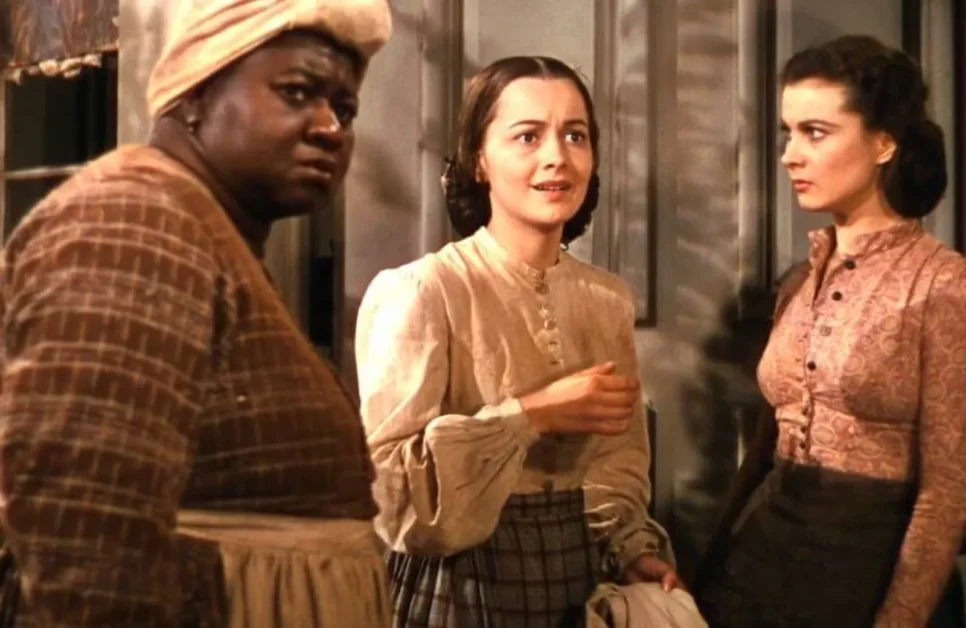
The 1939 film, produced by David O. Selznick, who paid Mitchell a record $50,000 for the rights (HISTORY.com), starred Vivien Leigh, Clark Gable, Leslie Howard, Olivia de Havilland and Hattie McDaniel (Britannica).
It won eight Academy Awards, including Best Picture, and was the first color film to win the top prize (Oscars.org). Hattie McDaniel became the first African American actor to win an Oscar. Even so, she was not allowed to attend the Atlanta premiere and had to sit apart from her co-stars at the ceremony (Atlanta Journal-Constitution).
Box office: Guinness World Records lists it as the highest-grossing film of all time once inflation is taken into account, at an estimated $3.44 billion (2014 figure) (Guinness World Records). It was Hollywood’s all-time box office champion for more than 30 years (Britannica).
Key differences I noticed after reading the book:
- In the novel, Scarlett has three children: Wade, Ella and Bonnie. The film keeps only Bonnie, which makes Scarlett seem less burdened and less neglectful.
- Rhett’s famous line in the book is “My dear, I don’t give a damn.” The film adds “Frankly.”
- Will Benteen, Archie and much of the Reconstruction material are cut, and the film softens the Klan raid.
- The book stays much closer to Scarlett’s thoughts, so her rationalizations come through more clearly. The film relies on Vivien Leigh’s face to do that work.
In 2020, HBO Max briefly pulled the film and then restored it with an introduction by film scholar Jacqueline Stewart. She said watching it “can be uncomfortable, even painful,” but argued that classic films should remain available in their original form for discussion (TV Insider).
Personal Insight: What Can a 1936 Novel Teach Us About Reading “Problematic” Classics?
The most useful thing Gone With the Wind taught me is how nostalgia works on readers, because the book does to us what Ashley’s memories do to him. When HBO Max restored the film in 2020, it did not cut a single frame. Instead it added context, with Jacqueline Stewart calling it “a document of Hollywood’s racist practices of the past” and also “an enduring work of popular culture”.
Three years later, Pan Macmillan took the same approach with the novel and added a warning instead of rewriting it. Meanwhile, millions of Americans still name it as a favorite (Christian Science Monitor). The problem the book helps us solve is how to love a story without swallowing its version of history.
Five lessons I took from it:
- Notice whose memories you are being given. Every “golden” scene at Tara comes from the planters’ memory. Asking who is missing from the scene is the habit that matters most.
- Beautiful prose can carry false history. Ashley’s “Grecian art” speech is lovely, and that is exactly why it is persuasive. Style is not evidence.
- Read the answer books. Pairing Mitchell with The Wind Done Gone or Beloved turns a one-sided story into a conversation.
- Adaptability beats longing. Within the story itself, the people who survive are the ones who stop mourning the past. That is still good advice for anyone living through economic or social upheaval.
- Context is better than erasure. The approach of HBO Max and Pan Macmillan, keeping the work available but framed, lets readers judge for themselves. A banned book teaches nothing.
Quotable Lines and Passages
“Scarlett O’Hara was not beautiful, but men seldom realized it when caught by her charm.” (Chapter 1)
“Land is the only thing in the world that amounts to anything… for ’tis the only thing in this world that lasts.” (Gerald O’Hara, Chapter 2)
“Has any one of you gentlemen ever thought that there’s not a cannon factory south of the Mason-Dixon Line?” (Rhett Butler, Chapter 6)
“I love you, Scarlett, because we are so much alike, renegades, both of us, dear, and selfish rascals.” (Rhett, Chapter 23)
“Was Tara still standing? Or was Tara also gone with the wind which had swept through Georgia?” (Chapter 24)
“As God is my witness, as God is my witness, the Yankees aren’t going to lick me. I’m going to live through this, and when it’s over, I’m never going to be hungry again.” (Scarlett, Chapter 25)
“There was a glamor to it, a perfection and a completeness and a symmetry to it like Grecian art.” (Ashley, Chapter 31)
“I’ve found out that money is the most important thing in the world and, as God is my witness, I don’t ever intend to be without it again.” (Scarlett, Chapter 36)
“I loved something I made up, something that’s just as dead as Melly is. I made a pretty suit of clothes and fell in love with it.” (Scarlett, Chapter 61)
“What is broken is broken, and I’d rather remember it as it was at its best than mend it and see the broken places as long as I lived.” (Rhett, Chapter 63, lightly trimmed)
“My dear, I don’t give a damn.” (Rhett, Chapter 63)
“I’ll think of it all tomorrow, at Tara. I can stand it then… After all, tomorrow is another day.” (Scarlett, Chapter 63)
Conclusion
I came to Gone With the Wind expecting a sweeping romance. I left with a book about a woman who refuses to starve, refuses to be pitied, and refuses to stop moving, even when moving on means losing the people she loves. Scarlett is one of the great characters in American fiction, and Mitchell’s storytelling holds up remarkably well across more than a thousand pages.
The novel’s sentimental view of slavery and its sympathy for the Klan are just as real, though, and I don’t think a review should hide them.
Who should read it: fans of long historical sagas, readers who like difficult heroines, book clubs that enjoy a lively argument, and anyone curious about how popular fiction shapes the way people remember history.
Read it alongside The Wind Done Gone or Beloved to get the full picture. Who might skip it: readers looking for a quick romance or an accurate account of the Civil War.
It is significant because it is both a great story and a cautionary one. Nearly a century later, it still shows how much a well-told myth can make us feel.
Gone With the Wind

Gone With the Wind by Margaret Mitchell is a 1,000-page Civil War epic that most people remember as a love story, but I finished it convinced it is really a novel about survival, money and refusing to look back. Scarlett O'Hara is not a romantic heroine. She is a hungry, scheming, brilliant woman who rebuilds her life three times while everyone around her mourns a world that, the book quietly admits, was built on slavery.
URL: https://www.sopranu.com/gone-with-the-wind-book-of-american-civil-war/
Author: Margaret Mitchell
4.8
Pros
- Unforgettable, complex heroine in Scarlett O'Hara
- Cinematic set pieces (siege of Atlanta, return to Tara)
- Sharp portrayal of survival, money and adaptation
- Bold, unsentimental ending
Cons
- Romanticizes slavery and uses racist stereotypes
- Sympathetic portrayal of the Ku Klux Klan
- Very long, with slow Reconstruction chapters
- Some side characters stay flat