Last updated on June 2nd, 2026 at 04:48 pm
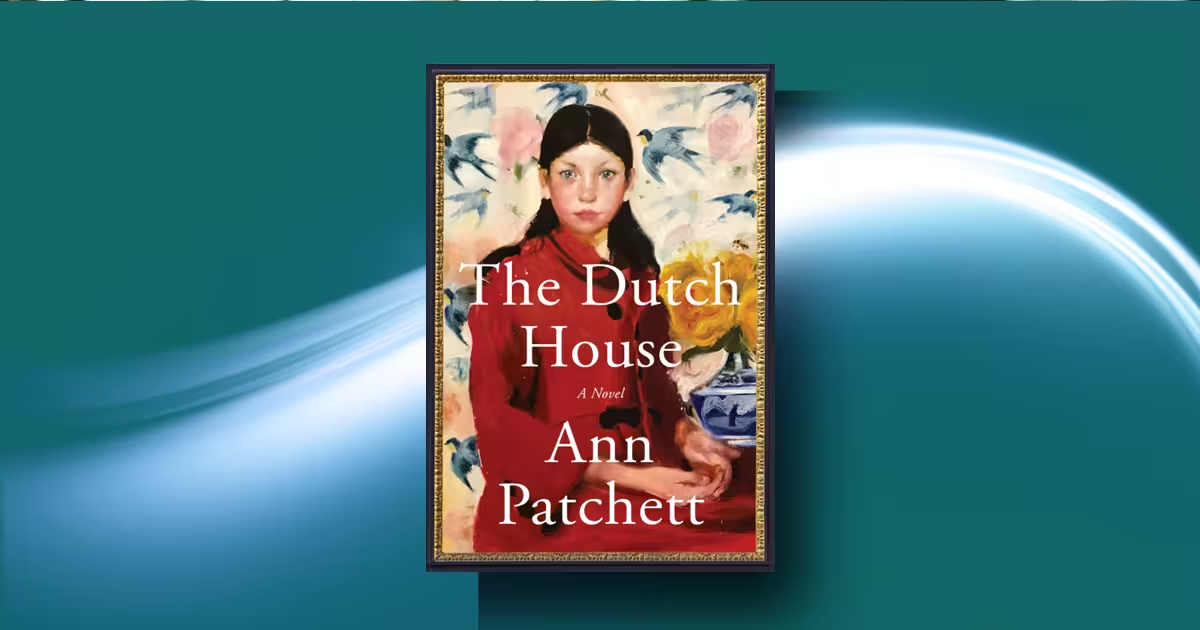
Do you ever wonder why the physical walls of a childhood home can hold more emotional weight than the people who actually lived inside them? The Dutch House by Ann Patchett explores family exile, sibling bonds, and the illusion of wealth.
Through the lens of an architectural marvel, a brother and sister endure a painful exile orchestrated by their stepmother, ultimately discovering that their shared memories and unbreakable bond are the only true sanctuary they have left.
The Dutch House is best for readers who savor slow-burn literary fiction, deep character studies, and complex, multi-generational family dramas centered around memory and forgiveness.
Not for those seeking fast-paced thrillers or action-heavy plots with neatly tied, simplistic resolutions.
Table of Contents
1. Introduction
The Dutch House, written by the masterful Ann Patchett and published in 2019 by Harper, is a sprawling, emotionally resonant novel that spans over five decades.
The book is a finalist for the Pulitzer Prize for Fiction, offering a masterclass in narrative pacing and architectural symbolism.
2. Background
Traditionally, post-World War II American literature heavily emphasizes the pursuit of the American Dream through property and wealth accumulation.
The Dutch House subverts this. The story is anchored in Elkins Park, Pennsylvania, revolving around an opulent estate built in 1922 by the VanHoebeeks, a Dutch family who made their fortune in the wholesale distribution of cigarettes.
The historical context is deeply tied to the economic fluctuations of the 20th century—the estate slowly lost its surrounding acreage to pay off debts during the Depression before falling back to the bank in 1945.
3. The Dutch House Summary
The Acquisition and the Absence
Initially, it may seem that the house itself is the main character.
The house was purchased in 1946 by Cyril Conroy, a man who made his fortune leveraging real estate[cite: 1]. He bought the fully furnished mansion as a surprise for his wife, Elna, but the overwhelming opulence of the VanHoebeek portraits and the grand scale of the property actively repelled her.
As a result, Elna’s discomfort with wealth grew so severe that she abandoned her family, leaving to help the poor in India when her son Danny was only three and her daughter Maeve was ten,
Consequently, the siblings were largely raised by the household staff: Sandy and Jocelyn, two housekeepers who were secretly sisters[cite: 1], and a young nanny named Fluffy.
Because of this abandonment, Maeve developed type 1 diabetes, triggered by the profound trauma of her mother’s departure[cite: 1]. Maeve essentially became Danny’s surrogate mother, overseeing his homework, attending his basketball games, and protecting him fiercely.
The Arrival of the Stepmother
Things shifted drastically when Cyril brought home Andrea Smith, a younger woman obsessed with the estate. The first time Andrea came to the house, she remarked on the glass doors and the lack of privacy, suggesting they hang drapes—a notion Danny found profoundly stupid.
Andrea’s presence lingered like a virus; she soon moved in with her two young daughters, Norma and Bright.
In a devastating shift of power, Andrea began displacing the siblings within their own home. She claimed Maeve’s cherished bedroom—the best room in the house with a beautiful window seat—for Norma, forcing Maeve into a cramped former servant’s room on the third floor[cite: 1].
Furthermore, Cyril enabled this behavior, prioritizing his comfort and his new wife over his children. He even married Andrea in the drawing room beneath the watchful eyes of the VanHoebeeks[cite: 1].
The Exile and the Education Trust
When Cyril unexpectedly dies of a sudden heart attack, Danny and Maeve’s world completely collapses. In truth, Cyril had never updated his will to protect his children after marrying Andrea. Andrea inherits everything—the business, the money, and most importantly, the house.
She promptly kicks the teenage Danny out, leaving him to rely entirely on Maeve, who is living in a small apartment and working as a bookkeeper for a frozen vegetable company.
However, there is a legal loophole. An educational trust was established for the children, and it cannot be touched by Andrea. Maeve, seeking financial revenge, forces Danny to stay in school as long as possible to drain the trust, preventing Andrea and her daughters from accessing the funds. Consequently, Danny goes to Columbia for his undergraduate degree and continues entirely through medical school, despite having absolutely no desire to become a doctor. He only wants to work in real estate like his father.
Danny marries a woman named Celeste, buys buildings, and quietly drops his medical career, while Maeve remains fiercely rooted in the past.
For decades, the siblings’ defining ritual becomes parking outside the Dutch House in Maeve’s Oldsmobile wagon, smoking cigarettes, and obsessively watching the house that was stolen from them.
The Return and the Resolution
Decades later, the narrative takes a shocking turn. Elna, their absent mother, miraculously returns. She has spent her life wandering and helping the destitute but has finally come back. Maeve’s reaction is fraught with complex resentment, though she ultimately embraces her mother. Danny struggles immensely to forgive Elna for abandoning them to a life of emotional starvation.
In a twist of irony, Elna ends up visiting the Dutch House and comforts Andrea, who is now suffering from severe dementia and living in the decaying mansion.
Elna essentially moves in to care for the woman who ruined her children’s lives. Maeve ultimately passes away from complications related to her long-standing diabetes, a heartbreaking conclusion to her role as the family’s true anchor. The book concludes with Danny’s daughter, May, purchasing the Dutch House, bringing the real estate full circle.
Danny finally lets go of his anger, realizing that the house was merely a structure, and his true home was always his sister.
4. The Dutch House Analysis
4.1. Characters
Danny Conroy: The narrator. He is observant but often passive, shaped entirely by the women in his life. He idolizes his father’s business acumen but fails to see the emotional wreckage around him until it is too late.
Maeve Conroy: The emotional core of the novel. Her brilliant mind (she won the math prize in school every year[cite: 1]) is trapped by her obsession with the past. Her diabetes serves as a physical manifestation of her childhood trauma.
Cyril Conroy: A distant, stoic figure who only truly communicates through buildings. He tells Danny, “The biggest lie in business is that it takes money to make money”[cite: 1]. He is fundamentally incapable of emotional intimacy.
Andrea Smith/Conroy: The usurper. Her obsession with the house supersedes any human connection. She is small, neat, and highly manipulative[cite: 1].
4.2. The Dutch Themes and Symbolism
The House as a Mirage: The Dutch House is a singular confluence of talent and luck, appearing to float above the hill it sits on[cite: 1]. It symbolizes the illusion of the American Dream—beautiful on the outside, but hollow and destructive to those within.
Memory and Time: As Maeve acutely observes, “we overlay the present onto the past… we look back through the lens of what we know now, so we’re not seeing it as the people we were, we’re seeing it as the people we are, and that means the past has been radically altered”[cite: 1].
Forgiveness vs. Vengeance: The siblings’ refusal to let go of their anger tethers them to the driveway of their past. Elna’s return forces them to confront whether true peace comes from reclaiming what was lost, or forgiving those who took it.
5. Evaluation
“The Dutch House” is a poignant, deeply moving excavation of family trauma that cements Ann Patchett as one of our most essential contemporary voices.
Strengths: Patchett’s prose is wonderfully vivid. Her characterization of Maeve is an absolute triumph; she is fiercely intelligent, tragically flawed, and deeply lovable. The pacing mimics the slow, relentless crawl of time and memory.
Weaknesses: Some readers may find Elna’s return and subsequent caretaking of Andrea slightly implausible or frustratingly saintly. The pacing in the middle third, detailing Danny’s medical schooling, can feel occasionally protracted.
Impact: This novel resonated with me profoundly. It forces the reader to examine the physical spaces they cling to and the grudges they nurture. It is a powerful reminder that our true inheritance is not property, but the people who choose to stay by our side.
Comparison with Similar Works
It shares the same haunting, reflective atmosphere as Julian Barnes’ The Sense of an Ending, where the reliability of memory is constantly called into question. Similarly, it mirrors the familial displacement found in Jonathan Franzen’s The Corrections.
6. Personal Insight with Contemporary Educational Relevance
The core theme of The Dutch House—the destructive nature of unresolved trauma and the illusion of material wealth—holds profound relevance in today’s hyper-materialistic, digitally obsessed culture.
According to mental health statistics from the APA, unresolved childhood trauma significantly impacts adult decision-making.
Here are 5 insightful lessons from the book:
Material Wealth is Not Emotional Security: The VanHoebeeks’ opulence could not save them from tragedy, just as Cyril’s real estate empire could not bind his family together.
Education as a Tool, Not a Trap: Maeve weaponizing Danny’s education is a brilliant but toxic strategy. It shows how systemic structures (like trusts) can be manipulated, but at the cost of personal fulfillment.
The Fallibility of Memory: We curate our pasts. The siblings parked in their car are not just looking at a house; they are watching a curated movie of their own victimhood.
Forgiveness is Self-Preservation: Holding onto anger toward Andrea slowly consumed Maeve. Releasing resentment is an act of survival.
Chosen Family Saves Us: In the absence of traditional parental structures, the sibling bond between Danny and Maeve became their true foundation.
7. The Dutch House Quotes
“The biggest lie in business is that it takes money to make money. Remember that. You’ve got to be smart, have a plan, pay attention to what’s going on around you. None of that costs a dime.”[cite: 1]
“I see the past as it actually was… But we overlay the present onto the past. We look back through the lens of what we know now, so we’re not seeing it as the people we were, we’re seeing it as the people we are, and that means the past has been radically altered.”[cite: 1]
“Everybody’s got a burden in life and this is yours. She’s gone. You have to live with that.”[cite: 1]
8. Conclusion
The Dutch House is an intricately woven tapestry of loss, resilience, and the inescapable gravitational pull of our pasts. Ann Patchett has crafted a world where the architecture is as deeply flawed and beautiful as the humans who inhabit it.
I highly recommend this novel to anyone who appreciates literary fiction that prioritizes psychological depth over plot-driven fireworks. Ultimately, the book is a vital reminder that while houses can be bought, sold, or stolen, our true homes are built from the shared histories of the people we love.