Last updated on October 19th, 2026 at 08:52 am
The Kite Runner is a novel built around one cowardly silence in a Kabul alley and the twenty-six years it takes a grown man to answer for it. Most reviews ask whether Amir earns forgiveness. After finishing it, the question I could not shake was a different one: who ends up paying for his second chance?
The answer sits in the last third of the book, in a hospital bed in Islamabad, and it changes how the famous kite ending reads.
Table of Contents
What is The Kite Runner about, and is it worth reading?
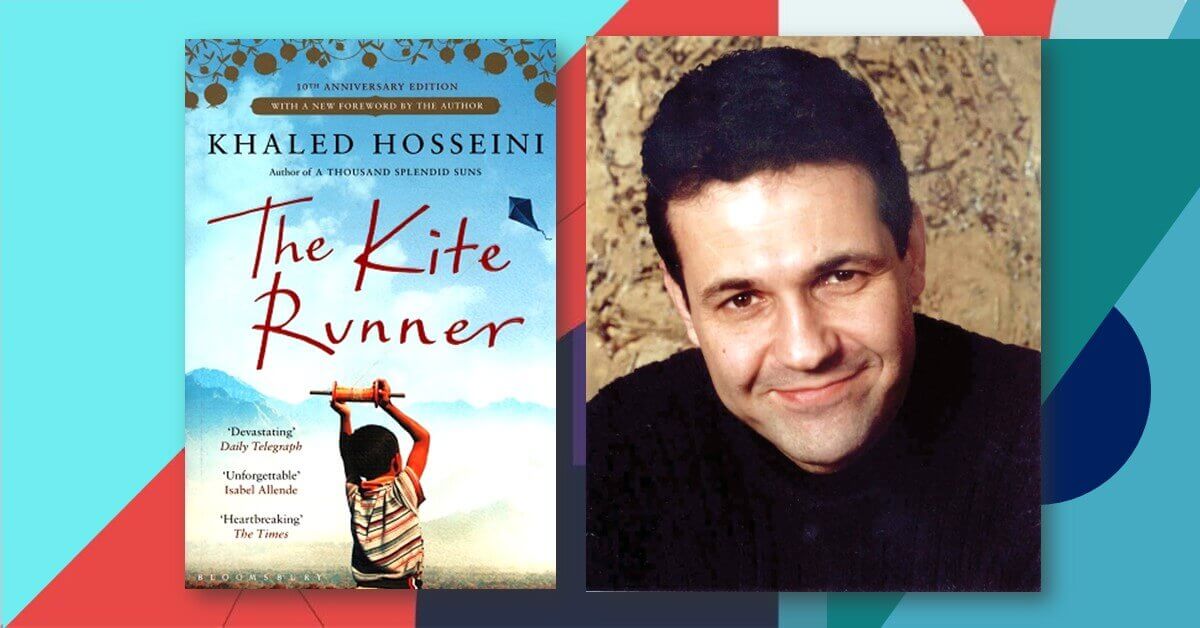
The Kite Runner is Khaled Hosseini’s debut novel, published by Riverhead Books in 2003, narrated by Amir, a privileged Pashtun boy from Kabul who betrays his Hazara servant and best friend Hassan during the winter of 1975 and spends his adult life in California running from it.
In 2001 an old family friend calls him back toward Afghanistan with a single line, “There is a way to be good again”, and the way turns out to be rescuing Hassan’s orphaned son, Sohrab.
Verdict: 4.5 out of 5. A book that earns its tears, with a villain and a few coincidences that are too convenient.
My angle: Amir does get his chance to be good again, but the novel quietly shows that Sohrab absorbs the cost. A broken promise, a suicide attempt and almost a year of silence come before the famous smile.
Reach and reputation: Hosseini’s own site says his three novels have sold more than 40 million copies worldwide, the 2007 film earned roughly $73 million, and Banned Books Week notes that the American Library Association ranked it fourth on its 2017 list of most challenged books.
Content warning: It contains the sexual assault of a child, a public stoning and a suicide attempt. All three matter to the story, and none is handled for shock alone.
Reader recommendation for The Kite Runner. If you like family secrets that detonate late, narrators who tell the truth about their own cowardice, and fiction that sends you looking up real history afterward, this book is for you. It is also a good fit for book clubs, because nearly everyone disagrees about whether Amir deserves the ending he gets.
Readers who need a reliably gentle read, or who find melodrama and coincidence hard to forgive, will probably bounce somewhere around the Assef reunion, where the plot leans on chance harder than the earlier chapters do.
If you are in a fragile place around child abuse or suicide, check the content notes above before starting, because the book does not look away.
Introduction
The Kite Runner by Khaled Hosseini was published by Riverhead Books in 2003. It is a first-person novel in 25 chapters that moves between Kabul in the 1970s, Fremont, California in the 1980s and Taliban-ruled Afghanistan in 2001. Hosseini, born in Kabul in 1965 and a physician who turned to full-time writing in 2004, began writing it in March 2001, while still seeing patients.
Quick Verdict
A painful, absorbing novel about a boy’s betrayal and a man’s late, costly attempt to answer it. Recommended for readers who want a story about guilt that does not hand out easy absolution.
Should You Read It?
| Pros | Cons |
|---|---|
| Amir is an honest, unflattering narrator, and his guilt feels earned | Assef is close to a cartoon villain by the Taliban section |
| The Kabul chapters are warm and specific, which makes the later losses hurt | Several coincidences (the reappearance of Assef, the timing of revelations) strain belief |
| The kite motif ties childhood and adulthood together without feeling forced | Hazara characters are often seen through Amir’s eyes rather than their own |
| The Sohrab chapters refuse a tidy ending | Heavy subject matter, including child abuse and suicide, will be too much for some readers |
| Easy to read, hard to forget, and good for discussion | The Rahim Khan reveal is predictable for attentive readers |
What Is It About?
Amir betrays Hassan, the Hazara boy who serves his family and loves him without condition, and then lets that betrayal drive Hassan and his father out of the house.
Twenty-six years later, Amir returns to Taliban Afghanistan to find Hassan’s son and learns a secret about his own father that reshapes everything he thought he knew.
Rating: 4.5/5
My rating for The Kite Runner is 4.5 out of 5 stars.
Why does the Hazara and Pashtun divide matter in The Kite Runner?
It matters because it is the reason Amir’s silence in the alley is not only a personal failure but a social one. Amir is a Sunni Pashtun and Hassan is a Shia Hazara, and in the Kabul of the book that gap decides who eats at the table and who sleeps in the mud shack in the garden.
Amir even finds a history book in his father’s study that spells out how Pashtuns oppressed Hazaras, and he notices that neither his teachers nor Baba ever mentioned it.
Years later he reduces it to one flat sentence about himself and Hassan: one was Sunni and one was Shia, “and nothing was ever going to change that”.
The real history behind that gap is grim. Al Jazeera, citing anthropologist Thomas Barfield, reports that in the late 1800s the ruler Abdur Rahman Khan ordered the killing of Shias in central Afghanistan, leaving tens of thousands of Hazaras dead.
In the 1990s the Taliban declared war on the Hazara, according to the same explainer. Dawn reports that Human Rights Watch said at least 2,000 civilians, mostly Hazaras, were executed in Mazar-i-Sharif in 1998.
The Kite Runner brushes up against that event when the Taliban commander Assef boasts about Mazar, and when Amir remembers the news report Soraya once handed him over breakfast.
Two other pieces of context help. The Taliban period is not just background in the book. Rahim Khan recalls that the Taliban took Kabul in 1996 and then banned kite fighting a few weeks later, which turns the title image into a casualty of the regime.
And the book’s family drama sits on top of real upheaval: the night Daoud Khan overthrew the king is the night Ali tells the boys the gunfire is just men shooting ducks, the Soviet invasion drives Amir and Baba out in March 1981, and the 1990s civil war and Taliban rule shape Hassan’s last years.
Hosseini lived a version of the exile in the book. His family was in Paris when the Soviet invasion made a return impossible, and they were granted asylum in the United States, moving to San Jose in September 1980. CBS News describes the novel as having originally been a short story.
The Kite Runner Plot summary
Short plot: a rich Kabul boy watches his best friend get assaulted and says nothing, spends twenty-six years running from it, then goes back to Taliban Afghanistan to rescue that friend’s son, and learns along the way that the friend was his half brother.
The Kite Runner opens in December 2001 in San Francisco. Amir, now an adult, gets a call from Rahim Khan, his father’s old business partner, who is in Pakistan and wants to see him. Walking in Golden Gate Park, Amir sees two kites in the sky and hears Hassan’s voice in his head. Rahim Khan had said something almost in passing: “There is a way to be good again”.
Then the story drops back into a Kabul childhood. Amir lives in a big house in Wazir Akbar Khan with his father, Baba, a wealthy and forceful man who built an orphanage with his own money and plans. Amir’s mother died giving birth to him, and he half believes Baba has never forgiven him for it.
Living in a mud hut in the garden are Ali, Baba’s longtime servant, and Ali’s son Hassan. Ali is a Hazara with a limp from polio. Hassan has a cleft lip, and his mother, Sanaubar, ran off with traveling performers days after he was born. The boys were nursed by the same Hazara woman, Sakina, and Amir remembers that Hassan’s first word was his name.
They are inseparable, but only partly. Hassan will do anything for Amir, taking blame for the mischief Amir invents and listening to every story he writes. Amir loves him, and also sometimes treats him cruelly, because Hassan cannot read and because Amir has learned that a Hazara is not supposed to be a friend.
Baba, meanwhile, finds his own son too soft and says it out loud to Rahim Khan, who is the only adult who encourages Amir’s writing.
The day after Daoud Khan overthrows the king, Assef, a blond, brutal boy from a wealthy neighborhood family, corners the two boys with his stainless-steel brass knuckles.
Hassan aims his slingshot at Assef’s face and says that they would have to call him One-Eyed Assef. Assef backs off but swears he will get them both. Soon after, Baba gives Hassan the best birthday present he can: a visit from a doctor, Dr. Kumar, who repairs Hassan’s lip.
Winter brings the kite tournament, the highlight of the Kabul year. Amir wants to win and then run home with the last kite he cuts, because it is the only thing he can think of that might make Baba look at him differently. He does win. Hassan, the best kite runner Amir has ever seen , sets off after the last defeated blue kite with the line that gives The Kite Runner its heart: “For you, a thousand times over”.
Hassan does not come back. Amir searches the bazaar, learns from an old merchant that Hassan went running with a blue kite, and then finds him cornered in a dead-end alley by Assef and two friends, Wali and Kamal. Hassan will not give up the kite. Assef assaults him while Amir watches from around the corner. Amir sees the resignation on Hassan’s face and thinks of a sacrificial sheep: “It was the look of the lamb”. Then Amir runs.
His excuse, which he admits is a lie, is cowardice. The darker reason, he says, is that he thought Hassan was the price he had to pay to win Baba.
The rest of that season is Amir’s slow poisoning of his own life. He avoids Hassan. Hassan, who knows exactly what Amir saw, keeps being loyal, which makes it worse. At Amir’s birthday party, Baba showers him with gifts, including a wristwatch, and Rahim Khan gives him a leather-bound notebook for his stories.
Unable to stand living near the proof of his shame, Amir hides the watch and a pile of money under Hassan’s mattress and tells Baba that Hassan stole them.
Hassan, asked directly, says one word: “Yes”. Baba forgives him on the spot. The scene lands harder once you know that Baba once told Amir there is “only one sin” and that it is theft. Ali then announces that the two of them are leaving anyway, and nothing Baba says will change his mind. Amir has gotten what he wanted, and he is left with nothing else.
Exile and the fuel truck
After the Soviet invasion, Baba and Amir leave Kabul in March 1981. A man named Karim smuggles them toward Pakistan with a crowd of other refugees, and the trip is the first time Amir sees what his father is made of .
When a Russian officer demands a young woman for his own use, Baba stands up in the dark of the truck and says he will take a thousand bullets before he lets it happen. The officer backs down. Amir, who has always doubted he is really Baba’s son, watches and feels it,
Other things happen on the road that stay with Amir. Among the refugees is Kamal, one of the boys who held Hassan down in the alley, now visibly withered. In the cramped fuel tank on the last leg, Kamal stops breathing from the fumes, and his father kills himself on the roadside.
It is one of the book’s grimmest scenes, and Hosseini lets Amir register it without telling the reader what to feel.
California, Soraya, and Baba’s death
Baba and Amir settle in Fremont, California. Baba, who once ran a respected business in Kabul, now works long days at a gas station and keeps a stall at a flea market on weekends. The shame of paying with food stamps sits heavily on him until he finally walks out of the welfare office “like a man cured of a tumor”.
Amir graduates from high school in 1983, much older than his classmates, and moves on to junior college.
At the flea market, Amir sees Soraya Taheri, the daughter of General Taheri, an exiled Afghan officer. They talk, and their courtship has to be negotiated through the elders, as in Kabul. Before the engagement, Soraya tells Amir on the phone that she once ran away with an Afghan man in Virginia, and that her father dragged her home.
Amir, who is carrying a far worse secret, says it does not matter and does not tell her his own. They marry. Baba, who has been told his illness is grave and has refused palliative chemotherapy, is well enough to attend the wedding, and he dies not long afterward.
Amir finishes his first novel in the summer of 1988, gets an agent, and learns it will be published. He and Soraya spend years trying to have a child and learn their infertility has no explanation. The marriage is warm. The lie underneath it, as far as Amir is concerned, is still there.
The call and the secret
In the summer of 2001, Rahim Khan phones from Pakistan. He is very ill. Amir goes to Peshawar and finds him gaunt and coughing blood.
Rahim Khan explains that he moved back into Baba’s empty house in Kabul after the Soviets left, and that Hassan returned to live in it with him as a caretaker. Sanaubar, scarred and broken, came back from her wandering and Hassan welcomed her. She helped deliver Hassan’s son, Sohrab, in the winter of 1990, and she died when he was four.
Rahim Khan hands Amir a Polaroid of Hassan and Sohrab and a letter Hassan wrote, warm and uncomplaining and addressed to the friend who hurt him. Then he tells Amir what happened next. After Rahim Khan left for Peshawar, two Taliban officials accused Hassan of lying about living in the house, ordered him out, and when he refused, shot him in the street.
Farzana, his wife, was killed when she ran at them. The house passed to the Taliban, and Sohrab was taken to an orphanage in Kabul.
Rahim Khan asks Amir to go to Kabul and bring Sohrab back to Pakistan, where an American couple runs an orphanage. Amir refuses. He has a wife, a home and a career. Rahim Khan then quotes Baba, who once said that a boy who won’t stand up for himself becomes a man who can’t stand up to anything. Then he tells Amir the real reason it has to be him: Ali was sterile. Hassan was Baba’s son, and therefore Amir’s half brother.
Amir storms out and walks the streets of Peshawar, rewriting his whole life. The signs were all there. Baba had paid for Hassan’s surgery.
Baba had never missed Hassan’s birthday. Baba had once said that when you lie you steal someone’s right to the truth, and now Amir sees that Baba stole from him the right to know he had a brother, from Hassan his identity, and from Ali his honor. “Like father, like son,” Amir thinks, because they both betrayed the people who would have given their lives for them.
He realizes Rahim Khan has called him to atone for his own sin and Baba’s, and that someone has always done his fighting for him, a flaw Baba pointed out long ago.
He tells Rahim Khan he will go.
Back in Kabul
A driver named Farid takes Amir across the border into a Kabul he barely recognizes: ruined, full of beggars and children, with hardly any men in sight beside the orphans. The orphanage director, Zaman, tells him that a Taliban official regularly comes and takes children away. Some come back.
The official, Zaman says, will be at Ghazi Stadium at halftime, wearing black sunglasses. Amir and Farid go. During the football game’s break, the Taliban hold a public stoning of two adulterers, and the man in the sunglasses throws the first stone. Amir covers his face.
After the stoning, Farid arranges a meeting, and Amir is taken to a big house in Wazir Akbar Khan, the district where he grew up.
The Talib who walks into the room is Assef. He calls Amir “Babalu” and boasts about the Hazara massacre in Mazar-i-Sharif. Sohrab is brought in, his eyes darkened with mascara, bells on his ankles, dancing for Assef, who holds the boy against himself. Assef will not sell the boy. He says Amir can have him if he earns him, “unfinished business” from the old days.
Then he takes out the brass knuckles.
The beating is brutal and Amir, to his own surprise, begins to laugh. For the first time in twenty-six years, he feels the pain he should have felt in that alley, and it feels like release.
Assef is choking him when Sohrab picks up a slingshot, loads one of the brass balls from the ring in the table’s base, and fires. It takes out Assef’s left eye. Amir has the line Hassan once threw at Assef returned to him in the most literal way possible. Sohrab pulls Amir up, and the two run out past Farid’s waiting car.
Islamabad, Sohrab and the kite
Amir passes out in Farid’s car and wakes in a Pakistani hospital with a wired jaw and a split upper lip, which echoes Hassan’s cleft. Rahim Khan has vanished from Peshawar, leaving a letter in which he describes Baba’s charity as his way of making amends, and calls that “true redemption”.
Amir and Sohrab then go to Islamabad. They begin, slowly, to talk. Amir tells Sohrab that Hassan was his half brother, and promises to take him home to America.
Then the plan collapses. Raymond Andrews, an American official, tells Amir that Sohrab is not legally an orphan and that adoption by Americans is strongly discouraged. A lawyer, Omar Faisal, says the best remaining route may be to place Sohrab in an orphanage while the paperwork is sorted out. Amir had promised Sohrab he would never send him back to one. Now he has to tell him it may be necessary, and Sohrab begs him to promise that he won’t.
Soraya then calls with news: a visa for Sohrab can be arranged after all. Amir, delighted, goes to tell him, knocks on the bathroom door and gets no answer. The narration abruptly shifts into the present tense as he waits outside an operating room, begging God for the first time in years. Sohrab has cut his wrists in the bath. He survives, and he spends days in the hospital on suicide watch.
In the hospital, Amir reads him a passage from the Shahnamah about Rostam and Sohrab. Sohrab speaks, almost in a whisper, and what he says is the heart of the book: he is tired of everything, he wants his old life back, and he wishes Amir had left him in the water.
Amir tells him the visa has come through, admits he broke his promise, and asks for forgiveness. Sohrab neither accepts nor refuses. He just goes quiet. Amir later understands that what he took as a yes was “a quiet surrender”, and the narration warns that almost a year will pass before Sohrab speaks again.
In California, Sohrab does not so much live with them as “occupy space”. When General Taheri frets about what the Afghan community will say about a Hazara boy living with his daughter, Amir finally tells the truth out loud: his father slept with a servant’s wife, Hassan was his half brother, the boy on the couch is his nephew, and he has a name, which is Sohrab.
Amir throws himself into a hospital fundraising project with a man named Kabir while Soraya tries swimming lessons and soccer plans that never get used.
The ending happens in March 2002, on a rainy day at Lake Elizabeth Park in Fremont, during an Afghan New Year gathering. Kites are in the sky over the wet grass, and Amir buys a yellow one and tells Sohrab a few stories about his father, none of which get an answer. He flies it alone until Sohrab quietly appears at his side and takes the string.
Together they cut a green kite. Amir asks if Sohrab wants him to run the defeated one. Sohrab gives the smallest of smiles, and Amir thinks he sees a nod. “For you, a thousand times over,” Amir says, and runs.
The Kite Runner ends there.
The final lines are careful not to claim too much. Amir says the smile “didn’t make anything all right,” and calls it “a tiny thing”. I will come back to that restraint in the analysis, because I think it is the most honest choice Hosseini makes.
Who are the main characters in The Kite Runner?
The cast is small, and almost every major character is shaped by a single act of cowardice or courage that the book keeps returning to. Here is how I read each of them.
Amir is a narrator who keeps telling on himself. He is not a villain, and Hosseini never lets him be a victim of circumstance either. His motive in the alley is specific: he wants Baba’s love badly enough that he briefly counts Hassan’s pain as the price.
What makes him believable is that he does not forgive himself quickly, and the novel does not do it for him. Even his good deeds in the second half, like the rescue, come mixed with self-interest: he admits he is trying to end a cycle of “lies, betrayals, and secrets” that began long before 1975.
The weak point in his arc is that he gets his fight with Assef so conveniently. The beating that feels like release is a powerful scene, but it is also very tidy.
Hassan is The Kite Runner‘s moral center and, to my mind, its most debated character. Some readers find him too good, a saintly servant who exists to absorb Amir’s sins. I understand that complaint.
But Hosseini gives him small, human details that keep him from being a symbol: he draws, he is a deadly shot with a slingshot, and he has a stubborn streak that shows up when Assef demands the kite.
His last letter is warm and ordinary, and it reads painfully because it is addressed to the friend who failed him. His death is also quietly political: he is shot not as a rebel but as a Hazara servant living in a house that someone else wants.
Baba is the most complicated figure in the book, and I changed my mind about him at least three times. In Kabul he is a force: a man who builds an orphanage on his own plans and who stands up to a Russian officer in a fuel truck. He is also the author of the deepest lie in the story.
He fathered Hassan with Ali’s wife and then watched his sons grow up on opposite sides of the garden, loving the servant’s son in secret and the legitimate son with obvious frustration. Rahim Khan’s letter reframes his charity as a long attempt to atone: “when guilt leads to good”.
I think that is the most generous reading available, and it also leaves Baba not fully redeemed, because the one person he most needed to tell never found out.
Assef is the weakest major character, though not for lack of effort. As a boy he is chillingly believable, a bully with a political creed who admires Hitler and says Afghanistan should belong only to Pashtuns.
As a Taliban official he is closer to a movie monster, delivering a long speech about his own past and his plans for Sohrab. The Kite Runner needs a figure who can embody both the alley and the regime that followed, and Assef does that job.
It still strains credibility that he is the very official Amir has to face.
Rahim Khan is the only adult who sees Amir clearly. He encourages the writing, he warns Baba that Amir needs room, and in the end he calls him back with the one argument that cannot be ignored. He also withholds a secret for years, which makes him complicit in the very cycle he later asks Amir to end.
Sohrab is the character the book spends the least time inside, and in a way that is the point. He is a child who has already lived through his parents’ murder and his own abuse before the novel gives him a voice, and then he mostly speaks in whispers.
The slingshot scene is the only time we see him act, and the cost of that act is visible in the hospital chapters. He is the novel’s real test of whether Amir’s redemption is anything more than a feeling.
Soraya and General Taheri matter more than they first seem to. Soraya’s confession that she ran away with a man in Virginia is the book’s quiet counter-example to Amir’s secrecy: she tells the truth before the marriage, and he does not.
General Taheri, a proud, stiff exile, shows the community’s prejudice in its most polite form when he asks what to tell people about the Hazara boy.
The scene works because Amir finally does what he failed to do in the alley: he speaks up for someone with less power.
What do the kites, the lamb and the slingshot symbolize in The Kite Runner?
Together they form a chain of images that links the alley in 1975 to the park in 2002, and Hosseini plays fair with them.
Kites are the obvious one. They stand for freedom, childhood and also competition: the glass-coated string that cuts opponents also cuts the hands of the people flying them.
The Taliban’s ban on kite fighting, which Rahim Khan mentions as a throwaway, makes the kite a quiet casualty of the regime. The final scene turns it around, because Amir’s hands bleed again from the string, and he runs for someone else this time.
The lamb is where The Kite Runner‘s moral logic is clearest. Amir sees “the look of the lamb” on Hassan’s face (Ch. 7, p. 72), then the text jumps to Eid al-Adha and the story of Ibrahim almost sacrificing his son. Amir admits he thought of Hassan as the lamb he had to slay to win Baba.
That image never leavesThe Kite Runner, and it frames the unspoken question of the second half: when someone sacrifices a child to buy something for themselves, what does it take to pay it back?
Theft is Baba’s gospel and The Kite Runner‘s quiet moral code. When Baba tells young Amir that every sin is a variation of theft, he is describing his own crime without knowing it. The thefts pile up: Baba steals Hassan’s paternity, Amir steals Hassan’s safety and then his place in the house, and the Taliban steal the house itself. Redemption, in this logic, is a kind of giving back.
The slingshot is the neatest symbol and the one most likely to split readers. Hassan uses it to stand up to Assef in the garden, and Sohrab uses it to save Amir in Assef’s living room, loading it with a brass ball from the table.
The symmetry is satisfying, and I also find it a bit too perfect. Still, it earns its place because it makes the point that Hassan’s courage did not vanish when he died. It passed to his son.
The harelip and the scar work as a moral echo. Hassan’s cleft lip is fixed as a gift from Baba, and years later the beating from Assef cuts Amir’s upper lip “in two, clean down the middle,” as a surgeon puts it, leaving a scar.
Amir says that during the beating he felt “healed”, as though the punishment he had waited for had finally arrived. That is both moving and a little convenient, because it is Amir who gets to feel relieved while Sohrab is the one watching.
The pomegranate tree and the Shahnamah are the soft symbols. Hassan and Amir used to read under a pomegranate tree, and in the last letter Hassan says it has not borne fruit in years.
When Amir reads Sohrab the story of Rostam and Sohrab, a tale the book itself calls “replete with tears” and one about a young warrior demanding to know his father’s identity, he is reading Hassan’s favorite story to the child of the boy he betrayed.
Hosseini lets the echo hang there without comment.
Theme: Redemption, and who pays for it. This is the angle I came away with. The standard reading of the book says Amir “becomes good again” by saving Sohrab. I think the text complicates that. Rahim Khan’s line is “There is a way to be good again,” but the way is a child who has been abused, orphaned and taken from an orphanage by a Taliban official.
Amir does the right thing, risks his life and is badly injured, yet the person who bears the longest cost is Sohrab. His breakdown happens because Amir breaks a promise. His silence lasts the better part of a year.
Hosseini tells us outright that what Sohrab got was “me and America” instead of the old life he wanted back. That sentence is the book’s quiet confession that Amir’s redemption is partly Amir’s story and partly Sohrab’s burden.
Theme: Silence and class. The alley scene is as much about social order as personal weakness. Amir’s cowardice is made easier by the fact that Hassan is “just a Hazara”. Years later, General Taheri’s phrase “a Hazara boy” shows the same sorting at work in California.
The Kite Runner keeps showing that prejudice does not need a Taliban to work.
Theme: Fathers and sons. Baba and Amir, Baba and Hassan, Hassan and Sohrab, Amir and Sohrab. The book is built from these pairings, and each one is bent by a secret. The only father-son bond that works is Hassan’s and Sohrab’s, which is the one the Taliban end.
Is The Kite Runner a good book? My evaluation
The Kite Runner is a rare novel that makes you complicit in its protagonist’s cowardice and then refuses to let you off easy, a story so emotionally direct that its flaws feel like the price of its force.
What works
Honest narration. Amir tells the truth about himself even when it hurts, and that gives the sentimental moments a base to stand on.
Concrete Kabul. The rooftops, the poplars, the kebab houses and the kite markets make the first half vivid enough that the later destruction has weight.
A smart structure. The December 2001 frame and the return of the same images (the kite, the slingshot, the lamb) give the book a tight shape.
The Sohrab chapters. The hospital scenes are the best writing in The Kite Runner, because they refuse to rush Sohrab toward healing.
What does not
Coincidence. Assef reappears as the Taliban official who holds Sohrab, Kamal turns up in the fuel truck, and the Soraya-General-Baba connections click too neatly. Britannica notes that critics have at times dismissed the book for melodrama, and I can see why.
An overwritten villain. Assef’s final monologue tells us far more than we need to know.
Hazara voices on the margins. Hassan, Farzana and Sohrab matter enormously to the plot, but we mostly see them through Amir’s memory and guilt. That may be deliberate, since it is about Amir’s blind spots, though it also means Hazara characters have less inner life than the central Pashtun ones.
Impact and controversy
The Kite Runner hit a nerve at an unusual moment. The novel arrived in 2003, and one reference work says it immediately spoke to American concerns after the September 11 attacks.
That same source calls it the first English-language novel written about Afghanistan, though The Globe and Mail was more cautious, saying Hosseini “reportedly” holds that distinction, so I would treat the claim as unverified. What is easier to confirm is its popularity: it was the third bestselling book in the United States in 2005, and Hosseini’s three novels have sold more than 40 million copies.
It has also been a regular target for school challenges. The American Library Association listed it among the most challenged books of 2008, where complaints involved offensive language and sexual content.
Banned Books Week notes it also reached the top ten in 2012, 2014 and 2017, and describes complaints in that period as including sexual violence and, from some would-be censors, arguments that it would inspire terrorism or promote Islam.
Those latter complaints say more about the censors than the book. The scene they object to is the one that makes the novel’s moral argument possible.
On a personal level, what stays with me is not the rescue but the hospital bed: a boy saying he wishes he had been left in the water, and an adult who had no good answer.
Comparison with similar works
A Thousand Splendid Suns (2007) is Hosseini’s second novel, following two women, Mariam and Laila, through decades of political upheaval.
It is a more sustained portrait of Afghan women’s lives and, to me, a steadier novel, though it lacks the single devastating hinge that the alley scene gives The Kite Runner.
Atonement by Ian McEwan (2001) is the closest cousin in theme. Both books center on a child’s act that wrecks someone’s life, and both are about the limits of making amends.
McEwan’s novel turns on storytelling, with a narrator who tries to rewrite the past, while Hosseini lets Amir act instead of rewriting. Where Atonement shows that atonement may be impossible, The Kite Runner shows it as partial and expensive.
Sea Prayer (2018) is a short, illustrated work by Hosseini inspired by the death of a three-year-old Syrian refugee in 2015, and it is a good follow-up if you want his refugee concerns in a much shorter form.
Adaptations
The 2007 film. Directed by Marc Forster from a David Benioff screenplay, the film premiered in the US on December 14, 2007 and earned about $73.2 million worldwide. Box Office Mojo lists a worldwide gross of about $75 million, and The Numbers puts the production budget at $20 million.
The three sources differ slightly, so I would call it roughly $73 to $75 million. It was nominated for the Golden Globe for Best Foreign Language Film and, according to IMDb, for one Oscar.
The controversy around it is arguably as important as the film. Paramount relocated four of the child actors to the United Arab Emirates for their safety shortly before release, because of fears about reprisals tied to the assault scene, and the release was pushed back six weeks. NPR later reported that one young star’s family felt exploited by the studio.
On stage and in print. Matthew Spangler’s stage adaptation won the 2009 Bay Area Critics Circle Award according to San Jose State University, and a graphic novel adaptation has also been published. I have not seen either, so I cannot compare them to the book.
What does The Kite Runner teach about atonement today?
The book’s most useful lesson is that atonement is not a private feeling, it is an action that has to be paid in the other person’s currency. That idea has an uncomfortable echo in 2026.
The Kite Runner ends with a refugee child arriving in a country he did not choose, and Afghanistan is again at the center of displacement news. UNHCR’s representative said in June 2026 that more than six million Afghans had returned from Pakistan and Iran since September 2023, with more than 750,000 arriving that year alone.
In March, UNHCR warned of families facing “cycles of displacement”, uprooted from Afghanistan, then from Iran, then returning again. A UN report said that more than half of the roughly three million expected returnees in 2026 would be women and children with weak or no ties to their communities of origin. Many of those children are not so different from Sohrab: they did not choose any of this, and the adults around them decide what happens next.
I find that connection more useful than any easy hope the book offers. The Kite Runner does not say that goodwill fixes the world. It says that the person who acted late still owes the person who suffered most, and that the debt keeps accruing. Five lessons I took from it:
- Speak at the moment it costs you something. Amir’s alley silence took twenty-six years to repay, and Assef’s blow does not erase it.
- Atone in the other person’s terms. Amir’s early efforts are about relieving his own guilt, and Sohrab pays when they fail.
- Do not promise a child what you cannot keep. Amir’s broken word to Sohrab nearly costs a life.
- Secrets are inherited. Baba’s lie shaped Amir’s cowardice, and Amir’s silence shaped Sohrab’s childhood. If you do not break a pattern, it continues.
- Small kindnesses are real but not final. The smile at the end is “a tiny thing,” in Amir’s words, and it is a beginning, not a settlement.
What are the best quotes from The Kite Runner?
These twelve lines carry most of the book’s argument, listed with chapter and PDF page references:
- “I became what I am today at the age of twelve.” The opening line frames the entire book as a confession.
- “The past claws its way out.” Amir’s thesis, stated before he has told us anything.
- “There is a way to be good again.” Rahim Khan’s hook, and the promise the book spends 300 pages questioning.
- “Hassan never denied me anything.” A plain sentence that gets worse every time you reread it.
- “There is only one sin, only one. And that is theft.” Baba’s creed, which turns out to describe his own crime.
- “It was the look of the lamb.” The image that fuses Eid sacrifice and betrayal.
- “He was just a Hazara, wasn’t he?” Amir’s worst thought, written without mercy.
- “Like father, like son.” The moment Amir realizes he and Baba are alike.
- “When guilt leads to good.” Rahim Khan’s definition of true redemption.
- “I wish you had left me in the water.” Sohrab’s answer, and the hardest line in the book.
- “It was only a smile, nothing more.” The book’s final disclaimer on its own hope.
- “A leaf in the woods, shaking in the wake of a startled bird’s flight.” The last image of the smile, small and fragile.
Conclusion: Is The Kite Runner worth reading?
Yes, with open eyes. The Kite Runner is not a perfect novel. Its villain is too theatrical, its coincidences pile up, and its Hazara characters often serve Amir’s story more than they claim their own.
What carries it is a narrator who admits he is a coward, an alley scene that nobody forgets, and a final act that refuses to settle the account in Amir’s favor. I give it 4.5 out of 5.
I would recommend it to readers of literary family dramas, to book clubs that like arguing about moral responsibility, and to anyone who wants to understand how a private betrayal can reflect a public injustice. I would hold it back from readers who are not ready for child abuse and suicide on the page, and from anyone who wants hope without cost.
If you read it and finish the last page believing Amir has earned his peace, read the hospital chapters again and ask who is paying for it. In my view, that question is why the book is still on school lists, in book clubs and in banned-book displays more than two decades later.
Frequently asked questions
Is The Kite Runner a true story?
No. It is a work of fiction, though some details of Hosseini’s life parallel the book: he left Afghanistan, was raised partly in Paris, and moved to California in 1980, and Santa Clara University’s alumni magazine notes that parts of the book parallel his life.
What is the ending of The Kite Runner?
In March 2002, Amir flies a kite with Sohrab at a park in Fremont and offers to run the last defeated kite for him. Sohrab gives a faint smile, and Amir says “For you, a thousand times over” and runs.
Why did Amir not help Hassan?
In the text, Amir says he was afraid, and then admits a darker thought: that Hassan might be the price he had to pay to win Baba’s approval.
Who is Hassan’s father?
Baba. Rahim Khan reveals it in Peshawar, after telling Amir that Ali was sterile.
The Kite Runner

The Kite Runner is a novel built around one cowardly silence in a Kabul alley and the twenty-six years it takes a grown man to answer for it. Most reviews ask whether Amir earns forgiveness. After finishing it, the question I could not shake was a different one: who ends up paying for his second chance?
URL: https://www.sopranu.com/the-kite-runner-book-review-and-afghan-culture/
Author: Khaled Hosseini
4.5
Pros
- Honest, unflattering first-person narration
- Vivid Kabul chapters that give the later losses weight
- Kite, lamb and slingshot imagery that ties the story together
- Sohrab chapters that refuse a tidy ending
Cons
- Assef becomes an overwritten villain
- Hazara characters are mostly seen through Amir's perspective
- Heavy subject matter will be too much for some readers