
Last updated on October 21st, 2026 at 03:55 pm
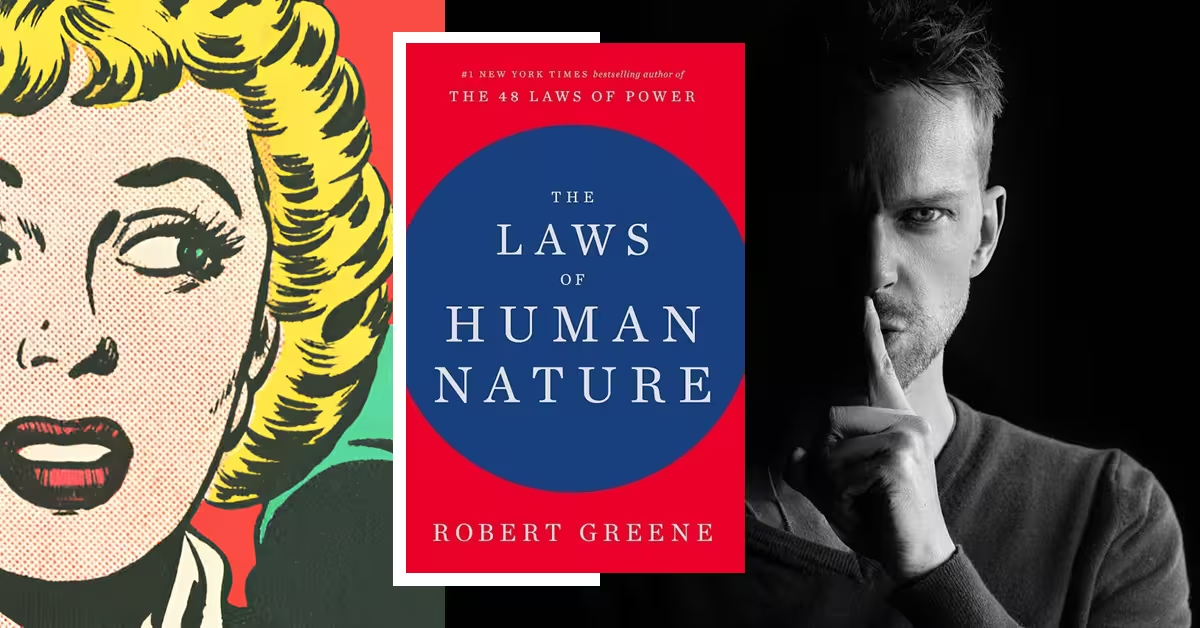
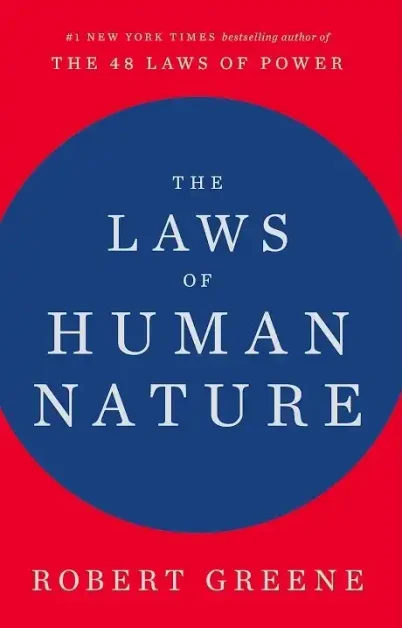
The Laws of Human Nature is Robert Greene’s 18-chapter field guide to why people, including you, act against their own interests, and my verdict is that it works best as a set of sharp lenses, not as a rulebook. Viking released it on October 23, 2018 (Penguin Random House), and Publishers Weekly listed it at 624 pages and 18 laws.
Most of it holds up as practical training in self-awareness. A few of its boldest claims, such as spotting hidden feelings in fleeting facial flashes, are weaker than Greene suggests. I read the book, then checked its big claims against published studies, so you can see which laws deserve your trust.
It is a huge book of around 600 pages and eighteen chapters, each built around one “law” and one or more historical stories. I read it slowly over a month. Here is a chapter-by-chapter summary in my own words, followed by an honest verdict on what it gets right and where you should be careful.
Table of Contents
What Are the Main Lessons of The Laws of Human Nature?
The main lesson is that most behavior, yours included, is driven by emotional forces you do not see, and that naming those forces gives you a real chance to manage them. Here is the whole The Laws of Human Nature at a glance:
Your thinking is less rational than you believe. Greene lists six everyday biases (confirmation, conviction, appearance, group, blame and superiority) and says the first fix is admitting you share them (chapter 1).
Everyone needs attention, and the way people handle that need sorts them along a narcissism spectrum. The healthy version is empathy, which Greene treats as a trainable skill (chapter 2).
People wear masks, but the mask leaks. Watch the face, the voice and the body for signs of dislike, dominance and deception (chapter 3).
Character repeats. “People never do something just once,” so study patterns, not promises (chapter 4).
Desire feeds on distance. The thing out of reach always looks greener, which is why Greene advises strategic withdrawal and, in the end, coveting reality itself (chapter 5).
Time gives perspective that the present moment cannot. Climb the mountain before you decide (chapter 6).
Never argue people out of an opinion. Lower their defenses first, then confirm their self-image (chapter 7).
Attitude shapes what you see and what happens next. A narrow, fearful outlook sabotages itself, and a wide, curious one compounds (chapter 8).
Everyone has a shadow. What people suppress leaks out as contradictory behavior (chapter 9).
Envy is the hardest emotion to detect. It hides behind anger, criticism and poisoned praise (chapter 10).
Know your limits. Grandiosity wrecks plans because it distorts your sense of proportion (chapter 11).
Gender rigidity makes people lopsided. Greene wants you to reconnect with the masculine or feminine side you suppress (chapter 12).
A sense of purpose is the antidote to drifting. Look for your calling in your earliest fascinations (chapter 13).
Groups pull you down. Join a high-functioning “reality group” instead of a tribe (chapter 14).
Authority is earned by making people want to follow. Ambivalence toward leaders is normal, so give them reasons (chapter 15).
Aggression is everywhere, most of it disguised. Learn to spot passive aggression and channel your own aggression into work (chapter 16).
You are a product of your generation. Use the spirit of the times instead of fighting it (chapter 17).
Death denial shrinks life. Facing mortality makes you more present (chapter 18).
Who Will Love The Laws of Human Nature, and Who May Bounce?
If you are a manager, a founder, a writer, a student of psychology, or simply someone who keeps repeating the same relationship or career mistakes, you will probably love this book, because it gives names and mechanisms to patterns you already half-sense, and it is packed with long historical stories that make each idea stick. You will also enjoy it if you like reading biography in the guise of self-help.
Readers who may bounce are those who want peer-reviewed rigor on every page, since Greene leans on psychoanalytic ideas that modern researchers treat cautiously, and anyone who dislikes cynical framing, because The Laws of Human Nature often asks you to assume the worst before you extend trust.
Short on time? At 624 pages (Publishers Weekly) it is a commitment, so read the chapters that match your current problem first, then return for the rest.
What Is The Laws of Human Nature About?
The Laws of Human Nature is a work of popular psychology and applied history that argues human behavior follows predictable emotional laws, and that you can learn to read them in others and in yourself. Here are the publishing details I verified:
- Title: The Laws of Human Nature
- Author: Robert Greene
- Publisher: Viking, an imprint of Penguin Random House (PRH listing)
- First edition: October 23, 2018, hardcover ISBN 9780525428145 (PRH listing)
- Length: 624 pages per Publishers Weekly; a library catalog entry lists 609 pages, so counts vary by edition and I cannot confirm a single “correct” figure
- Category: Self-Improvement and Business on the publisher’s page (PRH listing)
Greene is not a trained psychologist. According to a bookseller biography, he was born in Los Angeles on May 14, 1959, earned a B.A. in classical studies at the University of Wisconsin-Madison, and worked as a magazine editor, translator and Hollywood writer before his first book. His credentials are a reader’s credentials: he reads widely and retells what he reads.
That matters for how you weigh The Laws of Human Nature, and I come back to it in the critique below.
The thesis arrives early. Greene calls the book “a kind of codebook for deciphering people’s behavior” (introduction), and he claims that “human nature is stronger than any individual, than any institution or technological invention” (introduction).
In other words, technology, progress and good intentions do not rewire us. They only change the costumes our old impulses wear.
Why Did Robert Greene Write It After The 48 Laws of Power?
He wrote it to turn his lens inward, because his earlier books showed readers how to read power and this one tries to show them why people behave as they do. His breakout, The 48 Laws of Power, appeared in 1998 and has reportedly sold more than 1.2 million copies.
A getAbstract review by David Meyer describes the 2018 book as an “uncharacteristic detour into empathy” for a master strategist, and I agree with the spirit of that description: chapter 2 and the “transform” sections push you toward empathy more than manipulation.
Greene also tells you which sources he is drawing on. His introduction names psychologists such as Melanie Klein, John Bowlby, Donald Winnicott, Heinz Kohut, Carl Jung, Paul Ekman, Antonio Damasio and Daniel Kahneman, plus philosophers such as Schopenhauer and Nietzsche and novelists such as George Eliot and Henry James.
Each chapter follows the same pattern, which the introduction spells out: an iconic story, then the “keys” and strategies for dealing with the law in yourself and others, then a closing section on turning that force into something productive.
The introduction also lists seven promises. The Laws will make you a calmer observer, a better interpreter of cues, a match for toxic people, a smarter influencer, a more honest self-examiner, a more empathetic person, and someone who reaches for a “higher self.” Publishers Weekly quoted the first of these (becoming a “calmer and more strategic observer”) and called the promises lofty.
The 48 Laws of Power Summary
Law 1: Irrationality
Greene opens with ancient Athens and then uses the 2008 financial crash as “exhibit A” of how emotion beats information. His claim is that millions of buyers and sellers could have pulled back from risk and did not, because the lure of easy money made even smart people emotional (chapter 1).
He traces this to brain design: emotions evolved as physical arousal, but they are processed in a different region from language, so our translation of them is slippery. You feel anger when the real feeling is envy, or you aim at one person the anger that belongs to another. He then gives a three-step plan.
First, learn the six everyday biases: confirmation, conviction, appearance, group, blame and superiority. Second, watch for inflaming factors: trigger points from early childhood, sudden gains or losses, rising pressure, inflaming individuals and the group effect.
Third, practice four habits: know yourself, treat people as neutral phenomena (he holds up Anton Chekhov as the model), balance thinking and feeling like a rider and a horse, and learn to love the rational.
His test for rationality is useful: a rational person admits their irrational tendencies and shows it over time through finished projects and learning from failure.
Law 2: Narcissism
Greene says all humans crave attention, and most of us solve the problem by building a self-image that works like a thermostat, soothing doubt from the inside (chapter 2).
He places the key moment between ages two and five. Children whose parents either abandoned them or smothered them (he calls these “enmeshers”) may never build that inner thermostat, which produces the “deep narcissist” who lives off other people’s attention.
His signs include rage at any slight, constant self-focus, a habit of treating people as extensions of themselves, and frequent job changes. He sets this on a spectrum with four portraits: the complete-control narcissist (Stalin, in his account), the theatrical narcissist, the narcissistic couple and the healthy narcissist, whom he illustrates with Ernest Shackleton’s handling of his crew after the ship Endurance was abandoned in October 1915.
The takeaway is a skill: stop your inner monologue, enter the other person’s value system, and use empathy before defensiveness takes over.
Law 3: Role-playing
We are all actors, Greene argues, and the strain of performing means our real feelings “leak” through gestures, tone and facial cues (chapter 3).
He notes that “the word personality comes from the Latin persona, which means mask” (chapter 3). The good news is that children read people well, so the skill is something you are recovering, not acquiring. He recommends baby steps: watch one or two facial expressions that contradict someone’s words, then move to voice pitch and pace, then posture.
His decoding keys cover three categories of cues: like or dislike, dominance or submission, and deception. He puts heavy weight on microexpressions, brief flashes of emotion on the face, which is the claim I test hardest in the evidence section below.
The chapter also teaches the reverse skill, impression management, using the Roman emperor Augustus as a master of staging a persona.
Law 4: Compulsive behavior
Greene’s rule is blunt: “people never do something just once” (chapter 4). He describes character in layers: a genetic base, a second layer from early attachment (he summarizes John Bowlby’s four attachment styles), a third layer of habits formed as we age, and a fourth layer that develops in late childhood and adolescence.
The practical advice is to judge people by repeated actions over time, not by what they say they have learned. He retells the story of the Roman orator Cassius Severus, who kept insulting officials even after being banished to Crete and later to Serifos.
Then he profiles toxic types who look attractive at first, including the Hyperperfectionist, the Rebel, the Personalizer and the Pleaser.
The closing advice is encouraging: you can reshape your own character by deliberately building better habits, for example by exposing yourself to stress in small doses and working on tasks a bit above your level.
Law 5: Covetousness
We want what is far away, and the moment we get it, we start looking elsewhere (chapter 5). Greene calls this the grass-is-always-greener syndrome and traces it to the Hebrews’ complaints in the wilderness after leaving Egypt, then to the way adults gild their memories of childhood.
He then flips the law into a seduction strategy: to make yourself desirable, withdraw. Keep a touch of coldness, stay a little ambiguous, and be physically absent now and then.
His example is Michael Jackson spreading out album releases and interviews. He also advises leaving your work open to interpretation, which he says is why Shakespeare and Chekhov feel fresh across centuries. The “transform” step is the reverse: stop chasing the distant and covet your own reality, the people and work closest to you.
Law 6: Shortsightedness
In the moment we lack perspective, and time is the cure (chapter 6). He puts it this way: “time is the greatest teacher of them all, the revealer of reality” (chapter 6). His mountain analogy is clear: at the base of the mountain you see only trees, and higher up you see the terrain.
He lists four signs of short-term thinking, including unintended consequences (he cites the assassination of Julius Caesar in 44 BC and the colonial-era Delhi cobra bounty), “tactical hell” and “ticker tape fever.” The farsighted person feels connected to both past and future, maps a path to concrete long-term objectives and resists the overreactions of the moment.
Law 7: Defensiveness
Everyone builds walls, so direct persuasion fails (chapter 7). Greene says people drop their guard in a few situations, such as a night with friends, a rally or falling in love, and your aim is to create that feeling of safety. He offers five strategies for becoming a master persuader: become a deep listener, infect people with the right mood, confirm their self-opinion, allay their insecurities, and use their resistance and stubbornness instead of fighting it. The last section turns the lens on you. Keep ironic distance from your own self-opinion, because you are less free and less saintly than you think.
Law 8: Self-sabotage
Two people can visit Paris and report opposite cities, because attitude shapes perception (chapter 8). Greene describes a “constricted” attitude that narrows experience in an attempt to avoid pain, and five common forms: hostile, anxious, avoidant, depressive and resentful.
These attitudes tend to produce the very rejection they fear. The alternative is the “expansive” attitude: curious, adaptable, tolerant of uncertainty.
He cites William James’s idea from the 1890s that improving your overall attitude lifts everything else, and he suggests measuring people by the depth of their soul and spending more time with the expansive ones.
Law 9: Repression
This is The Laws of Human Nature‘s Jungian chapter. The Shadow is everything people deny about themselves, and Greene says it leaks out as contradictory behavior: a cruel remark from a gentle colleague, a sudden affair, a reckless gamble (chapter 9). He describes the shadow types he sees most often: the Tough Guy, the Saint, the Fanatic, the Rigid Rationalist, the Snob and the Extreme Entrepreneur.
He also covers overidealization and projection, two distortions he ties to the Shadow. The positive form is integration. Greene points to women such as Marlene Dietrich, Josephine Baker, Eleanor Roosevelt, Coco Chanel and Jacqueline Kennedy Onassis, who showed traits their era called “unfeminine” and became more magnetic for it. He calls this a kind of exorcism that turns the Shadow into an ally.
Law 10: Envy
“None is trickier or more elusive than envy,” Greene writes (chapter 10). We almost never say we envy someone, so we dress it up as unfairness, anger or critique. He teaches you to spot the signs, including backbiting, poisonous praise and microexpressions, and he describes five envier types: the Leveler, the Self-entitled Slacker, the Status Fiend, the Attacher and the Insecure Master. He also covers envy triggers and ways to move beyond envy.
Publishers Weekly noted that Greene ties Gore Vidal’s aphorism about a friend’s success to this chapter. The way out is to turn envy into admiration, to pick living and historical models, and to seek awe in places where comparison disappears, like mountains and the sea.
Law 11: Grandiosity
Greene asks you to imagine sculpting a block of marble, then to imagine a mental condition that makes the block look small and soft (chapter 11). That distorted sense of proportion is grandiosity, and it makes you underestimate effort, time and other people’s resistance. He covers the success delusion and the grandiose leader, and he borrows Croesus’s confession in Xenophon as a warning. The constructive version is “practical grandiosity”: aim high, but with a proportion that matches reality. The closing section links to chapter 18, because a sense of the sublime puts you back in proportion.
Law 12: Gender rigidity
Greene argues that love exposes our unconscious more than daily life does, because we become obsessive, dependent or childish with a partner (chapter 12).
He draws on Carl Jung’s anima and animus, the supposed opposite-gender figure in each psyche, and he sketches projection types such as the Devilish Romantic, the Lovable Rebel, the Fallen Woman and the Superior Man. His advice is to reconnect with your suppressed masculine or feminine side. He ends with a pointed line: “the muse, for both genders, lies within.”
Law 13: Aimlessness
Greene starts with the modern predicament: school ends, the competitive work world begins, and parents’ advice feels dated (chapter 13). Some people respond with excitement and try everything. Others react the opposite way, with fear. Either path can lead to drifting.
His remedy is to find your “calling” by studying your earliest fascinations. He gives the examples of Marie Curie, mesmerized at age four by laboratory glassware, Steve Jobs, drawn to gadgets in an electronics shop window, and Tiger Woods, who at two wanted to imitate his father hitting golf balls.
His strategies are to discover your calling, to use resistance and negative spurs, to create a ladder of descending goals, and to treat your work like a religious retreat. He warns against two false purposes: chasing attention and adopting cynicism, which he calls a consolation for people with few accomplishments.
The closing note asks you to rebuild the curiosity you had as a child and join it to adult intelligence.
Law 14: Conformity
Anyone who has felt goosebumps at a concert or rally knows the starting point: a group changes how you think and feel (chapter 14). Greene retells the story of Gao Jianhua, a boy who entered Yizhen Middle School in communist China in 1964, as an “experiment in human nature.”
He then describes how groups develop a court and courtiers around the leader, and he sketches roles such as the Intriguer, the Stirrer, the Gatekeeper, the Shadow Enabler, the Court Jester and the Mirrorer. His antidote is the “reality group,” a high-functioning group that holds its members to high standards and pulls them upward.
He argues that a dysfunctional group can make individuals neurotic, while a good one makes them healthy and confident. The Nietzsche epigraph sums it up: madness is rare in individuals but common in groups.
Law 15: Fickleness
Our feelings toward leaders, parents and friends are mixed, and Greene says ambivalence began in childhood, when we both needed and resented our parents (chapter 15). That means loyalty is never simple, and the leader has to keep earning it.
His authority strategies include finding your own style (he describes archetypes such as the Deliverer, seen in Moses or Martin Luther King Jr., and the Founder), focusing outward on people instead of yourself, developing vision, and being in a position where you can afford to be generous.
The final goal is “inner authority,” where you stop needing a parent or boss and become your own guide.
Law 16: Aggression
Most of us see ourselves as cooperative, but under threat or frustration we all cross lines and then rationalize it (chapter 16). Greene’s central case study is John D. Rockefeller, whom he uses to illustrate a “sophisticated aggressor.” He ties human aggression to our awareness of mortality and our constant insecurity.
Then he covers passive aggression, including what he calls the sympathy strategy and the dependency strategy, and he tells you how to counter them. The last section is “controlled aggression,” where ambition, persistence, fearlessness and anger are channeled into work.
He notes that lasting art often carries restrained anger, and the audience feels it as authenticity.
Law 17: Generational myopia
We are products of the era in which we grew up (chapter 17). Greene uses fashion cycles as the entry point: styles shift in waves that repeat over decades. He then brings in the fourteenth-century scholar Ibn Khaldun’s four-act model of history, in which revolutionaries are followed by order-seekers, then pragmatists, then doubters, until a new revolution arrives.
Greene admits the pattern “is not a science,” but he says we often see it. His strategies teach you to push against the past, to create new social configurations and to read the spirit of the times.
The last move is a kind of immortality strategy: if you feel out of step with your era, write for future readers.
Law 18: Death denial
The final law is the most philosophical. Greene opens with the American writer Flannery O’Connor and the death of her father in 1941 from lupus, then argues that humans cope with mortality by distracting themselves, and that this denial shrinks life (chapter 18).
He offers five strategies for a “philosophy of life through death,” including making the awareness visceral, seeing mortality in everyone and embracing pain and adversity.
He argues that facing death is liberating and sharpens your senses. It connects with The Laws of Human Nature‘s recurring idea of the sublime, the sense of awe that cures both envy and grandiosity.
Does the Science Back Greene’s Laws? My Evidence Audit
Most of The Laws of Human Nature‘s big claims survive contact with research, but a handful lean on ideas that psychologists treat with caution. I checked six of Greene’s biggest claims against published sources. I could not find direct tests for every law, and where I cannot confirm something I say so. This is my reading of the sources I found, not a formal meta-review.
| Greene’s claim | What the research I found says | Verdict |
|---|---|---|
| We seek evidence that confirms what we already believe (chapter 1) | Nickerson’s 1998 review in Review of General Psychology gathered evidence of confirmation bias across many settings | Strong support |
| Most people think they are better than average (chapter 1) | In a 1981 study, 93 percent of US drivers placed themselves above the median, compared with 69 percent of Swedish drivers; a 2023 replication found the same pattern | Strong support, with a caveat that the same article notes people define “skill” differently |
| Groups pull individuals toward the majority (chapter 14) | In Solomon Asch’s line study, about 75 percent of participants conformed at least once and about 25 percent never did | Supported |
| Character is largely set early and keeps repeating (chapter 4) | Roberts and DelVecchio’s meta-analysis found trait consistency rising from .31 in childhood to .54 in the college years, .64 at 30 and about .74 between 50 and 70; a 2022 meta-analysis found little evidence of rising stability after age 25 and a drift toward greater maturity | Partly supported: traits are stable, but not frozen |
| Microexpressions reveal hidden feelings and deception (chapter 3) | A 2018 opinion article in Frontiers in Psychology says microexpressions are a poor tell, citing a study that found six among deceivers and eight among honest pleaders; another Frontiers study calls the findings “equivocal at best” | Weak support |
| The Shadow, anima and animus shape behavior (chapters 9 and 12) | An entry in GoodTherapy, citing the APA Concise Dictionary of Psychology, says there is little or no evidence of innately inherited archetypes and that most modern psychologists do not use Jung’s model | Interpretive framework, not tested science |
Two further points deserve a closer look. First, on microexpressions, Greene does not pretend they are easy: he tells you to start small and stay relaxed. Even so, the research is clearly less friendly than his tone.
Scientific American quotes Maria Hartwig of John Jay College calling claims of reliable detection “simply implausible,” and the same article reports that legal psychologist Kristina Suchotzki says many researchers do not take the microexpression approach to lie detection seriously.
In other words, treat any facial flash as a prompt for a question, never as a verdict.
Second, on generations, chapter 17 leans on a long tradition of cycle theories, and Greene himself says the pattern is “not a science.”
That honesty helps. Still, a related practice, the modern habit of labeling birth cohorts, has been criticized: Pew Research Center, according to Fortune, decided in 2023 to stop using generational labels in most of its research after criticism from social scientists, including sociologist Philip Cohen of the University of Maryland, who argued the labels have “no scientific basis.”
Greene’s chapter is about historical cycles rather than marketing labels, so the criticism does not hit it directly, but it is a reminder to hold sweeping generational claims loosely.
Is The Laws of Human Nature a Good Book? My Critical Assessment
The Laws of Human Nature is a sprawling, sharp-eyed and occasionally overconfident field guide to our worst impulses, and it is at its best when it makes you wince at yourself. I finished it feeling humbler, and a little annoyed at how many of its portraits fit people I know and, less comfortably, me.
Does Greene support his arguments? Partly. The chapters on irrationality, envy, groups and attitude pair clear mechanisms with stories, and several of those mechanisms match well-replicated research, as the evidence table shows.
The weaker spots are the Jungian chapters and the body-language decoding, where the book moves from findings to interpretation.
The Laws of Human Nature‘s own framing admits this: Greene describes it as a codebook, not a lab report. I also noted that my edition lists a selected bibliography but, as far as I could tell, no line-by-line notes, so you cannot easily trace a specific claim to a specific study.
Does it deliver on its purpose? For most readers, yes. It aims to make you a calmer observer and a more honest self-examiner, and the exercises (slow down, watch repeated behavior, test your motives) can do that without any of the shaky science.
Publishers Weekly called The Laws of Human Nature‘s promises lofty yet said even skeptics would likely become believers, and that matches my experience.
What Are the Strengths and Weaknesses?
What I found compelling: the envy chapter, because it names a feeling most of us hide even from ourselves; the closing “transform” section in every chapter, which keeps the book from becoming a catalog of villains; and Shackleton’s mood-reading as a model of empathy used for leadership.
What frustrated me: the length, since several chapters repeat the same structure; the habit of resting a point on a single dramatic story; and a cynical streak that can make you suspicious of ordinary kindness. The book also overstates what a trained eye can read from a face, as the evidence audit shows.
Which Books Are Like The Laws of Human Nature?
If you want the research backbone that Greene sometimes lacks, start with Daniel Kahneman’s Thinking, Fast and Slow, published in 2011 by a psychologist who had won a Nobel Prize about a decade earlier. It covers the biases from Greene’s chapter 1 with far more evidence and far less storytelling.
For persuasion, read Robert Cialdini’s Influence, first published in 1984 and built on peer-reviewed studies according to that profile of Cialdini. It gives you the evidence-based version of chapter 7. And if you want the colder, power-focused sibling, Greene’s own The 48 Laws of Power (1998) covers the strategic side with less psychology.
Together, these three show what Greene’s book is: a literary go-between linking hard research and street-level strategy, more novelistic than either.
Is The Laws of Human Nature Worth Reading?
Yes, if you read it as a thinking tool and not as scripture. Read it if you want to understand your own repeated mistakes, manage difficult colleagues, or simply watch people with sharper attention.
Skip or skim it if you need every claim backed by a study, or if you prefer short books. My rule of thumb: trust the chapters on irrationality, envy, groups and attitude, treat the chapters on the Shadow and gender as thought experiments, and treat any facial-cue decoding as a hint to ask a question.
My Verdict
The Laws of Human Nature is long, uneven and sometimes overconfident, but it contains real wisdom about emotions, ego and empathy. I would give it four stars out of five, read slowly, with a pencil, and with the reminder that the most important person it helps you understand is yourself.
The Laws of Human Nature
The Laws of Human Nature is Robert Greene's 18-chapter field guide to why people, including you, act against their own interests, and my verdict is that it works best as a set of sharp lenses, not as a rulebook. Viking released it on October 23, 2018 (Penguin Random House), and Publishers Weekly listed it at 624 pages and 18 laws.
URL: https://www.sopranu.com/laws-of-human-nature-robert-greene-review/
Author: Robert Greene
4
Pros
- Clear 18-law structure; vivid historical case studies; practical exercises and a "transform" section in every chapter; strong chapters on irrationality, envy, groups and attitude; honest about readers' own blind spots.
Cons
- Leans on Jungian and psychoanalytic ideas with limited empirical support; overstates what microexpressions can reveal; long and repetitive in structure; no line-by-line citations that I could find; a cynical tone in places.








0 thoughts on “The Laws of Human Nature: Robert Greene on Why People Act as They Do”