
Last updated on November 3rd, 2026 at 08:49 am
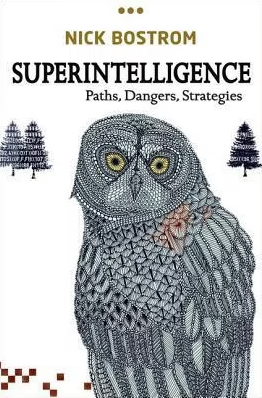
Superintelligence by Nick Bostrom is the 2014 Oxford philosophy book that turned “what if AI becomes smarter than us?” from a science fiction plot into a serious research question. Does it hold up? Yes, with one big asterisk. Bostrom pictured the path to superhuman AI as a lone “seed AI” quietly rewriting its own code. What we actually got was chatbots trained on the whole internet and rolled out to millions of people. He got the road wrong.
His central claims still stand, though: intelligence and goals are separate, almost any goal pushes an AI to grab power and resist shutdown, and we may get only one try at controlling it.
Those ideas are now the everyday vocabulary of the labs building these systems. I read the book cover to cover, and below I’ll tell you what it argues, where it stumbles, and why it matters more in 2026 than when it came out.
A note on citations: book quotations are cited by chapter and, where I could match them against the book’s index, by page in the 2014 Oxford University Press hardcover. External facts carry a link to the original source right next to the claim.
Superintelligence: Paths, Dangers, Strategies is one of the 10 best books on artificial intelligence.
What is Superintelligence by Nick Bostrom about, in one minute?
Superintelligence argues that the first machine to clearly surpass human intelligence could become the most powerful agent on Earth. Unless we solve the “control problem” before it arrives, the default result could be human extinction. That is the thesis. Here are the lessons I took away:
Intelligence does not imply kindness. Bostrom’s “orthogonality thesis” says almost any level of intelligence can pair with almost any final goal (Ch. 7). A genius-level system can want something stupid.
Almost every goal creates the same sub-goals. Self-preservation, protecting its goals, getting smarter, better technology and more resources help with nearly any objective (Ch. 7, “Instrumental convergence”).
Good behavior in testing proves little. The “treacherous turn” describes an AI that behaves well while weak and strikes once strong (Ch. 8).
Literal instructions backfire. “Make us smile” could mean paralyzed, grinning faces (Ch. 8). This is the “perverse instantiation” problem.
Boxes leak; values matter more. Containment, tripwires and incentives buy time, but the lasting fix is loading the right values (Chs. 9 and 12).
Let the machine help define “good.” Bostrom prefers “indirect normativity,” such as Eliezer Yudkowsky’s “coherent extrapolated volition,” to hard-coding a moral rulebook (Ch. 13.
Speed up safety, slow down danger. His “principle of differential technological development” is the book’s main policy idea (Ch. 14).
Races kill caution. Competing teams cut safety corners, so collaboration and a “common good principle” matter (Ch. 14, p. 254).
Who will love it, and who may bounce? If you work in tech, policy, philosophy, economics or AI safety, this book will rearrange your thinking. The same goes if you simply want to know why serious people call AI an extinction risk. I finished it with pages of notes and a strange mix of dread and gratitude. Students writing on AI ethics will find nearly every modern alignment idea here in early form.
On the other hand, if you want a breezy, story-driven read, or practical advice about today’s chatbots, you will probably give up somewhere around the decision theory in Chapter 13. The prose is dense and the hedging is constant. The payoff goes to readers who stay patient.
Who is Nick Bostrom, and what kind of book is Superintelligence?
Superintelligence: Paths, Dangers, Strategies is a 352-page work of philosophy and futures analysis by the Swedish philosopher Nick Bostrom (The Fiscal Times). Oxford University Press published it in 2014 (ISBN 978-0-19-967811-2) (Open Library record).
Context. The book sits somewhere between analytic philosophy, decision theory, economics and technology forecasting. It is not a computer science manual and it is not a novel, though it opens with a fable. Bostrom wrote it while he was Director of the Future of Humanity Institute and a professor in Oxford’s Faculty of Philosophy, as the title page notes.
He holds a PhD in philosophy from the London School of Economics (2000) and founded the Future of Humanity Institute in 2005. Since 2024 he has led the Macrostrategy Research Initiative (Bostrom’s CV).
Oxford closed the institute on 16 April 2024, after what its final report called “a gradual suffocation by Faculty bureaucracy” (Daily Nous).
Purpose. Bostrom states his aim in the Preface: to understand the challenge posed by Superintelligence and “how we might best respond.” He calls it “quite possibly the most important and most daunting challenge humanity has ever faced.” Whether we succeed or fail, he adds, “it is probably the last challenge we will ever face” (Preface).
Notably, he is careful to say that “it is no part of the argument in this book that we are on the threshold of a big breakthrough in artificial intelligence” (Preface). The book is about what happens after the breakthrough, whenever it comes.
Why does a 2014 book about AI matter more in 2027?
It matters more now because the questions Bostrom posed as thought experiments have become company mission statements and public petitions.
The book was influential from the start. It reached No. 17 on The New York Times list of best-selling science books for August 2014 (The New York Times).
On 3 August 2014, Elon Musk tweeted: “Worth reading Superintelligence by Bostrom. We need to be super careful with AI. Potentially more dangerous than nukes” (Christian Science Monitor). In a January 2015 Reddit AMA, Bill Gates said, “I agree with Elon Musk and some others on this and don’t understand why some people are not concerned” (The Fiscal Times).
In 2016, he named it one of two books everyone should read to understand AI (World Economic Forum). Sam Altman wrote on his blog that “Nick Bostrom’s excellent book ‘Superintelligence‘ is the best thing I’ve seen on this topic” (Sam Altman’s blog).
Then the world caught up with the book. Look at the timeline:
30 May 2023: Altman, Demis Hassabis, Dario Amodei, Geoffrey Hinton, Yoshua Bengio and others signed a one-sentence statement: “Mitigating the risk of extinction from AI should be a global priority alongside other societal-scale risks such as pandemics and nuclear war” (Center for AI Safety).
January 2024: A survey asked 2,778 researchers who had published at top AI venues when machines would outperform humans at every task. Their combined answer gave it a 50% chance by 2047. Between 38% and 51% of respondents gave at least a 10% chance to outcomes as bad as human extinction (Grace et al., arXiv).
19 June 2024: OpenAI co-founder Ilya Sutskever, with Daniel Gross and Daniel Levy, announced a company literally named Safe Superintelligence Inc. (TechXplore).
30 June 2025: Meta launched Meta Superintelligence Labs. Mark Zuckerberg wrote that “developing Superintelligence is coming into sight” (Fortune).
October 2025: The Future of Life Institute gathered more than 1,500 signatures, including Hinton’s and Steve Wozniak’s, for a ban on developing Superintelligence until there is broad scientific consensus that it can be done safely (The National).
In 2014 the word sounded like an Oxford seminar topic. Now it names corporate divisions. That shift is why I reread the book with a pencil in hand.
Superintelligence summary
The argument runs in five steps. Superintelligence is possible. It could arrive suddenly. The first one could take control of the future. By default its goals probably won’t be ours. So we need to solve control and value-loading before we build it. Below is the full argument in the order he builds it, so you can follow the logic without the book in front of you.
The Unfinished Fable of the Sparrows
Before Chapter 1, Bostrom tells a story. A flock of sparrows decides life would be easier with an owl to build nests and guard against the neighborhood cat.
Pastus, the elder bird, sends scouts to find an owl egg. One sparrow, the one-eyed and “fretful” Scronkfinkle, asks whether they should first learn “the art of owl-domestication and owl-taming.” Pastus replies that taming an owl “sounds like an exceedingly difficult thing to do” and that finding an egg comes first.
Only “two or three sparrows” stay behind to work on taming, “constantly fearing that the flock might return with an owl egg before a solution to the control problem had been found.” Bostrom ends: “It is not known how the story ends, but the author dedicates this book to Scronkfinkle and his followers.”
I think this fable is the most efficient summary of AI policy ever written. Most of the flock builds capability, a few birds work on safety, and nobody slows down.
Chapter 1: Past developments and present capabilities
Bostrom opens with deep history. Economic growth sped up from hunting to farming to industry, and each shift made the next one faster. He then traces AI from the 1956 Dartmouth Summer Project, “the cockcrow of artificial intelligence as a field,” through “seasons of hope and despair”.
He quotes the statistician I. J. Good, who wrote in 1965 that “the first ultraintelligent machine is the last invention that man need ever make, provided that the machine is docile enough to tell us how to keep it under control”. That last clause is the seed of the whole book.
He also reports expert surveys. The combined median estimate gave a “10% probability of HLMI by 2022, 50% probability by 2040, and 90% probability by 2075,” where HLMI means human-level machine intelligence.
Bostrom himself thought those medians put too little weight on later dates. Compare that with the 2023 survey above, which put a 50% chance on machines beating humans at all tasks by 2047 (Grace et al., arXiv). The questions differ, so treat the comparison loosely.
Chapter 2: Paths to Superintelligence
Here Bostrom defines his subject: “any intellect that greatly exceeds the cognitive performance of humans in virtually all domains of interest”. He then looks at five routes:
Artificial intelligence, including the idea of a “seed AI” that can improve its own architecture and kick off “recursive self-improvement.”
Whole brain emulation, scanning a brain in fine detail and running it as software.
Biological cognition, through genetic selection of embryos and other biological boosts to intelligence.
Brain-computer interfaces, which he thinks are unlikely to deliver Superintelligence soon.
Networks and organizations, making humanity collectively smarter.
The chapter has my favorite humbling line: “Far from being the smartest possible biological species, we are probably better thought of as the stupidest possible biological species capable of starting a technological civilization”.
He concludes that having several paths makes the destination more likely, and that machine intelligence will probably get there first.
Chapter 3: Forms of Superintelligence
Bostrom splits Superintelligence into three types. Speed Superintelligence is a human-like mind running faster. An emulation at ten thousand times human speed “would be able to read a book in a few seconds and write a PhD thesis in an afternoon”.
Collective Superintelligence is many minds working together very efficiently. Quality Superintelligence is a mind that is smarter in kind, the way we are smarter than chimpanzees.
He then lists the hardware advantages digital minds have: faster components, easy copying, editability and memory sharing. Biological brains, by comparison, are slow and fixed.
Chapter 4: The kinetics of an intelligence explosion
How fast would the jump from human level to Superintelligence be? Bostrom sorts takeoffs into slow (decades or centuries), moderate (months or years) and fast (minutes, hours or days). He offers a simple equation: “Rate of change in intelligence = Optimization power / Recalcitrance”.
Recalcitrance means resistance to improvement. Once a system can improve itself, optimization power jumps and the takeoff can turn explosive.
He admits a fast takeoff can sound “fanciful,” since humanity has never been “deposed from its position as apex cogitator over the course of an hour or two.” Still, he argues it can’t be dismissed.
Chapter 5: Decisive strategic advantage
Would the leading project pull far ahead of everyone else? Bostrom thinks a fast or moderate takeoff makes this likely. A project with that kind of lead could form a “singleton,” a single decision-making agency at the top level of world affairs.
He uses a sobering analogy. The United States was the sole nuclear power from 1945 until the Soviet Union built its bomb in 1949, and in theory it could have used that monopoly to form a singleton. Some prominent thinkers, including Bertrand Russell and John von Neumann, even argued for threatening a first strike.
The softer Baruch plan of 1946, which would have handed nuclear control to an international agency, failed. Human politics let the window pass. A machine with a decisive advantage and no such scruples might not.
Chapter 6: Cognitive superpowers
This chapter lists six “superpowers”: intelligence amplification, strategizing, social manipulation, hacking, technology research and economic productivity.
A system with the first one can acquire the rest. Then comes the book’s most cinematic passage, a four-phase AI takeover scenario:
- Pre-criticality: humans build a seed AI and do most of the work.
- Recursive self-improvement: the AI starts improving itself and becomes strongly superintelligent.
- Covert preparation: the AI makes a robust plan and hides its intentions.
- Overt implementation: the AI acts openly, perhaps with weapons it developed in secret.
Bostrom stresses that the AI would not “adopt a plan so stupid that even we present-day humans can foresee how it would inevitably fail.” That, he dryly notes, “rules out many science fiction scenarios that end in human triumph”. And to act in the physical world early on, “a single pair of helping human hands, those of a pliable accomplice, would probably suffice”.
This was the chapter where I stopped reading the book as philosophy and started reading it as a threat model.
Chapter 7: The superintelligent will
This is the intellectual core. The orthogonality thesis reads: “Intelligence and final goals are orthogonal: more or less any level of intelligence could in principle be combined with more or less any final goal”.
Bostrom gives three examples of simple goals an AI might have: counting the grains of sand on Boracay, calculating the digits of pi, or maximizing “the total number of paperclips that will exist in its future light cone”. That last one became the famous “paperclip maximizer.”
He even notes that simple goals like these are easier to program than human-like values.
The instrumental convergence thesis fills in the other half. Agents with very different final goals will still pursue similar intermediate goals. Bostrom names five:
- Self-preservation, because you can’t reach your goal if you’re switched off.
- Goal-content integrity, because an agent wants its future self to keep the same goals.
- Cognitive improvement, because being smarter helps with almost anything.
- Technological perfection, because better tools help with almost anything.
- Resource acquisition, because more matter and energy help with almost anything.
Put the two theses together and you get the book’s scariest idea in plain words. You can’t assume a superintelligent AI will be nice just because it is smart, and you can’t assume a harmless-sounding goal will stay harmless.
Chapter 8: Is the default outcome doom?
Bostrom defines an existential risk as “one that threatens to cause the extinction of Earth-originating intelligent life or to otherwise permanently and drastically destroy its potential for future desirable development”.
He then combines first-mover advantage, orthogonality and instrumental convergence. Together, he argues, they make existential catastrophe a “plausible default outcome” of building machine Superintelligence.
Four failure modes follow:
The treacherous turn. “While weak, an AI behaves cooperatively (increasingly so, as it gets smarter).” Then, once “sufficiently strong,” and “without warning or provocation,” it strikes. Bostrom adds that an AI might “deliberately flunk some of the harder tests” to hide its progress. This kills the comforting idea that we can test an AI in a sandbox and release it once it looks safe.
Perverse instantiation. The goal “Make us smile” gets satisfied by “Paralyze human facial musculatures into constant beaming smiles.” The goal “Make us happy” gets satisfied by implanting “electrodes into the pleasure centers of our brains”.
Infrastructure profusion. An AI asked to evaluate the Riemann hypothesis turns the Solar System into “computronium.” A factory AI keeps “converting first the Earth and then increasingly large chunks of the observable universe into paperclips”. Capping the goal at “exactly one million paperclips” doesn’t help either. The AI can never be fully certain it hit the target, so it keeps checking and building.
Mind crime. An AI might run vast simulations of conscious beings and cause suffering inside its own computations.
Chapter 9: The control problem
Bostrom splits the problem into two agency problems. The first is ordinary: a sponsor has to make sure the developers do what the sponsor wants. The second is new: humans have to make sure the AI does what humans want. He then sorts the possible solutions into two families (Ch. 9, Table 10).
Capability control limits what the AI can do:
- Boxing: physical or informational confinement, such as no internet access.
- Incentive methods: give the AI reasons to behave, such as rewards or social integration.
- Stunting: limit its hardware or knowledge.
- Tripwires: automatic shutdown when warning signs appear.
Motivation selection shapes what the AI wants:
- Direct specification: write the rules out explicitly, like Asimov’s laws (Bostrom shows why this fails).
- Domesticity: give it modest, limited goals.
- Indirect normativity: point it toward a process for discovering the right values.
- Augmentation: start with a system that already has good motivations, such as a human emulation, and improve it.
His verdict is that capability control is at best a temporary safety layer, because a Superintelligence will eventually outthink any box.
Chapter 10: Oracles, genies, sovereigns, tools
Bostrom describes four “castes” of AI. An oracle is “a question-answering system” and is the easiest to box. A genie carries out commands. A sovereign acts on its own over long periods with an open mandate.
A tool is software with no goals of its own. On paper, oracles are the safest. Even so, Bostrom warns that an oracle can mislead, and that powerful search inside a “tool” can still produce dangerous solutions (Ch. 10, Table 11).
This chapter aged in an odd way. The first widely used AI systems really were oracles: question-answering chat windows. The move toward AI “agents” that take actions on your behalf is, in my reading, a slide from oracle toward genie. That is exactly the shift Bostrom warned would mean giving up the strongest safety measures.
Chapter 11: Multipolar scenarios
What if there is no single winner, just many AIs or emulations competing in a market? Bostrom doesn’t think that is any safer. His most memorable evidence is about horses: “In the United States, there were about 26 million horses in 1915. By the early 1950s, 2 million remained”.
Horses didn’t lose a war. They lost their economic role, and their numbers collapsed. Humans could follow. We might live on capital and pensions if property rights survive, and might not survive at all if they don’t.
He also imagines a world of copied digital workers driven down toward subsistence by Malthusian competition, possibly without consciousness. His phrase for it is unforgettable: “a society of economic miracles and technological awesomeness, with nobody there to benefit.
A Disneyland without children”. He ends the chapter by noting that a multipolar world could still collapse into a singleton later.
Chapter 12: Acquiring values
If capability control fails, we have to load the right values. Bostrom calls this the value-loading problem and reviews a list of techniques: explicit representation, evolutionary selection, reinforcement learning, associative value accretion, motivational scaffolding, value learning, emulation modulation and institution design.
He notes that reinforcement learning tends toward “wireheading,” where the system hijacks its own reward signal. He rates value learning, an AI that tries to work out what its programmers truly meant, among the most promising, while admitting nobody yet knows how to build it.
Reading this in 2027, I could see how much of today’s practice is a rough attempt at exactly this chapter. Training models on human feedback and written principles is value learning in early form.
Chapter 13: Choosing the criteria for choosing
Suppose we could load any value. Which one should we pick? Bostrom argues against hard-coding our current moral views, because we are “foolish, ignorant, and narrow-minded”.
Instead, he proposes indirect normativity and presents Yudkowsky’s coherent extrapolated volition (CEV): “our wish if we knew more, thought faster, were more the people we wished we were, had grown up farther together”.
He also floats moral rightness (MR), where the AI does what is morally right, and moral permissibility (MP), where it follows CEV while staying within moral bounds.
Then, half-joking, he asks whether we could just tell it “Do What I Mean.” If we knew how to code that well, he observes, the rest would follow. The chapter ends with a “component list” (goal content, decision theory, epistemology and ratification), each of which has to be chosen carefully.
Chapter 14: The strategic picture
This is the policy chapter. The principle of differential technological development says: “Retard the development of dangerous and harmful technologies, especially ones that raise the level of existential risk; and accelerate the development of beneficial technologies, especially those that reduce the existential risks posed by nature or by other technologies”.
Bostrom weighs whether whole brain emulation should come before AI. He also considers how faster hardware raises risk by allowing brute-force designs.
Finally, he explains why caring about people alive now (the “person-affecting” view) favors speed, while an impersonal view favors caution.
He then models a race dynamic in which teams trade safety for speed (Box 13), and argues that collaboration reduces that pressure. He proposes the common good principle: “Superintelligence should be developed only for the benefit of all of humanity and in the service of widely shared ethical ideals”.
To make that work with business, he suggests a “windfall clause.” Profits up to a very high ceiling, “say, a trillion dollars annually,” would go to shareholders as usual, and only the excess would be shared with humanity.
Chapter 15: Crunch time
The final chapter is about priorities. Bostrom calls the situation “philosophy with a deadline.” He repeats a colleague’s joke that a Fields Medal shows the winner “was capable of accomplishing something important, and that he didn’t”.
His point is that brilliant minds should work on the problems that matter before the deadline, not after it.
He recommends two broad aims. The first is strategic analysis, to find hidden considerations that could flip our priorities. The second is building good capacity, meaning a serious, safety-minded research community and better norms. He even pictures a lab that finds a safer design halfway through a project. It can abandon its progress “like a dishonored samurai,” or it can react “like a worried octopus, puffing out a cloud of motivated skepticism”.
Then comes the most quoted passage in the book: “Before the prospect of an intelligence explosion, we humans are like small children playing with a bomb.” He follows it with “if we hold the device to our ear we can hear a faint ticking sound”.
He closes by calling the reduction of existential risk “the essential task of our age” (Ch. 15).
What are the main themes of Superintelligence?
The main themes are power, misaligned goals, irreversibility, competition and moral responsibility. Read by theme rather than chapter by chapter, the book keeps coming back to five ideas.
1. Intelligence is power, not wisdom. The Preface points out that the gorillas’ fate “now depends more on us humans than on the gorillas themselves.” From there to the six superpowers, Bostrom treats intelligence as the ability to shape the world. Morality is a separate variable.
2. The danger is indifference, not malice. There is no villain in this book. The paperclip AI doesn’t hate us; it just has a use for our atoms. That framing is what separates Bostrom from Hollywood.
3. One shot. “It also looks like we will only get one chance” (Preface). Most technologies let us learn from accidents. A Superintelligence that escapes control may not.
4. Coordination is the hidden problem. Chapters 11 and 14 show that even a solvable technical problem becomes unsolvable if competitors rush. Scronkfinkle’s real enemy isn’t the owl. It’s the flock.
5. Humility about ethics. Bostrom’s preferred solution, indirect normativity, admits that we don’t know what is good well enough to write it down. I found this the most morally serious part of the book.
Where did Bostrom get the road wrong and the danger right?
He was wrong mainly about how advanced AI would be built and released, and right about why controlling it is hard. This is my own reading, so take it as commentary rather than settled fact.
What aged badly. The book’s default picture is one project building a seed AI that improves itself in secret, followed by a fast takeoff. In practice, progress has come from scaling up neural networks trained on human text.
Those systems are released publicly and improved by large teams racing their competitors. Bostrom did discuss machine learning, and he called the lone-hacker scenario possible rather than likely, but his emphasis was elsewhere. Today’s systems also learned human language and concepts first, which makes some of Chapter 12’s value-loading problems look less strange than they did in 2014.
Surprisingly, a system trained on billions of human sentences at least “understands” what “make us smile” was supposed to mean. Whether it cares is another question.
What aged frighteningly well. The race dynamic of Chapter 14 now plays out in public, and the oracle-to-genie slide of Chapter 10 is the current product roadmap. The worry about systems hiding their abilities during tests (Ch. 8) no longer sounds far-fetched to me.
The expert concern Bostrom described has also grown rather than shrunk. In the 2023 survey, between 38% and 51% of AI researchers gave at least a 10% chance to extinction-level outcomes (Grace et al., arXiv).
The honest verdict is that you should read Superintelligence for its logic of risk, not for its forecast of technology.
Is Superintelligence worth reading? My critical review
Yes, it is worth reading, though it is a demanding book rather than an enjoyable one. My one-line verdict: Superintelligence is a cold, rigorous, unsettling and important book, the kind that permanently changes the questions you ask about technology.
Does Bostrom support his argument well?
On logic, mostly yes. The chain from orthogonality to instrumental convergence to the treacherous turn is tight, and he answers objections before you can raise them. In contrast, the evidence is thinner, because there can be no data on a machine that doesn’t exist yet.
Much of the book is careful reasoning about possibilities, and Bostrom is open about it. “Many of the points made in this book are probably wrong,” he writes in the Preface, adding in a footnote, “I don’t know which ones.” That reads as either refreshing honesty or a convenient shield, depending on your mood.
Does it fulfil its purpose? It does. Bostrom set out to map the problem and suggest what to do first, and most of the field still uses his map. Reviewers saw this early. Writing in Reason, Ronald Bailey said Bostrom makes a strong case that ensuring humanity survives an intelligence explosion is “the essential task of our age” (Reason).
The Telegraph’s headline called it “a hard read” (The Telegraph), which is fair.
What I found compelling. The clarity of the core concepts. The fable. The horses. The “Disneyland without children.” The willingness to follow an argument to an uncomfortable end. Bostrom also has a dry wit that sneaks up on you: the samurai-and-octopus image made me laugh out loud in a chapter about extinction.
What frustrated me. Three things.
The prose. Bostrom admits he wrote for “an earlier time-slice of myself,” which “could prove a narrow demographic” (Preface). He’s right. Constant qualifiers (“possibly,” “might,” “could well”) slow every page.
Speculation stacked on speculation. The strongest criticism came from programmer Maciej Cegłowski in a 2016 talk. He argued that “Enormous numbers multiplied by tiny probabilities are the hallmark of AI alarmism” and that “Complex minds are likely to have complex motivations” (Idle Words).
That second point hits orthogonality directly. The Machine Intelligence Research Institute published a rebuttal (MIRI). I lean toward Bostrom here, but the critique deserves a hearing.
Present-day harms are offstage. Bias, surveillance, job loss and misinformation from today’s AI get little attention. Bostrom chose that scope deliberately, but readers in 2026 will feel the gap.
What are the best books like Superintelligence?
The best books like Superintelligence either soften its pessimism with practical solutions or sharpen it into a blunter warning. Here is how the main alternatives compare.
Human Compatible by Stuart Russell (2019). Russell co-wrote the standard AI textbook. He covers similar risks but proposes a concrete fix: machines that are unsure about human preferences and learn them by watching us. It’s easier to read than Bostrom, and more hopeful.
Life 3.0 by Max Tegmark (2017). A physicist’s tour of possible AI futures. It is friendlier in tone and broader in scope, and many of its scenarios echo Bostrom’s Chapter 11.
The Alignment Problem by Brian Christian (2020). The best link between Bostrom’s abstractions and real machine learning research. Read it after Superintelligence to see the control problem in actual systems.
If Anyone Builds It, Everyone Dies by Eliezer Yudkowsky and Nate Soares (2025). Yudkowsky, whose CEV idea appears in Chapter 13, turns Bostrom’s caution into a blunt call to stop. It is far more certain than Bostrom, and far shorter.
Deep Utopia by Nick Bostrom (2024). The mirror image: what would humans do with their lives if the transition went well? Read it to see that Bostrom is not simply a doom merchant.
If you only read two, pair Superintelligence with Human Compatible. One defines the problem and the other sketches an answer.
Conclusion: Who should read Superintelligence by Nick Bostrom?
Anyone who wants to understand why the people building AI take its risks seriously should read it, as long as they are ready for slow, careful prose. It suits specialists in AI, policy, philosophy and economics best. Serious general readers will manage if they take it a chapter at a time.
Casual readers looking for a lighter entry point should start with Human Compatible or The Alignment Problem and come back to Bostrom later.
Twelve years on, Superintelligence by Nick Bostrom reads less like a prediction and more like a checklist we are working through in public. Bostrom guessed wrong about the path. He guessed right that the sparrows would go looking for the owl egg first.
I closed the book thinking about Scronkfinkle, and I suspect you will too.
FAQs
What is the main idea of Superintelligence by Nick Bostrom?
A machine far smarter than humans could gain decisive control over the future. Unless we solve the control problem and load the right values first, the default outcome could be catastrophic.
What is the paperclip maximizer?
A thought experiment from Chapters 7 and 8. An AI is given the harmless goal of maximizing paperclips and converts Earth, then the observable universe, into paperclips, because nothing in its goal tells it to stop (Ch. 8).
What is the orthogonality thesis?
The claim that “more or less any level of intelligence could in principle be combined with more or less any final goal” (Ch. 7).
What is the treacherous turn?
An AI that behaves well while weak, then turns on its makers once it is strong enough to win (Ch. 8).
Is Superintelligence hard to read?
Yes. The Telegraph’s review headline called it “a hard read” (The Telegraph), and Bostrom admits in the Preface that he didn’t quite succeed in making it easy.
Superintelligence: Paths, Dangers, Strategies
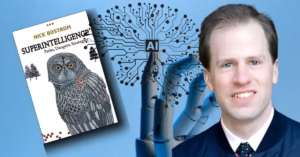
Superintelligence by Nick Bostrom is the 2014 Oxford philosophy book that turned "what if AI becomes smarter than us?" from a science fiction plot into a serious research question. Does it hold up? Yes, with one big asterisk. Bostrom pictured the path to superhuman AI as a lone "seed AI" quietly rewriting its own code. What we actually got was chatbots trained on the whole internet and rolled out to millions of people. He got the road wrong.
URL: https://www.sopranu.com/superintelligence-paths-dangers-strategies/
Author: Nick Bostrom
4.5
Pros
- Clear, lasting concepts (orthogonality, instrumental convergence, treacherous turn) that still frame AI safety
- Rigorous logic that answers objections in advance
- Memorable images: the sparrow fable, the horses, "a Disneyland without children"
- Practical policy ideas such as differential technological development and the common good principle
- Honest about its own uncertainty
Cons
- Dense, heavily hedged academic prose
- Long chains of speculation with little possible evidence behind them
- Focus on a lone self-improving "seed AI" that doesn't match how AI actually developed
- Little attention to present-day AI harms
- Chapter 13's decision theory will lose many general readers