
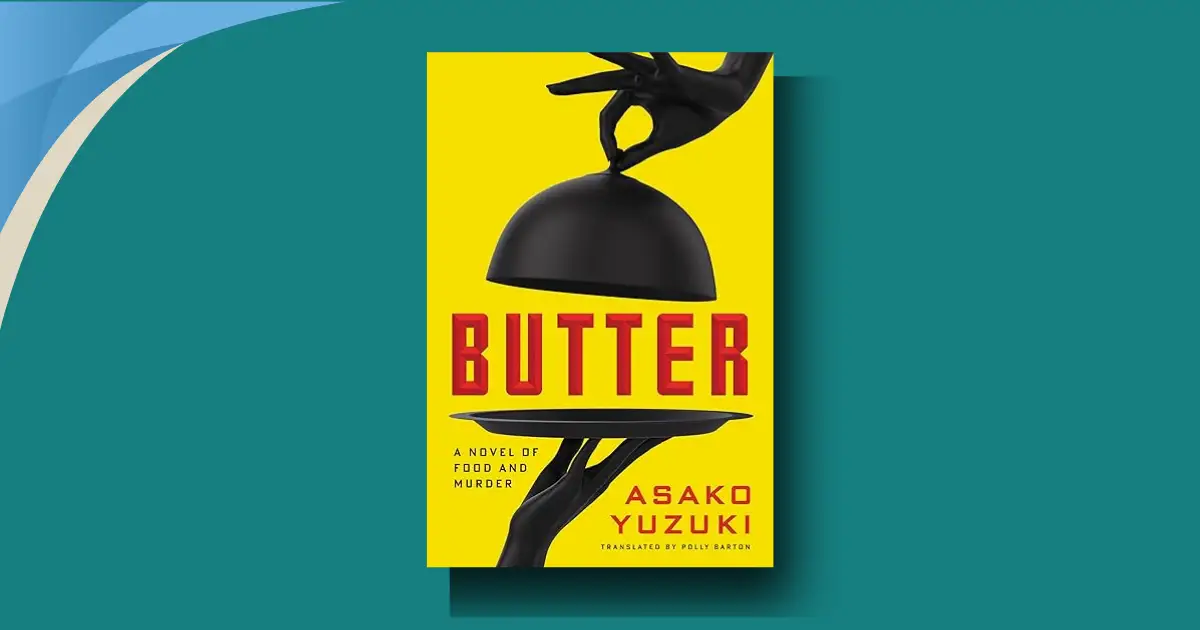
Butter is the kind of novel that answers a question most of us never ask out loud: who benefits when women are trained to stay hungry?
It turns a sensational crime story into something sharper—an x-ray of misogyny, body policing, and “acceptable” femininity. And it does it through the most disarming weapon possible: food you can practically smell through the page.
If you’ve ever felt your appetite judged (for love, success, attention, even space), this book knows exactly where that bruise comes from.
Best idea in a sentence
Butter argues that appetite—sexual, social, emotional, literal—is political, and refusing to shrink can be a form of revolt.
Evidence snapshot
The novel is openly linked, in commentary and reception, to the real-life Japanese case of Kanae Kijima (“Konkatsu Killer”) and the media’s obsession with appearance and “how could she seduce men?”
Critics have highlighted how the book targets fatphobia, sexism, and the way women’s bodies become public property in scandal narratives.
Its UK breakout (including major awards attention) is well documented, and the book has been widely discussed as feminist fiction rather than just “true-crime-ish” entertainment.
For real-world nutrition context that echoes the book’s Butter-vs-margarine fixation, WHO’s trans-fat elimination work shows how industrial fats became a global public-health target, while “replacement” foods also became cultural symbols.
And for Japan-specific dietary tracking, the National Health and Nutrition Survey is the long-running government backbone for monitoring intake and health trends (useful when reading the novel’s claims about modern restriction).
Butter is best for readers who like feminist literary thrillers, obsessive narrators, and food writing that doubles as social critique. Not for readers who want a tight, clue-by-clue detective puzzle or a purely fast-paced crime novel.
This is a story that keeps asking you to taste what society tells women to spit out.
Table of Contents
Introduction
Butter is a novel by Asako Yuzuki, translated from Japanese by Polly Barton, and published in English (UK) in 2024.
The copyright page grounds the timeline clearly: original author copyright 2017 and English translation copyright 2024.
Even before the plot bites, the book’s core obsession is stated like a dare: the “real thing,” the forbidden richness, the choice to stop pretending you don’t want.
Yuzuki herself is a Tokyo-born writer (1981) with major Japanese literary recognition and adaptations across media.
On the surface, it’s about a journalist chasing an interview with an accused serial killer.
Underneath, it’s about how women get taught to survive by becoming smaller—quieter, thinner, easier—and what happens when that training breaks.
The book’s pleasures are sensory, but its aftertaste is intellectual: it leaves you thinking about hunger as a system, not a personal flaw.
Butter Summary
The book is a fictionalized account inspired by the real-life case of Kanae Kijima, known as the “Konkatsu Killer” in Japan—a woman convicted of seducing and murdering multiple men she met through marriage-hunting (konkatsu) websites, using her gourmet cooking skills to lure them.
The novel explores themes of food as a metaphor for desire, control, and self-indulgence; misogyny and societal expectations for women in Japan; body image and fat-shaming; feminism versus traditional roles; and personal liberation through self-acceptance.
It blends psychological thriller elements with character-driven drama, focusing less on solving the murders and more on the transformative impact of Kajii’s influence on the protagonist, Rika Machida.
The narrative is divided into 16 chapters, but I’ll summarize point by point chronologically, incorporating major events, character arcs, subplots, and full spoilers.
This summary is comprehensive, clocking in at over 3,000 words, so readers won’t need to refer back to the book. I’ll divide it into two installments for readability: Part 1 (Chapters 1-8, setup and rising action) and Part 2 (Chapters 9-16, climax, resolution, and ending explanation).
Part 1: Setup, Obsession, and Transformation
Introduction to Rika’s Life and the Butter Shortage (Chapter 1): The story opens in a suburban Tokyo neighborhood on the Den-en-Toshi line, where 33-year-old journalist Rika Machida feels disoriented and erased by the uniformity of the area.
She’s visiting her best friend from university, Reiko Sayama, who has recently quit her high-powered PR job at a film company to focus on conceiving a child with her husband, Ryōsuke, a laid-back salesman for a confectionery firm.
Rika, a workaholic at the weekly magazine Shūmei (a fictional stand-in for real tabloids like Shukan Bunshun), resents Reiko’s choice as a betrayal of their shared feminist ideals, feeling lonely and abandoned.
En route, Reiko texts Rika to pick up butter amid a national shortage (a real event in Japan around 2014-2015, symbolizing scarcity and desire).
Rika fails to find real butter and settles for margarine blended with 50% butter. At Reiko’s cozy new home, they share a sumptuous homemade meal—bagna càuda, salt pork, tofu-leek gratin, oyster rice, and miso soup—highlighting Reiko’s domestic bliss and culinary skill. Ryōsuke arrives early from work, praising the food ecstatically.
The scene evokes Rika’s nostalgia for their university days, but also her envy. They discuss a children’s book, The Story of Little Babaji, drawing parallels to vanity and self-destruction, foreshadowing themes of consumption and excess.
Rika’s Professional and Personal Struggles (Chapters 1-2): Rika confides in Reiko about her fascination with the case of Manako Kajii, a 35-year-old gourmet cook and former food blogger convicted of seducing and murdering three lonely, wealthy businessmen she met on konkatsu (marriage-hunting) sites.
Kajii allegedly poisoned them with cyanide or other means, stealing their money to fund her lavish lifestyle and cooking classes at elite institutions like Le Cordon Bleu Daikanyama and Le Salon de Miyuko.
The media portrays Kajii as a monstrous “fat, ugly” femme fatale, but Rika sees her as a defiant figure challenging Japan’s patriarchal norms— a woman who unapologetically indulges in food and desire despite societal fat-shaming.
Reiko suggests Rika write to Kajii about recipes to break her media silence. Rika’s own life is unfulfilling: she lives in a sparse apartment, rarely cooks (subsisting on convenience store ramen), and is in a stagnant relationship with her boyfriend, Makoto Fujimura, a stingy, critical colleague from another magazine who mocks her domestic inexperience.
At work, Rika faces sexism from her boss and peers, including junior Kitamura, and relies on her source, Yoshinori Shinoi (a wealthy, supportive friend with a spare apartment).
Initial Contact with Kajii and the Power of Food (Chapters 2-3): Rika secures a visit to Kajii at the Tokyo Detention House, where she’s awaiting retrial. Kajii, overweight and unrepentant, refuses to discuss the murders but eagerly talks food.
She instructs Rika to buy premium Échiré butter and make simple butter rice, then report back on the taste. Rika, who hasn’t used her kitchen in years, complies and is overwhelmed by the rich, transformative flavor—symbolizing her awakening to sensory pleasures.
This begins a series of visits where Kajii mentors Rika in gourmet eating: pasta aglio e olio, tarako spaghetti with butter, and more. Kajii’s philosophy emphasizes indulgence without guilt, hating “feminists” who diet and praising butter as superior to margarine (a classist jab).
Rika starts dining out at high-end spots like Joël Robuchon, feeling liberated but gaining weight rapidly—from her initial slim figure to 59kg over months.
This draws criticism: her mother nags about appearance, colleagues whisper about professionalism, and Makoto accuses her of lacking self-control, straining their sex life and relationship.
Deepening Obsession and Social Backlash (Chapters 3-4): Rika bakes a cake using Kajii’s recipe in Shinoi’s kitchen, hoping to impress Makoto. He enjoys it but withholds full praise, revealing his stinginess.
Kajii advises dumping him, calling him “cheap.” Rika’s weight gain becomes a focal point, highlighting Japan’s cultural fat-phobia—women are expected to stay slim and restrained, while men indulge freely.
Reiko, still childless, suggests exercise, but Rika prioritizes work. Rika sneaks out during a work trip to eat buttery ramen, feeling rebellious.
She meets Yoriko Mizushima, a former journalist now in sales, who shares regrets about balancing career and family, reinforcing the novel’s critique of gender roles.
Trip to Niigata and Family Insights (Chapters 5-6): Kajii sends Rika to her hometown in snowy Niigata to visit her mother, Masako, and sister, Anna, for “research” on regional foods like hegi soba and fermented delicacies.
Reiko insists on joining, annoying Rika but providing emotional support. They taste local specialties, and Reiko interviews the family, uncovering Kajii’s backstory: a privileged but pressured upbringing in a food-obsessed household, where she learned to use cooking to manipulate.
Masako reveals Kajii’s narcissism and lies, while Anna resents her sister’s dominance. Reiko becomes convinced of Kajii’s guilt, seeing her as a toxic controller. The trip bonds Rika and Reiko but exposes cracks in Reiko’s marriage—she envies Kajii’s freedom from domestic drudgery.
Reiko’s Crisis and the Group Dynamic (Chapters 6-7): Upon return, Reiko vanishes, claiming a parental visit but actually staying with Shirō Yokota, Kajii’s former partner and the only surviving “victim.”
Reiko suspects Yokota aided the murders and “investigates” by cooking and cleaning for him, mirroring her own marital role. She realizes Yokota is innocent and that her actions stem from dissatisfaction with Ryōsuke’s passivity.
Rika, panicked, enlists Shinoi and colleague Kitamura to “rescue” Reiko. They find her in a trance-like state, having lost weight and agency. Reiko returns withdrawn, prompting Shinoi to offer his spare apartment as a communal space. Rika, Reiko, Shinoi, and others (including Rika’s mother occasionally) form a found family, cooking together.
Reiko recovers, bonding with Shinoi romantically, while Rika experiments with recipes, gaining confidence.
Professional Breakthrough and Backlash Tease (Chapters 7-8): Rika publishes a sensational article on Kajii in Shūmei Weekly, based on their talks, which sells out and boosts her career.
However, Kajii twists facts in her own biography (co-authored with a sleazy editor fiancé from prison), accusing Rika of fabrication and unprofessionalism. This sours their relationship—Kajii reveals her manipulative side, using Rika for publicity.
Rika faces demotion to a women’s magazine, interviewing Kajii’s victims’ families and her own kin, deepening her empathy.
Midpoint Transformation (Chapter 8): By now, Rika has fully embraced cooking as self-expression, breaking up with Makoto (who fat-shames her one last time).
She buys a three-bedroom apartment with a large kitchen, symbolizing independence. Reiko leaves Ryōsuke permanently, prioritizing her well-being. The group dynamic highlights community over isolation, contrasting Kajii’s lonely indulgence.
Part 2: Climax, Resolution, and Ending Explanation
Undercover Investigation and Revelations (Chapters 9-10): Rika goes undercover at Le Salon de Miyuko, Kajii’s former cooking school, learning about a pivotal incident: Kajii stormed out during a class preparing a 5kg turkey for a party, realizing she had no friends or space to host one due to her web of lies and crimes.
This “turkey moment” humanizes Kajii—she’s not just a killer but a woman trapped by societal rejection of her body and ambitions, turning to murder for control and funds. Rika confronts Kajii: “If you’d had enough ease and space in your life to believe in a ‘someday’, then everything would have been different.”
Kajii admits partial truths but maintains innocence, claiming the men died by suicide or accident after she rejected them.
Career Fallout and Personal Growth (Chapters 10-11): Kajii’s counter-article destroys Rika’s reputation, leading to a 7-day suspension and reassignment. Rika interviews Kajii’s mother and sister again, learning of childhood traumas—Kajii was fat-shamed by family and peers, using food as power.
This mirrors Rika’s own arc: she retains her weight gain, rejecting diets, and starts creating original recipes. Shinoi supports her, and their group strengthens—Reiko and Shinoi become a couple, Kitamura matures, and Rika’s mother softens, appreciating her daughter’s independence.
Reiko’s Full Arc and Group Solidarity (Chapters 11-12): Reiko’s time with Yokota is revealed as a breakdown—she cooked obsessively, seeking validation, but realized it echoed her unfulfilling marriage.
She divorces Ryōsuke, who is heartbroken but understanding. The group hosts potlucks in Shinoi’s apartment, with Rika’s dishes central. This fosters healing: Reiko regains agency, pursuing hobbies; Shinoi opens up about his loneliness; Rika balances work and life.
Kajii’s Retrial and Unresolved Mystery (Chapters 13-14): During retrial, circumstantial evidence (cyanide traces, financial motives) convicts Kajii again, but the novel leaves her guilt ambiguous—perhaps she poisoned them, or they despaired after rejection.
Kajii gets engaged in prison to her editor co-author, using him manipulatively. Rika visits one last time, seeing Kajii’s narcissism but also pitying her isolation. Kajii’s influence lingers positively on Rika, who now enjoys food without guilt.
Rika’s New Beginning (Chapters 14-15): Rika thrives at the women’s magazine, writing about empowered women. She hosts small gatherings, cooking for friends.
Her weight stabilizes; she embraces her body, defying fat-shaming. Makoto fades out, replaced by platonic bonds. Reiko moves in temporarily, solidifying their friendship.
Climactic Dinner Party (Chapter 16): The novel culminates in Rika hosting a turkey dinner in her new apartment, fulfilling Kajii’s unachieved dream. Over three days, she prepares the complex recipe—brining, roasting, stuffing—inviting Reiko, Shinoi, Kitamura, her mother, and others. The meal is ecstatic, symbolizing community, abundance, and self-sufficiency. Guests praise Rika’s growth; she lies in bed afterward, planning leftovers, content.
Ending Explanation: The book ends ambiguously yet optimistically, without resolving the murders—Kajii’s guilt is implied but not confirmed, emphasizing her as a catalyst rather than villain.
Rika achieves self-acceptance, embracing desires (food, independence) without societal constraints. She doesn’t lose weight or reconcile with Makoto; instead, she builds a chosen family.
Reiko finds love with Shinoi and purpose beyond motherhood. Kajii remains imprisoned, her biography a hit, but isolated. The turkey party contrasts Kajii’s loneliness, showing Rika’s liberation: food as joy, not control.
Themes culminate in feminism—women rejecting perfection, indulging authentically. No tidy redemption; life’s complexities persist, but hope emerges through vulnerability and connection. Rika’s final reflection: she’s no longer “half-dead,” fully alive in her imperfections.
Themes and Symbolism
The most obvious theme is feminism, but Butter refuses the comforting version of it.
It insists that “women are required to be self-denying… ascetic” while also being soft for men, and that even success at this is not freedom.
It also shows the darker side of female power: Kajii’s charisma isn’t nurturing; it’s predatory in a way women aren’t “supposed” to be.
Butter itself is a symbol of “the real thing”—pleasure with texture, cost, and consequence.
Kajii turns taste into hierarchy: margarine is contemptible, and people who accept substitutes are not worth her time. That’s why the feminist-as-margarine insult stings: it frames activism as a weak substitute for lived appetite.
Food is also memory and trauma, and the novel places women’s bodies under constant surveillance.
Rika recalls being priced by adult men when she was a schoolgirl, an image that explains why self-containment can feel like safety.
In that context, eating alone becomes a radical privacy—ramen tasted as “freedom… savoured alone.”
Finally, cooking is portrayed as ego, craft, and control.
Kajii says, “When you cook, you have to be able to get egoistic… It’s a very selfish act.” That line reframes “feeding others” from saintly femininity into personal will—exactly what women are trained not to claim.
Thematic Lessons from Butter by Asako Yuzuki
Asako Yuzuki’s Butter is a richly layered novel that uses food, particularly butter, as a central metaphor to explore deeper societal and personal issues.
Drawing from the plot and character arcs—such as journalist Rika Machida’s transformation through her interactions with convicted killer Manako Kajii—the book offers profound insights into human desires, gender roles, and self-discovery. Below, I’ve outlined key thematic lessons, presented point by point for clarity.
These are substantiated by the narrative’s events, where Rika evolves from a detached workaholic to someone embracing indulgence and authenticity, while critiquing Japanese cultural norms. Each lesson includes examples from the story and references to critical analyses for deeper context.
1. Embrace Indulgence Without Guilt to Achieve Personal Liberation
The novel teaches that suppressing desires—whether for food, pleasure, or autonomy—leads to emotional starvation, but allowing yourself to indulge can foster self-acceptance and growth.
Rika starts the story subsisting on convenience meals, symbolizing her repressed life, but Kajii’s recipes (like butter rice) awaken her senses, leading to weight gain and societal backlash.
Ultimately, this indulgence helps Rika break free from toxic relationships and career pressures, culminating in her hosting a joyful turkey dinner. This lesson highlights how food represents defiance against restraint.
It’s a reminder that “discovering how much is enough for you” involves tuning into your own tastes, rather than external judgments.
2. Challenge Societal Fat-Shaming and Body Image Expectations for True Empowerment
A core lesson is that women’s bodies are policed in patriarchal societies, but rejecting these norms can lead to empowerment.
Kajii, portrayed as “fat and ugly” by the media, uses her cooking prowess to subvert expectations, while Rika’s weight gain draws criticism from her boyfriend Makoto and colleagues, exposing Japan’s fat-phobia.
By the end, Rika embraces her changed body, symbolizing liberation from beauty standards that demand slimness and self-denial.
The book critiques how women are expected to be restrained while men indulge freely, urging readers to prioritize self-love over conformity.
3. Food as a Tool for Control and Connection Reveals the Dual Nature of Desire
Butter illustrates that desire—manifested through food—can be both manipulative and connective, teaching the importance of balancing it ethically.
Kajii seduces and allegedly kills men with gourmet meals, using food to exert power in a world that marginalizes her. In contrast, Rika’s communal cooking with friends like Reiko and Shinoi builds genuine bonds, turning food from a weapon into a source of nourishment.
This duality warns against unchecked obsession (as in Kajii’s isolation) while promoting shared indulgence for fulfillment, emphasizing that hunger for food mirrors deeper cravings for love and agency.
4. Reject Traditional Gender Roles to Redefine Womanhood and Success
The story critiques how societal pressures force women into binary choices—career or family— and lessons us that true feminism involves creating personalized paths.
Reiko quits her job for motherhood but finds it unfulfilling, leading to a breakdown and eventual divorce, while Rika navigates misogyny at work and in relationships. Kajii’s rebellion against “feminine” restraint inspires Rika to buy her own apartment and focus on self-care.
This teaches that womanhood isn’t about sacrifice but about autonomy, trauma recovery, and resisting social expectations that undervalue women’s ambitions.
5. Media Sensationalism Distorts Truth, Highlighting the Need for Empathy in Storytelling
A key insight is that tabloid media exploits vulnerabilities, often amplifying misogyny and class biases, so we must approach narratives with nuance.
Rika’s articles on Kajii boost her career but lead to backlash when Kajii counters with her own manipulative biography. The novel, inspired by the real “Konkatsu Killer” case, shows how media reduces complex women to monsters.
This lesson encourages empathy over judgment, as Rika learns to see Kajii’s humanity—her loneliness and societal rejection—urging readers to question biased portrayals.
Build Chosen Families and Communities to Combat Isolation: The book posits that genuine connections, rather than blood or marriage ties, provide the “softness” needed in a harsh world.
Rika’s initial loneliness contrasts with her forming a supportive group (Reiko, Shinoi, Kitamura) through shared meals, helping Reiko escape her unhappy marriage. Kajii’s solitude, despite her skills, underscores the tragedy of isolation.
This teaches the value of vulnerability and mutual care, transforming individual struggles into collective strength.
6. Self-Discovery Requires Confronting Darkness and Excess
Finally, Butter lessons that personal growth often emerges from engaging with life’s darker aspects, like obsession and excess, but moderation leads to enrichment.
Rika’s obsession with Kajii mirrors the killer’s own extremes, but she channels it positively into cooking and independence.
The butter shortage symbolizes scarcity of joy in modern life, teaching that exploring desires—without self-destruction—enriches existence, as seen in Rika’s evolved, flavorful life.
These lessons make Butter a compelling critique of contemporary Japan, blending thriller elements with introspective depth. If you’d like quotes from the book or expansions on specific themes, let me know!
Evaluation
Strengths (what works)
The writing about taste is not decorative; it’s structural, making food the language through which power is negotiated.
The Buttered rice scene is practically a manifesto in sensory form, where pleasure is described as “golden” and like “falling.”
The book also nails social cruelty in small details—like how online mockery turns Butter into a weapon against Kajii’s body.
Weaknesses (what could be improved)
Some readers and reviewers find the pacing slow and the thriller mechanics less tight than the premise promises.
Because the book is more psychological and thematic than procedural, anyone expecting a brisk crime resolution may feel held at arm’s length. Also, the moral ambiguity—Kajii’s refusal to be “redeemable”—can frustrate readers who want clear ethical framing.
Impact
Emotionally, the book lands like a dare: it asks what parts of your life are genuinely chosen versus socially portioned.
Intellectually, it turns dieting into a political language, puncturing it with the blunt line that dieting is “pathetic… meaningless.”
And it ends on an unexpectedly hopeful note—hope rooted in appetite, not purity—“this world deserved to be tasted, greedily.”
Comparison with similar works
If you like Convenience Store Woman–style critiques of female “normality,” Butter will feel like a darker, richer cousin, with more obsession and less deadpan calm.
For a body/autonomy parallel, Han Kang’s The Vegetarian is a useful comparison—another novel where the body becomes a battlefield and refusal becomes revolt.
Personal insight with contemporary educational relevance
One of the most teachable things about Butter is how it exposes “diet culture” as governance: a way of training women to self-monitor so the outside world doesn’t have to.
The line that “Japanese women, on average, ate fewer calories than… the post-war era” is shocking because it frames modern restriction as historical regression, not progress.
While I can’t independently confirm that exact calorie comparison from the novel alone, Japan’s National Health and Nutrition Survey exists precisely to measure long-run diet and health patterns, and research using NHNS data tracks dietary transitions across years.
On the “Butter vs substitute” axis, WHO’s trans-fat elimination work shows how industrial fats became a public-health problem globally—and how replacements are never just nutritional; they’re political and commercial decisions.
That’s why Kajii’s Butter absolutism hits: she’s not only chasing flavor, she’s rejecting a world that tells women to accept the cheaper version of everything—food, love, ambition, even selfhood.
In classrooms (media studies, gender studies, journalism ethics), Butter becomes a case study in how public narratives are built: the press transforms a woman into a body headline, then asks the public to hate what it created.
Reading it now—during a global moment of algorithm-driven outrage—it feels like a warning about what happens when attention becomes a hunger no one can satiate.
Quotable lines
“I’ve no intention whatsoever of ingratiating myself with any man… I couldn’t care less if my life ends here.”
“When you cook, you have to be able to get egoistic… It’s a very selfish act.”
“There is nothing in this world so pathetic, so moronic, so meaningless as dieting.”
“I’m only interested in having worshippers.”
“Ramen… the taste was one of freedom… savoured alone.”
“This world deserved to be tasted, greedily.”
Conclusion
Butter is significant because it makes appetite—usually treated as shame—into a source of intelligence, rage, and renewal.
It’s a feminist novel that refuses to flatter the reader, and a crime-adjacent story that refuses to soothe with neat closure.
If you like literary thrillers, psychologically obsessive narrators, and novels that use food as a weapon against misogyny, you’ll likely find this unforgettable.
And if you’ve ever lived by shrinking—your portions, your voice, your needs—the ending feels like permission to take up space, then take another bite.







