
Last updated on October 25th, 2026 at 08:57 am
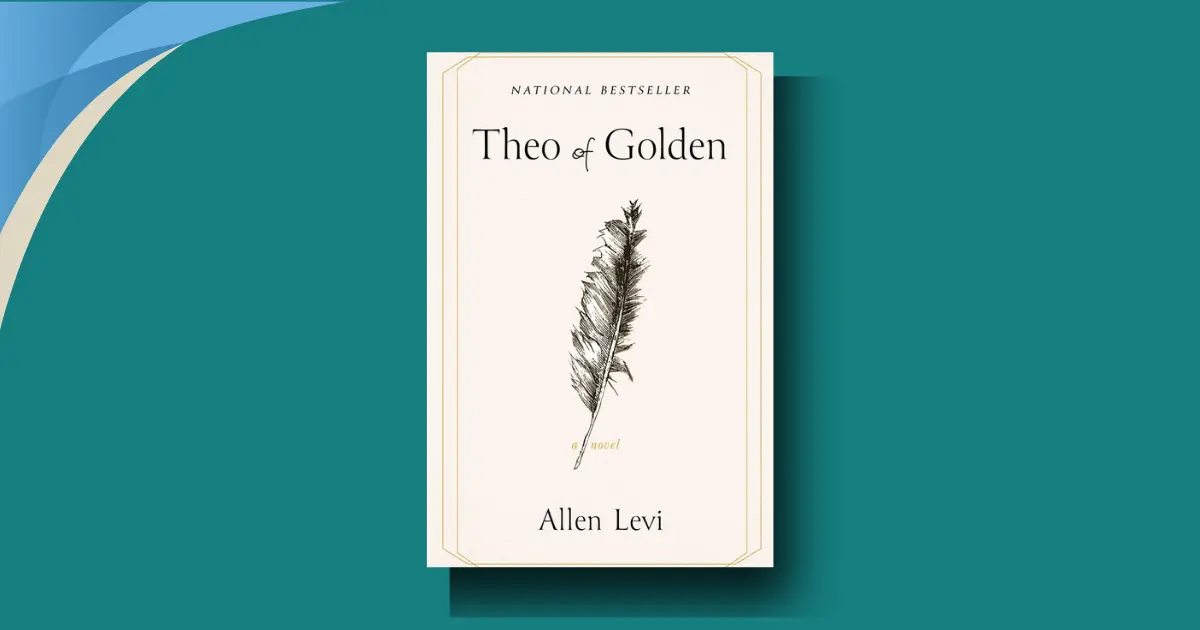
Theo of Golden by Allen Levi is a slow, openly sentimental novel about an 86-year-old stranger who buys pencil portraits off a coffee shop wall and hands each one back to the person it shows, and yes, it earns most of its hype. It has sold 3.5 million copies in the US (Deseret News, citing Deadline), and after 62 chapters I understand why: I cared about a bookseller, a cellist, a homeless woman on a bicycle and an old painter far more than I expected to.
The middle sags, the hero is almost too good, and the funeral sermon runs long.
Still, the last letter in the book is one of the most effective endings I have read in years, and I will spoil it for you below, because this review is written for people who want to decide whether to read the novel, and for people who already have.
Table of Contents
Theo of Golden in 60 Seconds
What it is: a 2023 debut novel about Theo, an 86-year-old man with no last name, who spends one year in Golden, Georgia, buying 92 portraits drawn by a local artist and giving them to their subjects, one at a time, at a fountain.
My verdict: 4 out of 5 stars. Warm, overlong, unashamedly moral, and better than its flaws.
The reveal: Theo is Gamez Theophilus Zilavez, the world-famous Portuguese painter known as “Zila.” The artist whose portraits he buys, Asher Glissen, is his secret son.
The ending: Theo is killed in a fall from his own balcony while pleading with three drunk men who are beating up two of his friends. Asher inherits his estate, his letters and an opal necklace.
The lessons: attention is a gift; “good sadness” is a messenger; choose mercy when you cannot choose clearly; do kindness quietly.
The phenomenon: self-published in 2023, picked up by Atria Books in 2025, and on the New York Times list for 36 weeks as of August 2026.
The film: Warner Bros. is reported to be in talks for the rights, with Tom Hanks in talks to star (TheWrap). I could not confirm a release date.
Quick Verdict
A tender, overlong, openly moral novel that rewards patient readers and tests cynical ones. Recommended for fans of quiet, kindness-driven fiction and anyone who has ever wished a stranger would simply look at them for ten minutes.
Should You Read Theo of Golden?
You should read it if you can enjoy sincerity without squirming, and you can skip it if you need plot twists every ten pages. Here is how the trade-off looks to me.
| Pros | Cons |
|---|---|
| A premise you can retell in one breath, and it delivers on it | The middle chapters repeat the same bestowal pattern |
| Ellen, Tony and Kendrick feel like people with real wounds | Theo himself is close to flawless, which flattens him |
| A late reveal that reframes the whole year | A very long funeral sermon and some heavy moralizing |
| Lovely scenes of music, painting, food and weather | Some dialect and word choices will make modern readers wince |
| Gentle, sharp humor from Tony and the Penny Loafers | A few antagonists, such as Pearce and Cleave Torber, are thin |
What Is Theo of Golden About?
In spring, an 86-year-old stranger named Theo arrives in Golden, Georgia, finds ninety-two pencil portraits of locals hanging in the Chalice coffee shop, and begins buying them to give back to the people they show. Each handover at the town fountain becomes a confession, a friendship or a rescue. The reason behind his generosity stays hidden until the final chapter.
Rating: 4 out of 5 stars (★★★★☆)
Who Will Love Theo of Golden, and Who May Bounce Off It?
If you loved gentle, community-centered novels, if you read slowly and enjoy a character who stops to examine an azalea with a magnifying glass, and if you are comfortable with a faith-flavored story that never preaches at you in a hostile way, you will probably love this book.
Readers who are grieving, lonely or caring for an older parent may find it hard to read dry-eyed. On the other hand, you may bounce if you want moral ambiguity, if you dislike heroes who are never wrong, or if you cannot stand a story that states its message out loud.
Slate’s reviewer called the midsection “baggy” and the protagonist “one-dimensional” while still explaining the book’s appeal (Slate).
I agree with both halves of that verdict.
What Is Theo of Golden by Allen Levi?
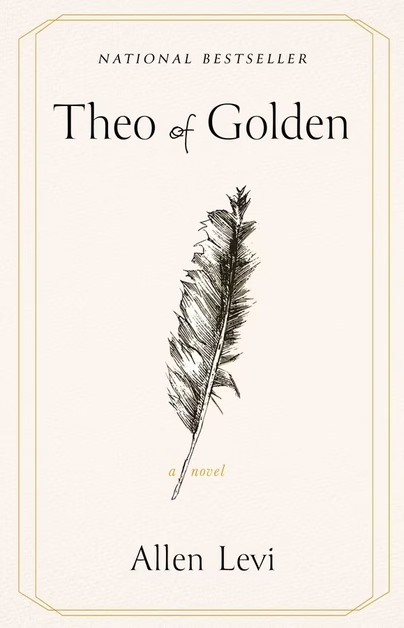
Theo of Golden is a literary novel by Allen Levi, first published in 2023 by the author himself (the copyright page of the edition I read gives an address in Hamilton, Georgia). Atria Books, an imprint of Simon & Schuster, acquired the rights in fall 2025 and released its edition that November, according to Deseret News.
The book is a debut. Levi, who describes himself on the back page as an attorney, judge, singer-songwriter and author, practiced law for 13 years, studied Scottish fiction in Edinburgh and worked as a singer-songwriter for nearly two decades before publishing it in his late 60s, as Deseret News summarizes from The Washington Post.
What is the book trying to say?
In my reading, the thesis is simple and stubborn: to see another person fully, and to let them be seen, is a form of love that changes both people, and the best kindness is “little, nameless, unremembered” (Chapter 34, quoting Wordsworth). The novel tests that idea one portrait at a time.
Why Did a Self-Published Novel Become the Bestselling Book in America?
It grew by word of mouth, slowly and then very fast. Levi and his niece promoted it through Facebook groups and cancer support groups, and the book sold about 3,000 copies by the end of 2023, 25,000 in 2024, and nearly 1,000 a day by spring 2025, figures Deseret News attributes to The Washington Post.
The idea came from a real coffee shop in Columbus, Georgia, whose walls were covered in portraits.
Levi told AARP he wondered whether it would be fun to buy them all and return them to the people in the frames, and he bought four that day (as reported by Deseret News). He has said Theo was partly modeled on his late brother, Gary.
By March 2026 the novel was holding a 4.56-star rating on Goodreads, higher than the 2025 Booker and National Book Award winners Slate used for comparison. Since then it has been called “an unprecedented bestseller” by The Wall Street Journal, according to Deseret News, and has been published in 43 languages.
Note that sales figures differ between outlets, so treat any single number as an estimate.
Theo of Golden Full Plot Summary
A Stranger, a Coffee Shop and Ninety-Two Faces (Prologue to Chapter 12)
The Prologue tells us the outline in advance. Theo was in Golden “only a year,” from one spring to the next, and the people he touched were carried along “by the vortex that was Theo.” In Chapter 1 he flies from a freezing New York to Georgia on a private jet, wakes in a hotel above the Oxbow River and wanders downtown at a crawl, stopping for every bird, bloom and historic marker. He tells nobody who he is.
In Chapter 2 he walks into the Chalice, a coffee shop owned by Shep and Addie Carlile, and is stunned by the quality of the espresso and by ninety-two pencil portraits drawn by a local master, Asher Glissen. Every face looks alive. Theo is baffled that portraits this good are priced at $125 or $200 and are still unsold. Sitting on a bench by the fountain across the street, he decides what to do about it.
He buys the portrait of a young accountant, Minnette Prentiss, and writes her a beautiful handwritten letter inviting her to meet him on a bench at seven o’clock the following Thursday.
He promises he is “a toothless lion with only innocent intentions” (Chapter 3). Minnette and her skeptical prosecutor husband, Derrick, nearly walk away, but she goes. At the fountain, which the locals call the Fedder, Theo explains that he intends to buy every portrait and send each one home.
Then he asks Minnette to tell him about herself. She confesses that her domineering father, Pearce Glissen, pressured her in college into giving up a pregnancy, and that she has been sad ever since.
Theo tells her the sadness in her face is the “good kind.” He presents the portrait to “St. Minnette,” and she hangs it in her bedroom (Chapter 7). The book never states the pregnancy’s outcome in clinical terms, though it is clearly implied.
Theo then meets Tony, the chain-smoking owner of the failing bookshop, the Verbivore, and his gang of retirees, the Penny Loafers. Tony points him to James Ponder, a formal, well-connected broker and consultant whose building, Ponder House, dates to 1845.
Theo rents the third-floor apartment, deposits $100,000 in trust, and recruits Ponder and his suspicious assistant, Mrs. Anita Gidley, to find addresses and mail his letters.
By Chapter 12 he has given away three more portraits to a one-armed bartender named Junior, an aspiring entrepreneur, and a boy in a wheelchair named Frankie who loves NASCAR. He has found his purpose.
The Eye of God, a Hospital Room and a Father’s Grief (Chapters 13 to 24)
Chapter 13 gives the Promenade a history. The tree beside the fountain is known to older Black residents as “the Eye of God,” because lynchings were once carried out there, and some say it weeps. It sets the moral weather for the whole book.
Theo’s next recipient, Kendrick Whitaker, is a night-shift custodian at the university whose small daughter, Lamisha, is in the hospital after a car accident that killed her mother. Kendrick distrusts the old man’s gift but is moved by the birthday present Theo sends Lamisha, a box of art supplies.
Quietly, through Mr. Ponder, Theo arranges for a single devoted physician, Dr. Goodson Ikande, to take over her care, and he makes sure Kendrick’s grandmother gets paid leave to look after the girl (Chapter 19).
Chapter 15 introduces Ellen, a homeless woman in a blue hat who rides a bicycle through the night and sings alone at the Fedder. In Chapter 17 we learn Theo’s own wound. He was a wealthy, much-traveled man in a loveless marriage whose adored ten-year-old daughter, Tita, died in a car crash caused by his intoxicated wife, who died too. Theo walked for weeks in grief near Paris, until an April evening beside a river, in the last quarter hour before sunset, he felt “a Love that changed him forever.”
That is why he sits by a river at sunset wherever he lives.
Mr. Ponder tells a doubtful Mrs. Gidley that Theo was once a client of his own father, which is why he trusts him (Chapter 18). Theo finally meets Asher in the Chalice and visits his studio, where he studies a small oil painting titled “Me, painting you, painting” and a hallway of framed letters (Chapters 20 to 22).
Theo has refused to give anyone his last name (Chapter 23). In Chapter 24 he speeds up his giving, and his apartment fills with portraits waiting for their owners.
Ellen’s Happiest Day, Church and the Bench (Chapters 25 to 36)
Ellen’s bestowal is the emotional heart of the first half. She tells Theo the happiest day of her life was also the worst. Years earlier, as a teenager fleeing a psychiatric hospital in Columbia, she gave birth in Charleston on the night her boyfriend, William, was shot dead.
A nurse and a policeman let her hold her baby, Willa Francesca, for a few minutes. Then the child was taken, and Ellen was sent back to the hospital. She calls it “kidnapping by bureaucracy.”
She has not touched her daughter in thirty years (Chapter 25).
Theo invites Ellen to church. She disrupts the service at St. James, shouting at the congregation, until Theo and a matriarch named Mrs. Ocie Van Blarcum calm her with kindness.
Ellen begins attending regularly (Chapter 26). Theo then gives a portrait to Basil Cannonfield, a street guitarist who sings outside the Chalice (Chapters 28 and 29), and recalls a childhood evening on the Douro when a fisherman who painted gave him a canvas of the sunset (Chapter 30).
Tony, who has watched the fountain meetings from his wicker chair, finally asks what Theo is doing, and they talk late with port and brandy (Chapter 31). Lamisha goes home and Theo rides bus number 37 each week to read to her (Chapter 32).
Theo recalls his first trip to Lisbon at ten, where the National Museum of Ancient Art changed him (Chapter 33), and meets Simone, a young cellist from Seattle who will give his master’s recital the next spring. A local reporter, Katherine Lesker, learns what Theo is doing.
He asks her not to publish, quoting Wordsworth on “little, nameless, unremembered acts of kindness,” and promises her an interview after he leaves (Chapter 34). When Asher asks why people love his sad portraits, Theo says there is beauty and gladness in them too, and suggests drawing a happy boy “again in thirty years” (Chapter 35).
Violence, Mercy and a Birthday Feast (Chapters 37 to 50)
The first bestowal that goes wrong comes in Chapter 37. Theo has bought the portrait of a beautiful young woman named Clarise. Her jealous boyfriend, Cleave Torber, storms the fountain, accuses Theo of stalking her, and stomps the framed portrait to pieces.
Theo, who rarely loses his composure, curses him in Portuguese, then thinks, “I have now met a Southerner whom I do not like.” Derrick, who happens to be passing, steps between them.
Chapters 41 to 44 follow the Whitakers.
The driver who caused the crash that hurt Lamisha is Mateo Mendez, a Guatemalan immigrant who fell asleep at the wheel while rushing to his own sick daughter. Kendrick is torn about what sentence to ask for. His grandmother tells him, “If you make a mistake, make it for mercy.”
He asks Derrick, the prosecutor, for leniency, and tells Derrick that Theo taught him to look at faces, and that he is looking at Derrick’s now (Chapter 42). In court, Mendez is released, and Mrs. Gidley quietly pays for a hotel so his wife and daughter can be there (Chapter 44).
Theo, sleepless, has walked to the river at night and bumped into Kendrick on the eve of that decision (Chapter 41).
By early November Theo has given away forty-three portraits, three people never showed up, and he pauses the project for winter (Chapter 43). On Tony’s birthday, Armistice Day, he hosts a feast at Ponder House, catered by the chef of a restaurant called the Canto, and Tony tells him the story of his dead friend Bobbo and the little pill bottle he carried (Chapter 45).
The young server from Barcelona who arrives with the chef turns out to be Clarise, now calling herself Mia. In a letter she explains that her boyfriend was violent, that she has fled him, and that she wants the portrait destroyed, because “Clarise” no longer lives in Golden. Theo grants her wish and destroys it (Chapter 46).
Thanksgiving at Glissen House brings Asher’s family, Simone, Basil and his girlfriend, Minnette and Derrick, and Asher’s brother Pearce, a phone-glued businessman who is the closest thing the table has to a villain (Chapters 47 and 48).
In December Theo flies to New York and mails gifts that arrive while he is away: a bow for Simone, shoes “as blue as morpho” and art supplies for Lamisha, tools for Ellen’s feather craft, a portrait for Mrs. Gidley, and a port and signed Hemingway first edition for Tony with a note from “The Godfather” (Chapters 49 and 50).
In a Christmas letter to Asher, Theo wonders whether we spend our lives “looking for a face.”
The Recital, the Fall and the Letters (Chapters 51 to 62 and Epilogue)
Theo returns in January, and in March he marks a full year in Ponder House (Chapter 52). On April 12 he nearly sends Ellen a golden feather for her lost daughter’s birthday, then tears up the card because it might hurt more than help (Chapter 53).
The next chapters belong to Simone’s recital. Rows E and F fill with the whole cast, Simone and a pianist perform Cassadó, Dvořák and Saint-Saëns, his parents appear in the audience as a surprise, and Theo walks home thinking, “I have tasted heaven” (Chapters 54 to 56).
After midnight, three drunk young men dare each other to steal Ellen’s hat as she sings alone at the Fedder. She fights them, and one of them beats her badly. Simone, walking home with his cello, charges in. They stomp his hand, hurl him into the fountain, and smash the cello.
Theo, woken by the noise, steps onto the balcony and begs them to stop. He leans across the low railing, which Mr. Ponder had warned him about in Chapter 11, and falls to the pavement in front of Ponder House. Simone finds him (Chapter 57). The attackers are never caught.
The town builds a shrine around the spot. Three days later a front-page obituary reveals Theo’s real identity: Gamez Theophilus Zilavez, “Zila,” 87, born in the Douro village of Pinhão, a one-name celebrity of the twentieth-century art world, with a gallery in Chelsea and a large canvas on permanent display at the United Nations.
His assistant says he was happier than at any time since his daughter died. His last works, “The Blues of Golden,” depict a hat, a pair of shoes, a pill bottle, a feather and a riverscape (Chapter 59). A memorial service at St. James follows, with a long eulogy from Father Lundy, and Theo’s body is flown to France to lie beside his daughter (Chapter 60).
In Chapter 61 a young woman named Olivia Reese forces her way into Mr. Ponder’s office with a letter, and the old broker looks at her face and thinks one word: Willa. The book stops there and leaves what follows to the reader.
In Chapter 62 Mr. Ponder gives Asher a key, an envelope and a small box. In Theo’s apartment Asher finds a portrait Theo has painted of him, and three letters. In the first,
Theo explains that long ago a six-year-old boy wrote him asking how to become an artist, and that the boy is the reason he came to Golden. He then tells the story of a young Spanish student he loved at the Prado, whose painting “Me, Painting You, Painting” hangs in Asher’s hallway, and whose necklace, the opal “Evening of Biscopo,” he offered as a pledge of marriage. She left suddenly, married an old friend, and kept a secret.
Asher is Theo’s son. The second letter is from Asher’s mother, begging Theo never to contact her and returning the necklace. The third is Asher’s own childhood note: “Dear Mr. Zila, I am six. You draw nice.” Theo signs off, “I love you, my son.”
Beneath the portrait Asher finds a second canvas of a seaside field, an easel and a painter, with a note on the back: “Me painting you painting me. I love you.”
The Epilogue closes the loose threads. The attackers are never identified. Simone’s hand heals, he joins a symphony in Massachusetts, and friends buy him a vintage cello.
Kendrick is promoted and Lamisha’s education is paid for. Basil finishes a doctorate and marries Trina. Minnette and Derrick name their son Theo. Ellen moves into a room at the Mission, builds a thriving feather-craft business, and gives her whole $1,600 savings to Simone’s cello fund. Asher’s daughter, Sam, gets married wearing the opal necklace.
Katherine publishes a book called Little, Nameless, Unremembered, which opens with the sentence “His decision to live small made him larger than life.” Tony still sits in the back row at St. James some Sundays, and the Verbivore is, as always, a week from closing.
Who Are the Main Characters in Theo of Golden?
Theo is the book’s engine and also its weak spot. He is curious, funny, fussy about coffee, tender with strangers and almost never wrong. His flaws appear only at the edges: his rage at Cleave Torber, his dodging of his own name, and the secrecy that kept a son from knowing his father.
I wanted more of that friction. Still, his backstory gives the gentleness a price. The death of ten-year-old Tita and the long walks near Paris explain why a man with every luxury chooses a third-floor apartment, a bench and a river (Chapter 17).
Asher Glissen is the quiet center of the town and, once you know the secret, of the book. He is a master portraitist who doubts himself because his pictures go unsold.
The reveal changes how every earlier scene reads. When Theo tells him a portrait belongs with its subject, or that his drawings hold gladness as well as sorrow, he is speaking as an admirer and as a father who cannot say so.
Ellen is the best character in the novel. She is homeless, mentally ill, funny, fierce and an artist in her own right, because her “featherwood” pieces turn into a business. Her “happiest day” chapter (Chapter 25) is the strongest writing in the book, and her beating in Chapter 57 is where the story stops being gentle.
Levi is writing a sequel called Ellen of Golden, according to Deseret News, which tells me he knows it too.
Tony the bookseller is the comic engine, with the Penny Loafers as his chorus. He insults everyone, refuses to let anyone pay for his coffee, and carries the grief of a dead war friend and his pill bottle. His journey from sarcasm to one small glass of port a day and an occasional Sunday in the back pew is the most earned change in the cast.
Kendrick and Lamisha Whitaker carry the moral weight. Kendrick has every reason to want punishment and chooses mercy, helped by a grandmother who knows what grievance costs. Lamisha, eight years old and wearing blue patent-leather shoes, is the book’s proof that Theo’s attention can heal without ever being explained.
James Ponder and Anita Gidley are my favorite slow conversion. A formal broker and his suspicious assistant begin by protecting their routine and end up as co-conspirators in kindness. Mrs. Gidley’s thaw is one of the funniest and most touching threads, and the Epilogue tells us that the only new client they take after Theo’s death is Ellen.
Minnette, Simone, Basil, Katherine and Mia each get a bestowal and one clear want: to be a mother, to play for the angels, to be heard, to be allowed to keep a promise, to be left alone. The weakest figures are the antagonists. Pearce Glissen and Cleave Torber are drawn in a single color, and Slate calls Pearce one of the few people in the book who are irredeemable.
What Are the Main Themes and Symbols in Theo of Golden?
The core theme is being seen. Asher’s mother told him “every face is a story” (Chapter 2), and the whole plot is Theo reading those stories aloud to their owners. Near the end, Theo’s Christmas letter to Asher turns the idea into theology: we spend our lives looking for a face that welcomes us, and heaven’s face is the one that finally looks back (Chapter 50).
A second theme is “good sadness.” Theo tells Minnette that sadness is rarely stupid and is often a messenger (Chapter 7), and he tells Asher the same about the portraits. The book treats grief as information that can be tended, never as a failure to be fixed.
Mercy against justice runs through the Whitaker plot. The grandmother’s rule, “make it for mercy” (Chapter 42), becomes Kendrick’s decision, and it lands in a book where the Eye of God tree reminds us that real injustice once happened on that very ground (Chapter 13).
There is also a theme of quiet versus noise. Theo thinks the world has become “a much too noisy place” (Chapter 15), and the book sets his handwritten letters, fountain benches and slow suppers against Pearce’s phone, Cleave Torber’s rage and three men who think a homeless woman’s hat is a joke.
Underneath it all runs a long argument about fathers and lost children. Theo loses Tita, Ellen loses Willa, Minnette gives up a pregnancy, and Asher grows up without knowing his real father.
Theo’s phrase “an end with a future” (Chapter 45) is the book’s answer.
The symbols are easy to read and still effective. The ninety-two portraits are “windows” in Theo’s first daydream (Chapter 2), and giving them back means opening a window from the other side. The river and the fifteen-minute sunset vigil mark Theo’s healing. The Chalice is a coffee shop named like a communion cup, and the Fedder fountain is where Tony’s final plaque says heaven and earth meet.
Ellen’s bicycle, which she calls the Noble Invention, is a borrowed Saroyan joke that becomes her dignity. Feathers, and the blue jay Theo reports with a missing tail feather, stand for beauty that survives damage.
The balcony railing, flagged as unsafe in Chapter 11, is a bleak echo of the book’s habit of planting small details. The opal necklace is love that waited.
And the epigraph, a brochure line listing six paintings from “The Blues of Golden,” is a quiet key: the last item, the oceanscape at Biscopo, is the one only Asher can decode.
Is Theo of Golden Well Written? My Evaluation
Theo of Golden is a long, tender, over-explained novel that behaves, against every instinct of modern fiction, as though goodness could be interesting, and by the last letter I believed it.
What Works
The premise is irresistible and the structure is simple enough to carry 390 pages. Ellen’s chapter, the Thanksgiving table, Tony’s port and the recital scenes are written with real feeling. The humor, especially around Tony and the Penny Loafers, keeps the sweetness from going sour.
The reveal is earned by plenty of planted details: the eyes Asher notices are like Theo’s, the loupe, the hallway painting, the habit of writing in beautiful script.
What Does Not
The midsection repeats itself, with one more bestowal, one more tearful story and one more speech about saintliness. Theo is almost never wrong, so he stops being surprising.
The funeral sermon in Chapter 60 goes on far longer than it needs to. A few phrases, including the way an immigrant is described as “an illegal” in dialogue, and the phonetic dialect given to an elderly Black speaker in Chapter 13, will bother some readers.
One reader review I found calls the middle “plodding” (Polly Castor), and I felt that too around Chapters 28 to 36.
Why Is Theo of Golden So Divisive?
It is a Christian novel that does not call itself one. Slate argues that its popularity comes from an old-fashioned, liberal-minded Christianity of “works, not prayers,” while also noting its heavy moral repetition.
Levi told Christianity Today he avoids the label “Christian fiction” so as not to push away readers of other beliefs, and says his goal is to “use stories to provoke godward thought,” as Deseret News reports.
For me the faith is part of the book’s construction, from the Chalice to the funeral, but it never demands agreement before it offers comfort. I cried at the recital, at the necklace and at the second canvas, and I am not embarrassed to say so.
How Does Theo of Golden Compare With Similar Books?
The closest relatives are books about kindness and cranky older men. One profile cites, as the closest comparison for the book’s trajectory, Fredrik Backman’s A Man Called Ove, another Atria title, though Theo is gentler and more devout.
Slate contrasts it with Tuesdays with Morrie, noting that Theo has an actual plot, and with Virginia Evans’s The Correspondent, a 2025 surprise hit whose elderly heroine is flawed where Theo is not (Slate).
My own extra pairing is Marilynne Robinson’s Gilead, which shares the elderly narrator’s patient wonder with far more complexity.
Will There Be a Theo of Golden Movie?
A film is being negotiated, and there is no confirmed release date. Warner Bros. Pictures is in talks for the rights, with Tom Hanks in talks to star and produce alongside Gil Netter and Gary Goetzman, and Levi set to executive-produce, according to TheWrap, which credits Deadline with the scoop.
An earlier Moviefone report said no director was attached and neither the rights nor Hanks’s deal had closed, and later outlets describe the deal differently, so treat “finalized” claims with caution.
What Does Theo of Golden Teach Us About Loneliness Today?
Why would a novel about an old man giving away drawings sell millions of copies? I think it answers a problem people feel but rarely name: we are surrounded by others and still unseen.
In 2023 the U.S. Surgeon General declared an epidemic of loneliness and isolation. About half of American adults reported experiencing loneliness, according to NPR’s interview with Vivek Murthy, and the advisory compared the mortality risk to smoking up to 15 cigarettes a day (AP).
Murthy also said service is one of the most powerful antidotes, and he reported that young people spent nearly 70 percent less in-person time with friends than two decades earlier (TND).
Theo is that advice turned into a person. He never lectures anyone about community. He sits on a bench, asks one question, and then listens for an hour. The cure in this novel is not an app. It is a letter, a bench and ninety minutes of someone’s full attention.
Note that the book is fiction and offers no clinical remedy, so it should sit beside real support, not replace it.
Five lessons I took from it:
Attention is the cheapest rare gift. Theo’s whole method is one question, “Could you tell me a bit about yourself?”, followed by silence.
Read sadness before you fix it. The “good sadness” on a face is often pointing at the thing a person most wants.
Give where credit cannot follow. Theo asks Katherine not to publish because attention to the giver would shrink the gift.
When you cannot tell justice from mercy, lean toward mercy and keep looking at faces. Kendrick’s choice began when he finally looked at Derrick.
Put people on a bench, not on a screen. Tony, Shep and the Penny Loafers are cheaper than therapy, and the book suggests they can be as healing as some of it.
Which Lines From Theo of Golden Are Worth Remembering?
- “Every face is a story.” (Chapter 2, as Asher recalls his mother’s saying)
- “Sadness might be many things, but it is rarely stupid.” (Chapter 7)
- “Kidnapping by bureaucracy.” (Ellen, Chapter 25)
- “Little. Nameless. Unremembered.” (Theo quoting Wordsworth, Chapter 34)
- “I have now met a Southerner whom I do not like.” (Chapter 37)
- “If you make a mistake, make it for mercy.” (Chapter 42)
- “Maybe an end with a future.” (Chapter 45)
- “Seek truth. Make beauty. Live well.” (Theo’s letter, Chapter 62)
- “Me painting you painting me. I love you.” (back of the final canvas, Chapter 62)
- “His decision to live small made him larger than life.” (Epilogue)
- “Every face is a story.” (Page 17)
- “It is more blessed to give than to receive.” (Page 23)
- “Sadness might be many things, but it is rarely stupid. The good sadness, I think, is always trying to tell us something very important.” (Page 44)
- “For anything to be good, truly good, there must be love in it.” (Page 127)
- “I’ve seen a lot through those eyes. A thousand stories are in those eyes. Yours too.” – Ellen (Page 152)
- “The blues of Golden were plentiful that year.” (Page 8)
Is Theo of Golden Worth Reading?
Yes, if you can accept its sweetness and its length. I rate it 4 out of 5 because the best chapters are among the best I have read in recent popular fiction, while the sag in the middle and the saintly hero keep it from five. It is for general readers, book clubs, faith-friendly readers, grandparents and anyone grieving, and less so for fans of irony, thrillers or dense literary experiments.
The most important thing the book does is ask you to look at one face for a long time. After I finished, I did.
Theo of Golden

Theo of Golden by Allen Levi is a slow, openly sentimental novel about an 86-year-old stranger who buys pencil portraits off a coffee shop wall and hands each one back to the person it shows, and yes, it earns most of its hype. It has sold 3.5 million copies in the US (Deseret News, citing Deadline), and after 62 chapters I understand why: I cared about a bookseller, a cellist, a homeless woman on a bicycle and an old painter far more than I expected to.
URL: https://www.sopranu.com/theo-of-golden-summary-ending-explained/
Author: Allen Levi
4
Pros
- Premise you can retell in one breath; vivid, wounded supporting characters, especially Ellen and Tony; a reveal that reframes the whole year; warm humor; memorable scenes of music, art and food.
Cons
- Sagging middle; near-flawless protagonist; long funeral sermon; thin antagonists; dialect and word choices that may bother some readers.







