
Last updated on January 13th, 2026 at 05:17 am
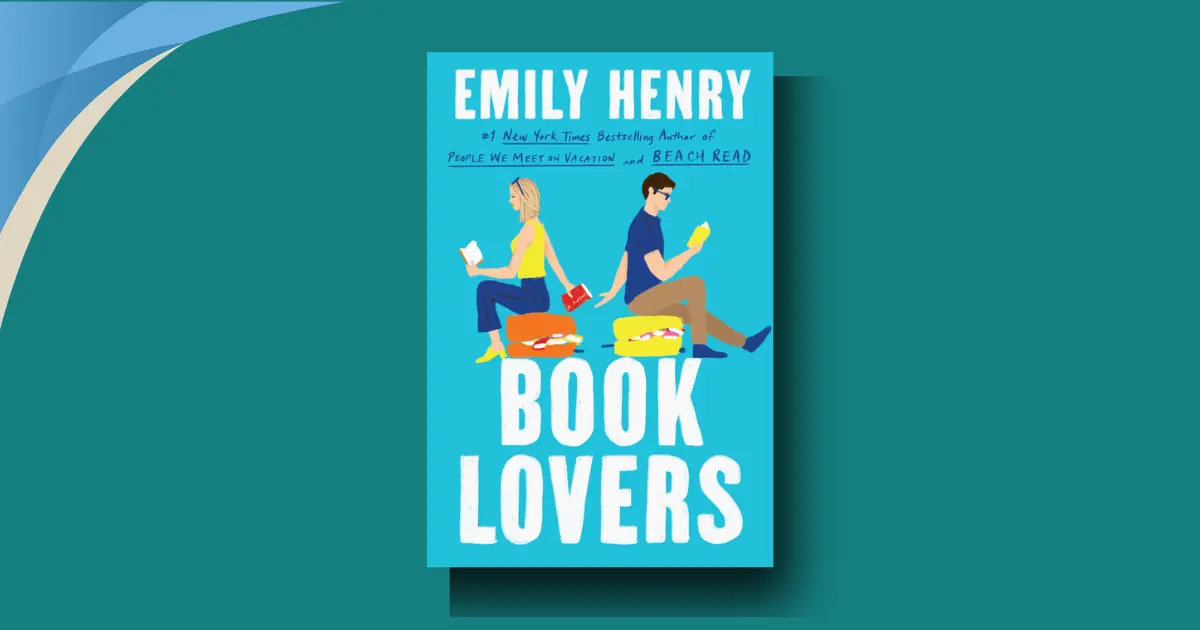
Ever wonder why you can be brilliant at building everyone else’s happy ending… but freeze when it’s time to write your own? Book Lovers by Emily Henry is the rare rom-com that makes “the career woman” feel seen—without sanding down her edges.
A sharp, meta-romance where two “city people” collide in a small town—and discover the happiest endings can be messy, earned, and self-defined, not prepackaged.
Evidence snapshot
- Reading fiction is linked to measurable gains in social cognition/empathy (literary fiction → improved Theory of Mind in experimental work).
- Research on workplace gender bias shows backlash for agentic/ambitious women (competent-but-unlikable penalty), which mirrors the book’s “villainess” framing of women like Nora.
- Book culture context: print sales momentum in 2024 has been notably supported by romance/romantasy trends.
- The book’s popularity is reflected in large-scale reader data (Goodreads rating volume + award).
Best for: readers who love enemies-to-lovers banter, publishing-world inside baseball, sisterhood stories, and romances that don’t punish ambition.
Not for: readers who want a low-conflict, purely cozy small-town fantasy—Henry deliberately subverts that comfort-zone.
Table of Contents
1. Introduction
Book Lovers is a contemporary romance novel by Emily Henry, published by Berkley (Penguin Random House) and released May 3, 2022.
It’s been positioned as an “instant #1 New York Times bestseller” in publisher materials and won the Goodreads Choice Award for Romance (2022) with a very large reader-rating footprint.
What makes it stand out (and what I’ll keep returning to here) is the book’s core promise: the women who usually get cast as the ice queen, the rival, the “problem”… deserve a full interior life and a real happy ending.
That’s not just implied—it’s basically stated in the back-matter, where the author frames this as a story about “designer-wearing… red-pen-wielding” women and the idea that “there is no one right way to be.”
2. Background
This isn’t historical fiction, but it is a snapshot of a modern cultural moment:
- Romance is in a highly visible boom phase—including BookTok-driven discovery and major mainstream coverage.
- Henry’s work sits inside that boom while also arguing (quietly, insistently) that romance can carry grief, selfhood, and ambition without becoming “less fun.”
- Publishing itself—agents, editors, acquisitions, comps, list positioning—becomes a believable pressure-cooker setting rather than a vague “bookish backdrop.” (Even the banter lands like work people who know each other’s tells.)
Also worth noting for readers searching “Book Lovers movie”: a feature film adaptation was announced as in development with Tango Entertainment and screenwriter Sarah Heyward attached.
3. Book Lovers Summary
3.1 The setup: Nora Stephens is tired of being the “wrong woman”
Nora Stephens is a high-powered New York literary agent whose life runs on competence, precision, and control. She’s the kind of woman who gets things done—and who gets judged for it.
The novel opens with a breakup that lands like a thesis statement: a boyfriend is leaving her, framing her as cold, career-first, and ultimately not “the one” for the kind of life he wants.
Nora bitterly recognizes the trope: she’s the woman men date before they go “find themselves” somewhere quieter, softer, more pastoral. The language is blunt—she’s got a “cold, city-person heart,” and she knows exactly what role she’s being assigned.
This trope becomes the engine of the story: what if the woman who’s always treated like a narrative obstacle… is actually the heroine?
3.2 Libby’s plan: Sunshine Falls + a romance-novel checklist
Nora’s younger sister, Libby, convinces her to take an extended trip to Sunshine Falls, North Carolina—an intentional “rom-com rehab” built around a checklist of small-town romance beats.
Even Nora can see where the list is heading, because she knows exactly how these stories end: “a big wedding inside of a barn, or an epilogue involving babies.”
But Libby isn’t only chasing cute scenery. She’s worried about Nora—about how Nora keeps sacrificing, how she keeps carrying the emotional load of the family, and how she keeps calling it “fine.”
3.3 The collision: Charlie Lastra, the editor she can’t shake
Almost immediately, Sunshine Falls stops being an escape and becomes a pressure test: Nora keeps running into Charlie Lastra, a book editor she has history with—someone she’s exchanged barbed emails with, someone she considers a professional nemesis.
Their dynamic is workplace sparring turned personal. They needle each other, but they also read each other too well.
There’s a scene early on that captures the core tension: Charlie calls out Nora’s attachment to New York and articulates it with eerie accuracy—like being “an astronaut out in space” while the city moves on without you.
Nora tries to deny it, but Book Lovers keeps showing how much she’s built her identity around being needed.
3.4 The publishing-world plotline: Dusty Fielding + Goode Books
A major thread running through the romance is Nora’s client, bestselling author Dusty Fielding, whose work has turned Sunshine Falls into a tourist-lure. Dusty’s local-setting fame has side effects: it feeds the town’s identity, but it also traps the town inside an idealized version of itself.
Meanwhile, the local bookstore Goode Books is in trouble, and a community-saving plan forms around what publishing knows best: an event + audience + ordering pipeline. Nora pitches a fundraiser built around a virtual book club featuring Dusty, open to anyone who orders through the shop.
This isn’t just “bookish atmosphere”—it’s a plot mechanism that forces Nora and Charlie into collaboration and public proximity.
3.5 Nora’s “villainess” problem: being seen as sharp, not soft
As Nora and Charlie spend more time together, the novel keeps poking at how women are read—especially ambitious women.
Charlie explicitly calls this out when Nora is harsh about a female character and he points to a broader truth: “reviewers are notoriously kind to female characters.”
That line matters because it’s not just about a book review inside the book. It’s about Nora’s whole fear: if people decide you’re the “difficult woman,” you don’t get softness; you get punishment.
This is why Nora clings to rules—checklists, standards, “don’t kiss colleagues,” don’t let lust call the shots—until the one person she can’t neatly categorize walks right through the barrier: “Until Charlie Lastra.”
3.6 The slow-burn shift: rivals → co-conspirators → lovers
The romance builds through proximity and competence-lust: they respect each other’s work brains. Charlie’s editor instincts and Nora’s agent instincts create a shared language: negotiation, notes, structure, what makes a story work.
When Charlie pushes for the chance to work on Dusty’s next book (Frigid), he admits he wants it—badly.
That professional hunger mirrors Nora’s own drive, and it becomes one of the reasons they fit: neither of them is secretly longing to quit and “simplify.” They’re longing to be loved as they are.
There’s also a constant undercurrent of desire, but Henry writes it as character-revealing rather than decorative.
Nora recognizes that Charlie disarms her filter; he makes her reckless in a way she hasn’t allowed herself to be in years.
3.7 The sisterhood spine: Nora and Libby’s real love story
Under the romance, the emotional backbone is Nora and Libby.
Nora has spent years acting like a second parent—protecting Libby, providing, compensating for their mother’s absence, and convincing herself that’s what love is. Libby, meanwhile, is building a full life: husband, kids, another baby on the way, and a growing need to be her own person rather than Nora’s “project.”
This is where Book Lovers gets sneaky-in-smart: the small-town trip is not mainly about getting Nora a boyfriend. It’s about forcing the sisters to confront how their love has become entangled with sacrifice, guilt, and control.
3.8 The “list” and the misdirection: Nora tries “new” with the wrong person
At one point, Nora goes on a tour/date with Shepherd—partly to satisfy the checklist, partly to prove she can do “small-town spontaneous.” Even while she’s doing it, she’s aware she’s lying to herself. The narration nails the pull she feels toward Charlie with a metaphor that’s almost painful: being near him is like a sunflower turning toward the sun—she’d “still be straining… toward his warmth.”
So even when she tries to choose “new,” her body has already chosen “true.”
3.9 The career turning point: Loggia’s offer changes the shape of Nora’s future
Back in New York publishing-land, a major shift hits: Nora gets a serious job offer from Loggia—offering her a move from agenting into an editorial leadership lane (the offer is explicit about titles, money, and long-term influence).
This matters because it’s the book refusing the usual romance bargain where the ambitious woman must downshift to “earn” love.
Instead, the tension becomes: How do you build a life where love doesn’t require self-erasure?
3.10 The third-act crisis: long distance, fear, and Nora’s “I don’t say goodbye” defense
Nora’s deepest fear isn’t just losing Charlie. It’s losing him slowly—the “death by a thousand paper cuts” of long distance and uncertainty.
So she offers a controlled ending: enjoy the week, no future talk, then leave without a goodbye because she’s “not good at them.”
Charlie refuses that script. And in the most editor-coded romantic move imaginable, he challenges her to rewrite it: “Tell me what you’d change… Get out your… pen… and tell me how it’s supposed to end.”
This is the moment the romance and the meta-theme click into one: Nora has to stop living like her life is a story other people get to judge—and start authoring it.
3.11 Ending explained: the “messy, apt” happily-ever-after
By the end stretch, Nora and Charlie begin actively imagining a future in scenes that read like drafts of a shared life: alternating holidays, trading cities, making plans that are both romantic and logistical.
Nora acknowledges she may take the Loggia job—and she’s already thinking like someone transitioning out of agency life, “off-loading” clients and stepping into a new role.
Crucially, the ending doesn’t pretend that love eliminates complexity. It argues the opposite: wanting is valuable because it risks pain, and that risk is part of the bargain of a life fully lived.
And if you want the author’s plain-language thesis on what kind of ending this is: it’s not a “perfect ending,” but an “apt one”—a happily-ever-after that’s “messy, complicated, and ultimately irresistible.”
That is the book’s final flex: Nora doesn’t become a different woman. She becomes a woman who stops apologizing for the one she is.
4. Book Lovers Analysis
4.1 Book Lovers Characters
Nora Stephens
Nora is built from contradictions: hyper-competent but emotionally risk-averse; generous but controlling; sharp-tongued but deeply tender with the people she loves. The “villainess” frame shows up both socially and internally—she hears the world’s judgment and preemptively agrees with it.
Even the humor carries armor. When she laughs at herself, it often lands like a shield. But Book Lovers keeps showing the cost of that shield: intimacy requires being seen without control.
Charlie Lastra
Charlie is the “brooding editor” archetype—but what makes him work is that he is not a redemption project. He’s competent, prickly, and sincere in a way that doesn’t beg for approval. He also sees Nora clearly, which is why he scares her.
He’s at his most romantic when he acts like an editor: he listens, asks for the real version, and pushes her to revise the self-protective ending she offers.
Libby Stephens
Libby is the book’s emotional mirror: she is “sweet” in the way Nora insists she isn’t, and she represents the life Nora believes she’s excluded from.
But Libby is not just “the sunshine sister.” She has her own needs, her own exhaustion, and her own coming-to-terms with how their childhood shaped them differently.
Dusty Fielding
Dusty functions like a meta-device: she’s the author whose romanticized small-town story helped write the very fantasy Nora is trapped inside.
Yet Dusty is also human—capable of help, collaboration, and unintended harm. The fundraiser plan depends on her goodwill and audience power.
Shepherd, Sally, and the town ecosystem
The town characters aren’t just quirky wallpaper. They’re narrative pressure: they reflect the town’s idealization of itself and challenge Nora’s assumption that “small towns = simplicity.”
Even Nora’s attempt to do the “local date” thing is framed as performance, not desire.
4.2 Book Lovers Themes and symbolism
1) The “career woman as villainess” trope—flipped
Henry explicitly invokes the cultural lineup of “women you’re not supposed to root for” (Miranda Priestly, Meredith Blake, etc.) and uses Nora/Charlie to argue that those women deserve full, complicated endings too.
2) New York vs. Sunshine Falls = identity pressure, not geography
The city and the small town are symbolic opposites, but Book Lovers refuses to crown one as morally superior. Charlie’s “astronaut” description captures how place can feel like oxygen or deprivation depending on who you are.
3) Editing as intimacy
The repeated language of notes, pacing, revisions, and “how it’s supposed to end” makes romance feel like craft. Charlie asking Nora for “notes” is both flirtation and philosophy: love is built, not stumbled into.
4) Sisterhood as the primary love story
The romance is hot and witty, but the deepest stakes are Nora/Libby: how do you love someone without turning them into your purpose? Book Lovers suggests compromise matters—but not self-erasure. (The discussion questions in the back matter even point straight at this tension.)
5. Evaluation
5.1 Strengths (what works—and why it feels good)
- Banter with subtext: The dialogue snaps because it’s doing two jobs at once—comedy and character exposure.
- A romance that respects ambition: Nora’s career isn’t a “flaw to soften.” The Loggia offer is treated as real, meaningful growth.
- Meta without smugness: Book Lovers calls out how women are judged (“reviewers… kind to female characters”) while still letting you sink into the love story.
5.2 Weaknesses (where readers may bounce)
- If you dislike industry talk: the agent/editor/business mechanics are frequent.
- If you need a neat ending: the book aims for “apt,” not “perfect,” and some readers interpret that as less tidy catharsis.
5.3 Impact
The emotional aftertaste isn’t just “aw, cute.” It’s that bruisey recognition that you can build a whole identity around being needed—and still be lonely inside it. The ending’s insistence that wanting is worth the risk (“must risk the pain of losing them”) lands like permission.
5.4 Comparison with similar works
If you like Emily Henry’s blend of humor + ache, Book Lovers is often discussed alongside her broader romance catalog.
Like Henry’s Beach Read (writers, banter) but more meta. Echoes Tessa Bailey’s heat or Sally Thorne’s enemies-to-lovers (The Hating Game), but with deeper family focus. Standout in the trope-flipping wave (think The Love Hypothesis).
5.5 Adaptation
What’s confirmed
A feature film adaptation is in development with Tango Entertainment and Sarah Heyward attached to write.
What a screen version will need to nail
- Nora’s interiority (her self-story as “villainess”) without flattening her into a stereotype
- The publishing-world rhythms (emails, edits, professional intimacy)
- The sisterhood arc as equal-to-or-bigger-than the romance
6. Personal insight with contemporary educational relevance
One reason Book Lovers hits so hard right now is that it dramatizes a real social penalty: women are often rewarded for competence but punished for the “tone” of it.
Research on gender backlash has long documented that when women display agentic traits—assertiveness, ambition, authority—they’re more likely to be judged as less likable, even when seen as highly capable.
Nora’s fear of being the “villainess” isn’t melodrama; it’s a survival strategy in a world that reads sharp women as morally suspicious.
What I find quietly educational in the novel is how it reframes “softness.” It doesn’t ask Nora to become less exacting. It asks her to become less self-erasing. That’s a meaningful distinction for real life: self-development doesn’t have to mean sanding down your strengths to make other people comfortable.
And there’s a second, modern layer: reading itself is becoming both a cultural identity and a mental-health tool. Experimental research suggests literary fiction can nudge empathy and social cognition.
Meanwhile, romance has become a highly visible driver of publishing’s current momentum. (
In that environment, a book like Book Lovers works almost like “permission-slip art”: it tells ambitious readers they don’t have to choose between achievement and tenderness—and it tells everyone else that the career woman is not the obstacle to the story. She is the story.
7. Book Lovers Quotes
- “I’m the city person. Not the one who meets the hot farmer. The other one… I’m the one who gets dumped.” (Prologue)
- “That’s the thing about women. There’s no good way to be one. Wear your emotions on your sleeve and you’re hysterical… Keep them tucked away… and you’re a heartless bitch.” (Prologue)
- “Maybe love shouldn’t be built on a foundation of compromises, but maybe it can’t exist without them either… Compromises that say, there will be a you-shaped space in my heart, and if your shape changes, I will adapt.” (Nora’s realization)
- “You’re in books. Of course you don’t have a life. None of us do. There’s always something too good to read.” (Charlie to Nora)
- “Sometimes, even when you start with the last page and you think you know everything, a book finds a way to surprise you.”
8. Conclusion
Book Lovers by Emily Henry is a romance that understands what it costs to be the “capable one”—in your job, your family, and sometimes even in love.
It’s funny, sharp, and fully spoiler-aware about the tropes it’s playing with, but it never treats emotion like a punchline.
Recommendation:
- If you want a smart contemporary romance with real career stakes, sisterhood depth, and enemies-to-lovers tension, this is a strong pick.
- If you’re here purely for small-town coziness and neat bows, the book may feel more challenging—by design.







