
Last updated on January 13th, 2026 at 05:19 am
What if the “love story” you can’t stop thinking about is the one that scares you a little—because it hits your nervous system before it hits your heart? That’s why I keep coming back to Chaotic by Shantel Tessier: it’s not just dark romance—it’s a deep dive into control, survival, devotion, and what a “choice” costs when power is everywhere.
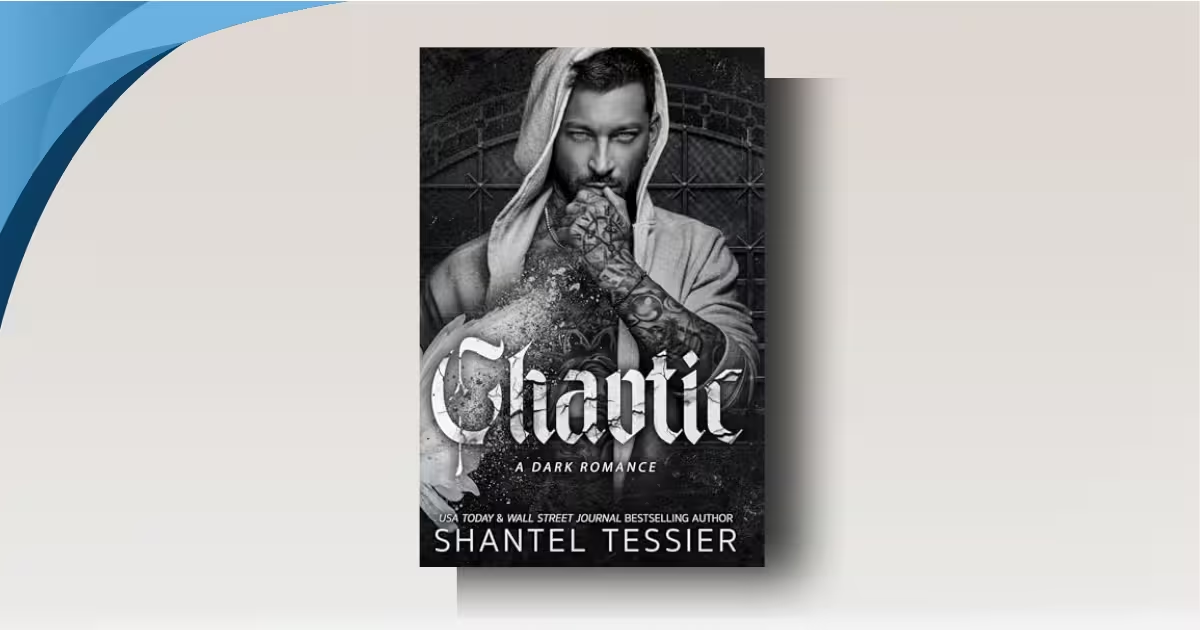
Chaotic is a brutally intense dark romance where a woman raised inside a secret, violent system collides with a man obsessed with claiming her—and the story forces you to ask whether devotion can ever be pure when it’s built on possession.
Chaotic is best for * Readers who actively seek extreme dark romance and can handle explicit trauma themes (the author warns it’s “very dark” and urges readers to know their triggers). And for the fans of secret-society power structures, “Lords/Ladies” dynamics, and morally gray (often morally black) devotion.
Readers who like multi-POV intensity and “I will burn the world for you” energy (sometimes literally framed as devotion/vows).
Not for anyone avoiding themes like coercion/non-consent cues, sexual violence, trafficking/“training,” captivity, or self-harm ideation (these themes appear directly in-text and via backstory).
Readers who want soft romance, healthy relationship modeling, or clean/closed-door spice.
Table of Contents
1. Background
The “Lords/Ladies” mythos and why it matters
Chaotic sits inside a world where “L.O.R.D.S” isn’t just a club—it’s ideology. The text frames it as: “LOYALTY. OBEDIENCE. RESPECT. DISCIPLINE. STRENGTH.”
And it ties that ideology to a vow-based culture—rules that feel religious, even when they’re criminal. The prologue lays out “The four sacred vows,” including devotion and sacrifice.
2. Chaotic Summary
Chaotic is a dark romance in Shantel Tessier’s interconnected L.O.R.D.S. series, focusing on Kashton “Kash” Landon Pierce—one of the infamous Spade brothers who run Carnage, a brutal underground prison for fallen Lords—and Everett “Eve” Sinclair, a deeply traumatized woman born into the Lords’ secret society.
The book is told in dual POV, with heavy flashbacks to both characters’ horrific pasts. It explores themes of extreme trauma, possessive love, redemption through pain, and overcoming worthlessness.
True to Tessier’s style, it’s graphically dark, with intense BDSM, murder, torture, and emotional devastation, but ends in a hard-won HEA.
Everett’s Traumatic Backstory (Revealed Through Flashbacks)
Everett’s life has been unrelenting hell. Born into the Lords world, her father desperately wanted a son and named her Everett (a traditionally male name) even after she was born female. He viewed her as a failure and kept her hidden, treating her like a secret shame.
From a young age (as young as 8), she endured severe physical and emotional abuse: locked in rooms, restrained in straitjackets for days, sensory deprivation, neglect, and psychological grooming to make her feel utterly worthless.
By her teens, the abuse escalated. At 15, she’s shown strapped in a straitjacket on her bed, losing track of time. At 16, she’s dragged into rooms for unknown punishments.
Hallucinations plague her from isolation and possible drugging. Her father and connected men conditioned her to believe she deserved nothing—no love, no future, no visibility.
There are hints of forced involvement in darker Lords activities, including potential grooming for sexual exploitation or trafficking setups. She suffers survivors’ guilt, self-harm tendencies, and deep infertility trauma (possibly from forced sterilization or miscarriages/child loss due to abuse).
Desperate for any escape or notice, teenage Everett rebels one night, putting herself in a dangerous situation. This leads to her near-assault (or worse) by multiple men.
Kashton intervenes, brutally killing her attackers and saving her. In gratitude and desperation, she offers him her body—the only “payment” she believes she’s worth.
They share an intense, raw sexual encounter. Overwhelmed by vulnerability, Everett runs afterward, disappearing for six years to rebuild herself in isolation, fighting depression and suicidal ideation.
Kashton’s Backstory and Present Pursuit
Kashton, along with brothers Haidyn and Saint, grew up in Carnage’s violent world.
Their childhood soundtrack was screams of the damned. Kashton is the “jokester” of the group—tattooed (including a nun with a ball gag), fearless on his motorcycle, but deeply scarred.
He fears abandonment (stemming from his mother’s suicide), endured solitary confinement torture, and has killed (including possibly a “chosen” woman in his past). He’s lonely, using humor and dominance to mask pain.
Six years after saving Everett, Kashton never forgot her. He tracks her down and begins obsessively pursuing her—stalking, sending lavish gifts (like roses), saving his number in her phone, and forcing proximity.
Everett, now independent but fragile, is terrified he’ll pull her back into darkness but can’t resist his pull.
Their reconnection is explosive: raw, dominant sex scenes filled with choking, pain play, bondage (including predicament bondage, e-stim, flaying threats, and sensory deprivation).
Kashton treats her as his “pet”—chaining her, denying orgasms, humiliating/degrading her—but also tenderly cares for her, making her feel seen and cherished for the first time. He invades her dreams and daily life, moving her into Carnage for “protection.”
Rising Relationship and Conflicts
Kashton introduces Everett to his found family: brothers Haidyn and Saint, and the wider Lords circle (Tyson/Sin, Elli, Ashtyn, Charlotte, Janice). Dinners and events show the tight-knit but morally black group.
Everett bonds with the women (Charlotte and Elli become friends), feeling accepted.
Threats emerge from Everett’s past: a man named Evan (connected to her father/trafficking) is greedy and obsessive, planning to pimp her out or use her to capture women for sale. Kashton protects her fiercely, with graphic kills and torture.
Emotional layers deepen: Everett struggles with unworthiness, pushing Kashton away despite craving his love. Kashton battles loneliness, putting her first and helping her heal. Spicy scenes mix tenderness with extremity (breath play, forced orgasms, branding/piercing, pain sluthood).
Mid-book crises: Everett discovers devastating truths—likely confirming her infertility (forced sterilization or past miscarriages), tying into triggers like child loss and forced breeding attempts.
Overwhelmed, she spirals, confronting Evan or running. In a heartbreaking moment, she calls Kashton whispering “I’m sorry,” then disappears (possible suicide attempt or self-sacrifice).
Everett ends up hidden with Adam (a connected Lord, possibly for protection or manipulation). A fake death is staged—a burned body makes Kashton believe she’s dead. He grieves intensely for three days, broken and raging.
Climax and Revelations
Everett returns alive, leading to explosive confrontations. Ashtyn is furious, accusing her of betraying Kashton.
Texts and plots reveal bait setups: villains planned to use Everett to lure Kashton, involving trafficking rings, greedy men like Evan, and possibly her father or Adam’s schemes.
Graphic vengeance follows: murders, torture (flaying, etc.). Kashton and the Spade brothers/Lords dismantle threats. Evan is killed for his greed. Revelations tie into series arcs—mysteries from Madness/Carnage, fathers’ betrayals, society corruption.
Everett and Kashton reconcile amid tears and flashbacks. She realizes his love is real; he proves she’s worthy. They marry in a Lords ceremony.
Ending and Epilogues
Despite Everett’s believed infertility (from past forced procedures and trauma), a miracle happens—possibly aided by “enhancements” Kashton took after learning her history. They have twins: son Kaidyn Pierce and daughter Kennedy Pierce.
The epilogues show future happiness: Kashton and Everett as parents, deeply in love. Everett heals fully, embracing her found family (babysitting for others, friendships with Ladies). Kashton overcomes abandonment fears, thriving as a devoted father and husband.
Carnage’s darkness lingers, but they seize joy. The world “teases happiness before stripping it away,” but they defy it. Final scenes likely show tender family moments, spicy intimacy, and closure on traumas—Everett feeling cherished, Kashton no longer lonely.
The book ends on redemption: two broken souls finding peace in each other. Heavy crying (especially flashbacks and “death” arc), twists, and emotional devastation, but ultimate HEA with children and family.
3. Analysis
3.1 Characters
Everett “Eve” Sinclair / Everett Sinclair Pierce
Eve is written as a survivor whose identity has been edited by other people—family, institutions, Lords, “trainers.” She “lives two lives,” and the novel repeatedly shows how her body becomes a battleground where others store messages.
Her most important arc isn’t romance—it’s agency under coercion. The fake pregnancy twist is the clearest symbol of that: her reality is manipulated until she can’t trust her own senses.
Kashton Pierce
Kashton is devotion turned predatory. He openly frames his desire as permanent ownership (“I want her forever”).
His complexity comes from contradiction: he’s repulsed by what was done to Eve, yet he repeatedly chooses control as “protection.”
Everett Sinclair (the father reveal thread)
The book’s wider power web includes a major reveal about identity and lineage (e.g., “Everett Sinclair Pierce” on the headstone and dialogue identifying “your father” and the Sinclair name).
The Lords ecosystem (Sin, Saint, Haidyn, etc.)
They function like a chorus of violence—each reflecting a different “logic” of power: suspicion, punishment, loyalty, pragmatism. Conversations about bodies found in Lord-linked spaces and trafficking threats reinforce that no one is clean here.
3.2 Themes and symbolism
Devotion vs. possession
The prologue’s vow-language (“DEVOTION,” “SACRIFICE”) is important because it gives the Lords moral vocabulary for immoral behavior.
Kashton mirrors that: he speaks in love, but acts in claim.
Identity as paperwork
The “profile readout” scene—listing suicide attempt, pregnancy, sterilization—turns a human life into a data card.
That’s the book’s recurring horror: the system doesn’t need to hate you to destroy you. It just needs to categorize you.
The body as a battleground
The pregnancy deception, the “tracker,” the confinement—these aren’t just plot devices. They are symbols of a world where the body is the most accessible property.
4. Evaluation
Strengths (what works)
- Relentless atmosphere: Tessier builds dread through system-logic, not just villains.
- High-stakes reveals: the fake pregnancy reveal is a gut-punch that recontextualizes earlier emotion.
- Devotion language: the vow structure gives the romance a quasi-religious intensity that dark romance readers often crave.
Weaknesses (what may not work)
- Extreme content density: if you’re sensitive to exploitation themes, this can feel punishing rather than cathartic.
- Ethical discomfort (by design): Kashton’s love is often surveillance-coded; some readers will read that as romance-killing.
Impact
This book hits like a psychological stress test: it asks whether “safety” offered by a powerful man is real safety—or just the same control with better lighting.
5. Comparison with similar works
Comparison with Other Books in the L.O.R.D.S. Series
- Chaotic Vs. Early Books (The Ritual, The Sinner, The Sacrifice): Much darker and more extreme; the Spade brothers (introduced later) surpass the original Lords in brutality, trauma, and depravity, as Tessier herself warns.
- Chaotic Vs. Carnage & Madness (Spade Brothers books): Similar feral intensity and length (Chaotic reportedly exceeds Madness’s 800+ pages), but focuses on Kashton with deeper emotional rawness, trauma exploration, and series character growth. Fans call it phenomenal and the most packed yet.
- While Chaotic by Shantel Tessier can be loosely compared to Fifty Shades of Grey—both feature a possessive, dominant alpha hero introducing a woman to intense BDSM dynamics and power exchange—the similarities are superficial at best.
- Fifty Shades is mainstream erotic romance: lighter on kink, focused on billionaire fantasy, emotional drama, and consensual (if controversial) exploration, often viewed as “entry-level” spice.
Overall, Chaotic pushes the series’ darkness to new extremes while delivering signature OTT possessive hero vibes.
6. Personal insight with contemporary educational relevance
There’s a reason dark romance like Chaotic creates such split reactions: it dramatizes control in a way that can feel disturbingly recognizable, even when the plot is heightened. In real life, violence against women is not rare or “edge-case.”
The WHO has reported that about 1 in 3 women globally experience physical and/or sexual violence in their lifetime (mostly by an intimate partner).
That statistic doesn’t “explain” a dark romance novel—but it explains why themes of autonomy, fear, and survival land so hard for so many readers.
Educationally, Chaotic can be read as an exaggerated mirror of coercive dynamics: isolation, surveillance, punishment, and the manipulation of reality (the fake pregnancy twist is basically gaslighting with medical horror attached).
If you’re discussing this book in a book club or classroom-like setting, the most useful angle isn’t “is this romantic?”—it’s how power gets normalized when it’s wrapped in vows, status, and “protection.”
One more modern layer: romance publishing is booming, and data firms have reported major growth in romance sales in recent years—so these conversations are mainstream now, not niche.
The educational win is learning to read critically: you can enjoy fiction while still naming the difference between fantasy containment and real-world harm—and noticing when your body reacts to the story for reasons deeper than plot.
7. Chaotic Quotes
Top Quotable Lines from Chaotic by Shantel Tessier
- “I’ll have to force my angel to live in hell.”
(Kashton’s dark promise—perfectly encapsulates the twisted devotion.) - “My woman is such an angry angel. This is what my version of heaven would look like if I ever had the chance to see it—beautiful chaos.”
(A fan-favorite for describing Everett; pure Spade brother energy.) - “Don’t fuck with me. I fuck back.”
(Badass vibe, already popping up in reviews.) - “She bursts into laughter, and the sound makes me smile. There’s the woman I’ve fallen in love with. I will hand her a gun and a stapler. She can patch me up after she shoots me.”
(Tender yet chaotic—shows Kashton’s obsessive love.) - “Why do I lose everyone I love? Nothing in this life is guaranteed.”
(Heart-wrenching emotional punch.) - “I’m a prisoner here. The worst part is I hate being alone. I just wish there was someone for me to talk to. Someone to play with. I just want to be seen and heard.”
(Everett’s raw vulnerability.) - “I learned at a very young age that I would rather swim with the sharks than surround myself with the people who tried to drown me.”
(Strong survivor mentality.) - “If my existence makes him angry, then I will vow my life to make him miserable.”
(Defiant and petty—relatable chaos.) - “After being told you’re worthless your whole life, it’s hard not to believe it.”
(From the blurb/teaser; deep trauma theme.) - “I VOW. YOU VOW. WE VOW.”
(Iconic Lords vow—repeated throughout the series and this book.)
More quotes will flood BookTok and Instagram as readers finish (it’s 800+ pages of intensity!). These are the ones standing out right now for their raw emotion and OTT possessiveness.
8. Conclusion
Overall impression: Chaotic is not “dark” as decoration—it’s dark as architecture. It’s built on vows, control systems, and the idea that devotion can be both salvation and threat. The book is emotionally intense, often brutal, and deliberately polarizing.
Recommendation:
- If you’re a seasoned dark romance reader who wants secret-society power, obsession, and survival arcs with massive twists, this is likely to stick to you.
- If you want healthy relationship dynamics or you’re avoiding exploitation themes, skip it (and take the author’s warning seriously).







