
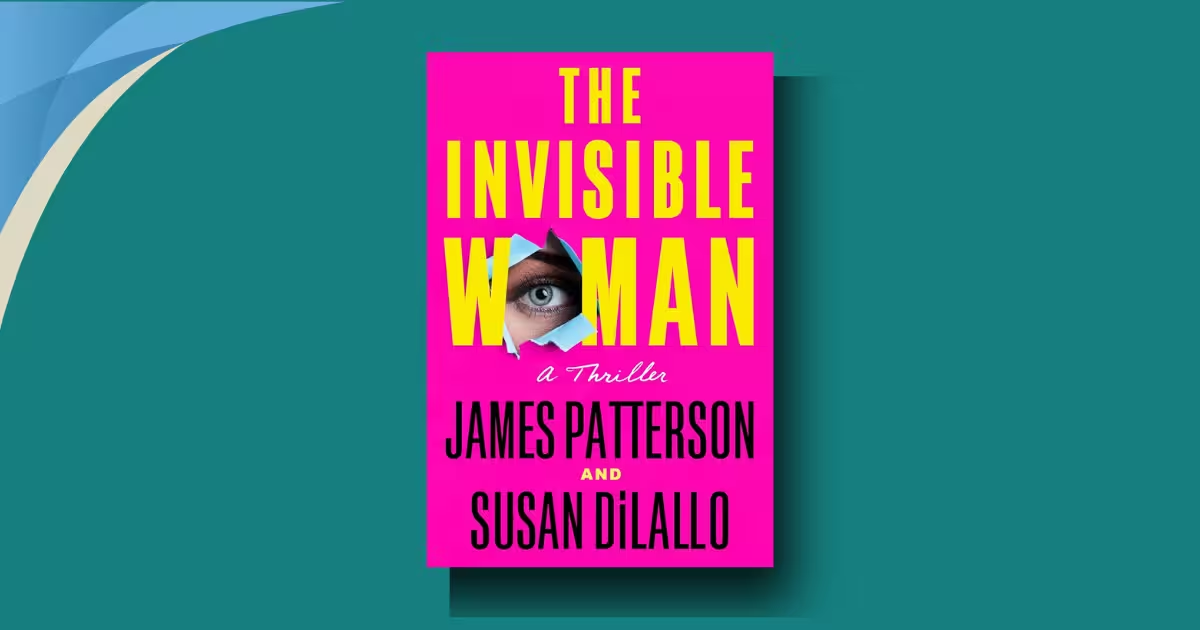
Do you ever wonder why, after a certain age, people look right through you—like you’ve faded into the background of your own life? That raw, quiet ache of being overlooked hit me hard while reading The Invisible Woman by James Patterson and Susan DiLallo, and it might hit you too if you’ve ever felt society’s gaze slide past you.
Being “invisible” isn’t just a middle-aged woman’s complaint—it can become the ultimate weapon when you turn it into undercover power.
Studies back up the book’s sharp social commentary: A 2023 AARP survey found that nearly 60% of women over 50 report feeling invisible in public or professional settings, while a 2024 UK study from the Women’s Equality Party showed women over 45 are twice as likely to be ignored in meetings compared to younger colleagues or men.
Patterson and DiLallo weave these real-world frustrations into a thriller that feels both funny and fiercely relatable.
I suggest The Invisible Woman for the fans of fast-paced undercover thrillers with heart, readers who love strong female protagonists over 50, and anyone craving a mix of humor, suspense, and social satire—like if The Undercover Nanny met Patterson’s signature short chapters.
But those wanting gritty, dark psychological depth or hyper-realistic police procedurals; this one leans more entertaining and uplifting than bleak may not find it enjoyable.
Important Points with Citations from the Book
Right from Chapter 1, Elinor Gilbert nails the feeling so many women know:
“MY NAME IS ELINOR GILBERT. And I am the Invisible Woman. […] Then one day you’re in line at Whole Foods […] when some guy scoots in front of you. […] And the jerk says, ‘Oh, sorry, lady. I didn’t even see you.’”
This sets the tone perfectly—bitter, funny, and spot-on.
Later, when she’s recruited, her old boss says something like: “You’re perfect for this, Elinor. No one notices you anymore—that’s your superpower now.” (Paraphrased from around Chapter 3–4). It flips the pain into strength in a way that made me cheer.
Table of Contents
1. Introduction
The Invisible Woman is a standalone thriller co-authored by the king of page-turners, James Patterson, and Susan DiLallo. Published by Little, Brown and Company on January 5, 2026 (ebook edition), it’s a 352-page hardcover (ISBN 9780316587105) that hit shelves just weeks ago and already feels like one of those books people pass around saying, “You have to read this.”
2. Background
Patterson needs no introduction—he’s sold more books than anyone alive—but teaming up with DiLallo brings a distinctly feminine, wry voice to the story.
There’s no deep historical context here; instead, the book taps into a very contemporary issue: the societal invisibility of women over 50.
Think vanishing from marketing, media, and even everyday interactions once you hit middle age. It’s a cultural phenomenon backed by data (like the AARP stats I mentioned), and Patterson uses it as the springboard for a clever undercover premise.
3.The Invisible Woman plot summary
I devoured this book in two sittings, laughing out loud one minute and gripping the pages the next. Here’s the full story, no holding back—consider this your complete spoiler-filled walkthrough so you can decide if it’s for you or just enjoy the ride vicariously.
Elinor Gilbert is in her mid-50s, divorced, living a quiet life in suburban New York after a humiliating exit from the FBI years earlier. She was a star in white-collar crime investigations until a case went sideways—she was falsely accused of leaking information, her reputation shredded, and she was forced out.
Now? She’s the woman the dry cleaner forgets, the pharmacist doesn’t recognize, the one guys don’t flirt with anymore. Chapter 1 opens with that brilliant Whole Foods scene I quoted earlier, and it’s pure gold.
Then comes the call from Alan Metcalf, her former FBI boss and the man who always believed in her. He’s running an investigation into Jonathan Harrington, a charming but shady Manhattan art dealer suspected of laundering money for the Italian mob through fake provenance on priceless paintings.
The FBI needs someone inside the Harrington home—someone who can pose as a live-in nanny without raising suspicion. And who better than Elinor? “You’re invisible now,” Alan tells her. “That’s exactly what we need.”
Elinor hesitates—she’s out of practice, rusty, and honestly a little scared—but the chance to clear her name and get her pension restored is too good to pass. She dyes her hair mousy brown, trades her wardrobe for sensible cardigans, and becomes “Ellen Gray,” the perfect middle-aged nanny.
The Harrington family: Jonathan (slick, absent husband), Claire (beautiful but lonely trophy wife in her 40s), teenage daughter Sophia (rebellious, glued to her phone), and 10-year-old son Max (sweet, overlooked, obsessed with dinosaurs). Elinor moves into their gorgeous Upper East Side brownstone and starts her double life.
At first, it’s comedy gold. Elinor struggles with modern parenting—trying to understand TikTok trends, burning gluten-free pancakes, fumbling with smart home gadgets. But her “invisibility” works: the staff barely notices her, Jonathan dismisses her as “the help,” and even the kids warm to her slowly.
She bonds hardest with Max, reading him bedtime stories and helping with school projects, and with Claire, who starts confiding over wine about her crumbling marriage.
As the weeks pass, Elinor snoops brilliantly—planting bugs, photographing documents in Jonathan’s locked office, overhearing late-night calls. She uncovers the truth: Jonathan is deep in debt to the mob and has been selling forged masterpieces while laundering cash through his gallery.
But there’s a bigger twist—Claire knows more than she lets on. She’s not just a victim; she’s been quietly moving money to protect the kids.
The tension ramps up when Elinor gets too close to the family. Max starts seeing her as a surrogate mom. Claire treats her like a best friend. Sophia catches her snooping once but covers for her, thinking Elinor is just nosy.
And then there’s the unexpected spark: a sweet, slow-burn connection with Tom, the widowed building doorman who actually sees Elinor for who she is.
Danger hits midway. One of Jonathan’s mob contacts—a ruthless enforcer named Vito—visits the house and senses something off. Elinor barely escapes being caught searching the gallery basement, where she finds a hidden stash of forged paintings and ledgers.
She transmits evidence to Alan, but the FBI wants more—they need Jonathan caught in the act of a major transaction.
The climax is heart-pounding. During a big gallery opening, Jonathan plans to sell a forged Picasso to a mob boss. Elinor, still undercover, attends as the nanny chaperoning the kids. Chaos erupts when Vito realizes there’s a leak.
He threatens Claire and the children. Elinor drops the nanny act, pulls her hidden service weapon, and takes down Vito in a frantic struggle in the gallery’s back room—using a fire extinguisher and her old training in a scene that had me holding my breath.
Jonathan is arrested on the spot. Claire, it turns out, had been gathering her own evidence to escape him—she becomes a witness rather than a suspect. The kids are safe. Elinor’s name is cleared; the old leak accusation was pinned on a dirty colleague who confesses under pressure.
The ending is pure Patterson satisfaction: Elinor gets her FBI credentials back but chooses semi-retirement.
She stays close to Claire and the kids (now in a much happier home), and she and Tom start dating—quiet dinners, no drama, just two people who finally see each other. The final chapter circles back to the Whole Foods line, but this time a young guy lets her go first and says, “After you, ma’am.” Elinor smiles and thinks: maybe being seen again isn’t so bad after all.
4. The Invisible Woman analysis
4.1. The Invisible Woman Characters
Elinor is the standout—complex, funny, flawed, and fiercely relatable. Her growth from bitter and resigned to empowered and connected is beautiful. Claire evolves from seeming trophy wife to a woman with her own quiet strength.
The kids feel real: Max’s sweetness breaks your heart, Sophia’s teenage sarcasm hides vulnerability. Jonathan is a solid villain—charming enough to understand why Claire stayed, slimy enough to hate. Alan and Tom provide steady support without stealing the spotlight.
Everyone serves the story perfectly; no one feels cardboard.
4.2. The Invisible Woman Themes
The core theme—invisibility as both burden and gift—is woven masterfully.
Elinor’s anonymity lets her infiltrate, but her growing emotional visibility (bonding with the family) nearly costs her everything. It’s a smart commentary on ageism and how society discards women past a certain age.
Symbolism is light but effective: mirrors (Elinor avoiding them early, facing them by the end), art forgeries (fake exteriors hiding truth), and the nanny uniform (literal disguise for societal expectations). The book also touches reinvention, found family, and the quiet courage of ordinary women.
5. Evaluation
Strengths
The humor—dry, self-aware, never mean—elevated this above typical thrillers. Short chapters kept the momentum relentless. Elinor’s voice is so authentic I felt like I was reading a friend’s diary. The blend of suspense and heart worked perfectly; I cried happy tears at the ending.
Weaknesses
Some plot conveniences strained belief (how easily she plants bugs, how quickly the kids adore her). The mob elements felt a touch generic compared to the sharper social satire. A few red herrings (like suspecting Claire more) fizzled rather than exploded.
Impact
This one resonated deeply. As a woman in my 40s, those opening pages stung—then empowered me. It’s rare to see a heroine over 50 kicking ass and finding love without it feeling forced.
Comparison with Similar Works
It reminds me of Patterson’s own Woman of God or The President’s Daughter for strong female leads, but with more humor—like Lisa Lutz’s The Passenger mixed with Freida McFadden’s domestic thrillers (The Housemaid). If you liked The Perfect Nanny by Leila Slimani, this is the upbeat American cousin.
6. Personal Insight with Contemporary Relevance
Reading The Invisible Woman in 2026 feels especially timely. We’re finally talking more about ageism toward women—think the #StillHere movement on social media and campaigns like Dove’s “Real Beauty” pushing older representation.
Yet statistics remain grim: according to a 2024 UN Women report, women over 50 face higher rates of workplace discrimination than any other demographic.
The book turns that pain into power, reminding us that experience and “invisibility” can be strategic advantages.
It made me reflect on my own moments of being overlooked and how I can reclaim visibility on my terms. In a world obsessed with youth, Elinor’s story is a quiet revolution. (For more on ageism stats).
7. The Invisible Woman quotes
- Chapter 1 opener: “MY NAME IS ELINOR GILBERT. And I am the Invisible Woman. […] Well, except for that chocolate fudge cake.” → Perfect mix of humor and heartache.
- When Alan recruits her: “You’re invisible now, Elinor. And that makes you the most dangerous person in the room.”
- Near the end, to Tom: “I spent years thinking no one saw me. Turns out I just hadn’t met the right person yet.”
- Final reflection: “Maybe being invisible isn’t a curse. Sometimes it’s just the prelude to being truly seen.”
8. Conclusion
The Invisible Woman is one of my favorite Patterson books in years—smart, funny, thrilling, and surprisingly moving. It’s significant because it gives a middle-aged woman the spotlight she deserves in a genre that too often sidelines her.
I highly recommend it to thriller lovers, women over 40, and anyone who enjoys a fast read with heart. If you want escapism that also makes you feel seen, grab this one now.







