
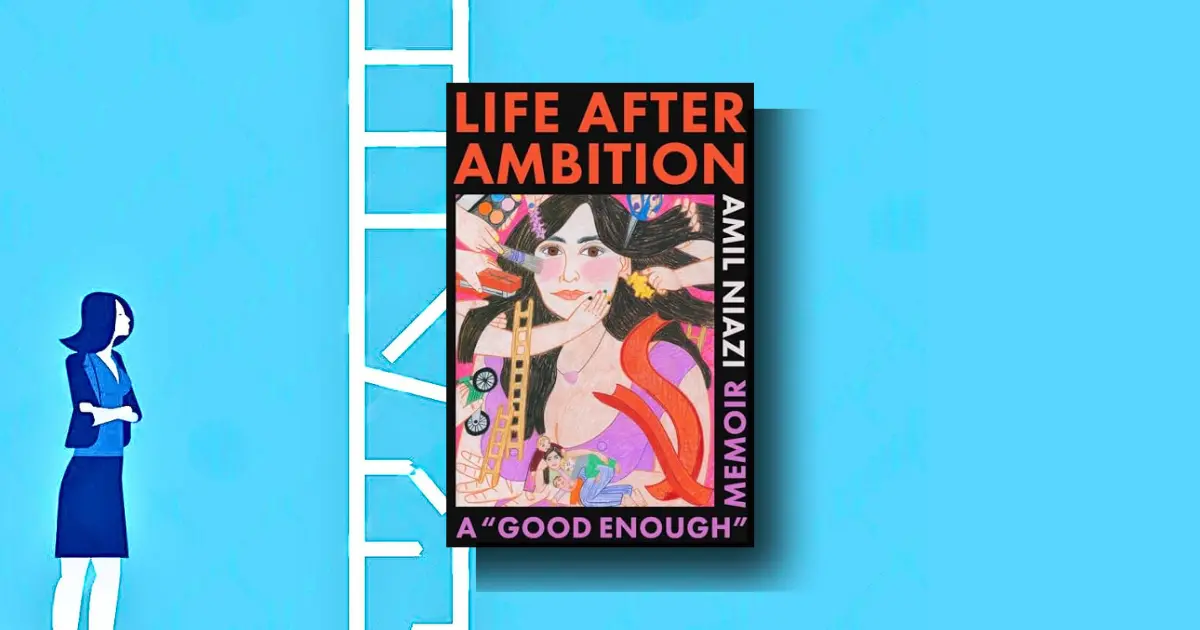
Are you exhausted from chasing the next milestone, only to find that “success” still feels hollow and out of reach? Amil Niazi’s Life After Ambition: A “Good Enough” Memoir speaks directly to that quiet burnout—showing how letting go of relentless striving can open the door to a life that finally feels authentic, joyful, and truly enough.
Letting go of relentless ambition doesn’t mean giving up—it means making room for a life that feels authentic, satisfying, and genuinely “good enough.”
Amil Niazi draws from her own immigrant upbringing, media career burnout, and millennial motherhood struggles, echoing broader trends: recent surveys show over 70% of mothers experience weekly burnout, while nearly half of working women report exhaustion driven by unbalanced workloads and lack of support. Many ambitious women are quietly stepping back, with record numbers leaving the workforce due to rigid structures and childcare gaps.
Life After Ambition is best for Millennial parents (especially mothers) juggling career pressure and family, immigrant daughters carrying generational expectations, or anyone burned out on hustle culture and craving permission to prioritize joy over constant striving.
But not for the die-hard productivity enthusiasts who still believe endless grinding equals fulfillment, or readers wanting a step-by-step self-help guide—this is raw memoir, not prescription.
I’ve been thinking a lot about ambition lately, especially after reading Life After Ambition: A “Good Enough” Memoir by Amil Niazi. It landed in my hands at the perfect time—fresh off the press in January 2026—and it felt like someone finally put words to that quiet exhaustion so many of us carry.
Table of Contents
1. Introduction
Life After Ambition: A “Good Enough” Memoir is the debut book by Amil Niazi, a Toronto-based writer and columnist best known for her sharp, confessional series “The Hard Part” in The Cut. P
ublished on January 6, 2026, by Atria/One Signal Publishers (an imprint of Simon & Schuster), the 224-page hardcover is already generating buzz for its timely take on millennial midlife reckoning.
2. Background
Niazi’s story is deeply rooted in the immigrant experience of the 1980s and 1990s. Born in London to Pakistani parents who eloped and chased freedom far from patriarchal villages, she moved to Toronto as a young child.
Like many South Asian immigrant kids, she grew up in high-rise apartments filled with newcomers, navigating polite racism, economic precarity, and the relentless parental refrain: succeed, or you’ll never escape. This era’s “hard work is the great equalizer” mantra became her life vest.
Yet it collided with the millennial reality of hustle culture, girlboss rhetoric, and a pandemic that stripped away all distractions, forcing a generation to confront what we were actually chasing.
3. Life After Ambition summary
The memoir opens with a moment that gutted me: Niazi standing with her young son S on his last day of kindergarten. An older kid warns him about the homework avalanche coming in first grade, and S bursts into tears on the walk home, sobbing, “I don’t want to just grow up, do work, and then die!” (direct from the introduction). Niazi laughs outwardly but recognizes her own lifelong dread in his words.
This scene frames everything that follows—a tender, funny, painful excavation of how ambition shaped her, saved her, and eventually nearly broke her.
She takes us back to her parents’ whirlwind romance: her dad spotting her mom at art college, nearly crashing his motorcycle to look cool; her mom wearing a tablecloth as a makeshift hijab for their elopement.
They land in London, scraping by—dad in a sweet shop, mom cleaning hotel rooms—while raising babies in their mid-twenties. By 1986, with three daughters, finances force a move to Toronto. Niazi, around five, remembers the biting cold, losing her English accent to fit in, and the constant shuffling between high-rises in Scarborough.
Childhood memories are vivid and bittersweet. She befriends Samantha (the “white trash” neighbor with pork-riddled snacks and casually racist parents) and Hana (strict Korean girl with piano lessons and church invitations).
A disastrous Sunday at Korean church—bad grape juice communion, no snacks, hours of boredom—ends with Niazi locking her apartment door and swearing off future invitations.
At Hana’s birthday, surrounded by accomplished piano-playing girls, she feels crushing shame for not having lessons herself, sulking through dry cake and fleeing in tears. These stories illustrate early lessons in class, race, and belonging: ambition becomes the promised path to worthiness. Teachers praise her “potential”; parents push the doctor-lawyer-engineer trifecta.
Teen years bring secret dreams of writing, but poverty and trauma (family addiction, abuse hinted at in blurbs and interviews) make escape feel urgent. She writes sealed letters to her future self promising independence and a writing career, only to tear them up on New Year’s Eve 1999 when the new millennium arrives without the dramatic reset she hoped for.
Adulthood delivers the promised grind. Niazi hustles through media jobs, eventually landing at the BBC in London—a dream gig that feels hollow. Promotions come, but never feel like enough; relationships sour under the weight of her drive (men condescend or undermine). She shrinks herself to take up less space, changes how she talks and dresses, convinced the next rung will finally make it worth it.
Marriage to Matt (the book’s dedication: “you made it possible”) and motherhood—three children in total—shift the ground. The pandemic hits like an escape room with no exit: no cocktails, no Amazon binges, just constant family presence. Ambition, once a survival tool, becomes a mask hiding a chasm between who she is and who she pretends to be.
She quits her dream job, moves away from relentless striving, and begins writing the viral essays (“Losing My Ambition,” “The Mindfuck of Mid-Life”) that become the book’s foundation.
The final sections are the most liberating. Niazi wrestles with guilt—does choosing “good enough” betray her younger self? Her immigrant parents? But she lands on optimism: shedding toxic ambition (the endless, never-satisfied kind) frees her for authenticity, presence, joy.
Motherhood teaches her that work is just one part of a whole life; she wants her kids to see her and Matt as “many things,” not defined solely by careers. The memoir closes without a tidy bow—just honest curiosity about what comes next in this post-ambition chapter.
4. Life After Ambition analysis
4.1. Life After Ambition characters
Since this is memoir, the central “character” is Niazi herself—complex, contradictory, fiercely intelligent, and unflinchingly honest. We watch her evolve from anxious, striving child to burned-out professional to reflective mother embracing imperfection.
Her parents are rendered with love and complexity: romantic dreamers who turned hardship into stories, yet passed down survival-level ambition. Matt appears as steady support, enabling her writing and parenting.
The children—especially sensitive S—act as mirrors, their innocence forcing Niazi to confront her fears. Childhood friends like Hana and Samantha highlight early othering. No one is villainized; everyone is human, shaped by circumstance.
4.2. Themes and Symbolism (full spoiler discussion)
4.2. Life After Ambition themes and symbolism
What stays with me most after finishing Life After Ambition is how Niazi turns the whole idea of ambition inside out—not as some straightforward villain or hero, but as this complicated, shape-shifting force that can save you and then quietly destroy you if you let it run unchecked.
The central theme is absolutely that double-edged sword: ambition as a survival mechanism for marginalized people (especially immigrant kids from working-class backgrounds), but also as a capitalist trap that keeps promising fulfillment just one more rung up the ladder.
Early on, Niazi lays this bare when she reflects on her childhood necessity: “Growing up, I had to be ambitious. It was my only chance to escape the poverty and trauma that had shaped my own childhood” (from the introduction). That line hit hard because it’s not abstract—it’s rooted in her parents’ elopement from patriarchal villages, their scramble in London (dad in a sweet shop, mom cleaning rooms), and the move to Toronto’s high-rises filled with refugees. Ambition wasn’t a choice; it was oxygen.
But then, as an adult, that same drive starts maiming her. She writes about how it “takes on a jagged shape, one that seems designed to maim anyone still hoping to grasp it” (echoed in interviews and excerpts). In her twenties and thirties, climbing the media ladder—landing gigs, moving to the BBC—never feels like enough.
Promotions come, but there’s always this hollow chasm: “There was a chasm between who I was and who I was pretending to be.” Relationships suffer too; men condescend to her effort or undermine her successes, accusing her of getting ahead because of her identity rather than merit. She shrinks herself—changes her speech, her clothes—believing the next achievement will finally make the struggle worth it. Spoiler: it doesn’t. The real breaking point comes with motherhood and the pandemic, which collapses every boundary.
Work and home tangle into “a tangled knot,” as she puts it in one passage, stripping away the pretense. No more hiding the kids on Zoom calls or chasing endless “more.” The pandemic acts as this brutal but necessary mirror, forcing a generational reckoning for millennials who bought into hustle culture only to burn out when the world stopped.
Motherhood is woven through all of this as both complication and liberation. Niazi exposes the myth that women can “have it all” without shattering—higher salaries often mean more invisible labor, guilt, and exhaustion.
She touches on darker wreckage from her past (poverty, family addiction, physical assault), showing how professional ambition became a way to compartmentalize trauma, presenting a “one-dimensional fiction” at work. Yet having three kids shifts everything; she starts questioning what modeling relentless grinding does to them.
That opening scene with her son S bursting into tears—“I don’t want to just grow up, do work, and then die!”—isn’t just cute; it’s a full-circle echo of her own dread, symbolizing how these cycles pass down unless broken.
And that’s where the radical heart of the book lies: embracing “good enough” as rebellion against optimization and girlboss rhetoric. It’s not quitting outright—Niazi still writes, still parents ambitiously in her way—but releasing the toxic, never-satisfied version of ambition. She’s freed from it, not defined solely by career, hoping her kids see her and Matt as “many things.” There’s guilt here (does this betray her younger self? Her parents’ sacrifices?), but ultimately optimism: post-ambition life means authenticity, presence, joy in the ordinary.
Symbolism runs subtle but deep, tying everything together without feeling heavy-handed. The ladder—prominent on the cover, with its jagged rungs amid hands pulling hair, applying makeup, holding toys—represents that maiming climb, always extending higher just as you near the top. Her son’s kindergarten tears mirror her lifelong existential fear, a poignant handoff of unprocessed anxiety.
Childhood stories symbolize early assimilation pressures: losing her English accent to fit in, the shame at Hana’s piano-heavy birthday party (where she sulks over dry cake, wishing she could “plonk out some beautiful tune” to prove her worth), or the polite racism from Samantha’s parents that outlines exactly how much space she’s allowed.
Even the torn-up letters to her future self (mentioned in reflections on millennial dreams) stand for shattered Y2K-era fantasies of dramatic resets. The pandemic itself symbolizes forced stripping— no distractions, just raw confrontation.
All these threads integrate so naturally because Niazi never preaches; she invites us into the mess, figuring it out in real time. It feels less like a tidy thesis and more like a conversation that leaves you rethinking your own ladders. For me, it was profoundly effective—validating that letting go isn’t failure, it’s freedom.
5. Evaluation
Strengths/pleasant/positive experiences with book: The voice—witty, warm, confessional—makes it feel like gossiping with the smartest friend. I laughed out loud at the Korean church debacle and teared up revisiting her childhood shame. The honesty about trauma, assault, addiction (touched on without exploitation) feels brave. It’s validating without being preachy.
Weaknesses/negative experiences with book: Some repetition of “ambition” can feel heavy-handed, and a few reviewers noted the conclusion muddles slightly—raising three kids while publishing a book still looks pretty ambitious! Pacing dips occasionally in career sections.
Impact: This book hit me emotionally and intellectually. As someone who’s felt that post-achievement emptiness, reading Niazi say “I’ve been liberated by my ambition, vilified for it, buried under it, and, finally, I’ve been freed from it” felt like permission to breathe.
Comparison with similar Works: It sits alongside Rachel Yoder’s Nightbitch (raw maternal rage), Meaghan O’Connell’s And Now We Have Everything (honest motherhood), and Amanda Montell’s essay collections (cultural critique). Less feral than Nightbitch, more personal than Annie Duke’s Quit.
6. Personal Insight with Contemporary Educational Relevance
Reading Life After Ambition in 2026 feels urgent because we’re in the thick of a maternal burnout crisis. Surveys show over 70% of mothers experience weekly burnout, while nearly half of working women report chronic exhaustion (APA 2025; Wellhub 2025).
Record numbers are leaving the workforce—not from lack of ambition, but because systems (childcare costs, rigid offices, layoffs) punish them for having both careers and families.
Niazi’s story mirrors this: ambition once promised equality, but for many women (especially racialized or working-class), it just delivers more invisible labor.
The lesson? We need to teach the next generation that worth isn’t tied to productivity. In an era where AI and economic instability threaten jobs, redefining success as “enough” could be revolutionary.
Schools and workplaces should prioritize well-being over hustle—flexible policies, mental health support, shared parenting norms. Niazi models this for her kids, hoping they see parents as “many things.” If we follow suit, maybe fewer children will cry about growing up just to “do work and then die.”
7. Life After Ambition quotes
- “I don’t want to just grow up, do work, and then die!” (her son S—gut-punch opener)
- “I’ve been liberated by my ambition, vilified for it, buried under it, and, finally, I’ve been freed from it.”
- On childhood shame at Hana’s party: “I would have spent my last dollar on earth in that moment to be able to sit down at Hana’s keyboard and plonk out some beautiful tune that impressed everyone and proved that I was also worthy and smart and good.”
- “There was a chasm between who I was and who I was pretending to be.”
- “Now I’m just trying to figure out what’s next.”
8. Conclusion
Overall, Life After Ambition is a tender, funny, necessary balm for anyone tired of the grind. It’s not anti-success—it’s pro-authenticity. I closed it feeling lighter, like I’d been given permission to want less and enjoy more.
Highly recommended for millennial parents, working mothers, immigrant daughters, or anyone questioning hustle culture. If you’ve ever felt the payoff never arrives, this book will feel like coming home.







