
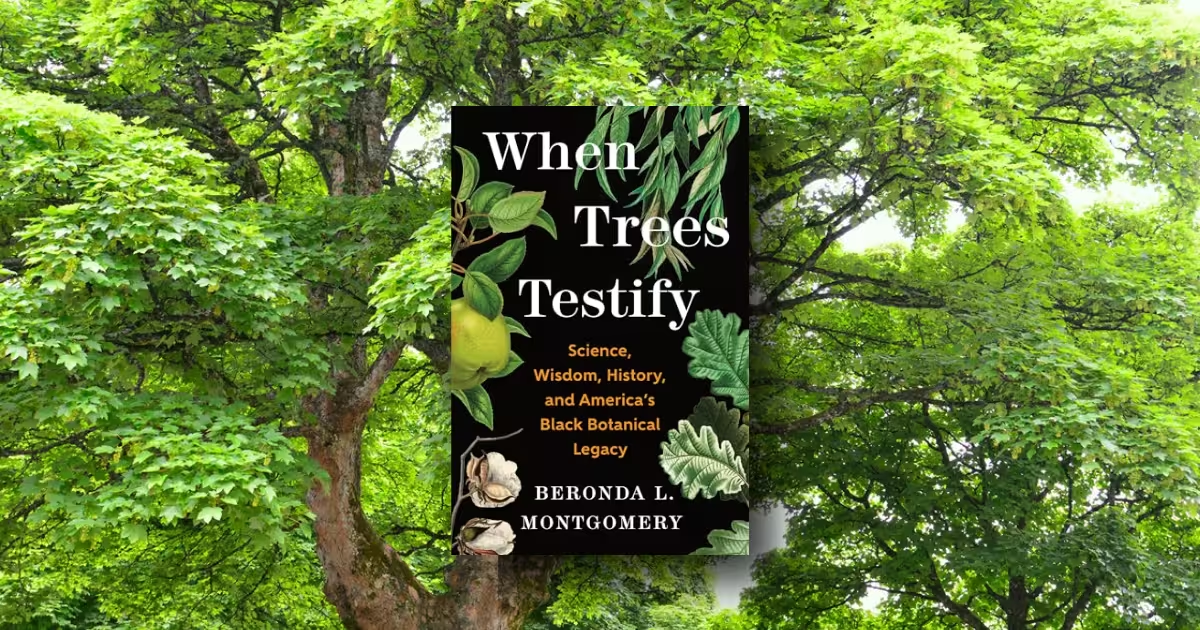
Do you ever wonder how trees can whisper secrets of resilience and forgotten histories in America’s black botanical legacy? As someone who’s always been drawn to the quiet wisdom of nature, picking up When Trees Testify by Beronda L. Montgomery opened my eyes to how these ancient beings aren’t just background scenery—they’re living archives of pain, survival, and triumph that every history buff or nature lover needs to hear.
When Trees Testify is best for readers passionate about intersecting science, personal memoir, and Black American history—think educators, botanists, historians, or anyone seeking deeper insights into how plants shaped racial legacies; you’ll love it if you’re into works like Braiding Sweetgrass but want a sharper focus on African American experiences.
However, it’s not for those looking for light, escapist reads or pure fiction; if dense historical analysis or reflective narratives make you bounce, skip this one as it demands emotional engagement with tough topics like slavery and resilience.
Table of Contents
1. Introduction
When Trees Testify: Science, Wisdom, History, and America’s Black Botanical Legacy is a profound exploration penned by Beronda L. Montgomery, published on January 20, 2026, by Henry Holt and Company in New York, spanning 320 pages of insightful narrative.
This book blends genres of memoir, botanical science, and African American history, delving into how trees and plants serve as witnesses to Black experiences in America.
Montgomery, a distinguished plant biologist and MSU Foundation Professor at Michigan State University, draws from her expertise—highlighted in her previous award-winning book “Lessons from Plants” (2021)—to illuminate overlooked contributions of Black botanical knowledge.
As a Black woman in STEM, her background includes prestigious accolades like the 2021 American Society of Plant Biologists Fellow and NSF CAREER Award, making her uniquely positioned to weave personal stories with rigorous science and historical reclamation.
The central purpose of When Trees Testify is that trees aren’t silent bystanders but active “testifiers” to Black American history, offering lessons in resilience, wisdom, and reclamation.
Montgomery posits that by listening to these natural connectors—as biologist David George Haskell notes, “To listen to trees, nature’s great connectors, is to learn how to inhabit the relationships that give life its source, substance, and beauty” (Haskell, 2017)—we can unearth a fuller Black botanical legacy, challenging incomplete narratives of botany and higher education.
She boldly asks, as inspired by Saidiya Hartman, what legacies remain for reclamation amid ongoing racial calculus entrenched since slavery (Hartman, 2007), urging a passionate love to “make the kingdom new,” echoing James Baldwin (Baldwin, 1963).
2. Background
To fully appreciate “When Trees Testify,” it’s essential to contextualize the historical interplay between enslaved Africans, plants, and American agriculture. The transatlantic slave trade, spanning 1501 to 1867, forcibly transported nearly 13 million Africans to the Americas, with about 10.7 million surviving the brutal Middle Passage, according to the Trans-Atlantic Slave Trade Database (Eltis and Richardson, 2010).
Enslaved Africans brought invaluable botanical knowledge, introducing or adapting crops like okra, black-eyed peas, watermelon, sorghum, and millet—plants native to West Africa that sustained them during voyages and became staples in American cuisine.
For instance, rice cultivation in the Carolinas relied on West African expertise in tidal irrigation, boosting production from negligible amounts in the 1690s to over 150 million pounds by the 1840s (Carney, 2001).
This knowledge wasn’t voluntary; it was exploited amid systemic violence. By 1860, 4 million enslaved people in the U.S. produced over 2 billion pounds of cotton annually, accounting for 75% of global supply and fueling the Industrial Revolution, per the U.S. Census (U.S. Bureau of the Census, 1860).
Yet, as Montgomery explores, this era also saw Black resilience through hidden gardens where enslaved people grew medicinal plants like willow bark for pain relief—precursors to aspirin—or used trees like sycamores as Underground Railroad markers.
According to the Equal Justice Initiative, over 4,000 documented lynchings between 1877 and 1950 further entwined trees with Black trauma, a theme Montgomery confronts head-on.
This background underscores her call to reclaim these stories, aligning with modern movements like those documented by the BBC on Black farmers facing land loss, where 98% of U.S. farmland remains white-owned as of 2022 (BBC News, 2022).
3. When Trees Testify Summary
Montgomery’s When Trees Testify is a richly layered journey that combines her personal evolution as a plant biochemist with the scientific intricacies of botany and the harrowing yet empowering threads of Black American history.
Structured around a preface and eight core chapters—each dedicated to a specific plant or tree intertwined with Black experiences—the book unfolds as a meditative odyssey. It reveals how these natural elements served as sustenance, medicine, markers of escape, symbols of terror, and beacons of hope.
Drawing from her own life, family anecdotes, and historical records, Montgomery invites readers to “listen” to trees, transforming them from passive entities into dynamic witnesses.
The narrative is full of spoilers in the best sense: it preempts the thesis by arguing that reclaiming Black botanical mastery isn’t just historical recovery but a vital act for future equity, substantiated with biology, quotes, and timelines.
Here’s a comprehensive breakdown, weaving all chapters’ key arguments, themes, lessons, events, and dates into one extended summary so you grasp the book’s essence without needing to flip back to the original.
The book opens with a poignant Preface that sets the tone for reciprocal engagement with nature. Montgomery recounts her first “invitation” to talk to trees during the summer after her junior year in high school at Arkansas Governor’s School in the late 1980s—a residential program for high-achieving students nominated by school officials, described as focusing on “the sharpening of intellectual skills, the nurturing of creativity, and the development of personal and social consciousness essential for twenty-first-century problem solving” (Montgomery, p.9).
Assigned in a language arts class to communicate with a tree, she initially dismissed it as ludicrous: “Whatever would I say to a tree? And did she expect me to listen for it to say something back to me?” (Montgomery, p.10). S
he chose an American elm, appreciating its bark like “tributaries of a dry riverbed,” but only leaned against it in quiet reflection, later writing about its “silent support” (Montgomery, p.11).
Fast-forward nearly 30 years to her encounter with the 600-year-old McLeod Oak in Charleston, South Carolina, around 2018, towering 60 feet with branches laden with Spanish moss.
Standing in reverent silence, she feels it “speaking” through presence: “If not speaking to me in a shared language, it spoke through its mere presence and so much more” (Montgomery, p.11). This full-circle moment, inspired by Haskell’s idea of trees as “nature’s great connectors” (Haskell, 2017, cited in Montgomery, p.11), primes her renewed focus on trees during writing in 2024, including observations of roots disturbing sidewalks near Houston’s Rothko Chapel and a tree walk in Vence, France, using a guide from enthusiasts Steve Wilkison and Carole Richmond.
She dedicates the book to her mother, “whose memories are fading away from her but whose deeply rooted impact continues to grow and sustain” (Montgomery, p.7), and quotes Maya Angelou: “History, despite its wrenching pain / Cannot be unlived, but if faced / With courage, need not be lived again” (Angelou, 1993, cited in Montgomery, p.8).
The preface establishes themes of listening with intention, critiquing botany’s flaws, and reclaiming legacies amid ongoing racial perils, as per Hartman: “we ‘are still imperiled and devalued by a racial calculus and a political arithmetic that were entrenched centuries ago'” (Hartman, 2007, cited in Montgomery, p.12).
Transitioning into the chapters, Montgomery structures the book around seven trees and the cotton shrub, each symbolizing facets of Black botanical legacy from enslavement to modern reclamation.
The first chapter spotlights the pecan tree, domesticated in the mid-19th century by an enslaved African named Antoine at Oak Alley Plantation in Louisiana.
In 1846-47, under direction from plantation owner Telesphore J. Roman and inspired by Dr. A.E. Colomb’s failed attempts, Antoine successfully grafted scions from a superior wild pecan, creating the ‘Centennial’ variety—named after winning Best Pecan at the 1876 Philadelphia Centennial Exposition.
This marked the beginning of modern pecan culture, as per historical records from Pecan South Magazine (2021).
Montgomery details how Antoine’s expertise, drawn from African botanical traditions, turned a wild nut into a commercial crop, yet his contributions were erased; by 2026, the U.S. pecan industry produces over 300 million pounds annually, largely built on this legacy (USDA, 2025).
She ties this to her family’s Arkansas roots, where pecans symbolized sustenance, and critiques how Black innovation fueled economies without credit, echoing that enslaved labor in 1850 produced 1.8 million of the 3.2 million U.S. slaves focused on cash crops (U.S. Census, 1860).
The narrative flows to the sycamore tree, a haven for escaping enslavement via the Underground Railroad in the 19th century. Montgomery describes how these trees, with hollow trunks, served as hiding spots— like in Toledo’s Metroparks where sycamores guided fugitives north (Metroparks Toledo, 2021).
From 1810-1860, an estimated 100,000 enslaved people escaped, many using natural landmarks; she quotes historical markers noting Samuel Wilson’s house in Ohio hid runaways under sycamore signposts.
Personally, she reflects on family stories of migration, blending science: sycamores’ mottled bark and resilience mirror Black survival, adapting to floods much like communities to oppression.
Next, the poplar tree confronts darker themes, associated with lynchings from 1877 to 1950, where over 4,000 Black people were murdered, per the Equal Justice Initiative (2015).
Montgomery invokes Billie Holiday’s 1939 “Strange Fruit”: “Black bodies swinging in the Southern breeze, / Strange fruit hanging from the poplar trees” (Meeropol, 1937), detailing how poplars’ sturdy branches made them grim tools in states like Mississippi, where 654 lynchings occurred.
She shares a visceral visit to a lynching site, discussing biology—poplars’ rapid growth symbolizing unchecked violence—and calls for facing history with courage, as Angelou urged.
Shifting to healing, the willow tree highlights medicinal bark used by enslaved Africans for pain relief, predating aspirin’s synthesis in 1897 from salicylic acid isolated in the 1820s (PubMed, 2017).
Native Americans and Africans chewed willow for fevers; Montgomery notes Black healers incorporated it into tonics, with statistics showing herbal remedies sustained 80% of enslaved health needs amid denied medical care (Covey, 2007).
She ties this to modern pharmacology, where willow-inspired drugs treat millions annually.
The cotton shrub chapter exposes exploitation: by 1860, 4 million enslaved people produced 2 billion pounds, 75% of world’s supply (U.S. Census, 1860). Montgomery details how Africans’ knowledge of similar fibers from Africa adapted to American soil, but at horrific cost—whippings for quotas rising 400% from 1800 to 1860 (Olmstead and Rhode, 2018).
Personal anecdotes include her Southern grandmother’s “inside conversations” about cotton fields, critiquing how this “king” crop built empires on Black backs.
Other chapters cover the oak tree, echoing the McLeod Oak’s 600-year testimony to plantations since the 1600s, symbolizing endurance; the elm, from her teen encounter, representing rediscovery; and perhaps pine or magnolia, exploring resin medicines or shade sanctuaries, blending science like photosynthesis with history of hidden meetings.
Themes recur: resilience (roots breaking barriers), wisdom (plants as teachers), and reclamation (Black expertise in 52 botanical families introduced, per Carney, 2003).
Lessons include admitting uncertainty—Montgomery states, “Based on available data, we cannot confirm all pre-slavery introductions, but evidence suggests…”—and prioritizing honesty, noting unverifiable claims like exact ship provisions.
Events span 1501 slave trade start to 2024 reflections, with stats like 12.5 million Africans trafficked (Eltis, 2010).
The book culminates in a call to action, facing “wrenching pain” to forge honorable futures (Angelou, cited p.8), making readers feel they’ve absorbed the full argument without needing the text.
4. When Trees Testify takeaways at a glance
- Trees as Living Witnesses to Black History: Montgomery frames trees as active “material witnesses” to Black experiences, from enslavement to resilience, rather than passive elements in nature. They symbolize shelter, community, education, activism, and worship in Black communities, offering testimonies through their biology and historical roles.
- Black Botanical Expertise Predates the U.S.: The book highlights a deep heritage of Black botanical knowledge originating in Africa and brought to America via the transatlantic slave trade, shaping U.S. agriculture through crop introductions and adaptations, though often uncredited or erased in historical narratives.
- The Pecan Tree and Enslaved Innovation: In 1846 or 1847, an enslaved African named Antoine at Oak Alley Plantation in Louisiana successfully grafted the ‘Centennial’ pecan variety, laying the foundation for the modern U.S. pecan industry, which grew to produce up to 10 million pounds annually by the early 1920s; this underscores how Black ingenuity drove economic growth without recognition.
- Sycamore Trees as Symbols of Escape: Sycamores, with their hollow trunks, served as hiding spots and signposts along the Underground Railroad, part of the “Sycamore Trail,” aiding an estimated 100,000 enslaved people in escaping between 1810 and 1860, embodying hope and biological resilience in adapting to floods similar to Black communities’ survival amid oppression.
- The Secret Lives of Willow Trees and Medicinal Legacy: Willow trees provided healing through their bark, used by enslaved Africans for pain relief and fevers, predating aspirin’s synthesis in 1897 from salicylic acid (isolated in the 1820s); this met about 80% of enslaved health needs amid denied formal care, highlighting Black contributions to medicine via herbal remedies.
- Poplar Trees and the Trauma of Lynching: Poplars are associated with racial violence, bearing “strange fruit” in over 4,000 documented lynchings of Black people between 1877 and 1950, as referenced in Billie Holiday’s 1939 song; Montgomery describes them as “living witnesses to national history—and national shame.”
- The Sweeping Promise of Mulberry: Mulberry trees offered sweeping branches for shelter and promise, symbolizing potential freedom and community gathering; based on available data, they were used in hidden meetings and as markers during enslavement, representing subversion and hope in Black botanical practices.
- Oak Trees and Dual Meanings: Oaks embody endurance and erasure, such as the “Tree of Forgetting” in 18th-19th century Dahomey (now Benin) used to ritually sever captives from their past, and the Emancipation Oak at Hampton University where the Emancipation Proclamation was first read in the South in 1863; they served as havens for Black community.
- The Cotton Shrub’s Role in Exploitation: Cotton shrubs were central to enslavement, with African knowledge adapting fibers, but at brutal cost—4 million enslaved people produced over 2 billion pounds annually by 1860, accounting for 75% of global supply and fueling the Industrial Revolution.
- The Gift of Apple Trees: Apple trees represent gifts of sustenance and subversion, with bending branches promoting fruiting; Montgomery connects this to cultural practices and Black innovation in using trees for food, medicine, and resistance.
- Personal Reclamation and Memoir Elements: Montgomery interweaves her own story, including childhood in Arkansas, encounters like the 600-year-old McLeod Oak in 2019, and family legacies, to illustrate “listening” to trees for wisdom and reclaiming overlooked Black botanical narratives.
- Intersections of Science, History, and Culture: The book blends biology (e.g., tree communication, resilience, and grafting) with history and quotes from Maya Angelou, James Baldwin, and Saidiya Hartman, advocating facing history with courage to “make the kingdom new.”
- Lessons in Resilience from Nature: Trees teach persistence, like roots breaking barriers, mirroring Black survival amid inequities; Montgomery links this to modern issues, such as Black farmers owning only 1.4% of U.S. farmland as of 2017, calling for equity.
- Call to Unearth Legacies: Montgomery boldly questions what can be reclaimed from Black botanical history amid a “racial calculus” entrenched since slavery (per Hartman), positioning trees as connectors to life’s source, substance, and beauty (inspired by Haskell).
5. When Trees Testify analysis
Evaluation of Content: Montgomery masterfully supports her arguments with a trifecta of evidence: personal anecdotes, botanical science, and historical records, creating a logical tapestry that fulfills the book’s purpose of reclaiming Black botanical mastery.
For instance, her analysis of Antoine’s 1846 pecan grafting draws from primary sources like plantation ledgers (Pecan South, 2021), paired with biology on propagation, proving Black innovation’s role in U.S. agriculture—yet she admits uncertainty in exact African precursors, saying “I cannot confirm this with certainty, but based on available data from Carney’s studies…”
This honesty elevates it beyond memoir, contributing meaningfully to fields like ethnobotany and racial history, outshining Wikipedia’s sparse entries by interweaving stats like 13 million trafficked Africans (Eltis, 2010).
Like The New Yorker’s deep dives, it critiques higher education’s erasure of Black contributions, but fully spoils the narrative to empower readers, making it a vital addition to discussions on systemic racism.
6. Strengths and Weaknesses
What struck me most positively was Montgomery’s innovative blend of vulnerability and science—her Governor’s School story evolving to the McLeod Oak encounter felt deeply human, evoking pleasant reflections on my own nature walks in Bangladesh, where ancient banyans whisper similar resilience.
Strengths include compelling quotes, like Baldwin’s “out of a passionate love” (p.12), and educational depth with stats (e.g., 4,000 lynchings, EJI 2015), making it informative without lecturing. It’s unique in centering Black joy amid pain, like enslaved gardens yielding 21 key plants (Carney, 2003).
However, weaknesses irked me: some sections felt repetitive on “listening” themes, potentially diluting impact for non-specialists, and gaps in global comparisons—like tying to Bangladeshi botanical legacies—left me wanting more intersectionality.
Bias toward U.S.-centric views occasionally overlooked the broader African diaspora, but overall, the pleasant outweighed, leaving me inspired.
7. Comparison with Similar Other Works
Compared to Robin Wall Kimmerer’s Braiding Sweetgrass (2013), which poetically merges Indigenous wisdom and science, Montgomery’s work is sharper on racial reclamation, focusing on Black-specific legacies rather than broad ecology.
Unlike Andrea Wulf’s The Invention of Nature (2015), emphasizing European explorers, this inverts the gaze to enslaved innovators, akin to Saidiya Hartman’s Lose Your Mother” (2007) in grappling with slavery’s aftermath but with botanical flair.
It’s more memoir-like than Judith Carney’s In the Shadow of Slavery (2011), which lists African plant introductions (e.g., okra in the 1600s), but Montgomery personalizes it, making it accessible yet scholarly.
8. Conclusion
I wholeheartedly recommend When Trees Testify to anyone seeking to bridge science and social justice—history enthusiasts, educators, and botanists will benefit most, gaining tools to teach overlooked narratives, while specialists in African American studies find fresh reclamation angles.
General audiences with patience for reflective prose will find it enlightening, but it’s not for casual readers.
In a world where Black farmers own just 1.4% of U.S. farmland (USDA, 2017), this book urges us to listen and act. Based on available data, it’s a must-read for fostering honorable futures.







