

Dark academia is the lovechild of scholarship and shadow: an aesthetic (and storytelling mood) that romanticizes learning while refusing to sanitize its darker edges. Think vintage “library chic,” candlelit corridors, old stone buildings, heavy books, obsession, ambition, and the kind of secrets that stain everything they touch.
In interior and lifestyle coverage, it’s often described through moody palettes, antiques, and book-filled spaces—and it’s strongly tied to the idea of academia as atmosphere: libraries, late-night study, classic literature, and a gothic-leaning sense of drama.
But dark academia isn’t just décor. It’s a story engine: you’ll see it in campus-set thrillers, literary mysteries, classics steeped in moral decay, and films that feel like they were shot through autumn air. This guide gathers standout dark academia books and films, explains the tropes that make the vibe work, and helps you build a reading list (and watchlist) that’s more than just tweed and tragedy.
Table of Contents
1. What counts as “dark academia”?
There’s no official rulebook. Instead, dark academia is a cluster of recurring themes and textures:
- Academic settings (universities, boarding schools, conservatories, institutes, libraries)
- Classic literature and intellectual obsession (ancient languages, poetry, philosophy, art, history)
- Ritual and exclusivity (secret societies, elite cliques, gatekeeping, prestige)
- Moral ambiguity (flawed narrators, self-justification, complicity)
- Beauty + dread (gothic architecture, candlelight, stormy weather, decay under elegance)
Lifestyle coverage often frames the aesthetic as deeply bookish and nostalgic—moody lighting, antiques, and “academia”-coded objects and spaces.
2. The dark academia tropes you’ll keep seeing
If you’re trying to identify dark academia books and films (or write one), watch for these recurring elements:
- The inner circle: a tight group that feels magnetic from the outside—and dangerous from within.
- A temple of knowledge: libraries, archives, lecture halls, labs, studios.
- A charismatic authority figure: professor, tutor, director, mentor (helpful… until they aren’t).
- Rituals and rules: codes of conduct, initiations, traditions, taboo knowledge.
- The cost of brilliance: obsession, burnout, envy, betrayal, self-destruction.
- A crime (literal or moral): murder, cover-ups, exploitation, intellectual theft, or the slow crime of becoming someone you dislike.
3. Best dark academia books
Below are 11 dark academia books that deliver the atmosphere—ranging from modern “dark academia darlings” to classic literature that feeds the same hunger.
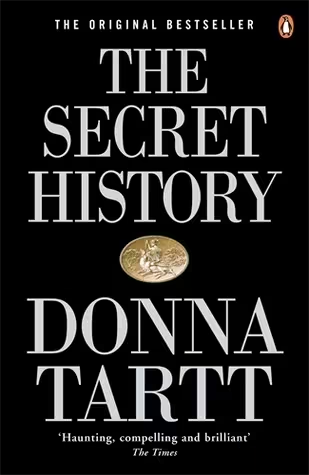
1. The Secret History (1992) by Donna Tartt
Often treated as a cornerstone of the modern dark-academia reading list, The Secret History is a murder mystery published in 1992. The novel is famously tied to an elite group of Classics students at a small New England college—and it moves with the slow, hypnotic confidence of someone explaining a disaster they can’t undo.
Why it hits the dark academia nerve: Classics, elitism, beauty-as-justification, and the feeling that intellect can become its own alibi.
Vibe notes: cold scholarship, warm wood interiors, moral rot under refinement.
2. If We Were Villains (2017) by M. L. Rio
Published by Flatiron Books (Macmillan), If We Were Villains went on sale in 2017 and centers on Oliver Marks, who’s released from jail—only to be met by the detective who put him there.
The book looks back to Oliver’s time among seven Shakespearean actors at a highly competitive conservatory, where rivalries turn ugly and “real violence” crashes into their world.
Why it fits: theatre kids as a closed ecosystem, performance bleeding into identity, and ambition that turns friendship into a knife.
Vibe notes: rehearsal-room intensity, literary obsession, claustrophobic rivalry.
3. Ninth House (2019) by Leigh Bardugo
Leigh Bardugo’s Ninth House (Flatiron Books) went on sale in October 2019. It introduces Alex Stern, described as an unlikely member of Yale’s freshman class, and builds a world where prestige and power have occult shadows.
Why it fits: secret societies, institutional power, and the sense that the campus is alive with hidden rules.
Vibe notes: modern gothic, ritual-and-consequence, elite structures with teeth.
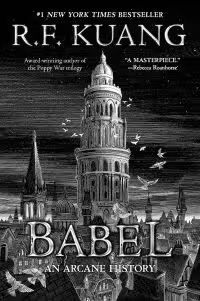
4. Babel: Or the Necessity of Violence (2022) by R.F. Kuang
On Harper Voyager’s listing, Babel is set in Oxford in 1836, anchored by Babel, the Royal Institute of Translation, and framed as a story about language, colonialism, and resistance. The listed release date is 1 September 2022.
Why it fits: scholarship as power, language as weapon, and the moral cost of “belonging” to an institution built on exploitation.
Vibe notes: historical academia, ink-stained rebellion, translation-as-alchemy.
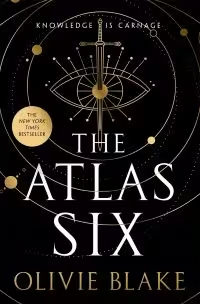
5. The Atlas Six (2022) by Olivie Blake
Tor Publishing Group describes The Atlas Six as the first in an “explosive dark academia fantasy trilogy,” featuring six uniquely talented magicians selected for a secret society—the Alexandrian Society. The Tor listing shows an on-sale date of September 6, 2022.
Why it fits: secret selection, ruthless brilliance, and the seductive idea that knowledge should be guarded (and weaponized).
Vibe notes: competitive genius, occult library energy, “prestige as pressure cooker.”
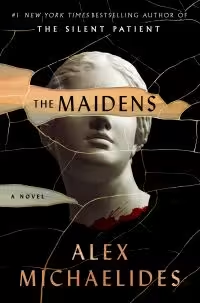
6. The Maidens (2021) by Alex Michaelides
Celadon Books lists The Maidens with an on-sale date of June 15, 2021. Their description frames it as psychological suspense weaving together Greek mythology, murder, and obsession.
Why it fits: mythic references, obsession-as-plot, and the collision of intellect with violence.
Vibe notes: psychological tension, classical echoes, dark obsession.
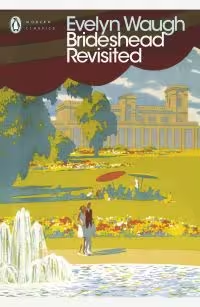
7. Brideshead Revisited (1945) by Evelyn Waugh
Britannica describes Brideshead Revisited as a satirical novel by Evelyn Waugh, published in 1945, focused on Charles Ryder and his connection to a wealthy Roman Catholic family.
Why it fits: nostalgia as a haunting force, class privilege, and the melancholy beauty of a world that’s already decaying.
Vibe notes: aristocratic gloom, longing, faith and fracture.

8. A Separate Peace (1959) by John Knowles
Britannica identifies A Separate Peace as a novel published in 1959, recalling the coming-of-age of a 16-year-old student at a New England preparatory school during World War II.
Why it fits: the closed world of school life, moral rupture inside friendship, and the way innocence can curdle into harm.
Vibe notes: prep-school intensity, quiet dread, psychological aftershocks.
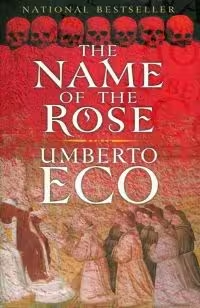
9. The Name of the Rose (1980) by Umberto Eco
Britannica notes that The Name of the Rose was published in Italian in 1980 and operates both as a murder mystery and as an inquiry into truth across scholarly and philosophical lenses. Its setting includes a labyrinthine library in a monastery and an investigation into suspicious deaths.
Why it fits: “knowledge as labyrinth,” intellectual puzzles, forbidden texts, and the violence of interpretation.
Vibe notes: medieval scholarship, library as battleground, truth as a trap.
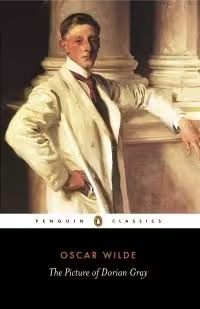
10. The Picture of Dorian Gray (1890/1891) by Oscar Wilde
Britannica reports that Wilde’s novel was first published in Lippincott’s Monthly Magazine in 1890 and as a book in 1891, centering on a young man who “purchases” eternal youth at the expense of his soul.
The British Library likewise notes its first appearance in 1890 and its later expansion into novel form.
Why it fits: aestheticism with a knife-edge, moral rot under beauty, and art as both mirror and curse.
Vibe notes: decadent gothic, salons and corruption, beauty that bites.
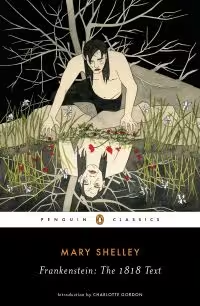
11. Frankenstein; or, The Modern Prometheus (1818) by Mary Shelley
Britannica describes Frankenstein as a novel by Mary Wollstonecraft Shelley first published in 1818, following a scientific genius whose creation torments him.
Why it fits: forbidden knowledge, creator/creation ethics, and the dread that brilliance can become monstrous.
Vibe notes: proto-science fiction, gothic conscience, ambition’s aftermath.
4. Best dark academia films
Below are 10 films that work beautifully on a dark academia watchlist. For each, I’m listing only details that can be verified in the cited sources (like year, director, and key credits), and then offering “vibe guidance” without pretending there’s a single official canon.
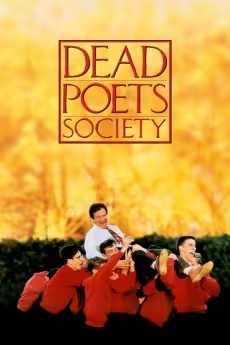
1. Dead Poets Society (1989): Dir. Peter Weir
BFI lists Dead Poets Society as a 1989 USA film directed by Peter Weir.
Dark academia watch mood: for nights when you want “literature as a life-or-death intensity” energy—an iconic pick for the broader academia-film vibe.
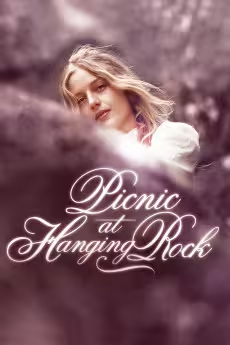
2. Picnic at Hanging Rock (1975): Dir. Peter Weir
BFI lists Picnic at Hanging Rock as a 1975 Australian film directed by Peter Weir. A Guardian retrospective describes it as a story in which schoolgirls vanish during a picnic in 1900, and the mystery remains unresolved.
Dark academia watch mood: uncanny innocence, institutions that can’t protect you, and elegance turning eerie.
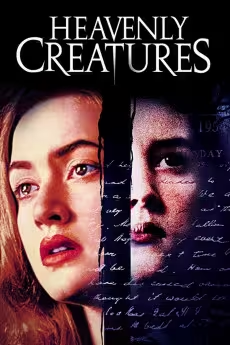
3. Heavenly Creatures (1994): Dir. Peter Jackson
BFI lists Heavenly Creatures as a 1994 film (New Zealand/Germany) directed by Peter Jackson.
Dark academia watch mood: intense inner worlds, friendship-as-obsession, and the uneasy boundary between imagination and consequence.
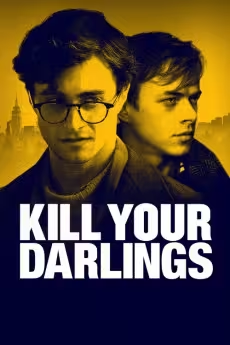
4. Kill Your Darlings (2013): Dir. John Krokidas
BFI lists Kill Your Darlings as a 2013 USA film directed by John Krokidas.
Dark academia watch mood: literary circles, intellectual glamour, and the darker underside of cultural myth-making.
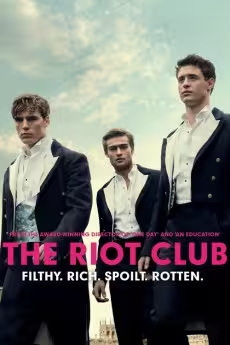
5. The Riot Club (2014): Dir. Lone Scherfig
BFI lists The Riot Club as a 2014 UK film directed by Lone Scherfig.
Dark academia watch mood: privilege, ritual, and the way exclusivity can become cruelty when nobody expects consequences.
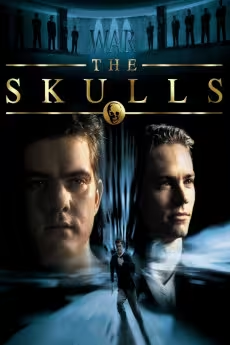
6. The Skulls (2000): Dir. Rob Cohen
A BFI review entry lists The Skulls as a 2000 USA film directed by Rob Cohen.
Dark academia watch mood: secret-society paranoia, initiation energy, and the fear that “access” always comes with a price.
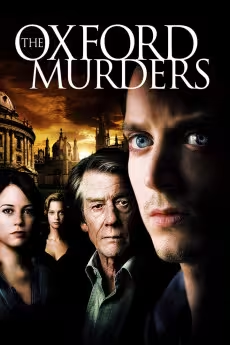
7. The Oxford Murders (2008): Dir. Álex de la Iglesia
Screen Daily describes The Oxford Murders as a 2008 film directed by Álex de la Iglesia.
Dark academia watch mood: intellectual puzzles, ominous symbols, and the thriller-flavored side of academic life.
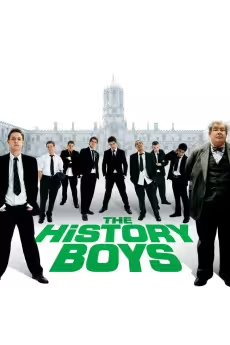
8. The History Boys (2006): Dir. Nicholas Hytner
The British Council film database lists The History Boys (2006) and credits Nicholas Hytner as director. Searchlight Pictures’ synopsis frames it around bright history students aiming for undergraduate places at Oxford or Cambridge.
Dark academia watch mood: classroom charisma, the politics of “merit,” and education as both opportunity and pressure.
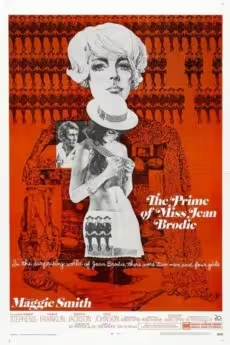
9. The Prime of Miss Jean Brodie (late 1960s): Dir. Ronald Neame
BFI lists The Prime of Miss Jean Brodie as a United Kingdom film directed by Ronald Neame, dated 1968 in their database entry.
Dark academia watch mood: a classic for viewers who like teacher/student power dynamics explored with old-school dramatic intensity.
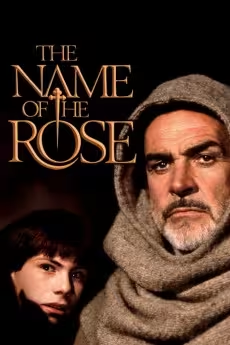
10. The Name of the Rose (1986): Dir. Jean-Jacques Annaud
Britannica notes that Eco’s novel inspired a 1986 film version directed by Jean‑Jacques Annaud, starring Sean Connery and Christian Slater.
Dark academia watch mood: labyrinthine libraries, forbidden knowledge, and mystery driven by interpretation.
5. Quick “if you liked this, try that” pairings
Use these pairings to build a satisfying dark academia book + film weekend:
- If you loved secret societies and power games (Ninth House, The Atlas Six) → try The Skulls or The Riot Club.
- If you want mystery + intellectual obsession (The Name of the Rose) → try The Oxford Murders or the 1986 film version of The Name of the Rose.
- If you want classic-gothic moral decay (Dorian Gray, Frankenstein) → try Picnic at Hanging Rock for elegant dread, then loop back to the classics.
- If you want youth, pressure, and the cost of “excellence” (A Separate Peace) → try The History Boys.
6. How to build the perfect dark academia reading and film night
Atmosphere is half the point—without needing to cosplay a 19th‑century scholar.
For reading:
- Choose one “dense” book (Eco, Shelley, Wilde) and one “propulsive” book (Rio, Bardugo, Michaelides).
- Read in short, focused sessions (30–45 minutes) to keep the mood delicious instead of exhausting.
- Keep a notebook for quotes, themes, and “academic marginalia” (your own commentary).
For watching:
- Double-feature idea: one “institutional” film (prestige, rules, hierarchy) + one “mystery/uncanny” film.
- Post-watch ritual: write a mini “seminar note” on what the story seems to claim about knowledge, status, and morality.
A lot of dark academia stories lean into heavy material—murder, obsession, manipulation, and psychological darkness are common. Publisher and database pages frequently include genre labels or positioning, but they don’t always summarize potentially sensitive content.
If you prefer to avoid certain themes, consider checking official content warnings or detailed reviews before you start.
7. FAQs about dark academia books and films
1. What are the best dark academia books to start with?
If you want a modern, widely recognizable entry point, start with Donna Tartt’s The Secret History (1992). If you want something faster and more thriller-adjacent, M. L. Rio’s If We Were Villains (2017) is an accessible next step.
2. Are dark academia books always set at universities?
Not always. Some sit in prep schools (A Separate Peace) or “scholarly worlds” like monasteries and libraries (The Name of the Rose). What matters is the academic obsession + shadow combination.
3. Is dark academia a genre or an aesthetic?
Based on available descriptions in mainstream lifestyle coverage, it’s most consistently framed as an aesthetic/style tied to academia-inspired spaces and moods. In books and films, it behaves like a vibe-driven microcategory—a recognizable set of themes rather than a strict genre boundary.
4. What’s the difference between dark academia and light academia?
In Better Homes & Gardens’ “academia decor” framing, the difference is largely tonal: dark academia leans moody, dramatic, and gothic-leaning, while light academia goes brighter and more pastoral.
In stories, that usually maps to whether the narrative feels ominous and morally fraught (dark) versus nostalgic and uplifting (light).
8. Closing thought
The best dark academia books and films don’t just look beautiful—they ask uncomfortable questions: What do we worship when we worship intellect? Who gets access to “knowledge”? And what are we willing to sacrifice to feel exceptional?
Build your list around those questions, and the aesthetic stops being surface-level—it becomes a lens.







