
Do you ever wonder what would happen if the single event that launched Christianity—the resurrection of Jesus—turned out to be nothing more than a hopeful myth? That nagging question kept me up at night as a curious reader in Bangladesh, where faith discussions often feel like walking a tightrope between tradition and tough evidence.
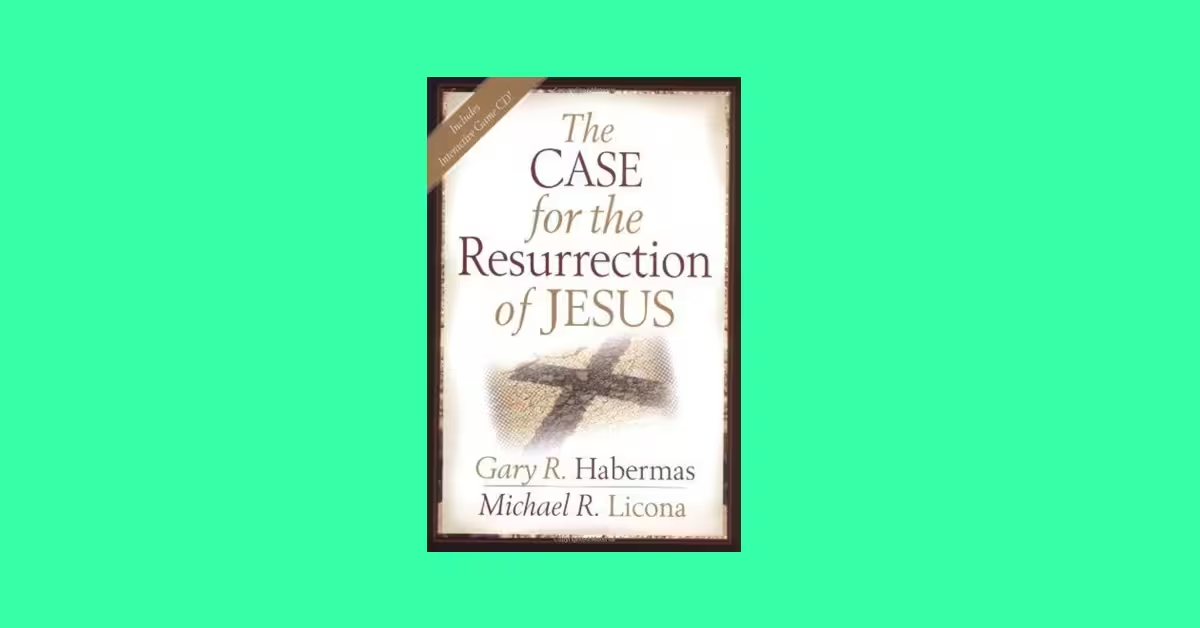
Then I picked up The Case for the Resurrection of Jesus by Gary R. Habermas and Michael R. Licona (Kregel Publications, 2004), and it changed everything.
This isn’t just another dusty theology book; it’s a practical, evidence-packed toolkit that equips everyday believers to defend the heart of the gospel with historical rigor while sharing it with skeptics.
If you’ve ever felt tongue-tied when a friend asks, “But did Jesus really rise from the dead?”, this volume hands you the words—and the confidence—to answer without dodging the hard questions.
Best for / Not for
Best for:
- Christians (from curious laypersons to seasoned pastors) who want to share their faith with confidence—backed by evidence, not just emotion.
- Skeptics, agnostics, and atheists who demand rigorous historical proof before believing anything, and who are willing to follow the data wherever it leads.
- College students facing intellectual challenges to Christianity on secular campuses.
- Small group leaders, Sunday school teachers, and apologists looking for a ready‑to‑use, evidence‑based evangelism tool.
Not for:
- Readers seeking a purely theological or devotional treatment of the resurrection.
- Those who reject any form of historical investigation as a valid path to truth.
- Anyone who believes “faith” means believing without evidence—this book will challenge that assumption from page one.
Table of Contents
1. Introduction
The Case for the Resurrection of Jesus isn’t your typical devotional. It’s a 347-page apologetics powerhouse co-authored by two heavyweights in resurrection studies.
Gary R. Habermas, Distinguished Research Professor at Liberty University, has spent decades compiling one of the most exhaustive databases on the topic—legend has it he started with 1,600 note cards as a teenager and later surveyed over 3,000 sources in his doctoral work.
Michael R. Licona, a New Testament historian with a PhD focused squarely on this event, brings fresh historiographical precision (his later scholarly tome The Resurrection of Jesus: A New Historiographical Approach builds directly on this collaboration).
Published in 2004 by Kregel Publications, The Case for the Resurrection of Jesus originally came with an interactive CD-ROM quiz game to drill the material home—proof it was designed for real-world use, not ivory-tower debate.
Genre-wise, it sits squarely in Christian apologetics and historical theology, blending accessible evangelism with scholarly minimalism.
The central thesis? The resurrection isn’t just a feel-good doctrine—it’s the best historical explanation for a handful of “minimal facts” that even most skeptical scholars accept. As the authors put it early on: “We have presented evidence for Jesus’ resurrection using a ‘minimal facts’ approach, which considers only those data that are so strongly attested historically that even the rather skeptical ones grant them” (p. 69).
No blind faith required. No assumption that the Bible is infallible from page one. Just cold, hard historical reasoning that points straight to a risen Lord. From my perspective as someone who’s wrestled with cross-cultural faith questions in Bangladesh, this book feels like a lifeline—practical, honest, and refreshingly free of fluff.
2. Background: The Authors’ Journey and the Need This Book Fills
Habermas and Licona didn’t write this in a vacuum. Both men once grappled with the same doubts many of us face. In the preface, they admit: “The authors of this volume did ask these questions as young men.
We determined to find some answers… intellectual integrity requires that we set aside biases” (p. 13). Habermas’s lifelong obsession with the resurrection began in his teens; by his doctoral days at Michigan State, he had built a massive research base that still informs his work today. Licona, a former skeptic in some senses, poured his expertise into making the case airtight for lay readers.
The Case for the Resurrection of Jesus emerged at a perfect cultural moment.
In 2000, Peter Jennings’ ABC special The Search for Jesus gave massive airtime to Jesus Seminar radicals like John Dominic Crossan, who downplay the resurrection. The authors saw ordinary Christians struggling to respond: “Americans generally have an abysmal level of knowledge of the Bible… headlines proclaim that this or that fact about [Jesus] has been declared untrue” (p. 23).
Their solution? Equip believers with a “minimal facts approach” that sidesteps endless Bible-inerrancy debates and focuses on data nearly everyone—believer or skeptic—already grants.
It’s brilliant strategy, especially in places like Bangladesh where Christianity is a minority faith and conversations with Muslim or secular friends demand common ground.
3. Critical Analysis – A Landmark in Modern Apologetics
Habermas and Licona have done something genuinely groundbreaking. Instead of the usual “the Bible says it, I believe it, that settles it” approach, they start on ground that even the most hardened skeptic cannot deny: the universally accepted historical bedrock.
As they state in the introduction to Part 2: “The minimal facts approach considers only those data that are so strongly attested historically that they are granted by nearly every scholar who studies the subject, even the rather skeptical ones.”
This is not your grandfather’s apologetics. The authors avoid the endless debates about biblical inerrancy, inspiration, or authorship. Instead, they treat the New Testament as any ancient historian would treat Josephus or Tacitus—weighing sources, cross‑examining contradictions, and applying standard historiographical criteria.
The result is a book that feels like a cold‑case investigation. Every claim is footnoted. Every counter‑argument is given a fair hearing. And the authors are refreshingly honest about what we cannot know with certainty.
What makes The Case for the Resurrection of Jesus truly unique is its dual‑purpose design:
- Part 1–2 build the positive case using only the “minimal facts.”
- Part 3 systematically dismantles every major naturalistic theory (fraud, hallucination, swoon, legend, etc.).
- Part 4 handles secondary issues (the nature of Jesus’ resurrection body, his claims to divinity, the existence of God).
- Chapter 13 and the interactive CD teach you exactly how to share this material in real‑world conversations.
The tone is respectful but confident. The prose is accessible without being shallow. And the charts and summaries make complex arguments stick in your memory.
If I had to describe The Case for the Resurrection of Jesus in one sentence, It is the most practical, evidence‑driven, and conversation‑ready defense of Jesus’ resurrection ever written for a lay audience.
4. The Case for the Resurrection of Jesus Summary
Part 1 – A Life to Die For: Sharing Your Faith
Habermas and Licona open with a sobering reality: many Christians cannot accurately define the gospel, let alone defend it. They cite a Barna study showing that “nine out of ten American adults cannot accurately define the meaning of the Great Commission.”
But the authors are not interested in guilt trips. They immediately pivot to why the resurrection matters so desperately:
“If Christ has not been raised, your faith is worthless; you are still under condemnation for your sins.” (1 Corinthians 15:17, paraphrased).
They then introduce the “test of the resurrection” – Jesus himself offered his resurrection as the ultimate sign that he was telling the truth about his identity (Matthew 12:38‑40; 16:1‑4). This is unique among world religions. No other founder offered a falsifiable, public, historical event as the anchor of his claims.
The chapter also addresses the nature of historical proof: “When it comes to any event that occurred in antiquity, the historian attempts to decide the matter with some degree of historical certainty. He has no videotapes or photographs available to him.”
They introduce a helpful spectrum of historical certainty and remind us that 100% certainty is impossible even for events like George Washington being the first president. The question is not absolute proof, but reasonable historical certainty.
Key takeaway: The resurrection is not an add‑on to Christianity; it is Christianity. If it didn’t happen, the faith collapses. If it did happen, everything changes.
Part 2 – “Just the Facts, Ma’am”: The Minimal Facts Approach
This is the heart of The Case for the Resurrection of Jesus. Habermas has spent decades cataloguing over 2,200 scholarly sources on the resurrection (in English, German, and French).
From that mountain of research, he identified a handful of facts that virtually all scholars—including skeptical ones—accept as historically certain.
The authors present five facts (which they call “4 + 1” because four meet the strictest criteria and one enjoys an impressive majority):
Fact 1: Jesus died by crucifixion.
Supported by Josephus, Tacitus, Lucian, Mara Bar‑Serapion, the Talmud, and all four Gospels. As even Jesus Seminar co‑founder John Dominic Crossan admits: “That he was crucified is as sure as anything historical can ever be.”
Fact 2: Jesus’ disciples sincerely believed that he rose and appeared to them.
The authors provide the POW! acronym (Paul, Oral tradition, Written tradition) to remember the nine independent sources that establish this fact. The disciples were not liars; they were willing to suffer and die for what they claimed to have seen. As Charles Colson (of Watergate fame) observes:
“Twelve powerless men, peasants really, were facing not just embarrassment or political disgrace, but beatings, stonings, execution. Every single one of the disciples insisted, to their dying breaths, that they had physically seen Jesus bodily raised from the dead. Don’t you think that one of those apostles would have cracked before being beheaded or stoned?”
Fact 3: The church persecutor Paul was suddenly changed.
Paul went from hunting Christians to dying for Christ because he believed he had seen the risen Jesus. His conversion is multiply attested (by Paul himself, by Luke in Acts, and by a story circulating in Judea within three years of his conversion).
Fact 4: The skeptic James, brother of Jesus, was suddenly changed.
James did not believe in Jesus during his ministry (Mark 3:21,31; John 7:5). But after the resurrection, he became the leader of the Jerusalem church and died a martyr. The early creed in 1 Corinthians 15:7 specifically lists an appearance of Jesus to James.
Fact 5: The tomb was empty.
Although not accepted by every scholar, Habermas found that “roughly 75 percent of scholars on the subject accept the empty tomb as a historical fact.” The authors offer three powerful arguments (J‑E‑T):
- Jerusalem factor – the tomb was proclaimed empty in the very city where Jesus was executed.
- Enemy attestation – the earliest Jewish response was to accuse the disciples of stealing the body, which indirectly admits the tomb was empty.
- Testimony of women – women were the primary witnesses, which would have been embarrassing in a culture that regarded female testimony as worthless.
The conclusion of Part 2 is inescapable: “These facts point very strongly to Jesus’ resurrection from the dead, which accounts for all five facts very nicely.”
Part 3 – “Yes, But …”: Encountering Opposing Theories
The authors systematically address every major naturalistic alternative:
Legend Theories (Embellishment, Nonhistorical Genre, Pagan Parallels)
They show that the resurrection accounts can be traced back to the original disciples within months or a few years of the event—far too early for legendary development. As for pagan parallels (Osiris, Adonis, Attis, etc.), the first clear parallels appear after AD 150, a full century after the New Testament documents. Habermas notes that “the tale of Isis and Osiris seems to be the only known case … which is dated prior to the middle or late second century AD.”
Fraud Theories
If the disciples were lying, why would they all die for a known lie? The empty tomb, Paul’s conversion, and James’s conversion cannot be explained by fraud.
Hallucination Theory
Hallucinations are individual, not collective. Groups do not share the same hallucination. Yet the early creed in 1 Corinthians 15 lists group appearances to “the Twelve,” “more than five hundred brethren at one time,” and “all the apostles.” The authors note that “Hallucinations are private occurrences, which occur in the mind of an individual. They are not collective experiences.”
Swoon (Apparent Death) Theory
A 1986 Journal of the American Medical Association article by a Mayo Clinic pathologist and two colleagues concluded: “interpretations based on the assumption that Jesus did not die on the cross appear to be at odds with modern medical knowledge.” Even if Jesus had survived, a barely‑living, wounded man would not have inspired the disciples to conquer the world.
Vision and Delusion Theories
These fail to explain the empty tomb, the conversion of Paul and James, and the physical, tangible nature of the appearances (Jesus ate, was touched, showed his wounds).
Naturalism / Philosophical Objections
The authors devote an entire chapter (Chapter 8) to answering a priori objections: “Only what science proves is true,” “Science proves that people do not come back to life,” “Even if a miracle occurred, we could never know it was a miracle.” They show that these objections are self‑refuting, philosophically bankrupt, and ignore the actual evidence.
Key quote: “Nothing can ruin an otherwise interesting argument like the facts.”
Part 4 – Wait! There’s More!
Chapter 9 – Heavenly Vision or Bodily Appearance?
A careful exegesis of 1 Corinthians 15 shows that Paul did not teach a non‑physical resurrection. The Greek words psychikos (natural) and pneumatikos (spiritual) contrast a body dominated by sinful appetites with one dominated by the Holy Spirit—not a material vs. immaterial body.
Paul also writes that Jesus’ resurrection body has “flesh and bones” (Luke 24:39) and that believers’ lowly bodies will be transformed to be like his glorious body (Philippians 3:21).
Chapter 10 – Who Did Jesus Think He Was?
Using the same minimal‑facts criteria, the authors argue that Jesus referred to himself as the “Son of Man” (a divine figure from Daniel 7) and as the unique, divine “Son of God” (Mark 13:32; Matthew 11:27). The principle of embarrassment supports these claims: the church would not have invented sayings that placed Jesus in a position of ignorance (Mark 13:32) or that made him appear delusional to his own family.
Chapter 11 – What Does God Have to Do with This?
A concise but powerful defense of God’s existence, including the cosmological argument (everything that begins to exist has a cause; the universe began to exist; therefore the universe has a cause) and the intelligent design argument (cosmic constants and biological information point to a designer).
Chapter 12 – Some Final Issues
Addresses objections like “Joseph Smith also had witnesses,” “Elvis sightings,” “UFOs,” and the Muslim claim that Jesus never died. The Muslim view is shown to rely on the Gospel of Barnabas, a medieval forgery that even most Muslim scholars reject.
Chapter 13 – People Skills: The Art of Sharing
This chapter alone is worth the price of The Case for the Resurrection of Jesus . The authors teach you how to have these conversations with gentleness and respect (1 Peter 3:15). Practical tips: be loving, be humble, be a good listener, stay on the subject, anchor conclusions, practice, pray, and never overstate your case.
5. Strengths
- Methodological brilliance – The minimal‑facts approach sidesteps endless debates about biblical inspiration and focuses on evidence that even skeptics accept.
- Unmatched scholarly foundation – Habermas has catalogued over 2,200 sources; the book is endnoted with hundreds of references for those who want to dig deeper.
- Practical evangelism tool – The CD‑ROM quizzes, the POW! acronym, the J‑E‑T mnemonic, and the sample dialogues make this material immediately usable.
- Intellectual honesty – The authors admit where the evidence is weaker (e.g., the empty tomb is not accepted by all scholars) and where they are making inferential leaps.
- Accessible yet deep – Written for laypeople, but scholars will appreciate the footnotes and the rigorous historical method.
6. Weaknesses
- Occasional over‑confidence – Some arguments (e.g., the “75% of scholars accept the empty tomb” statistic) rely on surveys that may be dated or methodologically limited.
- Lack of engagement with the most recent skeptical literature – The Case for the Resurrection of Jesus was published in 2004; newer objections (e.g., Bart Ehrman’s How Jesus Became God) are not addressed.
- The “4+1” structure feels slightly arbitrary – Why these five facts and not six? The authors acknowledge this, but some readers may wonder.
- Minimal treatment of the Gospels’ historical reliability – While this is a deliberate strategy, it may leave some readers feeling that the authors are building a house on a foundation they haven’t fully inspected.
7. Comparison with Similar Works
| Book | Approach | Audience | Strengths | Weaknesses |
|---|---|---|---|---|
| The Case for the Resurrection of Jesus (Habermas & Licona) | Minimal facts, historical method | Layperson / apologist | Extremely practical, evidence‑driven, conversation‑ready | Published 2004; needs update |
| The Case for Christ (Lee Strobel) | Journalistic / legal | Popular | Engaging narrative, accessible | Less rigorous, more anecdotal |
| The Resurrection of the Son of God (N.T. Wright) | Massive historical survey | Scholar / serious student | Encyclopedic, magisterial | Very long (over 800 pages), dense |
| Assessing the New Testament Evidence for the Historicity of the Resurrection of Jesus (William Lane Craig) | Technical philosophical/historical | Scholar | Extremely detailed, rigorous | Not for beginners |
| The Historical Jesus (Gary Habermas) | More comprehensive minimal‑facts | Advanced | Includes all 12 facts, more scholarly | Less practical for evangelism |
Habermas and Licona’s The Case for the Resurrection of Jesus occupies a unique niche: it is the only work that combines rock‑solid historical scholarship with a practical “how‑to” guide for sharing the evidence in real conversations.
7. Conclusion
I wholeheartedly recommend The Case for the Resurrection of Jesus to every believer who wants to share faith intelligently and to open-minded skeptics willing to follow evidence wherever it leads.
It’s perfect for laypeople, small groups, or anyone tired of vague “just believe” answers. Specialists will appreciate the scholarly backbone; general readers get the practical payoff. In my life, it turned abstract doctrine into living confidence.
If you’re in Bangladesh or anywhere faith meets skepticism, grab it—you’ll finish equipped, encouraged, and ready to say with Paul: the evidence suggests God raised Jesus, and that changes everything.







