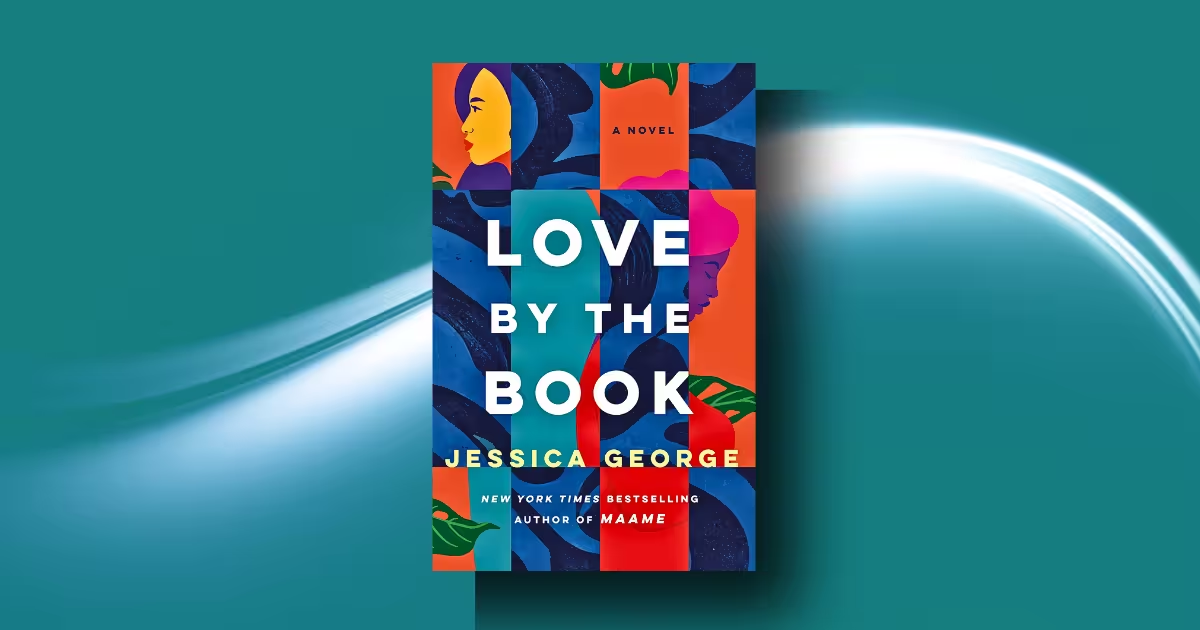

Did you ever wonder why the friendships that once felt like your entire world start to fray just as life demands you show up for yourself in brand-new ways? Jessica George’s Love by the Book doesn’t just ask the question; it hands you the answer in the warm, witty, and unflinchingly honest story of two women who collide at the exact moment they need each other most.
In a world that romanticises romantic love above all else, Love by the Book tenderly insists that the deepest, most restorative love story you can have is the one between two women who choose each other as friends when everything else falls apart.
Love by the Book is best for readers in their late twenties or thirties who’ve felt the slow drift of long-term friendships, introverts who secretly crave one true connection, fans of character-driven women’s fiction like Maame (George’s own debut) or The Joy Luck Club, and anyone who believes platonic love deserves its own spotlight.
It’s perfect for book clubs that love messy, real conversations about identity, family pressure, and what “success” actually looks like.
Not for: Anyone hunting for steamy romance or high-stakes plot twists; this is a slow-burn character study, not a page-turner thriller. If you need constant action or dislike dual timelines and interior monologues, you might find the first act a little quiet.
Table of Contents
1. Introduction
Love by the Book (St. Martin’s Press, April 7, 2026, 336 pages) is Jessica George’s highly anticipated sophomore novel after her New York Times bestselling debut Maame.
Born and raised in London to Ghanaian parents, George studied English Literature at the University of Sheffield and worked in publishing and theatre before writing full-time.
Her books are known for their sharp wit, cultural nuance, and deep empathy for Black British women navigating family expectations, identity, and the quiet revolutions of everyday life.
This one feels like a love letter to the friendships that get us through the messy thirties—exactly when society tells us we should already have it all figured out.
2. Background
There’s no sweeping historical canvas here, but the novel is steeped in very contemporary realities: the loneliness epidemic among adults (a 2023 U.S. Surgeon General advisory called it a public-health crisis comparable to smoking 15 cigarettes a day), the pressure on millennial women to “have it all,” and the unique cultural tightrope walked by first-generation Ghanaian-British daughters.
George draws from her own life and the universal experience of watching childhood friend groups dissolve under the weight of careers, relocations, babies, and break-ups.
The book also quietly nods to the ethics of storytelling—something George has spoken about in interviews regarding her debut—by making one protagonist a blocked author whose next book might mine real lives for fiction.
3. Love by the Book Summary
Six months ago, author Remy Baidoo is riding high.
Her debut novel These Four Friends—a celebration of the decade-long sisterhood she shares with Lin, Nova, and Melissa—has just hit paperback bestseller lists.
In a lively bookstore event, Remy fields questions about female friendship with warmth and vulnerability. She admits she’s an anxious introvert who relies on beta-blockers and her tight-knit circle.
But cracks are already showing.
The group chat “Future MILFs” is still chaotic and loving, yet life is pulling them apart: Lin has accepted a promotion in New York; Melissa is pregnant and house-hunting in Hertfordshire with her devoted husband Felix; Nova is back with her toxic ex David.
Remy’s creative well is dry, and a disastrous one-night stand with a man named Caleb only deepens her isolation.
Meanwhile, Simone Beduah—twenty-nine, Ghanaian-British, and a dedicated Year One teacher at Linwood Primary—appears to have it all together.
She lives for her students ( shows her thoughtfully decorating her classroom after feedback that it felt “cold”), spoils her younger sister Jenni with thoughtful gifts, and enjoys a close, boisterous family life in London.
But Simone harbours a lucrative secret: by night she works as a high-end escort under the name Raven. The money funds her independence and designer pieces she passes off as charity-shop finds.
Everything implodes at the family dinner that opens her storyline. Jenni arrives beaming with her new boyfriend Dominic Addae—only for Simone to realise, in a stomach-dropping moment, that Dominic is the same man she slept with three nights earlier as Caleb.
The one-night stand was supposed to be anonymous; now it’s a family grenade.
When the truth about Simone’s side hustle eventually surfaces (triggered by the overlap and later family confrontation), her tight-knit Ghanaian family—especially her mother Afua and sister Jenni—cuts her off completely. For the first time, Simone feels the crushing weight of loneliness she once dismissed as unnecessary.
The two women literally bump into each other in a London bookstore during a signing for Remy’s paperback.
Simone is prickly and guarded; Remy is raw and needy. Their first interaction is awkward—Simone is there for a quiet escape, Remy is desperately seeking inspiration.
Yet something clicks.
Over the following months, their unlikely friendship blossoms through late-night texts, shared meals, bookstore wanders, and brutally honest conversations. Remy helps Simone process her family estrangement and the shame she feels about her work; Simone becomes Remy’s sounding board for the new novel she’s struggling to write.
The pages Remy drafts start mirroring their real lives in subtle, sometimes uncomfortable ways—raising questions about consent, appropriation, and whether friendship can survive being turned into art.
Tensions peak when secrets spill.
Remy’s one-night stand with Caleb/Dominic is exposed in the worst way possible during a family event. Simone’s escort work becomes public knowledge, costing her the last threads of family approval.
Remy’s original friend group fractures further when Nova’s toxic reconciliation implodes and Melissa’s pregnancy forces practical distance.
Remy hits rock bottom creatively and emotionally, even considering drastic life changes (including a surprising biological revelation tied to a past decision that results in her meeting six-month-old Amelia, the daughter she carried but arranged for others to raise).
Simone, meanwhile, realises she has spent years hiding parts of herself out of fear rather than choice.
The climax forces both women to decide what kind of love they’re willing to fight for. Remy must choose whether to “steal” Simone’s story for her book or find a more ethical path.
Simone must decide if she can forgive her family—and herself—while embracing new honesty in her life, including a tentative, genuine connection with a man named Cillian who sees all of her.
The ending is pure catharsis. Remy and Simone co-author the book together, with Simone proudly claiming her name on the cover—an act of radical self-acceptance that integrates every version of herself: teacher, escort, daughter, friend, and now writer.
Remy embarks on a three-month solo journey that teaches her the difference between solitude and loneliness.
Her original trio “renews their vows” to love each other across distances, proving platonic commitment can be as binding as any marriage.
In the final scene at New Beacon Books, the restored community gathers—old friends and new—while Simone begins a healthier relationship with Cillian and Remy holds her daughter Amelia, at peace with the choices that brought her here.
Friendship, the novel quietly declares, isn’t the consolation prize; it’s the main event.
4. Love by the Book Analysis
4.1 Love by the Book Characters
Remy is complex and deeply relatable—funny, anxious, fiercely loyal, yet terrified of being left behind.
Her growth from desperate people-pleaser to someone who chooses herself is masterful. Simone starts guarded (“prickly” is the word reviewers use), shaped by cultural expectations and her double life, but her vulnerability when family rejects her is heartbreaking.
Their secondary characters shine too: Jenni’s betrayal feels earned and painful; the Future MILFs trio (Lin, Nova, Melissa) are distinct and believable; even Dominic/Caleb serves as a catalyst rather than a villain. George gives every woman interiority—no one is reduced to a plot device.
4.2 Love by the Book Themes
The central theme is platonic love as the most reliable romance.
George contrasts it with romantic relationships that disappoint (Nova’s ex, Simone’s family’s conditional love) and shows how friendship can be chosen daily.
Symbolism abounds: bookstores as safe third spaces, food as love language (jollof rice dinners vs. shared samosas), and the literal “book” Remy writes that becomes their shared story.
The one-night stand overlap symbolises how secrets entangle lives. Motherhood, sex work, cultural duty, and creative ethics are handled with nuance—no easy answers, just honest exploration.
5. Evaluation
The Sense of an Ending is a marvellous meditation on memory; Love by the Book is its warm-hearted, contemporary sibling—a groundbreaking celebration of platonic love that feels both intimate and urgent.
I closed the book with that rare, full-chest feeling of having been truly seen.
Strengths: The dialogue crackles with authenticity (the group chats are laugh-out-loud perfect), the dual timelines weave seamlessly, and George’s Ghanaian-British lens adds rich cultural texture without ever feeling didactic. The humour lands because it’s rooted in pain.
Weaknesses: The ending does tie things up a touch neatly—some readers may find the reconciliation a little wish-fulfilment—but it never feels unearned. Pacing in the first act is deliberately slow to mirror creative block and loneliness.
Impact: Intellectually, it made me reconsider how I prioritise friendships; emotionally, it left me texting my own long-distance best friends at 2 a.m. with gratitude.
Comparison with similar works: It sits beautifully beside Big Friendship by Aminatou Sow and Ann Friedman or The Girls’ Guide to Hunting and Fishing—but with deeper cultural specificity and zero cynicism.
Unlike many “friendship novels” that treat platonic bonds as background, this one puts them front and centre.
6. Personal Insight with Contemporary Educational Relevance
The most powerful angle is adult friendship as a skill we must actively practise, not assume will endure.
A 2024 American Psychological Association study found 61% of adults report chronic loneliness, with women in their thirties hit hardest as life milestones scatter friend groups. Love by the Book shows that new friendships in adulthood are possible—and life-changing—especially when old ones evolve.
It’s a timely lesson for anyone navigating post-pandemic isolation, remote work, or relocation.
In an era when apps promise connection but deliver dopamine hits, George reminds us that real friendship requires showing up, forgiving, and co-creating stories together. (External reference: Surgeon General’s 2023 advisory on loneliness as a public-health crisis )
7. Love by the Book Quotes
- “Love among friends deserves more discussion and praise than it currently gets… To assume a person will always have friends… is a very large gamble.” (Remy’s interview)
- “I now know my mistake was attempting to crack the art of being alone instead of addressing my loneliness.”
- “Dating was like paying your taxes: You don’t want to, but you have to, and you should.”
- “I teach Year One… Is that not where it all begins?” (Simone, capturing her quiet optimism)
- The entire final chapter’s reflection on renewed vows across distances—pure poetry on platonic commitment.
8. Conclusion
Love by the Book is a warm hug and a gentle shove all at once: it celebrates the friendships that shape us while reminding us we can always make new ones.
It’s significant because it treats platonic love with the same reverence usually reserved for romance—and does so with humour, heart, and cultural honesty.
If you’ve ever felt the ache of drifting friendships or wondered whether one true friend is enough, this book is for you. Highly recommended for fans of thoughtful, character-rich contemporary fiction that lingers long after the last page.
I finished this book on a quiet Sunday afternoon and immediately wanted to press it into the hands of every woman I love.
If that’s you—read it. You’ll feel less alone, and maybe even inspired to text that friend you’ve been meaning to reach out to. Friendship really is the love story you can count on.