
Did you ever find yourself scrolling through a “tradwife” (traditional wife, a woman who, often using social media, advocates for a 1950s-style lifestyle, focusing on homemaking, cooking from scratch, and raising children while being submissive to her husband) Instagram feed, watching a woman in a linen apron bake sourdough from scratch, and wonder if the “simple life” is actually a sophisticated trap?
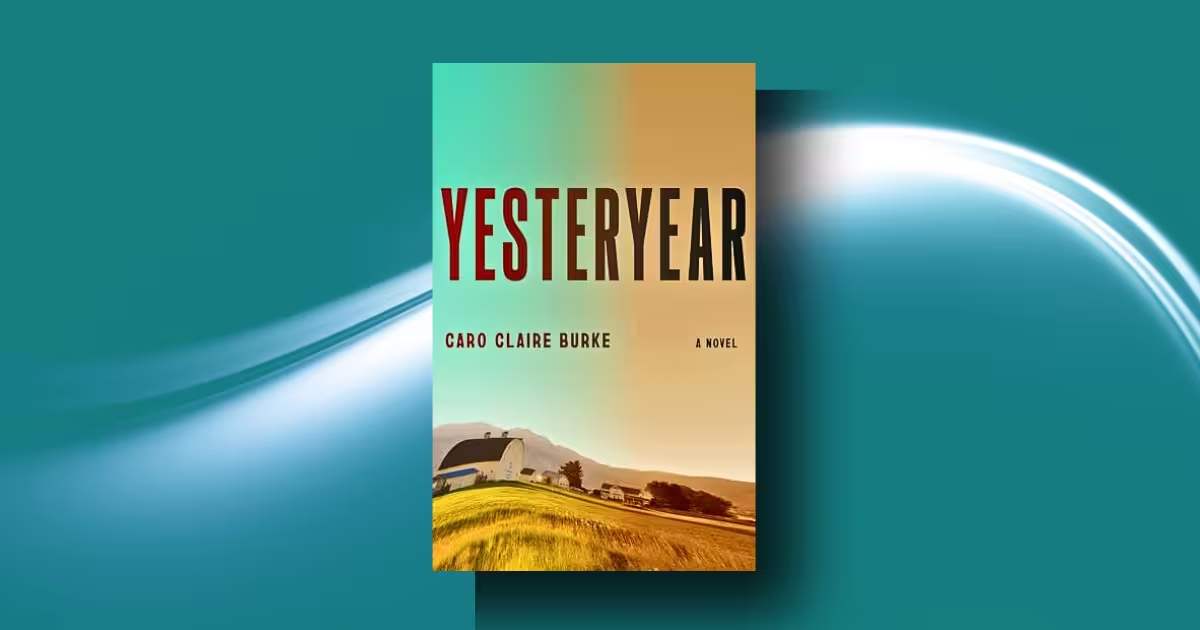
Yesteryear is a razor-sharp, satirical thriller that dismantles the “tradwife” influencer movement by forcing its protagonist to live the grueling, un-Instagrammable reality of the 19th-century frontier she has been monetizing.
Yesteryear is an essential reading for fans of The Handmaid’s Tale or The Stepford Wives who enjoy dark social commentary and complex anti-heroines; however, it is definitely not for readers seeking a cozy, romanticized historical romance or a lighthearted “fish-out-of-water” comedy.
Table of Contents
1. Introduction
Published in April 2026 by Alfred A. Knopf, Yesteryear is the explosive debut novel from Caro Claire Burke. Burke, an MFA graduate and former editor at Katie Couric Media, has crafted a story that feels less like a novel and more like a cultural autopsy of the mid-2020s.
The book has already ignited a firestorm in literary circles, earning a Kirkus Star and a spot as a “GMA Book Club Pick,” with film rights already secured for an Amazon MGM Studios adaptation starring Anne Hathaway.
2. Background
The novel arrives at the height of the “tradwife” phenomenon—a social media subculture where women promote a return to “traditional” gender roles, often involving homeschooling, homesteading, and submission to their husbands.
Burke uses this backdrop to explore the “soft submission” of these influencers, noting that while the Handmaid was a warning, the tradwife is often a “blueprint by the oppressor” designed for the female gaze.
3. Yesteryear Summary
Yesteryear follows Natalie Heller Mills, a high-profile influencer with 8 million followers who lives on the “Yesteryear Ranch” in Idaho.
To the world, she is the “perfect wife” with a “perfect life,” raising six children—Clementine, Samuel, Stetson, Jessa, Junebug, and a sixth on the way—alongside her handsome, cowboy husband Caleb.
Natalie’s brand is built on a romanticized, “sanitized vision of the American past”. She films herself in aprons, kneading dough and teaching her children values she claims are lost to the modern “Angry Women” (her term for coastal elites and feminists).
However, the reality is a facade.
Natalie’s kitchen hides industrial-grade refrigerators; she employs nannies, social media producers like Shannon, and extensive farm staff to maintain the image of self-sufficiency. Caleb is not a rugged pioneer but the soft-handed, aimless heir to a political dynasty, retreating into online conspiracy theories.
Natalie herself is battling severe postpartum depression and a mounting addiction to pills.
The turning point occurs when Shannon, the producer, reveals the abuse and the “fake” nature of the ranch to the public.
Facing a massive PR scandal and legal threats from Caleb’s powerful, patriarch father—who wants Natalie “removed” to save the family name—the couple makes a terrifying choice.
Instead of facing the consequences, Caleb and Natalie decide to turn the “Yesteryear” performance into a literal reality. They cut themselves off from the modern world entirely, destroying their technology and forcing their children into a “living museum” that becomes a prison.
Natalie wakes up one morning and finds the world has changed.
The electricity is gone, the kitchen is warmed only by a “sputtering fire,” and her soft-handed husband is suddenly a “competent farmer”. For the children, this isn’t a game; it is a brutal life of labor where they wash clothes until their “fingers bleed”.
Natalie, initially trapped in her own delusion, believes she has been “transported back in time” to 1855, possibly by God or Satan, to live the life she preached.
The suspense reaches a fever pitch when Natalie, suffering a brutal injury in the woods, discovers a “metallic, unnatural blue” object: a truck.
She realizes this is not time travel—it is a man-made clearing, a curated hell designed by Caleb to hide them from the law.
The Ending Explained:
Clementine, the eldest daughter, realizes the truth and eventually orchestrates an escape.
She takes her siblings to Santa Monica, California, to start a new life away from the cult-like isolation of the ranch.
Natalie and Caleb are left behind in the ruins of their experiment. Natalie is ultimately prosecuted for child neglect and abuse, sentenced to 30 years in prison.
The book ends five years later with an epilogue written by Mary, one of the children, who has written this very narrative to tell the truth about her mother and the “prison” of Yesteryear.
4. Yesteryear Analysis
4.1. Yesteryear Characters
Natalie Heller Mills: An “electric antiheroine”. She is a woman who “is programmed not just to submit, but to consent to her own submission”. Her complexity lies in the gap between her “Online Natalie” persona—optimized for engagement—and the deeply unhappy, isolated mother she is in reality.
Caleb Mills: A study in “gender role confusion”. He fails the patriarchal ideal Natalie craves, becoming a dangerous catalyst for the family’s isolation when his own failures are threatened by the outside world.
Clementine: The moral center and eventual savior. She represents the “resistance” within the home, the child who refuses to accept the performance as reality.
4.2. Yesteryear Themes and Symbolism
The Performance of Womanhood: The book symbolizes the “tradwife” movement as a “quite literal gun to the head”. The apron and the sourdough are symbols of a “blueprint by the oppressor” that silences women’s actual needs.
The Prison of Nostalgia: The “Yesteryear” name itself symbolizes a trap.
Natalie seeks “authenticity through aesthetics” while clinging to the wealth that allows her to ignore the actual hardship of the past.
The “metallic blue truck” is the ultimate symbol of the intrusion of truth into a carefully constructed lie.
5. Evaluation
Burke’s prose is “bitingly funny and occasionally heartbreaking”. It is a “mesmerizing” and “ingenious” social satire.
Strengths: The pacing is “relentlessly fast” and the satirical takedown of influencer culture is “uncannily astute”. The transition from a satire to a psychological thriller is handled with “melancholic wit”.
Weaknesses: Some critics, such as Opinions of a Wolf, feel the book “collapses under the weight of its third act” and offers a “shallow understanding” of fundamentalist Christianity.
Impact: The novel resonates as a “gimlet-eyed look at tradition, fame, [and] faith”. It leaves you feeling that the “perfect life” is often just a “prison” with a better filter.
6. Personal Insight with Contemporary Educational Relevance
The terrifying brilliance of Yesteryear lies in how it mirrors the actual 2026 zeitgeist.
Statistical data from recent social media trends shows that while only a small percentage of women identify as “tradwives,” their content reaches millions.
This creates a “universe of reinforcement” where images of domestic bliss are used to mask the “child care crisis” and the “wage gap”.
Burke’s work serves as a vital educational tool on “media literacy,” teaching us that what we see on Instagram is a “curated performance” often designed to make women “relent to [their] own disappearance with silence and a smile”.
7. Yesteryear Quotes
- “This is the last day of the life I imagined for myself.”
- “Perfect wife, perfect life? Think again.”
- “The tradwife was designed as a blueprint by the oppressor.”
- “I hear myself whisper—no, whimper—aloud… ‘Truck’.”
- “I wrote the ending with you in mind.”
8. Conclusion
Yesteryear is a “stunning debut” that will dominate book clubs for years to come. It is a “gory tale of a tradwife’s comeuppance” that also manages to be “intensely humane”.
Recommendation: I highly recommend this for fans of “Dark Academia” and “autofiction,” as well as anyone who has ever felt the toxic weight of social media perfection. It is a cautionary tale about what happens when we try to live in the past to escape the present.
The Dark Reality of ‘Tradwife’ Influencers
This video explores the rise of the “tradwife” movement on social media, providing essential cultural context to the themes of performance and ideology that Caro Claire Burke satirizes in her novel.







