
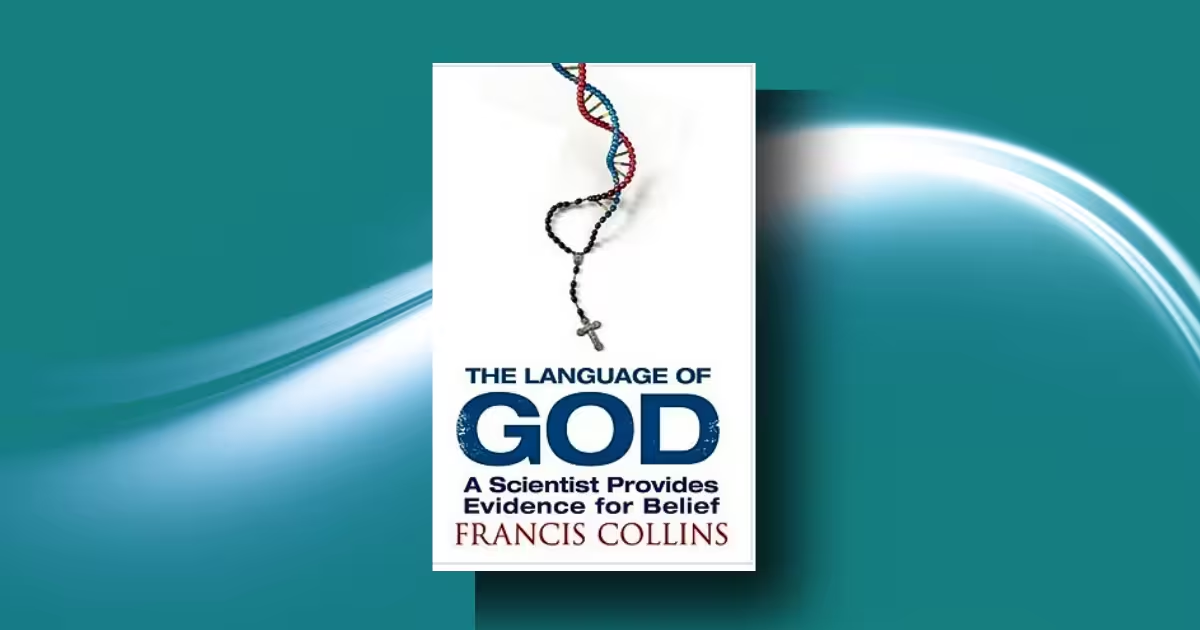
Do you ever wonder how the same brilliant mind that cracked the human genome—three billion letters of DNA code—could also fall to its knees in worship of a personal God? That’s exactly what happened to Francis S. Collins, and The Language of God: A Scientist Presents Evidence for Belief shows you why his journey from atheism to faith feels so refreshingly honest in our divided world.
The Language of God is perfect for curious skeptics who love science but feel a quiet tug toward something bigger, for Christians tired of the “science versus faith” shouting match, and for anyone in Bangladesh or beyond who’s ever sat under a monsoon sky wondering if the universe’s elegance points to a Designer.
It’s ideal if you’re a student, doctor, parent, or seeker craving intellectual honesty without dogma.
It’s not for rigid young-earth creationists who demand Genesis as a biology textbook, nor for militant atheists who dismiss all spiritual longing as delusion. If you want pure polemic or zero personal vulnerability, you’ll bounce off it.
But if you’re open to a thoughtful bridge between the lab and the soul, this one sticks with you long after the last page.
Table of Contents
1. Introduction
The Language of God: A Scientist Presents Evidence for Belief by Francis S. Collins hit shelves in July 2006 from Free Press (Simon & Schuster).
At 273 pages (plus appendix), it’s a slim but powerful blend of memoir, science popularization, and gentle apologetics. Collins, born April 14, 1950, in Staunton, Virginia, is no ordinary author.
He earned a Ph.D. in physical chemistry from Yale and an M.D. from UNC, then led the international Human Genome Project from 1993 to 2003—delivering the first draft in 2000 alongside President Clinton.
Later, he directed the National Institutes of Health for over a decade. A rigorous scientist who discovered genes for cystic fibrosis, neurofibromatosis, and Huntington’s disease, Collins is also an evangelical Christian who came to faith at 27.
The Language of God’s central thesis, laid out right in the introduction, is crystal clear: “There is no conflict in being a rigorous scientist and a person who believes in a God who takes a personal interest in each one of us.” Science explores the natural world; faith touches the spiritual.
They are complementary, not enemies. Collins wrote it because the “rising cacophony of antagonistic voices” (Dawkins on one side, creationists on the other) leaves sincere people confused.
He wants to show that belief in God can be entirely rational—and that the human genome itself feels like “the language in which God created life.”
I picked this up on a humid evening in Bangladesh, after a long day at the hospital where I volunteer. As someone raised in a culture where faith and daily life intertwine yet modern science pulls hard in another direction, Collins’ voice felt like a cool breeze.
He doesn’t preach; he invites. And by the end, I didn’t just understand his argument—I felt it.
2. The Language of God Summary
Collins structures the book like a careful laboratory experiment: personal story first, then objections, then evidence, then synthesis.
He gives everything away—no spoilers held back—so you walk away knowing exactly how he reconciles the Big Bang, evolution, and a loving God.
The appendix on bioethics (p. 250+) is gold for our era: stem cells, genetic privacy, behavioral genetics. Collins warns against reducing humans to DNA while celebrating how genomics can heal. He quotes twin studies showing heredity’s role in personality but insists free will and soul remain.
Throughout, Collins returns to the genome as “the language of God.” On the White House stage in 2000 he said: “We have caught the first glimpse of our own instruction book, previously known only to God.” That awe never left him.
By the end, Collins has walked you through 14 billion years of cosmic history, 3.8 billion years of life, and 200,000 years of Homo sapiens—and left you convinced that science illuminates God’s method while faith gives it meaning.
Chapter 1: From Atheism to Belief
Collins opens with his unconventional childhood on a Shenandoah Valley dirt farm, raised by freethinking parents who prioritized ideas, music, and self-reliance over faith.
Home-schooled by his perceptive mother, he developed a lifelong joy of learning. At 14, he discovered the ordered beauty of chemistry and physics, embracing a reductionist worldview while dismissing biology as rote memorization.
In college, he shifted from vague theism to agnosticism, then full atheism, influenced by scientific giants like Einstein and the elegance of quantum mechanics, which seemed to explain everything without God.
During his Ph.D. in physical chemistry at Yale, he grew disillusioned with the field’s narrow focus. A biochemistry course revealed the digital elegance of DNA, RNA, and the genetic code, prompting a switch to medical school at the University of North Carolina.
There, encounters with patients—especially those with genetic diseases and dying individuals whose faith brought profound comfort—challenged his atheism. A terminally ill woman’s direct question about his beliefs forced him to confront his “willful blindness.”
Reading C.S. Lewis’s Mere Christianity was pivotal.
The Moral Law argument convinced him: the universal human sense of right and wrong (invoked in everyday disagreements and altruism) cannot be dismissed as cultural or evolutionary byproduct. Lewis dismantles sociobiology (e.g., indirect reproductive benefits fail to explain selfless agape love, as in Oskar Schindler’s actions or the Sufi scorpion story).
The Moral Law points to a transcendent, holy, theist God—not a deist one.
Collins describes his “terrifying” realization that faith was rational, leading him to “leap” into belief at age 26. Science explores nature; God is in the spiritual realm. Both enrich human experience, with no inherent conflict.
The chapter ends by questioning whether a scientist can hold both worldviews.
Chapter 2: The War of the Worldviews
The Language of God addresses the four most vexing philosophical objections that trouble skeptics and believers alike, drawing heavily on C.S. Lewis while sharing personal reflections.
1 . Wish fulfillment (Isn’t God just wish fulfillment? ): The universal human longing for the sacred (Lewis’s “joy”) is not mere psychology or Freud’s father-figure projection. It does not match the demanding biblical God. Creatures have desires with corresponding satisfactions; this “God-shaped vacuum” (Annie Dillard) points beyond the material world to another.
2. Harm done in religion’s name (What about harm done in religion’s name?): Religion has inspired immense good (Moses, Wilberforce, MLK). The church comprises fallen people; judge the pure “water” of faith, not the “rusty containers” of flawed humans. Atheist regimes (Soviet Union, Mao’s China) caused comparable or greater atrocities by denying higher authority.
3. Suffering (Why would a loving God allow suffering? ): Much evil is human-caused via free will; God does not routinely override it or natural laws to preserve order and moral choice.
Natural disasters and disease arise from an evolutionary universe. Suffering builds character and draws people closer to God (personal example of his daughter’s rape; Bonhoeffer’s prison writings). God’s plan prioritizes growth over constant happiness; Lewis notes God “shouts in our pains.”
4. Miracles (How can a rational scientist believe in miracles? ): Defined as supernatural events inexplicable by natural laws. They are rare to avoid chaos. Lewis argues they reveal God’s relationship to creation. Bayesian reasoning (Collins’s card-drawing parable) shows rational assessment is possible. Skepticism is healthy; miracles do not conflict with science if God exists outside nature.
The Big Bang itself borders on miraculous.
Doubt is inherent to faith (Tillich). Collins concludes that compartmentalizing science and faith is unsatisfying; a harmonious synthesis is possible and enriching.
Chapter 3: The Origins of the Universe
Collins explores cosmology’s harmony with faith. Kant’s awe at the starry heavens parallels the Moral Law. Science is self-correcting and progressive, with revolutions (relativity, quantum mechanics) overturning prior views.
The steady-state universe yielded to the Big Bang: Hubble’s 1929 observation of galactic recession, confirmed by Penzias and Wilson’s 1965 cosmic microwave background and consistent element ratios (hydrogen, deuterium, helium). The universe began ~14 billion years ago from a singularity of pure energy; physics breaks down at t=0.
“What came before?” points to a Creator outside time and space. Our solar system formed ~5 billion years ago from a second- or third-generation star; Earth cooled and became life-friendly ~4 billion years ago. We are literally “stardust” from supernovae.
The Anthropic Principle highlights fine-tuning: 15 physical constants (gravity, nuclear forces, speed of light, etc.) are exquisitely calibrated for a stable universe and life. Slight changes would preclude atoms, stars, or complexity. Three options:
- Multiverse (infinite universes; ours is one lucky case)—untestable, violates Occam’s Razor.
- Pure luck (one universe, improbable coincidence).
- Creator intentionally tuned the parameters.
Option 3 is most plausible.
Quantum uncertainty (Heisenberg) overturned Laplacean determinism, leaving room for God. Einstein and others glimpsed “the mind of God” in mathematics. The Big Bang aligns with Genesis (“In the beginning…”) and solves the origin question.
Augustine warned against literalism that conflicts with evidence; poetic language in Genesis allows harmony. Science reveals God’s handiwork; faith interprets its meaning.
Chapter 4: Life on Earth – Of Microbes and Man
The Language of God presents the overwhelming scientific evidence for the evolutionary history of life on Earth as a continuous, branching process fully compatible with belief in God.
Earth formed about 4.5 billion years ago from stellar debris. Simple microbial life emerged by 3.8 billion years ago in the form of single-celled prokaryotes.
The fossil record, radiometric dating, and molecular clocks document a clear progression: photosynthetic cyanobacteria oxygenated the atmosphere around 2.4 billion years ago, followed by the Cambrian explosion of multicellular animals (~540 million years ago), the colonization of land by plants and amphibians (~400 million years ago), reptiles, mammals, primates, and finally anatomically modern humans appearing in Africa roughly 150,000–200,000 years ago.
Darwin’s mechanism of natural selection acting on random genetic variation is rigorously supported by multiple independent lines of evidence: the fossil record’s transitional forms (e.g., Tiktaalik, Archaeopteryx), comparative anatomy (homologous structures), biogeography, and—most powerfully—molecular genetics.
All life shares the same DNA code, the same 20 amino acids, and the same ribosomal machinery.
Humans share ~98.8% of our DNA with chimpanzees, and the pattern of shared genetic “mistakes” (pseudogenes, chromosome fusions, endogenous retroviral insertions at identical genomic locations across species) forms an undeniable tree of common descent.
Collins emphasizes that evolution is not “pure chance”; it is a lawful, elegant process operating within the physical constants God established. Far from diminishing human dignity, this view reveals a Creator who chose a gradual, creative mechanism over billions of years rather than instantaneous fiat.
The chapter firmly rejects any notion that accepting evolution requires abandoning faith; instead, it invites awe at the unity of all life as part of God’s purposeful design.
Chapter 5: Deciphering God’s Instruction Book – The Lessons of the Human Genome
Drawing directly from his leadership of the international Human Genome Project, Collins describes the 3-billion-letter DNA text as the most remarkable “instruction book” ever read by humans.
Completed in 2003, the sequence revealed only ~20,000–25,000 protein-coding genes—far fewer than expected and similar in number to worms or flies—showing that human complexity arises from intricate gene regulation rather than gene count.
Most of the genome (98–99%) was once called “junk DNA” but is now known to contain critical regulatory elements, non-coding RNAs, and evolutionary remnants.
The genome provides irrefutable molecular evidence for evolution and common ancestry. Humans and chimpanzees differ by only 1.2% in DNA sequence, but the shared “errors” are decisive: both species have a broken vitamin-C gene at the identical location, and human chromosome 2 is a fusion of two ancestral ape chromosomes (with telomere and centromere remnants in the middle).
Endogenous retroviruses—viral DNA inserted into the genome millions of years ago—appear at exactly the same positions in humans and other primates, forming a nested hierarchy that matches the fossil record perfectly.
Collins calls DNA “the language of God”: a digital, information-rich code written in four letters (A, C, G, T-adenine, cytosine, guanine, and thymine—that form the “rungs” of DNA’s double helix) that is elegant, error-correcting, and capable of vast creativity through mutation and selection.
These four letters constitute the digital, cryptographic code in which the instructions for building a human being are written. Their specific order along the DNA molecule carries all the hereditary information, making them the fundamental “alphabet” of the language of life.
He stresses that this does not reduce humans to “mere machines.” The genome is a testament to God’s creativity, not a refutation of Him.
The project itself felt like an act of worship—reading the very script God used to create life. Ethical challenges arise (covered in the Appendix), but the core message is harmony: science deciphers the book; faith meets its Author.
Chapter 6: Genesis, Galileo, and Darwin
The Language of God examines the historical tension between science and literal readings of Scripture, using Galileo’s heliocentrism and Darwin’s evolution as case studies.
The Church once condemned Galileo for contradicting a literal interpretation of Joshua 10:12–13 (On the day the Lord gave the Amorites over to Israel, Joshua said to the Lord in the presence of Israel: “Sun, stand still over Gibeon,
and you, moon, over the Valley of Aijalon.” So the sun stood still, and the moon stopped, till the nation avenged itself on its enemies, as it is written in the Book of Jashar. The sun stopped in the middle of the sky and delayed going down about a full day), yet later admitted error and apologized.
Similarly, many Christians initially rejected Darwin, fearing evolution undermined human uniqueness.
Collins advocates a non-literal, literary reading of Genesis 1–2. The text is poetic framework or ancient cosmology, not a scientific chronology.
Augustine (4th–5th century) explicitly warned against literal interpretations that conflict with observed reality, lest unbelievers ridicule Scripture. The “days” of creation can be long epochs or a literary device; the “image of God” refers to spiritual and moral capacities (the Moral Law, self-awareness, relationship with the Creator), not physical form or instantaneous appearance.
Darwin’s theory does not negate God; it reveals the mechanism by which God created.
Collins quotes Galileo: the Bible teaches “how to go to heaven, not how the heavens go.” Evolution is fully compatible with orthodox Christian faith once the false dichotomy is removed. Special creation of the human soul remains possible within an evolutionary framework.
The chapter urges humility: both science and faith are truth-seeking enterprises. When they appear to conflict, the fault usually lies in overly rigid interpretations of one or the other. True harmony emerges when Genesis is read as inspired poetry revealing theological truths while science reveals the “how” of creation.
Chapter 7: Option 1 – Atheism and Agnosticism (When Science Tramps Faith)
Collins critiques the view that science, particularly evolution, renders faith obsolete. Prominent atheists like Richard Dawkins claim Darwin made God “superfluous,” but Collins shows this is a philosophical leap, not a scientific conclusion.
Science excels at “how” questions (mechanisms, natural laws) but is silent on “why” questions (purpose, meaning, morality). The Moral Law and the fine-tuning of the universe remain unexplained by materialistic atheism.
Atheism struggles to ground objective morality; if there is no transcendent source, right and wrong become mere cultural preferences or evolutionary by-products, undermining the very basis for condemning evil.
Agnosticism often functions as “willful blindness”—a comfortable avoidance rather than rigorous examination.
Collins notes that many leading scientists (including 40% in repeated surveys) retain belief in a personal God who answers prayer, disproving the myth that science inevitably leads to atheism.
Evolution is a beautiful, God-ordained process, not a refutation of Him.
Collins shares personal encounters with brilliant atheists whose worldview leaves them without ultimate meaning or hope. He concludes that atheism and agnosticism fail both intellectually (they cannot account for the origin of the universe, the Moral Law, or the existence of beauty and consciousness) and existentially (they offer no comfort in suffering or death).
Science does not “tramp” faith; it complements it when properly understood.
Chapter 8: Option 2 – Creationism (When Faith Trumps Science)
Collins respectfully but firmly dismantles young-earth creationism—the belief that Earth is ~6,000–10,000 years old, species were created in their present forms, and a global flood explains the fossil record.
He presents multiple independent lines of evidence that make this view untenable: starlight from galaxies billions of light-years away, annual ice-core layers in Greenland and Antarctica reaching 800,000+ years, tree-ring chronologies, coral reef growth rates, and radiometric dating of rocks and meteorites all converge on an ancient Earth and universe.
“Appearance of age” (God creating a world that looks old) implies divine deception, which contradicts God’s character.
Flood geology fails spectacularly: it cannot explain the orderly fossil succession, the existence of undisturbed coral reefs or evaporite deposits, or the geographic distribution of species.
Plate tectonics and continental drift, confirmed by magnetic striping and GPS measurements, require millions of years.
Collins argues that insisting faith must override clear scientific evidence damages both: it drives thoughtful people away from Christianity and forces believers into intellectual dishonesty.
Faith should not fear truth; God is the author of both the book of Scripture and the book of nature. Creationism’s literalism repeats the Galileo error and ultimately weakens the witness of the Church.
He urges a mature faith that embraces the evidence God has placed in creation.
Chapter 9: Option 3 – Intelligent Design (When Science Needs Divine Help)
Collins examines in The Language of God the Intelligent Design (ID) movement, which accepts an old Earth and common descent but claims certain biological structures are “irreducibly complex” and cannot evolve by natural selection, requiring direct divine intervention.
Michael Behe’s examples (bacterial flagellum, blood-clotting cascade, immune system) are central.
Collins demonstrates that these structures are not irreducibly complex; each has evolutionary precursors or can be built stepwise through co-option of existing parts (exaptation).
Scientific literature has since shown plausible evolutionary pathways for every ID “icon.” ID is not testable or falsifiable by scientific methods; it is a philosophical or theological claim that inserts God into gaps in current knowledge.
The 2005 Kitzmiller v. Dover trial legally classified ID as religion, not science, because it invokes a supernatural designer.
Collins warns that ID is a “God of the gaps” strategy: as science closes gaps (as it has for many former examples), the need for God appears to shrink. This is theologically dangerous and scientifically unnecessary. God is not limited to acting only where natural laws fail; He can sovereignly choose natural processes (including evolution) as His creative method.
ID fails to account for the genome’s evidence of common descent and “imperfect” design (e.g., the recurrent laryngeal nerve, pseudogenes). Collins concludes that while ID rightly affirms design, it unnecessarily pits faith against science. The superior alternative is BioLogos.
Chapter 10: Option 4 – BioLogos (Science and Faith in Harmony)
Collins presents his own position—BioLogos (or theistic evolution)—as the most intellectually satisfying and theologically coherent synthesis.
God created the universe with finely tuned physical laws that made the Big Bang, the formation of stars and planets, the origin of life, and subsequent biological evolution not only possible but virtually inevitable.
Evolution is God’s chosen mechanism: a creative, ongoing process that unfolds over billions of years, culminating in creatures capable of knowing and loving their Creator.
The human genome, with its layered record of common descent, is direct evidence of this process.
God is not absent or limited to occasional interventions; He is the sustainer of natural laws and the source of the Moral Law and human spiritual capacity. The soul and the image of God are not in conflict with evolutionary biology; they represent God’s special relational gift to humanity.
BioLogos rejects both atheistic scientism and anti-scientific fundamentalism. It affirms the full authority of Scripture when read in its literary and historical context and the full reliability of science when practiced honestly. Collins shows how this view resolves every major objection: evolution does not make God unnecessary; suffering and death are part of a fallen yet evolving creation; miracles remain possible but rare.
He shares how leading the genome project felt like reading “God’s instruction book” in real time—an act of worship.
BioLogos (now an active organization) invites believers and scientists to stop the culture war and embrace a richer, unified worldview. It is the option that honors both the evidence in nature and the revelation in Scripture.
Chapter 11: Truth Seekers
Collins concludes with an urgent call to honest, humble truth-seeking that integrates science and faith without compartmentalization or conflict.
He shares inspiring stories: an impoverished Nigerian village where faith and medical science worked hand-in-hand, scientists who experience their work as spiritual vocation, and ordinary believers who find deeper wonder in both the genome and the Gospels.
He addresses lingering practical questions—bioethics (stem-cell research, cloning, genetic enhancement) are explored in the Appendix with nuanced, evidence-based Christian reflection.
The central thesis is reaffirmed: there is no inherent war between science and faith. Both are God-given faculties for discovering truth. The universe’s fine-tuning, the Moral Law, the elegance of DNA, and the human longing for the transcendent all point to a personal Creator who desires relationship.
Collins openly shares his own ongoing journey, admitting doubt is part of faith (quoting Tillich). He encourages readers to examine the evidence without prejudice, to read both “books” (nature and Scripture), and to live with integrity.
The Language of God ends on a note of hope and invitation: a richly satisfying harmony is not only possible but already realized in the lives of countless scientists and believers.
Truth seekers who embrace both worldviews experience life more fully—awed by the cosmos, grounded in moral reality, and drawn into relationship with the God who spoke the universe into being and who wrote the language of life in DNA.
The final message is clear: do not choose between science and faith—embrace both, for they ultimately point to the same Author.
3. Critical Analysis
The Language of God is marvelous—groundbreaking in its gentle power. Collins doesn’t shout; he reasons with the quiet confidence of a man who has sequenced humanity’s blueprint and still kneels in prayer.
His personal vulnerability—admitting “willful blindness,” sharing his daughter’s trauma—makes The Language of God feel human, not academic. As someone who’s wrestled with faith in a science-driven world, I closed it with tears and gratitude. It’s poignant, important, and exactly what our polarized age needs.
Does he prove God? No—and he never claims to. Faith requires that “leap into the Word” (p. 31, quoting Vanauken). But he dismantles the false dichotomy brilliantly.
The Moral Law argument, drawn straight from Lewis, still feels airtight to me: evolution explains how we behave selfishly, but not why we feel crushing guilt when we do. The genome as divine poetry? Yes. Collins supports every claim with data—HGP results, fossil records, cosmological constants—yet never loses the wonder.
Critics (Dawkins fans, strict creationists) call it too conciliatory. Fair enough. The Language of God isn’t exhaustive on every objection, and some Bayesian miracle talk feels hand-wavy. But that’s its strength: Collins models humility.
In Bangladesh, where science education clashes with cultural faith, The Language of God feels like a lifeline. It showed me I don’t have to choose between my microscope and my mosque—or church, or temple. Science and spirit enrich each other.
Reading it in 2026, post-COVID and AI boom, its message is even more urgent. Genomics is now everyday medicine; Collins’ bioethics warnings ring prophetic. This is no dusty 2006 relic—it’s a timeless invitation to intellectual honesty.
4. 10 top lessons from The Language of God at a glance:
- Science and faith are not enemies. A rigorous scientist can rationally believe in a personal God; the two worldviews complement rather than contradict each other.
- The Moral Law points to God. The universal sense of right and wrong, altruism, and conscience cannot be fully explained by evolution or culture—it’s a signpost to a transcendent Moral Law Giver.
- The Big Bang requires a Creator. The universe had a definite beginning out of nothing; science cannot explain what came “before,” making a supernatural Creator the most reasonable explanation.
- The Anthropic Principle suggests fine-tuning. Over fifteen physical constants are exquisitely set to allow life; this extreme improbability hints at intelligent design by God.
- Evolution is God’s elegant mechanism. Theistic evolution (BioLogos) accepts Darwinian evolution as real while affirming God as the author who worked through natural selection over billions of years.
- Young Earth Creationism is intellectually bankrupt. Insisting on a literal six‑day, 6,000‑year‑old earth contradicts overwhelming evidence from physics, geology, and biology, and damages faith by forcing a false choice.
- Intelligent Design (ID) fails as science. ID’s “irreducible complexity” arguments have been undermined by discoveries of evolutionary pathways (e.g., bacterial flagellum, blood clotting); ID is a “God of the gaps” theory.
- DNA is a digital language. The 3‑billion‑letter code (A, C, G, T) in the human genome carries instructions for life; sequencing it was “reading the language of God” and an occasion for worship.
- Suffering has purpose, not easy answers. Free will, natural laws, and spiritual growth explain much pain; God’s plan is not our temporary comfort but eternal relationship, and suffering can be a “megaphone to rouse a deaf world.”
- Jesus’ resurrection is historically credible. Collins moved from atheism to Christianity not just by philosophy but by examining eyewitness gospel accounts and non‑Christian historians, concluding that Christ’s claim to be God demands a verdict.
5. Comparison with Similar Works
Collins leans heavily on C.S. Lewis (Mere Christianity, The Problem of Pain)—and openly admits it. If you loved Lewis, you’ll hear his echo on every page. It’s like Lewis updated for the genome era.
Compare to Richard Dawkins’ The God Delusion (2006, same year!): Collins directly counters Dawkins’ “faith is belief despite evidence.” Dawkins is combative; Collins is conversational.
John Polkinghorne (physicist-priest) covers similar ground but more technically. Collins is more accessible.
For Bangladeshi readers, it pairs beautifully with local thinkers who wrestle science and spirituality—think of the harmony in Sufi poetry or modern Islamic science dialogues. It outshines dry textbooks and angry atheist manifestos alike.
6. Conclusion
Read The Language of God if you’re tired of culture-war noise and hungry for synthesis. It’s for general audiences—scientists, believers, doubters—yet specialists will admire its rigor.
I recommend it to every medical student, every parent teaching kids both Bible and Darwin, every curious soul in Chattogram staring at the Bay of Bengal wondering “Why is there something rather than nothing?”
Francis Collins didn’t just map our DNA; he reminded us it sings. In a world that feels increasingly fractured, The Language of God is proof that the language of God and the language of science can harmonize into something beautiful. I finished it feeling seen, hopeful, and—yes—believing a little more deeply.
Pick it up. Your mind and heart will thank you.
What do you think—does science point you toward or away from faith? Drop your thoughts below. I’d love to discuss over virtual chai.







