
Last updated on May 2nd, 2026 at 03:41 pm
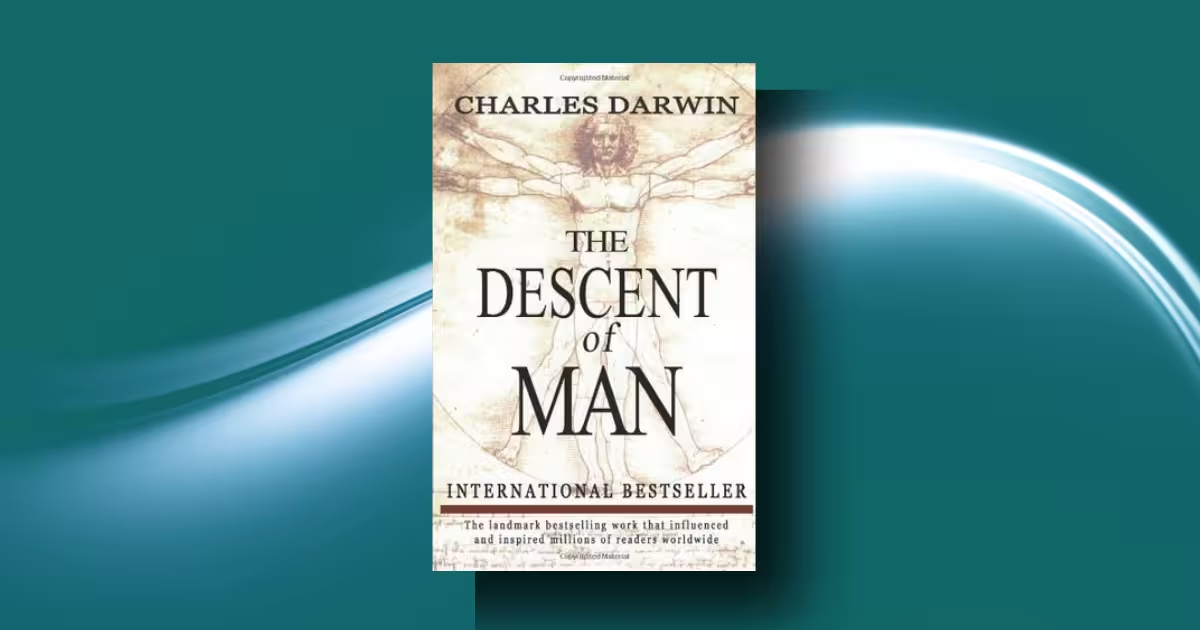
Why do we so desperately cling to the illusion that humanity was uniquely plucked from the heavens, rather than molded by the very same brutal, beautiful forces that shaped the rest of the natural world? For centuries, human hubris placed us on a solitary pedestal, entirely separate from the animal kingdom. But stepping into the meticulously researched world of Charles Darwin’s secondary magnum opus, The Descent of Man, shatters this comforting myth.
If you are searching for the definitive text that dismantled Victorian orthodoxies and laid the foundation for modern evolutionary psychology, sociobiology, and physical anthropology, you have arrived at the ultimate source.
The Descent of Man is best for evolutionary biology enthusiasts, historians of science, sociologists, and curious minds who want to understand the raw, unvarnished biological roots of human intellect, morality, and sexuality. It is essential for anyone looking to comprehend the deep mechanics of sexual dimorphism and mate choice.
The Descent of Man is not for readers seeking a fast-paced, modern scientific thriller, or those who firmly hold onto rigid, special-creationist views without an openness to comparative anatomical and biological evidence.
As a reader navigating the modern digital landscape, it is rare to find a text that so profoundly answers the core questions of our existence. This exhaustive review is designed to provide you with a comprehensive, thematic, and deeply personal synthesis of the work, ensuring you grasp the full weight of its arguments without ever needing to leaf through the original manuscript.
Table of Contents
1. Introduction
The book in focus is the seminal masterpiece The Descent of Man, and Selection in Relation to Sex by the revolutionary British naturalist, Charles Darwin. Originally published in 1871 by John Murray in London, the first issue consisted of a mere 2,500 copies retailing for 24 shillings.
Context of The Descent of Man
The book is a cornerstone in the genre of evolutionary biology and natural history. Darwin, already a towering figure due to his 1859 publication of On the Origin of Species, had long delayed publishing his thoughts on human evolution.
He possessed a lively apprehension of the trouble he was inviting, knowing that the frank materialism of his theories left no role for a Deity. However, by 1871, the intellectual climate was shifting.
As Darwin noted, quoting Carl Vogt’s 1869 address in Geneva, “personne, en Europe au moins, n’ose plus soutenir la création indépendante et de toutes pièces, des espèces” (no one in Europe, at least, dares to maintain the independent and piecemeal creation of species anymore).
Purpose of The Descent of Man
The central thesis of the book is straightforward yet earth-shattering for its time. Darwin’s sole object was to consider three things: firstly, whether man, like every other species, is descended from some pre-existing form; secondly, the manner of his development; and thirdly, the value of the differences between the so-called races of man.
Background
Darwin’s methodological approach was a marvel of the Victorian era.
He did not formulate his theories in a vacuum. Instead, he relied heavily on his earlier “M and N notebooks,” written between 1838 and 1839, which covered memory, habit, imagination, language, and animal intelligence.
Though he was terrified of the religious and social backlash—having seen peers like the surgeon Lawrence legally and socially punished for arguing that the mind is material—he ultimately braved the storm to present his massive accumulation of facts.
2. The Descent of Man Summary
To say this book is merely about apes turning into humans is a gross oversimplification. Darwin structured this immense work into two distinct but deeply connected parts: Part I: On the Descent of Man, and Part II: Sexual Selection.
Part I: The Evidence of the Descent of Man
Darwin immediately sets out to prove that the bodily structure of man shows unmistakable traces of descent from a lower form. He completely shatters the barrier between humans and the “beasts” through comparative anatomy and physiology:
Homologous Structures: Man is constructed on the same general type or model as other mammals. Every bone in the human skeleton, as well as muscles, nerves, blood-vessels, and internal viscera, can be compared with corresponding parts in a monkey, bat, or seal.
Brain Anatomy: Darwin points out, referencing anatomists like Huxley and Bischoff, that every chief fissure and fold in the human brain has an analogy in that of the orangutan.
Shared Diseases and Physiology: Man is liable to receive from the lower animals, and to communicate to them, diseases such as hydrophobia, variola, and the glanders. This fact proves the close similarity of their tissues and blood far more plainly than chemical analysis.
The Habits of Monkeys: Darwin notes that monkeys suffer from non-contagious diseases similar to ours.
The Cebus Azarae in Paraguay was observed by Rengger to be liable to catarrh, apoplexy, and cataracts. Furthermore, monkeys have a strong taste for tea, coffee, and spirituous liquors, and will even smoke tobacco.
Intoxication in Primates: In a remarkably humanizing detail, Darwin recounts Brehm’s observation of wild baboons in north-eastern Africa being caught using strong beer.
Once drunk, the baboons had aching heads the next morning, wore a pitiable expression, and turned away from beer with disgust, preferring the juice of lemons.
An American monkey (an Ateles) after getting drunk on brandy, would never touch it again.
Biological Rhythms and Parasites: Man is infested with internal and external parasites belonging to the same genera or families as those infesting other mammals. Human developmental processes, like gestation, and the duration of various diseases, follow lunar periods, just like in other mammals and even insects.
Reproduction and Healing: The entire process of reproduction, from the first act of courtship by the male to the birth and nurturing of the young, is strikingly the same in all mammals. Human wounds are repaired by the same healing process as other animals, and stumps of amputated limbs occasionally possess some power of regeneration.
The Mental Powers of Man
In chapters 2 and 3, Darwin ventures into psychology. He argues that the difference in mental power between the highest ape and the lowest savage is immense, yet it is a difference of degree, not of kind. He brilliantly catalogs shared emotional and intellectual traits:
Shared Faculties: Animals and humans share instincts, emotions, curiosity, imitation, attention, memory, and even imagination and reason.
The Moral Sense: Darwin tackles the origin of sociability, arguing that man is a social animal whose moral tendencies were transmitted and shaped through natural selection, emphasizing the struggle between opposed instincts.
The Races of Man
Chapter 7 addresses the origins of human races. Darwin investigates whether the so-called races of man should be ranked as distinct species, diving into the arguments of monogenists (single origin) versus polygenists (multiple origins).
He points out the numerous points of resemblance in body and mind between the most distinct races of man, ultimately showing how crossing, the direct action of the conditions of life, and most importantly, sexual selection, differentiated human populations.
Part II: Sexual Selection
This section is of an “inordinate length,” taking up a massive portion of the text. Why? Because Darwin had a specific problem: natural selection (survival of the fittest) couldn’t explain why a peacock had a massive, cumbersome, brightly colored tail that made it highly visible to predators.
The Principle: Darwin introduces Sexual Selection as the mechanism where certain traits in males (or less commonly, females) make them more successful in mating, leading to sexual dimorphism.
Male Competition and Female Choice: He catalogues the eagerness of the male, the variability of the male, and the choice exerted by the female.
Across the Animal Kingdom: He painstakingly lists secondary sexual characters across Annelids, Crustacea, Spiders, Insects (Diptera, Hemiptera, Lepidoptera), Fishes, Amphibians, Reptiles, Birds, and Mammals.
Application to Humans: Finally, in chapters 19 and 20, he applies sexual selection to humanity, explaining secondary sexual characters in man and how mate choice shaped our physical appearances across different geographic regions.
3. The Descent of Man Analysis
The Descent of Man is an outstanding, groundbreaking, and poignant triumph of the scientific method.
As a reader, I felt a deep sense of awe at the sheer audacity Darwin possessed to publish this in 1871. He systematically dismantled the metaphysical arguments of his time, proving that humanity is an integral part of the biological continuum.
Darwin supports his arguments with a crushing avalanche of evidence. His comparative method is practically flawless for his era. By deliberately collecting comparative information for large assemblies of different organisms, he documented broad trends that correlated with environmental circumstances.
However, he was operating with a massive blind spot: he had no knowledge of Mendelian genetics.
The Blending Inheritance Flaw: The conventional wisdom of his time dictated that inheritance worked by a blending of maternal and paternal characters. Under blending inheritance, variation cannot be maintained; the variance of a trait is halved in a single generation. Darwin was troubled by this inconsistency but had to press on regardless.
Hormones and Sex Determination: In his massive section on sexual selection, Darwin was completely ignorant of sex-linked genes and chromosomes. He also lacked knowledge of the role of hormones in producing secondary sexual characteristics, leaving him to only guess at the specific biological mechanisms producing differences between males and females.
Despite these gaps, his ecological intuition was so sharp that his overarching thesis remains fundamentally intact today. He brilliantly circumvented his lack of genetic knowledge by relying on sheer observational volume and comparative logic.
4. Strengths and Weaknesses
Strengths:
Unflinching Materialism: Darwin permanently disposed of the dualistic “mind/brain” dialogue, arguing that intellectual faculties and cerebral structure are equivalent and inseparable.
Pioneering Sociobiology: He recognized that evolutionary theory applied to social organizations and moral frameworks, anticipating modern concepts like “inclusive fitness” long before scientists like Hamilton formally defined them.
Accessible Style: Darwin wrote in simple, vivid language. He used everyday terminology, albeit anthropomorphically at times, to convey precise meanings with elegance.
Weaknesses:
Lamarckian Hangovers: Darwin repeatedly suggested that if an animal behaves in a particular way for a number of generations, the behavior becomes permanently fixed—confusing the cultural transmission of habits with genetic inheritance.
Victorian Biases: His discussion on the mental differences between the two sexes reflects the unreflective sexist views of his time.
Furthermore, his views on race, heavily influenced by his encounters with the Tierra del Fuego Indians on the HMS Beagle—who he noted had no religion, rude clothing, and allegedly ate their grandmothers during famines—led him to equate “civilized” with being like an educated Englishman.
5. Comparison with Similar Other Works
When placed alongside its predecessor, On the Origin of Species, The Descent of Man feels much more intimate and controversial. While the Origin avoided human evolution with the evasive phrase “light will be thrown on the origin of man and his history,” the Descent attacks it head-on.
It stands in stark contrast to Alfred Russel Wallace’s 1864 essay.
Wallace agreed that human bodily structure was accounted for by natural selection, but argued that the human mind was created by some “higher intelligence” from the “unseen universe of Spirit”. Darwin refused this compromise.
Similarly, it expands vastly upon T.H. Huxley’s 1863 Evidence as to Man’s Place in Nature and Ernst Haeckel’s Generelle Morphologie (1866), borrowing heavily from Haeckel’s fuller knowledge on certain genealogical points while establishing its own unique psychological and sociological frameworks.
6. Conclusion
I wholeheartedly recommend The Descent of Man to any serious student of human nature. It is best suited for general audiences with a strong stomach for dense, methodical scientific reasoning, as well as specialists in biology and sociology.
By reading it, you are not just learning about evolution; you are witnessing the very moment humanity looked into the biological mirror and finally recognized its true reflection.
It is a demanding read, particularly the cataloging of insect and bird dimorphism, but the profound shift it will cause in your understanding of human emotion, society, and physical form is unparalleled. Darwin proves, beyond a shadow of a doubt, that we are not fallen angels, but risen apes.







