

The best public speaking book overall is TED Talks: The Official TED Guide to Public Speaking by Chris Anderson because it teaches you how to build a talk around one clear idea, shape it for an audience, and deliver it with purpose.
But public speaking is not one skill. It is a combination of confidence, structure, storytelling, persuasion, stage presence, slide design, and audience awareness.
So the best book depends on what you are trying to improve.
If you are afraid of speaking, start with Speak With No Fear by Mike Acker.
If your talks feel scattered, read TED Talks by Chris Anderson.
If you want to tell better stories, read Storyworthy by Matthew Dicks.
If you give business presentations, read Resonate by Nancy Duarte.
If you present charts or reports, read Storytelling with Data by Cole Nussbaumer Knaflic.
If your slides are crowded, read Presentation Zen by Garr Reynolds or slide:ology by Nancy Duarte.
This list is not just a random collection of popular communication books. It is arranged like a practical learning path: fear first, then structure, then story, then visual clarity, then delivery.
Table of Contents
Why Public Speaking Is So Difficult
Public speaking looks simple until you have to do it.
You stand up. People look at you. Suddenly your voice, posture, memory, ideas, and confidence are all being tested at once. A sentence that sounded perfect in your head feels awkward when spoken aloud. Your slides seem too crowded. Your hands do not know where to go. Your mind jumps ahead to the next point instead of staying with the audience.
That is why public speaking is not only about speaking. It is about managing attention — your own and everyone else’s.
A good speaker needs to do several things at the same time:
- Control nerves without becoming robotic
- Build a clear message
- Tell stories that make people care
- Explain ideas simply
- Use slides without hiding behind them
- Read the audience
- End with something memorable
No single book can teach all of that. The best approach is to choose the book that solves your current bottleneck.
If you panic before speaking, do not begin with slide design.
If your slides are ugly, do not begin with rhetoric.
If your ideas are forgettable, do not begin with body language.
If your stories ramble, do not begin with persuasion psychology.
Start with the weakest link. Then build from there.
The 15 Best Public Speaking Books
| Rank | Book | Best For |
|---|---|---|
| 1 | TED Talks by Chris Anderson | Best overall public speaking book |
| 2 | Talk Like TED by Carmine Gallo | TED-style talks and memorable presentations |
| 3 | The Quick and Easy Way to Effective Speaking by Dale Carnegie | Beginner confidence and classic speaking principles |
| 4 | Speak With No Fear by Mike Acker | Overcoming public speaking anxiety |
| 5 | Confessions of a Public Speaker by Scott Berkun | Real-world speaking lessons |
| 6 | Resonate by Nancy Duarte | Persuasive presentation storytelling |
| 7 | slide:ology by Nancy Duarte | Visual thinking and slide design |
| 8 | Presentation Zen by Garr Reynolds | Simple, elegant presentations |
| 9 | Steal the Show by Michael Port | Stage presence and performance |
| 10 | Storyworthy by Matthew Dicks | Personal storytelling |
| 11 | Made to Stick by Chip Heath and Dan Heath | Memorable ideas |
| 12 | Stories That Stick by Kindra Hall | Business storytelling |
| 13 | Storytelling with Data by Cole Nussbaumer Knaflic | Data-heavy presentations |
| 14 | The Presentation Secrets of Steve Jobs by Carmine Gallo | Product launches and business keynotes |
| 15 | The Art of Public Speaking by Stephen E. Lucas and Paul Stob | Comprehensive public speaking reference |
1. TED Talks by Chris Anderson
Best for: Building a powerful talk from one clear idea
Read this first if: You want the best all-around public speaking book
Core lesson: A great talk is not a performance of ego. It is the gift of an idea.
Chris Anderson, the head of TED, has spent years around some of the world’s most-watched speakers. That gives TED Talks a practical advantage over many public speaking books: it is not based on empty motivation. It is based on how memorable talks are actually built.
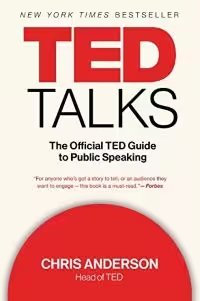
The most useful idea in the book is the throughline — the connecting thread that holds a talk together. Many weak speeches fail because they try to say too much. They become a collection of facts, stories, jokes, quotes, and slides with no central spine.
Anderson’s advice is simple: do not give the audience everything you know. Give them one idea they can carry away.
That makes this book useful for almost everyone: students, teachers, founders, creators, managers, researchers, writers, and professionals preparing a serious presentation.
Why it is worth reading:
It teaches you how to choose an idea, shape it, support it, and deliver it without sounding fake.
Best takeaway:
Before asking, “How do I perform this talk?” ask, “What idea am I giving the audience?”
2. Talk Like TED by Carmine Gallo
Best for: Creating emotional, memorable, TED-style talks
Read this if: Your presentations are informative but forgettable
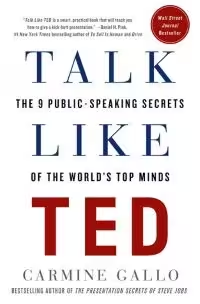
Core lesson: Great presentations are emotional, novel, and memorable.
Talk Like TED studies the style and structure of successful TED-style presentations. Carmine Gallo focuses on what makes a talk engaging: passion, storytelling, surprise, clarity, and moments the audience can remember.
This is a useful book if your talks are technically correct but emotionally flat. Many speakers explain their topic but never make the audience care. They deliver information, but they do not create a moment.
Gallo’s strength is helping you think about public speaking as an experience. The audience is not only asking, “Is this accurate?” They are also asking, “Why should I care?” and “Will I remember this tomorrow?”
This book works well for conference talks, lectures, pitches, webinars, workshops, and YouTube-style scripts.
Why it is worth reading:
It helps you make a talk more engaging without turning it into a performance gimmick.
Best takeaway:
People remember ideas more easily when they are attached to emotion, story, surprise, and vivid examples.
3. The Quick and Easy Way to Effective Speaking by Dale Carnegie
Best for: Beginners who want timeless, practical speaking advice
Read this if: You are new to public speaking and want a simple place to start
Core lesson: Good speakers are made through preparation, practice, and sincerity.
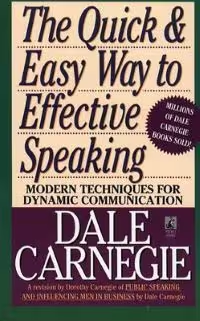
Dale Carnegie’s advice has lasted because it focuses on the basics: know your subject, care about your audience, speak with enthusiasm, and practice enough that your confidence has somewhere to stand.
The Quick and Easy Way to Effective Speaking is not a trendy book. It does not promise secret formulas or overnight charisma. Its value is more durable than that. It reminds you that effective speaking is built from simple habits repeated consistently.
This is a strong first book for people who want to speak better in everyday situations: meetings, interviews, classrooms, small events, team updates, community gatherings, and professional conversations.
It is especially useful for people who do not want to become professional speakers. They simply want to stop sounding hesitant, scattered, or uncomfortable when people are listening.
Why it is worth reading:
It gives beginners a practical foundation without overwhelming them.
Best takeaway:
You do not become confident by waiting until fear disappears. You become confident by preparing well and speaking anyway.
4. Speak With No Fear by Mike Acker
Best for: Overcoming public speaking anxiety
Read this if: Your main problem is fear, nerves, or avoidance
Core lesson: Fear becomes manageable when you understand it and train through it.
Some people do not need another book about storytelling or slide design. They need help with the moment before they speak — when the heart races, the mouth dries, the mind goes blank, and the body feels like it wants to escape.
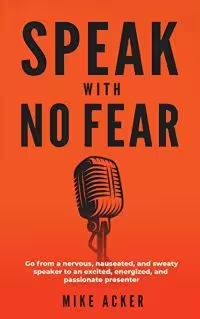
That is where Speak With No Fear is useful.
Mike Acker writes directly for people who dread public speaking. The book is practical, plain, and encouraging. It does not treat fear as a personality flaw. It treats fear as something you can understand, reduce, and work through.
This is a good choice if you avoid speaking opportunities, overthink every mistake, or feel physically uncomfortable before presentations. It is also a good book for students and professionals who know they need to speak more but keep postponing it.
Why it is worth reading:
It meets nervous speakers where they are instead of pretending confidence is easy.
Best takeaway:
Confidence is not the absence of fear. It is the ability to act while fear is present.
5. Confessions of a Public Speaker by Scott Berkun
Best for: Honest, real-world lessons about speaking
Read this if: You want to know what actually happens on stage
Core lesson: Things go wrong. Good speakers learn how to recover.
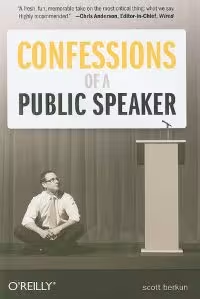
Many public speaking books make the stage sound too clean. Prepare well, stand tall, deliver perfectly, receive applause. Reality is messier.
Microphones fail. Slides freeze. Audiences look bored. Someone asks a strange question. You forget a sentence. The room is too cold. The schedule runs late. Your opening joke does not land.
Confessions of a Public Speaker is valuable because Scott Berkun talks about that messy reality with humor and honesty. He shows that public speaking is not about being flawless. It is about preparing, adapting, and staying useful even when conditions are imperfect.
This book is especially helpful if you already speak sometimes and want to improve. It is also comforting for beginners because it reveals a secret: even experienced speakers deal with awkward moments.
Why it is worth reading: It removes the myth of the perfect speaker.
Best takeaway: A speaker’s real skill often appears when something goes wrong.
6. Resonate by Nancy Duarte
Best for: Persuasive presentation storytelling
Read this if: You give pitches, keynotes, strategy decks, or leadership presentations
Core lesson: A strong presentation moves the audience between what is and what could be.
Nancy Duarte’s Resonate is one of the best books for turning a presentation into a journey.
Many presentations are built like reports. They say: here are the facts, here is the data, here is the update, here is the conclusion. That may be logical, but it is often forgettable.
Duarte’s approach is more dramatic. She teaches speakers to create contrast between the current reality and a better future. That contrast gives a presentation movement. The audience begins to feel why the idea matters.
This is especially useful for founders, executives, consultants, marketers, educators, nonprofit leaders, and anyone trying to persuade a room.
A weak presentation says, “Here is information.”
A better presentation says, “Here is where we are, here is where we could go, and here is why the journey matters.”
Why it is worth reading:
It teaches you how to build presentations that feel alive, not merely organized.
Best takeaway:
The audience is the hero. Your idea is the tool that helps them move forward.
7. slide:ology by Nancy Duarte
Best for: Visual thinking and slide design
Read this if: Your slides are crowded, confusing, or too text-heavy
Core lesson: Slides should support the speaker, not become the speech.
Many presentations fail before the speaker says a word because the slides are already working against them.
Too many bullet points.
Too much text.
Too many charts.
Too many decorations.
No clear visual hierarchy.
No obvious point.
slide:ology helps solve that problem. Nancy Duarte explains how to think visually, organize ideas, design clearer slides, and make abstract information easier to understand.
This is not only a book for designers. It may be even more useful for non-designers who regularly build slide decks for meetings, classes, pitches, webinars, and internal presentations.
The main lesson is simple: a slide should not be a document projected on a wall. It should be a visual aid that makes one idea clearer.
Why it is worth reading:
It helps you stop using slides as speaker notes and start using them as communication tools.
Best takeaway:
A good slide makes the message easier to understand. A bad slide forces the audience to choose between reading and listening.
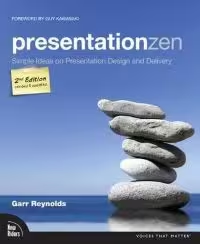
8. Presentation Zen by Garr Reynolds
Best for: Simple, elegant, audience-friendly presentations
Read this if: Your presentations feel heavy or cluttered
Core lesson: Simplicity is not emptiness. It is discipline.
Presentation Zen is a classic book on presentation design and delivery. Garr Reynolds argues against clutter, over-explaining, and lifeless slides. His approach is visual, calm, simple, and audience-centered.
This book is especially helpful if you tend to overpack your presentations. Many speakers add more content because they want to look prepared. But more content often creates less clarity.
Reynolds pushes you to remove what does not serve the message. That is harder than it sounds. Simplicity requires judgment. You have to know what matters most.
This book will not only improve your slides. It will also improve your thinking. A cleaner deck usually begins with a clearer idea.
Why it is worth reading:
It teaches you to respect the audience’s attention.
Best takeaway:
The best presentation is not the one with the most information. It is the one where the right information becomes clear.
9. Steal the Show by Michael Port
Best for: Stage presence, performance, interviews, and high-stakes moments
Read this if: Your content is good but your delivery feels flat
Core lesson: Every important interaction is a kind of performance.
Michael Port’s Steal the Show treats public speaking as performance — but not in a fake or theatrical way.
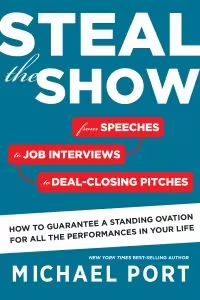
Performance here means preparation, intention, energy, timing, presence, and emotional control. It is about learning how to show up when the moment matters.
This book is useful beyond formal speeches. It applies to job interviews, sales calls, investor pitches, meetings, negotiations, panels, and difficult conversations. Port helps readers think about how they enter a room, use their voice, manage nerves, and create an experience for others.
If you already know what you want to say but struggle to say it with force, rhythm, or presence, this book can help.
Why it is worth reading:
It bridges the gap between having something to say and delivering it with impact.
Best takeaway:
The goal is not to become fake. The goal is to become intentional.
10. Storyworthy by Matthew Dicks
Best for: Personal storytelling
Read this if: You want to tell stories that feel human, not forced
Core lesson: A good story is built around change.
Many speakers know they should “tell stories.” The problem is that they do not know what a story actually is.
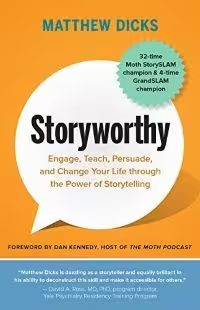
So they tell long anecdotes. Or they summarize events. Or they give background information. Or they describe something that happened, but the audience never feels why it mattered.
Storyworthy is one of the best books for fixing that.
Matthew Dicks teaches storytelling as a craft. The book is practical, funny, and unusually clear about what makes a story work. For public speakers, the most important lesson is that a story needs movement. Something must change.
A story is not just “this happened, then this happened, then this happened.”
A story is “I saw the world one way, then something happened, and now I see it differently.”
This is useful for teachers, founders, creators, coaches, writers, leaders, and anyone who wants to sound more human in front of an audience.
Why it is worth reading: It helps you turn ordinary experiences into meaningful communication.
Best takeaway: A story is not about what happened. It is about how someone changed because of what happened.
11. Made to Stick by Chip Heath and Dan Heath
Best for: Making ideas memorable
Read this if: People understand your point but forget it later
Core lesson: Sticky ideas are simple, unexpected, concrete, credible, emotional, and story-driven.
Made to Stick is not only a public speaking book, but it belongs on this list because public speaking is useless if nobody remembers what you said.
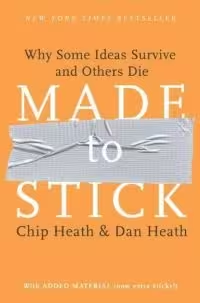
The Heath brothers study why some ideas survive while others disappear. Their framework is especially useful for speakers because every talk needs a core message. If that message is abstract, generic, overloaded, or predictable, it will vanish from the listener’s mind.
This book helps you simplify without dumbing down. It teaches you how to make ideas concrete, surprising, credible, and emotionally resonant.
It is especially useful for teachers, marketers, writers, founders, nonprofit leaders, and anyone who has to explain important ideas to busy people.
Why it is worth reading:
It improves the most neglected part of speaking: message design.
Best takeaway:
If your audience cannot repeat your idea later, your speech did not fully work.
12. Stories That Stick by Kindra Hall
Best for: Business storytelling
Read this if: You need stories for sales, marketing, leadership, or brand communication
Core lesson: The right story can make a message easier to trust, remember, and act on.
Stories That Stick is one of the most useful storytelling books for business speakers.
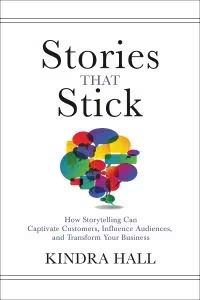
Some storytelling books focus mainly on personal memoir or stage performance. Kindra Hall’s book is more practical for people who need storytelling at work. It helps you understand which kind of story you are telling and why.
That matters because not every story has the same job. A founder story is different from a customer story. A story that builds trust is different from a story that teaches. A story that explains a company’s purpose is different from a story that sells a product.
For public speakers, this book is especially helpful because it connects storytelling with audience action. You are not telling a story merely to entertain. You are using story to make a point land.
Why it is worth reading:
It gives business speakers a clear way to choose and shape stories.
Best takeaway:
Do not add a story because “stories are good.” Add the story that does the right job.
13. Storytelling with Data by Cole Nussbaumer Knaflic
Best for: Data-heavy presentations
Read this if: You present charts, reports, dashboards, research, or analytics
Core lesson: Data does not speak for itself. You have to show people what matters.
Many smart people give weak presentations because they assume the data is obvious.
It usually is not.
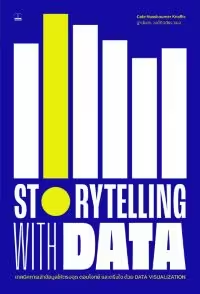
A chart can be accurate and still confusing. A dashboard can be detailed and still fail to communicate. A slide can contain the right numbers and still leave the audience wondering, “What am I supposed to see here?”
That is why Storytelling with Data deserves a place on this list.
Cole Nussbaumer Knaflic teaches readers how to reduce clutter, choose better visuals, direct attention, and turn data into a clear message. This is essential for analysts, researchers, consultants, marketers, managers, product teams, finance professionals, and anyone who presents numbers to people who need to make decisions.
The book is not about making data pretty. It is about making data understandable.
Why it is worth reading:
It fills a gap most public speaking books ignore: how to present evidence visually and clearly.
Best takeaway:
Do not just show the data. Show the audience what the data means.
14. The Presentation Secrets of Steve Jobs by Carmine Gallo
Best for: Product launches, business keynotes, and high-stakes presentations
Read this if: You want to make business presentations more dramatic and memorable
Core lesson: A great presentation feels like a story, not a report.
Steve Jobs became famous not only for products, but for how he presented them. The Presentation Secrets of Steve Jobs studies that presentation style and turns it into lessons other speakers can use.
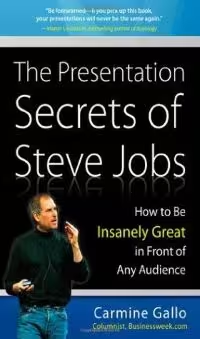
This book is especially useful for founders, marketers, product managers, executives, and anyone who needs to present an idea with drama and clarity.
The risk with a book like this is imitation. You should not try to become Steve Jobs. That would feel unnatural. But you can learn from the structure: build anticipation, simplify the message, create contrast, rehearse carefully, and make the audience feel why the idea matters.
Business presentations often fail because they become lists of features. Jobs-style presentations worked because they turned features into meaning.
Why it is worth reading:
It shows how product and business presentations can become stories with tension, clarity, and payoff.
Best takeaway:
Do not just present features. Present meaning.
15. The Art of Public Speaking by Stephen E. Lucas and Paul Stob
Best for: A comprehensive public speaking reference
Read this if: You want a textbook-style guide to the whole subject
Core lesson: Public speaking is a structured discipline, not just confidence and charisma.
Most books on this list focus on one part of public speaking: fear, storytelling, slides, persuasion, or delivery. The Art of Public Speaking is different. It is a broad, textbook-style guide to the discipline.
That makes it especially useful for students, teachers, debate clubs, communication courses, and readers who want a more formal foundation. It covers the major building blocks of public speaking: audience analysis, topic selection, research, outlining, introductions, conclusions, delivery, visual aids, informative speaking, persuasive speaking, and ethics.
It may not be the most casual book on the list, but it is one of the most complete. If you want a reference you can return to whenever you need to prepare a speech, this is the one.
Why it is worth reading:
It gives public speaking the seriousness of a craft.
Best takeaway:
A strong speech is not improvised charisma. It is the result of clear purpose, audience awareness, research, structure, and practice.
Best Public Speaking Books by Goal
1. Best overall public speaking book
TED Talks by Chris Anderson is the best overall choice. It teaches the full process of building a talk around a clear idea, shaping it for an audience, and delivering it with purpose.
2. Best public speaking book for beginners
The Quick and Easy Way to Effective Speaking by Dale Carnegie is the best starting point for beginners. It is simple, direct, and focused on confidence, preparation, and audience connection.
3. Best book for overcoming fear of public speaking
Speak With No Fear by Mike Acker is the best choice if nerves are your biggest obstacle. It is practical, encouraging, and written for people who feel anxious before speaking.
4. Best book for storytelling
Storyworthy by Matthew Dicks is the best book for personal storytelling. For business storytelling, read Stories That Stick by Kindra Hall.
5. Best book for business presentations
Resonate by Nancy Duarte is the best book for business presentations because it teaches you how to move an audience from the current situation to a better future.
6. Best book for presentation slides
Presentation Zen by Garr Reynolds is best for simplicity and restraint. slide:ology by Nancy Duarte is best for visual thinking and slide design.
7. Best book for data presentations
Storytelling with Data by Cole Nussbaumer Knaflic is the best choice if you present charts, analytics, dashboards, research, or reports.
8. Best book for stage presence
Steal the Show by Michael Port is the best choice if you want to become more intentional, energetic, and controlled in high-stakes speaking situations.
The Best Reading Order for Public Speaking Books
You do not need to read all 15 books before giving your next talk. In fact, that can become another form of procrastination.
Use this reading order instead.
1. If you are nervous
- Speak With No Fear
- The Quick and Easy Way to Effective Speaking
- Steal the Show
Start with fear, then build confidence, then improve presence.
2. If your talks feel scattered
- TED Talks
- Made to Stick
- The Art of Public Speaking
Start with one clear idea, make it memorable, then learn the broader structure of speech-making.
3. If your presentations are boring
- Resonate
- Storyworthy
- Stories That Stick
Start with presentation narrative, then improve personal stories, then apply storytelling to business.
4. If your slides are weak
- Presentation Zen
- slide:ology
- Storytelling with Data
Start with simplicity, then learn visual design, then improve charts and data communication.
5. If you give business pitches
- Resonate
- The Presentation Secrets of Steve Jobs
- Stories That Stick
- Storytelling with Data
Start with persuasion, then study keynote structure, then add business stories and evidence.
Honourable Mentions
These books are also useful, but they are either more specialized, more adjacent to public speaking, or partly overlapping with books already in the main list.
1. Influence by Robert B. Cialdini
Best for: Persuasion psychology
Influence is one of the most important books on why people say yes. It is not strictly a public speaking book, but speakers can learn a lot from it. If your goal is to persuade ethically, sell an idea, or understand audience decision-making, it is worth reading.
2. Speak Like Churchill, Stand Like Lincoln by James C. Humes
Best for: Rhetoric and historical speaking techniques
This book is useful if you enjoy studying famous speakers and old-school rhetorical methods. It is less essential for modern presentations than books like TED Talks or Resonate, but it can sharpen your sense of timing, phrasing, and authority.
3. Long Story Short by Margot Leitman
Best for: Personal storytelling and humor
This is a practical storytelling guide, especially useful for people who want to find stories in everyday life. If you like the storytelling side of public speaking, this pairs well with Storyworthy.
4. The Storyteller’s Secret by Carmine Gallo
Best for: Inspirational storytelling
Carmine Gallo appears twice in the main list already, so this one works better as an honourable mention. It is useful for understanding how leaders, entrepreneurs, and communicators use story to inspire action.
5. How to Own the Room by Viv Groskop
Best for: Presence, confidence, and women’s public speaking
This is a strong confidence and presence book, especially for readers interested in how women use voice, authority, and performance in public life. It is a good complement to Steal the Show.
6. Find Your Voice by Caroline Goyder
Best for: Voice, breath, and authentic confidence
Caroline Goyder’s work is useful for people who want to sound more grounded and present when they speak. It is especially relevant if your challenge is not what to say, but how to say it with calm authority.
7. The Confidence Gap by Russ Harris
Best for: Acting despite fear
This is not a public speaking book, but it is useful for nervous speakers. Its central message is that you do not have to eliminate fear before taking action. That is a powerful idea for anyone who avoids speaking opportunities.
8. Pitch Anything by Oren Klaff
Best for: Sales pitches and deal-making
This is a specialized book for high-stakes persuasion, especially in business and sales contexts. It is not the first book I would recommend for general public speaking, but it can be useful for founders, salespeople, and negotiators.
9. Wired for Story by Lisa Cron
Best for: Understanding why stories work
This book is aimed more at writers than speakers, but its lessons about narrative, attention, and the brain’s hunger for story can help speakers build more compelling talks.
10. Presence by Amy Cuddy
Best for: Confidence and self-presentation
This book is about showing up more fully in high-pressure moments. It can be helpful for speakers, but readers should treat some body-language claims carefully and avoid reducing confidence to posture alone. Presence is useful, but preparation still matters more.
How to Choose the Right Public Speaking Book
The best book is not always the most famous one. It is the one that solves your next problem.
Ask yourself this:
1. Am I afraid of speaking?
Read Speak With No Fear or The Quick and Easy Way to Effective Speaking.
2. Do my talks lack structure?
Read TED Talks or The Art of Public Speaking.
3. Do people forget my message?
Read Made to Stick.
4. Do my stories ramble?
Read Storyworthy.
5. Do I need stories for business?
Read Stories That Stick or Resonate.
6. Are my slides too cluttered?
Read Presentation Zen or slide:ology.
7. Do I present data?
Read Storytelling with Data.
8. Does my delivery feel flat?
Read Steal the Show.
Most people choose the wrong book because they misdiagnose their weakness. They think they need charisma when they actually need structure. They think they need better slides when they actually need a clearer message. They think they need confidence when they actually need more practice with a smaller audience.
Public speaking improves fastest when you fix the real bottleneck.
Practical Tips After Reading These Books
Reading about public speaking is helpful, but speaking is a physical skill. You cannot become a better speaker only by highlighting good sentences.
After reading one book from this list, do these five things.
1. Write your talk in one sentence
If you cannot summarize your talk in one sentence, the audience probably cannot remember it.
Ask:
What is the one idea I want people to take away?
That sentence becomes your spine.
2. Practice out loud
Silent rehearsal is not enough. Speaking uses breath, voice, timing, memory, and rhythm. A talk that feels smooth in your head may sound awkward when spoken aloud.
Practice with your actual voice.
3. Record yourself once
You do not have to post it anywhere. Just watch it.
You will notice things you cannot feel while speaking: speed, posture, filler words, unclear transitions, weak endings, and slides that do not match your message.
4. Cut 20 percent
Most presentations improve when they become lighter. Cut the extra examples, secondary points, long introductions, and unnecessary slides.
A shorter, clearer talk is usually stronger than a long, crowded one.
5. End with one action or one thought
Do not let your talk fade away.
End by making the audience remember one thing, feel one thing, or do one thing.
A strong ending does not need to be dramatic. It needs to be clear.
Final Verdict: Which Public Speaking Book Should You Read First?
If you want one book, read TED Talks by Chris Anderson. It is the best overall guide to building and delivering a meaningful talk.
If fear is your main problem, start with Speak With No Fear by Mike Acker.
If you are a complete beginner, read The Quick and Easy Way to Effective Speaking by Dale Carnegie.
If you give business presentations, read Resonate by Nancy Duarte.
If you present data, read Storytelling with Data by Cole Nussbaumer Knaflic.
If you want to tell better stories, read Storyworthy by Matthew Dicks and Stories That Stick by Kindra Hall.
The real secret is that public speaking is not mastered by reading one book. Books can give you structure, courage, techniques, and better taste. But at some point, you have to stand up and speak.
That is where the real learning begins.
FAQs About Public Speaking Books
1. What is the best book to improve public speaking?
The best overall book to improve public speaking is TED Talks: The Official TED Guide to Public Speaking by Chris Anderson. It teaches you how to build a talk around one clear idea, structure it for an audience, and deliver it with purpose.
2. What is the best public speaking book for beginners?
The best public speaking book for beginners is The Quick and Easy Way to Effective Speaking by Dale Carnegie. It focuses on confidence, preparation, clarity, enthusiasm, and audience connection.
3. What book should I read to overcome fear of public speaking?
If fear is your main problem, read Speak With No Fear by Mike Acker. It is written for people who feel nervous, anxious, or blocked when speaking in front of others.
4. What is the best book on storytelling for public speaking?
The best storytelling book for public speakers is Storyworthy by Matthew Dicks. For business storytelling, Stories That Stick by Kindra Hall is also a strong choice.
5. What is the best book for business presentations?
The best book for business presentations is Resonate by Nancy Duarte. It teaches how to structure persuasive presentations around contrast, audience transformation, and narrative movement.
6. What is the best book for presentation slides?
For slides, read Presentation Zen by Garr Reynolds and slide:ology by Nancy Duarte. Presentation Zen is best for simplicity and restraint, while slide:ology is best for visual thinking and slide design.
7. What is the best book for data presentations?
The best book for data presentations is Storytelling with Data by Cole Nussbaumer Knaflic. It teaches how to make charts clearer, reduce clutter, and communicate insights more effectively.
8. Can books really make you better at public speaking?
Yes, but only if you practice. Books can teach structure, storytelling, persuasion, slide design, and delivery principles. But public speaking improves through repeated speaking, feedback, and revision.
9. How many public speaking books should I read?
Start with one book that solves your biggest current problem. If you are nervous, read a confidence book. If your talks are unclear, read a structure book. If your slides are weak, read a presentation design book.







