
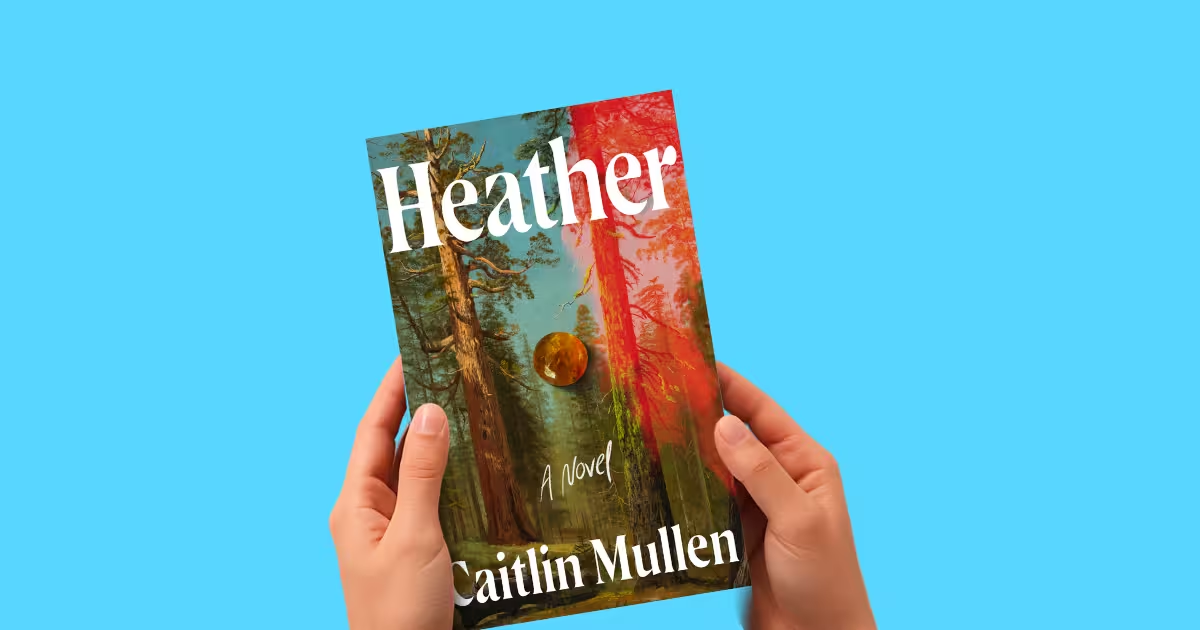
Did you ever wonder why some families carry secrets so heavy they warp every generation that follows? Heather answers that question with a slow-burn mystery that feels less like a thriller and more like watching fog roll in over haunted ground—you know something’s coming, you just can’t see it yet.
Heather is a story about a newly appointed police chief who returns to her New Jersey hometown, arrests her own alcoholic mother, and uncovers a thirty-year-old cold case involving twin sisters who vanished—only to discover she shares DNA with the dead baby found in the woods.
Heather is best for fans of atmospheric, character-driven mysteries like Liz Moore’s The God of the Woods or the Mare of Easttown series; readers who appreciate slow-burn narratives with emotional weight and complex female characters.
Not for the readers who ar seeking fast-paced action thrillers with non-stop twists; readers who prefer tidy resolutions or black-and-white morality.
Table of Contents
1. Introduction
Title: Heather
Author: Caitlin Mullen
Publication Date: June 9, 2026
Publisher: Celadon Books
Pages: 352
Caitlin Mullen, the Edgar Award-winning author of Please See Us (which won the 2021 Edgar Award for Best First Novel and was named a New York Times Best Crime Novel in 2020), returns with a novel that has already garnered significant praise. Described as “a propulsive mystery as incisive as it is forgiving”, Heather explores the tangled webs of family secrets, generational trauma, and the often-invisible violence men inflict on women.
2. Background
Caitlin Mullen brings considerable literary credentials to this work. She earned a BA in English and Creative Writing from Colgate University, an MA in English from NYU, and an MFA in fiction from Stony Brook University.
Her first novel, Please See Us, was a critical success, establishing her as a distinctive voice in crime fiction. Mullen lives in New Jersey with her husband and children, and her intimate knowledge of the state’s landscapes—particularly the Pine Barrens—infuses Heather with an authenticity that feels almost documentary.
The novel arrives at a moment when crime fiction is increasingly embracing nuanced explorations of trauma, systemic corruption, and the long-reaching consequences of violence.
It stands alongside works like Liz Moore’s The God of the Woods and Amy Tintera’s Listen for the Lie in its commitment to psychological depth over mere plot mechanics.
3. Heather Summary
Part I: The Return
Callie Hauser, a thirty-year-old former narcotics detective from North Jersey, has returned to her hometown of Pine Lakes in the New Jersey Pine Barrens. She’s been appointed Chief of Police after the previous chief suffered a major heart attack.
The job comes with baggage: an eight-man squad that resents her, a local drug ring dealing dirty heroin in green glassine baggies stamped with pine boughs, and a history she’d rather leave buried.
Her first major act as chief? Pulling over her own mother, Jenna, for drunk driving. Jenna is a mess—forty-nine years old but looking a decade older, with spider-veined cheeks, chipped teeth, and a rap sheet that includes disorderly conduct, petty larceny, and a previous DUI. When Callie arrests her, Jenna makes a cryptic remark: “He’s watching us now. I can feel it”. She’s talking about the Jersey Devil, a creature from local folklore she’s always believed in.
At the station, Callie overhears two of her officers, Latour and Collins, gossiping about Jenna. They reveal that when Jenna was sixteen, she discovered a dead newborn baby on the side of the road while delivering newspapers. The case went cold. Nobody ever identified the mother.
Callie demands the Baby Doe files. What she finds is a case that was mishandled from the start: the medical examiner ruled cause of death as exposure; the baby was born alive but died hours later. A broken amber bracelet was found near the scene.
Part II: The Riley Sisters
The narrative shifts to 1990-1991, following twin sisters Annabelle and Sabrina Riley. They’re sixteen, living in a decaying Colonial with an absent mother who abandoned them and a father who works double shifts and drinks.
Sabrina is the wild one—sharp-tongued, impulsive, and involved with a mysterious older man she calls “the Coyote.” Annabelle is the quiet one, the good student who wants to escape to college.
When Annabelle discovers Sabrina’s secret, she’s consumed by jealousy and curiosity. She gets into the Coyote’s car one day, pretending to be Sabrina, and has sex with him. It’s a decision that will haunt her forever.
The Coyote is revealed to be Luke Caputo, the older brother of Damien—who later becomes the husband of Callie’s best friend, Jane. Luke is a former cop who used his position to prey on vulnerable teenage girls. The Caputo family, including patriarch Frank (the former police chief), has been protecting him for decades.
Sabrina becomes pregnant with Luke’s child. Annabelle, meanwhile, discovers she’s also pregnant—from that single encounter. Sabrina promises to help her sister through the birth and raise the baby together.
But Sabrina also plans to blackmail Luke: she knows about his other underage victims and threatens to expose him unless he pays up.
On the night Annabelle goes into labor, Sabrina goes to meet Luke. She never comes back.
Annabelle gives birth alone in the woods near the abandoned factory where she and Sabrina used to play. The baby is stillborn, or nearly so—Annabelle is in such a state of shock and pain that she can’t be sure. She carries the baby to the roadside, leaves her there, and walks away. She takes one amber bead from Sabrina’s broken bracelet as a keepsake.
The next day, Jenna discovers the baby. Annabelle disappears, reinventing herself as Iris Owens and building a new life in Westchester County, New York. She marries, has three children, and becomes a pillar of her community.
Part III: The Present Collides with the Past
In the present day, Jenna goes missing after being released from jail. Her purse is found on the Batona Trail with heroin inside. But Callie discovers the drugs were planted—by Damien Caputo, who is trying to frame her mother and protect his family’s secrets.
Callie’s investigation leads her to Annabelle—now Iris Owens. She confronts the woman who abandoned Baby Doe, and Annabelle confesses everything: the pregnancy, the birth, the abandonment, and her sister’s disappearance. She also reveals that the Coyote was Luke Caputo.
Meanwhile, Callie’s DNA test results come back: she’s a genetic match to Baby Doe. Luke Caputo is her father. Jenna was another one of his victims.
The climax occurs at a sinkhole in the woods—the same place where Sabrina Riley’s body is eventually found. Damien Caputo lures Callie there, intending to kill her to keep the family secrets buried. He reveals that he murdered Sabrina Riley decades ago, dumping her body in the sinkhole.
Jane arrives with a rifle and shoots Damien in the leg, saving Callie’s life.
Frank Caputo is arrested for accessory to murder. Damien confesses to Sabrina’s murder. Annabelle is charged with involuntary manslaughter and sentenced to one year in prison plus probation. Luke Caputo is arrested on multiple charges related to his sexual abuse of underage girls.
Jenna is found alive, hiding in a family hunting cabin deep in the woods. She and Callie begin the long process of healing. Heather ends with Annabelle visiting two graves: one for Sabrina and one for the baby she named Heather.
4. Heather Analysis
4.1 Characters
Callie Hauser: The protagonist is a study in contradictions. She’s a fiercely competent detective who has spent her entire adult life building walls to protect herself from the chaos of her childhood.
As Chief of Police, she’s determined to impose order on a town that seems to resist it.
But her rigid control masks a deep well of pain and anger. Her arc involves learning that justice isn’t always black and white, and that sometimes the greatest act of strength is allowing yourself to be vulnerable. She’s a character who could easily have been a cliché—the damaged female cop with a troubled past—but Mullen gives her enough specificity and self-awareness to feel real.
Jenna Hauser: Jenna is the novel’s most tragic figure. She’s been written off by everyone—including her own daughter—as a hopeless drunk. But the story gradually reveals that she was a victim long before she became an addict.
She discovered a dead baby at sixteen, was sexually abused by a predatory cop, and was threatened with prosecution if she spoke up. Her addiction is a symptom, not a cause. The novel doesn’t excuse her failures as a mother, but it asks us to understand them.
Annabelle Riley / Iris Owens: Annabelle is the novel’s moral center.
She’s a woman who made an unforgivable choice as a terrified teenager and has spent the rest of her life trying to atone. Her transformation into Iris Owens—the perfect mother, the PTA volunteer, the community pillar—is both a triumph and a prison.
She’s built an entire life around pretending the past doesn’t exist. When it all comes crashing down, she’s finally forced to confront what she did. Heather is remarkably forgiving of her, not because what she did was okay, but because she was a child herself.
Sabrina Riley: Sabrina is the ghost at the center of the novel. She’s dead before the story even begins, but her presence haunts every page. She was the wild one, the one who took risks, the one who tried to protect her sister and ended up paying for it with her life. Her murder is the original sin that corrupts everything around it.
Luke Caputo: Luke is the novel’s villain, but he’s not a cartoonish monster. He’s a man who used his position as a cop to prey on vulnerable teenage girls, protected by his family’s power and influence. He’s also Callie’s biological father—a revelation that forces her to confront uncomfortable questions about her own nature.
Jane Caputo (née something): Callie’s best friend is a fascinating character in her own right. She’s recovering from a hit-and-run accident that left her with permanent injuries. She’s also dealing with the revelation that her husband, Damien, is a murderer. Her loyalty to Callie is tested to its breaking point, but in the end, she chooses her friend over her husband.
4.2 Heather Themes
The Jersey Devil as Metaphor: The Jersey Devil—a creature born from a mother’s curse in local folklore—functions as a powerful symbol throughout Heather.
It represents the monstrous things that can be born from desperation and neglect. It also represents the way communities create myths to explain away the ugliness they’d rather not confront. The Caputo family has their own version of the Jersey Devil: a story they tell themselves to justify protecting Luke.
The Body as Witness: One of the novel’s most striking themes is the idea that the body remembers what the mind tries to forget. Annabelle’s scar from the fight with Sabrina is a permanent reminder of their broken relationship.
Jane’s injuries from the hit-and-run keep her tethered to the violence of her past. Even Callie’s obsessive need for control is a response to the chaos of her childhood. The body, as the novel puts it, “is a traitor. The body undoes and reveals, has an agenda all its own”.
Mothers and Daughters: The novel is centrally concerned with the complicated, often painful relationships between mothers and daughters. Jenna’s failures as a mother have shaped Callie’s entire life. Annabelle’s abandonment of her baby defines her. Even Jane’s relationship with her daughter Opal is shadowed by her own traumatic upbringing.
The novel suggests that motherhood is never simple, and that the desire to be a good mother can sometimes lead to the worst choices.
The Corruption of Power: The Caputo family represents the way power can be used to protect abusers. Frank Caputo used his position as police chief to shield his son. Luke used his badge to prey on vulnerable girls. The novel is a searing indictment of institutional corruption and the way it allows violence against women to continue unchecked.
The Complexity of Justice: Heather refuses to offer easy answers. Annabelle is guilty of abandoning her baby, but she was also a terrified teenager who had no support. Luke is a predator, but he’s also protected by a system that values his family’s status over the truth.
Heather asks: What does justice look like when everyone is complicit?
5. Heather Evaluation
5.1 Strengths
Atmospheric Setting: The Pine Barrens are rendered with such vivid specificity that they become a character in their own right. The dense woods, the tannic cedar water, the sinkholes, the folklore—it all creates a sense of unease that permeates every page. Mullen clearly knows this landscape intimately, and her descriptions are both beautiful and unsettling.
Complex Female Characters: The novel is populated by women who are messy, contradictory, and deeply human. Callie is both competent and emotionally stunted. Jenna is both a victim and a perpetrator. Annabelle is both a good mother and a woman who abandoned her child. The novel refuses to flatten them into archetypes.
Emotional Depth: This is a mystery that cares more about emotional truth than plot mechanics. The twists and revelations are meaningful because they reveal something about the characters.
The final revelation—that Callie shares DNA with Baby Doe—is devastating not because it’s a shocking twist, but because of what it means for her identity.
Prose Style: Mullen writes with a lyrical precision that elevates the material. Her sentences are carefully crafted without being overwrought. She knows when to pull back and let the reader fill in the gaps.
Second-Person Narration: The sections narrated in second person (“you”) are a gamble, but they pay off. They create an intimate, almost claustrophobic connection to the characters, particularly Jenna and Annabelle.
5.2 Weaknesses
Pacing: This is a slow-burn mystery, and some readers may find it too slow. Mullen takes her time building the atmosphere and developing the characters. If you’re looking for a fast-paced thriller with constant twists, this isn’t it.
Supporting Characters: Some of the secondary characters—particularly the male officers in Callie’s department—can feel a bit one-dimensional. They exist primarily to be obstacles for Callie, and their motivations aren’t always fully explored.
The Ending: While emotionally satisfying, the ending wraps things up a little too neatly. The Caputo family is brought to justice, Annabelle gets a relatively light sentence, and Callie and Jenna begin to heal. It feels slightly at odds with the novel’s otherwise unflinching examination of trauma.
Fauver Subplot: The Billy Fauver subplot, while important to the drug ring investigation, sometimes feels like a distraction from the more compelling Baby Doe case.
5.3 Impact
Heather is a novel that lingers. It’s not the kind of book you read and immediately forget. The questions it raises about complicity, justice, and the weight of family secrets stay with you long after you’ve finished the last page. It’s also a novel that feels particularly timely in an era when we’re finally starting to take seriously the ways institutions have protected abusers.
The novel’s treatment of sexual abuse is particularly powerful. Mullen doesn’t sensationalize it or use it for cheap shock value. Instead, she shows how it warps lives, how it creates cycles of trauma that can last for generations.
Luke Caputo is a predator, but he’s also a product of a system that taught him he could get away with anything.
5.4 Comparison with Similar Works
Heather will inevitably be compared to Liz Moore’s The God of the Woods, and the comparison is apt. Both novels are set in rural communities with secrets, both feature complex female protagonists, and both use the landscape as a character. However, Heather is more explicitly concerned with the theme of sexual abuse and its consequences.
Mare of Easttown is another clear touchstone. The small-town setting, the female detective with a troubled past, the layers of corruption—it all feels like it could be a prestige miniseries.
Alex Michaelides, author of The Silent Patient, praised the novel as “a gritty cold-case detective story, vividly and insightfully written”. The comparison to Michaelides’s work is fitting: both authors are interested in psychological depth and the unreliability of memory.
Amy Tintera’s Listen for the Lie also shares DNA with Heather. Both novels feature women who have been wrongly judged by their communities and are trying to reclaim their narratives.
5.5 Adaptation Potential
Heather feels tailor-made for adaptation. The atmospheric setting, the complex female characters, the layered mystery—it has all the ingredients of a prestige limited series. The Mare of Easttown comparisons are inevitable, and it’s easy to imagine a similar treatment: a gritty, character-driven crime drama that takes its time unfolding.
Heather‘s structure—alternating between the 1990s and the present day—would translate well to television, allowing for parallel storylines that eventually converge. The second-person narration sections might be more challenging to adapt, but skilled screenwriters could find creative ways to capture their intimacy.
As of now, there’s no announced adaptation, but given the novel’s critical reception and the trend toward adapting literary thrillers for streaming, it seems like only a matter of time.
6. Personal Insight with Contemporary Educational Relevance
The Most Important Theme: The Cost of Silence
Heather is, at its core, a novel about what happens when we stay silent. The Caputo family’s silence—their refusal to acknowledge Luke’s crimes—allows him to continue preying on vulnerable girls for decades. Jenna’s silence—her refusal to tell Callie the truth about her past—poisons their relationship. Annabelle’s silence—her decision to bury her past and reinvent herself—leaves her living a lie for thirty years.
The novel suggests that silence is not neutral. It’s a choice, and it has consequences. Every time someone looks the other way, every time someone decides it’s easier not to know, the cycle of abuse continues.
This theme has powerful contemporary resonance. We’re living in a moment when victims of sexual abuse are finally being believed, when institutions are being held accountable for protecting abusers, when the #MeToo movement has made it possible for women to speak their truth.
But we’re also living in a moment when backlash is real, when victims are still doubted, when powerful men are still protected.
Heather reminds us that the cost of silence is paid by the most vulnerable. It’s a lesson that feels urgent and necessary.
Five Lessons from Heather
Trauma is inherited. The novel makes clear that the effects of violence don’t end with the immediate victim. They ripple outward, affecting children, grandchildren, communities. Callie’s obsessive need for control is a direct response to the chaos of her childhood. Annabelle’s desperate attempt to be the perfect mother is a response to her own mother’s abandonment.
Justice is not always punishment. Annabelle is guilty of abandoning her baby, but the novel asks us to consider whether punishment is the only form of justice. She was a child herself, with no support, no resources, no one to help her. The novel suggests that understanding context matters.
The powerful protect their own. The Caputo family is a case study in how privilege can shield abusers. Frank Caputo used his position as police chief to protect his son. The community looked the other way because the Caputos were powerful. This isn’t just a story about one family—it’s a story about how corruption works.
Addiction is a symptom, not a cause. Jenna’s alcoholism is presented as a response to trauma, not as a moral failing. She drank to numb the pain of what happened to her. The novel doesn’t excuse her failures as a mother, but it asks us to understand them.
The truth will out. No matter how deeply you bury a secret, it will eventually surface. Annabelle’s past catches up with her. The Caputo family’s crimes are exposed. The novel suggests that the truth, however painful, is ultimately liberating.
7. Heather Quotes
“The mind is one thing, the little black box of Before locked tight. But the body, as you well know, is a traitor. The body undoes and reveals, has an agenda all its own.” — This passage, from the opening pages, establishes the novel’s central theme: that the body remembers what the mind tries to forget.
“He was a man used to getting what he wanted. Dark-haired, dark-eyed, with a belt of stubble along his jaw. White T-shirt fitted to show off the muscles taut across his shoulders and chest.” — The description of the Coyote (Luke Caputo) is both alluring and menacing, capturing his predatory charisma.
“You are so smart but you can be so fucking stupid sometimes.” — Jane’s rebuke to Callie is a moment of brutal honesty that cuts through the novel’s layers of deception.
“America doesn’t hate anyone as much as they hate a bad mom.” — A devastating line that captures the novel’s critique of how society judges women, particularly mothers.
“There is nothing that happens to a child that a mother does not feel. Even when the thing that happens to them is you.” — Margot’s words to Annabelle are a profound meditation on maternal guilt and the impossibility of being a perfect mother.
“Some places keep their secrets pressed tight against the earth, waiting for the right person to dig them up.” — A perfect encapsulation of the novel’s atmosphere and its central mystery.
8. Conclusion
Heather is the kind of novel that reminds you why crime fiction can be so powerful. It’s not just about solving a mystery—it’s about understanding why the mystery existed in the first place. It’s about the systems that protect abusers, the silence that enables them, and the women who are left to pick up the pieces.
Mullen has written a novel that is both a gripping page-turner and a deeply empathetic meditation on trauma, motherhood, and survival. The characters are complex and flawed, the setting is vividly rendered, and the themes are urgently relevant.
This is a novel for readers who appreciate slow-burn mysteries that take their time developing character and atmosphere. It’s for readers who want to be moved as much as they want to be entertained. It’s for readers who understand that justice is rarely simple, and that the truth is often more complicated than we want it to be.
Heather is a significant addition to the canon of literary crime fiction. It’s a novel that will stay with you long after you’ve turned the final page.
Recommended for: Fans of Liz Moore, Mare of Easttown, Amy Tintera, and character-driven mysteries. Readers who appreciate atmospheric settings, complex female characters, and explorations of intergenerational trauma.







