
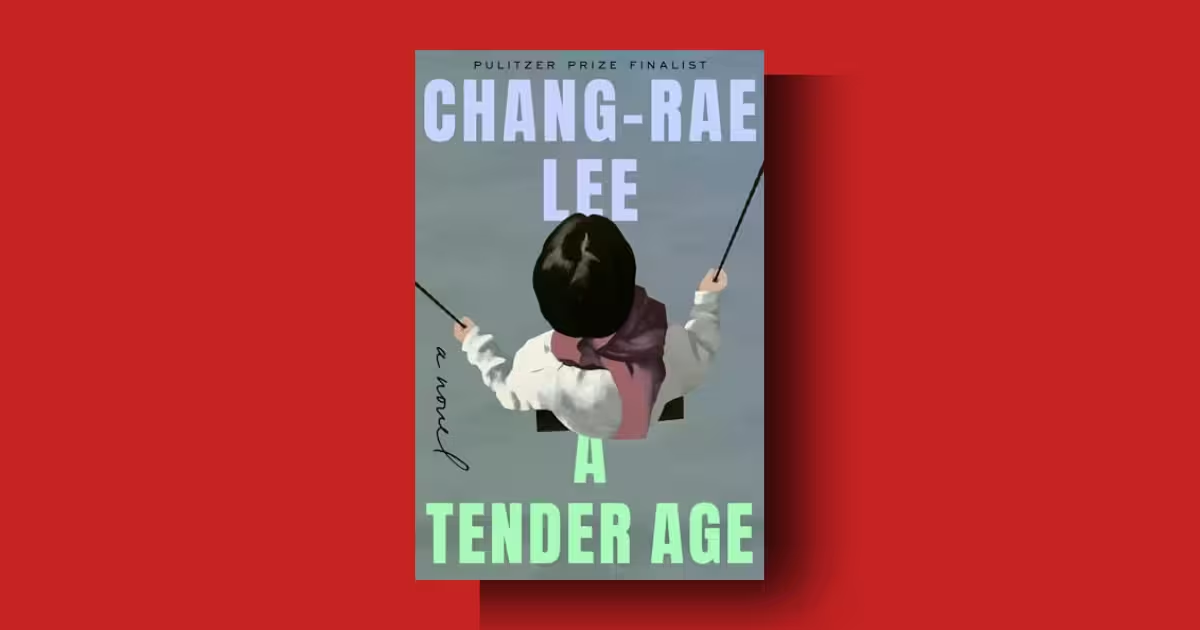
Did you ever wonder why certain childhood moments refuse to fade, no matter how many years pass? Chang-rae Lee’s A Tender Age (published on 11 August, 2026) explores this very question with devastating precision.
As a reader who has followed Lee’s work since Native Speaker, I found this novel to be his most personal and emotionally resonant yet. Set in 1976, the book follows ten-year-old Jeon-Gi through a pivotal summer that shapes the rest of his life.
What makes this coming-of-age story different from others is its unflinching look at how small wounds can accumulate into something far more damaging.
Lee, a Pulitzer Prize finalist for The Surrendered (2010), has crafted a narrative that feels both deeply specific to the Korean American immigrant experience and universally recognizable to anyone who remembers the awkward, painful, and sometimes terrifying years of preadolescence.
The novel has already garnered significant attention, being named a Most Anticipated Book of 2026 by The New York Times, The Boston Globe, Goodreads, and Literary Hub. With 368 pages of dense, emotionally charged prose, this is not a book you rush through; it’s one you sit with, letting the weight of each scene settle.
Table of Contents
Overview
A Tender Age is a melancholic bildungsroman, a type of novel that follows the personal journey of a central character as they mature. It typically explores how the protagonist develops emotionally, psychologically, and morally while moving from childhood or adolescence toward adulthood, about Jeon-Gi, a Korean American boy navigating the treacherous social landscape of 1970s suburban New York.
After a series of bullying incidents, including being terrorized by a classmate with a ninja star and a traumatic encounter with a sadistic girl, Jeon-Gi brings a carving knife to school and threatens a classmate.
His parents send him to a Korean church summer camp, hoping for a “behavioral reset”.
At camp, he experiences first friendships, a first crush, and first glimpses of adult sexuality, but also faces continued torment from another camper. The novel builds toward a climactic, ambiguous incident at a waterfall that leaves lasting consequences.
Lee explores themes of guilt, identity, masculinity, and the immigrant experience with raw emotional precision.
Reader recommendation of A Tender Age
A Tender Age is best for readers who appreciate literary fiction with psychological depth, coming-of-age stories that don’t shy away from darkness, and anyone interested in the Korean American immigrant experience.
Fans of Chang-rae Lee’s previous work will find this a rewarding addition to his bibliography. Those who enjoyed The Surrendered or Native Speaker will recognize Lee’s signature style—precise, emotionally devastating prose that cuts to the bone.
A Tender Age is not for readers looking for a lighthearted summer read or a nostalgic coming-of-age story. This is not “The Wonder Years” in book form. The novel deals with bullying, racism, sexual coercion, and violence.
As one reviewer noted, “This is a grim story” that “focuses heavily on how Jeon-Gi is treated by others, prepare yourself for some awfulness”. If you prefer plots with clear resolutions and unambiguous morals, this may not be for you.
A Tender Age Plot Summary
Part One: The World Before Camp
The novel opens with an adult Jeon-Gi reflecting on his life. He’s now an empty-nester, living with his wife and their dog, Pu-chu. The dog, adopted years ago during a Florida vacation, has strange eating habits, he can’t eat from a bowl and must be coaxed with finger taps on the floor.
This behavior stems from abuse by the son of the family they visited, a boy who would torment the puppy by pushing him off tables and perching him in trees.
The adult Jeon-Gi imagines himself as the dog, finally able to attack his tormentor: “To dispirit a certain kind you must be malign, become as bent as your nemesis. You must shock even yourself”.
This reflection triggers memories of his own childhood “rough times”, specifically, the year leading up to his eleventh birthday in the summer of 1976.
Young Jeon-Gi lives with his Korean immigrant parents and younger sister Ella in Cove Gardens, a low-rent apartment complex north of New York City. The town is “much darker-skinned and poorer than the surrounding villages and hamlets, which were and still are mostly white and wealthy”. Their neighbors are a diverse mix of Blacks, Puerto Ricans, working-class Irish and Italians, Jews, and new immigrants from Asia and Eastern Europe.
The children of Cove Gardens form a fierce tribe, ranging in age from eight to twelve.
They play unsupervised, their bonds “tourniquet tight” but fueled by “constant disagreements, contentions, sometimes outright bloodletting”. Among them is Katie Croker, an older girl who terrorizes the younger kids. She humiliates Jeon-Gi in the most intimate ways, forcing him to pee in front of her, then later using his devotion to his mother against him. In one particularly cruel episode, she forces Jeon-Gi to curse at his own mother from the street below their apartment window.
Jeon-Gi also faces racism from boys in the gang. Joshua Messing, a former friend, makes slanty-eye gestures and calls him “Chinky Chow” during a basketball game. Jeon-Gi retaliates by calling Joshua a “kike,” sparking a fight that leads to the “Ring”, a makeshift fight club organized by the older boys.
Meanwhile, Tommy Reilly, a disturbed red-haired boy who lives in the “Fort” (Building C), begins terrorizing Jeon-Gi with a slingshot and later with a ninja star. Tommy’s behavior is eventually revealed to be early signs of schizophrenia.
The bullying escalates. Jeon-Gi’s mother, noticing his withdrawal, tries to reach him, but he pushes her away. He steals money from a friend, Paul Dipinto, and feels increasingly isolated. When Tommy threatens him again, Jeon-Gi takes his mother’s carving knife, a ten-inch stainless-steel blade with serrated edges, and puts it in his book bag.
The next day, instead of confronting Tommy (who is being escorted into school by police for threatening other students), Jeon-Gi encounters Joshua Messing, who provokes him. Jeon-Gi pulls the knife and threatens to kill him. He is suspended immediately.
Part Two: The Aftermath and Camp
Jeon-Gi faces the juvenile justice system. A judge, noticing his “somewhat overcourteous” demeanor, remands him to his parents’ custody and admonishes him: “Don’t always think yourself to be so great”. He undergoes psychological evaluations, where he learns to manipulate the system by giving the “right” answers.
His parents, desperate, send him to Camp Charminster, a Korean church camp in upstate New York.
At camp, Jeon-Gi finds a temporary refuge. He bonds with his cabinmates—Mickey, Recipe, Jimmy Choi, Peter, David, and the Sangs. They become his “blood brothers”. He develops a crush on Susan Sun, a sharp, independent girl from Staten Island.
But trouble follows him. Dickens Rho, an older, handsome camper, kicks Jeon-Gi in the chest on the first day for no apparent reason. Dickens is charismatic and admired, but also cruel, he sexually harasses girls and manipulates others.
The campout, a two-night hike to Trench Lake- becomes the setting for the novel’s climax. Jeon-Gi struggles with his ruined hiking boots (scorched while saving a stew he cooked).
He witnesses Susan playing “Flipper” (a game where swimmers grab each other’s feet underwater) with Dickens, confirming his worst fears. Later, during a rainstorm, he sees Dickens forcing himself on Susan behind a utility hut.
Part Three: The Climax and Aftermath
The next morning, Jeon-Gi nearly drowns himself in Trench Lake, sinking into the freezing water before surfacing. During the rainy hike back, his injured foot causes him to lag behind. Susan briefly helps him, but when they encounter Dickens, she avoids Jeon-Gi’s gaze.
At the top of Moss Falls, Jeon-Gi sees Dickens standing near the edge of the waterfall. He pushes him. The boy goes over the falls. Ben Frost, the camp counselor, jumps in to save him but loses his footing and goes over with him. Both survive, but Ben Frost is seriously injured. The incident is ruled an accident, though a camper tells a counselor she saw Jeon-Gi push Dickens.
The novel ends with Jeon-Gi being taken home by his parents. He never tells them what really happened. The family stops attending church. Jeon-Gi grows up, goes to college (where he encounters Susan again briefly), and lives a seemingly ordinary life. But the weight of that summer never leaves him.
A Tender Age Analysis
A Tender Age Characters
Jeon-Gi (J.-G.): The narrator and protagonist. He’s a complex, often unlikable character—cowardly, manipulative, and capable of cruelty.
Yet Lee makes us understand him. Jeon-Gi is a boy constantly caught between competing identities: the cherished son at home and the bullied outsider outside. His name, meaning “electricity,” becomes a cruel joke. He lies constantly, even to his friends, and steals from those who trust him.
But he’s also deeply vulnerable, desperate for approval, and capable of genuine love. His arc is less about redemption than about learning to live with guilt.
Susan Sun: The object of Jeon-Gi’s first crush. She’s sharp, independent, and quick-witted, “fleet of mind as she was of foot”. She sees through Jeon-Gi’s pretensions and becomes his confidante. But she’s also drawn to Dickens, despite his cruelty. Susan represents the complexity of first love, the way it can be both pure and painful, how it doesn’t always make sense.
Dickens Rho: The antagonist. Adopted and charismatic, Dickens is a bully who uses his good looks and charm to manipulate others. He’s the kind of person who “had a gift for picking out some quality in a person to warp and make ugly and take advantage of”. Yet he’s not a cartoon villain; he’s a product of his own pain, a boy who was “left back” because he didn’t know English and who struggles with his identity.
Ben Frost: The camp counselor. He’s the ideal adult—kind, patient, athletic, and morally grounded. He represents everything Jeon-Gi wishes he could be. Ben Frost’s injury at the falls is devastating not just because of the physical harm, but because it represents the destruction of innocence. He’s the one person who truly believed in Jeon-Gi.
The Parents: Jeon-Gi’s mother and father are loving but struggling. His mother is anxious, overprotective, and deeply hurt by her son’s behavior. His father is gentle but overworked. Their decision to send Jeon-Gi to camp is an act of desperation. The novel hints at deeper family traumas, a miscarriage or abortion that causes a rift between them.
A Tender Age Themes and Symbolism
Guilt and Innocence: The novel asks whether a child can truly be held responsible for his actions. Jeon-Gi is eleven, old enough to know right from wrong, but young enough to be shaped by forces beyond his control. The ambiguity of the waterfall scene- was it an accident or intentional?- reflects this tension. Lee never gives us a clear answer.
American Masculinity: Jeon-Gi is constantly trying to prove his toughness, to fit into a mold of what a boy “should” be. He’s drawn to violence, even as it terrifies him. The novel shows how toxic masculinity is learned, passed down through generations.
The Immigrant Experience: Jeon-Gi’s family is caught between worlds. His mother doesn’t speak English well; his father works exhausting hours. The pressure to succeed, to be “American,” is immense. The camp, filled with Korean American kids, offers a temporary respite, but even there, the hierarchies of the outside world persist.
The Power of Memory: The adult Jeon-Gi reflects on his childhood, but his memories are unreliable. He admits, “I was experimenting” with lies, “testing the feel of airing some notion about myself”. The novel suggests that memory is as much about self-justification as it is about truth.
A Tender Age Evaluation
Strengths
Lee’s prose is luminous and precise. Every sentence feels weighted with meaning. The novel’s structure, framed by the adult Jeon-Gi’s reflections, adds depth to the childhood narrative. The characters are fully realized, even the minor ones. Lee captures the intensity of childhood emotions, the way a footrace or a girl’s smile can feel like “a matter of life and death”.
The novel’s handling of racism is particularly effective. Lee doesn’t preach; he shows. The casual slurs, the microaggressions, the way Jeon-Gi internalizes other people’s hatred, it’s all rendered with devastating clarity.
Weaknesses
The novel’s pacing can be slow, particularly in the middle sections. Some readers may find Jeon-Gi’s passivity frustrating. The ambiguity of the climax, while thematically appropriate, may leave some wanting more closure.
Impact
A Tender Age is a deeply uncomfortable read. It forces you to sit with the ugliness of childhood, the bullying, the racism, the casual cruelty. But it’s also a profoundly empathetic book. Lee never judges his characters; he simply observes. The result is a novel that lingers long after you’ve finished it.
Comparison with Similar Works
The novel has been compared to classics like The Catcher in the Rye and Huckleberry Finn. Like those books, A Tender Age features a young protagonist navigating a world that doesn’t understand him.
But Lee’s novel is darker, more psychologically complex. It also fits within the tradition of Asian American literature, alongside works like Native Speaker (Lee’s own debut) and Interpreter of Maladies by Jhumpa Lahiri.
Personal Insight: The Weight of Childhood
What struck me most about A Tender Age is how it captures the paradox of childhood memory. The things that seem insignificant at the time, a cruel joke, a moment of humiliation, a stolen glance, can become the defining moments of our lives. Jeon-Gi’s obsession with his childhood traumas, his inability to let go, feels deeply true.
Five Lessons from the Novel:
1. Bullying leaves invisible scars. Jeon-Gi is tormented by Katie Croker, Tommy Reilly, and Dickens Rho. Each encounter chips away at his sense of self. The novel shows how bullying isn’t just about physical harm—it’s about the slow erosion of a person’s dignity.
2. The immigrant experience is isolating. Jeon-Gi’s parents are loving but unable to fully understand the world their son navigates. The language barrier, the cultural differences, the constant pressure to succeed—it all takes a toll.
3. Guilt can be a life sentence. Jeon-Gi carries the weight of his actions for decades. The novel suggests that some mistakes can’t be undone, no matter how much time passes.
4. First love is complicated. Jeon-Gi’s feelings for Susan are intense but also possessive and confused. The novel shows how first love is often about projection, seeing what you want to see in another person.
5. We are shaped by our worst moments. Jeon-Gi is not a hero. He’s a boy who makes terrible choices. But the novel asks us to understand him, to see the circumstances that led him to those choices. It’s a reminder that people are more than their worst actions.
A Tender Age Quotes
Here are some of the most memorable passages:
“You can’t help but keep going back to old times, futilely scratching at a spot.”
“To dispirit a certain kind you must be malign, become as bent as your nemesis. You must shock even yourself.”
“Was there some quality I possessed that inspired kids like Katie Croker and Joshua Messing and Tommy Reilly and an otherwise impressive Korean camper to become my tormentors, my mistreaters?”
“You think you can die only once. What luck, if that’s true.”
“In truth, I was experimenting. I was testing the feel of airing some notion about myself, then watching how the information would fly.”
“Don’t always think yourself to be so great.”
Conclusion
A Tender Age is not an easy read. It’s a novel about the ugliness of childhood, the bullying, the racism, the casual cruelty. But it’s also a deeply empathetic book, one that asks us to understand a boy who makes terrible choices.
Lee’s prose is luminous, his characters fully realized, his themes timely and universal.
This is a book for readers who appreciate literary fiction that doesn’t flinch from darkness. It’s for anyone who remembers what it felt like to be eleven: awkward, desperate, and searching for a place to belong.







