

Why do Warren Buffett, Bill Gates, and Elon Musk keep pointing readers toward the same short stack of books? I went back through their shareholder letters, blog posts, book jackets, and interviews to check, and the overlap in the books billionaires recommend is bigger than most “best of” lists let on.
This is my attempt at a version you can actually trust: every entry below ties back to something a billionaire said or wrote on the record, not a title copied from someone else’s Goodreads shelf.
Table of Contents
Overview
I checked the books billionaires recommend against primary sources instead of recycling secondhand lists. Fifteen titles kept turning up, covering investing, business history, psychology, and philosophy on the books billionaires recommend . I personally read most of these great books.
Buffett and Gates independently call Business Adventures the best business book they’ve ever read. Buffett put The Outsiders first on his own reading list in a Berkshire Hathaway shareholder letter. Gates has recommended six of the fifteen titles here at different points.
Musk pointed to Zero to One and The Beginning of Infinity. Each entry below includes the actual line the billionaire said, not just a title dropped into a listicle.
There’s no shortage of billionaire books roundups online, and most of them just recycle the same handful of titles without checking whether the person they’re attributed to ever actually said those words. I wanted something different: a list where every recommendation ties back to a shareholder letter, a blog post, a book jacket blurb, or an interview I could verify myself.
That’s what follows.
A few patterns showed up once I started pulling the sourcing together. Among the books Warren Buffett recommends, there’s a clear pull toward capital allocation and rational thinking, usually alongside his longtime partner Charlie Munger.
Bill Gates gravitates toward books that make him rethink how the world actually works, not just how to run a company better.
Elon Musk’s picks lean toward physics, philosophy, and the kind of long-horizon thinking that shows up in how he talks about Mars. None of the books billionaires recommend on this list are secret or hard to find. What’s rarer is seeing the specific quote sitting next to the specific book.
Books Billionaires Recommend List
Here’s the full list, in the order I’d suggest reading them if you’re starting from zero.
1. The Intelligent Investor by Benjamin Graham
Recommended by: Warren Buffett
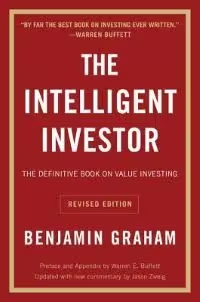
Buffett studied under Graham at Columbia in the early 1950s and has called Graham’s 1949 book, in his own words, “by far the best book on investing ever written.”
He was taken with it enough to give his eldest son the middle name Graham.
The Intelligent Investor‘s core idea, buying businesses for less than they’re actually worth and treating market swings as opportunities rather than emergencies, still shapes how Buffett evaluates every purchase Berkshire Hathaway makes.
If you only read one book from this list, most of the people on it would tell you to start here.
2. Business Adventures by John Brooks
Recommended by: Bill Gates and Warren Buffett
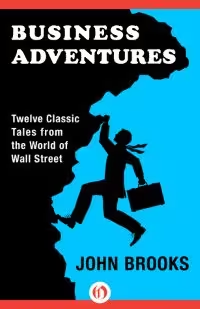
When Gates first met Buffett in 1991, he asked which business book Buffett would recommend. Buffett handed him this 1969 collection of New Yorker stories about corporate wins and blunders, including the Ford Edsel and Xerox’s slow fall from the top of its industry, and lent Gates his own copy.
More than two decades later, Gates wrote that it remains “the best business book I’ve ever read.” He still has Buffett’s copy.
That single exchange between two of the wealthiest people alive is probably the most retold origin story among the books billionaires recommend, and it holds up because the lessons are about people and leadership rather than spreadsheets.
3. Poor Charlie’s Almanack by Charles T. Munger

Recommended by: Warren Buffett
This is a compiled record of talks given by Charlie Munger, Buffett’s longtime business partner at Berkshire Hathaway, and it works as a manual for the mental models Munger used to make decisions across investing, business, and daily life.
Buffett has written that the book is “something of a publishing miracle,” selling tens of thousands of copies with no advertising, on reputation alone.
Ideas like the latticework of mental models and inversion, working backward from failure to figure out what to avoid, come straight from this book, and they’ve since become standard vocabulary among serious investors.
4. The Essays of Warren Buffett by Warren Buffett and Lawrence Cunningham
Recommended by: Warren Buffett and Bill Ackman
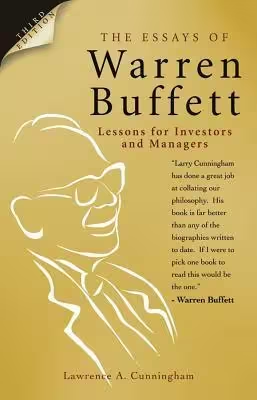
Lawrence Cunningham organized fifty-plus years of Buffett’s shareholder letters into one volume, grouped by subject instead of by year, and Buffett himself signed off on the project, saying Cunningham had “done a great job at collating our philosophy.”
Investor Bill Ackman has called it required reading for anyone trying to understand corporate governance and business judgment. It’s reportedly the book Buffett autographs most often at Berkshire’s annual meeting.
Among the books billionaires recommend on this list, it’s the closest thing to a primary source rather than someone else’s interpretation of one.
If you want Buffett’s thinking without working through fifty separate letters, this is the shortcut.
5. Principles: Life and Work by Ray Dalio
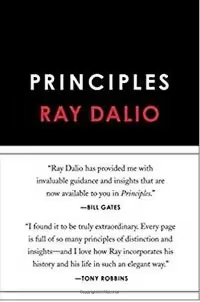
Ray Dalio built Bridgewater Associates into the largest hedge fund in the world using an explicit set of rules for decision-making, built around radical transparency and treating mistakes as data instead of failures to hide.
Gates featured the book on his blog and named it one of his top picks the year it came out, praising Dalio for writing down exactly how he thinks rather than offering vague leadership advice.
Among the books Bill Gates recommends, this one shows up most often when he’s asked specifically about decision-making. Some reviewers have compared parts of it to a modern-day Meditations, which is a fitting echo for a list like this one.
6. The Innovator’s Dilemma by Clayton M. Christensen
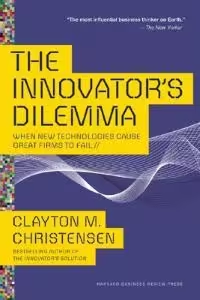
Christensen’s 1997 book explains why well-run, successful companies keep losing ground to smaller competitors that start out looking unthreatening.
Bezos has described it as “enormously influential” on Amazon’s own strategy, including the decision to build the Kindle despite the risk of undercutting the print book business that Amazon was built on.
He’s connected The Innovator’s Dilemma‘s ideas directly to both the Kindle and Amazon Web Services.
Of all the books Jeff Bezos recommends, this is the one most directly traceable to specific product decisions rather than general praise, which is part of why it’s one of the rare books billionaires recommend that you can actually watch play out inside a public company’s decisions over time.
7. Zero to One by Peter Thiel
Recommended by: Elon Musk and Mark Zuckerberg
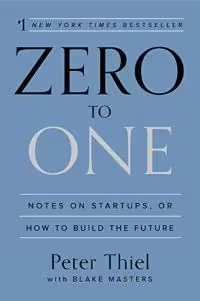
Peter Thiel, a co-founder of PayPal alongside Musk, turned his Stanford course notes into this short book arguing that real progress comes from building something genuinely new rather than fighting over an already crowded market.
Musk blurbed it directly: “Peter Thiel has built multiple breakthrough companies, and Zero to One shows how.”
Zuckerberg praised it separately as delivering fresh ideas about how to create value. When two founders who built companies as different as Tesla and Facebook land on the same book, it’s worth asking why.
8. The Hard Thing About Hard Things by Ben Horowitz
Recommended by: Widely championed across venture capital, including by Marc Andreessen
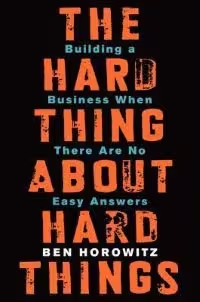
Ben Horowitz, who co-founded Andreessen Horowitz, wrote this book about the parts of running a company that don’t have clean answers: laying off a friend, managing your own psychology during a crisis, and deciding what to do when your board and your gut disagree. It’s part of a16z’s own official recommended reading list.
The book also includes the now-famous detail about Jeff Bezos building Amazon’s first desks out of doors to keep costs down, a story that’s become shorthand across Silicon Valley for frugal, no-frills company culture. Horowitz’s own a16z stake has made him a billionaire in his own right, which makes this less an outside endorsement and more a field manual from someone who lived every page of it.
It’s one of the few books billionaires recommend that was written by a billionaire rather than just endorsed by one.
9. Thinking, Fast and Slow by Daniel Kahneman
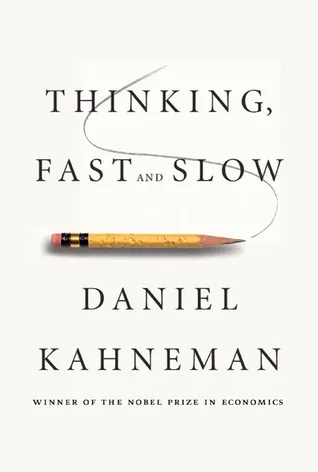
Nobel laureate Daniel Kahneman spent decades studying why capable people make predictably bad decisions, and this book lays out his two-system model of the mind: fast, automatic judgment and slow, effortful reasoning.
Gates named it one of his favorite books the summer it broke out and has referenced Kahneman’s two systems repeatedly in interviews since.
Munger, who built much of his own approach to investing around avoiding cognitive bias, has praised similar ideas for years, even though he and Kahneman got there from different starting points.
10. Factfulness by Hans Rosling, Ola Rosling, and Anna Rosling Rönnlund
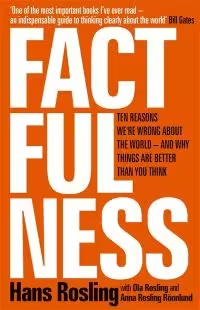
Hans Rosling spent his career showing, with actual data, that most people, including well-educated people, are systematically wrong about how the world is changing, usually assuming things are worse than they really are.
Gates called it “one of the most important books I’ve ever read” and paid for every 2018 U.S. college graduate to get a free copy.
Factfulness replaces the usual developed-versus-developing framing with four income levels, which changes how almost any headline about global poverty or health reads afterward.
11. The Better Angels of Our Nature by Steven Pinker
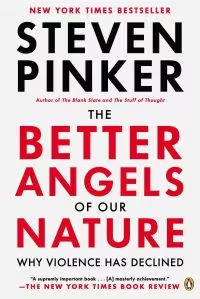
Steven Pinker’s central claim, backed by centuries of data, is that violence of nearly every kind has been declining for a long stretch of human history, even though it rarely feels that way from inside a single news cycle.
Gates recommended it the year before he pushed Factfulness, and the two books share a similar thesis: that measuring the world carefully tends to produce a less pessimistic picture than instinct does.
It’s a long, dense read, but Gates has said the trend lines Pinker lays out changed how he thinks about progress and where to direct philanthropy.
12. The Beginning of Infinity by David Deutsch
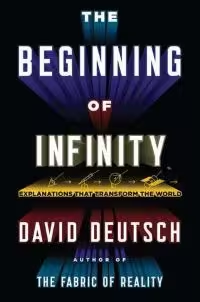
Recommended by: Elon Musk
Physicist David Deutsch argues that human knowledge has no real ceiling, since almost any problem can eventually be solved with the right explanation, and that optimism built on that idea is closer to a moral stance than a mood.
Musk named it as one of the books he was reading in a public post, and it’s also cited by OpenAI’s Sam Altman and investor Naval Ravikant as a personal favorite.
It’s denser than most of this list, closer to physics and philosophy than business, but it functions as a shared intellectual touchstone for a certain type of founder. Of the books Elon Musk recommends, this one says the most about how he actually thinks, as opposed to how he talks about any single company.
13. The Outsiders by William N. Thorndike Jr.
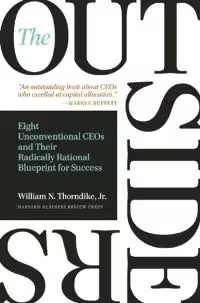
Recommended by: Warren Buffett and Charlie Munger
William Thorndike profiles eight CEOs who quietly beat the market for decades by treating capital allocation, not daily operations, as their actual job.
Buffett put this book first on his own recommended reading list in Berkshire’s 2012 shareholder letter, calling it “an outstanding book about CEOs who excelled at capital allocation.”
Munger praised it as well, and it’s since become close to standard reading for anyone studying how the best-run public companies think about spending money.
It’s also a good example of how the books billionaires recommend tend to overlap: Buffett’s endorsement alone would have made this a bestseller, but Munger’s agreement is what turned it into a fixture on serious investors’ shelves.
14. Shoe Dog by Phil Knight
Recommended by: Bill Gates
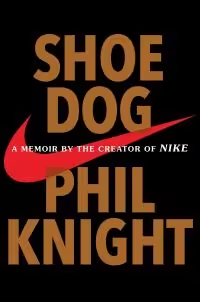
Nike founder Phil Knight wrote this memoir about borrowing fifty dollars from his father to start importing running shoes from Japan, and the long, often chaotic stretch of near-failure before Nike became Nike.
Gates named it one of his five favorite books of 2016, calling it “an amazing tale” and noting that Knight, a notoriously private person, opened up in a way few CEOs are willing to.
It reads less like a business how-to and more like an honest account of how messy the road to a multi-billion dollar company actually was.
15. Meditations by Marcus Aurelius
Recommended by: Repeatedly linked to Jeff Bezos, Elon Musk, Bill Gates, and Warren Buffett
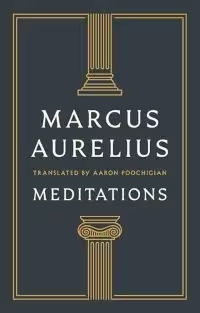
This one stands apart from the rest of the books billionaires recommend on this list, since it predates modern business writing by about eighteen centuries.
Marcus Aurelius wrote Meditations as a private journal while running the Roman Empire, never meaning for it to be published, and it reads like a Stoic emperor talking himself through discipline, patience, and keeping his own ego in check.
Business coverage has repeatedly grouped Bezos, Musk, Gates, and Buffett together as executives who draw on Stoic philosophy, and Buffett’s own famously modest lifestyle (he still lives in the Omaha house he bought in 1958) tracks closely with what Marcus Aurelius wrote about ignoring status for its own sake.
What These 15 Books Actually Have in Common
Every year brings another round of headlines about the books billionaires read, but few of them look closely at why the same names keep surfacing. Across all fifteen here, the pattern isn’t get-rich-quick advice. It’s decision-making under uncertainty, honest accounts of failure, and a habit of measuring the world instead of guessing at it.
Buffett and Munger’s picks cluster around capital allocation and mental models, which tracks with how they’ve actually run Berkshire Hathaway for sixty years. Gates’s picks lean toward data that overturns assumptions, whether that’s about global poverty, violence, or your own thinking.
Musk’s picks sit closer to physics and startup theory, reflecting someone whose companies are built on long-run technical bets. Bezos has one entry here, but it’s the one most directly traceable to specific product decisions at Amazon.
None of the four recommended the exact same title, but the connections between them are hard to miss. Buffett recommended Business Adventures to Gates directly. Thiel and Musk built PayPal together before Thiel wrote Zero to One.
Buffett and Munger overlap almost completely on Poor Charlie’s Almanack and The Outsiders.
Reading the books billionaires recommend as a set, rather than picking one at random, makes those connections a lot easier to see, and it’s why I keep coming back to this particular group whenever someone asks me where to start.
Frequently Asked Questions
These are the questions I kept seeing while researching the books billionaires recommend, answered directly and sourced the same way as the list above.
What books does Warren Buffett recommend?
Buffett has most consistently pointed people to The Intelligent Investor by Benjamin Graham, which he’s called “by far the best book on investing ever written,” along with Business Adventures by John Brooks and Poor Charlie’s Almanack, the collected talks of his business partner Charlie Munger.
In Berkshire Hathaway’s 2012 shareholder letter, he also put The Outsiders by William Thorndike at the top of his own recommended reading list.
What books does Bill Gates recommend?
Gates has recommended more titles on this list than anyone else, including Business Adventures, Principles, Thinking, Fast and Slow, Factfulness, The Better Angels of Our Nature, and Shoe Dog.
He posts summer and end-of-year reading lists on his blog, GatesNotes, and several of these titles have shown up on it more than once over the years.
What books does Elon Musk recommend?
Musk has pointed to Zero to One by Peter Thiel, his former PayPal co-founder, and named The Beginning of Infinity by David Deutsch as one of the books he was reading in a public post.
Business coverage has also repeatedly linked Musk to Stoic philosophy and Marcus Aurelius’s Meditations.
What books does Jeff Bezos recommend?
Bezos has credited The Innovator’s Dilemma by Clayton Christensen with directly shaping decisions like building the Kindle despite the risk it posed to Amazon’s print book business. He’s described the book as enormously influential on both the Kindle and Amazon Web Services.
What is the most recommended book among billionaires?
No single title has been endorsed by all four of the billionaires featured most in this piece, but Business Adventures comes closest: Buffett and Gates independently call it the best business book they’ve ever read.
Meditations by Marcus Aurelius is the closest thing to a shared philosophical touchstone, showing up in coverage connecting Bezos, Musk, Gates, and Buffett alike.
Do billionaires actually read the books they recommend?
Based on the sourcing behind this list, it looks that way. Buffett has referenced specific chapters of The Intelligent Investor for decades. Gates writes detailed reviews on his own blog instead of just posting a title.
Bezos has tied The Innovator’s Dilemma to specific product decisions rather than vague praise. That level of detail is hard to fake, and it’s a big part of why these particular books billionaires recommend keep resurfacing instead of fading into generic reading-list content.
One Last Thing
Reading these fifteen books billionaires recommend won’t make anyone a billionaire on its own.
Buffett, Gates, Musk, and the rest built what they built through decades of specific decisions that had as much to do with timing and risk tolerance as with anything they read. But if you want a starting point that’s actually been checked against primary sources instead of copied from another roundup, this is the list I’d hand a friend.
Start with whichever title matches what you’re dealing with right now, whether that’s evaluating a business, making a hard call under pressure, or just trying to think a little more clearly about the world.







