Last updated on November 5th, 2026 at 11:32 am
The Metamorphosis by Franz Kafka begins with one of the most famous opening lines in modern fiction. Gregor Samsa wakes to discover he has become an insect, and the story never explains why. Published in 1915, this novella by Franz Kafka has been read as a protest against soul-crushing work, a study of family duty, and a portrait of sudden illness.
I read the David Wyllie public domain translation and below you will find a spoiler-free assessment, followed by a full plot summary with the ending explained. Publication details for Franz Kafka’s work are documented by reference sources such as Britannica.
Quick verdict box
- Verdict: A difficult but necessary read that stays with you long after the final page.
- Rating: 4/5
- Best for: Readers interested in classic literature, family obligation, and stories about alienation.
- Main strength: Kafka’s ability to make an impossible premise feel emotionally immediate.
- Main weakness: The passive tone and bleak ending may frustrate readers who want a conventional plot resolution.
In brief:
The Metamorphosis by Franz Kafka follows Gregor Samsa after he wakes transformed into an insect. A key structural turning point arrives in Chapter II, when his father throws apples and one lodges in Gregor’s back, marking the moment the family stops seeing him as a son and starts seeing him as a burden.
The story ends with Gregor’s death and the family’s quiet relief, shifting their hopes to his sister Grete’s future.
What Is The Metamorphosis by Franz Kafka About?
Gregor Samsa, a travelling salesman, wakes one morning to find himself transformed into a horrible vermin. He cannot explain the change, and neither can his family. The novella tracks how his parents and sister move from concern to disgust, and finally to indifference, as Gregor becomes unable to work or communicate in a human voice.
Franz Kafka published The Metamorphosis in 1915, and it remains one of the most widely assigned works of modernist fiction; biographical and publishing context is available through Britannica’s entry on Franz Kafka.
Is The Metamorphosis by Franz Kafka Worth Reading? Spoiler-Free Review
Does the writing style hold up?
Yes, but not in the way you might expect. Kafka writes in a flat, matter-of-fact voice that makes the impossible sound like a boring office memo. Gregor thinks about train schedules and his boss’s temper even while lying on his back with multiple legs.
That contrast is where the horror lives. The David Wyllie translation keeps the tone dry and precise, which means the emotional moments hit harder because the narrator never asks you to feel them.
Are the characters and pacing effective?
The pacing is unusual. The first third moves slowly as Gregor struggles to leave his bed. After his family sees him, the story compresses months into a few chapters. Gregor barely changes as a character; he stays worried about his debt and his sister’s violin lessons. The family changes around him, which is the point. Grete starts as his caretaker and ends as his judge.
Pros and Cons
Pros
- The opening image is unforgettable.
- The family dynamics feel painfully real.
- Short enough to read in one sitting, dense enough to discuss for weeks.
Cons
- There is no clear explanation for the transformation.
- The ending offers no redemption or triumph.
- Some readers will find Gregor too passive to root for.
Who should read it?
Readers who enjoy psychological fiction, workplace satire, or family drama will find much to discuss. If you need a hero who overcomes his condition, this book will disappoint you. If you want to see how a household reacts when one member can no longer earn money, this is essential reading.
Spoiler warning: The following sections reveal major plot developments and the ending. Skip to the final recommendation for a spoiler-free conclusion.
The Metamorphosis by Franz Kafka Plot Summary and Ending Explained
The Beginning
I read the story as a man trapped by his job before he ever turned into an insect. Gregor Samsa supports his parents and his sister, and he hates every moment of it. He travels constantly, eats bad food, and cannot form friendships. In the chapter of The Metamorphosis, he wakes to find himself changed. He lies on his “armour-like back” and watches his “many legs, pitifully thin compared with the size of the rest of him, waved about helplessly.”
He does not panic about the metaphysics of his condition. He worries about missing the five o’clock train.
Gregor tries to roll onto his right side, the way he has always slept, but his new body will not cooperate. He tries a hundred times. He notices white spots on his belly and feels a cold shudder when he touches them. Still, his mind stays on work. He calculates that he has five or six years left to pay off his parents’ debt to his employer, then he will quit. The alarm clock shows it is already past seven. His mother knocks. His voice comes out as a painful squeak, and the family realizes something is wrong.
The chief clerk arrives from the office. Gregor wants to open the door and explain, but he cannot manage the doorknob. He finally pushes a chair to the door, stands on it, and turns the key with his mouth, scraping his jaw so hard that a brown fluid drips onto the key. When the door opens, the chief clerk retreats in panic. Gregor’s mother collapses.
His father hisses at him and drives him back into the room using a newspaper and a stick. Gregor gets stuck in the doorway, injures his flank, and his father gives him a final shove into the dark. The door slams shut.
The middle
Chapter II opens with Gregor waking in the dark. His left side is one “painfully stretched scar,” and one leg drags lifelessly. His sister leaves him a dish of sweetened milk, his former favorite, but he cannot stand the taste. He crawls under a couch and stays there. Over the following days, Grete brings him a selection of rotten vegetables, old bones, raisins, and cheese.
He eats the cheese and the spoiled food, ignoring the fresh items. She locks the door after she leaves so he can eat in private.
The family’s finances come into focus. Gregor’s father explains that some money remains from his earlier business failure, enough to live on for perhaps one or two years if untouched. Gregor feels shame. He had planned to announce, on Christmas Day, that he would send Grete to the conservatory. Now that dream feels pointless.
Grete decides to remove the furniture from his room so he can crawl more freely. She and his mother push out the chest of drawers. Gregor wants to stop them because the furniture connects him to his human past. When his mother returns alone, Gregor reveals himself from under a sheet covering the couch. She sees him, screams, and faints. Grete runs for smelling salts.
A bottle breaks, cutting Gregor’s face. Grete shuts the door, locking Gregor out from his mother.
Later, his father returns home. Grete tells him, “Mother’s fainted, but she’s better now. Gregor got out.” His father assumes Gregor has attacked her. Gregor presses himself against his room door to show he means no harm.
His father, now wearing a smart blue uniform with gold buttons, fills his pockets with apples from a sideboard and throws them. One apple hits Gregor’s back and lodges in his flesh. His mother begs his father to spare Gregor’s life. No one removes the apple.
The Ending Explained
The apple remains in Gregor’s back for more than a month.
His mobility declines permanently. The family leaves the door to his room open in the evenings, and he lies in darkness watching them eat and talk quietly. His father sleeps in his chair still wearing his uniform. His mother sews underwear. Grete takes a sales job and studies shorthand and French.
The family sells jewelry.
They dismiss the maid. A charwoman comes morning and evening. They cannot move flats because they cannot imagine transporting Gregor. Grete plays the violin for the boarders one evening, and Gregor crawls out to listen.
The boarders laugh and threaten to leave without paying rent. Grete tells her parents, “We must try to get rid of it.” Gregor returns to his room, weakens, and dies during the night. The charwoman discovers the body and sweeps it away. The family takes a tram ride into the countryside, and as they sit together, Mr. and Mrs. Samsa notice that Grete has grown into a beautiful young woman and begin to discuss her future.
This ending matters because Kafka does not punish the family. Life simply goes on without Gregor. He becomes an expense they no longer carry.
Characters, Themes, and Symbolism
Main Characters and Their Development
Gregor Samsa does not develop. He remains anxious about money and work even after he cannot speak. His sister Grete changes the most. She begins by bringing him food and cleaning his room. She ends by declaring that the family must get rid of “it.”
His father moves from a worn-out old man in a nightgown to a uniformed authority figure who throws apples. His mother wavers between pity and horror, never fully able to enter the room.
Relationships and Motivations
The core relationship is between Gregor and Grete. She is the only one who tries to understand him at first. She tests his taste with rotten food and fresh food. She argues with her mother about whether to remove the furniture.
But as she takes a job and studies in the evenings, she has less time and patience for him. Her motivation shifts from love to duty to resentment. Gregor’s motivation never shifts: he wants to provide, even when providing is impossible.
Central Themes
A unique angle worth considering is the comparison to Herman Melville’s “Bartleby, the Scrivener.” Both protagonists stop performing their jobs, but Bartleby refuses with words (“I would prefer not to”) while Gregor is refused by his own body.
Kafka literalizes the feeling that a worker is nothing but his output. When Gregor cannot earn, he becomes vermin. The theme is not simply alienation; it is economic punishment dressed as family drama.
Another thread is the debt to his boss. Gregor mentions it openly in Chapter I: once he pays off his parents’ debt in five or six years, he will quit. The transformation happens before that date, trapping him in the obligation forever. The body becomes collateral.
Symbols and Their Meaning
The apple lodged in Gregor’s back functions as a wound that never heals. It is both an attack and a mark of belonging, since the family never removes it even after they decide to tolerate him. The picture of the lady in fur, which Gregor presses himself against to protect it, represents a faded human dignity he tries to preserve.
The locked door is a symbol of communication failure: the family knocks, but no one understands his voice after the change.
Critical Evaluation
Overall Critical Judgement
The Metamorphosis by Franz Kafka earns its reputation as a classic, but it is not a comfortable book. It offers no explanation, no cure, and no hero’s return. Its power comes from refusing to look away from a humiliating situation.
Strengths: What Works Best
- The opening chapter traps the reader in Gregor’s limited perspective.
- The family’s shift from care to disgust feels psychologically honest.
- Kafka’s deadpan prose makes the absurd ordinary, which is more disturbing than outright fantasy.
Weaknesses: What Could Be Better
- Readers looking for plot closure will not find it.
- Gregor’s interior life stays narrow; we learn little about his inner world beyond work anxiety.
- The women in the story, especially the mother, remain underdeveloped compared to Grete.
Comparison with Similar Books
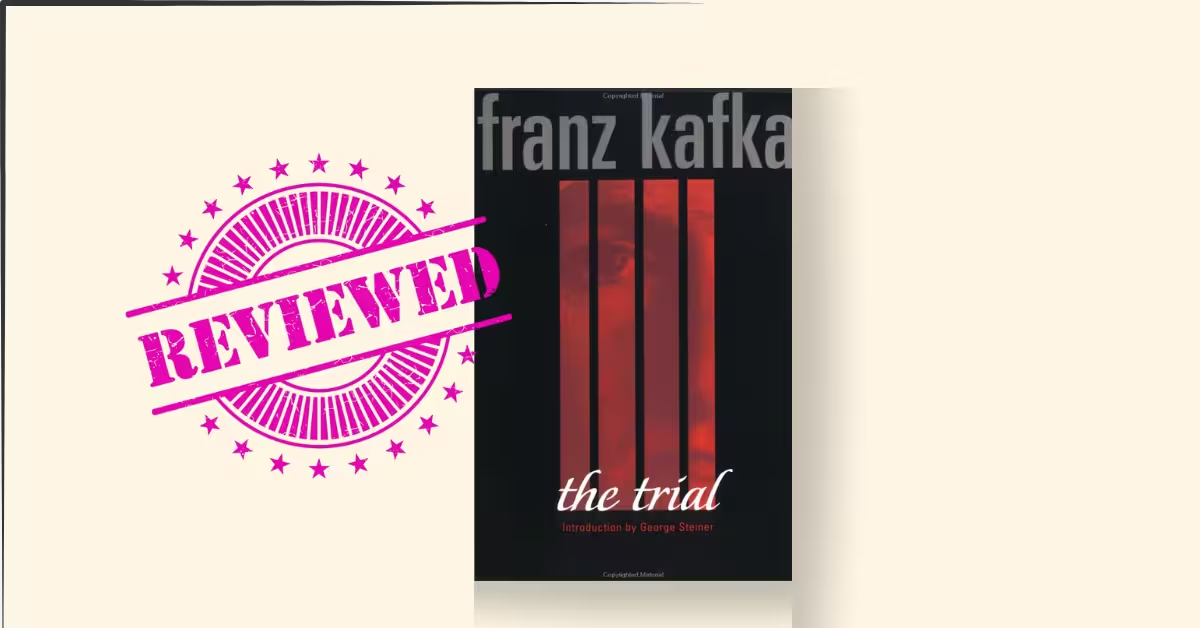
Kafka’s The Trial deals with an unexplained legal persecution, while The Metamorphosis deals with an unexplained bodily change. Albert Camus’s The Stranger shares the absurdist tone, though Meursault is emotionally detached where Gregor is emotionally overinvested in his family. Melville’s Bartleby offers the closest parallel in passive resistance to work.
Controversy
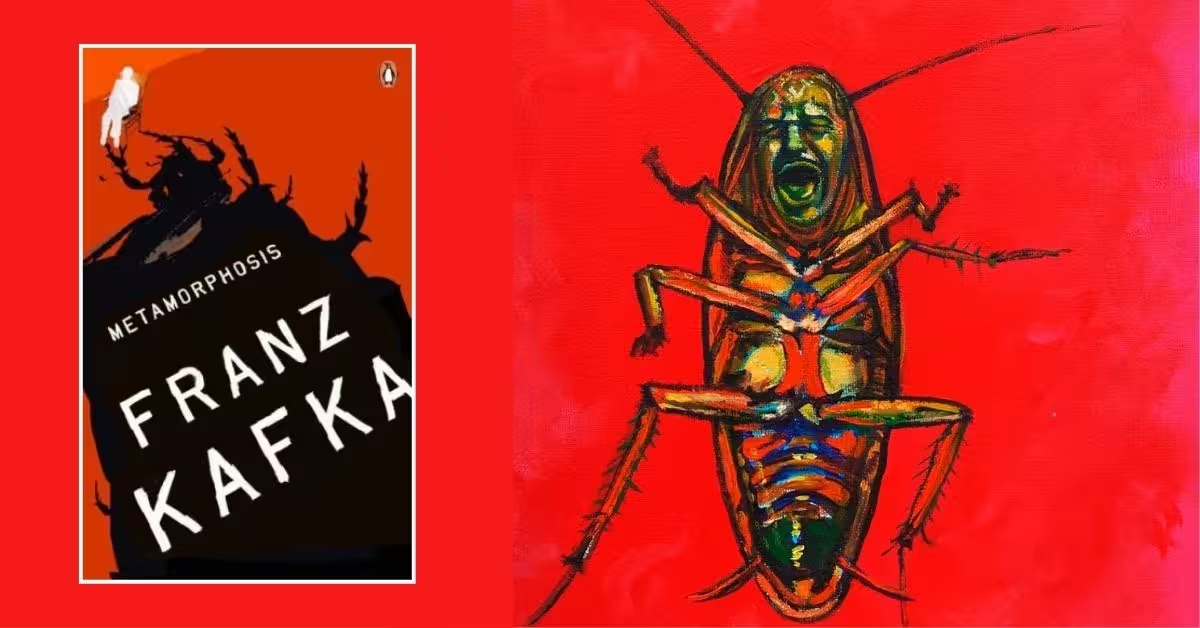
Kafka famously instructed that the insect should not be illustrated on the cover, because he did not want readers to fixate on a specific species. Translators and scholars still debate whether “Ungeziefer” means vermin, bug, or cockroach. The book uses “horrible vermin” in David Wyllie’s translation. I cannot verify the exact German nuance from this text alone.
What The Metamorphosis by Franz Kafka Reveals About Caregiving and Work Burnout
The story shows what happens when a household depends on one earner and that earner collapses. Gregor’s family does not ask what he needs; they ask what they will lose. Modern discussions of burnout describe a similar pattern, where workers are valued for output and discarded when they cannot produce.
The World Health Organization classifies burn-out as an occupational phenomenon linked to chronic workplace stress (WHO). Kafka wrote this long before the term existed, but he captured the dynamic exactly: when Gregor can no longer travel, he stops being a son and becomes a problem to manage.
Five Specific Lessons from the Book
- Work should not be the only reason a family values you. Gregor discovers this too late.
- Caregiving can turn into resentment when there is no end in sight. Grete’s patience has limits.
- A body that fails does not erase a person’s history, but others may act as if it does.
- Silence is more dangerous than the truth. Gregor cannot explain himself, so his family invents motives for him.
- Grief can look like relief. The family mourns Gregor even as they plan Grete’s future without him.
Selected Quotes and Why They Matter
“One morning, when Gregor Samsa woke from troubled dreams, he found himself transformed in his bed into a horrible vermin.” — Chapter I, opening line. This sentence sets the tone: extraordinary news delivered with zero emotion.
“If I didn’t have my parents to think about I’d have given in my notice a long time ago.” — Chapter I. Gregor’s motivation is debt and duty, not ambition.
“He’s enjoyed his dinner today… now everything’s just been left there again.” — Chapter II. Grete’s remarks track Gregor’s decline through his eating habits.
“Let me go and see Gregor, he is my unfortunate son!” — Chapter II. His mother’s demand shows the split between pity and fear.
The apple incident — Chapter II. No one removes the apple. It stays as a physical record of the family’s violence.
Final Recommendation
Read The Metamorphosis by Franz Kafka if you want a short, devastating look at what families owe each other and what happens when one member stops being useful. Skip it if you need a happy ending or a scientific explanation for the central event.
I found it difficult but worth the discomfort, and I still think about Gregor under the couch when I consider my own responsibilities.
FAQs
Is The Metamorphosis by Franz Kafka a novel or a novella?
It is a novella, meaning it is longer than a short story but shorter than a full novel.
Why does Gregor turn into an insect?
The text never explains the cause. Kafka treats the transformation as a given and focuses on the family’s reaction.
Is the ending happy?
No. Gregor dies, and the family moves on with relief.
What does the apple symbolize?
The apple lodged in Gregor’s back reads as a wound the family refuses to treat, marking the shift from care to hostility.
Who is Grete?
Gregor’s younger sister. She starts as his caretaker and ends as the family’s hope for the future
The Metamorphosis

The Metamorphosis by Franz Kafka begins with one of the most famous opening lines in modern fiction. Gregor Samsa wakes to discover he has become an insect, and the story never explains why. Published in 1915, this novella by Franz Kafka has been read as a protest against soul-crushing work, a study of family duty, and a portrait of sudden illness.
URL: https://www.sopranu.com/the-metamorphosis-kafka-identity-rejection/
Author: Franz Kafka
4