
Last updated on October 17th, 2026 at 09:21 am
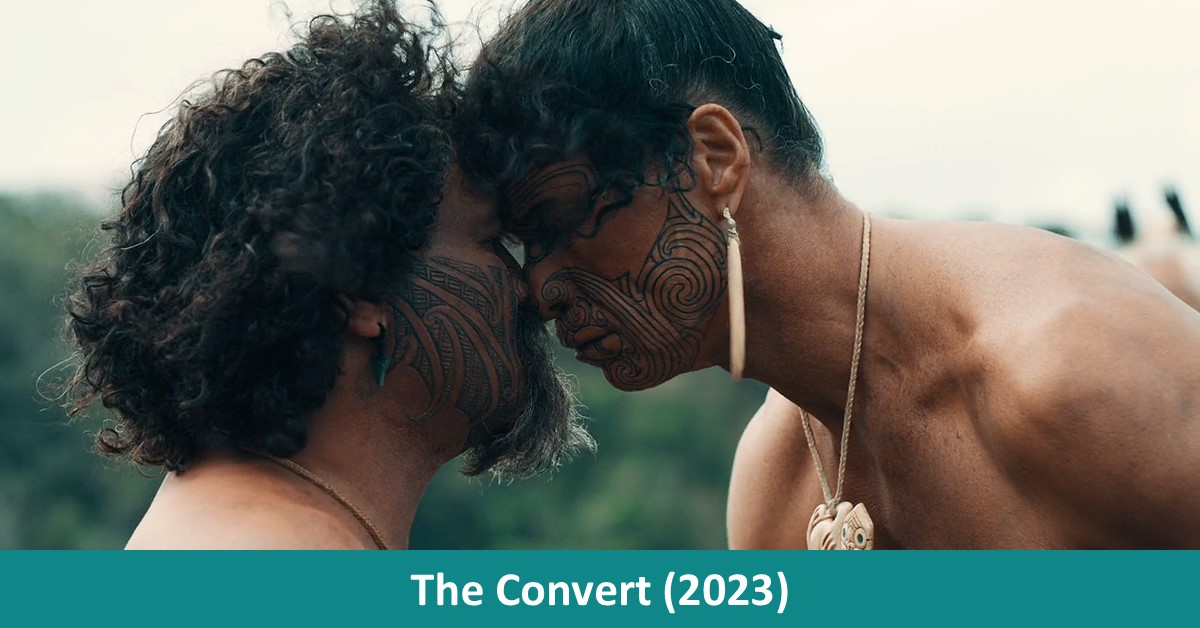
I watched The Convert on a small laptop screen, and even there the forests and grey-blue coastline of New Zealand nearly stole the film from its actors. Directed by Lee Tamahori, who made Once Were Warriors, it is a story about a lay preacher who arrives in Māori country in 1830 and is pulled into a war he never expected.
It reminded me of the moment Hana-Rawhiti Maipi-Clarke, the young Māori member of New Zealand’s parliament, performed a haka during her maiden speech and went viral around the world. Both show a culture that refuses to be a backdrop in someone else’s story.
Table of Contents
The Film at a Glance
- Director: Lee Tamahori
- Screenplay: Lee Tamahori and Shane Danielsen, from a story by Michael Bennett, based on Hamish Clayton’s 2011 novel Wulf
- Cast: Guy Pearce (Thomas Munro), Tioreore Ngatai-Melbourne (Rangimai), Antonio Te Maioha (Maianui), Lawrence Makoare (Akatarewa), Jacqueline McKenzie and Dean O’Gorman
- Premiere: Toronto International Film Festival, September 2023, with a New Zealand release in March 2024 (details)
- More: IMDb page
The Story
Thomas Munro is a former British soldier haunted by a massacre he took part in, now trying to redeem himself as a lay minister. In 1830 he sails toward Epworth, a small British settlement on Māori land, in the company of an arms trader named Kedgley who is selling muskets to the tribes.
On the way they witness a battle between two Māori groups. The ruthless chief Akatarewa is executing captured men from the rival Ngāti Hau, among them the husband of Rangimai, daughter of the Ngāti Hau chief Maianui. Munro trades his fine horse for a single life, and Akatarewa lets him save Rangimai. He takes her, wounded, to Epworth.

Epworth is not the Christian community Munro imagined. Its leading settler, Horace Beauchamp, rules through money and fear. When Maianui arrives to reclaim his daughter, he leaves her in Munro’s care so she can learn the settlers’ language and ways, along with a young warrior, Pahirua, to guard her. Beauchamp later has Pahirua killed when he suspects a romance with one of his daughters, and blames the death on a convenient scapegoat.
Munro, sickened, carries Pahirua’s body back to Maianui’s people with Rangimai and Mrs. Hegarty, the settlement’s healer. He urges Maianui not to buy more muskets, warning that the guns are turning the tribes against each other while the settlers profit. Maianui agrees to seek peace if Munro can take the offer to Akatarewa and return alive. The mission fails, and Munro barely escapes.

Akatarewa, who has seized the traders’ cargo of weapons, attacks. Maianui’s warriors use their knowledge of the land, trenches and smoke to defeat a better-armed enemy. Maianui kills Akatarewa himself and, to bind the tribes in peace, Rangimai agrees to marry Akatarewa’s son. Four years later, Munro, now bearing a tā moko, stands with the united tribe when British officials arrive to set up a customs post at Epworth, and backs their demand to be paid for the use of their land.
What Stays With Me
A Māori Story, Told in Māori
Much of the dialogue is in te reo Māori with subtitles, and the Māori characters are not a single, noble crowd. They are leaders, rivals, schemers and lovers. That alone sets the film apart from older colonial dramas.
Guns Change Everything
The film is clear about how the musket trade turned old rivalries into massacres, a real chapter of New Zealand history. The settlers sell weapons and then fear the people they have armed.
The “Civilised” Men
The most unsettling character for me is Beauchamp. He orders an innocent young man killed rather than simply speak to his own daughter, and he treats Māori lives as disposable. A settlement doctor even refuses to treat Rangimai. The film leaves no doubt about where the real savagery lies.
Compared With Dances With Wolves
It is hard not to think of Dances With Wolves, another story of a white soldier drawn into an Indigenous community. But where Kevin Costner’s film moves across open prairie and centres its hero, The Convert is set among dense forests and islands and gives its Māori characters much more of the story. Munro is not a saviour. He is a witness who learns to step back.
How It Was Received
Critics were mostly positive. Rotten Tomatoes showed 82 percent positive reviews from a small sample, according to Wikipedia’s summary. New Zealand reviewers praised the acting, battle scenes and use of te reo, while some found the middle section muddled and noted historical liberties.
Should You Watch It?
Yes, if you enjoy historical dramas, beautiful landscapes and stories that look at colonialism from more than one side. It is not flawless, and Guy Pearce’s Munro is less interesting than the people around him. But Tioreore Ngatai-Melbourne is magnetic as Rangimai, and the film earns its place among the films I recommend.







