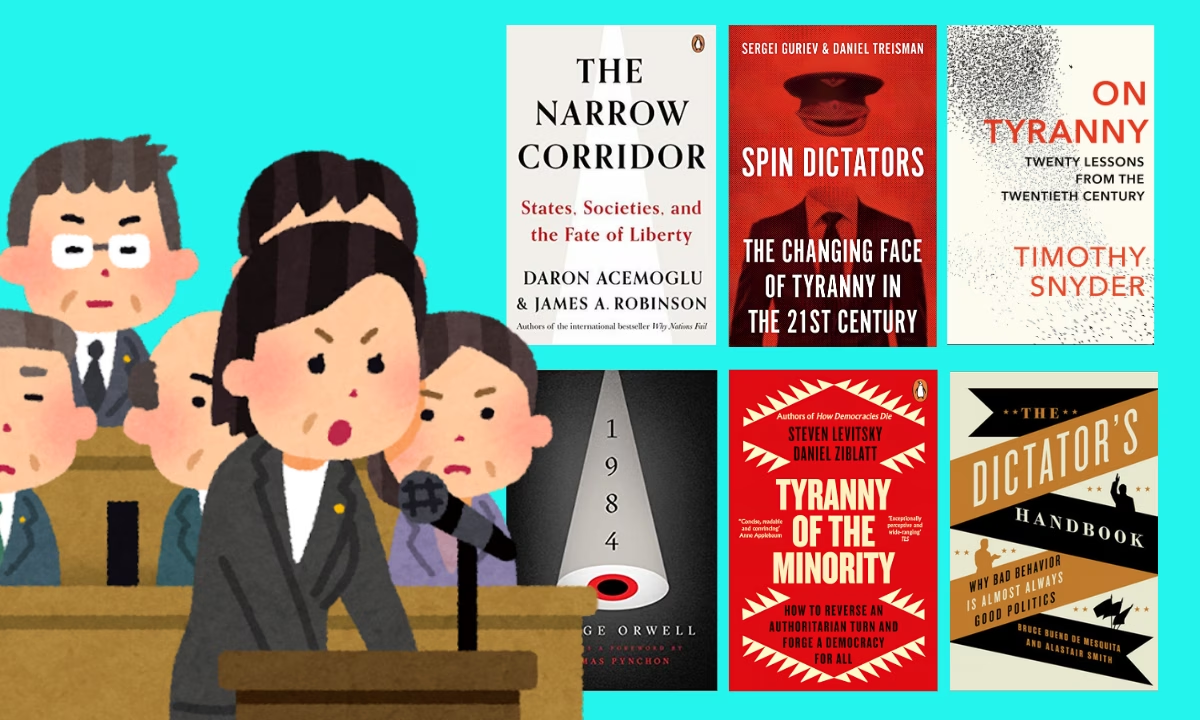
The 15 best books about democracy, power, and tyranny should help you answer three questions: who holds power, what stops its abuse, and how can ordinary people respond? My starting recommendations are On Democracy for the foundations, How Democracies Die for institutional warning signs, and On Tyranny for personal responsibility.
Their respective subjects are democratic principles, the weakening of democratic institutions, and lessons for resisting authoritarianism.
Below, I explain what each selection can help you understand, where I would read it cautiously, and which book makes a useful companion. You can follow the full reading route or choose the problem that concerns you most.
Table of Contents
15 Best Books About Democracy, Power, and Tyranny at a glance
My recommendations by reading goal are:
| Your question | My recommended starting book | Suggested follow-up |
|---|---|---|
| What should democracy actually provide? | On Democracy | Development as Freedom |
| How do elected leaders weaken accountability? | How Democracies Die | Tyranny of the Minority |
| What responsibility does an individual have? | On Tyranny | Democracy in America |
| Why do people accommodate authoritarian politics? | Twilight of Democracy | The Dictator’s Handbook |
| How should I think about propaganda? | Spin Dictators | 1984 |
| What might protect freedom over time? | The Narrow Corridor | On Liberty |
| Where should a fiction reader begin? | Animal Farm | 1984 |
These are editorial recommendations, not a ranking based on sales or a numerical quality score. The numbered list below works as a reading route, moving from democratic standards to institutional failure, personal choices, and possible safeguards.
My central advice is to read contrasting explanations together. Ask whether a book emphasizes rules, incentives, social relationships, or individual conduct. Then ask what its preferred explanation leaves out.
Why read about democracy and tyranny now?
Reading about democracy is useful now because recent evidence documents both losses of freedom and continued democratic resilience. According to Freedom House’s Freedom in the World 2026, global freedom declined for the twentieth consecutive year in 2025; 54 countries deteriorated in political rights and civil liberties, while 35 improved.
That is a reason to pay attention. It is not evidence that every country faces the same problem or that collapse is inevitable.
The same report states that 76 of the 87 countries rated Free in 2005 remained Free throughout the following two decades, more than 85 percent of that original group (Freedom House). Both findings belong in the discussion. An article that includes only decline would give you an incomplete picture of the report.
These figures describe Freedom House’s assessments of political rights and civil liberties. They are not a count of dictatorships or a prediction of your country’s future (Freedom House’s explanation of its ratings).
I would use the books below to make your questions more precise. Instead of asking whether politics feels frightening, ask whether opposition parties can compete, whether information can be checked, and whether officials face meaningful limits. Those questions create a better reading agenda than looking for a historical villain who resembles someone in today’s headlines.
How were these books selected?
I selected these books for complementary arguments, identifiable source material, and usefulness to readers with different starting points. “Best” here means the strongest fit for this particular reading route, not an objectively settled literary judgment.
The selection combines democratic theory, comparative politics, political economy, historical interpretation, and two novels. For example, Yale describes Dahl’s On Democracy as an explanation of democracy’s nature and mechanics, while Stanford’s presentation of Spin Dictators centers on information management under authoritarian rule.
I give the two books different jobs. One supplies standards; the other offers an explanation of how those standards can be imitated or weakened.
There are limits to the selection. Several books concentrate on the United States or Europe. This is not a complete account of democratic thought across Africa, Asia, Latin America, and the Middle East. I would supplement it with country-specific scholarship before applying any argument to a particular national case.
The descriptions below draw on publisher pages, authorized excerpts, and institutional sources. The cautions, pairings, and study exercises are my editorial judgments. They do not imply personal interviews with the authors or a claim to have conducted original field research.
The 15 books and the questions I would bring to them
1. On Democracy by Robert A. Dahl
My recommendation for learning the basic standards before debating their failure.
Dahl explains democracy’s purposes, institutions, and operation. His framework includes effective participation, voting equality, informed understanding, control over the agenda, and inclusion of adults, as summarized in a Yale National Initiative teaching unit.
I would begin here because it gives your reading a standard of comparison. Before deciding that an institution is democratic, you need to explain what citizens can actually do through it.
Try applying the framework to a fictional town council. Everyone may vote, but suppose only the chair can propose issues for discussion. Does equal voting settle the question of equal influence? The exercise makes the distinction between participating in a decision and shaping the choices available.
My caution is about what you expect from the book. Use it to establish questions, then turn to other authors for detailed explanations of political breakdown.
Read alongside: The Dictator’s Handbook, to compare democratic standards with a model of political survival.
2. How Democracies Die by Steven Levitsky and Daniel Ziblatt
My first choice for understanding democratic erosion through institutions.
Levitsky and Ziblatt examine how elected governments can weaken institutions and political norms. Their examples extend beyond the United States to Europe and Latin America, including Hungary, Turkey, and Venezuela.
The reading question I would keep beside this book is simple: what happens to the opposition’s ability to win and govern?
That question is more useful than collecting examples of unpleasant political speech. It directs your attention toward competition, oversight, and the conditions under which power can change hands.
I recommend making two columns in your notes. Record what an official is formally permitted to do in one; record the author’s argument about its effect on democratic competition in the other. Keep the distinction visible.
My reservation concerns application. An analogy can suggest what to investigate, but it cannot establish that two countries are following an identical path. Treat the comparative examples as prompts for evidence, not ready-made verdicts.
Read alongside: How Democracy Ends, which questions reliance on familiar historical templates.
3. Tyranny of the Minority by Steven Levitsky and Daniel Ziblatt
My recommendation for examining representation and constitutional reform.
In this book, Levitsky and Ziblatt argue that features of the American constitutional system allow partisan minorities to obstruct or govern popular majorities. They connect that argument to comparative examples and proposals for institutional reform.
I would read it after How Democracies Die. The change in emphasis gives you a useful question: when should preserving an institution give way to changing it?
Be precise about the word “minority.” Protecting individuals and vulnerable groups from abuse is a different aim from insulating a political faction from electoral accountability. Your evaluation should explain which kind of protection a particular rule provides.
For a discussion group, choose one hypothetical reform and test it under reversed political control. Would you still support the rule if your opponents benefited first?
My caution is geographic. The book’s constitutional argument is centered on the United States. Before carrying its proposed remedies elsewhere, compare the actual institutions involved.
Read alongside: On Liberty, to keep individual freedom in the conversation about majority rule.
4. On Tyranny by Timothy Snyder
My recommendation for connecting political principles to personal choices.
Snyder’s On Tyranny presents twenty lessons drawn from twentieth-century history, including defending institutions, maintaining professional ethics, and taking responsibility for language.
His first instruction is memorable: “Do not obey in advance”.
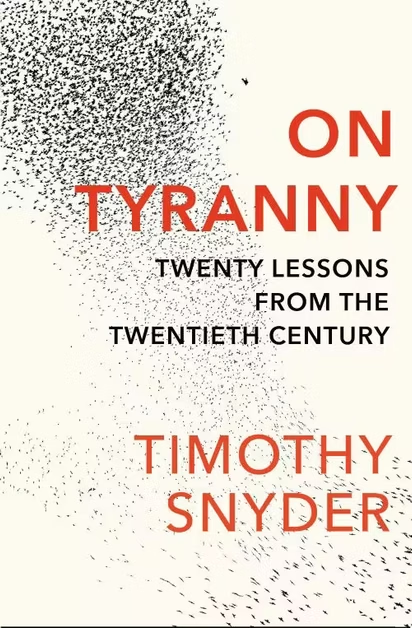
I take that sentence as an invitation to inspect accommodation before it becomes automatic. What would you do because a rule requires it? What would you do because you assume someone powerful expects it? Keep those questions separate.
For practical reading, select one lesson and write a workplace example. A teacher, administrator, editor, or accountant can each consider what maintaining a professional standard would require in a difficult situation.
I would not use a short guide as a complete explanation of why institutions fail. Nor would I turn it into a demand that readers ignore their personal safety. Its value in this reading route is the attention it brings to individual judgment.
Read alongside: Democracy in America, to connect individual responsibility with collective activity.
5. Twilight of Democracy by Anne Applebaum
My choice for thinking about the people who accommodate illiberal politics.
Applebaum examines the appeal of nationalism and authoritarianism among political and intellectual circles in the United States, Britain, and continental Europe. Her account considers the attraction of political systems that reward loyalty.
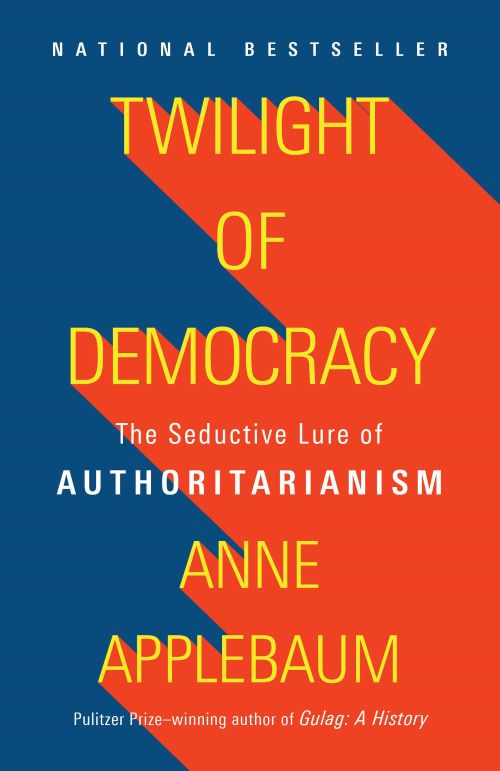
What interests me here is the move from abstract institutions to relationships. I would read it with a question about belonging: what might someone be willing to overlook in order to remain accepted by a political group?
That question also belongs in your reading habits. When you agree with an author, ask whether the explanation would persuade you if it concerned your own preferred party or social circle.
My caution is methodological. I would use an account centered on particular people to generate questions about motivation, then look for broader evidence before making population-wide claims. You do not have to accept every interpretation to benefit from examining the connection between conviction, ambition, and loyalty.
Read alongside: The Dictator’s Handbook, for a more explicitly incentive-based account.
6. The Origins of Totalitarianism by Hannah Arendt
My recommendation for sustained historical and conceptual study.
Arendt’s The Origins of Totalitarianism, first published in 1951, examines antisemitism, imperialism, and totalitarianism. Library of America’s account describes her analysis of Nazi and Stalinist rule, including manipulation of shared reality, demands for loyalty, and the political use of isolation.
I would approach it slowly, with room for questions and disagreement. Make a note whenever a term appears to describe a specific historical development rather than a general insult.
The question I would bring is: what exactly distinguishes the form of domination being described?
That question can restrain loose comparisons. If you want to apply an argument to another setting, state which mechanism you mean and what evidence would support the comparison.
My recommendation is to keep a chapter notebook rather than chase a collection of striking quotations. Record the argument, its historical setting, and a question you cannot yet answer. Return to those questions after further reading.
Read alongside: Spin Dictators, while preserving the differences between their subjects.
7. The Dictator’s Handbook by Bruce Bueno de Mesquita and Alastair Smith
My recommendation for analyzing incentives behind political loyalty.
Bueno de Mesquita and Smith build their account around leaders’ political survival and the supporters they need to retain power. Their model emphasizes how the size of that essential group affects leaders’ incentives.
I would use this book to ask a question that moral condemnation alone cannot answer: whose cooperation does a leader need tomorrow?
Try drawing a hypothetical coalition. Include the people who provide money, organization, votes, or enforcement. Then ask what each participant receives and what might make that participant withdraw support.
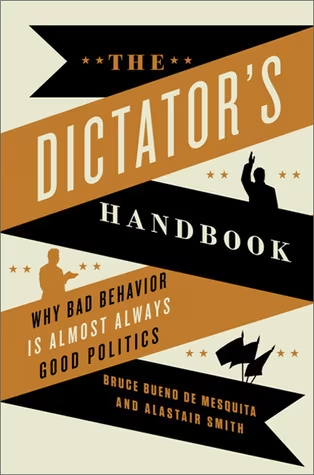
The exercise can make your political analysis more concrete. It also needs a boundary.
My caution is against allowing a useful model to explain everything by definition. If every action becomes evidence of self-interest, what observation could challenge the explanation? Write down that test before applying the model.
Read alongside: On Democracy, so the analysis of survival remains connected to an account of public accountability.
8. Spin Dictators by Sergei Guriev and Daniel Treisman
My recommendation for understanding authoritarian image management.
Guriev and Treisman describe rulers who cultivate competence, distort information, conceal censorship, and imitate democratic procedures. Stanford’s presentation of the book identifies this as an account of authoritarian adaptation in a more connected world.
I would bring a practical question to it: how would you distinguish genuine public approval from approval measured under restricted information?
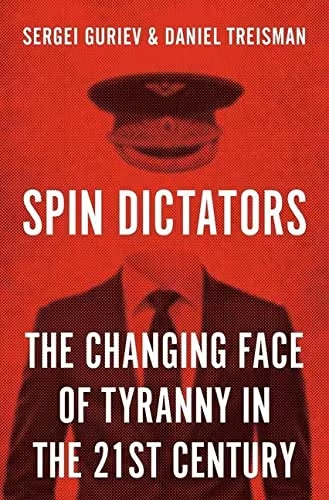
Do not answer with intuition alone. Make a list of what you would need to know about media access, opportunities to criticize, and the conditions under which opinions were expressed.
My caution concerns labels that become permanent. I would not assume that a government described through one method of control must always use that method or use it exclusively. Check the period and evidence attached to any claim.
The book makes a useful companion to fiction about propaganda because it asks you to consider institutions and incentives alongside the emotional force of the story.
Read alongside: 1984.
9. The Narrow Corridor by Daron Acemoglu and James A. Robinson
My choice for considering how state capacity and social accountability might coexist.
Acemoglu and Robinson argue that liberty requires an ongoing balance between a capable state and a society able to restrain it. Their account treats the relationship as a continuing struggle, rather than a condition secured once and for all.
This is the book I would assign after a discussion that has become stuck on whether government should simply be stronger or weaker. Instead, specify the power under discussion. Do you mean the capacity to provide a service, enforce a judgment, silence a critic, or resist scrutiny? Then ask who can contest its use.
My caution is about the scale of explanation. I would treat a broad historical framework as a starting point for investigating a country, followed by local history and institutional evidence.
The study exercise is to name both a public responsibility and a mechanism for holding its administrator accountable. Consider what happens when either is missing.
Read alongside: Development as Freedom.
10. Democracy in America by Alexis de Tocqueville
My recommendation for thinking about participation between elections.
Tocqueville examines American political and social life, including the role of voluntary associations. In an excerpt published by the University of Chicago Press, he argues that people must learn to act together to preserve their freedom.
I would bring this question to your reading: where can a person practice making a decision with others?
Think about a neighborhood group or student organization. Who sets the agenda? Who keeps records? How can members challenge a decision? Use those questions to turn an abstract discussion of participation into something you can inspect.

My caution is against treating any historical observer as a neutral narrator outside his own setting. Keep the description, the author’s judgment, and your present-day interpretation separate.
For your notes, compare one passage with Dahl’s standards. Ask whether the association being described offers meaningful participation or simply asks people to follow.
Read alongside: On Democracy.
11. On Liberty by John Stuart Mill
My recommendation for examining limits on coercion and conformity.
Mill defends freedom of thought, discussion, and individuality. His harm principle concerns when coercion is justified, while his argument also addresses social pressure as a threat to freedom.
I would read this book with a difficult case in mind, not just a principle you already support.
Suppose someone expresses an opinion you strongly dislike. What response would you permit from another citizen? What would you permit from a public authority? Explain the justification separately in each case.
The exercise does not require you to treat every disputed question as simple. Its purpose is to make your reasoning visible.
My caution is against using a familiar phrase as a substitute for reading the argument. Write down what you mean by harm, identify the person affected, and state why your proposed response is proportionate. If you cannot do that yet, keep the question open.
Read alongside: Tyranny of the Minority.
12. Development as Freedom by Amartya Sen
My recommendation for connecting political freedom with people’s actual opportunities.
Sen treats freedom as both a purpose of development and a means of achieving it. His argument shifts attention toward what people can actually do with their lives, rather than treating aggregate economic wealth as a sufficient account of progress.
I include it because I want a reading list about democracy to ask what participation means in practice.
Use a hypothetical example. Two people hold the same formal right to attend a public meeting, but one cannot reach the venue or understand the materials. What would making participation practically possible require?
That is a reading exercise, not evidence about a particular population. It helps you decide which additional facts you would need.
My caution is about scope. I would choose Sen for evaluating the meaning of development and freedom, then use other books here for a closer analysis of political takeover.
Read alongside: The Narrow Corridor.
13. Animal Farm by George Orwell
My recommendation for a fiction reader’s first encounter with the abuse of political ideals.
Orwell’s fable follows animals who overthrow their human owner in pursuit of equality, only for the new order to reproduce domination. The publisher identifies the novel as a satire of revolution’s movement toward totalitarian rule.
Its best-known contradiction captures that betrayal: “All animals are equal, but some animals are more equal than others”. I would ask you to track permissions rather than merely identify villains. Who can question a decision? Who interprets a rule? What would let another animal verify the explanation?
My caution is straightforward: a novel can help you formulate a question, but it cannot verify a factual allegation about a present government.
After reading, choose one political promise in the story and write down what institutional safeguard you would want attached to it.
Read alongside: The Dictator’s Handbook.
14. 1984 by George Orwell
My recommendation for thinking about truth under coercive power.
1984 depicts Winston Smith’s life under a Party associated with surveillance, control of information, and punishment of independent thought. Penguin Random House’s reading guide examines the novel’s treatment of memory, trust, and political control.
The question I would carry through it is: how can someone check a claim when the means of checking are controlled?
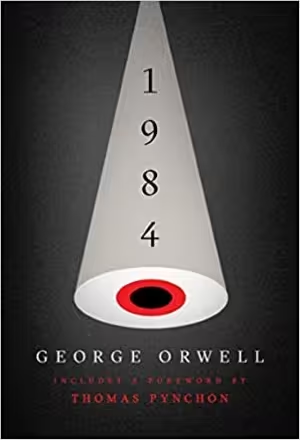
That gives your reading more precision than calling every disputed message “Orwellian.” Identify the particular mechanism you have in mind. Is it a rewritten record, a threat, an impossible contradiction, or the destruction of trust?
My caution is to preserve the difference between a fictional totalitarian world and evidence about an actual institution. State the resemblance narrowly and investigate the differences.
For a discussion group, compare the questions raised by 1984 with those raised by Spin Dictators. Ask what each format lets you understand, and what it cannot establish.
Read alongside: Spin Dictators.
15. How Democracy Ends by David Runciman
My recommendation for questioning an overly familiar warning story.
Runciman organizes his book around coups, catastrophe, and technological takeover. In the publisher’s preview, he asks whether democracy could lose substance through unfamiliar processes, including dependence on technologies and decisions people do not control.
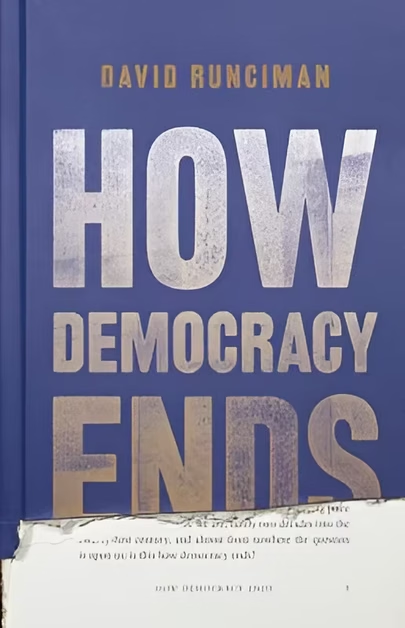
I would finish the route here because it invites you to reconsider the categories you brought to the earlier books.
What would you investigate if political failure did not look like the historical example you know best? What decisions would you want citizens to be able to question, even when those decisions were presented as technical?
My caution is about prediction. Treat possible futures as scenarios to test, rather than outcomes the book has established.
For your final exercise, choose one scenario and state what would count as evidence for it, what would count against it, and what remains uncertain.
Read alongside: How Democracies Die, then compare their questions before comparing their conclusions.
Which book should you read first?
Start with On Democracy if you want foundations, How Democracies Die if your main concern is institutional erosion, or Animal Farm if fiction is your preferred entry point. Those recommendations follow their respective focus on democratic principles, institutional weakening, and the betrayal of an egalitarian revolution.
If you want my shortest general route, choose these three:
- On Democracy: establish the standard you want institutions to meet.
- How Democracies Die: examine an account of how those institutions weaken.
- The Narrow Corridor: consider a framework for maintaining liberty.
I would then add On Liberty before making strong claims about what a democratic majority should be permitted to do.
You do not need to finish fifteen books before forming a useful question. One carefully examined argument, tested against a contrasting account, is a manageable place to begin.
Book pairings that make the reading more demanding
These pairings are my suggestions for comparing arguments. They are not claims that the authors directly answered one another.
| Read together | Question I would ask |
|---|---|
| On Democracy and The Dictator’s Handbook | What changes when I move from evaluating institutions to explaining a leader’s incentives? |
| How Democracies Die and How Democracy Ends | When does historical comparison help, and when should I test a different scenario? |
| On Liberty and Tyranny of the Minority | How would I distinguish protection from abuse and insulation from accountability? |
| Twilight of Democracy and The Dictator’s Handbook | What evidence would distinguish conviction, belonging, and material incentives? |
| 1984 and Spin Dictators | Which questions raised by fiction would require empirical evidence? |
| The Narrow Corridor and Development as Freedom | What would both accountable government and usable freedom require? |
My preferred method is to write a one-page disagreement after each pair. Identify the question, give the strongest version of each explanation, and state what additional evidence you need.
Do not force a disagreement where the books address different subjects. Sometimes the most useful finding is that one explains a problem the other leaves outside its scope.
How can you turn this reading list into better political judgment?
Use a repeatable set of questions, and apply it to arguments you welcome as well as arguments you dislike.
First, separate three kinds of statement in your notes: what happened, what the author thinks caused it, and what the author thinks should change. Ask for the evidence appropriate to each. A documented event does not, by itself, settle an explanation of its causes.
Next, track one mechanism through a chapter. You might choose the selection of officials, control of information, or the distribution of political rewards. Write down the actors and the sequence of decisions. Avoid replacing an explanation with a label.
Then test your interpretation against an alternative. Could the evidence support more than one account? What observation would help you choose between them?
I also recommend a reversal test. Before supporting a power, imagine it held by an opponent. State which limits you would still want and why.
Finally, check your application. If you use a book to interpret a current event, find reporting or primary documents about that event. The book can suggest a question; the event needs its own evidence.
For a four-week study group, I would assign one manageable task each week: define a democratic standard, examine a proposed mechanism of erosion, compare two explanations, and evaluate a safeguard. You can adjust the reading load without abandoning the sequence.
The goal I would set is modest and useful: finish with a claim you can explain, evidence you can identify, and a question you still need to investigate.
What else should you know before choosing a book?
Choose according to the question you want answered, the kind of evidence you need, and the amount of reading you can sustain.
Are these books politically neutral?
I would not approach any political book as a substitute for judgment. Evaluate its argument, definitions, evidence, and omissions separately. Agreement with a conclusion should not exempt the reasoning from examination.
For discussion, ask each reader to identify one persuasive argument and one unresolved question. That creates a more useful conversation than asking only whether the book supports your politics.
Can novels explain real political events?
I would use novels to formulate questions and recognize possibilities, then consult evidence about the event itself. Animal Farm and 1984 are works of fiction, as their publisher pages identify.
A resemblance to a fictional scene is the beginning of an inquiry. Explain exactly what you think resembles it and what evidence could establish that resemblance.
Should you buy all fifteen?
My recommendation is to begin with one foundation, one explanation of political failure, and one contrasting perspective. Borrow or sample them where possible before expanding your list.
When comparing editions, check the publisher’s description for translation, introduction, and supplementary material. For example, Library of America’s expanded Origins of Totalitarianism includes additional material showing how the work changed over time.
What is the most useful question to keep asking?
I would keep returning to this: who can challenge power, through what process, and with what realistic chance of being heard?
Write your answer before reading, then revise it after each book. Keep the revisions. They will show you where your understanding has become more precise, where an argument has changed your mind, and where you still need evidence.