

Last updated on October 29th, 2026 at 10:03 am
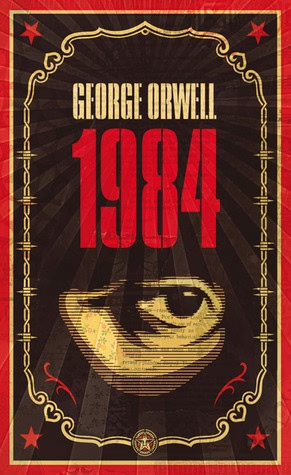
1984, or Nineteen Eighty-Four, by George Orwell is a 1949 dystopian novel about Winston Smith, a minor Party clerk in a London where the government rewrites the past and listens to every room. The ending is bleak on purpose: Winston is broken in Room 101, betrays Julia to save his own face, and closes the book by loving Big Brother.
Below you get the full spoiler summary, the ending explained, and the angle most guides skip. The telescreens are not what undo Winston. A shopkeeper he liked and an Inner Party man he idolised are.
Table of Contents
At a Glance
What it is: A novel about a man who tries to keep one private thought alive inside a state that polices thought itself.
How it ends: Winston is arrested, tortured, and reprogrammed. In Room 101 he begs the Party to put Julia in his place, and the last line says he loves Big Brother.
My angle: The surveillance is the backdrop. The real engine is misplaced trust, in a shop owner, in a glance, in a lover, and finally in his own heart.
Verdict: 4.5 out of 5. Cold, claustrophobic, and still the clearest portrait of how a regime can make lying feel like honesty.
Who should read it, and who may bounce. If you like books that argue with you, this one is worth your weekend. Readers who enjoy political fiction, anyone who has watched a news cycle rewrite itself overnight, and students writing about propaganda will get the most out of it.
Readers who want a plot-driven thriller, or who need a hopeful payoff, may stall around the middle.
Goldstein’s book takes up a chunk of Part 2, and I will admit I skimmed a paragraph or two the first time. People in a fragile mood should also know the last third is unrelenting in a way that never lets up, and it is never redeemed. It is meant to hurt.
Introduction
Nineteen Eighty-Four (also printed as 1984) is George Orwell’s final completed novel. It was published on 8 June 1949 by Secker & Warburg in London, and the American edition followed five days later. Orwell is the pen name of Eric Arthur Blair.
Quick Verdict
A bleak, tightly argued novel that turns a love story into a trap. Recommended for readers of political fiction and anyone who wants to understand where words like “doublethink” and “Room 101” come from.
Should You Read It?
| Pros | Cons |
|---|---|
| Ideas that still feel current (rewritten facts, enforced slogans, constant monitoring) | Goldstein’s book in Part 2 slows the story for several pages |
| Room 101 is among the most memorable scenes in English fiction | Julia is thinner as a character than Winston or O’Brien |
| Short chapters, easy to read in sittings | Part 3 is grim from start to finish, with no relief |
| The Newspeak appendix is a small essay worth reading on its own | Its famous vocabulary is so widely used that parts may feel familiar |
What Is It About?
Winston Smith works at the Ministry of Truth, where his job is to alter old newspaper records so the Party is always right. He starts a secret diary, begins an affair with a co-worker named Julia, and joins what he believes is an underground resistance, only to be captured and remade by the very man he thought was his ally.
Rating
4.5 / 5
What Was the Context Behind 1984 by George Orwell?
Orwell wrote it while seriously ill, and I think you can feel that in the prose. He finished the manuscript on 4 December 1948 and left the Scottish island of Jura in January 1949, and he died of tuberculosis on 21 January 1950. The farmhouse on Jura, Barnhill, had no electricity or hot water. He had also been treated with streptomycin at Hairmyres Hospital in 1948, a drug that was new at the time.
A few other facts help frame the book:
An earlier working title was The Last Man in Europe. Orwell wrote that he was hesitating between that and Nineteen Eighty-Four, and the publisher suggested the numeric title. You will see a popular claim that he simply flipped 1948. Dorian Lynskey, who wrote a 2019 book on the novel, doubts that theory, so I treat it as unproven.
The Russian novel We by Yevgeny Zamyatin is widely considered a primary influence.
Orwell did not want it read as an attack on socialism in general. According to the introduction in the current Penguin edition, a week after publication his publisher visited his bedside to take down a statement on exactly this point. Orwell himself called the book a satire and said he believed “something resembling it could arrive”.
The book sold fast. The same Penguin introduction says that within twelve months it had sold around 50,000 hardbacks in the UK and more than a third of a million in the United States.
What Happens in 1984? Plot Summary and Ending Explained
Part One: The diary
It is April 1984 in London, now the chief city of Airstrip One, a province of the superstate Oceania. The clocks strike thirteen. Winston Smith, thirty-nine, with a varicose ulcer above his right ankle, climbs seven flights of stairs to his flat in Victory Mansions because the lift is broken.
Posters of an enormous face with a black moustache hang on every landing: BIG BROTHER IS WATCHING YOU. In his flat, a telescreen blares production figures and cannot be switched off. It receives and transmits at the same time, so Winston must assume he is always seen and heard.
Winston works in the Records Department of the Ministry of Truth, one of four giant ministries. The others are the Ministry of Peace (war), the Ministry of Love (law and order, and torture), and the Ministry of Plenty (the economy). His actual job is rewriting history.
When a Big Brother prediction turns out wrong, or when the chocolate ration is cut after a “categorical pledge,” Winston edits the old Times article and drops the original into a memory hole to be burned. Nothing is ever admitted to be altered.
The Party slogan says it plainly: who controls the past controls the future.
Inside the flat, in an alcove the telescreen cannot see, Winston opens a diary, an act that is not illegal only because there are no laws, but is punishable by death or twenty-five years in a labour camp. His first entry is a stumbling account of a war film. Then, almost without noticing, he writes DOWN WITH BIG BROTHER over and over.
He knows this is thoughtcrime, and that the Thought Police will eventually find him. He decides he is already dead and that the only thing left is to stay alive as long as possible.
We meet the people around him. Syme, a philologist working on the Eleventh Edition of the Newspeak dictionary, delights in the destruction of words, and Winston privately decides Syme is too intelligent to survive. Parsons, a sweaty, cheerful neighbour, is the perfect believer.
His children, in Spies uniforms, accuse Winston of being a thought-criminal and hit him with a catapult. O’Brien, a large, civilised Inner Party member, once gave Winston what he took to be a look of secret sympathy during the Two Minutes Hate, and Winston dreamed years ago of a voice saying, “We shall meet in the place where there is no darkness.”
And there is the dark-haired girl from the Fiction Department, whom Winston hates and suspects of being a spy.
Winston records a memory of a prostitute in the prole district, and, in the stretch of Part One I found most revealing, a memory of the one time he held proof the Party lies: a photograph, years ago, showing three executed “traitors,” Jones, Aaronson and Rutherford, at a party function in New York on a date when their confessions said they were in Eurasia.
He dropped it into the memory hole. He writes, “I understand HOW: I do not understand WHY.”
Part Two: Julia and the room above the shop
The dark-haired girl trips in a corridor, and while he helps her up she slips a note into his hand: I love you. Her name is Julia. After several failed attempts in the canteen, they speak between spoonfuls of stew and arrange a meeting in a crowd.
A few days later, on a country walk she has mapped out, they make love in a wooded clearing. She is not a believer or a thinker.
She hates the Party in the same way she hates being told when to enjoy herself, and she has had many affairs with Party members. For Winston, this is a political act. “The sexual act, successfully performed, was rebellion.”
They meet in odd places: a belfry, the street, a market. Winston rents a room above an antiques shop run by Mr. Charrington, the old man who sold him the diary and who shows him an old rhyme about the bells of St. Clement’s. The room has no telescreen. Julia arrives wearing make-up and perfume, with real coffee, sugar and bread smuggled out of the Inner Party.
They are happy there, and they both know it cannot last. Winston dreams of his mother, remembers stealing his sister’s chocolate as a child, and decides the proles, who still love and laugh and sing, are the only hope. A moment later a rat appears in the wall. Winston goes pale.
He has never told her the word that frightens him most, and she, trying to comfort him, tells him she will fill the hole.
During Hate Week, Oceania switches enemies mid-speech. Eurasia, the long-time foe, becomes an ally, and Eastasia becomes the enemy. The posters are torn down and replaced overnight, and the Records Department works around the clock until no trace of the earlier war remains.
O’Brien approaches Winston in a corridor and, by pretending to talk about a new Newspeak dictionary, gives him his address. Winston and Julia go to his luxurious flat. O’Brien turns off the telescreen, which Winston did not think was possible, and welcomes them to the Brotherhood, led by Emmanuel Goldstein.
He asks whether they would commit murder, sabotage, suicide, and whether they would be willing to be separated. Winston says yes to everything but the last, where he says no after Julia says it first. O’Brien promises Winston a copy of Goldstein’s book.
Winston receives it, reads it in the room above the shop, and reads aloud from the chapters “Ignorance is Strength” and “War is Peace” to a sleepy Julia. Goldstein’s argument is that the three superstates are in perpetual war because war destroys the surplus that would otherwise make people equal.
Winston reaches the point where the book is about to explain why, when he realises Julia has fallen asleep. They wake up, look at the sky, say “We are the dead,” and an iron voice behind a picture says, “You are the dead.”
The telescreen was hidden behind the engraving of St. Clement’s. Black-uniformed men pour into the room. Julia is punched in the stomach and carried away. Mr. Charrington walks in, his posture straighter, his hair black, his accent gone. He is a member of the Thought Police and has been for years.
Part Three: The Ministry of Love
Winston is taken to a windowless cell with white tiles and constant light. Over what could be weeks, or months, he sees other prisoners. Ampleforth, the poet, was arrested over an unchangeable word in a Kipling poem. Parsons is there, proud that his seven-year-old daughter denounced him after hearing him say “Down with Big Brother” in his sleep. A starving man is shown the words “Room 101” and screams and begs not to be sent there.
Then O’Brien walks in. “They got me a long time ago,” he says. He is not a rebel. He is Winston’s interrogator, and he has apparently watched him for seven years. After an initial period of beatings, O’Brien begins what he calls a cure. Strapped to a bed, with a dial in his hand, he holds up four fingers and insists Winston see five. The point is not to make Winston lie.
It is to make him genuinely believe the Party’s version of reality. When Winston asks what is in Room 101, O’Brien answers, “You know what is in Room 101.” In the second stage he explains why the Party wants power, and the answer is the most frightening speech in the book: power for its own sake. “If you want a picture of the future, imagine a boot stamping on a human face for ever.”
He shows Winston his ruined body in a mirror, pulls out a tooth, and tells him he will be hollow.
Winston recovers, learns to fake the right thoughts, and then, one night, calls out Julia’s name in his sleep. O’Brien appears at once. “You must love Big Brother,” he says, and sends him to Room 101.
In Room 101 Winston is strapped to a chair. O’Brien shows him a cage with two starving rats and a mask that will lock over his face. Winston’s panic breaks him, and he screams the words he swore he would never say: “Do it to Julia! Not me!” The cage door clicks shut and not open. He has not been tortured into saying it. He has meant it.
The ending
Winston is released. He drinks Victory Gin in the Chestnut Tree Café, plays chess against a newspaper problem, and works at a pointless job on a committee about commas. He meets Julia by chance in a freezing park. They discover each other has been through the same thing. “I betrayed you,” she says. “I betrayed you,” he says. Neither feels anything. They agree they must meet again, and both know they will not.
He is in the café when a trumpet announces victory in Africa. Winston sits there, tears running down his nose, a gin-soaked ghost, picturing the bullet he has long expected. The last lines tell us “He loved Big Brother.” The struggle is over, and the Party has won not by killing him but by making him a believer first.
What does the Appendix on Newspeak mean for the ending?
The book ends with a short essay on Newspeak written in the past tense, as though the regime has fallen. Orwell does not say so, and readers disagree. Some see a thread of hope, a historian looking back. Others, me included, read it as a style choice that adds an eerie, scholarly coldness.
Character Analysis
Winston Smith
Winston is not a hero. He is a man who is vain about his intelligence, afraid of his body (the ulcer, the cough, the false teeth), and capable of casual cruelty. He fantasises about raping and murdering Julia before he has met her. He wants to “rot” the Party by spreading corruption.
He remembers, with shame, how he stole food from his dying sister. I think this is the book’s smartest decision. A pure rebel would be easy to admire and easy to forget. A flawed one, who knows he is flawed and still tries, is harder to shake.
His arc runs from fantasy rebellion to real action, then to confession, then to complete collapse. The thing that makes it painful is that he warns us in Part Two, to Julia: they could make him confess, but “if they could make me stop loving you, that would be the real betrayal.”
Then they do.
Julia
Julia is the book’s weakest-drawn major figure, and I think that is partly deliberate and partly not. She is practical, sensual, and pragmatic, a “rebel only from the waist downwards,” as Winston says. She falls asleep when he talks about doctrine.
She does not care about the past. She is more intelligent than Winston in one way, though. She suspects the war is staged, and she knows how to survive by looking orthodox. Her flaw is that Orwell mostly shows her through Winston’s eyes, so we rarely get a full inner life.
Her final scene in the park, stiff and unforgiving, is the best writing about her.
O’Brien
O’Brien is the most disturbing figure because he is the most attractive. He is witty, physically graceful, and respectful of Winston’s mind.
The man who tortures him is also the man who tells him he is not insane. Winston calls him a friend and an enemy and finds that it “did not matter.”
That line sits behind the whole book. O’Brien does not lie about what he is doing. In Part Three he states the Party’s purpose out loud, and that is what sets him apart from villains in most dystopian novels. He does not need Winston to be fooled. He needs Winston to understand and still agree.
Mr. Charrington
Charrington is the book’s cheapest trick, and also its most effective one. He is warm, forgetful, and charming. He tells Winston about rhymes, sells him a paperweight, and rents him the room. Winston half-registers that he cannot verify the man, and then does not follow the thought. Orwell lets us trust him too.
Parsons, Syme and Ampleforth
The minor characters each show a different way to fail. Syme is too clever and vanishes. Parsons is too loyal and is arrested for talking in his sleep. Ampleforth is too literary and is undone by a rhyme. None of them is spared by being sincere.
Themes and Symbolism
Trust as the Party’s real weapon
Here is the angle I promised. Most reviews open with surveillance, and surveillance matters. The telescreen is the book’s most famous object. But look at who actually catches Winston. It is not a camera in a lamp post. It is Charrington, who sells him a diary.
It is O’Brien, whom Winston trusts on the strength of a single flash of the eyes, a point the narration makes in Part Two, Chapter 5, and one Julia finds perfectly natural. It is the Parsons child who listens at a keyhole. It is Julia and Winston themselves, who each give the other up.
The state does not need to watch everyone if it can make everyone watch each other. Winston reflects in Part Two that the family has become “an extension of the Thought Police.”
Memory and the control of the past
“Who controls the past controls the future: who controls the present controls the past.” The Records Department scenes are the book at its sharpest. Winston is not lied to so much as made unable to prove a lie. When he holds the Jones, Aaronson and Rutherford photograph, it is the only moment in the book when physical evidence exists, and he drops it into the memory hole.
O’Brien later shows him the same photo and burns it. The scene shows that the aim is not to hide facts but to make the person doubt his own memory.
Language and thought
The Newspeak appendix argues that a language can be shrunk so that rebellion becomes impossible to express. Syme says it first: “the whole aim of Newspeak is to narrow the range of thought.” I find this the part of the book most often misread.
Orwell is not claiming that words cause thought. He is claiming that a state that controls words has a head start on controlling what can be said, and so what can be organised.
Two and two make four
Winston writes in the diary: “Freedom is the freedom to say that two plus two make four.” In Part Three, O’Brien tortures him until he sees five fingers, and later, after the electrical treatment, Winston does see five for a moment. The symbol works because it is so small. It is not about arithmetic.
It is about whether one person can hold a fact against a room full of people who insist otherwise.
Room 101, rats and the private self
The rats are a perfect piece of design. They are specific to Winston, set up in advance in Part Two when Julia mentions them, and effective because Orwell makes them physical and close.
But the important thing is that Room 101 is about betrayal. O’Brien explains that for everyone there is something “unendurable.” What breaks Winston is not pain but the moment he realises he would give up the person he loves. The Party does not need a confession. It needs him to feel it.
The proles, the thrush, the washerwoman
Winston’s hope lies in the proles, and Orwell gives us small moments of it: a thrush singing in the wood, the washerwoman singing in the courtyard. “The birds sang, the proles sang, the Party did not sing.”
It is Winston’s best idea and also the one the book never lets him test. By the end, even this hope has been cut off, and it is O’Brien who tells him the proles will never rise.
Chocolate, glass and gin
Small objects carry the book. The glass paperweight is a little world of the past, and it is smashed. Chocolate shows up three times: the rationing announcement, Julia’s real chocolate, and the childhood theft. Gin is the tool of numbness. These are the details I remember longest.
My Evaluation
1984 by George Orwell is a cold, compact, and strangely tender book, one that makes the loss of privacy feel like a death in the family.
Strengths
The Records Department scenes show propaganda as boring office work, which is more frightening than any speech.
Orwell trusts the reader. The big ideas arrive through objects (the paperweight, the coin, the diary) and not lectures.
Room 101 earns its fame. Every earlier hint about rats pays off.
The shortness of the chapters keeps the pace brisk even in grim stretches.
Weaknesses
Goldstein’s book, though thematically useful, repeats ideas we have already heard. I skimmed some of Chapter 3 the first time.
Julia deserves more interior life.
The long interrogation speeches are efficient but do read like essays.
Impact and why it stayed with me
I finished the book feeling oddly quiet, as if I had been in a cold room for too long. What lingered was the scene in the park. Two people who once risked everything stand a metre apart and discover they feel nothing. That scene says more about what cruelty does than any torture sequence.
The book keeps being rediscovered.
In January 2017, Penguin ordered a 75,000-copy reprint after the novel climbed to No. 1 on Amazon’s list. The same report notes Nielsen BookScan recorded 47,000 print copies sold since Election Day, and that sales had also spiked in 2013 when Edward Snowden’s disclosures about NSA surveillance made headlines. A Penguin spokesman also said that the start of each spring semester always brings fresh sales because the book is a classroom staple.
Commentators linked the 2017 surge to the phrase “alternative facts”, though, as the reports themselves say, nobody can be sure of the cause. It also appears on lists: Time included it among the 100 best English-language novels from 1923 to 2005, and it ranked eighth in the BBC’s Big Read survey of 2003.
1984 is one of the 10 Influential Western Novels That Challenge and Reward Your Reading
How does it compare with similar books?
We by Yevgeny Zamyatin, which is widely seen as a primary influence, has a similar setting but a different pulse. Aldous Huxley’s Brave New World (1932) imagines control through pleasure, while Orwell imagines it through fear and pain. I have always found the two complementary rather than competing.
Animal Farm, which came before it, is shorter and more fable-like. If you liked that, 1984 is the same argument without the animals and with far fewer places to hide.
How does the film compare with the book?
The best-known film, Nineteen Eighty-Four (1984), was written and directed by Michael Radford, stars John Hurt and Richard Burton, and was released in the UK on 10 October 1984.
It had a budget of £5.5 million and, according to The Numbers, a US box office of about $8.37 million after a wide US release on 14 December 1984.
A German review site called it a nearly slavishly faithful adaptation with deliberately old-fashioned photography, which matches my memory of it: grey, damp and respectful of the text.
Earlier versions exist too. A BBC production written by Nigel Kneale starred Peter Cushing as Winston, and a 1956 film followed with Edmond O’Brien. A 2013 stage version by Robert Icke and Duncan Macmillan was reported in 2021 as being developed as a limited TV series, though I could not confirm whether it was ever made.
What the films cannot easily capture is Winston’s interior voice, the half-formed thoughts that make the book claustrophobic. The page does that better.
Personal Insight: What the Book Teaches About Trust in the Age of “Alternative Facts”
When 1984 hit No. 1 on Amazon in January 2017, most of the commentary was about lies. I think the more useful reading is about trust. The Party’s hold in the book depends less on cameras than on a population that cannot tell who is safe to believe.
That is the problem the book solves for a modern reader: it explains why an environment of constant contradiction is so tiring, and why tiredness is exactly what a propagandist wants. Here are five lessons I took from it:
- Notice what you trust on thin evidence. Winston trusts O’Brien because of a look. Ask what your own “flash of the eyes” is based on.
- Keep a record you control. Winston’s diary matters because it fixes a date and a fact. Notes, screenshots and dated emails serve the same purpose.
- Be most careful with people who are suspiciously helpful. Charrington never asks for anything. That should have been the warning.
- Small private loyalties are a defence. Winston’s mother, the paperweight and Julia are all private attachments the Party tries to remove.
- Do not mistake exhaustion for agreement. Many Party members in the book are not convinced. They are too tired to object.
For further reading on the book’s recent revival, see the Boston Globe report on the 2017 surge and the Penguin article on how the novel came together on Jura.
Quotable Lines and Passages
- “Thoughtcrime does not entail death: thoughtcrime IS death.” (Part 1, Chapter 2, Winston’s diary.)
- “I understand HOW: I do not understand WHY.” (Part 1, Chapter 7.)
- “If there is hope, it lies in the proles.” (Part 1, Chapter 7.)
- “Freedom is the freedom to say that two plus two make four.” (Part 1, Chapter 7.)
- “We shall meet in the place where there is no darkness.” (Part 1 and Part 2, O’Brien’s recurring line.)
- “Sanity is not statistical.” (Part 2, Chapter 9.)
- “They can’t get inside you.” (Part 2, Chapter 7, Julia, which the ending quietly disproves.)
- “The object of power is power.” (Part 3, Chapter 3, O’Brien.)
- “Do it to Julia! Do it to Julia! Not me!” (Part 3, Chapter 5.)
- “He loved Big Brother.” (Final line.)
Conclusion
1984 by George Orwell is not the book I expected the first time I read it. I went in expecting a book about cameras and found a book about people. The surveillance state is real in the novel, but it works because Winston wants someone to confide in, and the Party knows it. That is why the ending hurts.
Winston loses his body, his dignity, his lover and finally his mind, and the story still treats it as ordinary business at a café table.
I recommend it to readers of political fiction, high-school and college students, and anyone interested in how propaganda works at the level of daily life. I would hesitate to recommend it to readers who need an uplifting arc. Everyone else should read it at least once, ideally somewhere warm.
Rating: 4.5 / 5
Nineteen Eighty-Four (1984)

1984, or Nineteen Eighty-Four, by George Orwell is a 1949 dystopian novel about Winston Smith, a minor Party clerk in a London where the government rewrites the past and listens to every room. The ending is bleak on purpose: Winston is broken in Room 101, betrays Julia to save his own face, and closes the book by loving Big Brother.
URL: https://www.sopranu.com/nineteen-eighty-four-1984-george-orwell-review/
Author: George Orwell
4.5
Pros
- Ideas that still feel current; Room 101 is unforgettable; short chapters; the Newspeak appendix stands on its own
Cons
- Goldstein's book slows Part 2; Julia is thinly drawn; Part 3 is grim from start to finish







3 thoughts on “1984-Nineteen Eighty-Four by George Orwell Is Really About Who You Trust, Not Who Watches”