
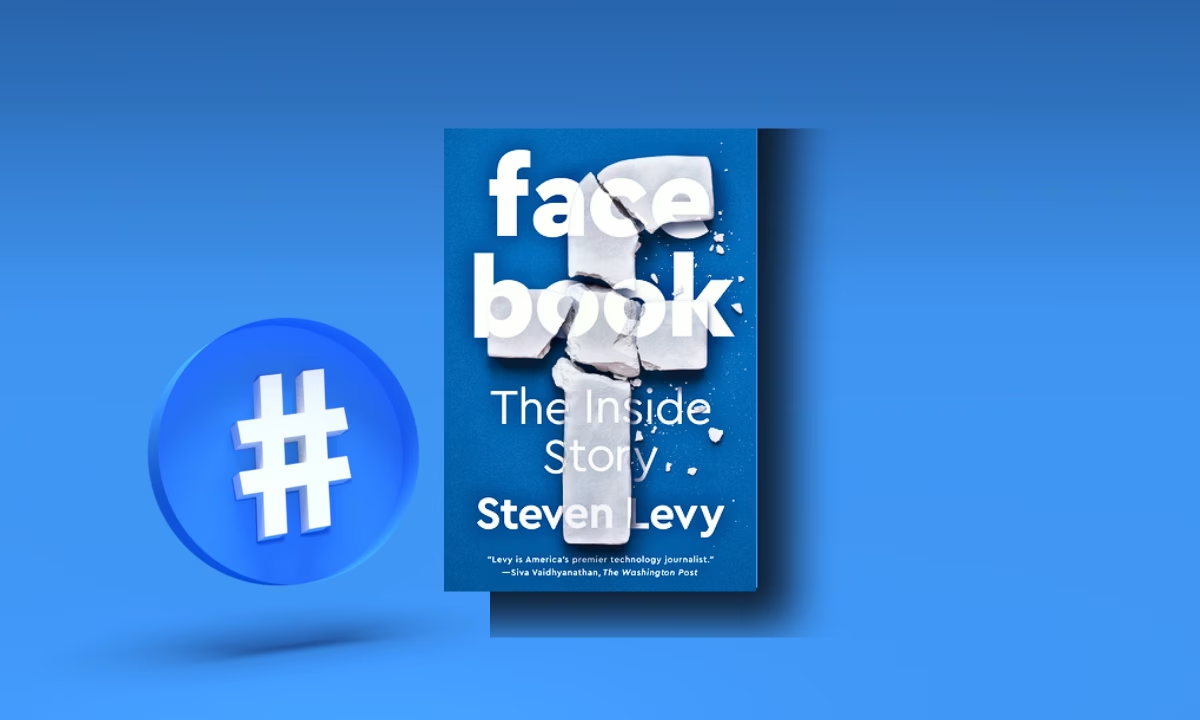
Facebook: The Inside Story by Steven Levy gets privacy right in one small detail. Changing your relationship status is one thing. Having the news delivered to your friends before you decide whom to call is another. Published by Blue Rider Press in 2020, Levy’s history is worth reading for how closely it follows the people who made that distinction disappear.
My question through the book was simple. When Facebook said people wanted to share, whose decision was it counting?
Quick verdict · 4.5/5
Best for General readers, business students, and people who design products. No technical background required.
Main strength Levy reconstructs a decision closely enough that I can see why reasonable colleagues disagreed.
Main weakness I came away knowing more about what executives learned from a crisis than what it cost someone who lived through it.
In brief. Chapter 6 is the hinge of the book. People used News Feed to organize against News Feed, and the team saw rising usage even as complaints arrived. Keep that contradiction in mind through the chapters on advertising and political data.
It explains both the attraction of Facebook and the danger of letting the company decide what its users meant.
What is Facebook: The Inside Story about?
It is a reported history of how a Harvard student directory became a company with the power to decide which parts of people’s lives other people saw. Levy follows Mark Zuckerberg from his early programming projects through Facebook’s advertising business, its acquisitions, and the political reckoning after the 2016 US election.
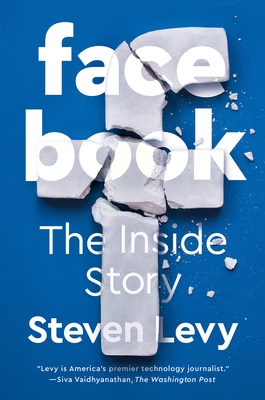
Along the way he gives engineers, executives, and dissenting colleagues enough room to complicate the portrait of the founder.
Levy, who also wrote Hackers and In the Plex, brings a technology reporter’s interest in how things are built. He also had an unusual way to test the founder’s memory. He obtained pages from Zuckerberg’s 2006 notebook and eventually showed them to Zuckerberg himself.
That puts an early record of what the founder wanted beside a much later account of what he thought he had accomplished. I found the distance between those two moments more revealing than any single interview.
Is it worth reading if you already know the scandals?
Yes, especially if you remember the headlines and want to understand the choices that came before them. Consider the first News Feed protest. Reading the support inbox, you would conclude that users were furious. Reading the usage logs, you might conclude that the launch had succeeded. Levy lets us hear from the people looking at both. What makes the episode memorable is that they were observing some of the very same activity. Joining a protest group helped put that group into more feeds. Chapter 6, pp. 141–143
For a beginner, the changed relationship status is an easier introduction to algorithmic distribution than a technical definition. For a manager, the harder question is what evidence would have persuaded the team that its launch was going badly.
My reservation about Facebook: The Inside Story is pacing. If your main interest is privacy, the early biographical chapters can feel like a long approach to the moment when the argument comes into focus. I would still read Chapter 6 before jumping to Cambridge Analytica. Chapter 6 · Chapter 16
How does the story change from News Feed to Cambridge Analytica?
The choice about sharing moves progressively farther from the person whose information is at stake. That is my reading of three episodes Levy connects through the company’s history. The discussion below reveals major developments and the book’s closing scene.
News Feed changed the audience’s behavior. A friend could already visit a profile and notice an edit. In 2006 the feed brought the edit to the friend. As Levy recounts it, staff had raised concerns before launch. When complaints arrived, some wanted to reverse course, while the team looking at usage had grounds to keep going. Facebook kept the feed and added controls, including a setting for suppressing news that someone had removed a relationship status. That one setting is almost a definition of the problem. A person could want an accurate profile and still want a quiet breakup. Chapter 6, pp. 141–143 · Facebook’s September 2006 announcement
Beacon changed who could start the conversation. A purchase on a partner site could become a story for Facebook friends. Levy carefully separates two often-confused accounts. He could not confirm the viral comment about a spoiled marriage proposal. He does identify Sean Lane, whose wife learned about her Christmas ring through Beacon. Even the discount traveled with the news. The detail that bothers me is the price. What possible reason did a friend need to know it? Facebook later acknowledged that its initial design shared an action if the customer failed to decline. It switched to explicit approval and added a way to turn Beacon off. Chapter 8, pp. 186–187 · Zuckerberg’s account of the change
The platform widened the circle again. Outside developers could build on Facebook; the Cambridge Analytica case shows why one person’s decision to use an app could matter to friends who had never opened it.
The US Federal Trade Commission found that Cambridge Analytica used deceptive practices to harvest personal information for voter profiling and targeting. Its complaint described an app that collected data about participants and their Facebook friends.
That finding supports a claim about data collection. It cannot tell us how an individual voted or whether targeting changed an election result. FTC findings
Growth made local knowledge matter more. The middle of Facebook: The Inside Story gives growth its own team and chapter. The later reporting on Myanmar changed how I read those pages. Levy recounts journalist Aela Callan’s visit to Facebook in 2013 to warn about events there.
She was told the company had one Burmese-speaking moderator, based in Dublin. Set beside the close attention paid to the News Feed launch, that account raises an uncomfortable question. Who was in a position to get an answer from Facebook when the consequences were far more serious than an unwanted announcement?
The ending returns to privacy. In 2019 Zuckerberg announced a shift toward private messaging and smaller groups. Levy describes him making that decision by declaration. The direction had changed; the authority to choose a direction still belonged to him.
In the final interview, Zuckerberg acknowledges harms and continues to believe that the long-term benefits can outweigh them. Levy leaves the reader to judge what that confidence is worth.
How strong is Levy’s evidence?
His evidence is strongest when a contemporary record lets us check a recollection. The September 2006 announcement names the controls Facebook added. The December 2007 Beacon statement explains precisely what happened when a customer did nothing.
Those documents establish how the company publicly described its products. Levy’s interviews supply something the announcements leave out. Colleagues had disagreed about what to do.
Neither source alone gives as good an account of how a decision survived objections.
There is also a fair defense of the engineers. A tool that helped students organize a protest had given them something they valued. I believe that defense as far as it goes. The usage logs Levy describes could show that a student stayed on the site longer.
They could hardly distinguish delight in a friend’s news from an anxious hour spent finding out who had seen one’s own. I wish Levy had followed one of those students as closely as he followed the team.
Two short passages worth pausing over
“pushing information to people” is Levy’s wording on page 141. The verb pushing does the work. It gives the platform a role in the telling of a story that its subject may have wanted to tell personally.
“Yes, that’s my handwriting!” is Zuckerberg’s response when Levy shows him the old notebook. I like the tenderness of this moment. A man who had made other people’s pasts so easy to retrieve needed a reporter to hand him a piece of his own.
It is the most affecting scene in the book precisely because Levy lets the gesture stand.
Final recommendation
I would assign this book to a journalism or product-design class for the argument students could have over page 142 alone. An engineer can make a good case for keeping the feed. A user can make an equally good case for deciding when to announce a breakup. Levy gives both positions enough substance to make a reader choose which decision belonged to whom.
For a more openly accusatory companion, Roger McNamee’s Zucked makes sense. I prefer Levy when the question is how a disputed choice looked to the people making it. For the experience of living with those choices, his history is a place to begin.
Facebook: The Inside Story
Facebook: The Inside Story by Steven Levy gets privacy right in one small detail. Changing your relationship status is one thing. Having the news delivered to your friends before you decide whom to call is another. Published by Blue Rider Press in 2020, Levy’s history is worth reading for how closely it follows the people who made that distinction disappear.
URL: https://www.sopranu.com/books-facebook-the-inside-story-review/
Author: Steven Levy
4.5







