Last updated on October 17th, 2026 at 03:25 pm
A single tree does a surprising amount of quiet work. It holds soil in place, shades the ground, shelters birds and insects, and draws carbon dioxide out of the air. Multiply that across a forest and you have one of the planet’s great life-support systems.
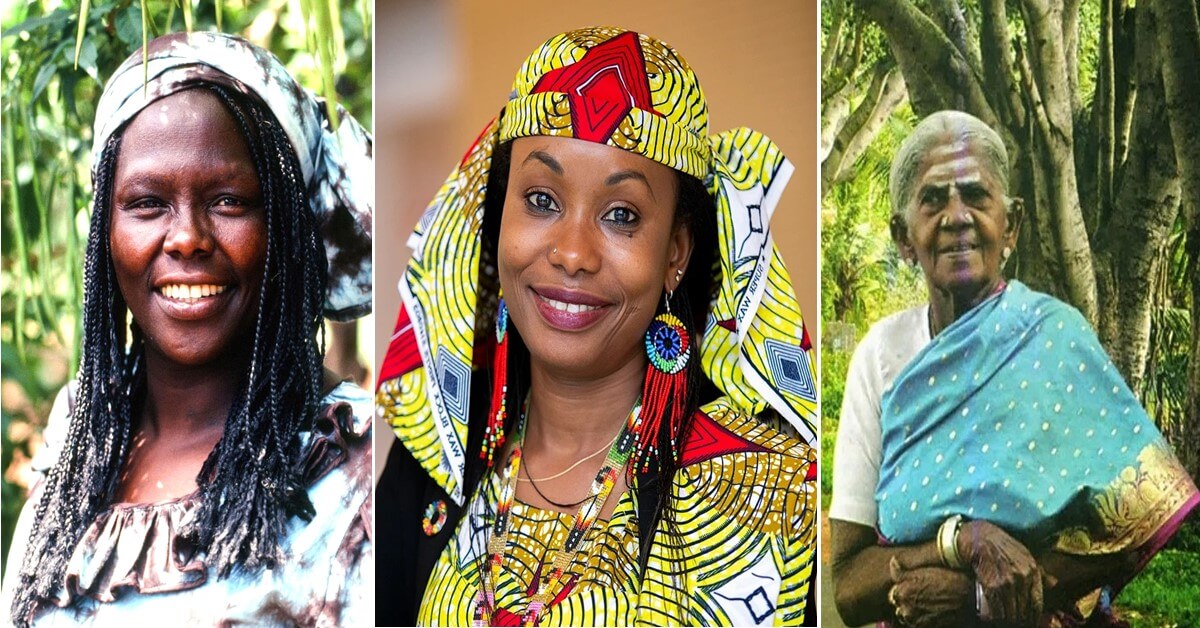
This piece is about nine people, seven women and two men, who understood that early and spent years, often decades, planting trees, defending them, or teaching the rest of us why they matter. Not all of them are tree planters in the literal sense. Some grew forests out of bare sand or dry, crusted fields. Others put their bodies, their communities or their careers between the trees and the saw.
Together they show that there is more than one way to stand up for a forest.
Table of Contents
Why forests need heroes
According to the UN Food and Agriculture Organization’s Global Forest Resources Assessment 2025, forests cover about 4.14 billion hectares, roughly 32 per cent of the world’s land. A 2015 study in Nature led by Thomas Crowther estimated that those forests hold about 3.04 trillion trees, that more than 15 billion trees are cut down every year, and that the global number of trees has fallen by around 46 per cent since the start of human civilisation.
There is genuine good news. The same FAO assessment found that deforestation has slowed in every region: it averaged 10.9 million hectares a year in 2015–2025, down from 17.6 million hectares a year in 1990–2000. Because new forest also grows back, the net annual loss fell from 10.7 million hectares in the 1990s to 4.12 million hectares in 2015–2025. Still, the FAO itself calls the current deforestation rate too high.
The stakes go well beyond trees. The UN estimates that about 2 billion hectares of land are degraded worldwide and that land degradation affects around 3.2 billion people. Forests also matter for the climate: a 2021 study in Nature Climate Change by Nancy Harris and colleagues at the World Resources Institute found that between 2001 and 2019 the world’s forests absorbed about 15.6 billion tonnes of CO₂ a year while losing about 8.1 billion tonnes to deforestation, fire and other disturbances, a net sink of roughly 7.6 billion tonnes a year. And the FAO estimates that close to 1.6 billion people rely on forest resources for their livelihoods.
Those numbers are why the people below matter. Each of them, in a different place and in a different way, pushed against that loss — including the kind of deforestation we see in Bangladesh.
The green heroes
1. Wangari Maathai (Kenya, 1940–2011)
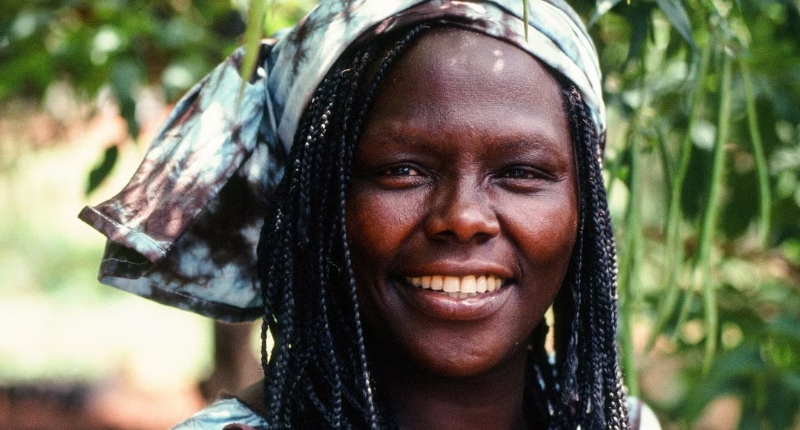
Wangari Maathai founded the Green Belt Movement in 1977 while working with the National Council of Women of Kenya. Its first event was held on World Environment Day, 5 June 1977, when a procession in Nairobi planted seven trees in honour of community leaders.
Her idea was simple and radical at once: rural women could plant trees to secure firewood, protect water sources and slow deforestation and soil loss, and earn an income while doing it.
By the early 2000s the movement had planted around 30 million trees, according to Encyclopaedia Britannica; more recent counts put the total above 51 million. Similar initiatives spread to Tanzania, Ethiopia, Zimbabwe and other African countries.
Maathai was also a pioneer in academia: she was the first woman in East and Central Africa to earn a doctorate, in veterinary anatomy. In 2004 she became the first African woman to win the Nobel Peace Prize, recognised for her contribution to sustainable development, democracy and peace, and she is widely described as the first environmentalist to receive it. She died in Nairobi on 25 September 2011.
2. Hindou Oumarou Ibrahim (Chad)
Hindou Oumarou Ibrahim belongs to Chad’s semi-nomadic Mbororo pastoralist community. As a teenager she founded the Association for Indigenous Women and Peoples of Chad (AFPAT) to support women’s livelihoods and Indigenous rights.
She is on this list less as a tree planter than as a champion of the knowledge that keeps land and forests healthy. Her best-known project uses participatory 3D mapping: herders, farmers and fishers from many ethnic groups around the shrinking Lake Chad pool what they know about water, pasture and forests into shared maps, which helps communities manage resources together and reduce conflict over them.
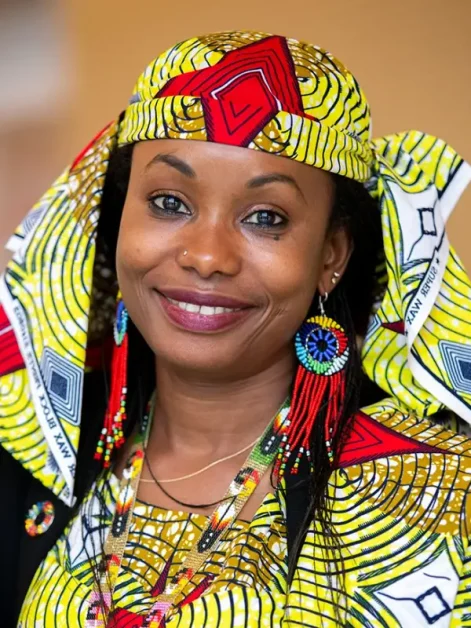
On the world stage she co-chaired the International Indigenous Peoples Forum on Climate Change during the 2015 Paris climate conference (COP21) and has served as Vice Chair of the Global Forest Coalition. Her honours include the 2019 Pritzker Emerging Environmental Genius Award and a 2021 Rolex Award for Enterprise.
3. Vandana Shiva (India, born 1952)
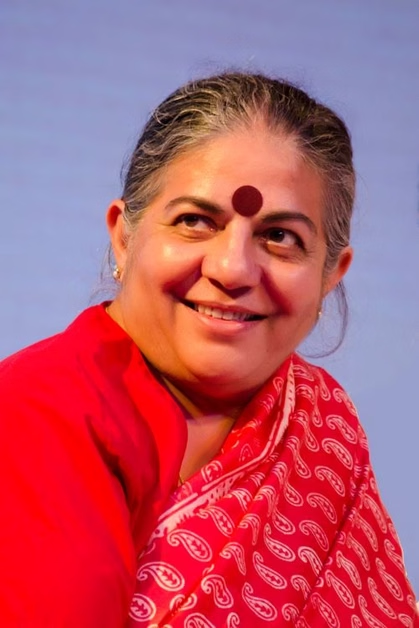
Vandana Shiva was born on 5 November 1952 in Dehradun, the daughter of a forestry official and a farmer. She studied physics, earned a master’s degree in the philosophy of science at the University of Guelph and, in 1978, a PhD in philosophy from the University of Western Ontario, with a dissertation on hidden variables and non-locality in quantum theory.
She then turned to grassroots environmental work, including campaigns against clear-cut logging and large dams. In 1982 she founded the Research Foundation for Science, Technology and Ecology in Dehradun, and in 1991 she launched Navdanya (“nine seeds”), a movement to conserve native seeds and promote organic farming that has set up more than 40 seed banks in India.
Her books include Ecofeminism (with Maria Mies, 1993), Earth Democracy: Justice, Sustainability, and Peace (2005) and The Violence of the Green Revolution. She received the Right Livelihood Award in 1993 and the Sydney Peace Prize in 2010, among many other honours.
4. Yacouba Sawadogo (Burkina Faso, 1946–2023)
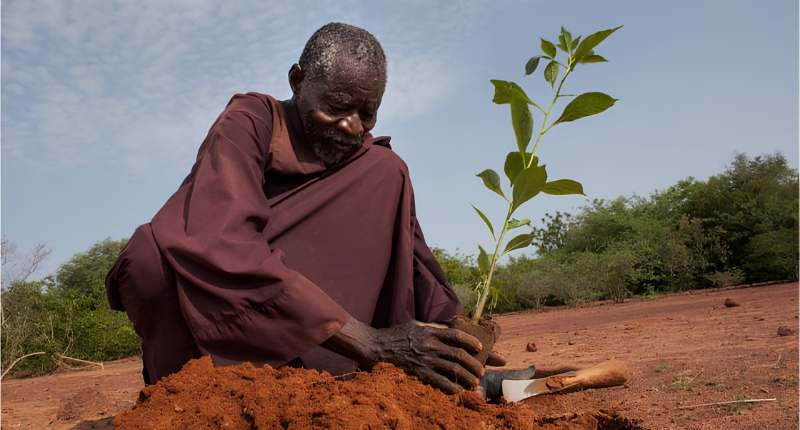
Known as “the man who stopped the desert”, Yacouba Sawadogo was a farmer from the village of Gourga in northern Burkina Faso, on the edge of the Sahel. He did not invent zaï — the practice of digging small pits to catch rainwater and filling them with organic matter is an ancestral technique. What he did was revive and improve it, adapting it to restore crusted, degraded soil and to grow trees as well as crops.
Neighbours called him a madman for breaking with tradition, and his forest was set on fire more than once. He persisted. From 1984 he held regular “zaï markets” on his land to share his methods with other farmers. Over the years he created a forest of almost 40 hectares with more than 60 species of trees and shrubs, according to the Right Livelihood Foundation (other sources give different areas). By 2016, zaï techniques had helped restore the productivity of tens of thousands of hectares in Burkina Faso’s Yatenga and Gourcy provinces alone.
His work was the subject of the 2010 documentary The Man Who Stopped the Desert. He received the Right Livelihood Award in 2018 and the UN’s Champions of the Earth award in 2020. Yacouba Sawadogo died in Ouahigouya on 3 December 2023.
5. Diana Beresford-Kroeger (Ireland and Canada, born 1944)
Diana Beresford-Kroeger is a botanist, medical biochemist and author. She was born on 25 July 1944 in Islington, London; orphaned young, she was raised in Ireland’s Lisheens valley in County Cork, where elders taught her traditional plant knowledge. She later worked as a research scientist at the University of Ottawa and now lives near Ottawa, Ontario, where she keeps a private arboretum.
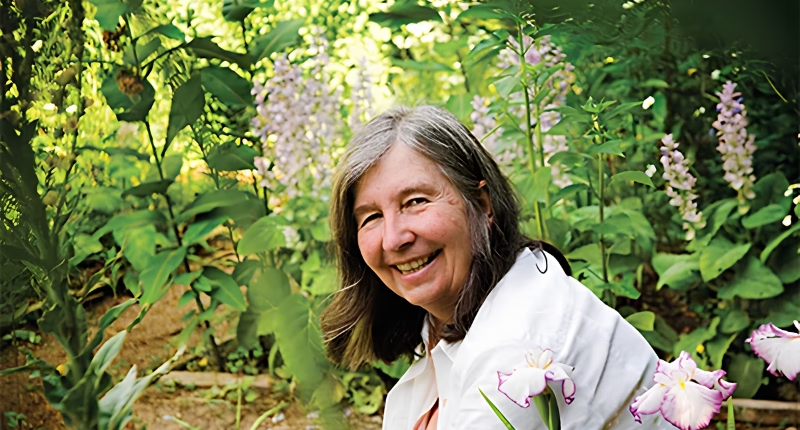
Her central idea, which she calls a “bioplan”, asks ordinary people to see the environment as a living system and to help replant the global forest. Her books include Arboretum America, Arboretum Borealis, The Global Forest, The Sweetness of a Simple Life and the memoir To Speak for the Trees (2019). The 2016 documentary Call of the Forest: The Forgotten Wisdom of Trees, based on The Global Forest, launched alongside an app that encouraged viewers to plant trees native to where they live.
Her honours include fellowships of WINGS WorldQuest (2010) and the Royal Canadian Geographical Society, which named her one of 25 women explorers of Canada in 2016; an honorary Doctor of Laws from Carleton University (2019); and the Society’s Kamookak Medal (2023).
6. Saalumarada Thimmakka (India, 1911–2025)
Thimmakka was born in Gubbi taluk, Tumakuru district, Karnataka; her birth date is reported as 30 June 1911. She had no formal education and married Chikkaiah of Hulikal village. When the couple had no children, they began planting banyan saplings and raising them as their own, he dug the pits, she carried water to them.
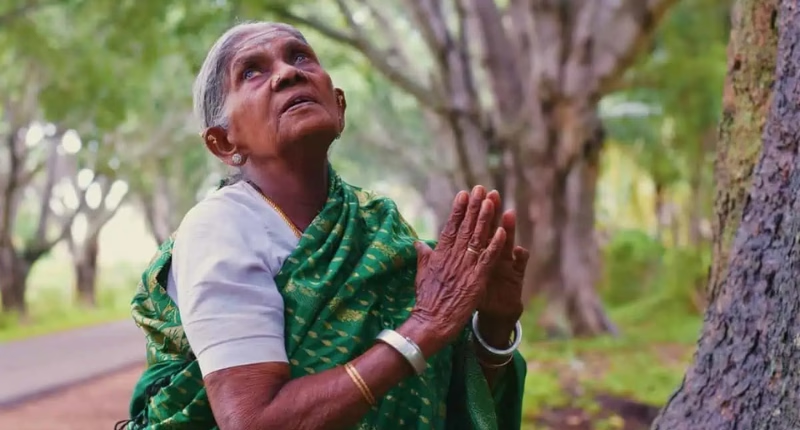
Together they planted 385 banyan trees along a roughly 4.5-kilometre stretch of road between Hulikal and Kudur, in what is now Bengaluru South (Ramanagara) district. That row earned her the name Saalumarada, Kannada for “row of trees”. She is also credited with planting about 8,000 other trees. After her husband died in 1991 she carried on alone, and in 2019 she publicly opposed a road-widening plan that threatened the trees.
Her honours include the National Citizen’s Award (1995), the Indira Priyadarshini Vrikshamitra Award (1997), Hampi University’s Nadoja award (2010) and the Padma Shri (2019), India’s fourth-highest civilian honour. She died in Bengaluru on 14 November 2025, reportedly aged 114.
7. Khurshida Begum (Bangladesh)
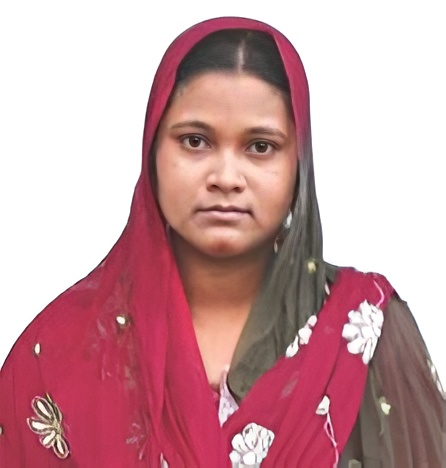
Khurshida Begum, a widow from Kerontali village near the Naf river in Teknaf, Cox’s Bazar, organised a female community patrol group of 28 women in the mid-2000s. Working alongside Forest Department guards, they helped protect the Teknaf Wildlife Sanctuary from illegal logging and poaching. The work also gave local women a voice and a steadier income, and she went on to serve as a Union Parishad member.
In 2012 she received an Honourable Mention in the first-ever Wangari Maathai Forest Champions Award, given by the Collaborative Partnership on Forests; the main award that year went to Narayan Kaji Shrestha of Nepal. She is a reminder that protecting the trees we already have can matter as much as planting new ones.
8. Julia Butterfly Hill (United States, born 1974)
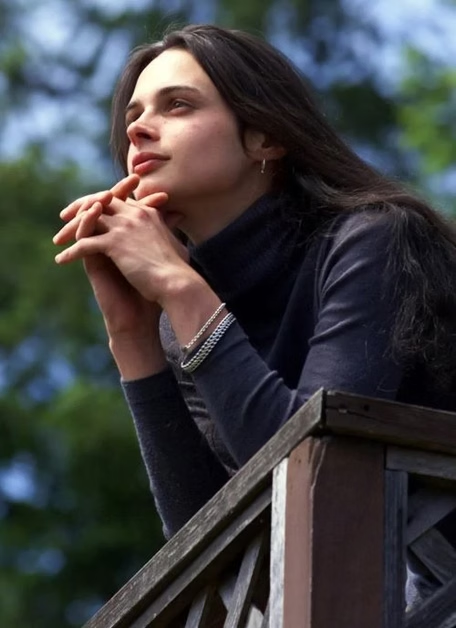
On 10 December 1997, 23-year-old Julia Butterfly Hill climbed a coast redwood in Humboldt County, California, that activists called Luna, a tree estimated at about 1,000 years old and 200 feet (61 m) tall, to stop the Pacific Lumber Company from cutting it down. She lived on a small platform about 180 feet up for 738 days, through winter storms and harassment, and came down only on 18 December 1999.
She left after reaching an agreement under which Pacific Lumber preserved Luna and a 200-foot buffer zone around it in exchange for $50,000. Luna was later attacked with a chainsaw by vandals. Hill told her story in The Legacy of Luna (2000) and became one of the best-known faces of nonviolent forest protest.
9. Jadav “Molai” Payeng (India)
Jadav Payeng is a member of Assam’s Mising tribe. In 1979, as a teenager, he found many snakes that floods had washed onto a bare sandbar of the Brahmaputra and that had died in the heat for lack of shade. Shaken by the sight, he began planting bamboo there. He also worked as a labourer on a government plantation project on the sandbars and kept planting on his own after it ended, consulting tribal elders on what to grow.
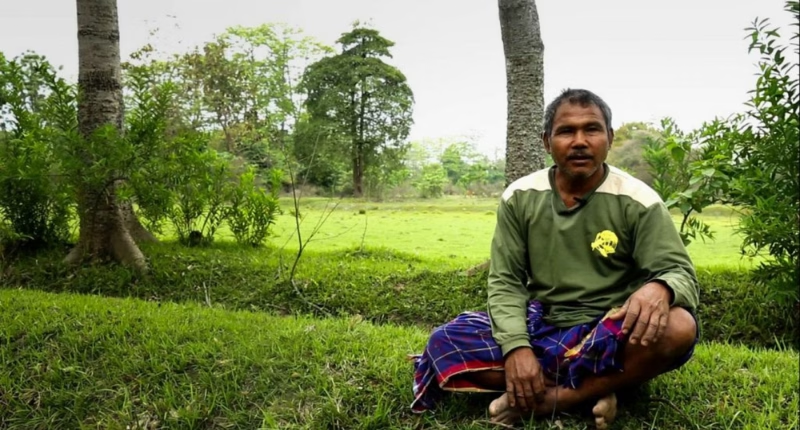
The result is the Molai forest, near Kokilamukh in Jorhat district, now about 550 hectares (some 1,360 acres) — larger than New York’s Central Park. Officials only learned of it in 2008, when they followed a herd of around 100 elephants into it. The forest now shelters Bengal tigers, Indian rhinoceroses, elephants, deer, rabbits and many birds, including vultures. Even in recent years he has reportedly spent long days planting saplings, collecting seeds and patrolling it.
He became known as the “Forest Man of India” after a felicitation at Jawaharlal Nehru University and received the Padma Shri, India’s fourth-highest civilian honour, in 2015. His story inspired the documentary Forest Man and two children’s books: Jadav and the Tree-Place by Vinayak Varma (Pratham Books, 2016) and The Boy Who Grew a Forest: The True Story of Jadav Payeng by Sophia Gholz, illustrated by Kayla Harren (2019).
Other voices for the natural world
These nine are far from alone. My favourite naturalist, Sir David Attenborough, has spent nearly eight decades showing audiences the living world and warning about its loss; he turned 100 on 8 May 2026 (I wrote about his series Mammals here).
Jane Goodall, who founded the Jane Goodall Institute in 1977 and campaigned for forests and wildlife into her nineties, died on 1 October 2025 at 91. And long before either became household names, Jacques Cousteau (1910–1997) carried the oceans into living rooms and founded the Cousteau Society for marine conservation in 1974.
What these green heroes teach us
Read side by side, these stories share a few threads. Almost none of these people started with money or power. Most began with something small and local, seven trees in a Nairobi park, a row of banyans along a village road, bamboo on a sandbar, a few rain pits in a dry field.
Many drew on traditional knowledge rather than discarding it. And nearly all of them worked through other people: women’s groups, farmers’ markets, patrol teams, readers and viewers.
They also remind us that the most valuable tree is often the one that is already standing. Planting matters, but so does refusing to let an old forest fall.
Conclusion
To tackle climate change and keep the Earth liveable for future generations, we need to plant trees, protect the forests we still have, and value the people who do both. The men and women in this piece can be our inspiration.
I think more countries should consider a policy like the Philippines’ Presidential Decree No. 1153. Signed on 6 June 1977, it required every resident citizen aged ten or older, unless physically unable, to plant one tree every month for five consecutive years, and to care for each tree for at least two years.
How well it was enforced is a separate question I could not verify for this piece, but the principle, that caring for trees is every citizen’s duty — is worth borrowing.
We do not all need to live in a redwood or grow 550 hectares of forest. But each of us can plant something native, protect what is already growing, and support the people on the front line. One tree at a time still counts.