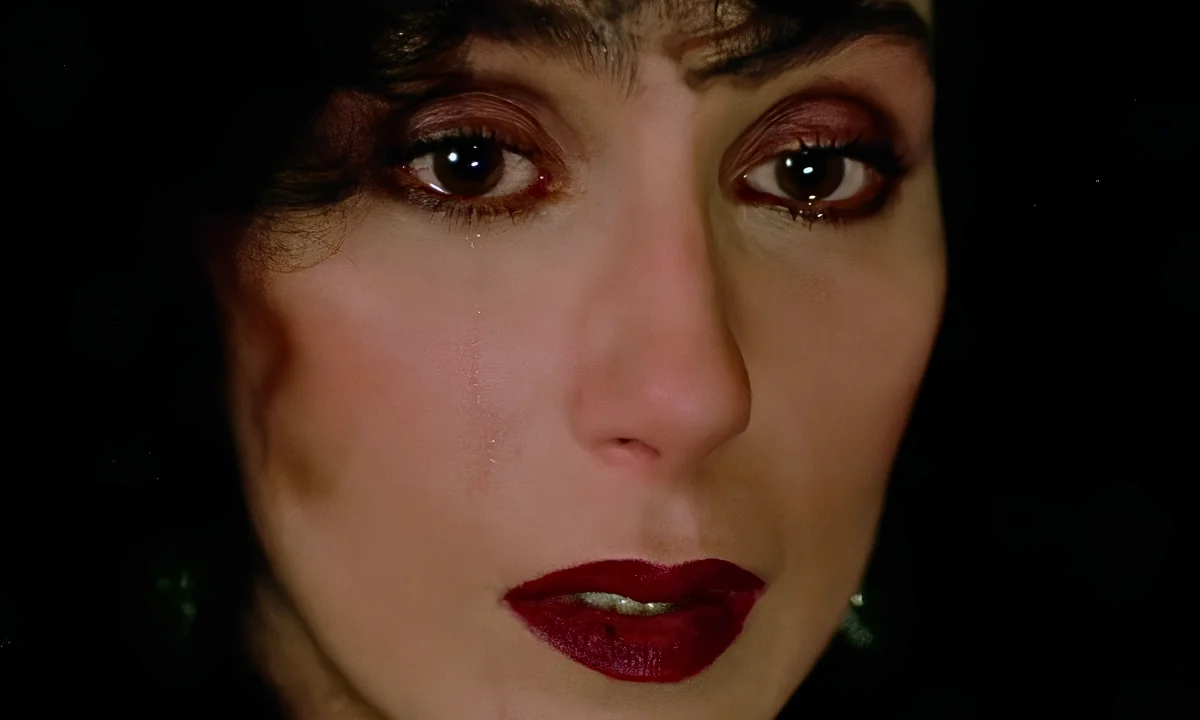
Moonstruck makes a complicated promise: falling in love may disrupt your life without making that life a mistake. This Moonstruck review follows its entire story, including the ending, before examining the question that gives the romance its substance. Why should we celebrate Loretta’s attraction to her fiancé’s brother when her father’s infidelity causes such unhappiness? My answer begins with the women.
Loretta must acknowledge a desire she has suppressed; Rose must insist that her existing marriage deserves respect. Their choices make this comedy more interesting than its love triangle alone suggests.
Table of Contents
At a glance
The story: A widowed bookkeeper becomes engaged to Johnny Cammareri, then falls for his estranged brother, Ronny. AFI synopsis. catalog.afi.com
The ending: Johnny cancels the wedding, Ronny proposes, and Loretta accepts. The family celebrates their engagement together. Filmsite. www.filmsite.org
My central interpretation: The film distinguishes between acknowledging an uncomfortable truth and using romance to avoid one.
Best suited to: Viewers who enjoy expressive performances, family comedy, adult romantic dilemmas, and dialogue with a theatrical rhythm.
Editorial rating: 4.5/5, a subjective assessment rather than an audience average.
What is Moonstruck about beyond its love triangle?
Moonstruck is about people trying to protect themselves from loss through arrangements that no longer satisfy them.
Directed by Norman Jewison and written by John Patrick Shanley, the 1987 romantic comedy stars Cher as Loretta Castorini and Nicolas Cage as Ronny Cammareri. Olympia Dukakis, Vincent Gardenia, and Danny Aiello play Rose, Cosmo, and Johnny respectively. The American Film Institute documents the film’s principal credits. catalog.afi.com
Its premise could support a broad comedy about choosing the wrong brother. Yet I find its emotional structure more carefully balanced than that description suggests. Loretta’s story concerns beginning again. Her parents’ story concerns remaining together without pretending that nothing has happened.
The distinction matters. A film that only followed Loretta might make emotional intensity look like a complete moral argument. Rose’s presence complicates that possibility. She asks what people owe each other after the initial excitement has passed.
For reference, the BFI lists a running time of 102 minutes. That relatively compact length gives the family’s competing stories room without requiring an elaborate secondary plot.
What happens in Moonstruck from beginning to end? Plot Summary
Loretta accepts a practical marriage proposal
Loretta Castorini, played by Cher, is a widowed Italian American bookkeeper living in Brooklyn Heights with her parents, Cosmo and Rose, and her paternal grandfather. Her first husband died after being struck by a bus. Loretta associates that tragedy with the way they married without following the proper wedding traditions.
She believes that doing everything correctly next time might protect her from another disaster.
Her boyfriend, Johnny Cammareri, proposes during dinner at the Grand Ticino restaurant. Loretta accepts, but she insists that he kneel and provide a ring. Since he has no engagement ring ready, his pinky ring serves the purpose. They agree to marry in a month. Johnny then leaves for Sicily to visit his dying mother, asking Loretta to contact his estranged younger brother, Ronny, and invite him to their wedding.
At home, Loretta’s announcement receives a mixed response. Cosmo dislikes Johnny and objects to paying for another wedding. Rose asks whether Loretta loves her future husband. When Loretta says she does not, Rose is relieved: she believes loving a man gives him the power to make a woman miserable. Loretta regards Johnny as a dependable choice, even without strong romantic feelings.
Meeting Ronny changes everything
Loretta visits the Cammareri bakery after failing to persuade Ronny over the telephone. There she encounters an angry, emotionally wounded man who has refused to forgive his brother. Ronny wears a prosthetic hand and blames Johnny for the accident that cost him both his hand and his engagement.
Johnny distracted him while he was operating a bread slicer; after the injury, Ronny’s fiancée left him.
They continue their conversation in Ronny’s apartment above the bakery, where Loretta cooks him a steak. Rather than accepting his explanation, she challenges the story he tells about himself.
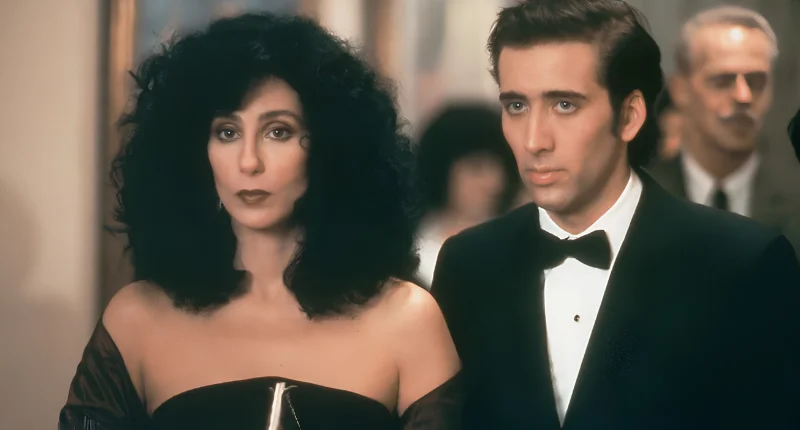
She compares him to a trapped wolf that bites off its own paw to escape. In her interpretation, losing his hand freed him from the wrong relationship, and blaming Johnny allows him to avoid confronting his own fear of love. This is Loretta’s provocative reading of his experience, rather than a revelation that the accident was deliberate.
Ronny challenges her in return. He sees her proposed marriage to Johnny as a surrender to fear and convenience. Their argument becomes a passionate encounter: they kiss, he carries her to bed, and they sleep together. Loretta’s attempt to arrange a safe future has brought her into a relationship that threatens every part of that plan.
The moon connects the family’s romances
While Loretta stays with Ronny, her family wonders where she has gone. At dinner, her uncle Raymond recalls a brilliant moon from the days when Cosmo was courting Rose. As a boy, Raymond imagined that Cosmo had somehow brought the moon to their house through the force of his love. Later, seeing a similarly striking moon awakens Raymond’s affection for his wife, Rita.
Loretta and Ronny also look out at the moon together.
Cosmo, however, is conducting an affair with a woman named Mona. He gives her jewelry while Rose increasingly suspects that something is wrong in their marriage. The family’s romantic troubles therefore extend beyond Loretta’s unexpected attraction to her fiancé’s brother.
Loretta tries to end the affair
The next morning, Loretta insists that she will still marry Johnny and that her night with Ronny must remain secret. Ronny tells her he loves her. She responds by slapping him and ordering him to “Snap out of it!” He offers a bargain: accompany him to the opera for one evening, and he will give her up.
Loretta agrees.
She goes to confession and admits that she has slept with her fiancé’s brother. At church, she also encounters Rose, who tells her that Cosmo is cheating. Loretta initially doubts her mother’s suspicion. Before the opera, she has her gray hair covered, gets her makeup done, and buys an evening outfit.
Her appearance changes as she prepares for the evening she has supposedly agreed will end the relationship.
The opera exposes another secret
Loretta meets Ronny at the Metropolitan Opera, where they attend Puccini’s La bohème. She is deeply moved by the performance. Their evening is interrupted, however, when she discovers Cosmo there with Mona. Her mother’s suspicion is confirmed.
Loretta confronts her father, but Cosmo notices that she is accompanied by Ronny rather than Johnny. Each now knows something compromising about the other. Cosmo proposes that they behave as though the encounter never happened, leaving Loretta in the uncomfortable position of recognizing his betrayal while concealing her own.
Afterward, Ronny brings Loretta back toward his apartment. She continues to invoke her engagement and her fear of bad luck. Ronny argues that love cannot guarantee an orderly or painless life. His declaration rejects her hope that following the rules will make her safe.
Loretta reaches for him and spends another night with him.
Rose has an opportunity to be unfaithful
During Loretta’s evening out, Rose eats alone at the Grand Ticino. A professor named Perry is publicly rejected by a much younger woman. Rose invites him to share her table, and they discuss his habit of pursuing younger women. Rose suggests that men chase women because they fear death.
Perry walks her home and hopes to continue their evening. Rose refuses. She acknowledges her marriage and remains clear about her own identity, even while suspecting Cosmo’s infidelity. Her father-in-law sees them together and mistakenly assumes that she, too, is having an affair.
Johnny returns unexpectedly
Johnny arrives at the Castorini house that night with surprising news: his mother has recovered. Loretta is absent, so he speaks with Rose. Still trying to understand Cosmo’s behavior, Rose asks Johnny why men pursue women, especially when they already have a wife.
His suggestion that men fear death confirms the explanation she has been considering. Johnny leaves intending to speak with Loretta the following morning.
Everyone gathers for breakfast
When Loretta returns home, Rose tells her that Johnny is back and will arrive soon. Ronny then appears, determined to meet the family and confront the situation. Rose notices the marks of their intimacy and invites him inside despite Loretta’s alarm.
The kitchen fills with relatives. Cosmo’s father pressures him to pay for his daughter’s wedding, and Cosmo agrees. Raymond and Rita arrive because Loretta has failed to deposit their shop’s money. Their concern is resolved when she realizes that she simply forgot the errand and still has the cash.
Rose then addresses her husband directly. After asking whether she has been a good wife, she demands that he stop seeing Mona and go to confession. Cosmo reacts angrily but agrees. Their exchange ends with an affirmation of affection, bringing their marriage back into the center of his life.
Johnny breaks the engagement, and Ronny proposes
Johnny arrives and initially assumes that Ronny has come to reconcile with him. Before Loretta can explain her own situation, Johnny announces that he cannot marry her. His mother recovered after hearing about their engagement, and he now believes that proceeding with the wedding would cause her death. He allows that superstitious fear to determine his decision.
Although Loretta loves Ronny, Johnny’s withdrawal still angers her. She objects to his broken promise and throws his ring back at him. Ronny immediately takes the opportunity to propose. When Loretta asks for a ring, he borrows the same one from Johnny and formally asks her to marry him. She accepts in front of her family.
Rose asks whether Loretta loves Ronny. This time, Loretta says she does, prompting Rose’s rueful response that this is unfortunate. Her daughter has chosen a relationship that carries the emotional risk Rose warned about at the beginning.
The film ends with an engagement, rather than a wedding. The family raises champagne to Loretta and Ronny. A bewildered Johnny is encouraged to join the celebration because he will still belong to the family through his brother.
The final toast embraces the whole household, bringing its competing romances, grievances, and reconciliations around one table.
Why does the ending work despite its convenient reversal?
The ending works because its convenient reversal resolves the practical obstacle after the characters’ emotional positions have already become clear.
Johnny’s decision gives Loretta an unusually easy escape. She does not have to deliver the full confession that the breakfast scene appears to be preparing. I consider that a real limitation. The comedy protects its central couple from some of the pain their actions could cause.
Yet the ending does more than replace one groom with another.
Loretta begins by arranging the external signs of a proper marriage. At the end, the same ring accompanies a different declaration. My reading is that the object has not changed, but her relationship to the promise has.
The family’s presence also matters. A private romantic triumph could allow Loretta and Ronny to imagine that only their feelings count. Here, their decision occurs among people who will continue dealing with its consequences.
I like the modest setting. Breakfast prevents the conclusion from floating entirely into fantasy. These people must sit down together, recognize the new arrangement, and continue being relatives.
B. D. McClay’s New Yorker essay similarly emphasizes the significance of the film ending with the family rather than a wedding. My emphasis is slightly different: acceptance becomes convincing because it happens in an ordinary shared space. The New Yorker
How well does the film balance comedy and criticism?
The film balances them best when an absurd exchange exposes something a character would rather avoid saying plainly.
I find the humor unusually dependent on competing explanations. Loretta explains suffering through bad luck. Ronny explains it through Johnny. Cosmo behaves as though romance might exempt him from aging. Each explanation gives its speaker a temporary sense of control.
The comedy interrupts those explanations.
That structure gives the dialogue force. Characters are rarely exchanging information alone. They are defending a version of themselves, and another person keeps refusing to accept it.
The film’s heightened style will divide viewers. Ronny’s declarations are much larger than ordinary conversation. I accept that scale because the emotional world is consistent: feelings become arguments, arguments become performances, and family members act as an impatient audience.
Still, intensity is not automatically depth. There are moments when Ronny’s certainty threatens to make Loretta’s hesitation look like a problem he is entitled to solve.
My reservation concerns the difference between cinematic excitement and persuasive relationship behavior. A compelling declaration can be thrilling within a romance while remaining insufficient evidence that two people will treat each other well.
The film is strongest when Rose supplies the missing standard. Her position requires respect, acknowledgment, and a change in conduct. Desire alone cannot satisfy it.
What makes the acting performances so effective?
The performances work because the actors give different shapes to the same emotional instability.
Cher as Loretta provides the necessary resistance. I find her most persuasive when her practical manner remains visible underneath her attraction. Loretta does not become an entirely different person once she desires Ronny. The conflict comes from a capable woman discovering that competence cannot eliminate uncertainty.
Nicolas Cage as Ronny gives the romance its dangerous comic energy. His performance can seem excessive, but excess is part of the character’s problem. Ronny has made his injury into the organizing story of his life. Cage makes that self-dramatization both funny and painful.
Olympia Dukakis as Rose supplies a contrasting rhythm. I value her pauses, direct questions, and refusal to compete for attention. Rose does not need to dominate the room to change its emotional temperature.
Vincent Gardenia as Cosmo makes authority look fragile. His resistance becomes amusing because it repeatedly encounters people who know him too well to be impressed.
Danny Aiello as Johnny makes an unsuitable partner recognizable without requiring him to become a conventional villain.
John Mahoney as Perry gives Rose’s evening an important alternative. Perry offers attention, but the encounter allows Rose to define herself through her response.
The cast and character assignments are documented by AFI. These evaluations are my critical judgments. catalog.afi.com
What themes give Moonstruck its emotional weight?
The strongest themes are grief, self-deception, commitment, and the difference between feeling alive and behaving responsibly.
Grief disguised as good judgment
I read Loretta’s practicality as partly protective. A dependable arrangement offers a way to proceed without exposing herself to the full possibility of loss again.
This makes her understandable even when her decisions become difficult to defend. Wanting certainty after bereavement is emotionally credible. The problem is expecting a wedding procedure to provide it.
Injury becoming identity
Ronny’s anger gives him a stable role: the person whose life was ruined by someone else.
My concern is not that his suffering is unreal. It is that a true injury can become an explanation so complete that it prevents any future change. Loretta challenges the permanence of that role.
Desire and responsibility
I do not read the film as declaring all affairs liberating.
Loretta confronts the emptiness of an engagement she has accepted. Cosmo avoids confronting what he already has. Their situations differ, even though both involve deception.
That distinction does not erase Loretta’s responsibility to Johnny. It does, however, explain why the two romantic plots can arrive at different outcomes without being identical moral cases.
Self-recognition
The makeover is especially useful here. Emily VanDerWerff’s Criterion essay observes that Loretta’s transformation initially belongs to her own experience rather than a man’s approving reaction. The Criterion Collection
I find that reading persuasive. The emotional change is not simply that someone desirable wants her. She begins allowing herself to want things again.
How does Moonstruck compare with other romantic comedies?
Moonstruck stands apart through its compressed emotional intensity and the importance it gives to an established marriage alongside a new romance.
Compared with When Harry Met Sally…
Rob Reiner’s When Harry Met Sally… is a 1989 romantic comedy starring Billy Crystal and Meg Ryan, written by Nora Ephron. AFI. American Film Institute
I find the contrast useful because the films create confidence in different ways. When Harry Met Sally… gives its central relationship time to accumulate familiarity. Moonstruck asks us to accept recognition at speed.
If you want a romance that demonstrates companionship developing through repeated encounters, the former offers more evidence. If you respond to sudden attraction expressed through dramatic language, Moonstruck is more immediately forceful.
Compared with My Big Fat Greek Wedding
The 2002 comedy My Big Fat Greek Wedding centers on Toula and the complications surrounding romance within her close family. Rotten Tomatoes synopsis. Rotten Tomatoes
Both films make family participation part of the romantic experience. My distinction is that Moonstruck feels more preoccupied with adults who already carry disappointment.
I would recommend My Big Fat Greek Wedding for a more welcoming route into family-centered romantic comedy. I would choose Moonstruck when the desired pleasure includes discomfort, mortality, and people who are entertaining without always being easy to admire.
Who should watch Moonstruck?
Moonstruck is best for viewers who enjoy emotionally expressive romantic comedies with substantial supporting characters.
You do not need knowledge of opera or film history to follow the story. The attraction, guilt, family pressure, and marital disappointment remain understandable on their own.
For casual viewers, the main pleasures are comic timing, sharp exchanges, and the shifting relationships around Loretta. For viewers interested in film craft, I would suggest paying attention to how the kitchen, bakery, restaurant, and opera house permit different kinds of behavior.
I would be more cautious recommending it to someone seeking a gradual courtship or consistently understated performances. Ronny’s intensity is fundamental to the experience.
The film carries a PG rating, as listed by AFI, but its plot includes adultery, implied sexual encounters, bereavement, and discussion of injury. I regard its emotional concerns as more suited to older teenagers and adults than young children. catalog.afi.com
Awards and critical reception
Moonstruck received six Academy Award nominations and won three at the ceremony held on April 11, 1988. The Academy’s official record lists the results. 1988
| Academy Award category | Nominee | Result |
|---|---|---|
| Actress in a Leading Role | Cher | Won |
| Actress in a Supporting Role | Olympia Dukakis | Won |
| Original Screenplay | John Patrick Shanley | Won |
| Best Picture | Patrick Palmer and Norman Jewison | Nominated |
| Directing | Norman Jewison | Nominated |
| Actor in a Supporting Role | Vincent Gardenia | Nominated |
Its critical reputation also extends beyond those awards. Roger Ebert later included it in his Great Movies collection. rogerebert.com
I would not use that recognition as a substitute for evaluating the film. Its persuasive qualities are specific: a central performer who can resist the surrounding theatricality, supporting characters with their own emotional claims, and a conclusion that allows several relationships to occupy the same frame.
My reservations are equally specific. Johnny’s withdrawal is convenient, the romance moves quickly, and the film offers limited evidence about the couple’s future compatibility.
Personal perspective on what the film offers today
The lesson I take from Moonstruck is that an orderly explanation of your life can become a way of avoiding participation in it. That does not mean every routine is a prison or every disruptive attraction deserves pursuit. It means that apparent good sense deserves examination when it consistently requires a person to want less, feel less, and expect less.
I recognize the appeal of Loretta’s approach. If you have already experienced a devastating loss, making careful arrangements can feel like an act of responsibility. You can choose a dependable person, follow accepted procedures, and avoid anything that resembles recklessness. None of those choices is foolish by itself. The difficulty begins when you ask them to guarantee that you will never suffer again.
My reading of the film becomes more useful when I hold Loretta and Rose together.
Loretta needs permission to change her future. Rose needs the authority to defend the value of her present life. Treating only the first position as freedom would leave the second woman looking unimaginative. I think Rose prevents that mistake.
Her example suggests that self-respect can produce different decisions in different circumstances. Sometimes it means leaving an arrangement that has become dishonest. Sometimes it means refusing to let another person quietly redefine the terms of a commitment. The outward actions may differ while the underlying demand remains similar: acknowledge what is actually happening.
I also find the film useful for thinking about the stories people repeat about themselves. A story can explain an injury without providing a sufficient plan for living after it. Ronny’s grievance has emotional logic, yet repeating it cannot restore his hand or decide what he should do next.
I see the same limitation in Loretta’s belief that she is unlucky. Once that explanation becomes complete, every new decision risks becoming another attempt to manage an invisible curse.
Still, I would resist using the film as a practical guide to choosing partners. Attraction can reveal a neglected part of yourself without proving that the other person is trustworthy or compatible. Emotional awakening and a sustainable relationship are separate questions. The comedy gives us strong evidence of the first and much less of the second.
What I value most is the space it leaves for imperfect self-correction. Nobody must become entirely wise before joining the final gathering. People acknowledge something, make a decision, and accept that others have witnessed their confusion.
That feels more useful to me than a promise of romantic certainty. You may not be able to arrange a life without embarrassment, disappointment, or change. You can, however, become more truthful about what you want and more accountable for how pursuing it affects other people.
I find the film hopeful when those two obligations remain together.
Brief quotations and why they matter
These short quotations are checked against the film transcript. They come from a feature film, so season and episode references do not apply.
“Snap out of it!”
Loretta’s response to Ronny captures her hope that an inconvenient feeling can be dismissed through force of will.
“Because I know who I am.”
Rose’s explanation for refusing Perry gives her decision a foundation beyond fear of being discovered.
“Love don’t make things nice.”
Ronny challenges the belief that love should arrive as a guarantee of comfort.
“To the family!”
The final toast expands the resolution beyond the newly engaged couple.
Pros and cons
| Pros | Cons |
|---|---|
| Cher balances practical intelligence with emotional uncertainty. | The central relationship develops very quickly. |
| Olympia Dukakis gives the marriage subplot independent weight. | Johnny’s decision removes an obstacle conveniently. |
| Supporting characters contribute to the film’s argument about love. | Some viewers may find Ronny’s intensity abrasive. |
| The opera sequence connects private feeling with public performance. | Romantic excitement receives more attention than long-term compatibility. |
| The final breakfast brings several conflicts together economically. | Certain gender assumptions can feel restrictive. |
Is Moonstruck still worth watching?
Yes. I recommend Moonstruck for its performances, family comedy, and unusually productive tension between desire and commitment.
My strongest reason is the relationship between its two women. Loretta’s new beginning becomes more meaningful because Rose insists that an existing life also deserves attention and respect.
The film does not fully answer whether Loretta and Ronny will build a good marriage. Its achievement is more immediate: it makes their recognition of each other exciting while allowing the surrounding family to remain emotionally important.
My editorial rating: 4.5/5.
Moonstruck
Director: Norman Jewison
Date Created: 1970-01-01 00:33
4.5
Pros
- Strong ensemble performances; effective family subplot; expressive dialogue; memorable final breakfast
Cons
- Rapid romantic development; convenient resolution; occasionally abrasive romantic behavior