Last updated on October 17th, 2026 at 09:42 am
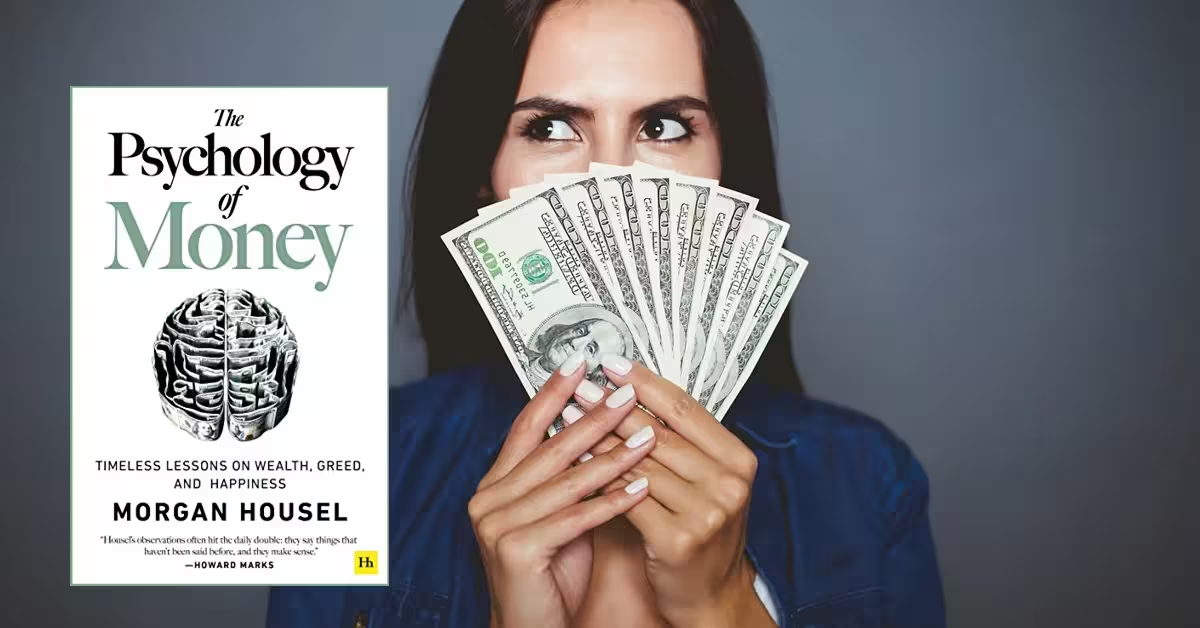
Here is the story that opens The Psychology of Money: a janitor and petrol-station worker named Ronald Read quietly saved and invested for decades and left a fortune of around eight million dollars when he died. Meanwhile, a highly paid Wall Street executive with a Harvard education went bankrupt. Morgan Housel’s point is simple: doing well with money has less to do with how smart you are than with how you behave.
Published in 2020, Housel’s book has become one of the most widely recommended finance books of the decade. Here is my summary of its main ideas and my honest assessment. This is general information, not financial advice.
Table of Contents
About the Book and Its Author
Morgan Housel spent years writing for The Motley Fool and The Wall Street Journal before joining the venture firm Collaborative Fund. The book is a collection of twenty short chapters, each built around a story and a lesson. It reads quickly, more like a series of essays than a textbook.
The Big Ideas
Everyone Is a Little Crazy About Money
Our views on money are shaped by our own experiences: when we were born, what economy we grew up in, what our parents went through. Someone who lived through high inflation will think about money very differently from someone who grew up in a boom. Neither is irrational. They simply learned different lessons.
Luck and Risk
Success and failure both involve forces beyond our control. Housel tells how Bill Gates attended one of the few schools in the world with a computer in the 1960s, while his equally gifted friend Kent Evans died in a mountaineering accident before he could share that future. We should be humble about our wins and forgiving about others’ failures.
Knowing When You Have Enough
The hardest financial skill is getting the goalpost to stop moving. People with plenty have risked everything chasing more, and lost it.
Compounding Takes Time
Much of Warren Buffett’s fortune, Housel notes, was accumulated after his mid-sixties. His real secret was not just skill but investing steadily for an extraordinarily long time.
A Few Events Matter Most
In investing, business and art, a small number of big wins account for most of the results. You can be wrong often and still do very well, as long as you stay in the game long enough to catch the rare successes.
Freedom Is the Real Return
The highest value of money, Housel argues, is the ability to control your own time. Wealth is what you do not spend. It is the cars not bought and the luxuries skipped, invisible to others but real for you.
Be Reasonable, Not Perfectly Rational
An investment plan you can stick with through bad times is better than a theoretically perfect one you will abandon in a panic.
Leave Room for Error
Plans fail. Savings, humility and a margin of safety let you survive the surprises that inevitably come.
What I Like About It
- Clarity: complex ideas told through short, memorable stories.
- Empathy: Housel does not mock people’s money mistakes. He explains them.
- Universality: most of the lessons apply in Dhaka as much as in New York.
- Timeless focus: it is about behaviour, which changes far more slowly than markets.
Where It Falls Short
- Light on practical steps: it will not tell you which accounts to open or how to build a portfolio.
- Repetitive: some chapters circle the same point.
- Little on inequality: the book says relatively little about how wages, access to credit and social systems shape who can save at all.
Who Should Read It
Almost everyone, but especially young earners and anyone who feels anxious or confused about money. It pairs well with a more practical guide, such as John Bogle’s book on index investing. See my list of books on building wealth for more.
My Verdict
The Psychology of Money will not make you rich by itself. What it can do is change how you think about money, which, Housel argues convincingly, is where wealth really begins. If you read only one book on personal finance, this is a strong choice.