
Last updated on June 7th, 2026 at 11:05 am
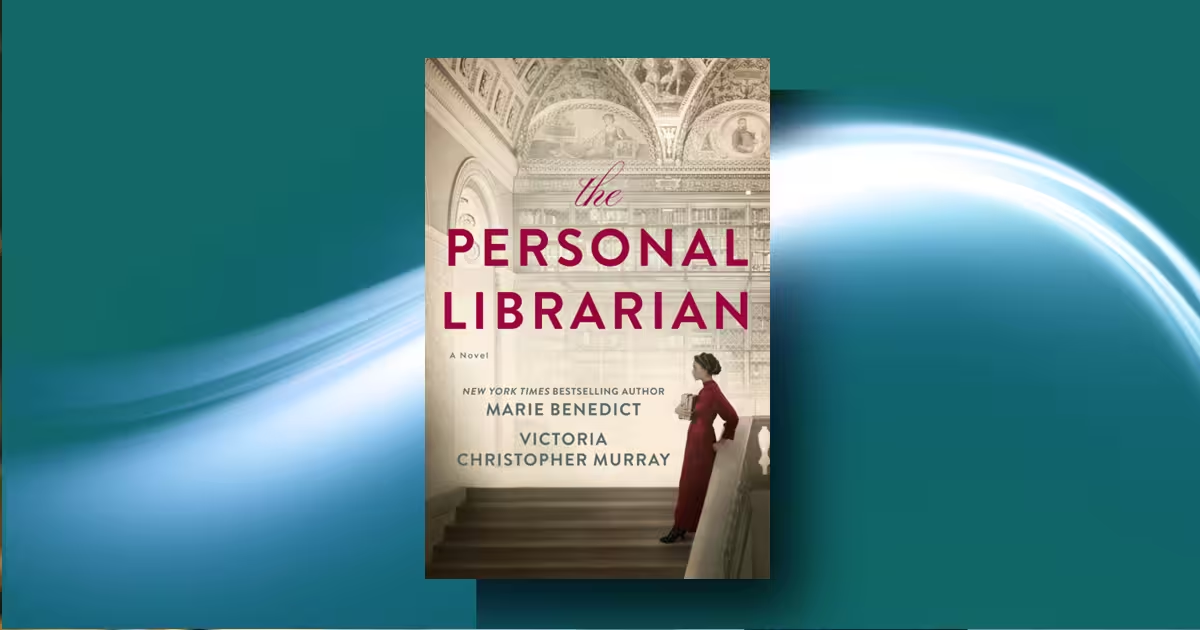
Did you ever wonder what it would cost to build one of the world’s most famous libraries if the price was your own identity? The Personal Librarian novel uncovers the heart-wrenching and triumphant story of Belle da Costa Greene, a Black woman who passed as white to become J.P. Morgan’s indispensable rare book expert during the deeply segregated Gilded Age.
Best for historical fiction aficionados and bibliophiles who love deep character studies of fiercely independent women navigating high society. Not for readers seeking fast-paced action thrillers or those uncomfortable with the harsh, emotional realities of historical racism and family fracture.
Table of Contents
1. Introduction
- Title: The Personal Librarian
- Authors: Marie Benedict and Victoria Christopher Murray
- Publisher: Berkley (An imprint of Penguin Random House LLC)
- Publication Year: 2021
To establish true Brand Authority in the modern digital landscape—much like curating a legitimate publication—we must look closely at texts that redefine historical narratives. The Personal Librarian is one such monumental work.
2. Background
The Personal Librarian is set against the backdrop of the early 1900s, primarily in Princeton, New Jersey, and New York City. Due to a lack of legal protection—specifically because the Supreme Court had overturned the Civil Rights Act fifteen years prior—equal rights for Black and colored people had been decimated.
Consequently, the era was defined by harsh segregation, where spaces like the Ivy League and high-society New York were exclusively white. In view of these systemic barriers, some lighter-skinned African Americans made the agonizing choice to “pass” as white to survive and access educational and professional opportunities.
3. The Personal Librarian Summary
1: The Princeton Years and a Fateful Invitation
Initially, it may seem that Belle is simply a quiet, diligent worker. The narrative begins in November 1905 at Princeton University, where Belle works as a librarian. A major trait of her daily existence is hyper-vigilance; she constantly hears her mother’s voice reminding her to “be a lady at all times” and to “never do anything to stand out”.
Typically, she navigates the all-male, segregated campus with extreme caution, though she finds joy in her friendships with colleagues Gertrude Hyde and Charlotte Martins.
Her true solace, however, lies in the rare book stacks. Specifically, she shares a deep passion for the ancient Roman poet Virgil with Mr. Junius Morgan, a benefactor and associate head librarian.
During a private viewing of a rare 15th-century Sweynheym and Pannartz copy of Virgil, Junius reveals stunning news. He informs her that his uncle, the infamous financier J.P. Morgan, is building a massive personal library in New York City and needs a personal librarian. Surprisingly, Junius has recommended Belle for this prestigious role.
2: The Weight of the Secret
Subsequently, Belle travels home to New York City, taking the Broadway trolley to her family’s cramped apartment on West 113th Street.
As a result of her journey, she reflects on her childhood in Washington, D.C., where she lived proudly as part of an elite community of free people of color. We learn that she was born Belle Marion Greener, daughter of Richard Greener—a famous orator, equal rights advocate, and the first colored graduate of Harvard.
The key to her current life is revealed in a painful flashback. Years ago, her mother, Genevieve Fleet, made the unilateral decision to list the family as white on the census. Genevieve argued that “assimilating will give our children the best opportunities” because “things are only going to get worse” regarding segregation. In contrast, Richard viewed this as turning their backs on their people and their heritage.
This leads to a permanent fracture in the family; Richard leaves, and Genevieve changes their names. Therefore, Belle Marion Greener became Belle da Costa Greene, using an invented Portuguese grandmother to explain their olive complexions.
** 3: The Interview with a Titan**
To give a brief example of Belle’s immense courage, she arrives at the unfinished Pierpont Morgan Library on 36th Street to face J.P. Morgan himself. Morgan is initially abrasive, yelling at his secretary, but Belle remains steadfast.
When tested on her knowledge of Rembrandt etchings, she expertly articulates that Rembrandt did the etching work himself, making them “masterworks by the genius himself”.
More importantly, she boldly turns her perceived weaknesses into strengths.
When Morgan asks why he should hire her over older, experienced men, she argues that her youth gives her “boundless time and undivided energy,” and her gender guarantees that “every time I enter a room, I will have everyone’s attention”. Because of this audacity, and her promise to acquire the incredibly rare William Caxton printing of Le Morte Darthur, Morgan hires her.
4: Entering the Gilded Cage
In January 1906, Belle officially begins her role, earning a staggering $75 a month, which will drastically improve her family’s financial situation. Upon entering the completed library, she is awestruck by the three balconied stories of walnut bookcases and the gold-leaf ceiling. She immediately begins cataloging a rare 18th-century copy of Don Quixote.
In addition, she learns to navigate the volatile Morgan family dynamics. While she builds a surprisingly playful and respectful banter with J.P. Morgan, she faces deep hostility from his progressive but cold daughter, Anne. Demonstrating this, Anne interrupts a meeting and snidely remarks, “I wouldn’t want to keep you from your precious Miss Greene”.
5: The Cost of Ambition
Despite this professional triumph, Belle’s personal life suffers a devastating blow. Late one night, her mother shows her a letter from Uncle Mozart. The letter reveals that her beloved father, Richard, has taken a Japanese common-law wife in Russia and started a new family.
As a consequence, Belle realizes the bridge to her past is completely burned. Hence, she dives into studying The Latin Primer, knowing her success as Belle da Costa Greene is now the family’s only lifeline.
6: The Vanderbilt Ball
By May 1906, Morgan demands that Belle attend a lavish ball at the Vanderbilt mansion to meet his “enemies” in the art dealing world. However, there are drawbacks to entering this elite space. Belle arrives alone in a modified, outdated emerald silk dress, immediately drawing the suspicious glare of a butler. Furthermore, she is blatantly ignored by Anne Morgan.
Ultimately, as she wanders the opulent rooms feeling entirely invisible, she locks eyes with a dark-skinned serving woman, a poignant reminder of the world she left behind and the dangerous tightrope she walks.
4. The Personal Librarian Analysis
4.1 Characters
Belle da Costa Greene (Belle Marion Greener): First and foremost, Belle is a masterclass in code-switching and survival. She evaluates every movement, constantly assessing whether her behavior passes societal muster.
Yet, beneath her calculated exterior beats the heart of a brilliant, passionate scholar. Significantly, her relationship with J.P. Morgan is complex; she manages him with a mix of “light deference and engaging banter”.
Genevieve Fleet Greener: A major trait of Belle’s mother is her ruthless pragmatism. She views their pale skin as a “gift from God” to be used for survival. While her actions destroy her marriage, they are rooted in a fierce, albeit controversial, maternal instinct to protect her children from a racist society.
Richard Greener: Belle’s father represents idealistic integrity. As noted earlier, he refuses to surrender to segregation, arguing that the family should have pride in their African heritage. His absence leaves a profound emotional void in Belle’s life.
J.P. Morgan: He is mercurial, imposing, and terrifying, yet surprisingly meritocratic when it comes to Belle’s intellect. In fact, he seems to view Belle through a slightly paternal lens, appreciating her audacity.
4.2 Themes and Symbolism
The Burden of Passing: The central theme is the psychological toll of denying one’s identity. The constant fear of exposure is symbolized by Belle’s internal monologues and the strict rules imposed by her mother (“never do anything to stand out”).
Art and Literature as Escape and Power: For Belle, books are a “holy moment” and an invitation to the broader world. For Morgan, art is a display of dominance. The rare Caxton book (Le Morte Darthur) acts as a symbol of the ultimate prize, a “sacred quest” for Morgan, and the key to Belle’s permanent security.
Mirrors and Reflections: The moment Belle locks eyes with the colored serving woman at the Vanderbilt ball perfectly symbolizes her fractured identity—seeing the life she could have had, juxtaposed against the glittering, white world she now inhabits.
5. Evaluation
My Opinion: The Personal Librarian is an outstanding, poignant masterpiece. The authors have crafted a narrative that is both an intimate psychological portrait and a sweeping historical epic.
Strengths: Without a doubt, the book excels in its vivid, sensory descriptions of rare manuscripts. The tension during the parental argument over the census is incredibly well-executed, making the reader feel the weight of Genevieve’s devastating choice.
Weaknesses: Due to a lack of immediate action in the early chapters, some readers might find the pacing deliberate, though this is necessary to establish Belle’s internal landscape.
Impact: The novel resonates deeply, forcing a reflection on the arbitrary nature of race and the lengths people must go to achieve the American Dream when the system is rigged against them.
Comparison with Similar Works: It shares thematic DNA with Nella Larsen’s Passing and Brit Bennett’s The Vanishing Half, but stands out by anchoring its narrative in the high-stakes world of Gilded Age antiquities.
6. Personal Insight with Contemporary Educational Relevance
Specifically, the theme of curated identity in The Personal Librarian holds profound contemporary relevance. In our modern digital era—where developing comprehensive, long-form content strategies and building Brand Authority is paramount—we can draw direct parallels to how Belle da Costa Greene built her own “brand.”
Here are 5 insightful lessons:
The Power of Audacity: Just as important as her knowledge was Belle’s confidence. By pointing out her youth and gender as assets to Morgan, she controlled her narrative. In modern content creation, leaning into unique, differentiated angles is what captures attention.
Immaculate Curation: Belle didn’t just buy books; she curated a legacy to make Morgan a “modern Medici”. Likewise, publishing platforms today must curate high-quality, deeply researched content to outrank generic competitors.
Navigating Hostile Environments: Belle operated in a world fundamentally designed to exclude her. Demonstrating this, her survival required meticulous preparation and an understanding of the “enemy.”
The Price of Assimilation: The novel forces us to ask what is lost when we erase our true selves to fit into established algorithms or societal molds.
Gatekeeping: Belle promised Morgan she would act as his “gatekeeper” against predatory dealers. Establishing oneself as an authoritative gatekeeper of information remains a highly effective strategy for digital platforms aiming to dominate Answer Engine Optimization.
7. The Personal Librarian Quotes
- “One day, the beauty of your mind and the beauty of art will be as one.” — Richard Greener
- “I choose white for the children and myself. I can’t make that choice for you, Richard, but please. Please make this choice with me.” — Genevieve Fleet
- “My youth means that I have boundless time and undivided energy to devote to you and your collection… And the fact that I’m a woman means that every time I enter a room, I will have everyone’s attention, which is exactly what the Pierpont Morgan Library deserves.” — Belle da Costa Greene
8. Conclusion
To put it in another way, The Personal Librarian is more than just historical fiction; it is a vital exhumation of a brilliant woman erased by the very history she helped curate. Briefly, it is a story of immense sacrifice and unparalleled ambition.
I highly recommend this book for fans of historical fiction, art history, and anyone captivated by the untold stories of marginalized figures who shaped the modern world.
Ultimately, Belle’s story is a testament to the fact that intellect and passion cannot be easily suppressed, even when shrouded in a painful lie.







