
Last updated on October 25th, 2026 at 11:38 am
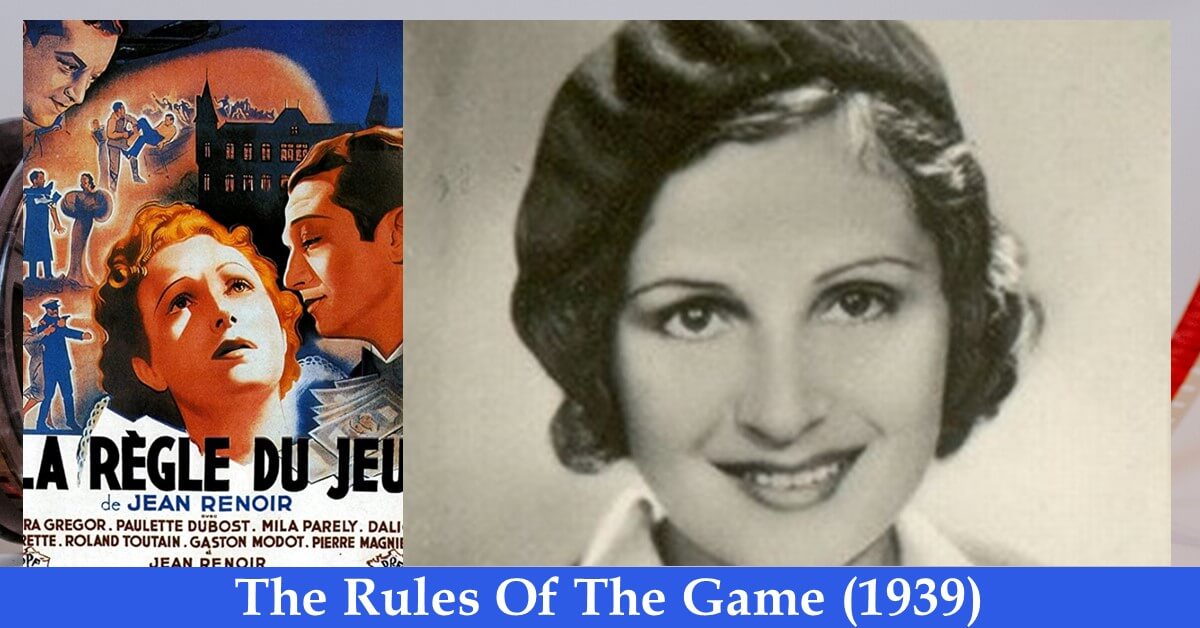
The Rules of the Game asks an uncomfortable question: what happens when preserving good manners matters more than telling the truth? Jean Renoir’s 1939 French film places romantic confusion inside a country-house gathering, where hospitality gradually becomes a means of containing scandal.
My reading is that its greatest subject is the authority to explain other people’s suffering. Its comedy is pleasurable, its violence disturbing, and its final return to composure harder to dismiss than an openly villainous speech.
The 1939 French film The Rules of the Game 1939 is part of my journey to watching 101 best films.
Table of Contents
The Rules of the Game at a glance
My verdict: An exceptional ensemble film whose humor makes its moral failures more troubling.
The central idea: I read its unwritten social rules as a system that tolerates deception while punishing inconvenient honesty.
The ending: A fatal shooting is followed by an explanation that allows the household to recover its public composure. The distinction between what happens and how it is described is essential. Plot reference.
Best suited to: Viewers interested in social satire, complicated relationships, and filmmaking that rewards attention.
Before watching: Expect subtitles, overlapping relationships, and a tonal movement from farce toward tragedy.
Version guidance: Criterion identifies its reconstructed edition as 106 minutes. Check the edition rather than assuming every available copy is identical. :chatgpt-content-reference.
What background helps explain the film?
The most useful background is that Renoir made this comedy of social disorder as another European war approached.
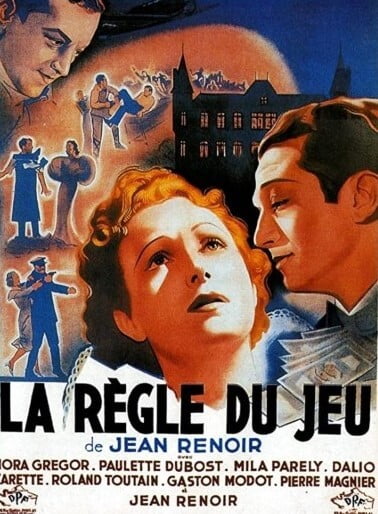
In Alexander Sesonske’s Criterion essay, the film’s development is connected to Renoir’s anxiety about Europe and his interest in French comic theater. That context helps explain the uneasy relationship between its apparently frivolous activities and its darker implications.
I would resist treating every character as a coded representative of a political faction. Such a method makes the film smaller. Its social criticism works through recognizable conduct: evasions, indulgences, jealousies, and the fear of being embarrassed.
The production’s later history also matters. Criterion records hostile initial reactions, subsequent cuts, the wartime destruction of the original negative, and reconstruction in 1959. The film’s survival therefore involves editorial recovery as well as physical preservation.
This is especially relevant to Octave. The Janus Films press notes explain that a shortened version changes the circumstances of his late decisions concerning Christine and André. When those circumstances change, our understanding of his responsibility changes too.
For a first viewing, I recommend a clearly identified reconstructed edition. A shorter runtime is not necessarily a more efficient route into the same experience.
What happens in The Rules of the Game? plot summary
A celebrated aviator’s disappointment brings several competing relationships into a country house, where romantic maneuvering ends in a fatal case of mistaken identity.
The following account summarizes the film’s principal narrative, as documented in the plot section reproduced in the supplied source.
The relationships to keep straight
| Character | Relationship and position |
|---|---|
| André Jurieux | An aviator who loves Christine |
| Christine | Robert’s wife and Octave’s longstanding friend |
| Robert | Christine’s husband and Geneviève’s lover |
| Octave | A friend and intermediary whose feelings complicate his interventions |
| Geneviève | Robert’s mistress |
| Lisette | Christine’s maid and Schumacher’s wife |
| Schumacher | The estate’s gamekeeper |
| Marceau | A poacher whom Robert brings into household employment |
These relationships are established in the supplied source’s plot and cast sections.
A public triumph becomes a private complaint
André arrives at Le Bourget after crossing the Atlantic. Instead of offering an uncomplicated statement of triumph, he expresses disappointment that Christine has not come to welcome him. His emotional complaint becomes a radio broadcast.
Christine is already married to Robert. Robert, in turn, has a relationship with Geneviève that he says he wants to end. Octave negotiates André’s invitation to the couple’s country estate, bringing an unresolved emotional problem into a setting supposedly designed for leisure.
My interest in this opening lies in André’s assumption that a public achievement should secure a private response. His disappointment is understandable. His decision to broadcast it is less innocent.
The servants develop a parallel conflict
At the estate, Schumacher catches Marceau poaching. Robert responds to Marceau’s appeal by employing him, and Marceau begins flirting with Lisette. Her marriage to Schumacher consequently becomes another source of tension within the gathering.
The household now contains related conflicts at different social levels. Affection, possessiveness, opportunity, and embarrassment circulate among both guests and employees.
A distant observation changes Christine’s understanding
After the hunt, Christine sees Robert kissing Geneviève through an optical viewing device. Robert is attempting to conclude their relationship, but the gesture Christine witnesses does not communicate that context.
She persuades Geneviève to remain rather than leave. Later, at the evening entertainment, romantic declarations and confrontations accumulate while Schumacher’s pursuit of Marceau makes the servants’ conflict increasingly dangerous.
Octave becomes involved in the escape he was arranging
André and Christine discuss leaving together, but their plans become entangled with expectations about proper conduct. Octave eventually declares his own love for Christine, and they consider running away.
Christine wears Lisette’s cape. Schumacher and Marceau, watching from outside, therefore mistake her for Lisette and believe Octave is involved with Schumacher’s wife.
Clothing completes the mistaken identity
Octave returns to the house. After Lisette challenges his proposed future with Christine, he withdraws and sends André to meet her instead, lending him his overcoat. Schumacher mistakes André for Octave and shoots him.
Robert subsequently explains the death as an unfortunate accident and brings Schumacher back into the household. Octave and Marceau leave.
The plot’s final movement is therefore double: a person dies, and a socially acceptable account of that death takes shape.
What does the ending actually mean?
The ending shows how a group can recover its public order without confronting the full moral meaning of what happened.
The immediate cause is specific: Schumacher shoots André while believing him to be Octave, whom he suspects of involvement with Lisette. Robert’s subsequent explanation presents the death as an accident. These are separate narrative events, and keeping them separate prevents a misleading reading of the conclusion.
I do not interpret the ending as evidence that Robert secretly plans André’s murder. The more disturbing possibility is that no such plan is necessary.
A harmful act occurs amid jealousy and confusion. Authority then supplies a version of events that the gathering can accommodate.
Robert’s composure matters because it gives his explanation social weight. He can make the situation legible again. What feels horrifying to me is the speed with which legibility becomes a substitute for examination.
There is an important limit to this interpretation. The film does not show a completed legal investigation or establish what every guest privately believes. Its conclusion concerns the household’s immediate response. Saying that the group accepts a convenient account is defensible; inventing a later judicial outcome is not.
André’s death also unsettles the promise attached to his public status. His achievement gives him visibility, but visibility does not guarantee that his needs will govern this private world.
The closing question I take from the film is simple: who has enough standing to decide when a disturbing event has been adequately explained?
Why is Renoir’s filmmaking so effective?
Renoir’s filmmaking is effective because it makes relationships visible through shared space, then makes that space increasingly difficult to control.
Criterion’s discussion of staging, featuring Kristin Thompson’s analysis, identifies the arrangement of people within the scene as a major part of the film’s achievement. The Janus press notes also describe deep-focus photography used to preserve action across different visual planes.
Shared space creates moral pressure
For me, the practical effect is that no relationship feels completely private.
A person’s behavior exists beside other people’s responses. Attention can move between attraction, surveillance, irritation, and indifference. A room becomes an arrangement of competing interests.
This is why the film benefits from patient viewing. Looking only for the person delivering the most important line can mean overlooking a reaction that changes the scene’s emotional meaning.
I find that approach more demanding than conventional emphasis, but also more rewarding. The viewer has to make judgments within a social situation rather than receive every judgment through a cut.
The hunt changes the terms of attention
The hunt includes the killing of animals, an aspect discussed explicitly in Slant’s review. Viewers sensitive to animal suffering should know this before watching.
My interpretation is that the sequence challenges the gathering’s definition of harmless pleasure.
The same people who maintain delicate distinctions in conversation can participate in an activity whose outcome is physically absolute. Death is not hypothetical there. It is organized into the day’s entertainment.
I would not reduce the animals to a simple symbol for André. Such a reading risks making their suffering merely decorative. The sequence has its own force before we consider its relation to the ending.
Comedy makes the danger harder to dismiss
The evening’s romantic confusion and Schumacher’s pursuit of Marceau bring farce and violence into the same narrative space.
I find this mixture more disturbing than a clean division between a comic first half and a tragic second half.
The audience cannot always identify the exact point at which amusement should stop. That uncertainty becomes part of the criticism. We have been learning how easily a group can absorb disorder as entertainment.
The film asks for alertness without abandoning pleasure. That balance is the foundation of my admiration for it.
Acting performances and the ensemble
The principal cast includes Marcel Dalio as Robert, Nora Gregor as Christine, Roland Toutain as André, Jean Renoir as Octave, Paulette Dubost as Lisette, Gaston Modot as Schumacher, Julien Carette as Marceau, and Mila Parély as Geneviève.
What follows is my critical assessment rather than a factual ranking of the actors.
Marcel Dalio
Dalio makes Robert’s charm a source of ambiguity.
I find him most persuasive when courtesy and self-interest become difficult to separate. Robert can appear accommodating without surrendering his position. The performance makes it possible to understand why people remain comfortable around someone whose conduct deserves scrutiny.
Nora Gregor
Gregor gives Christine a reserve that I find productive.
Her emotional distance can initially seem difficult to enter, yet it suits a character whose expectations about affection become unstable. I do not need her to explain every change of feeling. Some uncertainty belongs to the role.
Jean Renoir
Renoir’s Octave provides the performance I find most painful.
His apparent usefulness gives him access to other people’s intimate decisions. Yet sympathy does not automatically make his interventions wise. I read his warmth alongside his dependence on remaining necessary to the group.
Dubost, Carette, and Modot
Dubost and Carette give the servants’ interactions a lively playfulness, while Modot introduces a harder emotional pressure.
The contrast matters to my response. If everyone played the same comic rhythm, jealousy would become a harmless mechanism. Instead, I feel competing understandings of what the situation permits.
Toutain’s directness and Parély’s wounded pride also help prevent the ensemble from becoming a collection of clever positions. There is emotional cost beneath the maneuvering.
What are the film’s main themes?
The film’s main themes are unequal freedom, possessiveness, social performance, and the distance between understanding a motive and excusing an action.
Permission matters as much as prohibition
My reading of the title begins with a distinction between a rule and its enforcement.
A community may formally value fidelity, honesty, and restraint while responding very differently to different people’s failures. The meaningful question becomes who receives discretion and who receives consequences.
This gives the comedy a sharper edge than a general complaint that people are hypocritical. Hypocrisy becomes a practical arrangement.
Love can become an argument for entitlement
The plot repeatedly places declarations of love beside efforts to influence someone else’s choices.
I find it useful to ask what each declaration requests.
Does the speaker want companionship, reassurance, obedience, rescue, or public acknowledgment? Those desires are not interchangeable. Calling them all love can hide the difference.
This is particularly relevant to André. His sincerity deserves attention, but sincerity does not settle Christine’s obligations.
The servants do not provide a pure alternative
The parallel conflict involving Lisette, Schumacher, and Marceau prevents the servants from functioning as an uncomplicated moral opposition to the guests.
My interpretation is that proximity to power can reproduce its habits without distributing its protections equally.
That does not make social position irrelevant. It makes the film’s account of behavior less flattering and more difficult to escape.
Sympathy requires judgment
I value the film’s willingness to let people remain understandable after they become troubling.
Understanding gives criticism a clearer target. It helps distinguish insecurity from aggression, affection from possession, and embarrassment from actual injury.
The harder task is to preserve those distinctions when someone offers a convincing account of their own pain.
Comparisons that clarify the film
Grand Illusion
Renoir’s earlier Grand Illusion concerns French prisoners in a German camp during the First World War.
I find the two films useful companions because they invite different questions about social boundaries.
With The Rules of the Game, I become especially attentive to how apparent intimacy can coexist with exclusion. People may share rooms, jokes, and confidences without sharing the same freedom to determine an outcome.
Gosford Park
Michael Wilmington’s Criterion essay on Short Cuts explicitly connects Robert Altman’s Gosford Park with The Rules of the Game.
The comparison gives readers an accessible route into Renoir’s ensemble. My suggested viewing question is how each film directs your attention between the household’s social display and the work supporting it.
I would avoid approaching Renoir’s film primarily as a puzzle about a concealed culprit. Its ending gives me a broader question about collective accommodation.
The Discreet Charm of the Bourgeoisie
I recommend the pairing for viewers interested in how comedy can expose privilege.
My preference within Renoir’s film is for the discomfort produced by continuing to understand people I increasingly distrust. The pleasure of the gathering remains available, which makes accepting its moral arrangements a more immediate temptation.
How was the film received, and what recognition did it earn?
Its reputation changed dramatically from its troubled original reception to its later standing among major works of cinema.
Criterion documents the hostile response and subsequent reconstruction. In the 2022 Sight and Sound poll, the BFI lists it at number 13 among critics and joint number 38 among directors. These are dated poll results, not permanent measurements of artistic quality.
I would use that reception history to encourage curiosity, not obedience. A reader should not feel required to admire every moment because the film has an established reputation.
Its density can frustrate. The emotional movement may initially seem less clear than its social movement. Those are reasonable responses, and I think acknowledging them makes a recommendation more useful.
Awards need careful attribution
The Academy records Jean Renoir’s Honorary Award at the 1975 ceremony. That recognition belongs to the filmmaker’s career; it should not be presented as an Oscar won by The Rules of the Game.
For this review, the verified poll placements provide more relevant evidence of the film’s critical standing than an unsupported awards list.
My personal reading of its relevance today
The lesson I take from The Rules of the Game concerns the moment when a group stops asking questions because an acceptable explanation has arrived. I do not need to equate a modern office, family, or friendship circle with the film’s household to recognize that temptation.
I can use its ending as a question about judgment: when does an explanation help us understand an event, and when does it mainly help us move past discomfort?
Imagine a workplace in which a well-liked manager repeatedly humiliates a junior colleague. The manager apologizes and explains that the team was under pressure.
Pressure may be real. The apology may be sincere. Yet I would still want to know whether the colleague can describe what happened without risking another humiliation. If only the more powerful person can speak comfortably, I would hesitate to call the matter resolved.
That imagined example helps me distinguish motive from repair. A motive explains why someone acted. Repair concerns what happens afterward. I think the two become confused when sympathy for the speaker draws attention away from the person carrying the consequences. I can understand anxiety, wounded pride, or fear of embarrassment without treating any of them as sufficient answers to another person’s injury.
I also find a personal warning in the attraction of being useful. The intermediary who understands everyone can become attached to the role itself. In a disagreement, I might enjoy being the person each side trusts. That pleasure deserves scrutiny. Am I helping people make their own decisions, or am I maintaining a situation in which my presence remains necessary? Good intentions do not answer that question automatically.
The same caution applies to public sincerity. I value honesty, but I would not want emotional intensity to become a claim on someone else’s freedom. Telling the truth about my desire does not establish another person’s duty to satisfy it. A painful rejection can remain painful without becoming evidence of betrayal.
That distinction is easy to state and harder to maintain when disappointment feels overwhelming.
My most practical response to the film is therefore a short set of questions. Who has been heard? Who is expected to remain discreet? What facts would challenge the explanation being offered? What would repair require from the person with the most freedom to act? I would rather ask those questions than assume that a calm room is necessarily a fair one.
Still, I do not take the film as an invitation to distrust every act of courtesy.
Tact can protect vulnerable people, and privacy can preserve dignity. The test, for me, is where the protection goes. If discretion gives someone room to recover, I can respect it. If it mainly protects a comfortable group from examining its conduct, I become less persuaded. What stays with me is the need to remain attentive after the reassuring words have been spoken.
That is when accountability may finally begin, or quietly disappear.
A brief quotation worth examining
What’s natural nowadays?”
“The more you give, the more they want”.
“Men are so naïve to think affection as of love.”
The Rules of the Game Movie quotes
“Telling lies is such a heavy weight to bear.”
“Love as it exists in society is merely the mingling of two whims and the contact of two skins.”
“Believe it or not, you mean a lot to me. I don’t know if it’s love or force of habit.” “So, in Paris, you can’t show a man affection without…touch.”
“The awful thing about life is this: Everyone has their reasons.”
“Diets I can accept, but not obsessions.”
“Constraint spoils the pleasure.”
The Rules of the Game Movie quotes
“You can fight hatred, but not boredom.”
“André’s very kind and very decent, but too sincere. Sincere people are such bores.”
“Today everyone lies. Pharmaceutical fliers, governments, the radio, the movies, the newspapers. So why shouldn’t simple people like us lie as well?”
What are the film’s strengths and limitations?
Its greatest strengths are the relationship between staging and meaning, the ensemble’s tonal variety, and an ending that makes restored calm deeply uncomfortable.
The limitations below describe my viewing assessment, rather than defects every reader must experience.
| Pros | Cons or viewing difficulties |
|---|---|
| Shared spaces make relationships visually expressive | The number of relationships requires concentration |
| Comedy and unease strengthen each other | Some transitions may initially feel emotionally abrupt |
| Performances allow sympathy without easy approval | Viewers seeking a single central hero may feel distant |
| The conclusion supports precise ethical discussion | Its refusal of reassuring closure can frustrate |
| Formal detail rewards attentive viewing | The hunt may be distressing for sensitive viewers |
I would not describe the film simply as slow. My difficulty lies more in processing several emotional directions at once.
If you feel briefly disoriented, concentrate on what a character wants from the person directly in front of them. That small question offers a useful way back into the larger gathering.
Who should watch The Rules of the Game?
I recommend it most strongly to viewers who enjoy social satire and are willing to judge characters without dividing them neatly into heroes and villains.
Film students can use it to think about how staging carries information. Literature readers may appreciate the tension between what people declare and what their conduct makes possible. Viewers interested in class can examine how permission operates through personal relationships rather than explicit commands.
Casual viewers can appreciate it too. Specialist knowledge is helpful but unnecessary. A basic relationship guide and a clearly identified edition are more useful starting points than a long list of theoretical terms.
For a first viewing, I suggest:
- Learn the central relationships before trying to interpret every detail.
- Treat behavior toward employees as part of the main story.
- Watch reactions as carefully as declarations.
- Distinguish the shooting from the explanation offered afterward.
- Allow amusement and discomfort to coexist.
The plot includes infidelity, jealousy, and a fatal shooting, while the hunt depicts animal deaths. These content considerations are documented in the plot account and Slant’s discussion of the hunt. I would consider them before recommending the film to children or particularly sensitive viewers.
Conclusion
I recommend The Rules of the Game for its ability to make charm, sympathy, and moral failure occupy the same room.
My proposed rating is 5 out of 5 stars. Its achievement lies in how precisely it connects private desire with public composure. The ending leaves me asking whether order has been restored because something has been understood, or because further understanding would cost the survivors too much.
That question gives the film its lasting force.
The Rules of the Game
Director: Jean Renoir
Date Created: 1970-01-01 00:32
5
Pros
- Expressive ensemble staging; strong performances; effective combination of comedy and tragedy
Cons
- Dense relationships require attention; animal-hunting imagery may distress viewers







