Last updated on October 17th, 2026 at 09:35 am
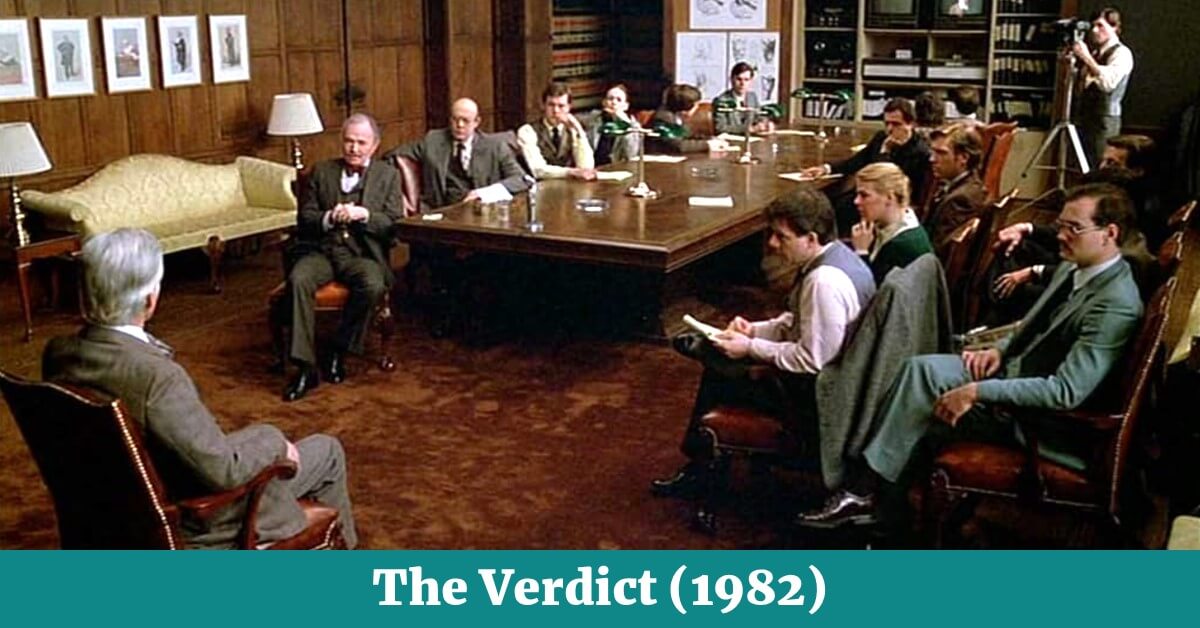
The Verdict looks at first like an ordinary courtroom drama. By the end, it is hard to stop thinking about a hospital ward in Boston and a woman who would never wake up. Sidney Lumet directed it in 1982 from a script by David Mamet, who adapted Barry Reed’s 1980 novel, and Paul Newman plays Frank Galvin, a lawyer who has lost almost everything except a last, stubborn piece of conscience.
Galvin is no hero when we meet him. He drinks, he hangs around funeral homes handing out business cards, and he has barely won a case in years. Then a malpractice suit lands on his desk, more or less as a favour. A young mother, Deborah Ann Kaye, was given anaesthesia during childbirth at St. Catherine Labouré, a Catholic hospital run by the archdiocese. Something went wrong. Her baby died, and she has lain in a coma ever since.
What makes the film unforgettable to me is not the legal puzzle. It is the moment a tired man decides that one thing in his life is going to be done properly, even if he has to do it alone.
Why the Story Felt So Close to Home
As someone who grew up in Bangladesh, I could not watch Galvin’s fight as pure fiction. Medical negligence is something we read about in the newspaper almost every week. The film’s hospital is protected by a church, a powerful law firm and doctors with famous names. Our hospitals are often protected by money, politics and the simple fact that poor families cannot afford to fight back.
The numbers are not small. The World Health Organization has reported that around 2.6 million people die every year from unsafe care in low- and middle-income countries, a group that includes Bangladesh. In the United States, a widely cited Johns Hopkins study estimated that more than 250,000 deaths a year are linked to medical error.
At home the headlines repeat with grim regularity. A six-year-old died after wrong treatment, and three doctors and a nurse were arrested. A three-year-old died in 2018. A woman died in 2019 under similar circumstances, and a private hospital in Chittagong was sued for wrong treatment more than once.
Some cases sound almost unbelievable. In Chuadanga, a woman lived for 20 years with surgical scissors in her abdomen. Another report described scissors left inside a small child for many months. Across the border in Hyderabad, doctors removed scissors from a patient three months after an operation. Each story ends the same way: the family is told to accept it, or is quietly paid to stop asking.
That is why Galvin hit me so hard. Most victims never get a lawyer who will turn down easy money and walk into court for them. They get silence, a settlement, or nothing.
The Story of The Verdict
Deborah went into St. Catherine Labouré to give birth to her third child. During the procedure she vomited into her anaesthesia mask, her heart stopped, and her brain went without oxygen long enough to leave her in a permanent vegetative state. Four years later her sister, Sally Doneghy, and Sally’s husband want enough money to move Deborah into proper long-term care.
The archdiocese, led by Bishop Brophy, would rather none of this reached a courtroom. Through its lawyers it offers $210,000 to settle. For Galvin, a third of that would be the easiest fee of his life. Then he visits Deborah in the hospital, takes Polaroid photographs of her lying hooked to machines, and something shifts. He refuses the money. If he takes it, he tells the bishop, he is finished as a person, because he will have been paid to look away like everyone else.
That decision costs him at once. The defence is run by Ed Concannon, played with icy charm by James Mason, whose firm has staff, money and connections that Galvin can only dream of. Sally and her husband are furious that he turned down a sure thing without asking them. Galvin’s star witness, an anaesthesiologist named Dr. Gruber who was ready to testify that Deborah was given anaesthesia carelessly, suddenly disappears on a vacation nobody can explain.
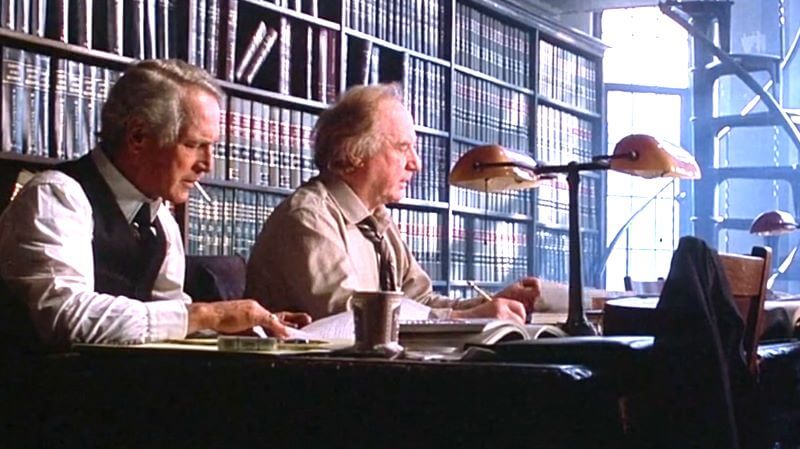
Galvin’s only ally is Mickey Morrissey, his old mentor, played by Jack Warden. Together they scramble for an expert and find Dr. Thompson, an elderly physician who agrees to say that the brain damage came from oxygen starvation after the heart stopped. On the stand he is picked apart. Concannon questions his credentials, and the judge, who plainly wants the case gone, does little to help.
The defence rests on one fact. Dr. Towler, the respected anaesthesiologist in charge, insists that Deborah’s admission record shows she had eaten nine hours before she arrived. If that is true, giving her general anaesthesia was perfectly safe, and the vomiting was bad luck rather than negligence. Towler’s own textbook even says patients who have eaten within the previous hour should not be put under, which makes the “nine” on that form the most important number in the film.
Galvin keeps digging. He learns that the admitting nurse no longer works at the hospital and tracks her down in New York. Her name is Kaitlin Costello Price, played by Lindsay Crouse, and she has been carrying a secret for four years.
Called as a rebuttal witness, she tells the court that Deborah had eaten one hour before admission, not nine. She wrote the number “1” on the form herself. After the operation went wrong, she says, one of the doctors pressured her to change it, and she was told she would never work again if she spoke. To protect herself she kept a photocopy of the original.
It should be the turning point. Instead Concannon objects, and the judge rules the photocopy inadmissible because the original exists. He goes further, striking Costello’s entire testimony and telling the jury to put it out of their minds. Legally, Galvin is left with nothing.
So he does the only thing he has left. In his closing argument he does not lecture the jury on medicine. He speaks quietly about how tired people become of lies, how easily we start seeing ourselves as victims, and how justice depends on ordinary people deciding to act as if it still matters. Today, he tells the twelve people in front of him, they are the law.
The jury finds for the plaintiff. Then the foreman asks the judge whether they are allowed to award more than the sum that was asked for. It is one of the quietest and most satisfying endings I know.
A Court Exists to Give People a Chance
There is a line in the film I keep returning to. Talking to Mickey, Galvin says the weak need someone to fight for them, and then adds, “The court doesn’t exist to give them justice.” It exists, he says, to give them a chance at it. That distinction is the whole film in one sentence.
I think it describes our own courts painfully well. Justice in Bangladesh is slow and expensive, and the side with the bigger firm usually walks out happier. When a grieving father tells reporters he no longer wants justice for his murdered daughter, he is not giving up on her. He is telling us he has stopped believing the system will deliver it.
Doctors face a special kind of shield. In a culture where physicians are treated almost like gods, a death on the operating table is easily described as fate. Families are told it was God’s will, which is exactly what Bishop Brophy suggests in the film. The Verdict refuses that comfort. Nobody, it says, is above being asked what really happened.
It is interesting to set the film beside To Kill a Mockingbird (1962). There, a decent white lawyer defends a Black man, and the jury, blinded by racial prejudice, convicts him anyway. The jury is where justice dies. In The Verdict the order is reversed. The judge and the lawyers are compromised, and the twelve ordinary citizens are the ones who rescue the truth. I find hope in that, even if it is a cautious hope.
My Final Thoughts
Elie Wiesel said in his Nobel lecture that “there must never be a time when we fail to protest.” Galvin is not a saint. He makes mistakes, trusts the wrong people, and nearly loses everything. But at the crucial moment he does protest, loudly and at his own expense, and that is what the film asks of us too.
Paul Newman, Jack Warden, James Mason and Milo O’Shea give performances that still feel alive four decades later, and the film earned five Academy Award nominations. It is slow, grey and patient, and it rewards that patience. The Verdict sits comfortably on my list of the 100 best films of 100 years, and if you have never watched it, I would put it near the top of your list as well.