Last updated on May 14th, 2026 at 08:59 am
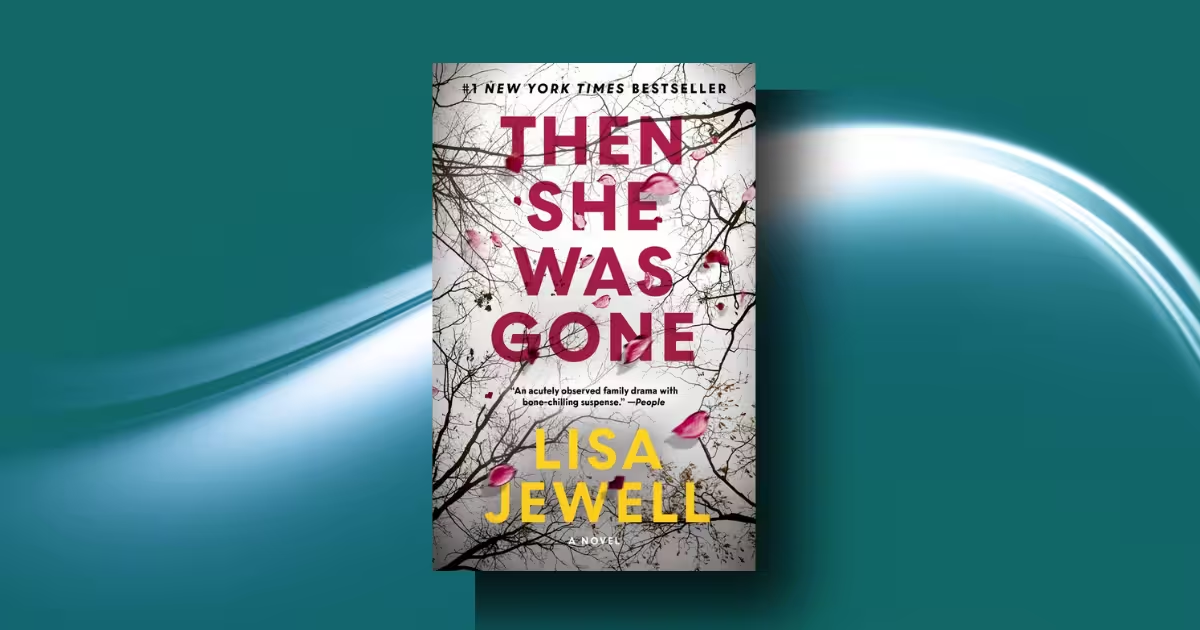
Did you ever wonder why you feel an invisible, magnetic pull toward certain strangers, only to uncover that your connection is rooted in your darkest, most unimaginable nightmare? Then She Was Gone traces the answer to that question.
Ten years after her golden-child daughter vanishes, a grieving mother tentatively rebuilds her life through a new romance, only to realize her new boyfriend’s nine-year-old daughter is the mirror image of her missing child, unravelling a terrifying web of obsession and captivity.
Then She Was Gone is best for: fans of psychological thrillers, domestic noir, and multi-perspective mysteries who enjoy slow-burn suspense with devastating emotional payoffs.
Not for readers who are highly sensitive to child abduction, prolonged captivity narratives, or severe maternal trauma, as the psychological manipulation here is suffocatingly dark.
Table of Contents
1. Introduction
Then She Was Gone is a masterfully woven psychological thriller by British author Lisa Jewell.
Published in 2017 in the UK by Century (Penguin Random House) and later internationally, the novel cemented Jewell’s reputation as a heavyweight in the domestic suspense genre.
Told through shifting timelines and multiple perspectives, the story forces us to look at the horrors hiding behind the polite curtains of everyday suburban life.
2. Background
In recent years, the “domestic noir” genre has surged, blending the banality of domestic spaces with horrific, hidden crimes. Then She Was Gone operates in a modern London setting—specifically Finsbury Park and Stroud Green.
The novel heavily relies on the contemporary historical context of how missing teenagers are often prematurely categorized by authorities and the media.
By leaning into the all-too-common tragedy of families left suspended in grief, Jewell crafts a narrative that is as much an exploration of psychological trauma as it is a gripping whodunit.
3. Then She Was Gone Summary
Part 1: The Disappearance and the Aftermath
In May 2005, fifteen-year-old Ellie Mack, the “golden girl” of her family, disappears on her way to the library in Stroud Green, North London. Despite desperate appeals, the police eventually downgrade the search, assuming the stressed teenager is a runaway.
The tragedy shatters the Mack family. Her mother, Laurel, becomes consumed by a paralyzing grief that alienates her husband Paul and her remaining children, Hanna and Jake. Unable to survive the emotional chasm, Laurel and Paul divorce. Ten years later, partial remains of Ellie—bones and her rucksack—are discovered in a shallow grave near Dover.
This grim closure finally allows Laurel to tentatively begin moving forward with her life.
Part 2: A Chance Encounter and a Ghostly Resemblance
Shortly after burying her daughter’s fragments, Laurel meets a charismatic American mathematician and author named Floyd Dunn in a local cafe.
They strike up a whirlwind romance that makes Laurel feel alive for the first time in a decade. However, Laurel’s fragile recovery is rocked when she meets Floyd’s nine-year-old daughter, Poppy.
Poppy is the exact, breathtaking image of Ellie at that age, right down to her dimples and the physical architecture of her face. Laurel is utterly breathless. Poppy is unusually precocious, home-schooled by Floyd, and possesses an unsettlingly mature demeanor.
Laurel learns from Floyd that Poppy’s mother vanished shortly after giving birth, abandoning them.
Part 3: The Dark Timeline (THEN)
The narrative cruelly shifts to Ellie’s perspective leading up to her disappearance. Struggling with a math test, Ellie begs her mother for a private tutor. Enter Noelle Donnelly, an awkward, resentful Irish woman in her forties.
Noelle develops an intense, unsettling obsession with Ellie, bringing her gifts and praising her excessively. Ellie soon finds her “weird and creepy”—calling her a “bunny boiler” in her diary—and asks to terminate the tutoring sessions.
On the fateful day Ellie vanishes, she runs into Noelle on the street.
Noelle lures the teenager into her house under the guise of providing exclusive practice exam papers. Once inside, Noelle drugs Ellie with a glass of elderflower squash. Ellie wakes up trapped in a soundproof, pine-clad basement with three locks on the door.
Noelle’s true, deranged plan is slowly revealed: she is obsessed with Floyd Dunn, with whom she had a brief, pathetic sexual relationship, and has suffered multiple miscarriages.
Knowing Floyd desperately desires a child, Noelle intends for Ellie to bear a baby that Noelle can present to Floyd to secure his love.
Part 4: Captivity and the Birth of Poppy
Ellie endures horrific, prolonged captivity. To keep her compliant and distracted, Noelle buys her hamsters, which eventually multiply out of control in the filthy basement.
Using a disturbing level of premeditation, Noelle artificially inseminates Ellie using sperm bought online from a donor who physically resembles Ellie’s boyfriend, Theo. Ellie becomes pregnant and delivers the baby alone with Noelle in the basement.
Noelle takes the newborn girl, names her Poppy, and presents her to Floyd as their biological child. Meanwhile, Ellie is left to rot in the basement. Stricken by an infection and deliberately starved, Ellie hallucinates her family and tragically dies in the dark.
After Ellie’s death, Noelle stages a burglary at the Mack household to steal Ellie’s sister’s passport, then dumps Ellie’s bones near Dover to simulate a runaway hit-and-run.
Part 5: The Climax and the Ending Explained
In the present, Laurel investigates Noelle Donnelly’s background, visiting her old house and discovering the dreaded basement.
She finds a watermelon lip balm Ellie once used, linking Noelle definitively to her daughter. Laurel’s suspicions about Floyd intensify when she sneaks into his study and discovers his old press clippings about Ellie’s disappearance.
The devastating final twist is unveiled in a video confession Floyd leaves for Laurel on his computer.
Floyd admits that when Noelle dumped a misbehaving toddler (Poppy) on him years ago, she spitefully confessed the truth: Poppy was Ellie’s biological child, conceived with donor sperm.
In a fit of blind rage, Floyd attacked Noelle, accidentally killing her. He buried Noelle in his garden. Floyd kept Poppy, knowing she wasn’t his, because the child made him feel unconditionally loved for the first time in his transient life.
When Floyd later saw the Crimewatch appeal on television, he recognized Ellie as Poppy’s mother. Instead of going to the police—which would mean losing Poppy and going to prison—Floyd meticulously stalked Laurel.
He transformed his physical appearance to match her ex-husband Paul’s style, engineered their “chance” meeting in the cafe, and orchestrated their romance so that Poppy would end up in the care of her biological grandmother.
Having confessed this all on video, Floyd leaves the country with a handgun and commits suicide on Christmas Eve, permanently removing himself so Laurel and Poppy can be a family without the shadow of a criminal trial.
The novel concludes months later with Hanna marrying Theo (Ellie’s former boyfriend), and Laurel, now acting as Poppy’s “Mama,” finding peace.
An epilogue reveals Ellie managed to hide a heart-breaking letter in a Red Cross shop book, expressing her enduring love for her family and proving her unbroken spirit.
4. Then She Was Gone Analysis
4.1. Characters
Laurel Mack: Laurel begins the novel suspended in amber. Her journey from emotional detachment back to a fierce maternal instinct is profoundly moving. She portrays the crushing weight of ambiguous loss.
Ellie Mack: The quintessential “golden child.” Jewell deconstructs this common thriller trope by giving Ellie a voice—showing her resilience, her terror, and her tragic physical decline in captivity. She is not just a plot device; she is the bleeding heart of the story.
Noelle Donnelly: A chilling antagonist. Driven by societal invisibility, inadequacy, and desperate obsession, her “bunny boiler” tendencies escalate into monstrous deprivation of another human’s life.
Floyd Dunn: A highly complex, tragic figure. Initially presenting as a charming savior, his “dark aura” hides deep manipulation.
His love for Poppy is genuine but dangerously selfish; orchestrating a romance with a grieving mother purely to assuage his guilt is an act of supreme psychological violence.
4.2. Themes and Symbolism
The Duality of Motherhood: The book sharply contrasts Laurel’s enduring, healthy maternal love with Noelle’s twisted, possessive, and ultimately violent maternal desperation.
Deception and “Auras”: Characters constantly wear masks. Floyd alters his physical appearance to manipulate Laurel’s subconscious preferences.
Laurel’s daughter-in-law, Blue, symbolically reads Floyd’s “dark aura,” representing the intuitive apprehension of hidden truths and the danger of ignoring our gut instincts.
The Golden Child vs. The Shadows: Ellie represents the light and potential of youth; Noelle represents the neglected, resentful shadows of society. The tragedy occurs when the shadow decides to consume the light to steal its warmth.
5. Evaluation
To me, reading Then She Was Gone feels like standing on a frozen lake, hearing the ice crack beneath your feet with every turning page—it is an outstanding, suffocatingly brilliant triumph of the thriller genre.
Strengths: Jewell’s pacing is flawless. The alternating timelines create an unbearable sense of dread. The portrayal of a mother’s suspended grief is viscerally accurate, capturing the mundane realities of tragedy.
Weaknesses: Some coincidences heavily strain credulity—such as Floyd managing to encounter Laurel so seamlessly, or Laurel taking so long to piece together Poppy’s physical traits without mental gymnastics (though the blinding nature of trauma somewhat excuses the latter).
Impact: This book is a poignant exploration of how trauma ripples through decades. It leaves a lingering sense of claustrophobia and melancholy, beautifully offset by a genuinely hopeful, tear-jerking resolution.
Comparison: It sits comfortably beside Emma Donoghue’s Room for its harrowing depiction of captivity, and Gillian Flynn’s Gone Girl for its unravelling of suburban facades and unreliable characters.
6. Personal Insight with Contemporary Educational Relevance
One of the most crucial themes of this book is the catastrophic mishandling of missing teenager cases. In the UK alone, over 170,000 people are reported missing each year, generating roughly 330,000 missing incidents for the police (National Crime Agency).
Often, as seen with Ellie, teenagers are quickly and dangerously dismissed as “runaways” due to academic stress or rebellion. This assumption causes fatal delays in investigations.
Here are 5 insightful lessons we can draw from the novel’s chilling reality:
Never Assume Runaway Status: Immediate, intensive investigation is crucial. Labeling a teenager a “runaway” closes doors and wastes the critical first 48 hours.
Listen to Intuition: Just as Blue noted Floyd’s “dark aura”, trusting gut instincts about predatory behavior can save lives. Red flags should never be dismissed as mere eccentricity.
The Ripple Effect of Grief: Trauma doesn’t just affect the primary victim; it destroys marriages and alienates siblings. It requires immense empathy and professional support to heal a fractured family.
Vetting and Safeguarding: Private tutors (like Noelle) operate in zones of extreme trust within the home. Stricter safeguarding and background checks in private education are a modern necessity.
Digital Footprints are Key: Modern investigations rely heavily on digital trails. As highlighted by Missing People UK, a missing teenager’s sudden lack of digital or communication activity is a massive red flag that demands immediate escalation.
7. Then She Was Gone Quotable Lines
“The nightmare of the thing is the not knowing. The lack of closure. I just cannot move forward without knowing where my daughter is. It’s like walking through sinking mud.”
“A man who can’t love but desperately needs to be loved is a dangerous thing indeed.”
“Stories are the only thing in this world that are real. Everything else is just a dream.”
“I want you to tell them all that I’m sorry and that I love them more than anything in the world and that none of them must feel bad about what happened to me because I am brave and I am brilliant and I am strong.”
8. Conclusion
Then She Was Gone is an emotionally devastating, masterfully plotted thriller that transcends its genre constraints.
It is an unforgettable meditation on loss, the terrifying lengths of human obsession, and the resilient bonds of family.
I highly recommend it for readers who crave thrillers that engage the heart just as fiercely as the mind. It will make you look at the strangers passing you on the street in an entirely different light.