
Last updated on May 22nd, 2026 at 10:43 am
Ever wonder if the person sleeping next to you is capable of destroying your life with a smile? That nagging doubt about trust in relationships—that quiet fear that love can curdle into something vicious—Gillian Flynn’s Gone Girl grabs it and twists until you can’t look away. I read it years ago on a rainy weekend, thinking it was just another thriller, and by the end I was pacing the room, questioning every marriage I’d ever seen portrayed as “perfect.”
Gone Girl is a razor-sharp psychological thriller about a marriage built on performances, lies, and revenge, told through two deeply unreliable narrators who make you doubt everything you think you know about truth and love.
You’ll love Gone Girl if you crave twisty psychological suspense, dark humor about relationships, unreliable narrators, and books that dissect modern marriage without mercy—perfect for fans of domestic noir who enjoy being manipulated right along with the characters.
Skip it if you need likable protagonists, clear heroes and villains, or a tidy happy ending; the characters are flawed to the point of monstrous, and the bleakness can feel exhausting if you’re not in the mood for cynicism.
Table of Contents
1. Introduction
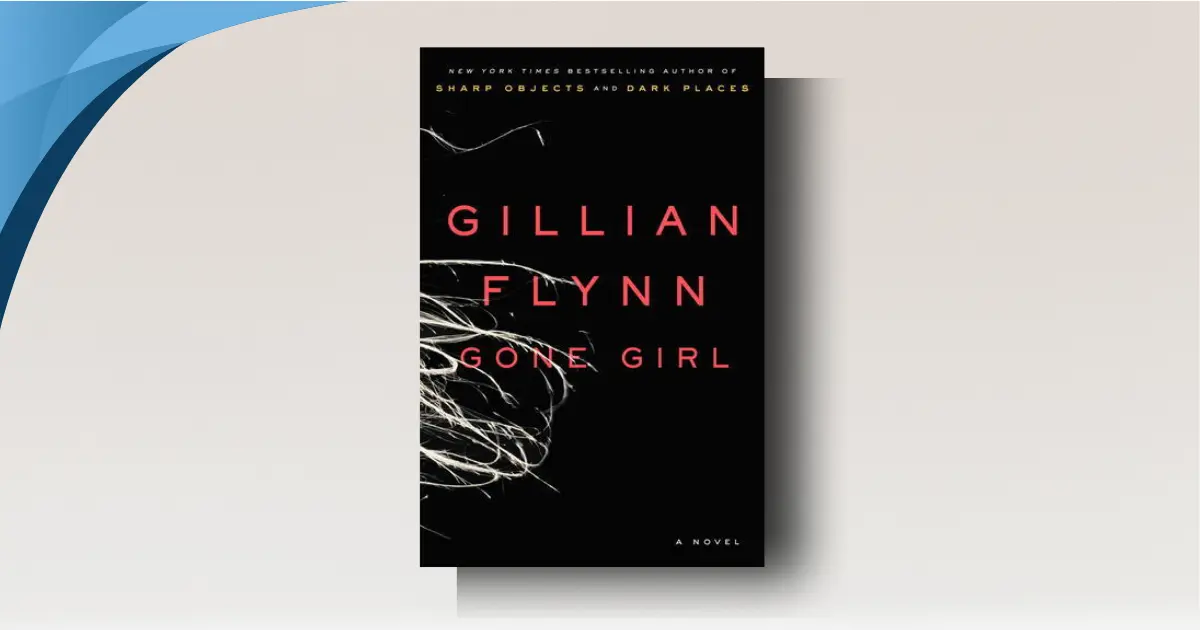
Gone Girl is a 2012 psychological thriller written by Gillian Flynn, published by Crown Publishing (an imprint of Random House). It exploded onto the New York Times bestseller list, staying there for over 90 weeks and selling more than 20 million copies worldwide, making it one of the defining books of the 2010s domestic suspense boom.
2. Background
Flynn, a former television critic for Entertainment Weekly, drew from her fascination with crime stories and the recession-era anxieties of the late 2000s. The novel arrived just as economic uncertainty was forcing many couples into uncomfortable proximity—lost jobs, forced moves, simmering resentments.
There’s no specific historical event anchoring it, but the media circus around missing-persons cases (think Casey Anthony trial in 2011 or the endless cable-news coverage of “beautiful young white women” vanishing) looms large.
Flynn has said she wanted to explore how the media turns real tragedies into entertainment, and how marriages can become battlegrounds of perception and performance.
3. Gone Girl Summary
Gone Girl unfolds in three parts, alternating between Nick Dunne’s present-day narration and entries from Amy Elliott Dunne’s diary—until the diary’s reliability collapses and the entire story flips.
The book opens on the morning of Nick and Amy’s fifth wedding anniversary in North Carthage, Missouri.
Nick, a former magazine writer who lost his job in the recession, wakes up uneasy. He heads to the bar he co-owns with his twin sister Go, avoiding the house. When he returns home, the front door is open, the living room is staged to look like a struggle, and Amy—beautiful, brilliant, the inspiration for her parents’ famous “Amazing Amy” children’s book series—is gone.
The police investigation quickly turns toward Nick. Clues pile up: a raised life-insurance policy, credit-card debt he claims not to know about, blood cleaned up in the kitchen, and Nick’s oddly detached demeanor on TV appeals. The media descends, turning Amy into the latest “missing beautiful wife” story. Nick’s smiles look fake, his answers evasive. His twin sister Go stands by him, but even she has doubts.
Interspersed are Amy’s diary entries, going back to their meeting in New York in 2005. They were both writers then—Nick charming and Midwestern, Amy dazzling and privileged.
The diary paints their early romance as electric, but gradually shows cracks: Nick becoming lazy and resentful after losing his job, Amy feeling abandoned and fearful, hints of his temper, her pregnancy fears, a possible push down the stairs.
By the time they move back to Missouri to care for Nick’s dying mother and Alzheimer’s-afflicted father, Amy seems terrified of the man she married.
About halfway through (the infamous twist around page 220), the diary stops—and we switch to Amy’s present-day narration. She’s alive. The entire diary was fabricated. She staged her disappearance to frame Nick for murder as punishment for his affair with a young student named Andie and for no longer worshipping her. Amy is a meticulous, almost sociopathic planner.
She’s been hiding in a cheap motel, dyeing her hair, gaining weight, hoarding cash, planting false clues (the treasure-hunt anniversary game that leads police to incriminating items), and manipulating every detail to make Nick look guilty.
But her plan goes sideways. She’s robbed by lowlife neighbors at the motel and, desperate, turns to Desi Collings—an obsessive ex-boyfriend from her youth who’s always carried a torch.
Desi whisks her to his secluded lake house, ostensibly protecting her, but it quickly becomes a gilded cage. Meanwhile, back in Missouri, Nick—guided by Go, a sharp lawyer named Tanner Bolt, and his own growing realization—starts piecing together that Amy is alive and framing him.
When Andie publicly confesses the affair at a press conference, public sympathy swings back toward Nick.
Amy watches all this on TV. Furious that Nick is becoming the wronged husband, she decides to return—but on her terms. She murders Desi (seducing him, then slitting his throat during sex, staging it as self-defense against a kidnapper/rapist).
She drives back to Nick covered in blood, collapses into his arms on live television, and spins a story the world swallows: Desi kidnapped her, held her captive, raped her repeatedly. Forensic evidence (which she carefully planted) supports her.
Nick knows the truth. He knows she’s a monster. But he’s trapped. If he exposes her, no one will believe him—he’s already been painted as the lying husband, and Amy’s “victim” narrative is airtight. Plus, Amy reveals she’s pregnant: she stole Nick’s sperm from a fertility clinic where he’d donated years earlier and inseminated herself. She threatens that if he leaves, she’ll poison the child’s life and his.
In the end, they stay together. Nick becomes the dutiful husband on camera, writing a memoir that toes Amy’s line. Amy finishes her own book, cementing her version of events. The final pages are chillingly domestic: Nick watching Amy with their newborn son, both of them playing their roles, both knowing the other is a liar and possibly a killer, both too entangled to escape.
The marriage continues—not out of love, but out of mutual fear, control, and the child. It’s a bleak, suffocating conclusion that leaves you feeling like there’s no justice, only performance.
4. Analysis
4.1. Gone Girl Characters
Nick Dunne is charming, lazy, and passive-aggressive. He lies easily—small lies that snowball—and resents Amy’s perfectionism while benefiting from it. He’s not a killer, but he’s not innocent either: he cheated, he emotionally checked out, and he enjoyed the attention when the media turned against him. His growth is minimal; by the end he’s resigned rather than redeemed.
Amy Elliott Dunne is one of the most terrifying protagonists in modern literature.
Brilliant, entitled, and rage-filled, she weaponizes every societal expectation of women—victim, wife, mother—to control the narrative. Her “Amazing Amy” childhood left her obsessed with being the perfect version of herself, and when Nick fails to adore that version, she destroys him. She’s not just vengeful; she’s clinical, almost psychopathic.
Supporting characters ground the story: Go (Margo), Nick’s fiercely loyal twin who sees through everyone; Tanner Bolt, the slick defense attorney who knows how to play the media game; Desi Collings, the entitled rich ex who thinks he owns Amy; and Amy’s parents, Rand and Marybeth, who’ve spent decades profiting off their daughter’s idealized image.
The genius is that no one is likable, yet everyone feels horrifyingly real.
4.2. Gone Girl Themes and Symbolism
The central theme is performance in marriage—how we curate versions of ourselves for our partners and the world. Amy’s “Cool Girl” monologue is iconic: the rant about pretending to love beer and burgers and blowjobs without commitment, only to resent men when they believe the act. It’s a brutal takedown of gendered expectations.
Media manipulation and Missing White Woman Syndrome are skewered relentlessly. Amy exploits how the public devours stories of pretty, affluent white women in peril, turning herself into the perfect victim while Nick becomes the villain because he doesn’t cry convincingly on TV.
Unreliable narration drives everything. Both Nick and Amy lie to the reader constantly, forcing us to question truth itself.
Symbolism: the Mississippi River near their house—murky, slow, hiding things beneath the surface. The treasure hunt—Amy’s annual game that becomes a trail of planted evidence. Blood—cleaned up, staged, weaponized.
5. Evaluation
Strengths: The pacing is relentless; every chapter ends on a hook. Flynn’s prose is sharp and funny in the darkest way—Nick’s wry observations, Amy’s icy precision. The mid-book twist is one of the best in modern fiction; I literally gasped. It’s psychologically layered and culturally prescient.
Weaknesses: Some readers find the characters so unlikeable that emotional investment is hard. The ending divides people—many wanted justice, but the bleak stalemate is the point. A few plot conveniences (Amy’s flawless planning, Desi’s isolated house) stretch believability.
Impact: It left me unsettled for days. I kept thinking about how much of marriage is performance, how quickly public opinion can destroy someone, how dangerous resentment can become.
Comparison with similar works: It kicked off the “domestic suspense” wave—think The Girl on the Train, The Silent Patient, Big Little Lies. Earlier echoes of Fatal Attraction or Patricia Highsmith’s twisted couples, but Flynn made it sharper, funnier, more modern.
Adaptation
David Fincher’s 2014 film is remarkably faithful—Gillian Flynn wrote the screenplay herself. Ben Affleck nails Nick’s smarmy charm; Rosamund Pike is chilling perfection as Amy (earned an Oscar nomination).
The tone is colder, more clinical than the book’s dark humor. Minor differences: the treasure hunt is streamlined, Andie’s role is smaller, Desi’s house is more opulent, and the ending is slightly less internal—Amy is shown writing her memoir while Nick does his TV interview.
The biggest change is tonal: the film leans harder into media satire. Box office: made on a $61 million budget, grossed $167 million domestic and $370 million worldwide—a massive hit.
6. Personal Insight with Contemporary Educational Relevance
Reading Gone Girl today feels eerily prescient about how media distorts missing-persons cases. Amy deliberately exploits “Missing White Woman Syndrome”—the well-documented bias where white, affluent women receive disproportionate coverage.
Studies show this isn’t exaggeration: in 2022, over 34,000 active missing-persons cases involved people of color, yet they rarely dominate headlines the way white women do.
One analysis found white female victims are up to three times more likely to get sustained media attention. (See NPR’s excellent piece)
The book forces us to confront how race, class, and gender shape whose stories we care about—and how dangerous that selective empathy can be when someone manipulative (like Amy) games the system. It’s a lesson that still resonates every time another high-profile case crowds out thousands of others.
7. Gone Girl Quotes
- Opening (Nick): “When I think of my wife, I always think of her head. The shape of it, to begin with… I’d know her head anywhere.” (Sets the creepy tone perfectly.)
- The Cool Girl monologue (Amy): “Men always say that as the defining compliment, don’t they? She’s a cool girl… Cool Girls never get angry; they only smile in a chagrined, loving manner and let their men do whatever they want. Go ahead, shit on me, I don’t mind, I’m the Cool Girl.”
- Amy’s true voice: “I’m so much happier now that I’m dead. Technically missing. Soon to be presumed dead. Gone.”
- Final chilling line (Nick): “I am a big fan of the lie of omission… We pretend to be in love, and we do the things we are supposed to do, and for now that is enough.”
8. Conclusion
Gone Girl is a modern masterpiece of psychological suspense—brilliant, ruthless, and unforgettable. It’s not a feel-good read, but it’s a necessary one if you want to understand how fragile truth and relationships can be in the age of media and performance.
I recommend it wholeheartedly to anyone who loves twisty thrillers, sharp social commentary, or books that make you argue with friends for hours afterward. If you’ve already seen the movie, read the book anyway—the internal voices add layers the film can only hint at. It’s significant because it changed the thriller landscape and still feels painfully relevant.
10 tags/categories: psychological thriller, domestic noir, unreliable narrator, marriage thriller, twist ending, media satire, feminist critique, dark humor, suspense, contemporary fiction
20 most searchable/related keywords: gone girl book review, gone girl summary spoilers, gone girl ending explained, gillian flynn gone girl, amy dunne character, nick dunne, cool girl monologue, gone girl movie comparison, gone girl twists, psychological thriller books, domestic suspense, missing white woman syndrome, gone girl quotes, gone girl adaptation, david fincher gone girl, rosamund pike amy, ben affleck nick, marriage thriller books, unreliable narrator novels, gone girl analysis







