

Last updated on January 13th, 2026 at 05:15 am
Have you ever wondered why the man who says he loves you can also make you feel so trapped and small? That one question—Why does he do that?—kept circling in my mind, and Lundy Bancroft’s book finally gave me answers that felt raw, real, and painfully clear.
According to Why does he do that?, abusive behavior isn’t about losing control or past trauma—it’s a deliberate choice rooted in a deep sense of entitlement and the need to maintain power over a partner.
Why does he do that? is a lifeline for women questioning their relationships, friends or family trying to support someone in an abusive situation, therapists, counselors, or anyone who wants to understand domestic violence from the inside out.
Why does he do that? is not for people looking for excuses for abusers (like “he can’t help it because of his childhood”), or those who want a quick, feel-good read—it’s heavy, confrontational, and doesn’t sugarcoat anything.
Table of Contents
1. Brief Introduction to Why does he do that?
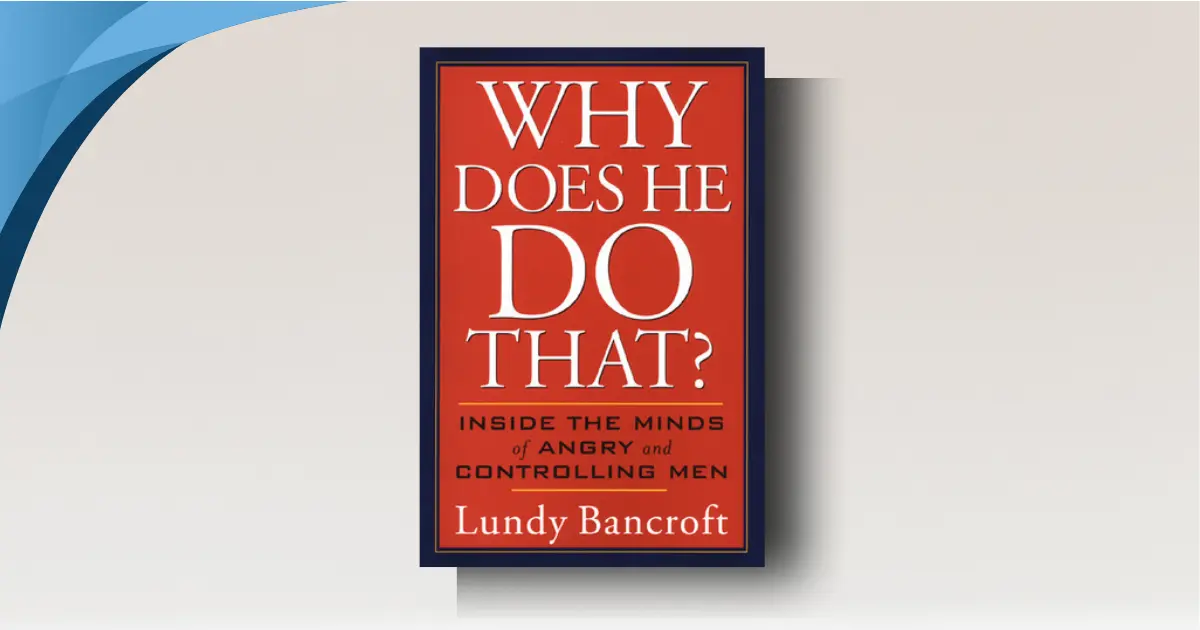
Published in 2002 (with the paperback edition coming out in 2003 from Berkley Books), Why does he do that? Inside the Minds of Angry and Controlling Men by Lundy Bancroft has become one of the most influential books on domestic abuse ever written.
Bancroft, a former co-director of Emerge—the first abuser education program in the United States—spent over 15 years working directly with thousands of abusive men in counseling groups while also hearing the unfiltered stories from their partners.
This unique perspective gives the book its power: it’s not theory from a distance; it’s drawn from real-life patterns he observed week after week.
The book’s central thesis is simple but revolutionary: abuse is not caused by anger issues, stress, addiction, mental illness, or “losing control.”
Instead, it’s a mindset of entitlement—abusive men believe they have the right to control their partners, and they choose tactics (emotional, verbal, physical, sexual) to enforce that control. As Bancroft writes early on, “An abuser almost never does anything that he himself considers morally unacceptable.
He may hide what he does because he thinks other people would disagree with it, but he feels justified inside.”
Why does he do that? aims to answer the question every victim, friend, or professional asks: Why does he behave this way? Bancroft debunks common myths and reveals the thinking patterns that drive abuse, ultimately empowering readers to recognize it early and understand why change in abusers is rare without profound internal work.
2. Why does he do that? Summary
When I first read this, I couldn’t put it down—it felt like someone was finally speaking the truth I’d sensed but couldn’t name. The book is divided into four parts, and I’ll walk you through the key arguments, chapters, and insights so you get the full picture.
Part I: The Nature of Abusive Thinking
Bancroft starts with Chapter 1: The Mystery, explaining why abuse is so confusing. Victims often hear “He has two sides” or “He’s not like this with anyone else.” But Bancroft clarifies: the nice side isn’t the “real” him—the abusive side is just as real, and often more revealing. He introduces the idea that abuse happens because the abuser gets something out of it: power, control, freedom from accountability.
In Chapter 2: The Mythology, Bancroft systematically destroys the excuses we hear (and abusers give):
- “He has an anger problem” → No, he controls his anger just fine at work or with friends.
- “His father abused him” → Many abused boys grow up non-abusive; childhood trauma may explain but doesn’t excuse.
- “Alcohol/drugs make him violent” → Sobriety doesn’t stop emotional abuse, and many sober men are abusive.
- “He’s under stress” → Stress doesn’t cause abuse; it just gives him an excuse.
A key quote here: “The abuser’s problem is not that he responds inappropriately to conflict. His problem is that he creates conflict.”
Chapter 3: The Abusive Mentality is the heart of the book. Bancroft lists the core attitudes all abusers share:
- Entitlement: He believes his needs come first.
- Disrespect: He sees his partner as less valuable.
- Objectification: He views her as an object for his use.
- Self-centeredness: Everything revolves around him.
- Manipulativeness: He twists reality to stay on top.
One line that stuck with me: “Possessiveness is at the core of the abuser’s mindset, the spring from which all the other streams spout.”
Chapter 4: The Types of Abusive Men is eye-opening. Bancroft identifies 10 archetypes (not rigid categories—many abusers blend types):
- The Demand Man – Expects constant service and attention.
- Mr. Right – Believes he’s superior and knows everything; belittles her opinions.
- The Water Torturer – Uses calm, relentless emotional cruelty (sarcasm, silent treatment) until she breaks.
- The Drill Sergeant – Obsessed with total control over her life.
- Mr. Sensitive – Uses “deep emotions” and therapy-speak to manipulate (“You’re hurting me so much”).
- The Player – Serial cheater who uses charm and sex as weapons.
- The Rambo – Hyper-masculine, aggressive toward the world.
- The Victim – Always claims he’s the real victim (“You make me act this way”).
- The Terrorist – Uses threats, intimidation, and escalating violence.
- The Abuser with Mental Illness/Addiction – Bancroft stresses these aren’t the cause; they can worsen abuse but don’t create it.
Part II: The Abusive Man in Relationships
Part II examines how abusive men behave intimately, showing abuse as a pattern of power and control rather than isolated incidents.
- How Abuse Begins (Chapter 5) — Abuse often emerges gradually after commitment (marriage, cohabitation, or pregnancy). Early red flags include intense jealousy, rushing the relationship, disrespect toward ex-partners or women generally, and subtle control attempts. Bancroft stresses abusers hide their tendencies initially to secure attachment: “The shift to abusiveness tends to occur when deeper involvement makes leaving harder.”
- The Abusive Man in Everyday Life (Chapter 6) — Daily tactics involve verbal degradation, financial control, isolation from support networks, mood swings, and using children as leverage. Abusers alternate charm with cruelty to keep partners off-balance, believing their needs override hers.
- Abusive Men and Sex (Chapter 7) — Many abusers feel entitled to sex anytime, using it to punish, reward, or degrade. Coercion via guilt, sulking, or force is common; selfishness dominates, with little concern for her pleasure or consent. Bancroft notes sexual abuse reinforces dominance.
- Abusive Men and Addiction (Chapter 8) — Substance abuse does not cause abuse—it may intensify it, but controlling behavior persists in sobriety. Abusers exploit addiction as an excuse (“I wouldn’t act this way if I were sober”), shifting blame.
- The Abusive Man and Breaking Up (Chapter 9) — Separation heightens danger: stalking, harassment, threats, or violence often escalate. Abusers refuse acceptance, viewing partners as possessions. Bancroft warns reconciliation rarely brings change and increases risk.
This section highlights abuse’s deliberate, escalating nature, urging early recognition and safety planning. Survivors’ stories and checklists make patterns undeniable.
Part III: The Abusive Man in the World
Part III explores how abusive men function outside relationships—as parents, with supporters, and in society—revealing systemic failures that enable them.
- Abusive Men as Parents (Chapter 10) → Abusers often seem “good fathers” publicly but use children to control ex-partners through custody battles, alienation, or visitation manipulation. They lack true empathy, prioritizing dominance over nurturing. Bancroft debunks myths: “He’s terrible to me but great with the kids” ignores harm to children from witnessing abuse or emotional neglect. Post-separation abuse via children is common and traumatic.
- Abusive Men and Their Allies (Chapter 11) → Friends, family, colleagues, and therapists often minimize abuse, buying the abuser’s charm or “both sides” narrative. Allies blame the victim (“What did you do to provoke him?”) or excuse him (“He’s stressed”). Bancroft critiques enabling cultures that protect abusers while doubting women.
- The Abusive Man and the Legal System (Chapter 12) → Courts frequently fail victims: abusers manipulate with charisma, false allegations, or delay tactics. Judges minimize emotional abuse, favoring “friendly parent” provisions that punish protective mothers. Custody often goes to abusers; restraining orders lack enforcement. Bancroft calls for reforms, noting the system revictimizes women.
This part exposes abuse’s broader impact—harming children, enabled by allies, perpetuated by flawed institutions. It urges societal accountability beyond relationships, with real examples showing abusers’ external success masks private cruelty.
Part IV: Changing the Abusive Man
Part IV addresses abusive men’s origins, rare change potential, and societal solutions, offering cautious realism over false hope.
- The Making of an Abusive Man (Chapter 13) — Abuse stems from internalized entitlement, reinforced by cultural male privilege and female devaluation. Childhood trauma or abuse may contribute but does not cause it—many abused boys grow non-abusive. Bancroft emphasizes values: disrespect, possessiveness, and superiority beliefs form the core. “It’s not what happened to him; it’s what he chooses to do with it.”
- The Process of Change (Chapter 14) — Genuine change is rare and demands years of accountability, rejecting entitlement, and full responsibility without excuses. Warning signs of fake progress include minimizing abuse, blaming the partner, expecting rewards, or quitting programs. Specialized abuser programs work better than anger management or therapy, but most men resist deep shifts. Bancroft outlines 15+ change indicators, stressing partners should not wait.
- Creating an Abuse-Free World (Chapter 15) — Ending abuse requires cultural transformation: challenging male entitlement, educating youth on respect, strengthening laws, and supporting survivors. Community involvement, media shifts, and male allyship matter. Bancroft envisions collective responsibility: “We can’t fix abusers one by one; we need to change the world that produces them.”
This section avoids illusions—change depends on the abuser—while inspiring advocacy. It empowers readers toward prevention and justice, closing with resources and hope through awareness.
3. Why does he do that? Analysis
Bancroft supports his arguments brilliantly with evidence from thousands of real cases. His logic is airtight: if abuse were truly about “losing control,” why does it stop the moment police arrive or when someone he respects walks in?
The book absolutely fulfills its purpose—it’s been a beacon for survivors and professionals since 2002, cited everywhere from courts to therapy offices.
Recent statistics underscore its relevance: According to the National Domestic Violence Hotline (2024 data), nearly 1 in 3 women in the U.S. will experience physical violence by an intimate partner in their lifetime.
Globally, WHO reported in November 2025 that 840 million women have faced partner or sexual violence. The economic cost in the U.S. alone exceeds $8 billion annually (medical, lost productivity).
Bancroft’s insights explain why these numbers remain stubbornly high: society still buys the myths he debunks.
4. Strengths and Weaknesses
Strengths: What hit me hardest was the clarity—it felt like someone turned on the lights. The types of abusers chapter alone helped me recognize patterns I’d seen in real life. It’s compassionate toward victims while being unflinching about abusers. The writing is accessible—no jargon—and the checklists are practical gold.
Weaknesses: It’s very focused on male-to-female abuse (which is statistically the majority), so it doesn’t deeply explore female abusers or same-sex dynamics.
Some critics (especially from men’s rights perspectives) call it one-sided, but I found that focus necessary—most books center the victim’s pain; this one centers the abuser’s thinking to expose it. Also, reading it can be triggering; I had to take breaks.
5. Comparison with Similar Works
Compared to Gavin de Becker’s The Gift of Fear (which focuses on intuition and danger signals), Bancroft goes deeper into the abuser’s psychology.
Patricia Evans’ The Verbally Abusive Relationship covers similar emotional tactics but lacks the abuser-group insights. Jackson Katz’s work on masculinity and violence echoes Bancroft’s cultural critique. For a follow-up, Bancroft’s own Should I Stay or Go? is a natural next read.
Another book, Women Who Love Psychopaths by Sandra L. Brown deals with similar topic.
6. Conclusion
If you’re questioning a relationship, supporting someone who is, or just want to understand why domestic abuse persists despite all our awareness campaigns—this book is essential.
It’s not light reading, but it’s transformative. I wish every woman (and every man who wants to be a better ally) would read it. In a world where 137 women and girls are killed daily by partners or family (UN Women, 2025), books like this aren’t just informative—they’re part of the solution.