
Last updated on January 13th, 2026 at 05:15 am
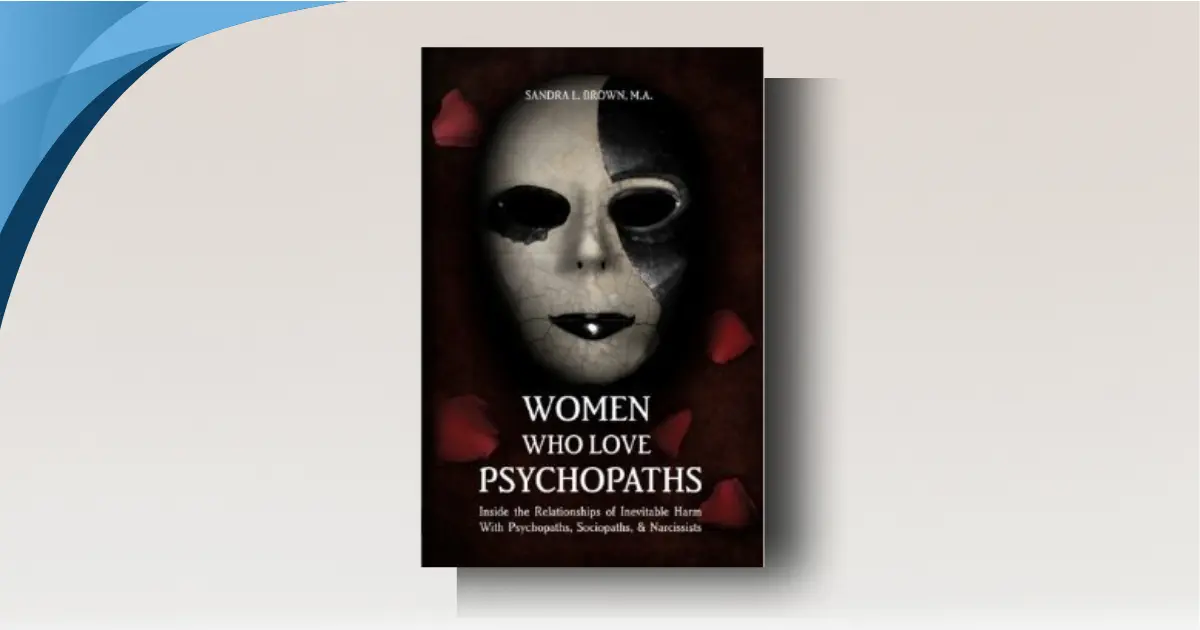
Have you ever given perfect advice to a friend about a toxic relationship, only to find yourself inexplicably trapped in one, questioning your own judgment and sanity? Women Who Love Psychopaths argues that the devastating relationships between high-empathy, successful women and psychopathic men are not accidents of poor judgment, but predictable collisions between extreme, opposing temperaments, rooted in biology and psychology.
Women Who Love Psychopaths is best for the women recovering from relationships with manipulative, destructive partners (narcissists, sociopaths, psychopaths); mental health professionals and coaches; anyone seeking to understand the dynamics of pathological love and the specific, severe trauma it inflicts.
Not for: Readers seeking a light self-help fix, those who believe toxic relationships are solely about “low self-esteem,” or anyone uncomfortable with deep, clinical and neurological explanations for human behavior.
Table of Contents
Introduction
If you’ve found yourself here, searching for answers after a relationship that left you feeling emotionally eviscerated, questioning your reality, and fundamentally altered, you are not alone.
Women Who Love Psychopaths by Sandra L. Brown is not just another book about “bad boys” or codependency.
It is a groundbreaking, research-based exploration into a specific and devastating relational phenomenon: the pairing of exceptionally high-empathy, high-achieving women with men possessing psychopathic, sociopathic, or narcissistic traits (what Brown terms the “low/no-conscience spectrum”).
Based on a survey of over 75 survivors and decades of clinical work at The Institute for Relational Harm Reduction, Brown shifts the focus from the cultural fascination with the psychopath to the overlooked victim.
Her central thesis is powerful and validating: The women who become entangled with these men are often the strongest, most competent, and most empathetic among us—not the weak.
The resulting damage is not a failure of character but “inevitable harm,” a predictable outcome when extreme biological and temperamental opposites collide.
This article will serve as a comprehensive guide to the book’s core concepts, providing the insights, statistics, and clinical explanations you need to understand what happened, why it was so uniquely damaging, and how to begin healing. Consider this your roadmap out of the fog.
Women Who Love Psychopaths Summary
Part 1: Understanding the Monster – The Pathological Man
Brown begins by clarifying the often-confusing diagnostic labels. She groups Antisocial Personality Disorder (APD), psychopathy, sociopathy, narcissism, and borderline traits under the umbrella of “low/no-conscience spectrum disorders.”
For the survivor, the semantic debates are less important than the universal outcome: inevitable harm. She states, “Harm is harm—PTSD is PTSD. Cognitive dissonance, intrusive thoughts, financial ruin, flashbacks, obsessions—it all feels mind-blowing” (p. 29).
The psychopath, as described through survivor accounts and checklists like Robert Hare’s PCL-R, is characterized by:
- Glib charm and pathological lying.
- A grandiose sense of self-worth.
- A complete lack of empathy, remorse, or guilt.
- Shallow affect (superficial emotions).
- Impulsivity, irresponsibility, and a parasitic lifestyle.
Crucially, Brown emphasizes that “not all psychopaths are criminals; many are successful ‘snakes in suits’ in law, medicine, business, and even therapeutic or religious roles” (p. 51-52). They fly under the radar because society expects psychopaths to be violent felons, not charismatic dates.
The “Why” Behind the Behavior: Nature vs. Nurture on Steroids
Brown delves into etiology, presenting a compelling blend of nature and nurture:
Neuroscience & Biology: This is a cornerstone of her argument. She details how brain imaging studies reveal significant differences in psychopaths:
- Limbic System & Amygdala: Weakness in areas regulating emotion, fear, and aggression. They don’t learn from punishment because their brain’s “stop signal” is faulty (p. 62-67).
- Corpus Callosum: Abnormal size and function, leading to poor communication between brain hemispheres, contributing to the “Jekyll and Hyde” phenomenon (p. 65-66).
- Orbitofrontal Cortex & Hippocampus: Impairments in organizing behavior, learning from consequences, and forming new memories (p. 67-68).
- Chemistry & Genetics: Altered serotonin and MAO levels linked to impulsivity and aggression, and genetic vulnerabilities associated with Cluster B disorders (p. 69-70).
“Super-Jacked” Motivational Drives: Psychopaths have excessive drives for entertainment (novelty/thrill-seeking), sex, social dominance, status, and power. Their pleasure-seeking is unregulated by fear of consequences.
Brown notes, “Psychopaths hurt people because power through victimization is much more satisfying to them” (p. 40). Infidelity is a given, not a mistake, stemming from this relentless need for new stimulation.
Spiritual Evil: Many survivors describe an intuitive sense of “evil.” Brown doesn’t shy from this, drawing parallels between psychopathic traits and historical descriptions of spiritual evil and the demonic, suggesting the harm transcends the psychological and touches the existential (p. 54-60).
Part 2: Understanding the Survivor – The Woman with “Super Traits”
This is the book’s revolutionary contribution. Using the Temperament and Character Inventory (TCI), Brown and Dr. Leedom discovered that the women surveyed were not typically codependent or insecure.
Instead, they possessed a cluster of elevated, positive traits that paradoxically made them perfect targets.
Her Temperament (The “Hardwiring”):
- High Excitement-Seeking/Extraversion: They are strong, outgoing, successful, and easily bored. They are attracted to equally dominant, intense partners—traits that psychopaths have in abundance (p. 106-110).
- Extremely High Relationship Investment (NOT Codependency): They attach deeply, are sentimental, socially sensitive, and derive great reward from relationships. They are 97% more cooperative than average (p. 115-120, 131).
- Variable Harm Avoidance: Some are carefree and optimistic (low harm avoidance), missing red flags. Others develop high anxiety as a result of the trauma (p. 121-125).
Her Character (The Developed Self):
- Off-the-Charts Cooperativeness: This includes extreme empathy, tolerance, compassion, trust, and loyalty. They are often “empaths.” Brown explains, “These traits are her drawing card to a psychopath… Her overflowing empathy… balance the lopsided scales of the relationship” (p. 131-132).
- High Self-Directedness: They are responsible, reliable, resourceful, goal-oriented, and self-accepting. They are often doctors, lawyers, CEOs, therapists—high achievers (p. 143-146).
- Blind Trust and “Insane Loyalty”: They operate on “trust until proven otherwise,” and give endless chances, believing in growth and redemption—a goldmine for a manipulator (p. 139-142).
The Fatal Attraction: It is the magnetic pull between two extremes—his pathological lack of empathy and conscience against her super-abundance of it. His hidden deficits are initially camouflaged by her surplus of trust and cooperation.
Part 3: The Dynamics of “Inevitable Harm”
Brown outlines the predictable stages of these relationships, explaining why they are so traumatizing.
- The Hook & Honeymoon: He uses “predatory 6th sense” to detect vulnerability (loneliness, grief, stress). He mirrors her, love-bombs her, and creates an intense, “soulmate” connection through constant attention and future faking (p. 81-82).
- Communication Warfare: Normal talk is impossible. He uses abstract language deficits, semantic twisting, gaslighting, and contradictory statements to create confusion. Conversations devolve into a “crazy-making” triangle of Wounded One, Tormentor, and Liberator (p. 71-86).
- The Unmasking & Degradation: As his mask slips, her super traits are used as weapons against her. Her empathy is exploited for pity, her loyalty is used to trap her, and her strength is systematically dismantled to feed his dominance. Cognitive dissonance—the mental agony of holding two contradictory realities (the charming man vs. the monster)—becomes crippling.
- The Aftermath: The breakup is not a clean end. The damage is specific and severe, often including:
- Complex PTSD: Beyond standard PTSD, involving severe trust fragmentation and identity disturbance.
- Pathological Grief: Grieving not just the relationship, but the loss of self and the imagined future.
- Neurological Dysregulation: Chronic anxiety, hypervigilance, and sleep disruption from prolonged stress.
- Financial & Social Ruin: As reported, nearly 90% of surveyed women went from six-figure incomes to destitution (p. 52).
The Three Inabilities: For recovery, Brown offers this crucial framework to internalize about the pathological partner (p. 46-47):
- The inability to grow to any authentic emotional or spiritual depth.
- The inability to sustain positive change.
- The inability to develop insight about how his behavior affects others.
If he lacks these, no amount of love, therapy, or prayer will effect change.
Key takeaways
Key Takeaways from Women Who Love Psychopaths
- Core Thesis: Women who partner with psychopaths, sociopaths, and narcissists are not weak or codependent; they typically possess elevated “super traits” (extraordinary empathy, loyalty, extraversion, competitiveness) that make them ideal targets for exploitation.
- The Unexamined Victim: Society focuses heavily on understanding psychopaths but neglects their intimate partners, who suffer profound, predictable trauma often misdiagnosed in therapy.
- Pathology Spectrum: Distinguishes psychopathy (largely genetic, severe lack of remorse), sociopathy (more environmental), antisocial personality disorder, and narcissism; harm is inevitable in relationships due to the disorder.
- Causes: Primarily genetic brain differences, with possible environmental exacerbation; psychopaths show early signs and are largely untreatable.
- Why Red Flags Are Missed: Psychopaths use masterful impression management, superficial charm, and intense idealization, blinding high-trust, empathetic women.
- Neuroscience: Underactive amygdala (no real fear/empathy) and reduced prefrontal activity (poor impulse control/conscience); they mimic emotions without feeling them.
- Communication Breakdown: Word salad, gaslighting, and emotional deflection create exhausting, unresolved interactions.
- Target Selection: Psychopaths seek high-value women (successful, loyal, empathetic) for status and reliable emotional supply; multiple overlapping relationships are common.
- Women’s Super Traits: Victims score extremely high on extraversion, excitement-seeking, relationship investment, empathy, cooperativeness, sentimentalism, and loyalty — positive qualities that contrast sharply with the psychopath’s lows.
- Strong Character: These women often have high integrity, responsibility, and achievement orientation, leading to deep shame after the relationship ends.
- Traumatic Bonding: Intermittent reinforcement creates addictive neurochemical highs/lows; intense sexuality and future-faking feel like soulmate connection.
- Hypnosis & Suggestibility: Psychopaths induce trance states via mirroring, eye contact, and love-bombing; highly suggestible empathetic women bond deepest.
- Relationship Stages:
- Luring/Honeymoon: Deception, idealization, rapid intensity.
- Mid-Phase: Mask slips — devaluation, criticism, cheating; women cling harder amid cognitive dissonance.
- End-Phase: Sudden discard, leaving PTSD-like symptoms, anxiety, identity loss.
- Recovery Path: Requires strict no-contact, grief work, understanding temperament vulnerabilities, and specialized therapy; full healing is possible but lengthy.
- Children as Collateral Damage: Emotional neglect, triangulation, and modeling of abuse cause long-term attachment issues and trauma in children.
- Prevention & Education: Awareness of temperament mismatches, red flags, and inevitable harm empowers better partner selection; standard couples therapy often fails or worsens damage.
- Debunked Myths: Victims aren’t “stupid” or masochistic; relationships aren’t fixable; these women are often the highest-functioning partners psychopaths can attract.
Critical Analysis and Personal Experience
Strengths & Why It’s Transformative:
- Validation Through Science: This book saved my sanity by replacing self-blame (“Why was I so stupid?”) with understanding (“My biology met his pathology”). Learning that my deep empathy was a strength that was hijacked, not a weakness that caused the problem, was life-altering.
- The “Super Traits” Model: This is groundbreaking. It finally explains why accomplished, intelligent women get caught in these webs. It reframes the narrative from victim-blaming to predator-targeting.
- Focus on the Survivor: As Brown laments, most research is on the psychopath. This book is a lifeline for the walking wounded, offering a language for their specific, surreal experience.
- Practical Frameworks: The “Three Inabilities,” the temperament charts, and the checklists (like the Partner-Rated Assessment on p. 90-91) are invaluable tools for assessment and closure.
Weaknesses & Considerations:
- Dated Research & Presentation: Published in 2009, the neuroscience, while still valid in concept, is not the latest. The DSM-IV-TR references are outdated (DSM-5 was published in 2013). The book’s layout and writing style can feel dense and somewhat repetitive.
- Gender Binary Focus: The book explicitly focuses on female victims and male psychopaths, though Brown acknowledges the disorders exist in all genders. Survivors in same-sex relationships or male survivors may need to extrapolate more carefully.
- The Depth of Despair: Reading this while in acute trauma can be overwhelming. It meticulously details the predator’s capabilities and the depth of the damage. It is best approached when you are ready for hard truths, not in immediate crisis.
Comparison to Other Works
Unlike more general books on narcissistic abuse (e.g., Why Does He Do That? by Lundy Bancroft, which focuses on mindset and control tactics) or memoirs, Women Who Love Psychopaths provides a biopsychosocial model.
It’s more clinical than Psychopath Free by Jackson MacKenzie but offers a deeper explanatory framework. It complements Dr. Ramani Durvasula’s work on narcissism by adding the psychopathic element and the survivor’s biological predisposition.
Conclusion and Recommendation
Women Who Love Psychopaths is an essential, if challenging, text. It is not a quick-read self-help book but a manual for forensic emotional archaeology.
It helps you dissect the relationship to understand not just what he did, but why it worked so devastatingly on you, and why you couldn’t just “figure it out” and leave.
Who must read it: Any woman (or supportive partner/therapist of one) emerging from a relationship with a man who was charming yet destructive, who left her feeling “crazy,” financially depleted, and spiritually empty—especially if she was high-functioning before the encounter. It is crucial for therapists to better identify and treat this specific form of relational trauma.
Final Word: This book gave me the missing puzzle pieces. It didn’t just describe the prison; it showed me the blueprint of the locks, made of both his broken brain and my generous heart.
In doing so, it didn’t leave me in despair; it handed me the first, real key to reclaiming myself. The path is hard, but understanding is the first, non-negotiable step on the road back to wholeness.







