
Last updated on November 4th, 2026 at 10:30 pm
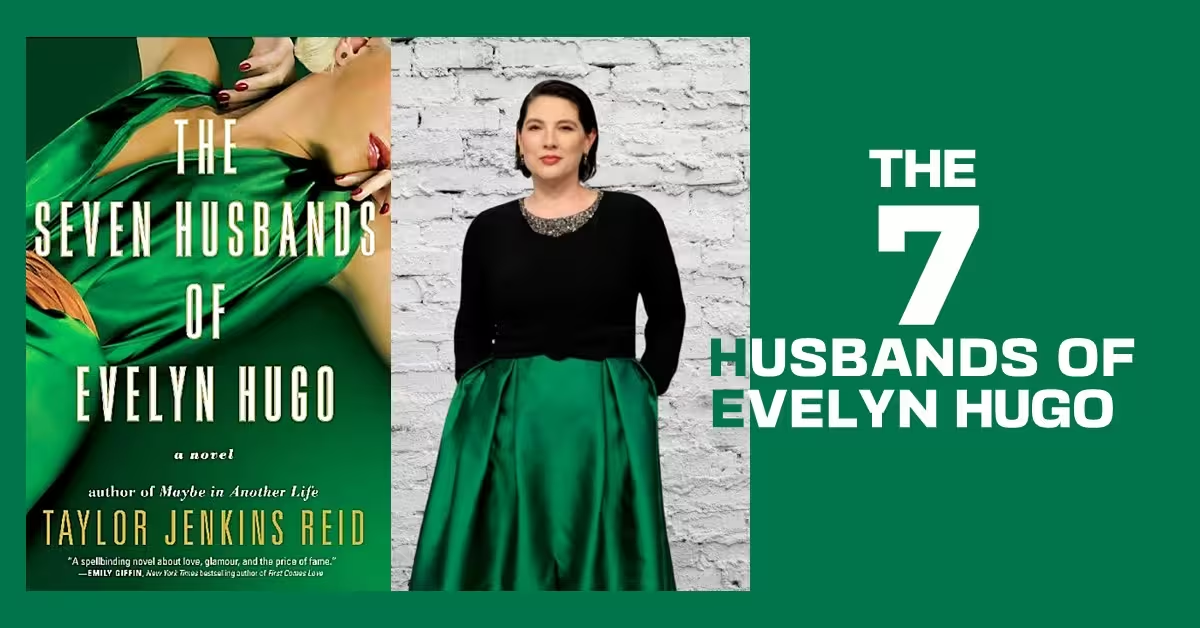
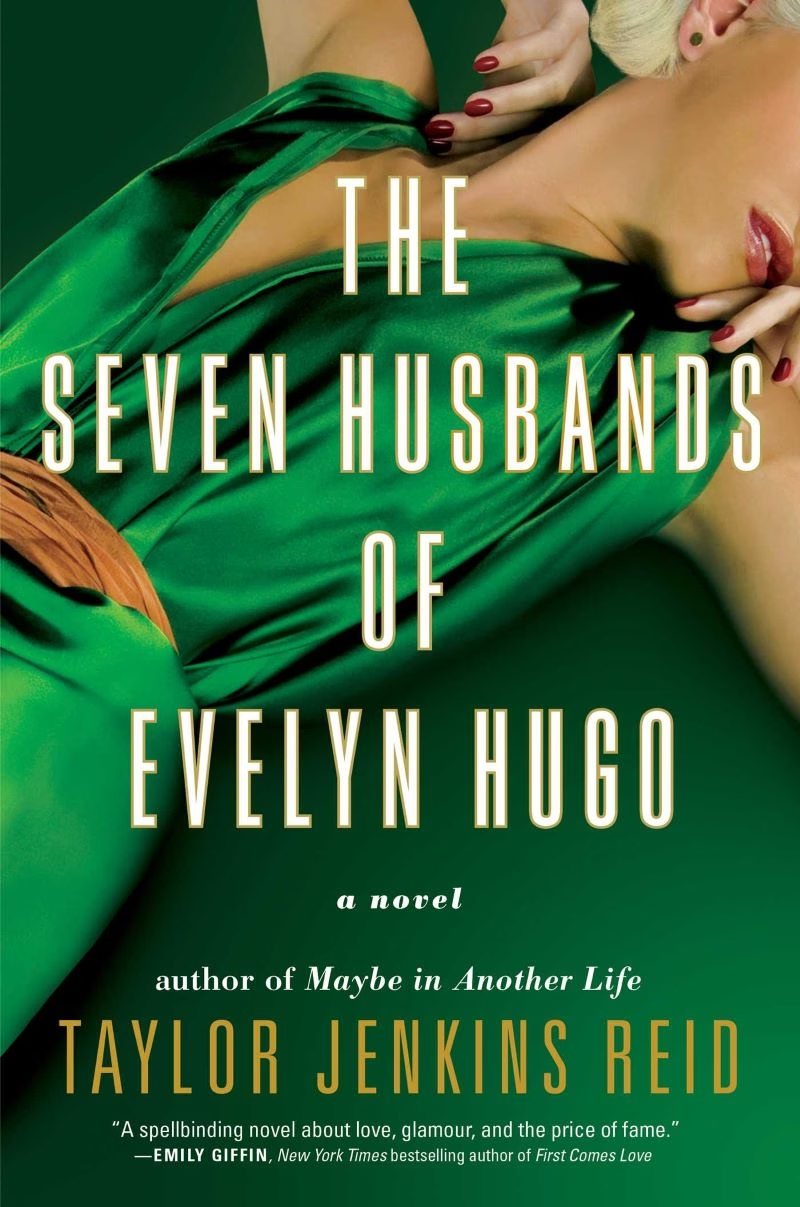
The Seven Husbands of Evelyn Hugo by Taylor Jenkins Reid looks like a glamorous Hollywood confession, but its real subject is the cost of keeping a life private. Published by Atria Books in 2017, the novel follows journalist Monique Grant as she records Evelyn Hugo’s story, from poverty and ambition to celebrity, motherhood, grief, and the love Evelyn has concealed for most of her life.
The supplied edition identifies the first Atria hardcover edition as June 2017. Simon & Schuster, publisher information
Quick verdict
- Verdict: A highly readable, emotionally direct novel that uses celebrity gossip as a doorway into questions about identity, survival, privacy, and memory.
- Rating: 4.5/5
- Best for: Readers who enjoy character-driven fiction, fictional celebrity memoirs, queer love stories, old-Hollywood drama, and major plot reveals.
- Main strength: The novel gradually changes the meaning of its own title.
- Main weakness: Some secondary characters and emotional transitions receive less development than Evelyn’s central arc.
What should you know before reading?
Evelyn Hugo hires Monique Grant to write her life story, but the promised account of seven marriages becomes a story about one enduring love. The novel’s main structural turn occurs when the interview moves from celebrity scandal to Evelyn’s relationship with Celia St. James.
Its final revelation also explains why Evelyn chose Monique and transforms the assignment from a career opportunity into a deeply personal inheritance.
What is The Seven Husbands of Evelyn Hugo about?
The Seven Husbands of Evelyn Hugo follows Evelyn Hugo, an aging and reclusive Hollywood star who agrees to tell her life story to Monique Grant, a relatively inexperienced journalist.
Evelyn recounts her childhood, her rise in the film industry, her seven marriages, her relationship with her daughter Connor, and the decisions she made to protect her career and private life.
Monique expects a celebrity memoir. Instead, she receives a carefully controlled account of ambition, abuse, friendship, motherhood, sexuality, grief, and sacrifice. The Seven Husbands of Evelyn Hugoalternates between Monique’s present-day observations and Evelyn’s memories, with fictional newspaper and entertainment reports showing how the public misunderstood the actress.
The novel’s central question is simple: what happens when the public story is built around the wrong person?
Evelyn’s husbands are visible to the world. Her relationship with Celia St. James is the emotional centre of her life, but it remains hidden for decades because public disclosure could damage both women’s careers and safety.
Publication context
Taylor Jenkins Reid’s official author page lists The Seven Husbands of Evelyn Hugo among her novels. Taylor Jenkins Reid, official website
The Seven Husbands of Evelyn Hugo is contemporary fiction with strong elements of historical Hollywood fiction, romance, family drama, and LGBTQ+ fiction. Its Hollywood setting is invented rather than a direct account of a real actress’s life.
Is The Seven Husbands of Evelyn Hugo worth reading?
Yes. I recommend it for readers who want a fast-moving story with emotional stakes and a strong central mystery. The Seven Husbands of Evelyn Hugo is particularly effective when it contrasts the public version of Evelyn with the private decisions that produced it.
My unique review angle is this:
Evelyn is not simply confessing her life. She is deciding which version of herself deserves to survive.
That distinction makes the novel more interesting than a conventional celebrity scandal story. Evelyn does not spend the book proving that she is innocent. She knows she has lied, manipulated people, and made choices that harmed others. Her aim is more precise: she wants Monique to understand why she became the person the public both desired and condemned.
Writing style and narrative voice
The writing is direct, accessible, and built around forward movement. Monique’s narration is reflective but conversational, while Evelyn’s voice is sharper and more authoritative. Evelyn speaks like someone who has spent decades studying power.
Her voice is persuasive because she combines confession with performance. She gives Monique intimate details, but she still controls the sequence and emphasis. That makes Evelyn an unreliable narrator in an interesting way. She is not necessarily lying about events, but she is still shaping their meaning.
The Seven Husbands of Evelyn Hugo also uses fictional media fragments, including newspaper articles, gossip posts, and entertainment headlines. These passages provide an external version of Evelyn’s life. They are often shallow or cruel, which makes the gap between public perception and private reality visible.
Characters and pacing
The Seven Husbands of Evelyn Hugo is divided into sections named after Evelyn’s seven husbands. Each marriage introduces a different part of her life:
- Ernie Diaz: Evelyn’s first route out of poverty.
- Don Adler: The glamour and violence hidden inside a studio-arranged marriage.
- Mick Riva: A short, impulsive marriage shaped by publicity and betrayal.
- Rex North: A practical arrangement between two actors who understand the value of appearances.
- Harry Cameron: Evelyn’s closest friend, co-parent, and emotional partner in building a family.
- Max Girard: A director who wants Evelyn as an image more than as a person.
- Robert Jamison: A marriage shaped by Evelyn’s long-term plans involving Celia.
The structure is easy to follow and creates a strong sense of progression. At times, however, the section titles make the moral interpretation too clear before the events have finished unfolding.
Monique’s development is subtler. She starts the novel professionally stalled and emotionally shaken after her husband leaves. Evelyn’s story gives her a career opportunity, but it also forces her to stop waiting for other people to validate her choices.
Pros and cons
Pros
- Strong opening premise.
- Highly readable prose.
- Effective use of fictional media coverage.
- A memorable central relationship between Evelyn and Celia.
- Clear thematic focus on privacy, reputation, and survival.
- A final revelation that changes the meaning of Monique’s assignment.
Cons
- Several secondary characters exist mainly to serve Evelyn’s development.
- Evelyn’s dialogue can sometimes sound too polished to feel spontaneous.
- Major experiences, including abuse and grief, are occasionally compressed.
- The novel prefers emotional clarity over complete moral ambiguity.
Who should read it?
This book is a good fit for readers who enjoy:
- Fictional celebrity biographies.
- Queer historical romance.
- Dramatic family stories.
- Stories about public image and private identity.
- Characters who are sympathetic without being morally spotless.
Readers who prefer quiet literary fiction, extensive historical research, or less theatrical plot construction may find the novel too polished and emotionally deliberate.
Spoiler warning
The next sections reveal major plot developments, including Evelyn’s relationship with Celia, Connor’s death, the connection between Monique and Evelyn, and the ending.
The Seven Husbands of Evelyn Hugo plot summary and ending explained
The beginning
The novel opens with a fictional New York Tribune article about Evelyn Hugo auctioning twelve of her famous gowns to raise money for breast cancer research.
The article describes Evelyn as a legendary actress, a style icon, and a woman known for seven marriages. It also mentions her daughter, Connor Cameron, who has recently died from breast cancer.
This opening establishes the public version of Evelyn’s life. The article focuses on dresses, beauty, marriages, money, and scandal. Evelyn’s motives and private relationships are not visible.
Monique Grant works for Vivant, a high-profile magazine in New York. She is thirty-five years old and feels stuck in a low-level writing position. Her husband, David, has recently left her for a job in San Francisco. Monique’s career is also uncertain. She wants to write serious work, but she is mostly assigned lightweight pieces about wealthy people and lifestyle trends.
Her editor, Frankie, tells her that Evelyn Hugo has requested an interview. Evelyn’s representatives reject several prominent writers and insist on Monique. Monique does not know Evelyn personally and cannot identify any obvious reason for the request.
Monique arrives at Evelyn’s apartment expecting to discuss the gown auction. Evelyn immediately reveals that the auction is only a pretext. She wants Monique to write her life story.
Evelyn explains that she will tell Monique everything, including the parts that may damage her reputation. She also says that her name will not appear as the author because she expects to be dead when the book is published. This creates the first major tension: Evelyn wants her story recorded, but she will not be present to manage the reaction.
Evelyn begins with her childhood. She was born Evelyn Elena Herrera in 1938 and grew up in Hell’s Kitchen as the daughter of Cuban immigrants.
Her childhood is marked by poverty and an abusive father. Evelyn learns that beauty can create access to money and power, while dependence on men can create danger.
As a teenager, Evelyn leaves New York for Hollywood. She changes her name, appearance, hair, and presentation. Evelyn Herrera becomes Evelyn Hugo. The change helps her enter a society that is more willing to accept a glamorous white screen star than a poor Latina girl from Hell’s Kitchen.
The transformation is both empowering and painful. Evelyn creates herself, but she also learns that Hollywood rewards a carefully edited version of womanhood.
Ernie Diaz
Evelyn’s first husband, Ernie Diaz, is connected to her escape from New York. Their marriage is not based on a lasting romance. It helps Evelyn reach Los Angeles, after which she leaves the relationship.
The section title, “Poor Ernie Diaz,” reflects Evelyn’s blunt assessment. She does not pretend the marriage was more meaningful than it was. From the beginning, the novel establishes that Evelyn sees relationships as both emotional experiences and practical arrangements.
Don Adler
Evelyn’s second husband is Don Adler, a major Hollywood actor. Their relationship is encouraged by the studio because the pairing benefits both of their public images. Their marriage looks glamorous from the outside.
At home, Don becomes abusive. He hits Evelyn and uses his position to keep her silent. Evelyn understands that publicly accusing him could damage her career. She therefore remains in the marriage for a time, calculating which consequences she can survive.
The novel does not describe Evelyn’s decision as simple weakness. She is trapped within a system that protects a famous man more readily than an actress. Her eventual escape requires both courage and professional risk.
Evelyn takes a role in a French New Wave film after leaving Don. The project helps her prove that she is more than a beautiful star. She can act, and she can rebuild her career outside the image created for her by the studio.
Mick Riva
Evelyn’s third husband is singer Mick Riva. Their marriage is brief and impulsive. Mick is unfaithful, and the relationship quickly collapses.
This marriage shows another side of Evelyn’s relationship to celebrity. A wedding can create publicity, but the publicity does not produce emotional security. The press treats the relationship as entertainment, and Evelyn learns to use that attention rather than trust it.
Rex North
Rex North is Evelyn’s fourth husband. Both are actors who understand how much a public relationship can help their careers. Their marriage is based on a mutual agreement. Each continues relationships outside the marriage, and both understand the arrangement.
Evelyn’s relationship with Celia continues during this period. The marriage to Rex provides cover and stability, but it also demonstrates how thoroughly Evelyn has learned to separate public performance from private desire.
Celia St. James
Celia is the most important person in Evelyn’s life. Evelyn meets her as a fellow actress and is immediately drawn to her. Their relationship develops through rivalry, friendship, jealousy, sexual attraction, separation, and reconciliation.
Evelyn and Celia love each other, but they cannot openly live as a couple without risking their careers. They therefore use marriages to men as protection. The novel presents those marriages as part of a survival strategy created by social conditions.
Their relationship is not idealised. Evelyn and Celia hurt each other repeatedly. Evelyn often chooses career security or public control, while Celia wants greater emotional honesty. Both women are capable of jealousy and cruelty.
The love remains real despite the damage. That tension is one of the novel’s strongest features.
Harry Cameron
Evelyn’s fifth husband is Harry Cameron, a film producer and her closest friend. Harry understands Evelyn in a way few others do. He is also attracted to men, and his public marriage to Evelyn helps protect them both.
Evelyn and Harry have a daughter, Connor. Their family is unconventional, but it is built around genuine care. Harry is involved with John Braverman, while Evelyn continues to love Celia.
The arrangement works because Evelyn and Harry share trust and responsibility. Harry is not a substitute for Celia. He is Evelyn’s closest friend and partner in creating a family.
Harry also helps Evelyn build professional power. Their relationship is personal and practical at the same time. Together, they navigate a film industry that expects them to perform conventional identities.
The accident and Harry’s death
Harry later becomes involved in a fatal car accident after drinking. Evelyn takes responsibility for the accident to protect him from exposure and legal consequences. The decision is intended to shield Harry, John, and their family.
The choice causes Evelyn lasting guilt. Harry eventually dies by suicide. Evelyn’s attempt to protect him cannot prevent his suffering.
This is one of the novel’s most morally difficult events. Evelyn sacrifices her public reputation to protect Harry, but she cannot control the emotional consequences. Her actions are loving and destructive at the same time.
Max Girard
Evelyn’s sixth husband is Max Girard, a director who gives her an important film role. Their marriage begins with professional attraction and public excitement.
Max is more interested in Evelyn as an image than as a complete person. He wants to control her presentation and benefit from her fame. The marriage breaks down, and their divorce becomes part of the public scandal surrounding Evelyn.
The relationship shows that being desired is not the same as being known. Evelyn has spent years constructing an image, but she still wants someone to understand the person behind it.
Robert Jamison
Evelyn’s seventh husband is Robert Jamison, Celia’s brother. The marriage is practical and helps Evelyn secure financial and legal protection. Robert understands the relationship between Evelyn and Celia.
This marriage is also part of Evelyn’s long-term strategy to protect Celia. It allows Evelyn to create a structure in which Celia can receive financial security after Evelyn’s death.
Robert is described as agreeable because he does not demand the emotional performance that defined many of Evelyn’s other marriages. Their relationship is based on mutual understanding rather than romantic idealism.
Connor’s illness
Connor is Evelyn’s daughter and one of the main reasons Evelyn eventually retires from acting. Evelyn wants to be present in her daughter’s life, even though her earlier choices have created instability.
Connor later develops breast cancer and dies before the main interview begins. Her death explains Evelyn’s decision to auction her gowns and direct money toward breast cancer research.
Connor’s illness also changes the meaning of Evelyn’s wealth. Money can pay for care, but it cannot guarantee survival. Evelyn’s public power cannot protect the person she loves most as a mother.
Evelyn and Celia’s later life
Evelyn and Celia reunite after years of separation. They spend time together and continue their relationship, but their history remains complicated. Love does not erase the betrayals and resentments that accumulated over decades.
Celia’s health declines. Evelyn cares for her, and their final years together contain both tenderness and grief. The relationship is finally more open between them, but it arrives after much of their life has already passed.
Evelyn’s attachment to Celia explains why the title is deliberately misleading. Her husbands are the public markers of her life. Celia is the private continuity beneath them.
The ending explained
Near the end of the interview, Monique learns why Evelyn chose her.
Evelyn had known Monique’s father, James Grant. He photographed Evelyn and Celia together at a moment when their relationship could have been exposed. The photographs were dangerous because they could have destroyed their careers and public identities.
James kept the photographs private. Evelyn paid him to protect the secret. Monique’s father therefore became part of the hidden history Evelyn has spent decades controlling.
Monique also learns that Evelyn’s actions were connected to her father’s death. Evelyn knew about circumstances surrounding James that Monique had never understood. The revelation means that Evelyn’s story is connected to Monique’s personal grief, not merely her professional future.
This is the point at which the novel changes genre. It begins as a celebrity biography and becomes a story about inheritance, responsibility, and the ethics of telling someone else’s truth.
Monique is furious. Evelyn has given her an extraordinary writing opportunity, but she has also deliberately drawn her into a painful family revelation. Evelyn does not expect easy forgiveness. She wants the truth documented.
Evelyn dies shortly after Monique leaves. A fictional New York Tribune report describes her death as an accidental overdose and repeats the public version of her life. The article mentions her seven marriages and charitable work but does not know the central truth about Celia.
Monique returns to her mother. They order pizza and watch one of Evelyn’s films, All for Us. Monique remains angry, but she begins to understand that Evelyn’s life cannot be judged through a single emotion.
The final piece, “Evelyn and Me,” reveals that Evelyn was bisexual and spent most of her life in love with Celia St. James. Monique explains that Evelyn wanted Celia’s importance acknowledged publicly.
The novel ends by reframing the title. When Monique asks whether Evelyn is troubled that her husbands have overshadowed her work and identity, Evelyn replies:
“No,” she told me. “Because they are just husbands. I am Evelyn Hugo. And anyway, I think once people know the truth, they will be much more interested in my wife.”
Reference: “Evelyn and Me,” final section of the supplied edition.
This line is both a joke and a declaration. Evelyn refuses to let the husbands become the centre of her identity. She also wants Celia to be recognised as her wife, even though the language comes decades after the relationship began.
The ending does not make Evelyn innocent. She remains a person who manipulated others and made damaging choices. However, the book asks readers to hold several truths together:
- Evelyn survived abuse.
- Evelyn used people.
- Evelyn loved deeply.
- Evelyn lied to protect herself and others.
- Evelyn caused harm.
- Evelyn tried to repair part of that harm through the story she left behind.
Monique’s final role is important because she is not simply Evelyn’s ghostwriter. She becomes the person who decides how Evelyn’s truth enters the public record. Evelyn constructs the story, but Monique determines whether to carry it forward.
Characters, themes, and symbolism
Main characters and their development
Evelyn Hugo
Evelyn is ambitious, strategic, and emotionally guarded. She understands that Hollywood rewards women for beauty but punishes them for ageing, sexuality, anger, and independence. She therefore learns to control the story around her.
Her greatest strength is her ability to read power. Her greatest weakness is that she sometimes treats people as pieces in a strategy. The novel never asks us to admire her without reservation.
Monique Grant
Monique begins with low confidence and an uncertain career. She wants to become a serious writer but has accepted work that does not satisfy her. Evelyn’s story pushes her to recognise her own authority.
Monique does not become another Evelyn. Instead, she learns to act without waiting for someone else to approve her choices.
Celia St. James
Celia is Evelyn’s emotional equal. She is talented, proud, loving, and capable of deep anger. Her relationship with Evelyn is compelling because both women are flawed.
Celia represents the life Evelyn wanted but could not safely live in public. At the same time, Celia is not merely a symbol. She has her own ambitions and boundaries.
Harry Cameron
Harry offers Evelyn loyalty, friendship, and family. He understands the cost of public exposure and helps create a household based on mutual protection.
His tragedy shows that protection can become another form of pressure. Evelyn’s efforts to shield him cannot remove his pain.
Connor Cameron
Connor gives Evelyn a reason to change direction. Her illness exposes the limits of Evelyn’s control and forces her to confront the possibility of losing the person she most wants to protect.
Relationships and motivations
The novel’s relationships operate on two levels.
There is the emotional level, involving love, jealousy, desire, betrayal, and grief. There is also the practical level, involving publicity, money, safety, legal protection, and professional access.
Evelyn’s marriages are therefore not simply romantic failures. They are arrangements shaped by a society that denies her safe ways to live openly.
Her relationship with Celia demonstrates that love can be both authentic and strategically managed. Their secrecy protects them, but it also prevents them from experiencing ordinary forms of recognition.
Central themes
The wrong story can become the official story
Evelyn is known through her husbands because husbands are easy to list. Her work, compromises, sexuality, and emotional life are much harder to summarise.
The novel argues that public knowledge often favours information that can be counted. Seven husbands fit a headline. A lifetime of fear and devotion does not.
Survival can look like selfishness
Evelyn’s choices are often self-protective. She takes opportunities, leaves relationships, controls rumours, and protects her career. Those choices make sense within her circumstances, but they also hurt people.
The Seven Husbands of Evelyn Hugo’s moral strength comes from refusing to make survival automatically virtuous. A person can be protecting herself and still be acting selfishly.
Identity is made and marketed
Evelyn Herrera becomes Evelyn Hugo through deliberate self-invention. She changes her name and public presentation in order to enter a world that would not have welcomed her original identity.
The transformation raises a difficult question: how much of the self can be edited before self-invention becomes self-erasure?
Love and visibility are not the same thing
Evelyn and Celia’s love is hidden, but it is not less real than the marriages the public can see. The novel challenges the assumption that visibility is the only measure of authenticity.
At the same time, the secrecy causes pain. The Seven Husbands of Evelyn Hugo does not romanticise concealment. It shows why concealment may be necessary and why necessity can still wound people.
Women are remembered through men
The title points to a cultural habit of defining women through their relationships to men. Evelyn’s final statement rejects that habit, but the novel also uses it to attract the reader.
This makes the title cleverly self-critical. It sells the public story while promising to replace it.
Symbols and their meaning
The gowns
The gowns represent Evelyn’s public image. They preserve the visual memory of her career, but they cannot preserve the private circumstances surrounding each appearance.
By auctioning the gowns, Evelyn turns pieces of her public identity into funds for a cause connected to Connor’s death.
The photographs
Photographs seem objective, but they are incomplete. A photograph can show Evelyn and Celia together without explaining their history. It can preserve beauty while hiding danger.
James Grant’s photographs also connect Monique’s family to Evelyn’s secret life.
The husbands
Each husband functions as a public chapter in Evelyn’s biography. Together, they create a misleading structure that suggests her life is primarily a sequence of relationships with men.
The emotional continuity lies elsewhere, with Celia.
Hair and appearance
Evelyn repeatedly changes her hair, skin tone, clothing, and presentation. These changes show her ability to reinvent herself, but they also reveal the demands placed on women in the entertainment industry.
Her appearance is both her tool and her burden.
Critical evaluation
Overall critical judgement
The novel is emotionally effective because it is designed around revelation. It gives readers a glamorous public story and then gradually exposes the private choices underneath it.
I would not call it a fully realistic portrait of a life. It is more theatrical than that. Evelyn is often fascinating because she speaks in conclusions, and the plot is arranged to give those conclusions maximum force.
Strengths: what works best
The framing device
The interview format allows Evelyn to control the story while Monique observes and questions her. Their conversations create tension because Evelyn is both subject and director.
The use of fictional media
The newspaper articles and gossip posts expose how quickly a woman’s career can be reduced to sex, beauty, marriage, and scandal. They also provide an external counterpoint to Evelyn’s version.
The central relationship
Evelyn and Celia’s relationship is the reason the novel lasts beyond its plot. Their love is not simple, pure, or consistently admirable. It is shaped by fear, ambition, jealousy, and genuine devotion.
The treatment of ambition
Evelyn is not punished by the story for wanting power. However, The Seven Husbands of Evelyn Hugo also does not make her ambition harmless. Her choices create consequences.
Weaknesses: what could be better
The husbands are given memorable labels, but most do not receive enough internal development to stand independently from Evelyn’s story. Harry is the exception because his relationship with Evelyn carries emotional and family significance.
The novel also makes difficult experiences move quickly. Abuse, grief, queer concealment, illness, and suicide are important to the story, but their emotional aftermath is sometimes shortened to maintain momentum.
Finally, Evelyn’s lines can feel too polished. Her advice is memorable, but real people are often messier and less articulate than the novel allows her to be.
Emotional and intellectual impact
The emotional force comes from accumulation. Every marriage adds another layer to Evelyn’s public identity, while every return to Celia reveals what the public cannot see.
The novel also made me think about biography as an argument. A life story does not merely list events. It decides which events should be interpreted as central.
Evelyn wants readers to stop asking which husband mattered most and start asking why Celia was excluded from the official record.
Comparison with similar books
Readers who enjoyed Reid’s Daisy Jones & The Six may appreciate the fictional archive, celebrity interviews, and concern with performance. Both novels examine the relationship between public image and private feeling.
The two books differ in emphasis. Daisy Jones & The Six focuses more on creative collaboration and the mythology of a band, while The Seven Husbands of Evelyn Hugo centres on a woman’s controlled public identity and hidden queer relationship.
Readers who want another emotionally direct novel about identity and public image may also enjoy:
- The Great Believers by Rebecca Makkai.
- The Girls at the Kingfisher Club by Genevieve Valentine.
- The Price of Salt by Patricia Highsmith.
These books differ in setting, style, and historical context, so the comparison is thematic rather than plot-based.
Controversy
The novel raises questions about representation, particularly in its treatment of Cuban identity, bisexuality, queer history, and the experiences of women in mid-century Hollywood.
The supplied edition’s acknowledgments state that Reid consulted people who could help her write characters different from herself. That shows an effort to approach the material responsibly, but authorial intention cannot determine every reader’s response.
The Seven Husbands of Evelyn Hugo should therefore be read as a popular fictional interpretation of these subjects, not as a complete historical account of queer Hollywood or Cuban American identity.
What does the novel reveal about privacy and identity today?
The novel’s central issue remains relevant because modern public culture still rewards disclosure while often ignoring consent. Evelyn’s era is dominated by film studios, magazines, gossip columns, and photographers. Today, personal information can spread through social media, online archives, and algorithm-driven platforms.
The underlying question is the same: who owns a person’s story?
The American Psychological Association discusses privacy and disclosure as factors in psychological wellbeing and relationships.
The National Center for Transgender Equality also explains how involuntary disclosure of personal identity can create safety risks and discrimination. Although that organisation addresses transgender experiences specifically, its resources help clarify why disclosure should not automatically be treated as a moral obligation.
Evelyn eventually chooses public disclosure, but the novel does not argue that everyone must reveal everything. Her decision comes after decades of concealment, loss, and reflection. She chooses visibility on her own terms, at a time when she believes the truth can help someone else.
Five specific lessons from The Seven Husbands of Evelyn Hugo
- A headline is not a biography. Public records often preserve the event and lose the motive.
- Privacy can be protective. Concealment may be painful, but disclosure can carry real consequences.
- Ambition has a moral cost. Getting what you want does not erase the people affected by your choices.
- Visibility should involve consent. A person’s identity does not become public property because others are curious.
- The storyteller controls the centre of a life. Monique changes Evelyn’s legacy by placing Celia where the husbands once stood.
Selected quotes and why they matter
“When you’re given an opportunity to change your life, be ready to do whatever it takes to make it happen. The world doesn’t give things, you take things. If you learn one thing from me, it should probably be that.”
“You can be sorry about something and not regret it,” Evelyn says.
“By the time we are through, you won’t have any questions,” she says. “All of these things you’re so desperate to know, I promise I’ll answer them before we’re done. But I’m not going to answer them one minute before I want to. I call the shots. That’s how this is going to go.”
“It just goes to show that if you tell a woman her only skill is to be desirable, she will believe you.”
“But the truth is, praise is just like an addiction. The more you get it, the more of it you need just to stay even.”
“I’m bisexual. Don’t ignore half of me so you can fit me into a box, Monique. Don’t do that.”
“I feel like I spent my entire life loving her.”
“You could be a nobody living in a cardboard box, and I’d still love you.”
“Never let anyone make you feel ordinary.”
“Evelyn Hugo just wants to go home. It’s time for her to go to her daughter, and her lover, and her best friend, and her mother.”
Final recommendation
The Seven Husbands of Evelyn Hugo is worth reading if you want an accessible, emotional novel about fame, secrecy, sexuality, family, and the stories people tell to survive.
Read it for the relationship between Evelyn and Celia, the controlled structure of the interview, and the way the ending changes the meaning of the title. Choose another book if you prefer quieter prose, more extensive historical realism, or greater development of secondary characters.
What makes the novel memorable is the distance between its title and its heart. The seven husbands attract attention, but the hidden wife explains the life.
FAQs
Is The Seven Husbands of Evelyn Hugo based on a real person?
No. Evelyn Hugo is fictional. The novel’s films, magazines, newspapers, awards, and entertainment figures belong to its invented world.
What is the main twist in The Seven Husbands of Evelyn Hugo?
The main emotional revelation is that Evelyn’s great love is Celia St. James, not any of her seven husbands. The novel also reveals that Monique’s father was connected to Evelyn and Celia’s secret.
Is Evelyn Hugo bisexual?
Yes. The final article identifies Evelyn as bisexual and explains that she spent most of her life in love with Celia St. James.
Why does Evelyn choose Monique?
Evelyn chooses Monique because she respects her writing and because Monique’s family is connected to Evelyn’s hidden past. The personal reason becomes clear near the end.
Who is Evelyn Hugo’s true love?
Celia St. James is Evelyn’s central and enduring love.
Which husband did Evelyn love most?
Harry Cameron is Evelyn’s closest male companion and family partner. He is not her great romantic love. Celia holds that place.
What happens to Connor?
Connor, Evelyn’s daughter, dies of breast cancer before the main interview begins. Her death motivates the gown auction and affects Evelyn’s final decisions.
What does the title mean?
The title refers to Evelyn’s seven marriages and to the public’s obsession with them. It is deliberately incomplete because the story readers expect is not the story that matters most.
Is the ending tragic?
The ending is tragic because Evelyn dies and Monique learns a painful truth about her family. It is also an ending about recognition because Celia’s importance is finally placed into the public record.







