
Last updated on October 22nd, 2026 at 07:38 am
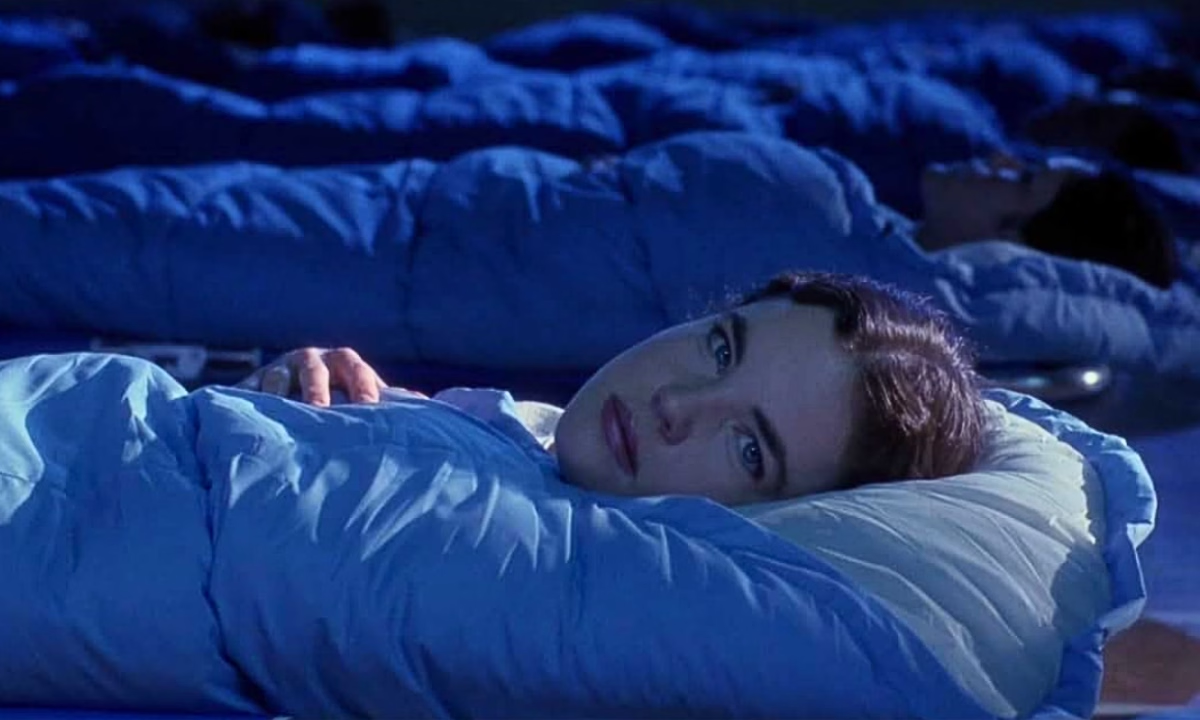
The Handmaid’s Tale 1990 film is an uneven adaptation of Margaret Atwood’s novel that critics mostly rejected, and it earned about $4.96 million in the US against a reported $13.5 million budget. Even so, it is worth watching for its cast and for one big decision: an ending where Kate kills the Commander and escapes, which the novel never gives you.
My verdict after watching it is 2.5 out of 5. This review covers the full plot with spoilers, the production fight between Harold Pinter and the people who rewrote him, how the film compares with the book and the Hulu series, and who should press play.
Table of Contents
Snapshot
What it is: a 1990 dystopian drama directed by Volker Schlöndorff, with a screenplay credited to Harold Pinter, based on Atwood’s 1985 novel.
Release: February 15, 1990 in West Germany and March 9, 1990 in the US.
Cast: Natasha Richardson, Faye Dunaway, Robert Duvall, Aidan Quinn and Elizabeth McGovern, per the film’s credits.
Critics: 35% positive on Rotten Tomatoes from 23 reviews, a Metacritic score of 53 out of 100 from 24 critics, and two out of four stars from Roger Ebert.
Money: a $4,960,385 box office total against a $13.5 million budget reported by Time Out.
Biggest change from the book: Kate kills Fred, flees with resistance soldiers and ends the film pregnant and hopeful, while the novel leaves her fate open.
Best parts: Duvall and Dunaway, and Elizabeth McGovern, whom one critic called the best of the cast.
Weakest part: a thin-looking Gilead. Empire said it came across like a TV movie.
My rating: 2.5 out of 5. Watch it as a curious companion piece, not as the definitive version.
Why was the Handmaid’s Tale 1990 film made, and who was behind it?
It was made because Atwood’s novel was already a famous property by 1985, and producer Daniel Wilson wanted a screen version. Atwood was not interested in writing the screenplay herself, according to a New York Times article from April 2, 1989 that the American Film Institute catalog summarizes.
She did approve Wilson’s choice of playwright Harold Pinter, because of his command of dialogue.
The path to the screen was messy. Karel Reisz was the original director. Pinter later told his biographer that Reisz wanted to stage the big public scenes with thousands of extras, the film company refused, and Reisz withdrew. Volker Schlöndorff then took over, and Pinter said he was too exhausted to rework the script.
Schlöndorff went to Atwood for rewrites, and the actors added changes too. Pinter tried to remove his name from the credits but failed, and he refused to let the script be published. Copies of his original filmscript are held in the Pinter Archive at the British Library.
Schlöndorff was a safe-looking choice on paper. He is the director behind the Oscar-winning The Tin Drum, and the film premiered in competition at the 1990 Berlin International Film Festival. In an interview quoted by German outlet prisma, he later said the story never suited him, despite Pinter and Duvall. That is a striking thing for a director to say about his own film.
The shoot happened in North Carolina. The AFI catalog credits the North Carolina Film Commission and lists the Blue Ridge Mountains as a location, and the hanging scene was filmed in front of Duke Chapel at Duke University. Time Out reported a ten-week shooting schedule.
The music came from Ryuichi Sakamoto, whose score a Boston cinema later described as haunting, and the hymns were sung by the Meredith College Chorale with lyrics altered to fit the story.
The Handmaid’s Tale 1990 film plot summary
This is a single film, so there are no seasons to split up. Here is the whole story in order, with every major spoiler.
The setup. The film imagines an early 21st century in which pollution has left 99% of the population sterile and the US has become the Republic of Gilead. Kate, her husband Luke and their daughter Jill try to cross into Canada on foot. Border guards order them back.
Luke draws their fire so Kate can run, and he is shot dead. Kate is captured. Jill wanders off alone into the back country.
The training. Kate lands in a facility where women are prepared to become Handmaids, concubines for the privileged couples who run the regime. Aunt Lydia runs the indoctrination. In the film, Kate first meets Moira at the Red Center, unlike the book, where they have known each other since adolescence.
The household. Kate is assigned to a Commander named Fred and his wife Serena Joy. She is renamed Offred, meaning “of Fred”. Her job is a monthly ritual based on the biblical story of Rachel and her handmaid, performed with the wife present. Kate keeps longing for her old life, and nightmares of Luke’s death and Jill’s disappearance haunt her.
The cracks. A doctor tells Kate that many of Gilead’s male leaders are as sterile as their wives, and that a secret organisation is working on a way to stop extinction. Serena Joy, desperate for a baby, pushes Kate to sleep with another man, a crime punishable by hanging.
When Kate agrees, Serena shows her a recent photograph of Jill living in another commander’s household, but says Kate can never see her. Fred, sensing she would be a better Handmaid if she enjoyed herself more, uses her background as a librarian to win her over with hard-to-get items and access to his private library. The man Serena chooses turns out to be Nick, Fred’s chauffeur. Kate grows attached to him and becomes pregnant with his child.
The ending. Kate kills Fred. A police unit arrives, and she assumes they are the Eyes, the secret police. She then realizes they are soldiers from the Mayday resistance, which Nick also belongs to. She leaves with them and parts from Nick in an emotional scene.

The last stretch shows her alone in a trailer in the mountains, pregnant, receiving reports from the rebels, and vowing to find her daughter. A voice-over tells us she is safe.
That ending is the film’s signature move. The novel does not include the murder of the Commander and leaves Offred’s fate unresolved, and the escape, the child and Nick’s reappearance as a rescuer were additions for the movie.
Why did critics reject the Handmaid’s Tale 1990 film?
Critics rejected it mostly because it turned a book about ambiguity into a straightforward thriller on a budget that showed. Schlöndorff named the trap himself. He described the novel as “a book about ambiguity and everything on screen becomes factual.” He also compared the job of merging Atwood’s book with Pinter’s script to walking a tightrope, which tells you how little room he felt he had.
The numbers back up the cold reception. Rotten Tomatoes lists 35% positive from 23 reviews, and Metacritic gives it 53 out of 100 from 24 critics, which counts as mixed. Roger Ebert gave it two stars out of four, and his central complaint was that the film is “curiously muted” for all its anger.
He also wrote that he was unsure what the movie was trying to say. Owen Gleiberman of Entertainment Weekly gave it a C minus while admitting it looks striking. Empire’s verdict was harsher: a “high calibre cast and concept completely squandered.”
The money story is just as rough. Little White Lies called it a complete commercial failure that did not earn back half its budget, which fits the $4.96 million US box office against a $13.5 million budget.
I see four specific problems, and each one has a source behind it.
First, the missing inner voice. The novel is one woman’s interior monologue. Richardson believed narration would solve that and felt cast adrift when Pinter dropped it. She said at the time that it would have helped because it is her story, and that sentence stays with me: “After all it’s HER story.” A voice-over does appear near the end, but too late to change how the film feels.
Second, a low-cost look. Empire joked that Gilead is conjured mostly from news footage, roadblocks and costumes in what looks like a gravel pit. That is unkind, but a world this oppressive needs texture, and the film often settles for signs.
Third, pace and melodrama. When the film played Berlin, some observers found it sluggish and static, and the Christian Science Monitor thought Pinter’s script padded the story with needless melodrama.
Fourth, the tacked-on hope. The same review said the more hopeful ending softens the film’s harsh use of sex and violence. I will come back to that, because the ending is the most interesting thing about this movie.
Timing also worked against it. By 1990, as SBS put it, the political baton had passed to George H. W. Bush, and the Reagan years were over. Decades later the film was long out of print before a Blu-ray release, so many viewers assumed the Hulu show was the first adaptation.
Who gives the best performance in the Handmaid’s Tale 1990 film?
The supporting cast gives the most dependable work, while Natasha Richardson’s lead performance splits opinion. SYFY WIRE argued that her subdued, nonverbal approach to Offred’s constant anxiety works very well. Another critic took the opposite view and found her performance too playful in a role that demands anonymity. I land in between. She is convincing when she must hide what she feels and weaker when the script asks for big emotional beats.
Robert Duvall and Faye Dunaway get the sharpest scenes. Ebert said they provide the best moments, Duvall through the Commander’s blind self-regard and Dunaway through a wife who judges her happiness by how closely her home fits society’s norms.
That reading fits the story: Serena Joy is not a villain from outside the system but a believer who is also trapped by it. Another review described Dunaway’s performance as tightly restrained and Duvall’s as very good.
Elizabeth McGovern, as Moira, is the standout for several critics. One reviewer said she gives the film some much-needed warmth and bite, and a home-video blurb singled out her wrenching turn as a so-called gender traitor. Victoria Tennant plays Aunt Lydia, and that same reviewer called her turn broad and theatrical. Aidan Quinn plays Nick, and Ebert dismissed the romance with Richardson as predictable, in a film where Richardson and Quinn fall in love or lust on cue.
On chemistry, the scenes that work best are the three-way ones in the Commander’s house, where politeness covers cruelty. The love story is the weakest connection in the film.
A note on Richardson: the late Natasha Richardson remains the reason many people seek this film out today.
What are the main themes of the Handmaid’s Tale 1990 film?
The central theme is control of women’s bodies through religion, law and fear.
The film’s rules draw on scripture: the Handmaid’s role is based on the biblical story of Rachel and her handmaid, and the movie specifies that its codes rest on an extremist reading of the Old Testament alone, while the novel also twists New Testament passages. The rituals are the argument. Power wraps cruelty in ceremony, and the ceremony makes it feel legitimate.
A second theme is complicity. Serena Joy enforces the system and then breaks its rules to get a child. The doctor’s reveal that many male leaders are sterile too shows a regime built on a lie about whose fault the crisis is. Ebert noted that the film feels more like a feminist fable than a political one like Orwell’s 1984, and he read childbearing as its chosen metaphor.
A third theme is reading and knowledge. Fred rewards Kate by opening his private library to her, and the story treats books as both a temptation and a lever of control. Pollution adds an environmental thread, which Ebert summed up as male greed wrecking the environment.
The fourth theme is hope, and it is where the film splits from its source. One academic-minded critique argued that turning Offred into a safe, expectant mother blunts Atwood’s satire, and that dropping the novel’s Historical Notes removes another layer of irony.
In the book, an epilogue presented as a future lecture reveals that her story came from cassette tapes. The film has no epilogue. Inverse made the opposite case, calling the film more hopeful than the television version and arguing that it lets Kate truly triumph. Both readings are fair.
How does the 1990 film compare with the novel, the Hulu series and similar stories?
It is the most compact version and the most hopeful, and it gives up the most of the book’s ambiguity. Here is a side-by-side view built from the sources above.
| Point of comparison | 1990 film | 1985 novel | Hulu series |
|---|---|---|---|
| Form | Feature film, 109 minutes | Novel by Margaret Atwood | Series created by Bruce Miller, ordered at 10 episodes, production began late 2016 |
| Protagonist’s name | Kate, renamed Offred | Offred | June Osborne (played by Elisabeth Moss), formerly known as Offred |
| Fate of the Commander | Kate kills him | No murder in the book | Commander Fred Waterford is killed by June and former handmaids in Season 4. In the final season (2025), Commander Joseph Lawrence and Nick Blaine die when a bomb destroys a plane carrying Gilead’s commanders. |
| Ending | Escape, pregnancy, hope of finding Jill | Open ending, a van waits | Ran to a sixth and final season in 2025 |
| Epilogue | None | Future lecture explaining the tapes | In the series finale, June returns to the ruins of the Waterford house and begins recording her story as Offred. Massachusetts has been liberated, but Gilead remains powerful elsewhere, and June’s daughter Hannah is still trapped there. June vows to continue the fight for freedom. |
The Hulu show had far more room. Romper noted that it shows how the world fell apart and makes Serena Joy a contemporary of Offred instead of an older woman. The film, with a runtime under two hours, cannot do that, so it compresses the story into one escape plot. There are other adaptations too. Poul Ruders and Paul Bentley’s opera has played houses such as San Francisco Opera in September and October 2024, and a graphic novel by Renee Nault came out in 2019.
Against similar films, the picture is mixed. The Apple TV page lists related titles such as Children of Men, Soylent Green, Don’t Worry Darling and THX 1138, and Rolling Stone’s Peter Travers dismissed it as a Stepford Wives rehash. I think that comparison is too harsh, but it shows why the film felt less distinctive in 1990 than the book did in 1985.
As for the director’s own record, one reviewer called it Schlöndorff’s most commercially accessible film, noting that he is best known for The Tin Drum from 1979. It lacks the formal daring that built his reputation.
Who should watch the Handmaid’s Tale 1990 film?
Watch it if you are curious about how a famous novel looked on screen first, or if you follow any of its names: Atwood, Pinter, Schlöndorff, Richardson, Duvall or Dunaway. It suits patient adult viewers rather than casual weekend watchers.
The film is rated R, and an Apple TV listing describes it as a book-based cautionary tale with violence, sex and language.
Three kinds of viewers will get the most from it:
- Readers of the novel who want to see which choices an adaptation can make, and which ones break the story.
- Students of film adaptation and screenwriting, since the Pinter script history is a case study in too many hands on one script.
- Hulu fans who want the earlier, smaller, more hopeful version of the same premise.
Skip it if you want the novel’s interior voice, a big-budget Gilead, or a slow-burn psychological study. If you only have one evening, I would read the book or watch the series first and treat this film as a companion piece.
What awards did the Handmaid’s Tale 1990 film win?
The award record is thin, and I could not fully verify it. What I can confirm is that the film was entered in the main competition at the 40th Berlin International Film Festival.
A fan wiki lists a Golden Bear nomination and an Evening Standard British Film Award entry for 1991, but it does not make clear whether the second one was a win, and I found no official source for the category.
A university film catalog lists two wins and one nomination without naming them. Based on the available data, treat the awards history as unconfirmed beyond the Berlin entry.
If you want to watch it, availability changes by country and week, so check a streaming search tool for your region. For physical copies, MGM released a DVD in 2001, and a Blu-ray from Fabulous Films followed after years out of print.
What can the Handmaid’s Tale 1990 film teach us today?
It teaches that a story built on ambiguity can lose its power the moment you make everything explicit. That is my main takeaway, and it applies far beyond this one movie.
Take the ending. Atwood’s novel closes on an uncertain note, with a van waiting and Offred stepping into darkness or light.
The film answers the question. Kate kills Fred, flees, and carries a child toward a future she can plan. That choice is easy to criticize, and critics did. Yet I understand why it was made. I suspect a studio picture in 1990 wanted to send an audience out of the theater with something to hold. The risk is that a warning turns into a rescue story, and a rescue story is easier to forget.
The second lesson is about authorship. Pinter wrote a script, a director rewrote it, the novelist changed it, and the actors changed it again. He later called the result a hotchpotch. If you create anything with other people, this is a fair warning: a project can pass through five talented hands and still lose its shape.
The third lesson is about timing.
The film landed soon after the Reagan years and failed. The Hulu series arrived in 2017, and one reviewer tied its arrival to the aftermath of Donald Trump taking office. The same story found success with audiences when the mood changed.
That is an opinion from one critic, not a measured cause, so treat it as one reading. Still, it fits a pattern I notice often: stories do not always fail on quality, and sometimes they fail on date.
The fourth lesson is that the story keeps getting retold. Besides the series, which reached a sixth and final season in 2025 with a spinoff reported on the way, there is an opera and a graphic novel. Each version answers the same question differently: what does resistance look like when you cannot trust anyone?
The film’s answer is that a person can act, and sometimes that act works. The book is more cautious, and the series keeps pushing the finish line further away.
I also keep thinking about what hope costs in a story like this. Inverse argued that the film lets Kate truly triumph, something the series has struggled to show.
I do not fully agree, because the triumph arrives through a murder and a rescue rather than through Kate’s own mind. Still, I would not call the ending dishonest. It treats hope as a decision rather than a guarantee, and in that way it matters.
So my practical advice is simple. Read the book first. Watch this film second, as an argument about endings. Then decide for yourself whether ambiguity or hope is the braver choice.
Handmaid’s Tale 1990 film pros and cons
| Pros | Cons |
|---|---|
| Strong supporting work, especially from McGovern, Duvall and Dunaway | Gilead looks cheap and TV-like |
| A haunting Ryuichi Sakamoto score | Pacing described as slow and static at Berlin |
| A clear, hopeful escape ending that differs from the open-ended novel | No interior narration, which Richardson herself missed |
| A fascinating production history for film students | Melodrama and a softened ending that critics said blunts the satire |
| Compact running time compared with a long series | Mixed to negative critical record: 35% on Rotten Tomatoes |
Final verdict on the Handmaid’s Tale 1990 film
It is a flawed but interesting adaptation that deserves a place on your list, just not at the top of it. The cast carries it, the production story fascinates, and the ending is a real argument about what the novel should mean.
The weak world-building and the lost interior voice keep it from being good. My rating is 2.5 out of 5. Watch it after the book, and go in expecting a different story from the one you may know from the series.
Frequently asked questions
Is the Handmaid’s Tale 1990 film worth watching?
Yes, as a companion to the book or series, and no if you want the definitive version. Critics were mixed to negative, but the cast and the changed ending give it lasting interest.
Why did Harold Pinter distance himself from it?
He said the finished film departed heavily from his script after the director, the author and the actors all changed it. He tried to remove his name and could not.
How does the film end?
Kate kills the Commander, is rescued by resistance soldiers, and ends up pregnant in a mountain trailer, hoping to find her daughter.
Did it make money?
No. It grossed $4,960,385 in the US on a reported $13.5 million budget.
The Handmaid's Tale

Director: Volker Schlöndorff
Date Created: 2026-11-05 08:00
2.5
Pros
- Strong supporting cast, haunting score, clear hopeful ending, fascinating production history
Cons
- Cheap-looking world, slow pacing, no interior narration, melodrama







0 thoughts on “The Handmaid’s Tale 1990 Film Flopped, but Its Ending Still Matters”