
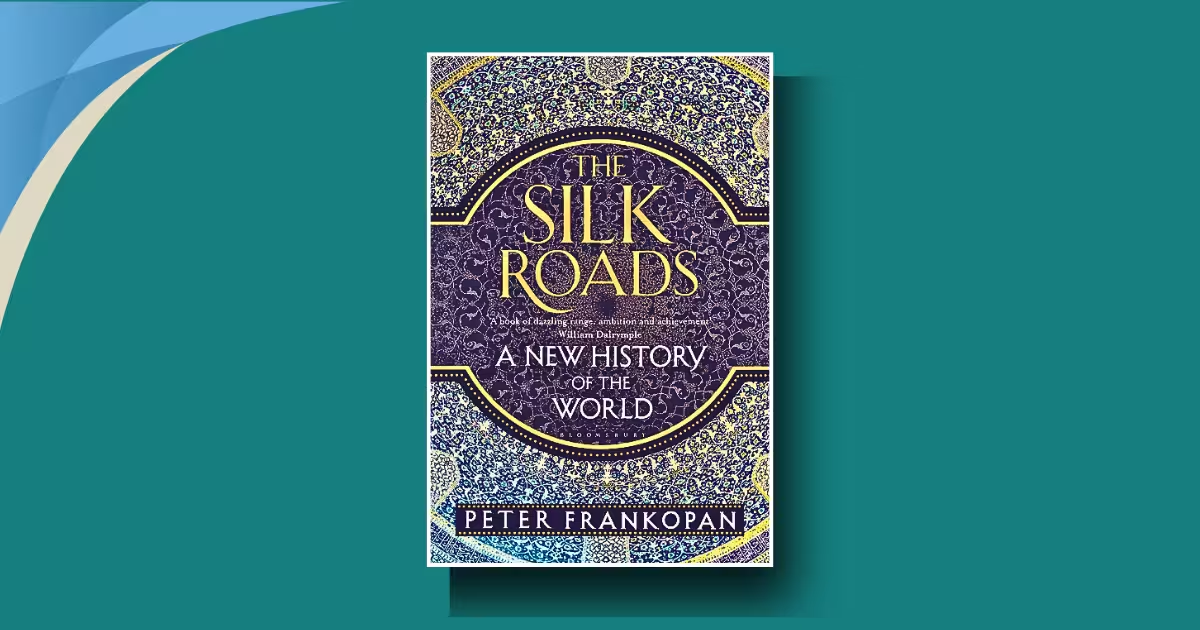
Do you ever finish a history book or class and wonder why everything seems to revolve around Europe and the West, as if the rest of the world was just waiting for them to show up? That nagging feeling hit me hard while reading The Silk Roads: A New History of the World by Peter Frankopan. This book flipped my entire perspective—it turns out the real engine of global history has always been the sprawling networks connecting the Middle East, Central Asia, Persia, and beyond.
From a reader in, Bangladesh, where we’re literally at the edge of those ancient trade routes, this felt like finally seeing my part of the world placed at the center, not the periphery.
If you’ve ever questioned the Eurocentric lens we’re all taught through, The Silk Roads will reshape how you see everything from ancient empires to today’s headlines.
The Silk Roads is best for anyone hungry for a non-Western take on world history—students, travelers, policy enthusiasts, or curious readers who want to understand why Central Asia and the Middle East keep dominating global news.
If you’re fascinated by trade, religion, empires, oil politics, or China’s rising influence, you’ll devour this. It’s perfect for South Asians like me, as it highlights India’s role in spice routes, Persian connections, and how our region linked East and West long before colonialism.
The Silk Roads is bot for readers seeking a deep dive into European Renaissance art, American Revolutionary details, or purely social histories of everyday life.
If you prefer tightly focused academic texts with endless footnotes over sweeping narratives, or if you’re uncomfortable with a thesis that occasionally critiques Western interventions, this might frustrate you. It’s broad and ambitious, not exhaustive on any single era.
Table of Contents
1. Introduction
Book: The Silk Roads: A New History of the World
Author: Peter Frankopan
Publisher: Bloomsbury (UK).
The Silk Roads is widely listed as published in 2015 (Bloomsbury edition; Wikipedia lists 27 Aug 2015).
This is non-fiction global history, written like a corrective lens. Frankopan’s framing is simple: if you keep telling world history as a Western success story with “the East” as a side stage, you’ll keep misunderstanding the past—and you’ll keep misreading the present.
Frankopan is an Oxford historian (commonly described as Professor of Global History / Senior Research Fellow at Worcester College) and has formal Silk Roads credentials listed in major book listings. (Amazon)
Frankopan’s thesis is not “the Silk Road existed.” It’s sharper:
- The region between Europe and East Asia—especially the Middle East, Central Asia, Persia/Iran, the steppe, the eastern Mediterranean—has repeatedly been the world’s gravitational centre.
- History makes more sense when you follow flows: trade, faith, disease, money, raw materials, and strategic corridors—rather than treating Europe as the default protagonist.
- The modern era is bending back toward these routes again; Frankopan explicitly says the “Silk Roads are rising again,” tying historical structure to current geopolitics.
He also calls out how stubbornly Eurocentric storytelling remains—how it foregrounds Greece and Rome and downplays “a more complex anatomy of the past.”
2. Background
What is the Silk Road?
The Silk Road was a vast network of interconnected land and maritime trade routes linking East Asia (especially China) with Central Asia, the Middle East, Europe, and parts of Africa from roughly the 2nd century BCE to the 15th century CE. It facilitated not only the exchange of luxury goods such as silk, spices, and precious metals, but also the spread of ideas, religions (like Buddhism and Islam), technologies, cultures, and diseases between civilizations across Eurasia.
Before Frankopan, a lot of popular imagination treated the Silk Road as one romantic camel-trail between China and Europe. His version is broader: a network—land and sea—where religion, weapons, ideas, microbes, bullion, slaves, crops, and later oil and pipelines all moved.
This is also why, reading The Silk Roads, I kept catching myself thinking: “Wait—so the ‘middle’ isn’t the middle. It’s the main stage.”
Even the book’s modern hook lands hard: in 2013, China’s leader announced a “Silk Road Economic Belt,” followed by a maritime version—explicitly tying contemporary strategy to the ancient metaphor.
3. The Roadmap of the Silk Roads: A Network of Ancient Trade Routes
The Silk Roads (or Silk Routes) weren’t a single, straight highway like a modern interstate—they formed a sprawling, ever-shifting network of overland and maritime paths connecting East Asia (primarily China) with the Mediterranean, Europe, the Middle East, India, and even parts of Africa. These routes thrived from around 200 BCE (Han Dynasty era) to the 15th century CE, peaking under empires like the Romans, Persians, Abbasids, Mongols, and Tang/Song China.
Peter Frankopan, in The Silk Roads: A New History of the World, emphasizes this as the “heart of the world”—the crossroads from the eastern Mediterranean and Black Sea through Persia and Central Asia to the Himalayas and Pacific. Goods (silk, spices, porcelain, gold), ideas (religions like Buddhism, Christianity, Islam), diseases (like the Black Death), and people flowed both ways, shaping civilizations far more than we often learn in Eurocentric histories.
Main Overland Routes (The Classic “Silk Road”)
- Northern Route (Steppe Branch) — From Xi’an (ancient Chang’an) in China, north through the Gobi Desert, Mongolia, then west across the Eurasian steppe to the Black Sea/Crimea. Popular with nomads and during Mongol times.
- Central Route (Oasis Branch) — The most famous: Xi’an → Dunhuang → Kashgar → Samarkand → Bukhara → Merv → Herat → Baghdad → Antioch/Constantinople. This skirted the Taklamakan Desert via oases.
- Southern Route — Branched through the Pamirs, Afghanistan (Bactria), Persia (Iran), Mesopotamia, to the Levant.
Key cities/hubs: Xi’an, Lanzhou, Turpan, Kashgar, Tashkent, Samarkand (legendary market center), Balkh, Nishapur, Tehran area, Baghdad, Damascus, Constantinople (Istanbul).
Maritime Silk Road
From southern Chinese ports (like Guangzhou/Quanzhou) south through the South China Sea to Southeast Asia (Malacca, Java), India (Malabar Coast, Bengal), Sri Lanka, then Arabia (Persian Gulf) and East Africa. This exploded in the 9th–13th centuries with Arab, Indian, and Chinese sailors.
From your location in Chittagong (Bibir Hat area), Bangladesh was connected via the Bay of Bengal—ancient ports in Bengal (like Tamralipti or later Sonargaon) linked to these maritime extensions, trading textiles, spices, and rice.
Chronological Timeline of Key Events and Periods in The Silk Roads: A New History of the World by Peter Frankopan
Peter Frankopan’s book isn’t a strict year-by-year chronicle—it’s a thematic sweep showing how the “heart of the world” (Mesopotamia, Persia, Central Asia, the Middle East, and connections to India/China) drove global history through trade, faith, conquest, resources, and ideas.
The narrative flows roughly chronologically across 25 chapters, from prehistory to the 21st century (up to around 2015 publication).
I’ve compiled this timeline from The Silk Roads‘ core arguments, key references, and chapter structures. Dates are approximate where eras are discussed broadly. I’ve grouped them by major historical phases for clarity, with ties to specific chapters.
As someone reading from Bangladesh—right on the historic maritime Silk Road extensions via the Bay of Bengal—this hits close to home; Bengal’s ports and textiles feature in medieval and early modern trade sections.
Prehistoric to Ancient Foundations (Chapters 1–3: Creation of the Silk Road, Road of Faiths, Road to a Christian East)
- c. 5000–3000 BCE: Birth of civilization in Mesopotamia (between Tigris and Euphrates, thought to be Garden of Eden location) and early urban centers like Uruk, Akkad, Nineveh, and Babylon.
- c. 2600–1900 BCE: Indus Valley Civilization flourishes with sophisticated cities like Harappa and Mohenjo-daro (advanced sewage systems, populations in tens of thousands).
- c. 2000 BCE onward: Bactria (northern Afghanistan) emerges as legendary trade hub for goods from far and wide.
- 550–330 BCE: Achaemenid Persian Empire builds extensive royal roads, forming the backbone of early Silk Road networks.
- 334–323 BCE: Alexander the Great’s conquests link Greece to India, accelerating cultural and trade exchanges.
- 3rd century BCE: Emperor Ashoka’s missions spread Buddhism along trade routes.
- c. 130 BCE: Han Dynasty China formally opens Silk Road contacts (diplomat Zhang Qian’s expeditions to Central Asia).
- 1st–4th centuries CE: Spread of Zoroastrianism, Buddhism, Judaism, Manichaeism, and Nestorian Christianity eastward.
- 330 CE: Founding of Constantinople as new Roman/Byzantine capital, bridging East and West.
Medieval Islamic and Nomadic Eras (Chapters 4–10: Revolution, Concord, Furs, Slave Road, Heaven, Hell, Death and Destruction)
- 622–750 CE: Rise and rapid expansion of Islam; Arab conquests unite key trade hubs.
- 750–1258 CE: Abbasid Caliphate shifts power to Baghdad (population over 1 million by 900 CE), golden age of scholarship and trade.
- 786–809 CE: Reign of Harun al-Rashid; diplomatic exchanges with Charlemagne.
- 9th–11th centuries: Peak of slave trade (Slavs via Viking-Rus networks to Islamic markets) and fur trade empowering Northern Europe.
- 1099 CE: First Crusade captures Jerusalem, opening Western access to Eastern luxuries.
- 1206 CE: Genghis Khan unites Mongol tribes.
- 13th–14th centuries: Mongol Empire at its height (largest contiguous land empire, covering ~24% of Earth’s land); integrates Silk Roads but through massive destruction.
- 1347–1351 CE: Black Death spreads via trade routes, killing 30–60% of Europe’s population but reshaping economies.
Age of Exploration to Imperialism (Chapters 11–16: Gold, Silver, Northern Europe, Empire, Crisis, War)
- 1492 CE: Christopher Columbus’s voyages seek new routes to Eastern riches.
- 1498 CE: Vasco da Gama reaches India by sea, bypassing traditional land routes.
- 1545 CE: Discovery of silver at Potosí (Bolivia); floods global markets via Manila Galleons to Asia.
- 16th–18th centuries: Rise of Portuguese, Dutch, and British naval dominance; shift of trade to sea routes.
- 1839–1842 & 1856–1860 CE: Opium Wars force China open; British India exports massive opium.
- 19th century: “Great Game” rivalry between Britain and Russia in Central Asia.
- 1908 CE: First major oil strike in Persia (leading to Anglo-Persian Oil Company).
20th Century Conflicts and Resources (Chapters 17–25: Black Gold, Compromise, Wheat, Genocide, Cold Warfare, American Silk Road, Superpower Rivalry, Catastrophe, Tragedy)
- 1914–1918 CE: World War I; competition over Persia and Middle East resources a key underlying factor (quote from 1914 British memo on empire at stake).
- 1915 CE: Armenian Genocide (over 1 million deaths).
- 1927–1938 CE: Major oil discoveries in Iraq and Saudi Arabia.
- 1939–1945 CE: World War II; resource grabs in the East fuel conflicts.
- 1973 CE: Oil crisis (prices quadruple after Yom Kippur War/OPEC embargo).
- 1979 CE: Iranian Revolution; Soviet invasion of Afghanistan.
- 1980s CE: US supports mujahideen against Soviets (backfires long-term).
- 1991 CE: Collapse of Soviet Union; brief US unipolar moment.
- 2001 CE: 9/11 attacks.
- 2003 CE: US-led invasion of Iraq (based on false WMD claims; costs trillions, destabilizes region).
- 2013 onward: Launch of China’s Belt and Road Initiative (BRI); massive investments reviving “New Silk Roads” (over 150 countries involved by mid-2010s).
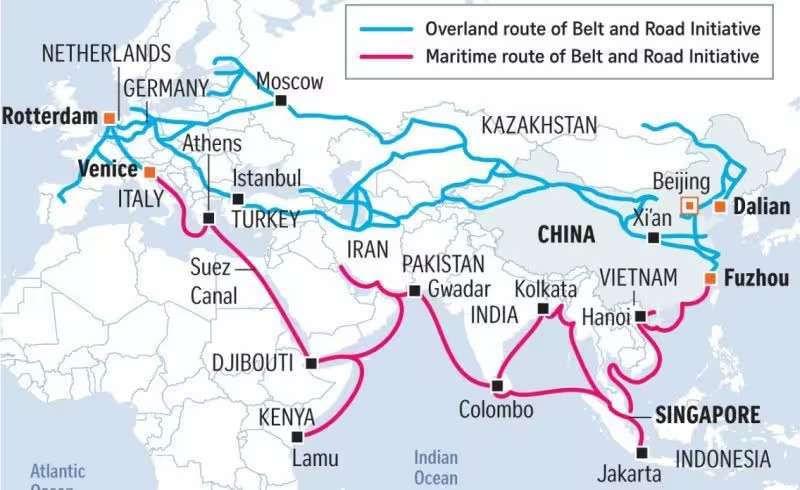
Frankopan ends by arguing power is shifting east again—Asia’s economic rise (China’s luxury demand quadrupling projections, India’s growth) signals the region’s return to centrality, with the US/West facing overreach from post-9/11 interventions.
This timeline captures the book’s flow: the Silk Roads region as the perpetual axis, with trade/commodities (silk, furs, slaves, silver, oil) driving shifts in power. No single “time” for most events (they’re eras), but these are the pivotal dates highlighted.
4. The Silk Road summary
Part I: The Birth of Globalization (The Early Roads)
The narrative begins not in Rome or Athens, but in the Persian Empire and the Han Dynasty of China. Frankopan establishes early on that the West has always been a periphery to the true center of civilization. The “Silk Road” wasn’t just a conduit for silk; it was the world’s central nervous system.
The Creation of the Silk Road:
The bridge between East and West was forged through luxury and necessity. The Han dynasty in China needed horses to defend against the Xiongnu nomads, and the West craved luxury. I was fascinated to learn that Rome’s obsession with silk was so intense it terrified moralists. Seneca was horrified by the fabric, declaring that a woman could not honestly say she was not naked when wearing it.
By the first century AD, Rome was hemorrhaging money to the East, with Pliny the Elder complaining that 100 million sesterces flowed annually into Asia. This wasn’t just trade; it was the first era of globalization, linking the Pacific to the Mediterranean.
The Road of Faiths:
We often associate Christianity with Europe, but Frankopan reminds us that “every aspect of early Christianity was Asian”. Religions didn’t just appear; they competed in a crowded marketplace along these trade routes.
- Buddhism’s Expansion: Buddhism spread out of India, transforming from an internal spiritual journey into a religion of stupas and visible worship to compete with other faiths.
- Christianity in the East: Long before it dominated Europe, Christianity was spreading deep into Asia. There were archbishoprics in Merv, Gundeshāpūr, and Kashgar long before Canterbury.
- The Rise of Islam: The sudden eruption of Islam in the 7th century reshaped the world. It wasn’t just a conquest; it was a revolution that created a massive free-trade zone. Frankopan notes that while Europe withered in the “Dark Ages,” Baghdad became the richest city in the world, a center of science and astronomy where scholars preserved the knowledge that Europe had lost.
Part II: The Middle Era (The Rise of Commerce and the Mongols)
This section of the book completely upended my understanding of the Middle Ages. While we usually focus on knights and castles in Europe, the real action—the money and the power—was in the hands of the Viking Rus’, the Khazars, and eventually, the Mongols.
The Slave Road (The Vikings):
I was shocked to realize the true economic engine of the Viking Rus’. They weren’t just warriors; they were human traffickers. The Rus’ made fortunes selling slaves (Slavs) to the wealthy Islamic markets in the south. The scale was massive, with slaves being an “article of trade” treated well only to ensure a higher price.
This trade pumped millions of silver dirhams back into northern Europe, funding the rise of cities like Kiev and Novgorod. It is a grim reminder that the rise of civilization is often paid for in human flesh.
The Road of Death and Destruction (The Mongols):
Frankopan paints a complex picture of the Mongols. Yes, they were brutal—at Nīshāpūr, they massacred every living being, including dogs and cats, piling corpses into pyramids. Yet, Genghis Khan and his successors created a “Pax Mongolica” that allowed trade to flourish as never before.
- The Black Death: This connectivity had a deadly price. The plague bacterium, Yersinia pestis, traveled along these same efficient trade routes. The devastation was apocalyptic, killing at least one-third of Europe’s population.
- The Silver Lining: However, Frankopan argues that this tragedy was the catalyst for the Rise of the West. The massive depopulation empowered the peasantry in Europe, leading to higher wages, better diets, and a shift in social structures that laid the groundwork for the industrial revolution.
Part III: The Great Shift (The Road of Gold and Silver)
This is the pivot point of history. The years following 1490 saw the center of gravity shift from the heart of Asia to the Atlantic coast of Europe.
The Rise of Europe: Christopher Columbus and Vasco da Gama didn’t just discover new lands; they changed the economic flow of the world. Columbus, obsessed with finding gold to fund the recapture of Jerusalem, stumbled upon the Americas. The influx of gold and silver from the Americas was staggering.
The Global Currency: Spanish silver from Potosí didn’t just enrich Europe; it fueled the economies of India and China. In fact, so much silver flowed into China that it eventually caused an inflation crisis.
The Decline of the Old Routes: With ships now bypassing the overland routes, the great cities of Central Asia—Merv, Bukhara, Samarkand—began their slow decline into obscurity. Europe, once a backwater, became the new “fulcrum of a sprawling communication, transportation and trading system”.
The Road to Empire: As Northern Europe (specifically Britain and the Dutch Republic) rose, they engaged in a new kind of empire-building—corporate imperialism.
The Dutch East India Company (VOC) and the British East India Company (EIC) were not just traders; they were sovereign powers with armies. The British conquest of Bengal was a turning point, transforming Britain from a trading nation into a territorial empire.
The looting of Bengal was so severe that it triggered a famine killing millions, while simultaneously funding the Industrial Revolution back home.
Part IV: The Modern Era (The Great Game to the Cold War)
Frankopan brilliantly connects the 19th and 20th centuries back to the Silk Roads. The narrative here is dominated by the struggle for resources—specifically, the transition from coal to oil.
The Road of Black Gold: This is perhaps the most critical section for understanding modern geopolitics. In the early 20th century, the British Navy switched from coal to oil to gain speed and range. This made the oil fields of Persia (Iran) a matter of national survival for Britain.
The Knox D’Arcy Concession: In 1901, William Knox D’Arcy secured a 60-year concession to explore for oil in Persia. This document, signed by the Shah, became “one of the most important documents of the twentieth century”, leading to the creation of British Petroleum (BP) and decades of Western interference in the Middle East.
The Wars for Resources:
Frankopan reinterprets the World Wars through the lens of the East.
- World War I: It wasn’t just about the assassination of Archduke Franz Ferdinand. It was about Germany attempting to break the British and Russian hold on the resources of Asia.
- World War II: Hitler’s invasion of Russia (Operation Barbarossa) was fundamentally an economic war. He needed the wheat of Ukraine and the oil of the Caucasus to sustain the Thousand Year Reich. German planners calculated that “x million people” in Russia would have to starve to free up food for Germany. It was the failure to capture these resources that doomed the Nazis.
The Road of Cold Warfare:
After WWII, the US inherited Britain’s imperial mantle. The CIA-backed coup in Iran in 1953 to overthrow democratically elected Prime Minister Mossadegh (who wanted to nationalize oil) is pinpointed as a catastrophic error. It secured short-term oil flows but sowed the seeds of the 1979 Islamic Revolution.
The West’s desire to control the “heart of the world” led to the funding of the Mujahidin in Afghanistan against the Soviets—funding the very forces (like Osama bin Laden) that would later turn on them.
Part V: The New Silk Road (The Future)
The Silk Roads concludes by bringing us to the present day. The West’s dominance, Frankopan argues, was a historical anomaly—a 500-year blip. We are now seeing the world revert to its natural state.
- The Shift East: Wealth and power are flowing back to the East. China’s “One Belt, One Road” initiative is literally rebuilding the Silk Roads with pipelines, high-speed rail, and highways.
- The Resource Battle: The countries of Central Asia—Kazakhstan, Turkmenistan, Azerbaijan—are once again pivotal because of their vast reserves of rare earths, gas, and oil.
- Conclusion: The era of the West is ending. As Frankopan succinctly puts it, “The Silk Roads are rising again”.
5. Highlighted Lessons from The Silk Roads at a Glance
- The Creation of the Silk Road
Commercial networks began in Mesopotamia over 4,000 years ago, with Persia’s strategic position enabling massive empires (Achaemenid, Roman, Han) to rise through trade in luxuries like silk—the true engine of ancient globalization was East-West connectivity, not isolated Western progress. - The Road of Faiths
Religions like Zoroastrianism, Hinduism, Buddhism, and early Christianity spread and clashed along trade routes, showing that faith was deeply intertwined with commerce and power from the start. - The Road to a Christian East
Christianity’s spread eastward via networks made it a major force in Asia before dominating the West, highlighting how ideology flowed with goods across the Silk Roads. - The Road to Revolution
Islam emerged in the 7th century amid Roman-Persian exhaustion, rapidly conquering key trade hubs and uniting regions under a new faith that prioritized monotheism and solidarity. - The Road to Concord
Early Islamic conquests brought relative tolerance and booming trade, turning cities like Baghdad into intellectual powerhouses while Europe lagged—prosperity often followed religious unification of trade zones. - The Road of Furs
Muslim demand for steppe luxuries (furs, slaves) empowered nomadic groups like Vikings and Khazars, showing how consumer appetites in the East could reshape Northern Europe’s economy and politics. - The Slave Road
The medieval slave trade (especially Slavs to Muslim markets) injected massive wealth into Scandinavia and Russia, proving that brutal commerce was a foundation of Europe’s later rise. - The Road to Heaven
The First Crusade (1099) opened direct Western access to Eastern trade, enriching Italian city-states like Venice and shifting economic power toward Europe despite religious rhetoric. - The Road to Hell
Mongol conquests under Genghis Khan created the largest land empire ever, integrating trade routes but through devastating violence—control of the Silk Roads has always meant mastering both cooperation and destruction. - The Road of Death and Destruction
The Black Death (14th century) ravaged populations via trade networks but paradoxically boosted wages and innovation in recovering regions, while weakening Mongol and old powers. - The Road of Gold
Columbus’s 1492 voyages and the flood of American gold/silver into Europe (and then Asia) recentered global wealth westward temporarily, but still flowed along Silk Road logics. - The Road of Silver
New sea routes (Vasco da Gama) and silver from the Americas supercharged competition between European powers, Ottomans, and Asian empires—global trade became a zero-sum imperial game. - The Road to Northern Europe
England and the Netherlands built naval dominance to challenge Iberian monopolies, turning Northern Europe into trade powerhouses through militarized commerce. - The Road to Empire
18th-century Britain aggressively expanded in India and beyond, showing how control over Eastern trade routes became the foundation of modern imperialism. - The Road to Crisis
19th-century Russia’s push into Central Asia clashed with British interests, intensifying the “Great Game” and setting up global rivalries. - The Road to War
Competition over the East (especially Persia) was a major spark for World War I—seemingly European conflicts were deeply rooted in Silk Road resource struggles. - The Road of Black Gold
Oil discoveries in Persia (1908) made the region’s resources vital to modern warfare and economy, shifting global power toward whoever controlled Eastern energy. - The Road to Compromise
Post-WWI exploitation of Middle Eastern oil bred resentment and nationalism, as Western powers carved up mandates while locals pushed back. - The Wheat Road
Food and resource shortages in Europe (especially Nazi Germany) drove expansionist wars eastward—control of fertile Silk Road lands has always been about survival. - The Road to Genocide
WWII horrors, including the Holocaust, were exacerbated by logistical failures tied to resource grabs in the East, linking ideology to material desperation. - The Road of Cold Warfare
US-Soviet rivalry played out intensely in Iran and Afghanistan, with coups and proxy fights over Silk Road heartlands shaping the Cold War. - The American Silk Road
Post-WWII Western (especially US) interference in the Middle East sowed chaos and anti-Western sentiment that still echoes today. - The Road of Superpower Rivalry
1970s oil shocks and the Iranian Revolution (1979) exposed Western vulnerability to Eastern resource control, fueling arms races and fundamentalism. - The Road to Catastrophe
US support for mujahideen in Afghanistan (1980s) and later invasions backfired dramatically, leading to 9/11 and prolonged conflicts. - The Road to Tragedy
Post-9/11 wars in Afghanistan and Iraq (2001–2003) cost trillions and destabilized the region, revealing the limits of Western military dominance over the Silk Roads.
Conclusion: The New Silk Road
Power is shifting east again—China’s massive investments (Belt and Road Initiative) and rising Asian economies signal the region’s return to global centrality, reminding us that the Silk Roads never stopped shaping the world.
6. Critical Analysis
Does Frankopan support his argument with evidence and logic?
Yes—his method is heavy on:
- Economic figures (taxpayer collapses, revenue jumps, commodity flows).
- Anchoring events (378, 965, 1094, 1571, 1914, 1973, 1979, 2013).
- Cross-regional linkage (how one node’s shift reconfigures others).
When he gives numbers—like the 125-mile wall with 30 forts and 30,000 troops , or the 98% taxpayer collapse in Asyut —he’s not padding. He’s making a structural argument: states and societies reshape themselves around these corridors because survival and wealth depend on them.
Does the book fulfil its purpose / contribute meaningfully?
It absolutely fulfils its purpose: it makes the Eurocentric default story feel incomplete. Frankopan explicitly challenges the way history is often taught—clinging to a “western-centred narrative” and failing to show a “more complex anatomy of the past.”
A strong external academic review summary (LSE Review of Books) also describes the book’s aim as countering Eurocentric globalisation narratives by recentering exchange across Persia/Silk Roads.
Where I think The Silk Roads is most valuable is not in any single chapter—it’s in the cumulative effect: by page after page, your brain stops asking “what was Europe doing?” and starts asking “where were the flows, and who controlled the hinges?”
7. Strengths and Weaknesses
Strengths
1) It changes your mental map.
The strongest “innovation” is conceptual: Eurasia as the recurring centre, not the periphery.
2) It’s brave about ugliness.
Slavery is not waved away. Venice’s early entanglement with slave trading is laid out plainly.
This matters because romantic Silk Road storytelling often turns trade into a cosy montage. Frankopan does the opposite.
3) Numbers sharpen the reality.
When you read “Venice lost three-quarters” or “Iran eight-fold revenue jump” , history stops being vibes and becomes pressure, scale, consequence.
Weaknesses
1) The panoramic sweep can flatten local texture.
When you cover centuries in bursts, some regions feel like strategic tiles rather than lived places.
2) Readers wanting a single, continuous narrative thread may feel whiplash.
Frankopan’s structure is connective and thematic; it’s not a traditional “one empire, one story” approach.
3) The “Silk Roads” label can invite pushback.
Even recent debate around “Silk Roads” framing argues the term can mislead if treated as a single route myth (e.g., critics of museum narratives), though Frankopan himself uses it as shorthand for networks.
This isn’t a fatal flaw—but some readers may bounce if they expect a strict technical definition.
7. Comparison with similar works
If your readers liked:
- Jared Diamond’s Guns, Germs, and Steel (macro explanations),
- Tim Marshall’s Prisoners of Geography (geography as constraint),
- Kaplan’s Revenge of Geography (strategic realism),
- William Dalrymple’s recent arguments about Asia/India’s centrality (and critiques of simplified Silk Road myths),
…then Frankopan sits in the same “big frame” shelf—but with a distinct signature: he makes the Middle East/Central Asia feel like the main plot instead of the setting.
8. Conclusion
If you read The Silk Roads: A New History of the World by Peter Frankopan purely as history, you’ll finish smarter. But if you read it the way I ended up reading it—as a guide to why the world’s power keeps reorganising around Eurasian corridors—you’ll finish with something rarer: a better instinct for the present.
Frankopan’s line that “The Silk Roads are rising again” isn’t marketing fluff. It’s a warning and a map.
Recommendation:
- General readers: yes, if you can handle scale.
- Geopolitics / world order readers: strongly yes (it matches the “world order” framing you publish on Probinism).
- Specialists: you’ll argue with details, but the synthesis is still valuable.







