
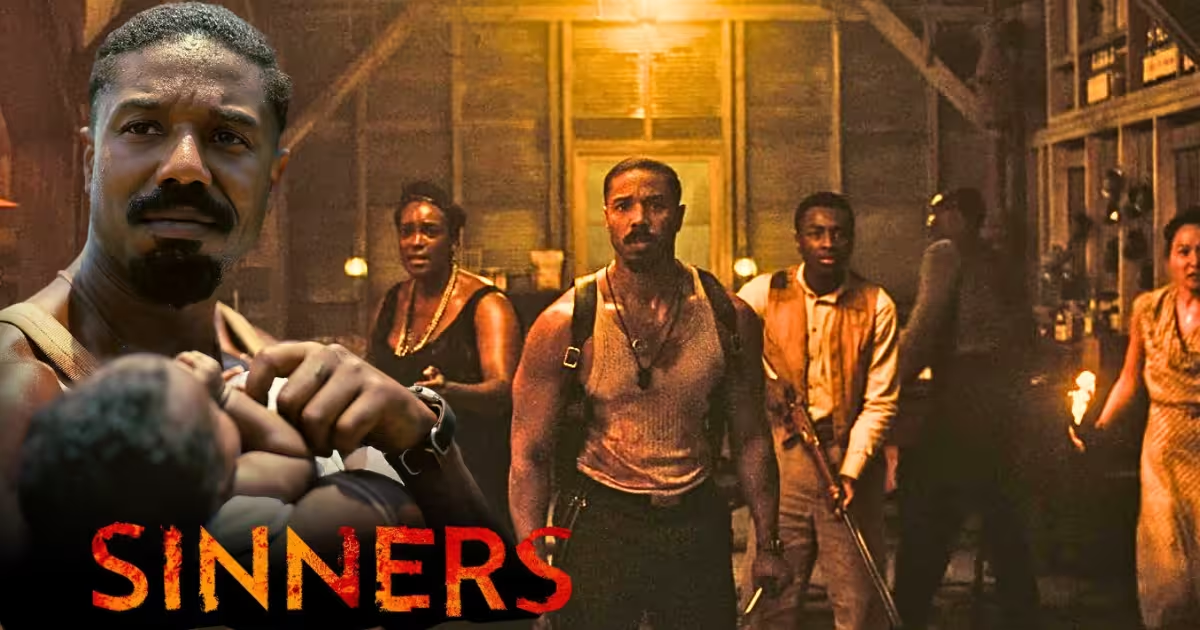
Have you ever wondered what happens when the blues meet bloodthirsty vampires in the heart of the Jim Crow South? That’s the gripping premise of Sinners 2025, a bold horror masterpiece that left me breathless and reflective long after the credits rolled.
Directed by Ryan Coogler, this supernatural thriller stars Michael B. Jordan in dual roles and weaves a tale of family, freedom, and the supernatural against the backdrop of 1930s Mississippi. Released on April 18, 2025, it not only shattered box office expectations but also earned a record 16 Oscar nominations, proving that original storytelling can still dominate in a franchise-heavy era.
Personally, I found it to be one of the most emotionally resonant films I’ve seen in years – a reminder that horror can be as much about human resilience as it is about scares.
Table of Contents
Background
Diving into the origins of Sinners 2025, it’s fascinating how Ryan Coogler, known for blockbusters like Black Panther, shifted gears to create his first entirely original feature.
Announced in January 2024 through his Proximity Media company, the project sparked a bidding war among studios, with Warner Bros. ultimately securing distribution rights in February after agreeing to Coogler’s demands for first-dollar gross, final cut, and ownership reversion after 25 years.
The film’s $90–100 million budget reflected its ambitious scope, blending period drama with horror elements.
Production kicked off in New Orleans in April 2024 under the working title Grilled Cheese, wrapping in July. Coogler assembled a stellar cast, including Hailee Steinfeld, newcomer Miles Caton, Jack O’Connell as the villainous vampire, and veterans like Delroy Lindo and Wunmi Mosaku. Interestingly, some costumes were repurposed from the stalled Marvel film Blade, thanks to designer Ruth E. Carter’s involvement.
Cinematographer Autumn Durald Arkapaw made history as the first woman to shoot on large-format IMAX film, using 65mm stock for a flashback sequence developed specially by Kodak. Influences ranged from Quentin Tarantino‘s pulpy style to Stephen King’s Salem’s Lot, with Coogler drawing personal inspiration from his family’s Mississippi roots and conversations about blues music with his uncle.
As Coogler shared in an NPR interview, the idea hit him “like a bolt of lightning,” connecting African American, Irish, and Choctaw histories through shared themes of oppression and cultural fusion .
The soundtrack, composed by Ludwig Göransson (who also executive produced), immersed itself in 1930s Delta blues, featuring artists like Brittany Howard and Buddy Guy. Released on April 18, 2025, via Sony Masterworks, it included originals like Hailee Steinfeld’s “Dangerous.”
Post-production delays pushed the release from March 7 to April 18 due to film lab shortages, but the wait paid off – the film premiered at AMC Lincoln Square on April 3 and grossed $368.3 million worldwide, becoming a cultural phenomenon .
Sinners 2025 Plot
Sinners 2025 unfolds like a fever dream, starting slow and building to a chaotic crescendo of violence and revelation. Set in October 1932, the story centers on identical twin brothers Elijah “Smoke” Moore and Elias “Stack” Moore, both World War I veterans played with remarkable duality by Michael B. Jordan. After seven years hustling in Chicago’s criminal underworld, they return to their hometown of Clarksdale, Mississippi, laden with stolen syndicate money.
The Jim Crow South is a powder keg of racial tension, where Black communities scrape by on exploitative company scrip from white landowners. The twins, ever the opportunists, buy a sawmill from the sleazy Hogwood (David Maldonado), a local Klan leader, to convert it into a juke joint – a haven for music, dancing, and escape for the Black locals.
Their cousin, Samuel “Sammie” Moore (Miles Caton in a breakout debut, with Buddy Guy as the elderly version), is a talented singer and guitarist torn between his aspirations and his pastor father Jedidiah’s (Saul Williams) fiery sermons against the “sins” of blues music. Jedidiah warns that such sounds are the devil’s work, but Sammie joins the venture anyway, bringing his guitar – rumored to have once belonged to Delta blues legend Charlie Patton, who Coogler notes was likely part Choctaw.
The twins assemble a ragtag team: pianist Delta Slim (Delroy Lindo), a legendary harmonica player; Chinese shopkeepers Grace (Li Jun Li) and Bo Chow (Yao) as suppliers; field worker Cornbread (Omar Benson Miller) as bouncer; and Smoke’s estranged wife Annie (Wunmi Mosaku), a Hoodoo practitioner who cooks up soul food but harbors doubts about her faith after their infant daughter’s death.
Stack, the more charismatic twin, reunites with his ex-girlfriend Mary (Hailee Steinfeld), whom he left years ago to shield her from interracial backlash in the segregated South.

Meanwhile, the film’s supernatural thread introduces Irish immigrant vampire Remmick (Jack O’Connell), fleeing Choctaw vampire hunters led by Chayton (Nathaniel Arcand). Remmick takes refuge with Hogwood and his wife Joan (Lola Kirke), turning the Klansman couple into vampires. This setup cleverly parallels historical oppressions: Remmick sees kinship in the Black characters’ struggles, drawing from Irish famine history and forced labor, as Coogler explained in interviews.
The juke joint’s opening night is electric. Sammie, Delta Slim, and Pearline (Jayme Lawson), a married singer who catches Sammie’s eye, perform a transcendent set.
The music – raw, soul-stirring blues – unknowingly summons spirits from past and future, turning the crowd into a timeless congregation. But it also attracts Remmick and his undead posse.
Vampires can’t enter human dwellings without invitation, so they tempt with money and melodies. Suspicious Smoke refuses, but the twins face a harsh reality: their patrons’ reliance on scrip means the joint won’t turn a profit without outside cash.
In a desperate move, Mary steps out to negotiate and gets turned by Remmick. She re-enters, seduces Stack, and bites him fatally. Smoke and Sammie discover the horror; Smoke shoots Mary, but she’s unfazed and flees. Outside, Cornbread meets the same fate.
As patrons and Bo leave, the vampires turn them one by one. Stack revives as a vampire but is repelled by Annie’s pickled garlic juice – a clever Hoodoo twist. Annie, drawing on her practices, explains the rules: stakes, sunlight, and holy items kill them, but slaying Remmick won’t cure the others. The vampires share a hive mind yet retain personalities, adding psychological depth.
Barricaded inside, the survivors face Remmick’s ultimatum: immortality and freedom from persecution in exchange for Sammie, whose music can summon Remmick’s lost Irish kin. He reveals Hogwood’s dawn Klan attack plan.
They refuse, but Remmick threatens the Chows’ daughter Lisa (Helena Hu). Enraged, Grace invites the vampires in, sparking a brutal fight. Grace, Annie, and Delta Slim perish; Mary escapes; Remmick turns Pearline. Smoke battles his brother Stack in a heart-wrenching showdown, defeating him but sparing a final mercy. With Sammie’s help, they vanquish the rest as sunrise incinerates the undead.
Smoke sends Sammie home, then confronts Hogwood and his Klan mob, killing them but getting mortally wounded. Dying, he reunites with Annie and their daughter in a poignant afterlife vision. Sammie, rejecting Jedidiah’s salvation pleas, heads to Chicago to pursue blues.
The epilogue jumps to 1992: elderly Sammie (Buddy Guy), a blues icon, performs at his club. Ageless Stack and Mary visit, revealing Smoke spared Stack on condition Sammie lives peacefully. Sammie declines immortality, performs for them, and admits that night – violence aside – was life’s peak, the only time they felt truly free. Stack agrees, lamenting it’s the last he saw Smoke or sunlight.
This ending underscores themes of legacy and loss. Smoke’s sacrifice echoes wartime trauma, while Sammie’s journey affirms blues as rebellion against oppression. The vampires symbolize eternal suffering under racism, but human connections prevail.
Coogler masterfully explains this in a New Yorker piece: the music “pierces the veil,” linking generations . At over 1,500 words, this plot reveals why Sinners 2025 feels like a lived history – raw, unflinching, and profoundly moving.
Sinners 2025 analysis
1. Direction and Cinematography
Ryan Coogler’s vision in Sinners 2025 masterfully blends intimate storytelling with grand horror spectacle. He shifts from grounded drama to chaotic vampire action seamlessly, drawing from influences like From Dusk Till Dawn but infusing personal cultural depth.
Autumn Durald Arkapaw’s cinematography shines, alternating 1.43:1 IMAX and 2.76:1 Ultra Panavision ratios for immersive tension – wide shots capture the Delta’s oppressive vastness, while close-ups heighten emotional stakes .
2. Acting Performances
Michael B. Jordan delivers a tour de force as the pragmatic Smoke and charming Stack, their chemistry feeling authentically fraternal. Hailee Steinfeld’s Mary evolves from vulnerable to menacing post-turn, while Miles Caton’s Sammie captures youthful ambition amid horror.
Standouts include Wunmi Mosaku’s Annie, blending strength and grief, and Jack O’Connell’s Remmick, whose charisma masks predatory menace. Delroy Lindo’s Delta Slim adds soulful gravitas, with improvised moments that nearly got cut but elevated the ensemble.
3. Script and Dialogue
Coogler’s screenplay excels in layering historical authenticity with supernatural twists, though some critics noted the grounded first half outshines the action-packed latter. Dialogue feels natural, laced with 1930s vernacular and poetic blues references, but pacing occasionally drags in exposition. Strengths lie in sharp social commentary, delivered without preachiness .
4. Music and Sound Design
Ludwig Göransson’s score is the film’s heartbeat, fusing Delta blues with haunting orchestration on a 1932 Dobro guitar. Tracks like Rod Wave’s “Sinners” and Hailee Steinfeld’s “Dangerous” complement scenes, amplifying tension – the opening night performance’s sound design immerses you in transcendent rhythms that summon spirits. Critics hailed it as “phenomenal,” inseparable from the narrative .
5. Sinners 2025 themes and Messages
Sinners 2025 delves into oppression, identity, and immortality’s allure. Vampirism metaphors racism’s eternal grip: Remmick offers “freedom” from persecution, tempting survivors with escape from Jim Crow horrors.
Coogler parallels African American, Irish, and Choctaw struggles – Remmick’s hive mind reflects forced assimilation, while Hoodoo repels evil, symbolizing cultural resistance. The ending’s 1992 epilogue ties past to present, showing how blues preserves heritage amid trauma.
It evokes emotions of loss and defiance, relevant to today’s discussions on systemic inequality. As one X user noted, it’s about “solidarity between marginalized groups”.
6. Audience Appeal/Reception
Sinners 2025 targets horror enthusiasts, history buffs, and music lovers, with its R-rating suiting mature viewers seeking depth over jumpscares. Cinephiles will appreciate the craft, while casual fans enjoy the thrills.
Reception was stellar: 97% on Rotten Tomatoes, “universal acclaim” on Metacritic (84/100), and an A CinemaScore .
It grossed $368.3 million, with strong word-of-mouth . Awards include 16 Oscar noms (record), four Critics’ Choice wins, two Golden Globes, and top 10 lists from NBR and AFI .
Comparison
Compared to Coogler’s Black Panther, Sinners 2025 feels more intimate yet equally ambitious, trading superhero spectacle for horror rooted in real history.
It echoes From Dusk Till Dawn‘s genre shift but stands apart with cultural depth, outperforming Jordan Peele’s Us in blending social commentary with scares. Where it falls short is in some pacing, unlike Nolan’s tightly wound narratives, but its originality sets it above typical vampire flicks like Blade.
Personal Insight and Lessons
Watching Sinners 2025, I couldn’t shake how it mirrors today’s world – a poignant lesson in resilience amid division. Set in the Depression-era South, the film’s vampires aren’t just monsters; they’re metaphors for systemic oppression that drains life from marginalized communities.
Remmick’s offer of immortality as escape from racism hits hard, reminding me of modern immigrant stories or ongoing racial injustices. Coogler, in a Guardian interview, highlighted parallels between African Americans and the Irish, both “forcibly removed” from homelands, fostering cultural fusion like blues music .
This resonates now, with global migration crises and debates on identity.
Personally, as someone from a multicultural background in Bangladesh, it evoked thoughts on colonial legacies – how empires “vampirize” cultures, leaving echoes in music and folklore. Sammie’s guitar, tied to Choctaw roots, shows hybridity as strength; today, think hip-hop or K-pop blending traditions.
The lesson? Freedom isn’t eternal life but preserving heritage against erasure. In 2026, amid political polarization, Sinners urges solidarity: the Chows’ alliance with the Moores defies isolation, much like today’s coalitions against hate.
Critics like Richard Brody praised its “phantasmagorical vision” revising myths, while X discussions lauded its emotional depth. Statistically, its $368M box office and 16 Oscars underscore cultural impact , proving diverse stories thrive. For me, it teaches embracing “sins” like blues – once demonized, now celebrated – as acts of rebellion.
In uncertain times, Sinners 2025 reminds us: true immortality is in stories we pass on, not escaping pain but confronting it together.
Sinners 2025 quotes
“Music so pure it can pierce the veil between life and death, past and future.” – Sammie, summoning spirits during the juke joint performance.
“We are earth and beast, and god. We are woman and man. We are connected, you and I – to everything.” – From the film’s thematic voiceover, echoing interconnected oppressions.
As Coogler said, “The connections between the two cultures are really obvious to spot” – on Irish and African American parallels .
Pros and Cons
| Pros | Cons |
|---|---|
| Stunning visuals and cinematography | Slow pacing in early setup |
| Gripping performances, especially Jordan’s dual roles | Some supernatural shifts feel abrupt |
| Immersive blues soundtrack | Minor thematic overload in dialogue |
| Deep social commentary | Not for the faint-hearted due to gore |
Conclusion
Overall, Sinners 2025 is a triumphant blend of horror and heart, showcasing Ryan Coogler’s evolution as a filmmaker. It’s raw, innovative, and deeply human. A must-watch for thriller enthusiasts and anyone craving meaningful cinema.
Rating
4.5/5 stars.







